Showing posts with label Fun. Show all posts

Wednesday, 9 December 2020

Fantastic Cooking in the Cosmere

Recently, in a nerdy kick, I decided I would try some fantasy cooking. Now I'm not saying I cooked with dragon eggs and added a pinch of dwarven mead for flavor, no, I used very real world ingredients to cook some very out there recipes. Welcome to my first adventure in cooking with weird recipes from fantastic places!

A real shout out to Deanna Whitney who put together the inspiration for these recipes on Tor.com and who has done quite a lot of work to make these things right. I took inspiration, if not the whole recipe, from Whitney in compiling my own two meals. Mostly to a rousing success! Let's unpack how this went!

Now as a disclaimer, I'm not really a cooking writer, so I'll be giving what I worked on, some of the recipes, and linking to the articles with preparation instruction. This is just my unpacking of how this experience went.

The two recipes I tried were from the world of Roshar in Brandon Sanderson's cosmere. If you've read my reviews of the Stormlight Archive books so far, you'll see this is a world very unlike our own. It's one which, very much, requires a bit of experimentation to get things cooking just right. Roshar has a distinct lack of anything like cows, so all the dairy is either goat or pig, and chickens come in varying shapes and sizes. That makes for some interesting cuisine, and since many meat bearing creatures are more akin to shellfish than our own meat bearing animals, you have some fun designs.

For my first recipe I decided to cook a variant of Alethi "men's food" which is different from "women's food" for cultural reasons. Men's food is spicy, while women's food is sweet. I prepared myself a dish of shellfish chickpea curry, which went quite well in concept and execution!

The basic recipe as laid out by Whitney can be found here for both the curry I used and cooking the shrimp. For the curry, I did a few changes and I used coconut milk.

Whitney's recipe is laid out with these ingredients:

  • 2 cups basic curry
  • ½ cup milk (I used goat)
  • 2 teaspoons of garam masala (to taste)
  • 1 teaspoon of chilli powder (to taste)
  • 1 teaspoon turmeric
  • 1 teaspoon+ of kosher salt (to taste)
  • 15 oz can of chickpeas: pre-cooked, drained, and rinsed
  • 4 oz of spinach 
  • 1 teaspoon of cooking oil

Chickpea curry slow simmering

I managed to get these all together in the pan quite nicely while I marinated the shrimp according to the stated recipe. Her ingredients for a marinade were as such:

  • 1 pound jumbo shrimp, cleaned and deveined
  • 1 cup water
  • 6 cloves of garlic OR 2 tablespoon of ginger-garlic paste
  • ½ teaspoon kosher salt
  • ¼ cup lime juice
  • 1 tablespoon oil
  • ¼ teaspoon pepper
  • 1 cup of coconut milk
  • 2 tablespoons of stock (I used chicken)
  • ¼ cup of toasted coconut

Then for the shrimp I roughly followed Whitney's guide to the recipe and it turned out quite well. I think I had more food waste than intended with the marinade, but overall, it was an excellent recipe! For this recipe I had to forgo using the toasted coconut, and I used pre-minced garlic for my own which saved quite a bit of time and allowed me to set the marinade up very quickly.

Both of these went off, relatively, without a hitch otherwise. I managed to make myself a tasty snack with many leftovers for work the next day! The recipe came together as a very satisfying pair.

A light snack for reading!

Next I decided to try chouta. I will admit, that of all the foods that have fascinated me in the cosmere, chouta is the one I have most wanted to try and was what I had originally set out to cook. It was the recipe though which did not turn out quite as intended.

The recipe can be found here and it is well worth checking out. The way Whitney prepared her recipe involved making your wrap and meatballs from scratch. I got tortillas from the mall personally, and simply used chopped onion, rice, hummus and feta cheese for the base of the wrap to keep everything nice and stuck together.

My difficulties began when I decided to use store bought chicken meatballs (no beef on Roshar!) and pan fried them. It was a, less than satisfactory outcome. Doing that I moved on to cooking the sauce. Since I have not cooked my own sauce before rather than making something from a can, this from scratch sauce was way too thin, more of a liquid really, rather than very thick. Despite my very amateurish efforts to thicken, it never did reach the consistency I sought so I remedied this by adding the meatballs and cooking them together.

The sauce ingredients are laid out as such:

  • 2 tablespoons butter
  • 2 tablespoons flour (I used cassava)
  • 2 cups broth (I used chicken)
  • 1/4 cup sour cream
  • ¼ to 1/2 teaspoon crushed red pepper (to taste)
  • ¼ teaspoon curry powder
  • ¼ teaspoon turmeric
  • ¼ teaspoon coriander
  • ½ teaspoon kosher salt
  • ⅛ teaspoon black pepper
The sauce was way too liquid like

I also forwent directions on cooking the bread, using my store bought tortillas to save the time. I wanted to try a thicker wrap, so I put two together. It was a bit of a stretch, but it took. To fill the wrap I used hummus, rice and chopped onions and feta cheese. It was a very tasty filling. So filling I could only eat two in one sitting! In the end, I ended up savoring them alongside a glass of yellow (white) wine with my dinner!

When I make this again I feel like I will be well served by practicing with making a sauce. I would also want to try making my own meatballs were I to do it again, and I would definitely stick to only using one tortilla. Even were I to fry the bread, one tortilla maximum. What would also be interesting is to work on my wrap style, making make it more "one handed" to work with. 

My first foray into chouta, mildly successful!

On the plus side, I had plenty of sauce, meatballs and rice leftover for a tasty meal at work the next day!

Meatballs, sauce, and rice.

This has been my first foray into fantasy cooking, but rest assured, you can't stop me from trying again!

Saturday, 28 March 2020

Sixteenth Watch

I must admit going forward, I had no idea the United States Coast Guard was a branch of the US Armed Forces. Really! And it was that revelation which really sucked me into the world of Myke Cole's new novel Sixteenth Watch!

I had seen this book sitting on the shelves at my local bookstore and the simple cover art and title really sucked me in. A brief read of the back blurb convinced me I had to buy it. So, I set off once more to the Moon of tomorrow!


Set an indeterminate amount of time into the future, we come to a Lunar surface being rapidly developed by Chinese, American, Russian, and European Helium-3 Mining interests. China and America are in fierce economic and military competition in space. Sabers have been rattled and punches have been thrown, and it seems like the first Lunar war is only just around the corner.

Enter Jane Oliver of the United States Coast Guard, the fifth branch of the United States Armed Services. She and her XO Wen Ho are aboard the Coast Guard Cutter Aries as it runs over Lacus Doloris where American and Chinese miners are running riot, brawling over mining rights and economic losses. Things turn ugly, weapons are drawn, and Jane's husband Tom of the United States Navy is caught in the crossfire.

Three years pass and Jane is back down the well in Yorktown teaching Coast Guard cadets, putting the best class she can forward as her daughter Alice moves to stake her own Helium-3 claim. It is with this revelation that she is approached by her commandant about training the Coast Guard's SAR team to compete in the widely televised Boarding Action, where the elite teams from each branch of the Armed Services and United States security services compete in a zero-gee game to see who can board and clear a boat against an opposing team.

What reason might this be to send Jane back to the Moon? Well, the American Navy is increasingly taking over the 'maritime' enforcement and search and rescue activities on the Lunar surface, putting it on a collision course with its People's Liberation Navy counterpart. Unless the Coast Guard can do something to wrest control of policing duties back from the Navy, then it seems very much as though war on the moon may become inevitable.

As a damn good teacher Jane seems right for the job, and she has the most talented operators in the Coast Guard to work with. Unfortunately, they don't seem to work well together, and Jane has only three months to turn them around in order to beat the United States Marine Corps elite operations team. A task that might be beyond even her considerable resources.

Myke Cole has his character voice down pat. Jane comes off as a multidimensional woman who knows what she wants and how she wants to do it. She's a long time operator in the Coast Guard, space experience, and wonderful strengths and limitations. Her banter with both her long suffering and great XO, Wen, is hilarious and endearing, giving their relationship a lot of important depth. Then her own difficult experiences with losing her husband, fears for her daughter, and the stress of her own job comes across quite well.

Oliver's narrative primarily revolves around dealing with her superiors and subordinates. There's a great degree of latitude too the author allows his main character in that she comes up with a pretty ingenious team building plan to put them all on rather even ground. The supporting cast who are her primary charges, the men and women of SAR-1 are quite fun. The best of the best, but not well functioning as teammates. This forms the primary interactions in the books outside Oliver's occasional meetings with her Marine counterpart, General Demetrius Fraser. Those interactions were always a hoot, and Oliver's banter with both her teammates and Ho all made me laugh out loud at points.

The author himself has served in the Coast Guard, and two tours in Iraq. His experience is undeniable and shines through in the book itself quite well. Even though we don't yet have any SAR operators in space, he makes a quite believable case for them operating by the Coast Guard's rules. The doctrine and actions portrayed are all superbly written and they sucked me into the story in a way I really didn't expect.

His portrayal of the politics of military service really adds to the plot. The cajoling for position between the Navy, the Marines and the Coast Guard over who has jurisdiction on Luna is also engaging. I was impressed at how he managed to make it feel like the characters were threading the needle between following orders and not causing a general bureaucratic free for all between departments when things went sideways. And oh boy do many things go sideways!

This isn't your run of the mill military science fiction, its actually taking the idea in a bold new direction. We do indeed have space navies and space marines, but the latter really plays out more like a police drama in space, interspersed with the occasional terrifying firefight between heavily armed opponents. Without the usual emphasis on weapons systems, space battles and gunfights I had to interpret this story in a very different way. It actually gave me an appreciation for a branch of the armed services I never had even considered before!

One might call it part police procedural and part military thriller.

Sixteenth Watch takes our conception of what we expect to see in space and turns it around on us. The goal isn't knock down, drag out action, its life saving by the book work, and I think that's a great way to tell a story. For military science fiction as you haven't seen it before, definitely check out Myke Cole!

Friday, 31 January 2020

Things Science Fiction Takes for Granted

I've been on a bit of a sci-fi kick recently, if not in reading in what I've been researching in my spare time. I've noticed we take a few things for granted when it comes to reading or writing sci-fi, no matter what type it is. In brief, I'm going to list out the things we don't even bat an eye at.

1) FTL, Faster Than Light Travel

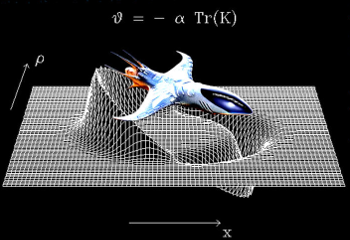
This seems perhaps an obvious one, space opera tends to be impossible without some measurable means of transiting the stars in a reasonable time frame, but it is one that, until recently, was even theoretically impossible. With the cultural popularity and theoretical applications of the Alcubierre Drive, it seems that we can justifiably speculate on how an FTL civilization would function. However, before this, when breaking the light speed barrier was beyond the realm of plausibility, we had to simply invent it as science fiction.


I don't think too much needs to be said about this one, as its premise is quite simple and the scope for storytelling it grants is pretty broad. That said, I don't think that writers should fall into the trap that you can only tell good space opera with FTL. The solar system is vast enough that we can tell many stories inside of it, without ever having to leave the heliosphere. That space is big is an understatement, and so we can do much to fill up the void between planets.

2) Artificial Gravity

This one is also a standard feature, but the one that seems least likely to ever be feasible within the realm of known physics. Gravity as we know it is generated by the spin of an object exerting force on the items upon it, essentially pulling on them. To do that you need something which can artificially replicate that force. In most science fiction though we seem to see artificial gravity being a standard applied everywhere. The mechanics of this are usually poorly explained, and well beyond the scope of our physics. Thus, one is forced to conclude that this is an unfeasible prospect based on our current understanding of modern science.

However, we can generate artificial gravity through things like centrifugal force, or simple thrust. The books in The Expanse series (and television series) show this through both aspects, and it is fascinating to watch the differences in gravity and problems it creates for our characters when they must do without it on occasion. Knowing that this is a plausible thing too, might change many people's perspective on what is 'realistic' and 'unrealistic' in science fiction.

I personally look forward to the day when we have a rotating habitat in orbit around Earth to start to get some hard data on this.

3) Interplanetary Colonization

One thing that is practically taken as gospel in almost every piece of science fiction is the idea that humanity will spread to the stars and plant our flags on other worlds and terraform them to suit our needs. Now, we have a history here on Earth of spreading across the continents, from the early Polynesian peoples to the Age of Discovery when Europeans began planting flags all over the world. It would make sense then that we would seek to expand that process to the final frontier. But does it really?

For one thing, space is big. Really, really, big. It would take centuries to travel to even some of the closest stars near to our solar system without FTL. Even travelling between the various planets in the solar system at the moment would take months or years with current technology. Even with some future technology it would take a long time to reach some place like Proxima Centauri, our closest star.

Even then, once we got to another solar system, would we even be able to colonize it? Kim Stanley Robinson's Aurora has some interesting answers on that. However, even assuming that we could terrform another planet, it would take a long time, centuries or millennia. So why not just build some islands in space?


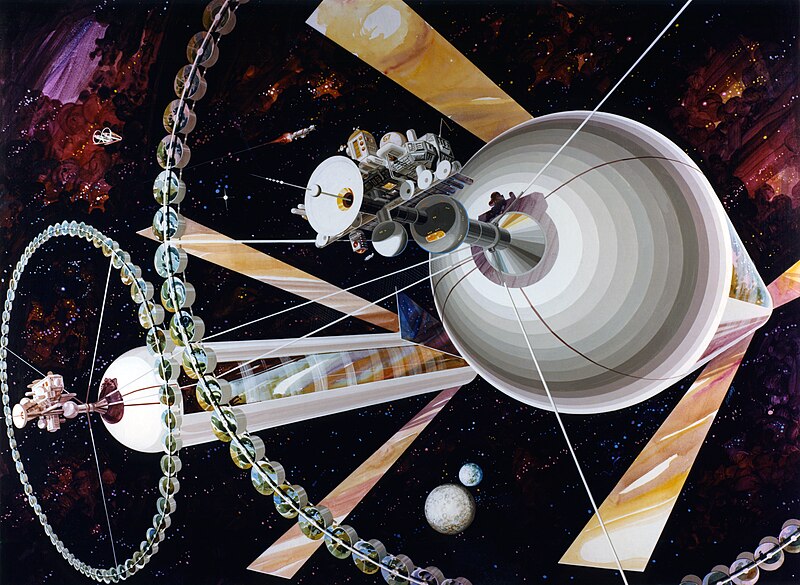
This brings you to the idea of the O'Neill Cylinder! At its simplest this is a large tube, either built independently or into a hollowed out asteroid, and spun up to provide gravity. Something like the terrarium from 2312.  The idea was originally floated in the book The High Frontier by physicist Gerard K. O'Neill, which talked of building rotating habitats in Earth/Moon orbit, or at the stable Lagrange points in Earth's orbit. These can be of varying sizes, but the advantages are you can create and settle them however you like! Want an arctic like location? No problem! Eternal tropics? No problem! All you need to do is create a cylinder with a certain diameter and length, spin it up and light it and voila!

And O'Neill's design isn't even necessarily the only one. You could build even larger, potentially with the truly massive McKendree Cylinder. Unlike O'Neill's more modest island in space, here you would practically be building a continent in space. Measuring 460 km in radius and 4600 km in length per the original proposal, you could have a living area inside with the same land area as Russia! You could even build it bigger with stronger future materials!

Building something like this turns into decades, or maybe a century, of work. Something far removed from the travel times between the stars or the length of time it might take to terraform somewhere like Mars. We could have continent sized living space in the future, yet this seems to get overlooked fairly easily. Perhaps we should start thinking of those types of stories more. You don't even need to leave the Solar system to have an 'interplanetary' adventure!

4) AI

Artificial Intelligence, or the reasonable facsimile thereof, has been an expectation of science fiction since at least the 1950s. Presumably most well known is Robert Heinlein's "Mycroft" who was birthed when an engineer on the moon progressively plugged in more and more computers until they gain sentience as one single being. Sadly, to some people the idea hasn't advanced much beyond that.

There is a strange belief in what is known as "The Singularity" in which computers will advance so quickly and so fast that just one day they will "wake up" and AI will be born. Now there's a few problems with this idea. Firstly that our rapid advancement in technology and efficiency is nowhere near as rapid as proponents even 20 years ago predicted. Futurist Ray Kurzweil predicted in his 1999 book The Singularity is Near that by 2010 we would have a computer capable of emulating human intelligence, and by 2020 such computers would be available for "one-thousand dollars" to us. Well, it's 2020 and barring some massive change no such computer is on the horizon.

Largely the idea is a vast misunderstanding of Moore's Law, which even the observer himself said was not a hard fast law, but an observation. It is even clear today that the rapid increase of processing power in computing is reaching a state of diminishing returns. Exponential growth cannot continue forever.


Even overlooking the issue of the Singularity, what would an AI actually look like? Would it have human level intelligence? Maybe, but would we recognize that intelligence? That last question is probably the most important when considering the issue of AI, would we even recognize it for what it was if we had it? Let me be clear, creating an 'artificial brain' which can solve complex problems is already within our grasp, whether it be made to play games of go or jeopardy. However, one which will be able to complexly interact with and communicate/reason with its human creators will take time and we might not even realize it was self aware as it wouldn't have the same desires/fears/ambitions as we do.

This is why I personally tend to dismiss out of hand fears of 'god like' AI destroying either humanity or the planet. In fact, I think AI will probably be far 'simpler' than we imagine when/if it does show up. For now though, its a highly theoretical concept with some wild out there ideas which fiction has almost done a disservice to.

5) Space Capitalism

So this is an important one. In many, many future scenarios it is hundreds or thousands of years in the future and everyone is either still working a 9-5 job, or working towards getting a pension or government benefits. Now, this makes sense since it would take a lot to put readers in a frame of mind where they grasp a post-capitalist society. However, is this the best way to try and imagine the future?

There have been many attempts to imagine a post-capitalist society in science fiction. Whether it was Gene Roddenberry's post-scarcity Federation of Planets, or the Mondragon Accords put forward by Kim Stanley Robinson. Now, each of these do depend on future technologies to be feasible (the magic replicators in the former and quantum computing in the latter) and it isn't far fetched to believe that our future economic systems will be driven by post-scarcity concerns or technological advances.

One future technology with the potential to upend the current economic order as we understand it is fusion power. An expected massive leap in power production and orders of magnitude more efficient and safer than our current atomic power generation. This could, almost overnight, upend our way of producing power as we know it and put the current hydrocarbon power generation methods the world largely depends on in decline. That would change some key economic inter-dependencies, such as on foreign oil or even the whole natural gas industry.

Now some of this does depend on the idea of a 'post-scarcity' society. It should be understood that 'post-scarcity' does not mean that we have everything, it just means that obtaining resources and a high standard of living is not impossible for the average person as goods are produced cheaply and available to all. This would though, arguably eliminate the need for traditional capitalism as we know it and lead to something close to the UBI (Universal Basic Income) that has been mooted around the last few years. Even just the UBI would undermine our understanding of politics and economics as it stands.

The future though, might not be more egalitarian but more corporate. With men like Elon Musk and Jeff Bezos driving the current future of space travel, it seems like we're possibly going to have shares be more important in the near future than any sort of workers cooperative in space.

However, the ideas for a post-capitalist future are many, and even here I can only list some ideas for why writers ought to be imagining a post-profit driven society.

----

These of course, are just a few things that science fiction is often using as a standard for the genre. They aren't the only big tropes, but I think they are at least the top five. What do you think, and what would you like to see more of in science fiction?

Saturday, 16 February 2019

Two Moon Mysteries

Recently, I've been on something of a science fiction kick in my reading. Over the last two months I have had the absolute pleasure to read, among other books, the excellent Gunpowder Moon, by David Pedreira, and Red Moon by the modern futurist himself, Kim Stanley Robinson. Both are (obviously) set on the moon, and have competing images of Lunar life in the mid to late 21st century, and interestingly, each was released in 2018. However, both are linked by one of the oldest crimes known to man, murder.


Both stories begin with such a premise, whether it is a murder at an American Helium-3 mining base, or murder on a Chinese owned Lunar community, we have to try and figure out who is behind it. In between are a cast of feckless characters sucked into a power struggle beyond their pay grade. The poor souls.

Each book tries for relatively 'hard sci-fi' playing as close to our understanding of the realities and problems in working and colonizing the moon. In each work we can see some of the big differences in how the author approaches the various problems of Lunar-politics, industry, and resolving murder. A general review of each book follows.

Gunpowder Moon is set in 2072, as we see the dueling claims of Helium-3 mining on the Lunar surface heating up. The Earth is facing an energy crisis in the aftermath of a massive ecological disaster called the Thermal Maximum which caused famine, dislocation, and rampant resource wars as Earth is plunged into a climate changed world rather violently. The world is saved by breakthroughs in nuclear fusion tech, which requires enormous amounts of Helium-3 to make work. The United States, Russia, China, and Brazil, are all staking their claims and keeping one another mostly in check.

The story is told through the eyes of station commander and former Marine Caden Dechert. Escaping from the bloody memories of fighting in the Beqaa Valley, Dechert has come to the Moon for a fresh start. When a hotshot member of his own team is killed in mysterious circumstances, he has to grapple with the fact that everything he fought to escape from on Earth, might just be catching up with him on Luna.

Part mystery novel and part sci-fi thriller, it follows rising tensions between the US and China and the paranoia and mystery of just how someone would set up a murder on such a contained and controlled environment as the moon.

Dechert is helped in his search by his own crew, the most colorful of whom is the genius engineer Jonathan Quarles. An engineering and computer genius, he is invaluable to the station, which is how he gets away with growing hash in the hydroponics garden. His somewhat harmless attentions are often flung upon Dechert's second in command and only female member of the crew Lane Briggs. A no nonsense woman who knows she has to work twice as hard and be twice as serious to be respected or taken seriously by her companions and teammates in the mostly male field of Lunar mining. Secondary characters, from the fellow diggers to the government wet nurse and Marine officer who are introduced supply secondary stories to the plot. Dechert's Chinese counterpart commanding the Chinese stations is an invaluable yet only partially seen character.

The tensions between the rising power of China and the fading power of the US are what drives the story. It is as much a story about nations as it is about the one lone outpost on Luna. From the first murder, to the rising and chillingly well illustrated power grabs by the rival nations it ratchets up to a fast moving conclusion which will leave readers satisfied.

Pedreira goes into the realism quite well. From explaining the intricacies of the hypothetical Helium-3 mining to the difficulties of keeping out the fine Lunar dust and regolith from the crew's living quarters, to justifying the military build up on the moon. It all flows naturally and creates a sense of wonder even in an ostensibly dead rock which we all see on a near daily basis.

In fact, the sheer harshness and sameness of this Lunar landscape plays a significant background in the plot and understanding how the mystery unfolds. It's quite satisfying to see how our knowledge of how the moon works is incorporated. How can the killer leave no tracks from walking on the Lunar surface? How does someone sabotage something in a station which depends on keeping things closely monitored so the miners can live? Pedreira goes to great lengths to keep this consistent, and it works.

I think the only thing that bothered me was that the characters all felt a little flat. I never got a genuine sense of Dechert's implied PTSD, or really understood early on why he had fled to the Moon. Some things are well spelled out over the course of the novel, but we have too much time in Dechert's head with a bevy of unsatisfying thoughts. The only standout character was the engineer Quarles, whose class clown attitude and unusual habits set him apart from the group. The runner up was the government wet nurse who was sent to keep an eye on the situation, since his fish out of water character made for both a natural form of exposition and kept things at least fresh and engaging while keeping us up to date on all the goings on in the wider world.

Overall though, if you want a good sci-fi thriller with mystery and genuine suspense, the book is a good read. I heartily recommend it to anyone who likes either genre. You won't walk away
disappointed.


On the flip side we have Red Moon by the modern master of science fiction, Kim Stanley Robinson. Set in the not-so-distant future of 2047, it plays out against another backdrop of international intrigue. Once again, China is the undisputed growing power in the world, and the US isn't far behind. In fact, people often only talk about the G2, meaning only the United States and China have economies that matter.

Interestingly, the novel is setting itself up to predict some future history on at least a slightly more plausible scale. In 2047 Hong Kong will see the end of the one country, two systems, agreement which has been in place since 1997 when Hong Kong was formally handed over from the UK. The outcome of that has yet to be specified by either party, and what could happen remains a mystery. Here, that sets the background the the election of the next President of China and a shake up in the Party Congress, as an unpopular leader is stepping down and many are jostling for power. Amid all this, the large migrant worker underclass in China is clamoring for change and representation.

Enter Fred Fredericks and Ta Shu, both travelers to China's expansive Lunar community on the South Pole. Ta Shu, a popular poet and host of a cloud travel show, meets the awkward American working for a quantum communications company from Switzerland. The two bond over breakfast before Fredericks is sent to meet the Lunar governor. While there, the governor is assassinated by a clever ploy involving poison, and Fredericks, the man who shook his hand, is implicated.

Secret Service agent Valerie Tong is sent to try and extradite him, helped by the poet. Finally freed, a new problem is thrown at them as daughter of one of China's 'big tiger's' Chan Qi is to be extracted from the Moon along with him. Unfortunately for both, they have become pawns in a much larger game of politics and revolution which is unfolding around them.

Thus begins a series of chases, hiding, and escapes which will culminate once again on the Lunar surface in a race against the clock, not only because of potential revolution in China, but from the fact Qi is pregnant and getting worryingly close to her due date.

The story is a fascinating exploration of a potential future. Interestingly, it chooses to make its focus on China, Chinese problems and politics. Shown as a rising power with the fate of the Solar System potentially resting in its palms, the Party still rules with an iron fist hidden by the velvet glove of the Social Credit System and the Great Firewall, backed up by the expansive security system of the (so far) fictional Great Eyeball, watching the whole nation. These 'soft' methods of authoritarian rule are explored, analyzed, and critiqued, all while trying to navigate the byzantine nature of Party politics.

But it is also an interesting examination of the Chinese system, and what it might birth in the future. I found these parts of the novel enjoyable, and Ta Shu's reflections on his society and its triumphs and flaws are all fascinating reading. Even the brief glimpses into the future of China offered by Fred and Qi's flight from various factions make for interesting reading.

Sadly, the story meanders much from the beginning. Though not a bad premise, the mystery is dropped for a distressingly long time as we spend perhaps too much time inside the head of the socially awkward Fred Fredericks, and are forced into long interactions of their escapes and time in hiding, which is just as boring as it sounds. Despite some interesting scenes, and attempts to explain quantum computing these moments tend to drag. Poor Valerie is largely cast out of the story until near the end! There are also interludes with an unnamed Analyst and his pet project AI, which makes for one of the few genuinely enjoyable reads about an AI I have had in a while, and these add to the story quite nicely too. Though all these plot points seem as though the author is taking too much on.

While the final act from the novel is action packed, and leads to a few fun conclusions, I have to say it still fell a little flat with me. There's little resolution, as such, and many of the tantalizing hints given by the novel are dropped by the wayside in our protagonists final escape. While we do learn whodunnit in the end, and it is neatly wrapped up, dropping that plot point was frustrating and I felt there could have been a more solid conclusion, including more explanation of the oft referenced idea of blockchain governance. While it all sort of comes together, it never really meshes well.

If you like Robinson's work, I would recommend it, but novices in sci-fi might want to steer clear until they've read more of him.


Put together, these two novels represent a microcosm of the slow returning interest humanity has in going back to the moon, and a fun side by side comparison of its possible futures.

This adds to the interesting trend in the last year I've noticed in mankind returning to the Moon. Colonizing the Solar System, and finding a good reason for Lunar economics, has been a source of interest to laymen, NASA and other space agency scientists and billionaires from Jeff Bezos to Elon Musk, which is understandably filtering into our fiction.

These disparate views of the Lunar future, tied together by death, are each interesting in their own ways. Futurism and sci-fi have always interested me, and I think it is fun exploring what the stars have to offer in fiction form. I can only hope that we can see even some of the details read here realized among the stars.

For now though, let us hope that we don't have to worry about space murder or space pregnancies for a good long while!

Tuesday, 21 August 2018

Retro Review: Kagemusha

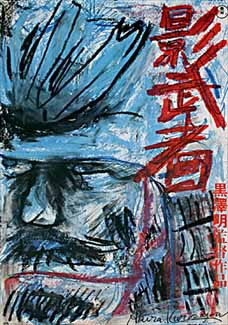
Set in feudal Japan in the sengoku jidai period, Kagemusha follows the story of the Takeda clan as they battle with the fearsome warlords Tokugawa Ieyasu and Oda Nobunaga. It is a story revolving around the historical drama leading to the end of that particular struggle. Those familiar with history will know how it ends from the start. For those without knowledge of it, I will refrain from any spoilers of the ending.

The story is a jidaigeki film (literally period drama) directed by acclaimed Japanese film director Akira Kurosawa of Seven Samurai fame. It won the Palme d'Or at the 1980 Cannes film festival, and was nominated for other awards.


Our story here opens with the daimyo of the Takeda clan, Takeda Shingen, and his brother, Takeda Nobukado, looking at a condemned criminal who bears an uncanny resemblance to the daimyo. It is decided, that despite his insolent nature, they will keep the criminal alive to act as the daimyo's body double in time of need. He becomes, the kagemusha. Meanwhile, the Takeda are engaged in a battle with Tokugawa Ieyasu, one of Nobunaga's prime supporters. Shingen, feeling that the fall of the castle is imminent, travels to oversee the siege. While watching the siege one night he is shot and mortally wounded by a sniper.

Despite being on the cusp of victory, Shingen orders a withdrawal of his forces. Nobukado is able to maintain the ruse by posing as his brother, but realizes this is a failing strategy. Shingen gathers his closest generals and allies, including his son Katsuyori, and orders that if he dies, the clan cannot be allowed to fall to the plans of their enemies. He orders that they must stay neutral for three years in order to recuperate. Dying from his wounds, Nobukado orders the thief to be used as a body double to fool the clans enemies. Meanwhile, his foes ponder on what this sudden change of strategy in the Takeda clan means.

This deception will not be easy. The thief is uncouth, ill educated, and does not know the ways of the noble families. He will have to fool Shingen's allies and family, as well as dealing with the bitterness of Katsuyori, as he fumes at being unable to take his rightful place at the head of the clan. His enemies too are on the lookout for anything that undermines the clans position.

At its heart, Kageshuma is a family drama. It revolves almost solely around the issues affecting the Takeda clan, the internal family, and its struggle to survive. Nobukado tries to keep the wishes of his brother in place while protecting the clan, while Katsuyori is struggling to understand his role in his father's plan, all the while feeling as though he has been slighted through his fathers death and delayed inheritance. The thief himself must navigate the world of concubines while preventing the old lord's son from discovering he is an impostor.

The film itself is a visual spectacle though. Medieval Japan is brought to life in costuming, scenery, and battle through the use of well dressed extras, amazing costumes, and fascinating battle scenes. The work has clearly been done in bringing this era of history to life, and you see that in the little scenes where men are relaxing, and the scenes where soldiers clash on screen.

The small actions of the actors might be baffling to those unfamiliar with Japanese dramas, but the way they use subtle facial expressions and motions to portray events are amazing in my opinion. If you're even remotely familiar with Japanese culture you will get a pure joy from seeing how the movie turns out.

However, if you aren't familiar with Japanese drama, history, and culture, this may be a difficult movie for you. If you don't like movies with subtitles, that is doubly so.

Personally, knowing the history, I enjoyed the film and what it has to offer. As a historical drama it is excellent, and I think it should be applauded for how well it captures the era. The work that has gone into the costumes, the set design, and the appreciation for the culture is amazing. It is worthy of any awards it was nominated for. The film was spectacular.

All in all, this is an excellent historical piece. I recommend giving it a watch even once to truly appreciate some of the fantastic imagery we owe Japan, and to get an understanding of Japanese culture.

Tuesday, 10 July 2018

Retro Review: The Ten Commandments

Personally, I am an old movie buff. Even though old movies acting and effects are nowhere near what we can put on the screen today, they still tell excellent stories and gives a glimpse into the world as it was way back then. This is part of the reason I tend to appreciate them so much as compared to some modern films which don't do the era they are set in justice I think.

Recently, I was able to watch the 1956 classic The Ten Commandments on Netflix.


That film is epic, which tells not only its own innovative story of the Exodus, but is epic in scope and scale of story telling regarding the life of Moses, Pharaoh, and the Israelites. It also draws influence from novels like Dorothy Clark Wilson's Prince of Egypt, Joseph Ingraham's Pillar of Fire, and On Eagle's Wings by Arthur Eustace Southton. Not only that, it draws on historical sources like Philo's Life of Moses and the works of Josephus. This provides a rich background to draw characters and inspiration from in order to craft a grand narrative to tell a new story of Moses. Largely filling in the 'forgotten years' between Moses exile and return to Egypt.

The casting though, is spot on.

A younger Charlton Heston (with pectoral muscles which could put eyes out) captures a young, outgoing, and brash image of Moses who has been raised by Egyptians. His performance as the film rolls on and he undergoes a transformation from honorable, but driven and intriguing prince, to a devout holy man with a mission to free his people. His penchant for chewing the scenery is fantastic in my opinion and he can be perfectly over the top as necessary.

The second character I noticed was Vincent Price as Baka, an Egyptian overseer who goes from faithful assistant to Moses, to card carrying villain. The man whose voice I remember from The 13 Ghosts of Scooby-Doo as a kid, plays an excellent and sinister character on screen. Though admittedly this is a tiny role, it fills me with great amusement.

Bigger roles of course are those of Rameses (Yul Brynner), Nefritiri (Anne Baxter), Joshua (John Derek), Aaron (John Carradine), Lilia (Debra Paget), Yochabel (Martha Scott) and Bithia (Nina Foch). Each of these actors is well cast to their parts, and the female leads are all amazing in their performances.

I think that for a 1950s film, the agency and drama it grants to women is admirable. The roles of Nina Foch as Bithia and Martha Scott as Yochabel both are allowed to shape and drive Moses while holding some agency of their own. Though this is primarily in the form of protecting and nurturing their biological and adoptive son, it is a good role regardless. Nefritiri, whose scheming and agency drives much of the plot is a fantastic character, for both her tragic backstory and her desire for vengeance. Unfortunately, the character Lila falls into the "damsel in distress" category as Joshua's love interest.

While the film would soundly and swiftly fail a modern Betchel Test, it is fair for its day in the 1950s in giving its female characters more voice.

The Biblical epic though, unfolds roughly similar to the original story in the Book of Exodus. Pharaoh, fearing that the people of Judah will become too populous, orders the massacre of every firstborn males of the Hebrews. Yochabel, seeking to protect her son, sets him adrift in the river. He is saved and adopted by Bithia, daughter of Pharaoh.

Years pass, the Hebrews suffer, but Moses (named so by Bithia) is raised in luxury. Prince Moses quickly becomes the favorite of Pharaoh Sethi, to the jealously of his son Prince Rameses. This kicks off the plot as Rameses is charged to build a great city to honor Sethi, but his cruelty slows production. Meanwhile, Moses has won a great victory over Ethiopia, earning acclaim. However, he covets Pharaoh's daughter Nefritiri, who Rameses also covets. When Moses is sent to build Sethi's great city, Rameses schemes against him. Moses however, sees the plight of the Hebrews, and tries to aid them. In the process, he learns of his Hebrew parentage and has a crisis of conscience. In doing so he decides to forgo his Egyptian heritage and live among the slaves.

Here is where part of the film felt contrived for me. In the Book of Exodus, (and the great adaptation, The Prince of Egypt) Moses kills an Egyptian overseer, so he must flee. Here, the same thing happens but in a far more contrived way. Despite being told repeatedly that only Pharaoh may free slaves, and with his path to becoming Pharaoh secure, Moses decides to forgo power and live amongst the Hebrews to know his heritage. Instead of using the path laid out for him to free his people and become an enlightened ruler, he decides to take the hard and stupid way. Moses from this movie doesn't seem too bright in this moment.

It gets worse when because of this bad decision he is captured and accused of being "the Deliverer" whom the Hebrews speak of taking them out of bondage. Rameses has him exiled, showing a great deal of bad judgement himself, and Moses wanders the desert until he comes to the tribe of Jethro, and meets his daughter Sephora.

From here the narrative leaves the contrivance train and we get to the big symbols of the burning bush, Moses receiving his staff and getting all woolly haired and wild eyed, and his return to Egypt.

In is at this point that the movie begins playing to its strengths. While the acting and story telling in the first half of the movie is superb (save for Moses being something of an idiot) the narrative shines forth to tell the story of the exodus from Egypt quite well.

The plagues are carried out as well as can be expected with 50s special effects, which is to say remarkably well at points. They manage to show the turning of the Nile to blood, the flaming hail, and a truly creepy rendition of the Angel of Death coming into Egypt. That last scene is tense, disturbing, and truly enjoyable.

The special effects too, are stunning for the time. Showing off the great accomplishments in Egypt, the crossing of the Red Sea, the tempest of God as a pillar of fire, and the burning bush. There was a reason this was, at the time, the most expensive movie ever made.

When one considers that by and large this was accomplished through practical effects and with large groups of extras, the coordination is even more impressive. In the penultimate scene where Rameses chases the Jews to the Red Sea, the armies of Pharaoh are actually being played by the Egyptian Army! Which is pretty great in my humble opinion.

At the time this was one of the most expensive movies ever produced. When one considers the budgets many movies get now and the results that delivers, it should be obvious that directors could learn a thing or two from old movies.

The film is of course something of a morality tale. Nefritiri is something of a "Vamp" who uses her feminine wiles to confuse and misguide the men in her life, and is influenced by first her lust, then hatred for Moses. That the story is from the Book of Exodus is fitting since it is the triumph of the Christian God over the gods of Egypt. Moses more questionable decisions come from a clear intent of following an honor code.

Definitely old fashioned in its message, The Ten Commandments is a spectacle that shouldn't be missed, however. The films scenes of Biblical epics and amazing effects for the 50s stand true today. The acting is grand, the story holds up as timeless, and the film itself is a deserved epic. If the long view time puts you off, it comes with a natural intermission to pause at for a little while if you're not up for seeing the whole thing in one sitting.

Well worth seeing as an excellent Retro Film. Personally, I'm looking forward to recommending many more for you!

Tuesday, 8 May 2018

A Kill in the Morning

The year is 1955 and something is very wrong with the world.

That is the excellent opening tagline which sucked me into the world of A Kill in the Morning by Graeme Shimmin. Published in 2015 this is a riveting action packed alternate history novel that could in fact be a feature film ripped from the 1980s. It has the riveting action and intrigue of a James Bond novel and the detail of an alternate history piece. Even the book cover looks like something you would find in the amazing stylized posters of the era!


Originally written on alternate history.com by user Shimbo it then got published and came out to some acclaim in the community. I'm quite pleased by this as not only am I a member of the website myself, but I've followed the work of other members there for a while as well!

In that case I was happy to tear into this novel with unbridled pleasure. Let me say that it doesn't disappoint on any front, whether it be action or alternate history!

Opening in 1955 we meet a nameless British assassin while he is out in Germany. Officially he is supposed to be on holiday. Really he ends up killing an SS officer who is responsible for the massacre of his team on a dangerous mission in 1947. One of them at least. He returns to a Britain engaged in a cold war with the German Reich, with the two sides are locked in atomic staring contest across the Channel.

While fleeing from his mission he meets a hapless member of the White Rose, Kitty, as she stumbles away from a mission of her own. Upon meeting her he returns to Britain where he begins to unravel an intrigue that has been playing out since 1941. In Germany itself, a ruthless SS man is rising to the top, the man with the iron heart Reinhard Heydrich.

Wednesday, 2 May 2018

Small Treasures

On Sunday, I had the nostalgic experience of helping empty out my grandmothers house. It had been in my family for 44 years, and I have many fond memories of it from my earliest childhood. In helping clean it out I found myself nostalgic and wistful for those younger years.

It was a place where my parents had grown into adulthood, and I too went from an infant to an adult in those halls. I have happy memories of it, running around the large household, playing in the big basement, and going through (what seemed to my younger mind) the palatial halls and rooms.

The brown carpet in particular was a fixture of my childhood

It was where I learned my love of history, my love of reading, and my early faith with the tutelage of my uncle and grandmother. In fact I think many of my best lessons in life were learned under that roof. My grandmother was one of the people who made me who I am today.

"In the same way, you who are younger, submit yourselves to your elders. All of you, clothe yourselves with humility toward one another, because, 'God opposes the proud but shows favor to the humble.'" (1 Peter 5:5)

“I have not departed from the commandment of his lips; I have treasured the words of his mouth more than my portion of food.” (Job 23:12)

I learned manners in this dining room.

Sunday, 28 May 2017

A Beautiful City

Many days I wake up and look out my window and I have to smile, because I live in a very beautiful city. Canada's capital may not be as old as say, London, New York, or even Quebec City, but Ottawa is still a very beautiful place.

Originally known as a lumber town more notable for the scope of the violence between its French and Irish lumbermen, its choice as Canada's capital was a compromise which satisfied no one and displeased many. Almost until the last minute people were hoping minds would be changed and that the capital could be moved somewhere else rather than this little hilly city which it seemed was only fit for habitation by swine and lumber barons, and the two were not necessarily mutual exclusive. However, the city stuck, and just in time in 1867, the Parliament Building was completed

Just in time

Wednesday, 29 March 2017

A Fear of Endings

Have you ever been reading a good book (or a series of books) or watching a particularly good television series and then suddenly found yourself at the end? Have you found yourself so immersed in the media that you've crept progressively closer and closer to the grand finale without even realizing it?

As you come upon that ending do you suddenly find yourself filled with dread at the thought that it was done? The sudden feeling that there is no more in this world to be had and your experience with that media is now complete. In short, have you ever finished something and felt your life was meaningless?

All credit to tapastic.com and Sarah Anderson

Sunday, 14 September 2014

Why I Prefer AD vs. CE

Well recently in one of my Christianity classes we got into the topic of what BCE and CE means, and contrary to some, no it does not mean 'Christian Era' instead it is a 'neutral' term meaning 'Common Era' which is supposed to define the commonly used dating system in the modern era. Now understand this, the debate over the use of Common Era (or BCE/CE vs. BC/AD) is not a modern phenomenon, in fact the use of CE goes back nearly 400 years with the first use of CE appearing in Latin in 1615 and English in 1708 showing that, despite what some would think, we are not unique in attempting to change the dating system.

Now here's the thing, most arguments against the use of BC/AD are those who are attempting to pursue an idea of 'religious tolerance' or pluralism and inclusiveness in the dating system adopted by the world in an attempt to be more neutral to the global community. Never mind that this in and of itself is absurd since the Gregorian Calendar was foisted on the globe through the imposition of European ideas on local cultures completely upending their own way of time telling and was imposed by force. Nor does it take into account already existing counter calendar systems which are explicitly religiously based (such as the Muslim calendar or the Japanese Imperial calendar which measures the year from when the first emperor sat on the throne). It also ignores the fact that the Gregorian Calendar currently has religious ties to ancient religions built into it (the months and days being named after gods). The most important thing is that, for all intents and purposes, the global community uses this calendar for convenience sake.

However, what grinds my gears about the idea is that rather than attempt to remove any connection to previous time keeping or cultural strata they simply adapt the 'Christian' calendar making the change completely cosmetic and utterly pointless. In that same vein I sincerely doubt that most people, even of other religions, strenuously object to the use of this type of Calendar or really notice it at all to begin with.

Now for the plainly reactionary part of my little essay here. Functionally and culturally there is absolutely no need to change the dating system effectively in use for hundreds of years (well in the Western world at least) and reasons for changing it because it might 'offend' are laughable since it was through Western cultural hegemony which the current dating system became 'common'.

Though as a little aside, let me just offer up one suggestion to those who wish to make a 'neutral' dating system. Rather than simply trying to rewrite the current calender in a pointless PC exercise, how about just starting a new dating system? I know it's harder than just cosmetically altering the one we currently have, but at least it's more intellectually honest.

Here's a thought, how about we celebrate one of man's crowning achievements as the new more neutral dating system? Let us hypothesize that we can start if from October 4th 1957, when Sputnik was placed in orbit and man finally had access to the high frontier. We can say that starting that day is a new era (or hell just starting on the new year of 1958 for convenience sake) and every year after (we can say that the time from October 4th to December 31st is the 'year zero') becomes a year of the new Cosmic Era (CE). That would make today September 14th 56 CE. Rejoice for one of the greatest moments of mankind's history!

Now that may seem just silly, but it's a hell of a lot more honest than just trying to tie in a 'correct' idea to the existing dating system. It has worked without popular complaint for the last hundred years (or I suppose technically since we started the Gregorian calendar). To me though, it is just as silly to implement a cosmetic change which no one really cares about, and no great majority is asking for.

This is one of those traditions I will gladly stick too.

Tuesday, 29 October 2013

Ottawa Geekcon 2013

Well readers other than being busy with school work and general research for my own pleasure I did manage to do one other thing which was a barrel of fun recently. That was going to visit Ottawa Geekcon at Carleton University the weekend before last.

While there I saw a number of amusing geek icons, got my photo taken with a Dalek, and picked up some awesome paraphernalia of fandom.

Shockingly this is actually my first fan convention activity. This partially due to a) living outside the United States and away from many of the best fan conventions like Dragoncon and Comicon, and b) having had a work schedule overlap with every Comicon and event held in Toronto for a solid five years.

So this being my first time being exposed to the larger fandom of the land (well more specifically the Ottawa area) I have to say it was an awesome time! Just seeing how many people close to me (and even amongst my friends) was incredibly uplifting since I have actually never seen first hand such a colorful and vibrant outpouring of fan love!

The booths all stocked great merchandise and wonderful items, not to mention a great array of fellow fans all engrossed in the same things I was seeing. To say it was just a fellowship of friends is like saying the Serenity is crewed only by acquaintances! It was a gathering of believers really! It felt so engrossed and accepted it was marvelous! I'm glad that I went and sincerely wish to repeat the experience!

Myself and my Dalek buddy.


My new companion

Tuesday, 22 October 2013

The Cerberus Rebellion

Well it's time for that long promised review. Now here I am going to reviewing another Kindle novel I purchased, and it's not just another short story either. No this work is full fledged novella comprising a whole cast of delightful characters and awesome battles, all revolving around a growing trend in modern fantasy, the idea of gun powder fantasy.

As a short aside so readers will understand, gunpowder fantasy is a fantasy setting which features gunpowder weapons, ranging from flintlocks to full fledged firearms. Much like Brandon Sanderson's Alloy of Law, Stephen King's Dark Tower series or  Brian McClellan's A Promise of Blood. However some books only feature guns to help differentiate them from epic fantasy, gunpowder fantasy is revolved around fitting magic into an advanced setting outside the middle ages. The Cerberus Rebellion by Joshua Johnson does just that.

From: gunpowderfantasy.com


The world of the Cerberus Rebellion is an interesting one, the Kingdom of Ansgar is ruled by a paranoid and brooding king, Eadric Garrard, who sees the rise of the Chisean Empire across the seas as a potential future threat to his own realm. Egged on by foreign diplomats and by his own advisers he decides to martial his armies and intervene in the conflict across the Vast Sea and safeguard his realm.

However, Eadric is not a well loved king, and not all his subjects are as eager to go to war as he. Then we have Magnus Jarmann, ruler of Kerberos, once a sovereign nation, now under the heel of the Asangari occupation. He is eager to win his realm's independence back, all he has to do is wait for the right moment. Finally we have Lord Raedan Clive, Baron of the Broken Plains who is a warrior first and foremost, a politician second.

This delightful cast of diverse main characters, each with competing interests and ideas, sets us up for a thrill ride through politics and war.

There are of course plenty of fun secondary characters in the series, like Raedan's brother Hadrian, and the king's advisers who all color the events of the novel depending on their own outlook. They serve as wonderful supporting characters who fill in the dynamics of the story and serve as windows into the upper crust of the world.

The story itself is not slow at all. From the get go we see things moving both militarily and politically. What helps this along of course is that it is in a setting where you don't rely on just men on horseback but telegrams and railroads which all speed along the important messages and allow for very little lag time. Here I have to applaud Johnson for his skillful mix of court intrigue and politics with the practical and often harsh realities of early industrial war and the nitty gritty of the battle field.

The resulting combination is something akin to Game of Thrones meets Bernard Cornwell's Sharpe series.

It's an interesting world with politics that are distinctly feudal in their application (for instance landed aristocracy still holds an enormous amount of power compared to our world in a similar time) and one which is clearly influenced by such. It combines the appendages of a modern and centralized state with those of a late medieval one where the king controls all the armories with the best weapons and artillery, but the aristocracy can still call on a powerful military levy of its own.

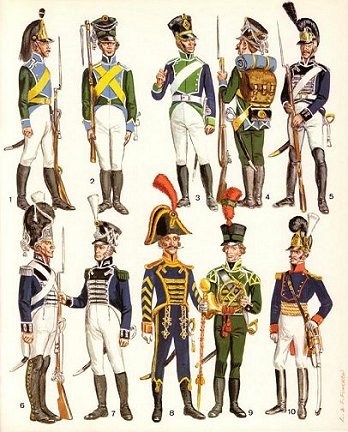
It's even reflected brilliantly in some of the battle scenes! There is no national uniform for any of the armies so the infantry marches to war in their house colors, which causes immense confusion and disorder on the battlefield (similar to our own histories Napoleonic Wars with soldiers lack of standard uniforms leading to friendly fire incidents) and is something the characters comment on more than once.

Think this, only just a bit more confusing.


It's also a sort of fascinating look into a society where a medieval style of command and control still reigns with titles of aristocracy such as 'Knight Commander' sitting in the chain of command alongside more familiar ones like lieutenant and major. The lack of a true unified command structure in most cases too makes for some rather interesting, and in one or two cases unfortunate, situations.

The battles of course are superbly done with little confusion from the point of view of the characters, and we get what is, in my opinion, a good vague outline of the actual battlefield and course of the battle itself while dealing with what only the character on the ground sees and then once the battle is done do we see the full scope of the action and what has happened. From a narrative perspective it makes things more thrilling and tense as the characters don't fully grasp how they are affected in the thick of it, yet they tend to make great leaps and advances.

Of course they are not military fools and at a few points characters make great leaps which change the course of battle thanks to good foresight and clever maneuvering of their forces.

Now one criticism I would have is that of the roughly six battles we see in the book only two are presented in great detail to the end. Sometimes the author forms a wonderful and suspenseful buildup to a turning point in the battle, only for us to miss it completely and have the narrative skip straight to the aftermath. While it was a bit of a suspense killer it did hasten the events of the novel along and I won't say the story suffered greatly for it.

The character interaction too is fun and educational, giving us details about the world these characters live in. The sub-plot focusing around the potential marriage of Raedan in order to sire an heir and cement his claim the Broken Plains is fun and quite amusing since it shows off Raedan's personal strengths and weaknesses, alongside his magical abilities.

Another thing I would like to congratulate the author on is his inclusion of elves in the story without making it feel cliched or shoe-horned in to fit the necessary fantasy mold. The elves seem to be perfectly natural in the world and they insert themselves as individual characters and personalities alongside their human counterparts with their long lived and magical nature filling an important niche in noble politics.

The inclusion of magic too was well done, though at times it did seem like a secondary focus of the plot, but it played an important role in Raedan's story arc. The way magic is handled was interesting to me, especially how it plays into the nature of griffons and how one controls them.

All in all the book is a wonderful read with a climax which leaves you begging for more. Johnson shows off his stuff as a writer with great promise leaving us with a fascinating new fantasy world to explore. I say the book is worth a read as it is a nice long read at a very affordable price. I would say that you could do well to part with three dollars for more than three hours of entertainment.

---
On a related note Johnson has a wonderful website where he posts about his world, industrial fantasy in general, and updates on his writing projects. He also has a myriad of short stories available on Amazon. This is his Facebook page, if anything here has intrigued you, check him out!

Saturday, 5 October 2013

The Weekly Word #7

Well this will be a short Weekly Word readers, really only two things have happened this week worth great notice, along with a few interesting things on the web.


In international news, the American government has shut down after failing to reach an agreement on the details of expanding Medicare and all 'non-essential' government services have been shut down. This of course has spawned various debates on whose fault the shutdown is, when an agreement will be reached, whether Obama is a weak president for allowing this to happen, and of course, a loss of faith in the system by some.

Of course this also isn't the only time in recent memory the government has been shut down. In fact back in the 90s the Clinton administration suffered the same problem over near the exact same issue. The only good thing about that is that it was after the limit to raise the debt ceiling had been passed.

Now though, just like back in 2011, the US faces yet another game of brinkmanship over the raising of the debt ceiling in which the very real threat of the US defaulting on its loans rears its ugly head. Now if he really has to Obama can use his executive powers to force the raising of the ceiling, but if he somehow fails to do that then the resulting catastrophe would make the recession of 2008 look tame in comparison.


In other sad news Tom Clancy has passed away at the age of 66 this week. He was the father of the modern techno-thriller as we know it and he was really a brilliant man in many of his insights into military technology. In fact he once got in hot water for merely guessing what a US submarine would operate like (inadvertently guessing top-secret knowledge at the time!).

His books have made a number of best-selling movies, from The Hunt for Red October, to Sum of All Fears, and one of my personal favorite books for its sheer beautiful insight and techno-thrilling genius, Red Storm Rising, which alongside Red Army by Ralph Peters is one of the most amazing insights into the potential ground war between the Warsaw Pact and NATO and makes for an amazing read.

I simply hope we can find writers of his caliber to fill the void of the techno-thriller genre in the future.


In other news from around the web Korsgaard has done a wonderful review of the new film, Gravity which people really ought to check out. He really sells the film in this review, and he has decided for me the next film I am going to see!

In other-other news I have begun reading Steven Attewell's simply phenomenal Song of Ice and Fire political/story analysis blog,  Race for the Iron Throne. It's an amazing blog which seeks to do a chapter by chapter analysis of the entire series examining the political and cultural ideas that George R.R. Martin introduces to his world. He really digs into the series and helps show off some of the considerable world building Martin has done in creating Westeros and the Seven Kingdoms, comparing our history and Westeros and looking at the medieval world in which the characters reside.

It also appeals to me as a lover of the alternate history genre as it highlights the 'What if?' questions that A Song of Ice and Fire offers in abundance that really brings the world alive. In nearly every chapter we find details of how if even certain little events had changed they would have effected the outcome and trajectory of the story immensely! It's the little things like that which make the world so believable as well as spark literally hundreds of fan fictions putting forward different POD's for how the whole series could have gone differently!

Currently he's a little over halfway through A Game of Thrones so this project is going to be ongoing for many years if he does as detailed an analysis of every book as he does this one. Don't be too rough on him though, even if he did one chapter a week it would still take over a year for him to get through the first book!

I encourage readers who like that series, or even just history in general, to read his blog and support the project, it's truly a gargantuan undertaking!


Well that's all for this week readers! Stay tuned for my upcoming review!

Monday, 12 November 2012

Movie Review: Skyfall

Hello dear readers, I am here today to happily proclaim over fifty years of James Bond. To do so I will be giving a brief and spoiler free review of Skyfall the latest film in this wonderful series.


As readers ought to know Skyfall is the third film done with the first blonde Bond actor Daniel Craig. This film, unlike the previous Quantum of Solace, is not a direct sequel and instead is a stand alone film with an original story line following the escapades of M and of course 007 himself.

This film revolves around the mysterious and authorative M as she has her command questioned and an adversary from the past comes back to haunt her. As well 007 questions his loyalty and commitment to the organization he has so faithfully served for many years.

Now on with the show er review!

The Good:

Well what can I say readers? This film has once again given us reasons for why James Bond is a classic hero and such a suave character. From dynamic one liners to amazing action scenes we get a well put together movie with a stellar cast of characters and a wonderful set of villains as well.

Daniel Craig of course returns in his third showing as the eponymous 007 James Bond that lovable MI6 agent. We start of with him fighting valiently in the line of duty and being the good agent he always has been. During the opening moments of the films actions he has intense action sequences and is thrust into the line of duty while questioning his superiors orders and trying to do his duty.

Judi Dench returns as the grand old lady M and the leader of MI6 where we find she is being questioned in her role as a leader and we see her past has come home to haunt her putting some of her current and past decisions in the spotlight.

Then we have a cast of new (or old however you want to look at them) characters returning, with Naomi Harris as Bond's supporting agent, Ben Whishaw as the new Q, Rory Kinnear as Bill Tanner, and Javier Bardem as the villain of this installment.

Put together these characters create a fabulous story of intrigue, betrayal, unorthodox tactics, plotting, and politics. It also delves more deeply into incidents in Bond's past which are interesting to see played out on screen and discover some interesting facts about our great hero.

Then of course we have the hilarious one liners and situational comedy that are so familiar to a 007 film with lovely lines along with my favorite "Seems like a waste of perfectly good Scotch" and I'll leave readers guessing as to the incident which prompts that ;)

The action sequences are amazing and impressively fantastic, what more could you expect from a Bond film? Strung together by an excellent plot we see an army of mooks being demolished by Bond in increasingly unique and unorthodox ways. The final showdown between Bond and our villain is impressive for the number of ways you can kill people with the contents of an old English house and 'the old ways' of killing.

To top it all off the music in the film is a call back to the original Bond soundtracks and we have the opening title song written and sung by none other than Adele. It's probably one of the best Bond openings to date.

For more astute viewers we also have dozens of callbacks to the original Bond films themselves, and much to my pleasant surprise a number of original gadgets. You'll be shocked to see some of the inventive ways they play these in to the film, and it also increases the re-watch value as you try to find all the shout outs to older films.

The Bad:

I honestly can't find to much to criticize about this film. Mind you, there are some things.

For those hoping to see the events of Quantum of Solace and Casino Royale wrapped up, better explained and expanded on I'm afraid you'll be disapointed. Unless later films write this in the film is purely stand alone with no connection to the events of the previous film whatsoever and little effort is made building upon Bond's character or how he's reacted to the previous events from the films. This is one thing that disapointed me but that's alright considering the film we are left with.

There is also the fact that some elements of the plot seem strung together on a shoestring and could have been better explained. For instance the villain could have used just a bit more foreshadowing and given a bit more depth. Otherwise his plans seem kind of out there.

We've also got the issues with other events being left vague or unmentioned which left me confused, not critically so, but still wondering about events characters were referencing in the plot.

Verdict:

All in all though, Skyfall is definately an excellent addition to the James Bond series and filmography as a whole. I found that I was on the edge of my seat most of the film and I was laughing along with the fun events and gnawing my finger nails in suspense for later on.

I would seriously reccomend that people go see this movie and enjoy fifty years of James Bond!


4 out of 5 stars for this great film!