Showing posts with label Politics. Show all posts

Monday, 20 March 2023

Invasion of Iraq Twenty Years On

On this day in 2003, the announcement was made that land operations were being undertaken against Saddam Hussein's Iraq and the Ba'ath Party which had brutally ruled it for decades. In a little over a month, the Coalition forces overran Iraq and occupied the country. The invasion, while an unqualified military success, contained almost no planning for the political and economic aftermath. Almost immediately Iraq fell into anarchy and the forces of occupation had to struggle to maintain order. A rising insurgency, civil war, and unclear strategic goals, lead to a chaotic war that attempted to stabilize the country. Even so, this paved the way for the nihilistic death cult of ISIL to expand into a power vacuum. Overall, the strategic aims of the United States and it's allies failed spectacularly, and plunged the region into continued chaos with effects that are still felt to this day.

The war began on extremely dubious justification. We now know that ever since the day of the 9/11 attacks, the Bush administration was looking for a way to attack Iraq or somehow blame them for the exportation of terror around the world. Enter the extremely nebulous "Weapons of Mass Destruction" which were toted by the administration as the reason Iraq had to be invaded. They were never found. Instead, there was a post-facto justification for "spreading democracy" and rebuilding Iraq, despite the men who decided to invade Iraq having no intention to do anything of the sort.

Over the course of the intervention the US did topple a dictator, but had to spend blood and treasure on rebuilding the country because they had no plans to do so. The appointed governor/dictator Paul Bremer then proceeded to sow the seeds for a brutal little civil war and cock up creating a government quite badly. This allowed nearly a decade of violence to be played out with only a few bright spots until the withdrawal was negotiated and agreed to by the US, with all Coalition troops leaving by the end of 2011. Unfortunately, in linking the war to the wider war on terror the US had allowed terror cells and movements the ability to coalesce around Iraq and use it as a rallying cry. The Iraqi government then became embroiled in sectarian fights which led to the rise of ISIS, necessitating the US to deploy to Iraq once again.

Most damningly, throughout it all Iran steadily increased its own powerbase in the country and plays a large role in internal Iraqi politics to this day. Making an entire aspect of the ostensible reason for the US to be there pointless! It was a strategic failure from start to finish, costing hundreds of thousands of lives, most of them civilian.

In short, it was a baseless, brutal, nasty war that served no purpose.

Yet, against the odds, to this day there are people who will say it was the right decision. Everything from saying "well weapons of mass destruction could have existed" to "well we overthrew a dictator!" Which is all so much whitewashing. The consequences of the US's unsanctioned invasion of Iraq are with us to this day as it showed that power could flout international norms, and the wars we see from Ukraine to Armenia are now proof that countries are willing to use violence to settle their differences in a way we had assumed was not possible or desirable at the end of the Cold War. The casual flouting of the idea of a rules based international order will have consequences far down the road that we cannot yet conceive of.

I was young when the war started, but I have a vivid memory of watching the news one night and seeing the announcement that the invasion of Iraq had started. I turned to my father and said "Dad, am I watching history right now?" 

"Yes, this is history," he said.

What I most vividly remember leading up to the war was the divisiveness, with many media pundits and commentators (and even our then Prime Minister, Jean Chretien) disagreeing with the US policy. The UN was telling people there were no weapons of mass destruction hiding under rocks anywhere, while the Bush Administration aggressively said they were. This was, of course, all lies based on either deliberately selected faulty intelligence or willful ignorance, but it took a long time to discover that.

I remember Jon Stewart lampooning most of discourse leading up to the invasion, and the backlash that he got. France in particular for spurning the American claims so much that there was a briefly known as freedom fries. Journalists who questioned the honesty of the decisions leading up to the war were branded as unpatriotic, while even the Dixie Chicks - as they were then known - received threats for being insufficiently patriotic.

Discourse was heavily divided, the evidence was lacking, and even as a youth I could see that, but the war went ahead anyways. Maybe I'm more cynical because I've looked back on those years and just finished reading some excellent books on the decision making processes, the rush to judgement, and the terrible mistakes made during the war. My mind was further hardened after a visit to the George W. Bush museum in Texas last year where I saw the ongoing effort to whitewash the war. However, even with hindsight, I am happy I was such a little radical as to oppose the war at a young age and still be a staunch critic of it now.

What makes me sad is all the blood, death, and destruction visited on countries that had nothing to do with 9/11, the losses of so many innocents, and the ongoing sectarian and regional violence it has enabled. This war leaves many scars and will have a long shadow cast over not only the Middle East, but the United States as well.

Friday, 25 November 2022

The Costs of Being Left Alone

Prompted by a recent tweet, I began to ruminate on the idea that certain people only want to be left alone. Now, that can seem extremely enticing, indeed for some even desirable. The problem is, many of the people who want to be left alone don't really want to leave you alone necessarily.


The tweet in question is provided by famous whistleblower and defector Edward Snowden. In it he compares being afraid of Libertarians politically to being afraid of cats. I do admit that, on some level, there is a bit of a point as the Libertarian Party of the United States is so whacky in its politics that the odds of them ever forming a stable government are damn near impossible. However, the ideas that they do hold are downright terrifying in what they could do to you.

Lest it sound like I'm just down on libertarians, I'm not really. Libertarian ideology actually has a few principles in personal liberty, property rights, freedom of speech, and various decriminalization ideas that I do admire. However, most of that was coopted from it's original libertarian socialists/anarchists of the late 20th century and bastardized into an extremely schizophrenic defense of laissez-faire capitalism, which means many of the good things about the ideology do come from a completely different place in the political spectrum. That one of the main ideas of libertarianism is that it wants to completely dismantle many existing government regulations on just about everything and let "the market" take over is really just an enormous problem. Essentially, while I like their take on personal liberty and rights, I find their look at trying to craft a society to be downright horrific.

I've written a bit before using fictional examples of how this is probably a bad idea, but I'd like to just make a quick summary of why that is. For reference, in the Libertarian Party's platform is a stated desire to allow employers to refuse to recognize a worker made union, effectively negating the leverage of collective bargaining or such protections. While it is not against unions, it does not offer any protection or inherit legitimacy, which is an enormous blow to the mere existence of labor organizing when one traces its history.

Secondly, it supports free market solutions to healthcare. The free market solutions in the United States as it already exists are so hideously expensive and inefficient in delivering care that it's near cartoonish, and this is with minimal government intervention in the healthcare system. Among wealthy nations it has the highest rate of hospitalizations from preventable causes, and the highest number of deaths from preventable causes. Quite simply, it spends an enormous amount of money on healthcare, while creating an enormous financial barrier to actually seeking that care (indeed, most bankruptcies in the US result from unexpected medical spending). Any objective analysis would conclude that the problem rests with the issue of making healthcare a commodity rather than a public service, but the Libertarian Party concludes the opposite.

Thirdly, it supports market based solutions to the environmental crisis. This is, put simply, almost so ludicrous that it barely rates a comment. However, it is an insidious idea that is in vogue that we can simply use the free market to get out of climate change, even though oil and gas companies spent decades running climate denial propaganda, and private corporations are notoriously unaccountable for the environmental damage they cause, while overselling their commitment to fighting it. But the market will solve all!

While these are just small examples of what is really wrong with the Libertarian platform and ideology, let me swing this back to Snowden's original message. He says "Sure, they're not in power now, but someday they might take over and... uh, leave you alone, I guess, since that's kind of their whole deal."

Let's look at this for a second; on one hand, he's saying that with a Libertarian government they will say "We can't tell you what to do," and well, sure, here's a question? What's the flip side of "we can't tell you what to do?" It's "You can't tell me what to do."

That's where the problem sets in. It's a similar problem I have with anarchism, where it depends very much on community norms and peer pressure to enforce conformity, but in libertarian ideology the extreme emphasis on individualism creates a Randian nightmare where what you want doesn't really matter if no one is going to bother to help you. With one ideal of libertarian ideology being a "night watchmen state" which merely enforces contracts through the judiciary and police, while enforcing the 'non-aggression principle' through the same and defending liberty with an army, the ability to do much beyond basic property rights becomes a bit complicated.

Broadly speaking this is a problem with both libertarianism and anarchism since both tend to look at the vacuum a loss of government function would create and assume utopia. As the old adage goes, nature abhors a vacuum and so something must fill it. In the libertarian world that's the market, which as I lay out in my longer essay, has no accountability to the public good. 

As an example, let's say for instance that a company builds a factory on a river. Since there is no regulation on what kind of waste they can dump into that river, they begin dumping harmful industrial byproducts into it. This causes the local environment to be poisoned, leading to the drinking water supply of a local town to be contaminated and people die. Naturally, some people will organize and try and sue the company that caused it. In the libertarian philosophy, case closed, but is it? Quite a lot depends on the people being able to afford a good legal team, and a company which has the capital to build that factory in the first place will almost overwhelmingly be able to afford a good legal team (or potentially SLAPP suit the problem away before it starts). The corporate legal team will almost inevitably win this, and the people who have lost loved ones or who are still living with a poisoned water supply will still have that problem. The overwhelming legal defense for the corporation might be "it was their individual responsibility to prepare for what might happen, no one stopped them from looking into living downriver from a factory might be like, it's their fault if they weren't prepared!"

If that seems like a ludicrous idea, projective personal responsibility onto the victim, allow me to refer you to the story of the MacDonald's Hot Coffee lawsuit. Despite becoming the poser child for a frivolous lawsuit, most of what you know about the case is actually wrong. The victim, Stella Liebeck, was a 79 year old woman who was in a parked car when she accidentally spilled coffee on herself, because the coffee was at 180–190 °F (82–88 °C) it caused third degree burns to her legs an genitals, nearly killing her, requiring extensive surgeries and skin grafts, costing 20,000$. Liebeck merely wanted her medical expenses covered, but MacDonald's framed this as a case of greed, among a litany of other crazy claims. Indeed, this was framed as a 'personal responsibility issue" and a concentrated effort was made to portray this as a "clumsy, greedy woman wanted money for her own mistake" rather than "company serves coffee capable of melting skin" to the public. That Liebeck won was astonishing.

Though let me give you another, more concretely libertarian example. In his book A Libertarian Walks into a Bear,  tells the story of personal liberty run amok in a New Hampshire town called Grafton. A weird mix of libertarian activists moved in and, effectively, took over the town government. They cut services to the bone, paring down police, fire, road maintenance, and even the public library to an absurd degree to the point where they almost existed in name only. The town's legal fees skyrocketed because it became an extremely litigation heavy region, the local police force was so handicapped by budget cuts that they could hardly ever put their single police cruiser on the increasingly pothole cratered roads for fear it was so unsafe, and the number of accidents and medical incidents practically overwhelmed what medical services were available.

The title comes from the fact that, by doing away with bylaws and many other ordinances that prevented big groups of people from living in the woods, trash began to be dumped everywhere. So bears showed up. With easy food, and some people even feeding them just because they enjoyed it, bears lost their fear of humans. That led to confrontations and bear attacks. When some frustrated people got mad at people who fed the bears, they were told that anything that happened wasn't really the bear feeders problem.

As I said, the flip side of "we can't tell you what to do" is "you can't tell me what to do" and as seen here, with the government pared down to nothing, life got immeasurably worse as no one bothered to take responsibility for anything. The book did show a fascinating divide among the libertarian ideology, and how many people had such broad ideas on what libertarianism is. The author treats most of the people sympathetically, and does an excellent job showcasing the slow motion collapse of a civil society. While he treats the people with sympathy (and occasional incredulity) I can say for certain that there was a lot of "fuck you, got mine" on display, which unfortunately tends to be a very common underlying theme in many proponents of libertarianism. 

These examples are, overall, just a few reasons why people are genuinely afraid of libertarianism politically. While the broad ideas of freedom and individual liberty are indeed admirable, they come attached to a series of poorly thought out other political ideas. From dismantling healthcare to effectively ceding economic primacy to unaccountable corporations, libertarian political emphasis on individual freedom does not make up for the broad structural damage it could introduce from a lack of protections or responsibility. 

Tuesday, 9 August 2022

Coup D'etat

In the near future, the ruler of the Emirate of Kabat has died, and after having brutally murdering most of his sons, his final traumatized son shall inherit the throne. In bad news for his very skilled daughter, her brother has become a religious fanatic from his father’s awful treatment. If he enacts his mad plans that can only mean destruction for her country. She has no choice but to enact a coup d’état.

Christopher Nuttall brings us another pulse pounding thriller through the eyes of the forces of Executive Solutions, a mercenary company hired for the task of overthrowing a sovereign government.


Though the unfortunate Princess Sultana is our eyes in the Palace, the main plot revolves around the leader of Executive Solutions, former British special forces soldier Malcolm Smith. He’s on what promises to be a life long vendetta against Islamic terrorists after a revenge squad targeted his family and killed his wife and child. When it was covered up by the government for security purposes, he dedicated himself to his own private war. In a way, he reminds me somewhat of George Taylor from Ralph Peters The War in 2020, but if he’d formed a mercenary company instead. Competent and full of blood lust, he has a cadre of loyal men and women around him, and will do his damned best to ensure they all make it home while inflicting maximum damage on the enemy.

The management for how exactly a small mercenary company is supposed to overthrow a sovereign state with a functional military is explored in depth. While much of Kabat’s armed forces are revealed to be embarrassingly inept, it does have a core Royal Guard of foreign mercenaries who are effective and aggressively adaptive. This, alongside their access to heavy weapons and air support, is one of the greatest problems to be overcome.

While looking at the logistics of a not strictly sanctioned coup, it also goes into major details on how mercenary recruiting in Britain tends to work, who often provides the manpower, and how hard it is for private armies to form because buying weapons beyond rifles and grenades is actually something many governments want to keep a lid on. That makes the unofficial help from the British government a godsend, but doesn’t get them everything they might wish they had!

The problems in many oil monarchies are also examined and ruminated on in depth. From the lazy elite, the use of what is tantamount to state bribery to placate people, the effects of gilded cages, and the effective slavery of many so-called guest workers is all showcased. This is a problem known to many Gulf monarchies, and the fictional Kabat is merely a patchwork of ideas from many smaller states like Yemen or the UAE with their history and economy. From old British imperialism to modern oil and economic wealth, its a system which breeds corruption and misery. The mercenaries are aware they may not be fighting for the most benign of states, but a terrorist harboring theocracy is much worse.

All of this insightful societal examination and the major plotting for the coup is what forms the lead up to the quite explosive third act. There’s plenty which goes well, and a lot that goes wrong. I was impressed by the detail used from the reconnaissance in earlier chapters which was directly incorporated into the way the action in the finale gets framed. It’s a very pulse pounding ride to the end, which leaves a lot of the ultimate outcome in doubt, both for the heroes and the villains of the story.

Nuttall delivers on the action in many visceral scenes with appropriate exchanges of gunfire and heavy ordinance, with commentary on the tactics (or lack there of) for terrorist fighters, and the skills of the mercenaries. One particularly enjoyable moment comes from them finding a pair of functional A-10 Warthogs, which make a grand slam appearance at a moment of crisis. Any work which uses them gets a positive nod from me.

Coup D’etat is an exciting near future thriller which incorporates some elements from the early 2010s, the War on Terror, and an unorthodox cast of characters who are fighting against some nicely unsympathetic villains. I managed to binge read this from start to finish and quite in enjoyed it the whole way through. For a well thought out thriller you really can’t go wrong with this one!

Friday, 17 June 2022

A Country of Ghosts

“The steepest places have always been the asylum of liberty.” – Baron de Tott

The Boril Empire seeks to conquer the mountains. It has coal, iron, and other resources necessary for the empire to continue it's expansion. There are no nations there, or so they tell everyone. Dimos Horacki is sent to report on this war for the broader public. He believes the nation is going to war in order to give resources to the people, not just for simple conquest, but he is soon disabused of this notion and captured by the Free Company of the Mountian Heather. Now in enemy hands he finds all his assumptions challenged in this, A Country of Ghosts.

In Margaret Killjoy's novel we are given a little slice of utopia and war in a secondary world. The 'country' of Hron is being invaded by a colonial empire as told through the eyes of this wayward observer to war. It makes for an extremely effective analysis of the world and the premises of each side.

Killjoy writes a very believable anarchist society, in a way perhaps that Ursula K. Le Guin would not have dared for her own The Dispossessed but not quite in the sci fi spectacle of Michael Z. Williamson's Freehold where the ideological conflict and military conflict are synonymous. It makes for something of a refreshing in between.

 A Country of Ghosts is a book that is meant to showcase a society, and one that the author is exploring through this fictional lens. The people of Hron are a curious mix. Many of them are the descendants of herders and isolated mountain communities who have always governed themselves and lived as they liked. Then an influx of refugees fleeing a failed revolution who have in turn revolutionized the society into a more confederal mix of refugees and mountain communities, all living in (mostly) harmony.

Young Dimos finds this confusing, hypocritical, and is a very believable fish out of water! Looking through his eyes I also found confusion, but also appreciation for the people of Hron. The secondary characters are no less deep for all that they may have the life of a mayfly on the stage of the impending war! The ways they introduce our viewpoint character to the ideas of Hron are very organically laid out and tend to flow with the story so you are gradually introduced to this world. It makes for some very fun reading, especially as Killjoy does not skimp on details in this secondary world, from the flora, fauna, and even how these people build their homes! It's all quite entertaining.

Nor does she skimp on the horrors of war. Honestly war is occasionally portrayed as invigorating, but always with a cost. You'd be hard pressed to say anyone walks away unscathed.

Just as importantly, nothing is monolithic. The people of Hron are varied, quarrelsome, and often don't get along as well as they should. Nor is it depicted as some paradise or land of plenty, but it is plenty free. The people like how they live overall, and don't care to be told what to do. It honestly makes me flirt with the idea of anarchism.

The story has it's highs and lows, with a grimly satisfying conclusion. Killjoy establishes a beautiful world and I hope she returns to it! Definitely one to keep an eye out for!

Friday, 27 May 2022

A Climate Leviathan

Recently, I was able to read Joel Wainwright and Geoff Mann's book Climate Leviathan, an intriguing look at how global politics must (and will) change as a response to looming climate change. The two analyze the problem from a leftist perspective, using previous philosophical discourse, political commentary, and the truly global nature of the problem to arrive at a simple conclusion; some form of supranational entity may be the only way to address the creeping climate emergency.

They lay out their reasoning quite well, pointing out how, in the words of Ursula K. Le Guin (quoting others) "it is easier to imagine an end to the world than an end to capitalism" and this is, especially in the political and economic sphere, rather true. From the failures of the world to band together in any meaningful way, to the flub that was the 2015 Paris Climate Agreement, to increasing use of fossil fuels and no existent plan to meaningfully reduce their use. This is contrasted to the poisoned pill that the Obama administration took up in the aftermath of the 2008 financial crisis where banks were bailed out and, rather than hold those responsible to account, next to no one was prosecuted or censured for the outrageous acts that lead to the greatest recession in nearly a century.

With these somewhat depressing facts in mind, the authors both critique capitalism and the current liberal/neoliberal establishment that, as yet, has proven almost completely incapable of meaningfully addressing climate change. With no national solution (no single country can address or alter the global climate trajectory) to the problem, the authors posit a Hobbesian Leviathan which takes on supranational importance to govern the global response to the climate emergency. It would be, largely, the existing capitalist/liberal system we know, with tweaks to allow for supranational action. This is contrasted between the 'Climate Behemoth' which is a reactionary rejection of Leviathan where reactionary elements fight and defeat it, making a muddled, uneasy, and disunified fight at regional scale or simply national against climate change.

In contrast to those, we see Climate Mao, an authoritarian supranational entity which would be swept up by not only a populist clamoring for action to mitigate and adapt to the climate emergency, but also punish those responsible. On a global scale this would be rank authoritarianism of the worst kind, while also a means of cathartic solution to popular unrest as those deemed responsible (even their descendants) meet an unkind fate.

The authors stress though that none of these would be in any sense democratic. Mao is the most notably authoritarian, but Leviathan, despite coming with the trappings of liberal democracy, would still command the power and respect to crush dissent largely beneath its heel, and have the justification of saving the world in order to quash any other objections to its programs.

Only one imagined system, dubbed Climate X, would see this not come to pass. A decentralized and supranational, but not quite coordinated, movement of resistance to control, green energy initiatives, and effective decolonization of the modern neoliberal/capitalist systems and other statist means of control. It is moderately utopian in its vision, but the authors stress, not impossible or unimaginable. They lay out no specific goals, and only some examples, but offer it as a tantalizing image of a world where many old inequalities are torn down, but not one which is perfect.

Interestingly, this is not the first I have encountered the idea that planetary governance may be the only way to mitigate the worst fallout from climate change. In the world of The Expanse for instance, after centuries of climate disaster, the nations of the world prove unable to fight the devastation in isolation and so abdicate their political sovereignty in exchange for help to the UN which works to right the wrongs of a ravaged planet. In the Star Carrier series, we see something similar with the Terran Confederation and other supranational entities having banded together to help mitigate the damage. And in Kim Stanley Robinson's 2312 we see a world just hinting at better multinational collaboration for future cooperation.

While science fiction often is often only an examination of the present through a futuristic lens, it does say something that you can find many works envisioning the horrors of climate change only being capable of being resisted by humanity (more or less) united. As the authors of this work posit, fighting climate change in isolation is most likely going to be impossible, leading to supranational organizations and demands to fight against it, or even correct further damage. While this is, for now, only the speculation of some political wonks and science fiction writers, science fiction has occasionally been predictive rather than merely speculative.

Climate change and the various crisis it will entail is a threat to all of humanity, and despite this many people pretend that they can hide from the effects, whether with walls or money. A change in the planet though, is a change for everyone, and as changing weather patters, wildfires, and extreme weather events have shown, even the wealthy and powerful in the West are not immune. Whether we willingly, or unwillingly band together to fight this crisis remains to be seen, but the speculation on the nature (or necessity) of a potential Climate Leviathan is there, and does deserve some pondering on.

Wednesday, 30 March 2022

Age of Ash

An interesting beginning to a new fantasy trilogy. The city of Kithmar is old, has a grand character all its own, and politics and plots that span centuries. When Alys, member of a street gang, runs a pull that goes awry, she sets in motion a series of events which could undo the whole city. 

In a new trilogy Daniel Abraham, of James A. Corey and The Expanse fame, brings us a stunning visual of the city of Kithmar and its environs. From the sprawling palace complex of Green Hill to the gutters of Long Hill. He is taking us on a new journey with thieves, gods and ancient magics. This is an Age of Ash.


The story revolves around Alys and her friend Sammish, two gutter thieves from Longhill. Her older brother Darro is a hired knife who gets in over his head. Wanting to unravel the mystery of her brother's work she begins treading down the same path as Sammish tries to stop her. Though we also see the trials of some of Kithmar's other residents, especially Andomaka who lives mainly in the sprawling Palace Hill complex and the temple of the Daris Brotherhood. The rich and the poor intertwine in some surprising ways, and we do see true compassion from the top for those on the bottom. One outsider who emerges is Saffa, giving us a small glimpse into the magic of this world, and a mother's vendetta.

It is more about thieves and loss than palace intrigue, and it shows us the poorer side of the city and the desperate struggles to eke out a life on the fringes of society. This is quite well done and I could almost breath in the desperate and grinding poverty of the citizens of the city. Sammish having no family to turn to and scraping out a living by running odd errands, doing odd jobs, and of course crime, makes for some heart rending moments as her life is explored. The progressive strain of her relationship with Alys merely adds to this and I was impressed at how these material conditions also effected her emotional journey as well.

Alys began as my favorite character in the book, but her vendetta became almost background to Sammish's mundane struggles. Both characters worked well as foils for one another and their struggles were almost literal mirrors, becoming intertwined almost by accident. They made for some great reading and a very, very suspenseful third act!

Kithmar itself is a character, in a way. Abraham details so much of it so well that you can see yourself walking these streets and getting lost in the alleys or marveling at the homes of the wealthy and the palace. There's a depth to the city that you don't get from a lot of fantasy locations and I'm looking forward to how it gets used as the trilogy expands. The bare bones of a broader mystery and sprawling contest are laid down for us and it will be fascinating to see them built upon.

However, I do think that for all this detail we were sparse on some background details. There are the Hansch and Inlisc peoples who inhabit the city, but beyond some broad cultural differences we don't get much information. There's gods about, but we get little information on who worships what and why. We also never really get a broader sense of the world, or whether the magic is so powerful. It leaves a lot of mysteries, but also slightly unclear stakes overall beyond our main characters. This is made up for by making the stories so personal and the stakes rooted firmly in their struggles, but it does leave many mysteries unexplained.

Told against the sprawling backdrop of Kithmar, which comes to life as a living, breathing, city, it's a tale of friends at odds and gods in the streets. The story shows us a lot of mysteries, but never quite answers them to our satisfaction. I'll certainly be looking to see more of Kithmar in the future.

Wednesday, 23 March 2022

Walkaway

In the not so distant future, the world is falling into shambles amid climate change as encroaching privatization leaves many without work, without insurance and without hope. Though technology is plentiful and scarcity could be a thing of the past, the grinding desire of capitalism to own and consume leaves no room for that. It has led many people to simply up and walkaway from the default world and trust altruism and omnipresent technology to help them get by. They're talked about in hushed tones by others. They're terrorists, radical anarchists, Mad Max style hooligans, and much worse. But for some, the crushing horror of the default world is too much and they take their chances with the walkaways.

Enter Natalie Redwater, scion of a zotta (ultra-rich) family and her new friends after a crazy night at a "communist party" where they flip on old printers and just give everything away. After a run in with the law, she and her new friends Hubert-nineteen middle names-Espinoza (otherwise known as Etcetera) and Seth decide they've had enough and decide to give it all up and go walkaway. Enter Limpopo, a veteran walkway and sort-or proprietor of the B&B, a walkaway community where you can stop and get adjusted. She shows them the ropes and helps them decide if they want to stay.

In the background however, the world is changing with technologies that could change the meaning of life itself, and Natalie's ultra rich father, Jacob, has power and reach. Will he let his daughter get out from under his thumb or will he leave her to the changing world of the late 21st century?

Walkaway is a sort-of piece of utopian fiction where a new world is struggling to be born. This is author Cory Doctorow's bailiwick, with the common themes he talks about in both fiction and non-fiction. Omnipresent surveillance, creeping capitalist domination, and the possibility of a post scarcity society just at our fingertips. In this novel he presents a radical ideology of pacifism, technological sustainability, and gift economy which exists outside the norms of capitalist society.

Doctorow does a wonderful job elaborating on these ideas throughout the novel, his characters having real motivations for what they do, and complex and all to humanly flawed personalities which clash with their own ideologies more often than not. Though the throws a lot of slang and terminology at you, he does a good job explaining most of it and fleshing out how his world works, why the walkaway society is great, but by no means perfect. With the power of efficient recycling and 3D printing, the society is one which seems enticing, if weird and alien to the world of default sensibilities. Ideas of owning nothing, and carrying little more than what you have on your back are not only rational, but with the power of printing, viable.

Though the story starts from Etcetera's perspective, it is largely that of Natalie's and her work in adapting to the walkaway lifestyle and the world. The other driving characters are Etcetera and Limpopo who all shape the story to one degree or another alongside others introduced later on.

Walkaway spans multiple years, but this is never clearly indicated between chapter breaks. I found myself getting lost in the plot a few times as suddenly we were years down the line and I had no indication of what had happened which jarred me from the story more than once. The slang and jargon often goes unexplained with you having to pick it up as you go along, which does work in most cases but was a bit confusing at times.

There is also very little preamble into the state of the world leading up to when people just walkaway and despite some mentions of wastelands or abandoned properties I found myself wondering how so much land simply got abandoned. With looks at climate change and mentions of bankruptcy and social disorder, I had some inkling, but much of the world was a little vague for my taste.

That said, I do have a certain thrill that 99% of the book takes place in Canada. Doctorow is a Canadian by birth, and the setting early on in and around Toronto and Niagara was a huge tug at my heartstrings. It made for a nicely familiar setting to me, with talk about some differences between Canada and the US, but also some delightful time shock as it examined the breakdown and atomization of society to this future norm where I scarcely would have recognized Canada of the later 21st century!

Doctorow also does wonders with the aspects of passive and non-violent resistance. Not that walkaways won't defend themselves, but they almost exclusively use non-lethal means, except against drones and that doesn't count. That is part of the walkaway ethos where people can't take something from you if it wasn't yours to begin with. The action in the book primarily revolves around this kind of retreat and technical battling against aggressive electronic warfare by the state. It made for many amazing action scenes in which, on many occasions, no one actually dies! A very different form of action from what I'm used to.

Like any good utopian fiction, it grapples with the flaws and pitfalls of the society it creates. Selfish people still exist and they can drag the whole thing down - no one really solves the free rider problem. There's also the benefits, and they do seem legion. The science fiction aspect of course also plays a role with the technology, with some very interesting ideas being bandied about.

Walkaway is a radical utopia with warts and all. Despite some difficulty jumping in, I did enjoy the story and the trajectory for these characters. It's a fascinating world with radical ideas and some beautiful character growth. Give this one some love.

Sunday, 13 February 2022

The Revelations: My Apocalyptic Journey

Years ago now I was attending church, and doing what I usually did, poking my nose through the little Church library. I stumbled across books regarding the Book of Revelation and the foretold End of Days. They purported to tell me how I would know the world is coming to an end, how I as a Christian could see the signs, and what to expect as the End Times rolled nearer. I lapped these up, and then moved on to the controversial evangelical fiction series Left Behind.

Since then I've become a bit less convinced in these prophesies. 

I recently read a fascinating article from Current Affairs on 'Christian Horror and the end of the world' which tells the long story of attempts by the evangelical bent of Christianity to provoke a conversion experience by telling them of the horrors that await them in the Apocalypse. It also highlights the very troubling trend undertaken in making these more accessible for 'entertainment' to the public, the outright demonization of anyone who doesn't agree with these very narrow denominational views and an adherence to a very questionable idea of Biblical prophecy.

My own interactions with these ideas has also been uniquely American. For decades now there has been a cottage industry of American evangelists and theologians trying to reinterpret the Bible to, somehow, include the United States in prophecy or claim that the United States had a covenant with God. Neither of those things is true, but it hasn't stopped people from trying to claim it so. As such, whenever I read books about the End Times, the United States always loomed large in the authors thinking.

I can't say specifically what got me going down that path towards interest in the apocalypse, I was a pre-teen turning teenager when I began engaging with the ideas of the Christian End Times so perhaps my own changing life had something to do with it. However, I began reading about all the terrible things in the Book of Revelation, then reading Revelation itself. 

It's some pretty grim stuff, plagues, war, slaughter, and a one world government (if some of this sounds similar to contemporary conspiracy theory, take a few guesses about what has inspired some if it). Quite naturally, I began to be concerned. I read the Left Behind series next, wanting to soak in some - what I assumed - well informed fiction on the subject. The books aren't out and out awful, but they're not good either. If you're a teenager just getting into exploring your religion, this is probably not the best way to explore the End Times.

The fictional journey through the Book of Revelation is told primarily through two dimensional characters with some very lame attempts at Christian ideology or feel good conversion stories sprinkled throughout. Many of them come off as talking down to everyone else in the world. The cast is almost all American, and trips to the other parts of the world are inexpertly told and kinda troubling overall. It explores the years of the Tribulations, and the establishment of a one world government by the Antichrist and the eventual triumph of Jesus over the powers of evil. Yes, knowing the end does drain all the tension from the books.

Finishing the series by about the time I was sixteen, I began to wonder about all the prophesies. Was I living in the End Times? It certainly seemed that way! Wars, rumors of war, economic collapse, chronic fear of "the other" after 9/11, and not really having a firm grasp in Christian theology or the context in which Revelation was written made me fearful. Conversations with fellow Christians became worried about, is the end near, are we doing enough?

However, as time wore on, I became a little less worried. Partially thanks to Matthew 24:36 and Mark 13:32, as touchstones for how misguided the evangelicals warning of the imminent end times were.

With that though, I also realized many of the more firm predictions for how the end of the world would come about were a bit dated. One book I read was certain that Saddam Hussein was the Antichrist who was rebuilding Babylon to bring about the end times and described his time in power as the result of 'Satanic protection' from harm. Considering he was overthrown and executed only a few years before I began my journey into the End Times readings, I was understandably skeptical of further assurances from this writer.

If you go back far enough, many of the assurances or predictions from people seeking to capitalize on the End Times do depend on the enemy of the day. The Russians were fated to bring about the End Times, Gorbachev was the Antichrist, Al Qaeda and Islam would birth the Antichrist, ect. It's a lot of the here and now trying to be shoehorned into Biblical eschatology. Even the contemporary QAnon cult draws on much of the language and prophetic visions we see in Christian eschatology.

By the time I reached twenty there were other weird end of the world theories running around. The Mayan calendar and the 2012 end of the world date was one, and the zombie apocalypse infecting the whole post-apocalyptic fiction genre was also weighing heavily on peoples minds. The end of the world was trendy, and I was beginning to think that the evangelical view of the End Times was less than accurate.

Now I no longer believe in the literal End Times. I believe Jesus is coming back, but I don't quite think the apocalyptic visions promised by Left Behind or may other Christian apocalyptic visionaries are true or accurate. I've moved on from that fear, and I think it isn't a good fear for Christians to engage in. With very real issues facing the Earth like climate change, peak oil, and the horrible potential for nuclear war, we have much bigger things on our plates. The end of the world as we know it can be fun to explore or write about, but is not a theological or evangelical pursuit worth chasing. There are better messages to spread.

Thursday, 6 January 2022

Storming the Capitol (1/6) A Year On

It is hard to believe that the terrible events of January 6th are now only a year old. In fact it seems almost like yesterday, even though so much has happened since then. While hundreds have been arrested and tried for the act, it appears as though they are going down as martyrs rather than treasonous criminals. Indeed, there is a frightening divide in the United States now where a purely partisan reality is entrenching itself. On one side is the old liberal order which trusts the rule of law to see them through, and on the other is a new, reactionary far right ideology which sees itself as persecuted by a corrupt system. The outright lie that the 2020 election was stolen seems to be, rather than weakened for the farce that it is, strengthened by commentators and politicians on the right pandering to a myth.

It does not bode well for the future.


I've seen the pernicious effects of this myself. Whether from online commentators calling the events 'staged' or 'mischaracterized' despite them happening on live television and hundreds live streaming their ideology and actions to the world. Or you have sitting politicians willingly and maliciously downplaying or outright fabricating events. One of the few people killed is now being hailed as a martyr by the right wing, while the GOP has been doing everything it can to hamper the investigation into events by the government.

Meanwhile the Democrats, ostensibly the party in power, have been reacting to the GOP outright enabling and allowing this treasonous talk with what one could call suicidal faith in the rule of law. Rather than treating the situation as unprecedented in modern US history, they seem to act as though as this were something that might be brushed under the rug. That it will be decided in the courts and in the ballot boxes. The GOP, whether through embracing the violent rhetoric or attempting to control the courts, treats this as a fight to the death.

Whether it is because an aging Democratic leadership in Washington is out of touch with most of the country - or reality - or simply an abundance of faith in the system (or adversity to changing it) they seem to be setting the stage for defeat in 2022. That could lead to worse, a defeat in 2024. The GOP seems to let no rules or boundaries constrain them. While recently the Democrats felt bound by the Senate Parliamentarian, the GOP in a similar situation fired and replaced them. This is nothing new, in the past decade the GOP flouted norms as it suited them, and the Democratic politicians have done almost nothing to stop them, or challenge them at their own game.

I'm not saying a game of political brinkmanship is the solution to the US's ills, but showing more backbone to authoritarians has never really been a problem. Rather than tackling the GOP head on, they target the foot soldiers and not the enablers. Only time will tell if their ongoing investigation into events bears fruit or even tilts the political headwinds slightly.

So far though, the divide between left and right is entrenching. I wrote last year that there are still chances for Americans to come together, if they can merely stop demonizing each other and understand their own common ground. But to do that one has to peer beyond a wall of rhetoric, hate, and fear. Many fears are sadly not rational. The ones propelling those who stormed the Capitol a year ago least of all. In the end, all we can really hope is that a nation's leadership can stand firm before an oncoming storm. It ain't over yet.

Saturday, 11 September 2021

9/11 Twenty Years On

In my grandparents time, Pearl Harbor was one of the most defining moments of a generation. I don't think for my (or even my parents) generation, any event was so Earth shaking as those moments when highjacked planes flew themselves into the former World Trade Center in New York. The images from that day will haunt me for the rest of my life I suspect. The world will be living with the aftershocks for a generation to come.


Make no mistake, twenty years later we are living in the shadow of the Twin Towers collapsing. The world as we know it changed immediately after that event, and it took on a momentum of its own.

Perhaps because it is the 20th anniversary of that terrible day, or perhaps because of the chaos we have seen playing out in Afghanistan recent, but because of it all, I am brought back to when I wasn't yet ten years old and I saw the world change. I remember the news conferences, the repeated footage, and the tumultuous decisions around the clock as the news tried to keep up with the response to the deadliest terrorist attack in human history which killed nearly 3,000 and wounded 25,000. I even remember the fear that crept into everyone in some form or another. 

Barely a month would pass before the Bush administration ordered military action in Afghanistan, and until recently, we were living with a "forever war" where US and allied forces were fighting an uphill battle against a tenacious enemy who had harbored the man who carried out 9/11. Little would the world realize that the war would go on for nearly two decades, and the most powerful military in the world would lose. Whether it was because there was no coherent mission, enriching weapons manufacturers, it was a war that went on well past the point of sanity and only succeeded, broadly, in carrying out its goal of impoverishing Al-Qaeda, and killing Osama bin Laden. In Pakistan. 

That of course, was not all. Seemingly losing track of the mission at hand the Bush administration then contrived to invade Iraq and topple the tyrannical regime of Saddam Hussein, a man who had nothing to do with 9/11. This would lead to another "forever war" which did toppled Saddam, but did very little for the stability of the Middle East as a whole. All the consequences of that decision are still playing out to this day.

I have been reading all about that history recently. The bungling, the fear, the botched reactions, and it is sobering. I can only encourage people who lived through it, and those born afterwards, to go out and read the more accessible history detailing the choices made going to war, and after the wars had ostensibly "ended" according to the politicians. It's a mess that, twenty years on, is still difficult to understand. 

History aside, I am choosing to spend this 9/11 living for tomorrow. We must remember the dead from that day, but we cannot forget the innumerable graves dug across the Middle East by decades of war and pointless struggle. We should open our arms to those fleeing the consequences of the actions of the West in Afghanistan and Iraq, and we should do better on the world stage in the coming decades. 

So today, on the 20th anniversary of 9/11, I ask everyone to take a moment of silence, not just for those lost in New York, but for every life lost in the last two decades. Remember these tragedies, and remember that we can do better in the world. There are so many people who have grown up not knowing the collapse of the Two Towers and its traumatic images, and they don't need to live in the shadow of the mistakes of the past. We can build a better world for tomorrow, and we should set our energies to doing so.

Friday, 9 April 2021

2034

Just beyond the scope of my recent WWIII reads, we come to the not too distant future with a thriller set in the year 2034. The novel was written by Elliot Ackerman and Admiral James Stavridis, both had military experience and an insight into the world of the military from the top to the bottom. It made me quite curious to see their views on what a future conflict with a peer competitor might look like.

The novel is, unsurprisingly, set in early 2034, taking place in the South China Sea and Iran at first. It looks at one of the areas of heightened tensions in the world and from there tries to trace a series of events where the two global powers end up in a series of increasing miscalculations and escalations which lead to, if not all out war, then a fairly close approximation of it.

Told through the eyes of USN Captain Sarah Hunt, Marine pilot Major Chris "Wedge" Mitchell, deputy security advisor Sandeep Chowdhury, Revolutionary Guards Brigadier General Qassim Farshad, and finally Peoples Liberation Navy Commander Lin Bao. Through this cast of characters, from diverse and at odds nations, we see truly horrific events unfold in ways we can only hope will never happen.

In 2034 we see the authors being just ambitious enough with the history leading up to these events to engage the reader but not bog them down with geopolitics. We have references to India fighting a brief proxy war with Pakistan, Israel losing control of the Golan Heights, Russia annexing Belarus and much of Ukraine, and Iran engaging in various client state building wars in Iraq, Afghanistan and Syria. The US political system has apparent faced so much gridlock that the president is an independent and an octogenarian Putin still rules Russia, with NATO slowly falling apart in the background. It's enough background to keep an audience engaged, but not so much that you can't hope to understand the world around you.

Looking at these events also helps explain why the United States becomes extremely concerned with face saving measures in the Pacific, rather than potentially concentrating on the broader outcome like further Russian aggression in Europe, Iranian proxy wars and other factors a US which is humiliated by a foreign power might suffer. 

The novel's main premise, and overall cautionary moral, is to chide many American commentators and planners who blithely assume the United States will remain at the top of the technological dog pile. In begins with the Wèn Rui Incident in the South China Sea where unspecified advances in Chinese cyberwarfare capabilities blackout the communications of a small USN flotilla, and swiftly lead to shots fired. Almost concurrently an F-35 is hacked by (supposedly) Iranian forces who force it to land inside Iran and take the pilot hostage. Either incident alone would be enough to trigger a harsh response, both trigger an escalation.

A United States shorn of its usual expectation of technological advantage discovers itself lacking many options it might otherwise employ beyond brute force. Miscalculations in Washington and Beijing each lead to more shots fired in anger, and horrendous consequences ensue. 

Unlike my previous reads, where combat and technological know-how was highlighted, this book was much more interested in things like exploring nightmares from someone who commanded a losing battle, an old warrior seeing too much and desiring peace, and a political man thrust into a situation he was totally unprepared for and his much more powerful boss has to save face against. That doesn't mean we don't get a look at war, but the action scenes are few and far between, with battles largely being described after the fact. It made for an interesting change of pace and an overall shorter book (300 pages vs the 400-900 of previous reads) that flowed very easily.

That's not to say this was necessarily an improvement. The story, after all, is trying to present a cautionary tale that the US may find itself too dependent on overall technological superiority and lacks any strategic deterrent outside its nuclear arsenal. This did, overall, lead to a very limited look at strategy (the US's potential allies in the Pacific are all absent, and only the potential enemies get mentioned, suggesting something has gone horrifically wrong with international alliance systems) and it did leave me with more than a few questions on that front.

While I understood that the premise of the story would be impossible without the Chinese developing an advantage on some front, it did feel a bit odd that so many of the US's other contemporaries, like India, had completely blindsided it on similar fronts. Not necessarily impossible - the year the war is set is nearly fourteen years away, plenty is possible - but just very convenient for the plot. 

It was an interesting story, but the characters did feel a little thin. Sarah Hunt in particular had some of the most moving moments, but I felt I never really got inside her head the way I did for Wedge, Chowdhury or Farshad. Chowdhury was the most globe trotting character, going between the White House and New Delhi, engaging in delicate political maneuvers and probably having the most "American" outlook by being a proud immigrant and dealing with the backlash many immigrants in similar situations would face. The other characters were fine, but Lin Bao fell almost too far in the territory of a mediocre villain at times. In complete fairness to the novel though, no nation really comes off as a "good guy" in this scenario, with everyone being guided by realpolitik rather than rational policy decisions.

2034 is a chilling piece of future history. Whether you find the scenario realistic or not, it does its best to show how a future war might not be one we're overly familiar with, but no less deadly for all that. An intriguing and cautionary tale which may be well worth your time.

Friday, 5 February 2021

Cyberpunk 2020

This year was almost the genre of cyberpunk personified. Perhaps this is because the game Cyberpunk 2077 had such a buggy launch, but also I think that the real world is much more terrifyingly cyberpunk-esque right now than any video game can contrive to be. 

It was back in May when I saw the front page of many news sites. On one hand the biggest story going on was the ongoing George Floyd protests, but on the 30th, SpaceX successfully launched it's Dragon capsule to rendezvous with the International Space Station. This all took place against the backdrop of an ongoing global pandemic and one of the hottest years on record with wildfires scorching the West Coast.

To my eyes there was almost something incompatible with these images. On the same front page you could see smiling astronauts docking with the ISS in one of the biggest breakthroughs for putting mankind in space, while you also saw tens of thousands of angry African Americans protesting racial injustice in the United States and then skies blotted out by smoke. It was jarring to say the least.

Needless to say, that got me thinking. I began reflecting on how much (and perhaps also how little) the world has changed from a century ago. In 1920 the world was just recovering from the greatest war humanity had ever known, a deadly plague had ravaged the world in the aftermath of said war, and the majority of Europe, the Middle East, and Africa were in the process of rebuilding. The Great Powers were in flux, and the social order which had prevailed for literal centuries had been dealt a massive blow by popular revolutions and the chaos of a global conflict.

We've come a long way since 1920. The atomic age dawned, the digital age, humanity expanded out into space and we explored the poles, the last places not yet reached by human feet. Now we are connected almost instantly around the world by the internet, satellites fly over head and we have in our pockets more computing power than that which sent astronauts to the Moon. It's almost mind boggling to think about.

However, with that also comes a disturbing loss of freedom. We take being surveilled by our governments for granted, and no one even seems to bat an eye at the idea that corporations watch and analyze our every move more that even Orwell's Big Brother was capable of. People are as physically connected to devices as they can possibly be without implanting them directly into their bodies, we let social media rule our lives far more than is healthy, and we are becoming trapped in bubbles and echo chambers that only reinforce our opinions rather than challenge them. It's a very creepy world which, like cyberpunk, highlights all the things that can go drastically wrong with technology and its effects.

The echo-chamber and self-reinforcing worldview that a constructed social media bubble builds is another problem. It allows people to get deeply involved with conspiracy theories and conmen promising simple answers, and helps breed violent extremist groups. That impacted the 2020 election far more than many seem to realize, and may play an ever increasing role in electoral politics going forward, to societies detriment.

It's mildly scary that we end up with a situation like this. The outcomes of introducing new technologies are, of course, not absolutely predictable, but we should be worried about the current trajectory technology is taking us on. 

We live in a world where a global pandemic can be killing millions, the world's only superpower is wracked by political turmoil and unrest, and in the same breath we're celebrating a cheaper launch system to orbit and an advance in streaming technology with 5G networks. All while people buy and sell for one day delivery on Amazon and try to become influencers on social media with amazing photos and snappy videos. 

There's no easy solution for any of this, and there's no denying that the technology we enjoy doubtless makes our lives easier too. It is important that people realize just how dangerous it can be if used uncritically. Trying to filter the world out through our preferences for news sources and information can't protect us from a rampant pandemic and climate change. 

Perhaps the best advice people can take is to disconnect from their social media for a while, get outside, enjoy some fresh air, and try not to take disagreements as life or death situations. I can be bad at taking this very advice, but sometimes, just disconnecting for a day is very cathartic. One resolution to keep for this year is to disconnect some, enjoy life, and take time with what you love. Outside the digital world of course. Stay safe, stay informed, and stay curious.

Thursday, 21 January 2021

The 2020 Election

I actually held off publishing my opinion on the most recent American election because I had a sinking suspicion that even after November, things would get worse before they got better. Oh boy was I right about that! So let's just try and unpack this. I've got bits in here I wrote between November and now so this took some editing, but here's my thoughts.

In 2020 the United States probably had its most nerve wracking election in the last fifty years, if not the last century. Two septuagenarian white men went toe to toe for the position of the most powerful man in the United States, possibly the world. It was, frankly, an election which felt like it would never end. I can tell you that beforehand everyone felt some great anticipation for how it turned out, and now in the aftermath, I personally only feel a sense of anticlimax.


There does not need to be a divide so deep before this upcoming election. As I wrote back in 2016, Americans can still come together. They have more in common than many suppose. In the following paragraphs though, after the events of January 6th, I realize some of what I previously wrote might ring hollow, but here it is.

I grow sad when I watch members of the left reach out and attack anyone who supports Trump. Not just his rabid supporters who flock to rallies, but even people who identify as Republican or who say they voted for Trump. There does not need to be this kind of divide, and it is a divide which only benefits Donald Trump. It is the sort of rhetoric that he, and demagogues like him, thrive on. You are either with him or against him, there is no middle ground. It breeds division and disunion, something which Trump needs to even survive.

I'm not saying this because I condone the actions of Trump, or even think his supporters are right for supporting him. I merely say this because I believe two things. One is that I think very few people stop to take a moment to realize how dangerous and isolating the current American political divide is. So many people create, intentionally or not, echo chambers for themselves on social media and in the news they choose to consume. Speaking as someone who grew up consuming a lot from both the left and the right (watching John Stewart and Stephen Colbert in the evening and checking the Conservapedia and Fox News trackers afterwards) it's very easy for me to understand how the messaging gets mixed and right wing propaganda is shoved down people's throats. This meant that many people who voted for him did so because they really didn't know another opportunity existed, and that's been the danger of media bubbles and propaganda - people who might otherwise make another decision simply did not. There's more to that, but I'll address that in a moment.

Like I said in 2016, yes there's racism, populism, and white supremacy, but in 2020-21 it's important to acknowledge that there are people on the right side of the aisle who aren't complete monsters. There were those who were conservative who condemned Trump, and whether you believe that the Lincoln Project accomplished anything or not it did show that members of the Republican Party are not a monolithic bloc bound to vote for the orange maniac. Even after the disturbing events of early January, a majority of Republicans polled did not support those actions. 

The second reason I'm hopeful people can reach out is because solidarity is an extremely important aspect in making democracy work. People who want a New Green Deal don't want miners to lose their jobs and have no alternatives, they want them to have other options, not be forced to stay put in dying towns. People who want Medicare for all want everyone regardless of political party to have access to affordable healthcare and not be driven to poverty over medical expenses. At a certain level, most people realize that we're all human beings. 

All that said, this election brought out a far, far darker side of American politics too. 

I confess it shouldn't be surprising. The signs were there in 2015, with people being assaulted at Trump rallies, Trump creating divisive rhetoric, he began to call the media the enemy of the people, he proposed 'alternative facts' and made a marching cry out of fake news. It only got worse from 2017 onwards. His erratic behavior, wannabe authoritarianism, and his gradual laying of the groundwork to undermine the democratic process and people's faith in it. It all led to the mass conspiracy theories in 2020 that were being spread before the election, and all the desperate, flailing and almost comedic actions afterwards. From spreading lies about voting fraud all the way to the courts, to the tragicomedy of his desperate calls to the Georgia secretary of state.

The counting process though was scrupulously and painstakingly carried out. A record number of Americans turned out to vote (which in the middle of a Pandemic killing over 1,000 a day by that point, no mean feat). It took a long time to crunch the numbers right, and many made comparisons to Bush v. Gore in 2000. In the end though, despite a less than stellar performance, Joe Biden and the Democratic Party won the election. There was a concerted effort to create a feeling that the system was rigged, or that it was unfair for Trump though. A narrative was spun almost from day one to suggest that if Trump didn't win it was because there was fraud.

I remember where I was though when the election was finally called for Biden. Someone told me they'd called Georgia, and Biden had won. I was briefly ecstatic, then suddenly nervous. I had seen the reports of disbelief from Trump voters, just as I saw the jubilation from millions who felt a great fear lifted from their shoulders. For others though, a great weight had been fraudulently placed upon it as Trump's insidious narrative wormed it's way through their brains. Between 50-70% of Republican voters believed the narrative that Biden had cheated and they protested, or demanded to see the ballot counting. Trump launched a blizzard of ineffectual lawsuits to overturn the results, and there were fears he might command enough clout to get state electors to simply make up voting fraud and cast their electoral votes for him.

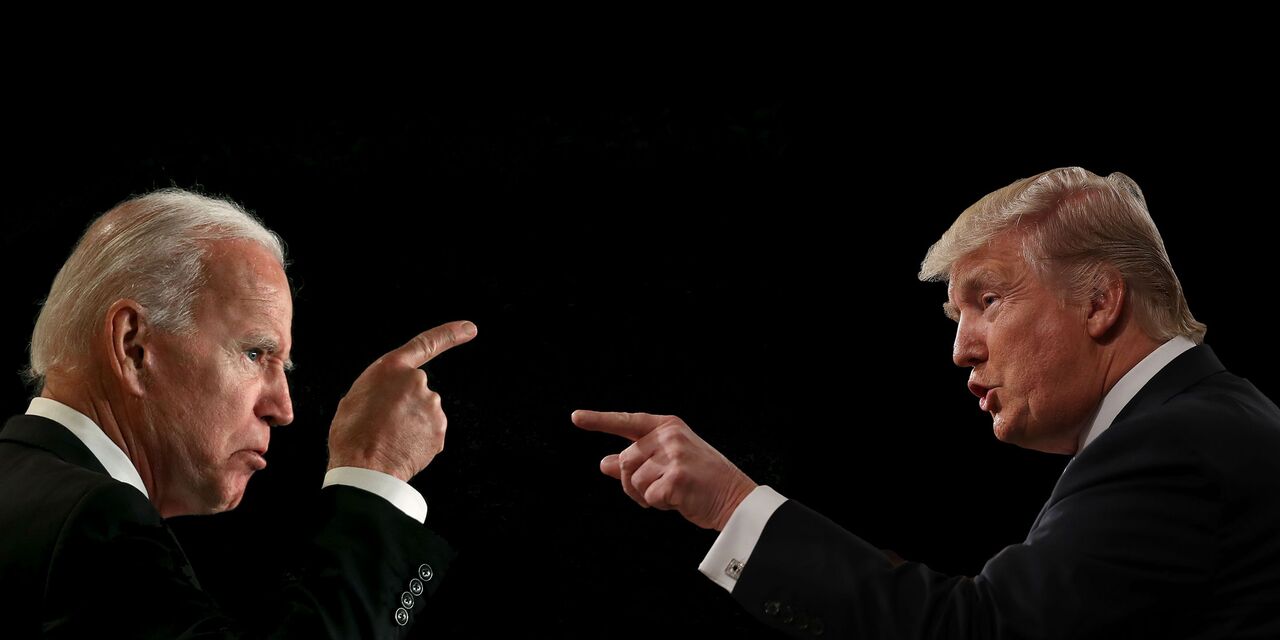
President Joe Biden (from wikimedia)

Tragically though, it all came together in the dramatic and terrifying scenes of January 6th 2021. While holding a "stop the steal" rally in Washington exhorting his supporters over his lost election and the voting fraud, he and his sycophants egged on a crowd of people who genuinely believed that the election had been stolen. They had been lead to believe, as early as 2019 that the Democratic Party would be plotting to steal the election through rigging. Hell, even as early as 2016 when Trump claimed he only lost the popular vote by millions of fraudulent votes cast for Hillary Clinton. They had been primed to believe that democracy was in peril, and the election was being stolen from them!

So being exhorted to go to the Capitol to cheer on some lawmakers (but not others) with a farcical cry of "trial by combat" ringing in their ears, a crowd of thousands marched on Capitol Hill. After screaming at police for being traitors and demanding that they be let in, they overran the pitiful police presence and smashed their way into the Capitol building, causing Senators and Congressmen to shelter in place or flee for their lives as they were preparing to count the electoral votes. After a few hours of wandering, brawling with security and petty vandalism, the rioters were forced out.

It was a sad day for American democracy. The untarnished dream and peaceful transition of power had been shattered in the most offensive way possible.


Worryingly though, after the fact 45% of Republicans polled said they supported the actions of the rioters. Many said they'd be back. Many other people praised the act, and when I went trawling through the right wing internet, you had people either saying it was a "false flag", supporting it wholeheartedly, or suddenly being very quiet. There was rage from his adherents, but he gave them hope again. Until he was banned from Twitter.

There's no doubt Trump relished the riot though. He was tardy in calling in the National Guard, there had been no plans for any sort of security from the rally. He told his supporters they were special, and they loved them. The backlash though, was swift, his sycophants began tripping over each other to either resign from his administration or disown him. We shouldn't let them. There were calls for the 25th Amendment to be invoked and another push for impeachment, which succeeded, and is bringing on a second trial, making Trump the only President in history (so far) to be impeached twice.

In spite of all this though, I still believe that people in the US should try to embrace solidarity. It's so easy to get caught up in social media bubbles, and far too many Americans are! It breeds division, dissent, and terrifying alternate realities. It creates an overwhelming sense of alienation and hostility, whether on Twitter or in the work place. I know it does sound naive, or a tall order from people who are hostile to your existence, but one reason I hope is because the only other outcome is a further decline into political dysfunction and violence.

However, Trump's lies may make that inevitable. There is now a core of Republican voters who simply believe the 2020 election was stolen, and Biden is not a legitimately elected president of the United States. Here is a ready made narrative for the far-right to milk for years to come.

This all said, Biden is hardly something to write home about. I'd hazard a wager the Democratic Party could have run a dead mule and still won this election. Despite getting a truly enormous share of the popular vote, he still underperformed compared to Hillary Clinton on certain demographics. His campaign was largely uninspiring and perfunctory, and his victory belongs far more to grassroots organizers who got people out to vote in a time of pandemic and political repression for poor voters and people of color. These organizers also flipped Arizona for the first time in 20 years, secured Georgia, and enabled the Democrats to (barely) control the Senate.

Add that to his goal to pander to rich donors and a promise that "nothing will fundamentally change" and you have a bog standard Democrat whose only real selling point is that he isn't Donald Trump. While he did deliver a beautiful speech on the 20th, and there was a truly heartwarming ceremony to bring him in, it had many reminders that the US stands on the brink as a nation that is, at a more than one level, divided. Whether Biden can alter the trajectory of American politics remains to be seen. Personally, I wouldn't bet on it. However, we can all maintain some hope that the US will not slip further into dysfunction and there will be some way to bind up the nation. 

Otherwise, things get crazy.

That's all my thoughts on the craziest race for American democracy I've ever known, but I'm still not done talking about 2020! Stay tuned for my thoughts on a very crazy year.

Tuesday, 15 December 2020

The Ministry For the Future

In 2020, I was very much looking forward to reading another work by Kim Stanley Robinson, as he has become one of my favorite science-fiction writers. Most famous for his Mars trilogy, and in my opinion one of his best works, 2312, he has tackled one of the greatest issues facing the world in his most recent novel. With rampant climate change altering weather, coastlines, and threatening the biodiversity of our planet, it seems that The Ministry for the Future is the only option in a world rapidly cascading towards climactic disaster.

This work is part of a growing body of literature which examines climate fiction (or cli-fi, if you will), and works to show both the perils of, and possible solutions to, climate change on Earth. Robinson has done some excellent interviews about the book, and has been very open that he's using it to address many of the problems with how society handles climate change, and how it thinks about the world economy, a system which supports a lazy or even do-nothing approach to combating climate change. As a piece of cli-fi, it is probably one of the most comprehensive in showing how many interconnected systems are contributing to, and accelerating, climactic change the world over.

Robinson's story itself begins in 2025 when a deadly heatwave kills 20 million people in India. More than plague, world wars, and any other natural disasters up to that point combined. In response, two things happen. The global shock to this catastrophe causes the UN to found the titular Ministry for the Future, whose job it is to see that the terms of the Paris Climate Agreement are held to. The second is that India, in the wake of this enormous disaster, undergoes a social and political change only a nation suffering that kind of loss on a psychological and social level could, it has an almost overnight revolution and begins desperate efforts to make sure such a tragedy never happens again. They launch what could probably be considered the first act of geoengineering by using particulates to seed the skies in their hemisphere with an artificial ash cloud to mimic an enormous volcanic eruption, and cut the intensity of the suns rays over their subcontinent for a time.

The story then follows members of the Ministry, Mary Murphy it's leader primarily, as they attempt to use what little influence they have to mitigate the damage caused by climate change. At first, this is a largely frustrating uphill battle, and many people see it as futile to fight against the currently entrenched global system. Mary is shaken by an unexpected visit from a foreign aid worker, Frank, who survived the Indian heatwave, who demands she do better. The story spreads out from there.

The deadly heat wave in India isn't the only natural disaster to plague the world in this book. More killer heatwaves rock the globe, a major one killing tens of thousands across the American South, L.A. is practically wiped off the map in a superstorm comparable to one which struck the state of California in 1862, and other deadly events stalk the world, motivating people to advocate for change.

In this story Robinson tackles numerous difficult ideas. If laws and jurisprudence aren't going to stop people from burning carbon, is it moral to use extreme methods to do so? Some groups say yes, and an extremely angry group of radicalized Indians who suffered from the heatwave, the Children of Kali, lead the way. They assassinate petrolium industry moguls, blow up private jets, and attack coal plants. In many other parts of the world, more people follow suit as the natural disasters grow more widespread. There's questions on the morality of this, weighing the worth of all future generations of mankind, and then the lives of men and women enriching themselves at the expense of others and then trying to flee from their problems. Of course, those people hit back, killing dissidents, and even targeting the Ministry!

As an alternative to violence, Mary uses her ministry to try and find a different path, an economic one. Much of the world, through both climate related damages and populist action against existing systems, begins to balk at the way they're governed and how wealth is transferred. Her own people propose a currency backed by carbon sequestration efforts, meaning that as you work to store carbon you will be rewarded by a new form of currency backed by the level of climate friendly action you engage in. To be honest, I freely admit I'm probably explaining this badly, but this should be read to be understood as its a fascinating idea.

From the ground up, people begin to agitate for change as they become broadly more affected by a changing climate, and the economic fallout from that. Students stage debt strikes, refusing to repay their loans, tenants simply occupy properties and dare someone to do something about it. The African Union pointblank nationalizes many internationally owned resources extraction operations, and in China the hundreds of millions of migrant hukou workers use their mass to occupy Beijing to demand change.

Even on an individual level, a different form of internet is developed. A new social media, web browsing app, YourLock, is launched. This app allows individuals to put their data in quantum encrypted data storage, which protects both their information and their money from theft, but also gives them a means of economic power. Since many modern internet and social media providers make money off of mining your data, the idea that you could deny them that resource and then negotiate with, and directly sell it for royalties to corporations is fairly revolutionary. It's almost an annual annuity for being yourself.

Against these backdrops, many different political and economic organizing ideas are touted. The ever familiar Mondragon model of federated worker cooperatives is of course front and center, with some fascinating expansion on the man who founded it. Before reading this, I had no idea who Father José María Arizmendiarrieta was, but he's a simply fascinating figure I'd love to know more about now! There's other examples offered, blockchain economics, even blockchain governance, as a system for the future.

In terms of science fiction, we even have a subplot following some Antarctic scientists who are engaging in an experiment in geoengineering of their own. Seeing that the West Antarctic ice shelf is in danger of slipping its bonds and collapsing into the ocean potentially adding a catastrophic seven feet of sea level rise in less than a generation, and if the Greenland ice sheet were to join it, that would be even worse! Interestingly, something like this is part of the plot of 2312, which makes for some fascinating parallel reading. However, these scientists are trying a novel approach which Robinson thought of and sketched out to try and present something that might work to help keep the worst effects of climate change and global sea rise down. It's some very interesting reading here.

What's important, I think, is that this book bucks the trend a lot of other more technocratic writers might argue for and presents no silver bullet solutions. It's a painstaking series of decisions, mistakes and uphill fights to try and build a better future. Robinson doesn't give us some easy solution and pretend everything will be alright, he instead reminds us that this is an issue we have to face head on, with everything we've got.

The plot is a bit thin though, the main characters really only exist as mouthpieces for the arguments around different ideas to deal with global warming and how to solve it. This made me less than invested in them as individuals, but more interested in the situations which surrounded them. 

The writing style was a bit difficult too, as certain vignettes would probably better have been served as being part of an overall interview process or categorization under some different internal structure similar to what was done in 2312 or World War Z to add a cohesive and overarching element to the story. This lack of structure did make me lose focus on what I was reading at some points, and occasionally served to suck me out of the book, and not in a positive way. I also tended to simply glaze over the more polemic interludes, some might enjoy them, but they weren't quite my fancy for this read.

On a purely literary level the book has a few flaws. However, the book should not be judged on its literary merits alone. In fact, its literary merits might also be better disregarded. Ministry is more a thought experiment than manifesto, an attempt to force us to confront difficult questions about climate change and its repercussions, and would make us change our minds. 

In that sense, it succeeds wonderfully. It makes you re-examine how we view the world and rather effectively points out its flaws with things such as wealth inequality, the oil and gas industry, refugee politics, and even the way our banking system works. I found many of the objections raised by characters to portions of the currently existing international system to be fascinating. There were many compelling arguments and a lot of good banter back and forth on numerous issues. You find yourself thinking "yes, why do we do things this way?" which is something not enough people seem to ask.

Rather than presenting a broad and sweeping plan for combating climate change and global inequality, the book presents many options, and gives you lots of ideas to think about. Jacobin probably had one of the best write ups on this novel saying that Kim Stanley Robinson imagines a future where we don't all die, which when you consider some of the rather apocalyptic visions of what unfettered climate change could bring, that's a nice image. I think that the hope this novel ends up conveying both in humanity, and our ability to combat climate change, is also a much needed message in a world where denialism is running up against increasingly self-evident facts, and a sense of hopelessness in younger generations.

For that reason, Ministry for the Future, while perhaps not being a literary masterpiece, might be one of the most important books you read in 2020 or 2021. It's made to make you think, and doing that, you might just come away with some ideas even this ambitious author couldn't imagine.