Showing posts with label Reading. Show all posts

Saturday, 21 January 2023

What I Read in 2022

I found that 2022 was a good reading year. Not necessarily as good as 2020 with the new non-fiction and huge re-reads I did, but still a banner year for reading. I re-explored some of my favorite fiction, while also jumping into a pair of exciting new series and exploring a lot of wonderful science fiction! I read 68 books; some pleasurably for the first time and a few pleasurably once again! Here's a brief overview of what caught my attention in 2022!

Starting the year I read the phenomenal non-fiction work Revolution in Rojava which is an accounting of the political revolution which took place in northern Syria during the Syrian Civil War and up to the present. It is an older work (2015) that doesn't take into account many updates, but is still a fantastic look at one of the most revolutionary and democratic experiments in the 21st century in the last place you would expect! 

In the first months of the year I also read Stoic Wisdom by Nancy Sherman, which was an excellent modern reading on the great stoic tradition which I aspire to conform to. I also read Michael Coren's The Rebel Christ which is a must read for modern Christians and a truly compassionate look at the revolutionary message Christ espoused.

As for fiction, well that didn't disappoint! I read the exciting new alternate history The Romanov Rescue and Sarah J. Maas's new installment in the Crescent City series House of Breath and Sky which expanded on that exciting new world. I also continued on with a reread of the Honor Harrington series, which rarely fails to inspire joy in the military science fiction reader. I also sat down and read Cory Doctorow's Walkaway which is a radical story of a new society and some amazingly interesting ideas. One of my big recommends from 2022! A fantasy counterpoint would be A Country of Ghosts by writer and podcaster Margaret Killjoy, which is an equally exciting work for its storytelling and ideas!

Another good read was The Word for the World is Forest by Ursula K. Le Guin, an author I only really got into over the last two years. It, like all of her work, did not disappoint! Really an interesting look into her ideas on violence, pacifism, and the ill effects of colonialism! Very cleverly done, and written at the time of the Vietnam War, which she was of course adamantly opposed to. Interestingly enough, there were comparison's to James Cameron's Avatar film, ones which she amusingly shot down.

One of my big new jumps in 2022 was to get into Ian Douglas's Star Carrier series, where I read the first four books. Expect a full review of that series this year! I was also very lucky to get into David Weber and Timothy Zahn's Manticore Ascendant series which is all the best of Honor Harrington, but without Honor Harrington!

For other fiction, I read Christopher Nutall's Coup D'etat which is a near future thriller and one I sincerely enjoyed. Also, the late, great Eric Flint's alternate history story 1812 Rivers of War which was a work I learned about years ago, and having read, sincerely think it sets the standard for excellent alternate history, but had feared we would never see more! It's sequel was also republished last year, and I'll be reading it this year as well, while sincerely looking forward to more!

In a similar vein to the nonfiction that started the year, I read George Orwell's Homage to Catalonia which, let me just say, if you ever thought Orwell leaned to the right of the political spectrum let his own words in here cheerfully disabuse you! Secondly, a book which paired well with my more utopian reading this year was Joel Wainright and Geoff Mann's Climate Leviathan which took a riveting look at the political theory that may emerge from the looming threat of climate change. Genuinely insightful book on how the world order could respond to this calamitous threat!

Among some of the best fantasy and science fiction I read this year though was Mickey7 by Edward Ashton, which is a short but endlessly funny, inventive and pulsepounding story of the life of a clone worker on a struggling colony and his rough life fitting in with not only his human colleagues, but the dangerous alien life that inhabits that world! Legends and Lattes was just a great low fantasy story that revolves around setting up a coffeeshop for a retiring adventurer, which was oh so fun, and relaxing, to read. There was also Richard Chismar's Chasing the Boogeyman which is a soft horror story where he tells the fictional tale of his hometown serial killer, which as not only a true crime aficionado but also horror reader, loved how he wove the story of his childhood years and home into a truly terrifying/creepy story of an imagined murder spree in the late 80s!

I also finished my reread of the Mistborn Era Two novels just in time for Brandon Sanderson's latest release, The Lost Metal which effectively and heartwarmingly ends the new era on Scadrial. I loved it and I hope all the other Sanderson fans out there enjoyed it too!

However, my big foray into fun reading was in anthologies. The year started with the news that the Expanse series would be releasing all its short fiction in a single collection Memory's Legion which alongside all the previous work, included one last tale from the author which tied up (sort of) a few loose ends and made just as many questions!

The big foray for me though was into some of the amazing anthologies that Baen has released over the years. I started with their recent release Robosoldiers which was a fantastic look at robots, drones, AI and all their myriad uses and abuses on the battlefield. Just a wonderful book.

Next I perused my way through The Founder Effect which is an ambitions project that tracks the founding of Cistercia and the stories of the effort to get the mission off the ground, the trip over, the first colonists and all their myriad struggles, and oh so much more! I sincerely hope there will be more released in that shared universe so I can get my hands on it!

Finally, the most recent release was the horror/scifi anthology Worlds Long Lost by Christopher Ruocchio and Sean Korsgaard who edited the whole compilation. It is, bar none, a collection of some of the best science fiction horror writing ever put together. With stories from old masters and new faces, the anthology was one of the best I read all year! I couldn't put it down, and it gave me some haunting visuals that are still sticking with me! Definitely check this one out! The paperback comes out this year with an all new story from writer/editor Korsgaard which I was priviledged to get a look at and let me tell you you don't want to miss it!

Rounding out the year, I read Origins of the Wheel of Time by Michael Livingston which is a beautiful work by a fan exploring the late Robert Jordan's epic masterpiece. It goes into his notes, what we can glean of his thought process, as well as a long look at all the history and mythology that inspired this modern fantasy epic! If your a Wheel of Time fan check this out!

All in all, a good reading year that I was quite happy with. Here's to a well read 2023!

Friday, 24 June 2022

Halo: The Fall of Reach

We all know the story of Halo: Combat Evolved, but did you know the story of the Spartans? Their rise to super soldiers and their history from a black ops organization to the most feared of humanities warriors? In 2001 Eric Nylund took on this task and wrote the story of the early days of the Spartan program, the origins of the Human-Covenant War and most importantly, the Fall of Reach.

As a note, I am reviewing the original 2001 publication of The Fall of Reach, not the 2012 reprint which fixed some continuity errors and expanded some of the story.


After an action packed prologue, the story begins in 2517 with Lt. Jacob Keyes escorting a UNSC specialist Dr. Kathleen Halsey to a planet in the Outer Colonies. Curiously, they tour a school looking for a 'subject' that is being examined for some obscure program that the Office of Naval Intelligence (ONI) is undertaking. The young boy, John, is a rough, adventurous, and courageous child who, ultimately, also has a lot of luck on his side. He is considered a perfect candidate.

Fast forward some months later, and John has been kidnapped and placed in a training facility under the care of Chief Petty Officer Mendez, and he will be trained in the ways of war, strategy and tactics. He will become the ultimate soldier for the UNSC and help quell the maelstrom that is coming. Little do any of them know, humanity's first contact with a hostile alien species is just around the corner.

I've been interested in the concept of supersoldiers for a while. My own novella Reintegration, deals with the idea, and it was partially inspired by this story. The Spartans are supersoldiers made to be the last line of defence against a civil inssurection which could tear humanity apart, and how they are formed is quite a fascinating tale. Nylund captures it with a lot of discussion on why the government feels it's necessary, the extreme lengths gone to in order to make the perfect soldiers, and how it changes them over time. It also explores how, in some small ways, these children turned soldiers lose their humanity, but become it's ultimate guardians in the end.

Nothing in the novel fails to deliver, and it fleshes out the history and character of Halo protagonist John 117, who is the lens through which the player/reader sees much of Halo's world. It also exposes us to other Spartans like Linda, Fred and Kelly who are John's teammates and friends for much of the later games and novelizations who add depth to the world and the Spartans overall. Alongside stellar characters like the brilliant tactician Captain Keyes, the enigmatic Dr. Halsey, and of course Cortana, it gives a lot more to each of the characters it explores.

Of course it also has some amazing action scenes.

From Spartan infiltration missions to duking it out with Covenant ships with superior weaponry, it does a lot to give us some amazing action sequences. 

My favorite part is the whole Sigma Octanus campaign, which has some simply awesome space battle action and some very memorable moments with the Spartans on the ground. It has a particularly memorable sequence which has ignited a love affair with space battles that continues to this day in what I read and write. Nylund really nails the pulse pounding action and gets me pumped up for every alien encounter. It's a perfect companion to a first person shooter.

The Fall of Reach is a fun, and very easy read. Somewhat heavy in a moral direction, it's a fun action romp that will hopefully get you thinking on the morals of supersoldiers, but also suck you into the world of Halo and the many stories it has to tell. 

Friday, 26 February 2021

Moonflower Murders

A few years back I had the absolute delight to read Anthony Horowitz's Magpie Murders. I was then thrilled to learn that in 2020 he would be publishing a sequel! We once again meet (former) editor Susan Ryland. Having moved on to what she hopes is a more idyllic life in Crete, she suddenly finds herself swept back into the world of Atticus Pünd and author Alan Conway. Now she has to go back to the UK and try to find out what exactly happened in The Moonflower Murders.

Picture is my own

Once again deftly using a book-within-a-book premise, Horowitz tells us a story that fits right in with the classics of the old school English murder mystery genre. This time he sets his sights on a much more modest idea, solving an old murder in a quaint, but modern, inn in the English countryside. 

Approached by a wealthy couple whose daughter has gone missing, Susan is asked to intervene in the death of one Frank Parris at the Moonflower Hotel. The Trehernes family was aghast when eight years ago one of their workers killed a guest for perhaps no reason. Swiftly convicted, the Romanian worker was carted off to prison despite flimsy evidence. However, now their daughter has gone missing and one of her last acts was to phone her parents and say that the man was innocent, and she had figured it out by reading one of the late Alan Conway's books.

Thrown into a mystery eight years old, and with no authority whatsoever, Susan must pick through a prickly family who alternate between distrusting her and bereaved, the family of the former murder victim who are outright hostile, and a police inspector who doesn't want her sticking her nose into the investigation at all.

It's a cast of characters that wouldn't appear out of place in an Agatha Christie novel. A wealthy family with a prickly relationship, a grieving husband of few means, a sinister cast of not so trustworthy extras, and the English countryside as a background. With many winks to old English detective stories, it sets out to take murder into the 21st century while trying to piece together clues from a book within a book that purport to solve the crime.

The secondary story Atticus Pünd Takes the Case, is from the titular Atticus Pünd series from her deceased former author, Alan Conway. Written in the vein of a Christie era thriller set in the 1950s, it tells a similar story with a cast of characters not so different - in subtle strokes - to the potential murderers in real life. It was a nice distraction from the main story with a complete series of twists all its own, but one that was cleverly foreshadowed in a way that kept me looking for clues to the killer in the principle story. Two mysteries in one has never worked out so well!

Horowitz manages to pile on twists while keeping the book entertaining and suitably throwing off your attention. There's enough surprises to keep you guessing to the very end, and overall he manages to wrap up the story quite nicely. Definitely another excellent mystery for the 21st century.

Monday, 4 January 2021

What I Read in 2020

The year 2020 was a long, long year for me. Quite honestly it almost feels like the period between January and March was one year, between March and June was another and then June to September, and finally October to January. So, I feel like I've been through four years when its been just one. Thankfully though, I read a lot in the four years of 2020!

I managed to read 72 books and 34,204 pages between them. I'm not sure if that's a record for me or not, but it certainly outpaced what I read last year. I had actually planned 2020 as a fresh start in a new decade, especially for reading. I had started the year with the goal of doing a massive re-read of my favorite book series for the year. I had dedicated myself to re-reading a lot of my old favorites to see if they stood up, and then to maybe, maybe downsizing my collection. I mostly expanded it though. In the course of my re-read I went back to a few of my old favorites, The Moon Is A Harsh Mistress, Leviathan Wakes, Jennifer Government, and then branching into some of my favorite fantasy series. A re-read of Joe Abercrombie's amazing First Law series, then re-reading all of the Stormlight Archive so far in anticipation of the release of Rhythm of War this year. Finally I re-read, perhaps the perfect trilogy in the first three books of A Song of Ice and Fire. Though I had to put off my combined reading of A Feast for Crows and A Dance With Dragons until 2021.

On the whole, the re-read was highly successful. I didn't get to all of what I wanted, but I managed to read a lot of new books too.

Normally my year has pretty bog-standard reading. Fantasy, science fiction, and the occasional mystery, historical fiction or alternate history. This year however, I was committed to reading more on social issues, some on political issues, and generally more books by authors I had not yet read, but especially by women and people of color. 

A small cross section of what I read!

One of the first books I branched out on and took a chance with was The Secret History by Donna Tart. It's a novel set in the 1980s in Vermont at Hampden College. Young Richard Papen leaves his home in California to study Ancient Greek, and while there he meets an eccentric group of wealthy students partake in an almost cultish devotion to the art. From there, dark things transpire and poor Richard is thrown into a world well beyond his understanding. It's honestly one of the most fascinating and frustratingly good books I've read in years. Well recommended!

Something more in my usual wheelhouse that I read for the first time was 2312 by Kim Stanley Robinson. Originally written in 2012, it was the authors attempt to reach 300 years in the future and grapple with what humanity might look like. It tells a compelling story of love, loss, and a humanity startlingly distinct, yet also depressingly still similar to our own 21st century selves. It's an old planetary romance novel in the style of recent reads. A solid piece of science fiction literature!

A non-fiction book I distinctly enjoyed was The Global Crisis by Geoffrey Parker. It's a fascinating look at war, religion and climate change in the 17th century. It supposes an idea of a "general crisis" taking place across the globe brought about by previous socioeconomic conditions, religious awakenings and social upheaval, but most of all, by climate change. The 17th Century was a genuine era of emergency, encompassing the whole world with events like the Thirty Years War in Europe, the collapse of Ming China, the near extinction of the Virginia Colony, the establishment of the Tokugawa shogunate, and the Puebla Revolt. It was referred to by some as the "Age of Iron" due to there being a genuine sense of global calamity. It's a very academic work (and I read the abridged version!) but it is chock full of information, research and first hand accounts of the people of the era. It established to me that this was one of the most fascinating periods in human history. 

In other realms of non-fiction, I also read The Sport and Prey of Capitalists by Linda McQuaig. It's a very short, but spectacularly enlightening read. It details the history of public ownership of utilities and natural resources in Canada, while also detailing long campaigns of poor deals and mismanagement by private entities. It compares and contrasts the systems here with those of other countries. There's notes on missed opportunities and possibilities for how we can make our own institutions better.

A book which acted as a real eye opener for me was Why Women Have Better Sex Under Socialism by Kristen R. Ghodsee. From showing how many early socialists were women, to the egalitarian thinking of other socialists and socialist writers, it also highlights how modern liberal democracy, and capitalism in particular, has made women less free and arguably less equal as well. It's a spectacular examination of how in Eastern Bloc nations, there was a long history of, at the very least, pandering to women's rights, establishing job and childcare opportunities to make something of a more level playing field among men and women, and makes a compelling argument that had the Eastern Bloc not adopted such policies, there would have been little impetus for Western nations to adopt them as well. Far from cheerleading for the East Bloc however, it rightly points out their flaws and failings, while also arguing that the ideas behind socialism could do a lot for our economic lives, and even our love lives.

I think the most shocking, if not the most radical book I read in 2020 though was The Uninhabitable Earth: Life After Warming by David Wallace-Wells. It fleshes out what he wrote in a 2017 article, and runs the range of possible global outcomes across various levels of warming. He points out that with rising temperatures - and they will rise, it's only a matter of by how much - there's a gambit of problems which will impact across multiples spheres. Mass extinctions, spreading disease, rising sea levels, frequent natural disasters and increased risk of internal and external conflict between peoples. It's a grim read, but with a hopeful message. It pairs really well with another novel I read this year, The Ministry For the Future. Both are somewhat shocking examinations of the potential ramifications of climate change, and frankly, I would advertise them as must reads.

On a more fictional note, I also read Mexican Gothic by Silvia Moreno-Garcia. I've done a longer review for this one, but in brief; it takes the usual horror of Gothic fiction and transplants it to the highlands of Mexico. The story has everything you love from Gothic literature, creepy old houses, a reclusive family, and a very deep and disturbing mystery.

Another author who I was very fortunate to run into again was Max Brooks. I was able to re-read his cult classic World War Z, and his new, unique work Devolution. It was amusing to discover this year as well that the one movie monster my dad has a fear of is bigfoot. I got more than a little mileage out of this book by describing it to him. A fun and very unique take on the monster horror style, I definitely recommend this to horror buffs everywhere!

I also caught up with Brandon Sanderson's works by reading Rhythm of War. This is the latest work in the Stormlight Archive and a very well done piece. It defies a lot of your expectations and takes you deeper into the world of Roshar and his fictional cosmere as a whole.

Finally, one of the best novels I read this year was The Parable of the Sower. In my bid to expand beyond works I'd already read, I tried to find works recommend by others. This novel by Octavia Butler was highly recommended in many different circles and by many different authors. I dove in to this world in our near future and found myself entranced. It was a phenomenal read and one which I have to recommend to anyone who loves science fiction. Tracking down the sequel is one of my main reading goals for 2021, along with the rest of my reading list.

Of course, I did read 72 books this year, so I had a lot to choose from to celebrate. These books specifically though, were easily in the top ten of what I read among the re-reads to start the decade. I managed to reconnect with old favorites, while finding lots of new work which I could enjoy! I'm happy for what I accomplished this year, and I'm hoping I can read more next year!

Saturday, 12 December 2020

Rhythm of War

I've really returned to the world of Roshar in my 2020 re-read, so much so that I practically feel like I was living there in the latter half of the year! So with the release of Rhythm of War this year I was very excited to climb back in to this fascinating planet with its great story and fascinating peoples! 

There are, of course, SPOILERS for the events of the three preceding novels. You can find my reviews for those here, here, and here if you want to dip your toes in the water, but otherwise, proceed at your own risk!

The story picks up roughly a year after the events of Oathbringer. The Everstorm ravages the land, the Voidbringers and their singer allies have taken much of the world. Dalinar, his reforged Knights Radiant and their coalition of allied monarchs fight tooth and nail to reclaim as much of the world as they possibly can, but the war drags on. The reforged Radiants battle the emerhing forces of the Fused, the favorites of Odium, and Kaladin Stormblessed finds himself unable to keep up with the fighting. Shallan Davar meanwhile, works to keep her order of Lightweavers alive to fight another day, but without the help of more spren, will find herself succumbing to the many facets of her personality. Adolin Kholin, her husband, also struggles in a world where demigods soar through the skies and he is merely the most competent swordsman with no powers of his own. Meanwhile, Navani Kholin, husband to Dalinar, must try and run his small kingdom in the lost city of Urithiru, trying to unlock its secrets. Finally, the former listener scholar Venli attempts to keep her head down as Odium uses her people as disposable pawns, and potentially, find a way to fight back.

Rhythm appropriately starts off showcasing how this war has displaced so many. Long lines of refugees flooding into Kaladin's occupied hometown. It is, in my opinion, a very effecting way of showcasing the horrors of war and the toll it takes on nations, communities, and individuals. The fighting in the opening is fantastic, the characterization is superb, and the opening section here is probably one of the best Sanderson has written. I was immediately sucked in to what was happening, felt a real raising of the tensions and the stakes, and could tell you what had happened and what was going on. It reminded me a lot of the opening of The Hero of Ages for getting you situated in this world again, and keeping the story fresh and fast.

Kaladin's arc this book leads him down the path of someone suffering from "battle shock" or PTSD. It is done well, alongside handling his lingering issues with depression and anxiety to a really realistic level where he tries to fight through the pain and overcome his own feelings of worthlessness. Shallan meanwhile is attempting to fight past her three different personalities which cover up a multitude of sins, while keeping a nebulous fourth personality from emerging and taking her over.

The three most compelling arcs though, IMO were those of Venli, Navani, and Adolin. While we had some very solid movement on our three mains like Kaladin, Shallan and Dalinar, we've only gotten some time in the last three books with each of these characters, and of those Adolin took up the most space. Venli only came into her own in Oathbringer, and Navani has been more in the background of these books. Adolin was always in the forefront, but this book was truly his chance to shine. Though, unfortunately, his and Shallan's plots were relegated to the background for much of the book.

First I'm going to outline a spoiler free part before leaving more below.

The first half of the novel, after Part I is a little slow and had some events that felt rushed or overlooking certain outcomes at the end of Oathbringer, but it made for a workable opening. Kaladin's arc seemed to bog down in the middle, not because it was boring IMO, but because there just wasn't enough real material to work with. I felt you could have truncated his story in this book considerably and not really lost anything.

Meanwhile, Adolin and Shallan's stories in this book were almost completely overlooked. There was still progress and work done on them, but it felt like we had to wait forever to get through much less interesting storylines to see it, and an inordinate amount seemed to get wrapped up at the very end of the story. Adolin trying to move out from the shadow of both his Radiant wife and almost demigod father is still very fascinating. Add that to his relationship with his sword, and I think we had a much greater potential for a powerful story here.

This story though, is far more that of Navani, Venli, and Kaladin. For all that Navani and Venli are given the center stage though, I can't really say much about Venli's story. Her story seems to be much slower because, unlike the last three books, she doesn't have interludes begin which bring her to the center stage until almost a third of the way into the books. That means the looks back on her past and her build up as a character drag excessively compared to the detail put into building up Navani and Kaladin.

Navani's story is excellent however. I liked her on page presence and her struggles as a leader and someone who felt imposter syndrome as she led, but did not consider herself, a scholar. This is well reinforced in the prologue by showing off her strained relationship with her former husband Gavilar. That she has to struggle first as a leader, a scholar, and then a war leader, makes her go through many mental stresses and deal repeatedly with the cost of failure. I like her growth, and the revelations and ultimate build up for her ending were very satisfactory and made me very much enjoy building her into a main cast member in her own right.

The first to middle sections of the story though, did drag somewhat, and I did find myself not breathlessly racing through them in the same way I did in Oathbringer which I found myself doing in my original read-through of that book's Kholinar arc. The finale though, really brought the whole book together in ways that I genuinely appreciated, and I had to put the book down to dry my tears for a few moments with some characters. The send off for Eshonai was, IMO, one of the most touching moments in the book. 

Upon my first re-read, I do think that Oathbringer is actually a stronger novel than Rhythm of War simply because there was more action in that book than this one. Much was thrust on the shoulders of almost too many characters for really good build up for each of them. That being said, of the three main characters who had the greatest build up, Kaladin, Navani and Venli had some of the best work done, and poor Adolin and Shallan were somewhat left out till the end. That said, they still got excellent characterization and great moments of triumph as they found their way through this plot.

My only real criticism of this book might be that here, beyond any doubt, we get to the point of a continuity lock-out. If you haven't read all the cosmere material up to this point, you probably won't understand the implications of Shallan's plot. Many scenes won't make sense, and much of the Ghostblood's plot will seem completely unrelated to the main characters on Roshar. Casual readers will, probably be put off by this, which makes me think that beyond this book the Stormlight Archive will be primarily for fans of the cosmere.

At the end of it all though, I still enjoyed this book, and really hope that upon re-reading I'll pick up on more that I've missed and can say that this was, once again, a well done piece by Brandon Sanderson! Still, for a book that delves into not just the physical wounds, but the mental pain and anguish that can hold people back, I think this is a wonderful series to read!

Major SPOILERS below the cut!

Monday, 23 November 2020

Oathbringer

Picking up only a few days after the climactic end of Words of Radiance the third book in the Stormlight Archive explores a world where a new cataclysm has come! The Everstorm comes, and the Voidbringers threaten to return! Can the Knights Radiant turn the world towards facing the threat, or will they all be swept away by a new storm about to break upon Roshar? Find out in Oathbringer!

SPOILERS for Way of Kings and Words of Radiance to follow. Read on at your own risk!

A paperback which owes me nothing

The ancient city of Urithiru has been rediscovered. Ancient citadel of the Knights Radiant, it has been occupied by the Alethi highprinces, and Dalinar Kholin's small group of Knights. But, the ancient enemy, Odium, and his Voidbringers come, the Desolation is upon Roshar!

Oathbringer is one of the strongest openings in Sanderson's works outside of The Hero of Ages. It also, nicely, and subtly, twists the expectations of the apocalypse you have, and grinds them against one another. Everything I expected in this book was actually turned on its head, and the one true constant of the cosmere kept coming back to me; there's always another secret.

In this third installment, we explore more of the Knights Radiant, their founding and disbandment at Aharietiam, and the conflict between gods which has been brewing in the background on Roshar for millennia. Major questions brought up in the first two volumes are answered, but even further questions are raised. The issues of old legends being true, and others being false, are brought to the fore again, and we even have to wonder whether we can trust the sanity and perceptions of some of our main characters! 

Similar to how the previous two books explored the issues facing Kaladin and Shallan, this book is Dalinar's. We see the history of Dalinar, the Blackthorn, feared but respected general of Alethkar, the blade in the hand of the unifying king Gavilar Kholin, and the power behind the throne of the kingdom. His youth spent drenched in blood to win a kingdom, his attempts at being a father, and his systematic deconstruction of himself to try and become a better man after his brother's death, are all explored in depth. His story is very well handled, and leads to important revelations in the present which threaten to derail the struggle of the good guys completely!

Meanwhile, Kaladin and Shallan continue to battle their own inner demons. Kaladin, who fights to protect the world, makes some disturbing revelations about his simple look at war, while Shallan grapples with her own identity and fragmenting it into many different shapes in order to be the woman she needs to be. This will affect them in different ways, whether they can advance on their path to being Radiants, and refound their orders to, hopefully, save the world.

We also go a bit deeper into the other characters from the Kholin family. Adolin, Navani, and Jasnah Kholin are all explored more in depth, given much to do, and given more depth and character exploration. Adolin may even be on his way to becoming a Radiant! Jasnah however, is my current favorite side character, one who I hope is given much, much more exploration in the series as a view point character.

Two new characters, Szeth, the Assassin in White, and Venli, one of the Parshendi who fought to survive, are also brought more into the forefront. These characters aren't new, since we've seen them in each previous installment, but it will be very interesting to see where we go with them. 

As mentioned above, the story itself does what Sanderson does extremely well, and he twists your expectations almost completely. What I personally expected after the end of Words of Radiance fell short as things never did quite go the way I predicted. This was, occasionally, extremely frustrating, for reasons I can't quite outline for spoiler specific purposes, but also in many ways satisfying. The work Sanderson put into expounding on the characters rising to new heights and overcoming both the fantastic, and the mundane obstacles in their paths were extremely well executed. It's a story where characters battle their own selves just as much as external obstacles, and it is so empowering for that.

In a non-spoiler ending to this review, I do want to highlight that if you're expecting the End Times of the Apocalypse as normal, you'll be delightfully disappointed! TEOTWAKI might be upon us, but it is spectacularly so! On my first reading of this story, I was actually severely disappointed with it. I found it dragged in places, and I wasn't quite satisfied with the conclusion. On second reading though, there;s hidden depths, other stories I love, and even things I feel speak to my own inner demons. The story is fraught with twists and turns, lots of highs and spectacular lows for our characters, and some really phenomenal action scenes and sequences involving the gods themselves! 

Below the cut here are some spoilers I want to include in my review, as I want to talk about them, but don't want to spoil the book for those who haven't caught up yet. Journey before destination.

By Isaac Stewart

Saturday, 14 November 2020

Words of Radiance

The second book in the Stormlight Archive, Words of Radiance, was released in 2014 and I eagerly got my hands on a copy. Now for the 2020 re-read, I've eagerly jumped back in! Re-reading the book for the second time I discovered many things I had forgotten, and got some of the most intense action sequences Brandon Sanderson has ever put to paper!

Mild spoilers for Way of Kings follow.

My original copy which owes me nothing!

Words of Radiance picks up just a few weeks after the conclusion of Way of Kings with all the strides made by our characters from that book. The Alethi warcamps on the Shattered Plains continue to struggle against the Parshendi, but meanwhile Shallan, ward of Jasnah Kholin, is travelling to meet with the Alethi royalty to reveal potentially dangerous secrets about the ancient Voidbringers which could turn the whole world on its head.

In the warcamps, Kaladin Stormblessed struggles to protect Highprince Dalinar Kholin and his nephew, King Elhokar from the infamous Assassin in White and schemes from within their own armies as betrayal and intrigue stalk the supposedly allied highprinces. In the rest of Roshar, chaos rocks the world as kings die, spren begin acting strangley, and people fear that the Knights Radiant have returned. For if the Radiants have returned, so too must the ancient and cataclysmic Desolations.

This story is, while just as much of a door stopper as Way of Kings a bit tighter in its focus. The vast majority of the story takes place on the Shattered Plains so it is all very geographically centered on this spot. The main characters are all interacting in various ways, and numerous new plots and counter plots are unfolding. 

One of the most interesting aspects of this story is that we get a good look at the other side of the war on the Plains. Throughout Way of Kings the Parshendi were enigmas, we only saw them as enemies being confronted by the Alethi, and they were directly responsible for not a few deaths of those that Kaladin and Dalinar were trying to save. It made them foes only to be confronted. Now we have a character, Eshonai, who shows the war from their perspective. Tantalizingly though, we still get some mystery as to how the war started and why Eshonai has made some of the choices she has. In her chapters though, we do see how her people are becoming desperate and being driven to the edge. Hard, perhaps unthinkable, choices must be made.

Meanwhile, Dalinar Kholin is still trying to mold the fractious Alethi highprinces into something resembling a coherent whole. They still balk at his authority, scheme against him, and after the great betrayal by his old friend and ally Sadeas, he doesn't know who he can trust. His guard is now led by Kaladin Stormblessed who must struggle with the burdens of command and the need to try and master his new and mysterious powers. 

Shallan Davar meanwhile, must make her own way to the warcamps, and uncover the mysteries of the Voidbringers and the lost city of Urithiru. In doing so she finds that one constant of the cosmere remains true, there's always another secret.

This book is really Shallan's book. Like the first book, which had Kaladin's backstory play out, this one shows us flashbacks from Shallan's childhood and her early life. We learn of her struggles growing up, the mystery of her mother's death, and why she and her brothers have always lived in fear of her father. The way this illuminates much of her character, and character growth, in this story is very well done. Shallan grows in leaps and bounds over the course of the story, and I think this further makes her one of my favorite characters in the whole series!

Of course, that's not to say our other leads, Dalinar and Kaladin, don't grow more too. Dalinar has to learn many hard lessons about principles and politics, while trying to match wits against those who don't share his politics or his scruples. Kaladin meanwhile, after so much abuse from men who are supposedly good men and his superiors, must learn to trust. While he respects Dalinar, he feuds with Dalinar's son Adolin, and mistrusts every lighteyes he meets. This leads to an interesting dynamic with Shallan early on.

With all the main characters concentrated in one location, this story lets Sanderson shine in his writing. Most of his tales have always had the action happening at one place, and I think that the plot he writes here is very much better for it. Most importantly, he allows the characters to all interact and grow in natural ways which will be very important for their relationships in Oathbringer.

It also delves deeper into the lore of the magics (investiture for those cosmere aware) on Roshar. It's what makes the world tick, how all the spren relate to one another and how those blessed with the powers granted by the gods can shape and use their powers. With the characters in one spot, and for the moment, pursuing broadly similar goals, it allows everyone to put their thoughts to figuring all this out in order to both win the war and to prevent the Desolations. That in particular, is one of the greatest strenghts on display here, as Sanderson is able to really bring our attention to the lore and magic in a narratively necessary way while also highlighting how wonderfully alien the world of Roshar is.

It is also a fantasy world that doesn't rely on those traditional fantasy races we all know. There's no dwarves, no elves, and no orcs. The Parshendi can't be counted as orcs as they're very, very different, and almost like aliens. The Iriali are vaguely human, then there's creatures much, much stranger. You really do have to read it to see it!

Of course, this all comes together in a very satisfying climax as the war, the political scheming, and all the study we've seen in both this book and the previous installment. It showcases a lot of Sanderson's strengths, with his avalanche of intrigue and storytelling among the humans and the Parshendi paying off at the end. It's both epic, and really suitably tragic. Kaladin's story arc here is perhaps one of the most important as, while this is Shallan's book, Kaladin has done some of the most growing as a person.

Words of Radiance is an excellent sequel and, so far, definitely the second best work in the Stormlight Archive overall. Its' got all of Sanderson's strengths and really lets him run wild with the world he has created. It sets us up for the next installment quite nicely, and really gives us a lot to appreciate, and ask ourselves, for what comes next on Roshar.

Friday, 23 October 2020

Devolution

In our very tech focused and hyper-integrated world, it can be hard to imagine just how brutal and unforgiving nature can be. Try to picture then, a quaint and cute little haven away from the hustle and bustle of the technological world, surrounded in an oasis of natural phenomenon. This is the small planned community of Greenloop, situated in the Pacific Northwest and in the shadow of the magnificent Mount Rainier. Still hyperconnected to the comforts of the modern world though, wifi, great cell reception, drone deliveries, and biofueled houses which you can adjust at your leisure. 

Truly a small piece of paradise.

Until the mountain erupts. In a flash of fire and fury, the modern world is swept away, leaving the people lounging here stranded. All one once the inhabitants of Greenloop are cut off from the outside world, their access gone, drone deliveries, gone, and they're stranded in an unforgiving environment at the onset of winter. But it's just a matter of time until they're rescued right? Perhaps, but what if the eruption of Mount Rainier has driven something more dangerous, something more deadly, something more primal towards them? What happens when these modern people, who have never known the terror of primal nature, its mercilessness and its hardship, come face to face with their potential primitive past? You get a severe case of Devolution.

Max Brooks new novel sets out to tell an engaging scary story, one quite appropriate for the modern world.

The story is told in the familiar scrapbook style, revolving around the nameless journalists' interviews with those familiar with the incident, excerpts from news pieces, and the main meat of the story, the diary of Kate Holland. Her story is one told with an interesting twist as she writes a diary to deal with her stress from the overwhelming nature of everyday life, to keep her therapist abreast of how she's feeling, and chronicle her own state of mind to see her progress and express herself.

Her trip has, with her husband Dan, been undertaken to improve their marriage, give them some piece of mind, and help them get back on track. 

They meet the colorful cast of other eccentrics coming from the Pacific Northwest to relax and unwind in this isolated, but technologically connected community. Run by the stunningly beautiful and technologically savvy team of Tony and Yvette Durant, the community looks amazing with its individual houses and common house. 

The other members of the community, the overweight and arrogant philosopher Reinhardt, the power couple of Carmen and Euphemia with their adopted daughter Palomino, husband and wife Bobbie and Vincent, and the reclusive but powerful presence of the elderly and diminutive Bosnian artist, Mostar. This little group, thrown together from diverse backgrounds, will suddenly have to survive their own little apocalypse.

It tells an interesting story of city dwellers who are expecting nature to revolve around their needs. They feel that, with technology, their little group can tame nature. That they've all only lived in the city, never interacted with untamed nature, and have no survival skills that don't revolve around technology, doesn't really occur to them. It puts human need for technology and community front and center, and shows how the hyper-individualistic and society of instant connection can be sorely tested by extreme situations. They also learn the hard way that nature is not nice.

All of the issues of being cut off from greater society, planning for long term survival, and otherwise pulling together, might have been overcome if it were not for the sudden intrusion of another group of equally desperate primates. The Sasquatch. This throws everything into turmoil as these new critters are desperate and hungry, and the humans of Greenloop, while smart and intuitive, are not exactly equipped to fight them off. Whether from sheer lack of preparedness, a semi-naïve philosophy of harmony with nature, or simple inability to understand their new neighbors, the people of Greenloop are very much unprepared for the danger they face.

Like most of Brooks works prepping does feature, to a greater or lesser degree, into the overall story. He tries to outline practical examples of disaster preparedness, reminders about the fragility of high technology in emergencies, and that most people don't really know how to survive in the wilderness. It's an honest, not really preachy, way of putting forward the idea of keeping yourself ready for even a mild natural disaster which, I can say from experience, can really throw you for a loop. It also takes a few potshots at tech gurus, thinking nature is calm and pleasant, or that humans can be effortlessly on top of the food chain. Though most of all, reminding us that nature is full of wild animals and not tame petting zoo critters.

We have a great slow build to the story, with the gradual encroaching disaster, a slow creep of the monsters, and a build up to a tense, unknown situation with a brutally climactic ending. One of the true triumphs of the book is so comprehensively dealing with the modern problem of instant communications in horror, by using the destruction from the Rainer eruption to so totally cut off the characters. It gives you a real feeling of isolation and horrible solitude that is hard in our modern world, and I think that every time this is pulled off well for an author it should be applauded.

I definitely think it's great to have Max Brooks back in the game of horror. He writes phenomenally well, establishes a diverse, exceptional, and unique cast of characters, and uses them in an unexpected and interesting way. They really do jump off the page, through the biased views of the narrator, and with the "after action report" of the various interviewees. A great read for 2020 and anyone who loves the horror genre! 

Saturday, 17 October 2020

Mexican Gothic

 A recent release which I picked up because goodreads kept recommending it to me, I was very happily surprised as I found myself suddenly immersed in the world of Mexican Gothic

Set in 1950's Mexico, it follows debutante Noemi Taboada, as she answers a seemingly madness filled letter from her cousin Catalina, who has married into the obscure Doyle family. In the letter, Catalina accuses her husband Virgil Doyle of trying to poison her. Catalina's father, wary of scandal, sends his daughter to check on events in the remote province of Hidalgo at the Doyle home of High Place. As Catalina arrives, she realizes things are not quite as they seem.

This is the most recent novel by Silvia Moreno-Garcia. This is a Canadian author who I had not read before, and I am pleasantly surprised by what I have found! Having explored more of her work upon completion of this novel, I am happy I started with this one and will certainly be checking out more of what she does!

Mexican Gothic has everything you could hope for in a good tale of Gothic horror. There's a creepy house, a mysterious family, and dark, twisted secrets. Instead though, they are transplanted to the highlands of Mexico and set against the backdrop of Mexican society and expectations. The very foreign people are almost part of the horror as their entire setting is alien and unsettling, with its many references to both the Mexican Revolution and foreign exploitation of the Mexican people.

Noemi is a fantastic narrator. She is a sassy socialite who likes to bend the rules and frustrate her opposition. That she comes from a world of parties, learning, and language, makes it very difficult for her to adjust to the dark, dreary, rigid ways of the Doyle family of High Place. She's like a beacon of light there, but one which almost instantly strikes friction with those inhabiting the place. She clashes immediately with the family head Virgil, instantly dislikes the patriarch Howard, and the 'mother' of the house Florence has an instant distaste for her smoking habit. The only person she doesn't seem to bring out revulsion in is the black sheep of the family, the shy and nervous Francis.

She isn't one to play a damsel in distress either, and is always thinking to try and get one over on the Doyle's and save her cousin, who seems to be slowly losing her mind. Though Noemi finds herself questioning her own sanity the longer she stays in High Place.

What I really enjoyed was how my initial assumptions were twisted and turned on me, until I came to a stunning and shocking conclusion. In the first few pages I rather foolishly assumed I knew how things would end up, but man did the twist really show me wrong! Very well done and very, very scary! Highly recommend this wonderful new book!

Monday, 21 September 2020

The Trouble With Peace

Having once again fallen into chaos, the Circle of the World returns to the Age of Madness as though the wars have been won for now, Joe Abercrombie shows us that an absence of conflict can be as much of a problem itself. This is indeed The Trouble With Peace.

Picking up almost directly after the end of A Little Hatred we once again join our new cast of characters in the world of the First Law. Leo dan Brock is basking in the victories he has achieved in the last novel, Savine dan Glokta is alternating between her life collapsing around her and making something of herself, Prince Orso is finding terrifying new responsibilities while feeling stuck in a moribund power structure, Rikke struggles with the Long Eye, Broad doesn't know whether he is a man of peace or war, Vick struggles with her role in the Union, and Clover is trying to stay alive beneath the capricious and violent shadow of Stour Nightfall. 

I admit to not quite knowing what to think going into this book. It raised the stakes in a way I hadn't seen used by Abercrombie before. He wasn't giving us any indication of an imminent war at the end of the last book, the status quo seemed to be god. Of course, by the end of the first third of the book that's all been thrown out the window as men's ambitions are never satiated!

This book was, compared to much of Abercrombie's other work, a sort of slow burn. The machinations of our protagonists built over time, and the results definitely took time to get to the payoff. The final act of this book though, was spectacular, but more on that in a moment.

Savine dan Glokta, Leo dan Brock, and Prince Orso arguably took center stage for this piece. They had the most view point issues by far, and over all, managed to drive the plot almost in spite of the presence of other characters. I do think that this series has, overall, shaped up to almost be about the main characters of Savine, Leo, Orso, and Rikke, with the others being more of a supporting cast to these four characters machinations.

That said, this book was the most political and bathed in conspiracy and backstabbing since arguably Last Argument of Kings and Best Served Cold, and it had many call outs to Best Served Cold which absolutely endeared it to me. Those two books contained some of Abercrombie's best pushes towards political backstabbing and personal vengeance, as well as amazing battle scenes. Though The Trouble With Peace is a lot less bloody than those two, it doesn't disappoint when it comes to battles or treachery. The slow burn plot does an excellent job of giving us reasons to root for both sides of the emerging battle lines, and it makes it quite impressive as the two factions end up coalescing around various characters, and the lengths each character is willing to go to because each character believes so firmly in their cause.

I believe that this book works well because A Little Hatred built up these characters so that we could care about them. That they now have competing ambitions in a time of peace makes it so much more tense as you get led along through conspiracy, webs of lies, and competing ideas and ambitions which pits these men directly against one another. It means that the stakes are very real, and as the book comes blazing towards its conclusion you get a number of shocks and feel real tension for our main characters as they come up against obstacles both on and off the field of battle. I won't spoil where that battle takes place, but boy does it take everything Abercrombie has built on since the last few installments and really make it shine.

The finale honestly blew me away. It combined some of Abercrombie's best work in writing well plotted violence, the tension he can create for both combatants and non-combatants, and the sheer pull of characters. He shows the push and pull of a battlefield in ways that, quite honestly, many people who write military fiction often fail to do. The ground pounders view to the commanders view lets you see the chaos, the violence, and the blood and mud. I loved that about his writing and anyone who loved his standalone The Heroes won't be disappointed by what he manages to craft here. Then the aftermath of the battle, and the actions of the victors, just adds an entirely new layer of excellence.

Personally, I don't feel this will become my favorite book of his. It takes much of what he does well and combines it, but I do think that some of the pacing felt off. The characters and their flawed actions were all very well executed, but I don't think it had the same stakes as say, Best Served Cold or Before They Are Hanged. While it is an excellent middle book, which reintroduces us to some of our favorite characters from the previous series, I did honestly think something was missing overall. Perhaps it was that the main four I highlighted felt like they received more attention so that the secondary characters all felt like a supporting cast where in A Little Hatred they played more central roles and had more agency. It also might be that I felt that a few of the revelations were not as well foreshadowed as they might have been.

All that being said, I sincerely enjoyed this book and roared right through it in a couple days. Fast paced and it never once drags and gives you a bit of everything you enjoy about Abercrombie. Characters are maimed, people claim the ashes of victory, and many new and scary revelations are brought to the forefront. It is just more proof that Abercrombie remains an excellent writer.

Thursday, 17 September 2020

The Way of Kings

Way back in 2012 I picked up The Way of Kings by Brandon Sanderson. I saw the cover and, on a whim, I snatched it up. I had no idea then that I would leap down into the world of Roshar with both feet and not once look back as I rode the storms into the greater world of Brandon Sanderson's cosmere.

Now for full disclosure, I actually had to put this book down the first time I started reading it. Brandon Sanderson does an amazing job at capturing a character who is burnt out, facing depression, and on the verge of a total breakdown. It was so well done that I, who was at the time facing one of my own, was unable to read about a character who had similar problems. Boy am I glad that I picked it up again though because that put me in a much better mood. I've re-read the book three times now, and I have thoroughly enjoyed it each time. I firmly feel that, to date, Way of Kings is the best book he has yet written.

A copy which owes me nothing

The Way of Kings is the opening to Brandon's epic series, The Stormlight Archive. It is projected to be a ten book long undertaking with two distinct arcs of five books each. I say these things in advance just so people know why I'm going to be gushing about the cosmere for, oh, say the next decade or so.

But what is this story? Way of Kings is set on the world of Roshar, far unlike anything you've ever seen before. The single continent is perpetually lashed by highstorms, hurricane like storms which come randomly sweeping east to west, scouring the land and creating a landscape and creatures we would find wholly unnatural. Grass lives in tiny holes in the ground that it retreats into when the winds rise. Trees will hug in their branches to stay alive, and animals have shells and other methods of hiding and surviving which will spare them the worst of that damage.

Humans too have to adapt to survive this world. They build in the shelter of natural concentrations of rocks, lees and valleys which hide their homes from the worst of the winds. It's a world very different from our own.

Far in the past, humanity was cast from the Tranquiline Halls by the Voidbringers, demons who hated humanity. Humanity had the Ten Heralds who led them against Desolations where the Voidbringers would invade and ravage Roshar. Protected by the Knights Radiant, the Heralds and Humanity banished the Voidbringers and the Heralds left the world to bring the fight to the enemy in the afterlife. However, the Knights Radiant later betrayed humanity, and so left behind their great weapons, shardplate and shardblades. 

In the present day, four thousand years after Aharietiam, the Last Desolation, the nation of Alethkar is at war. Their king has been assassinated by the mysterious Parshendi people, and so they have sworn the Vengeance Pact to bring the assassins to justice. It is a brutal war which has lasted for six years.

Roshar

We follow three characters, the disgraced warrior Kaladin, the warlord Dalinar, and the scholar to be, Shallan. Each of these three characters begin in disparate stories, separated by geography, motivation and class. One is a slave, one an impoverished noble daughter, and the other head of an Alethi princedom, and seen as the power behind the throne.

Kaladin's story was, to me, a very poignant and personal one, but one that was not without hope. His start as an amazing fighter who eventually falls as low as one can in that society, and the resultant hopelessness he feels hit very close to home. I enjoyed Kaladin, and the family he found in Bridge Four, where he is cast out and left to be used as cannon fodder. This story of rediscovering humanity and friendship spoke to me. I definitely enjoyed Kaladin and his growth into a leader, that he gets an amazing spren companion in Syl, just added to the fun.

Shallan was actually my favorite character in this book. Her journey to find the famous heretic princess, scholar Jasnah, a formidable character in her own right, was one I sympathized with. Jasnah's artistic talent being unappreciated by her mentor, and her growth in the love of finding knowledge. Her quick wit, and determination to move forward was another thing I found inspiring.

Dalinar Kholin, the Blackthorn, unifier of Alethkar, and brother to a murdered king, is probably an fan and series favorite. I admit, he is on my list to be the best character in the series. I can never decide who I enjoy more as a main character. However, his story is one of the burdens of leadership, and the possibility that he is going insane. During every highstorm he receives visions and a voice commands him to "unite them" and this has caused him to try and live by increasingly strict Alethi codes, and the philosophy of the book The Way of Kings. It puts him at odds with his former friend and ally, Torol Sadeas, who doesn't share his vision. Putting the two most powerful highprinces at odds, Dalinar battles his visions, his son who questions his sanity, and his own doubts. If he fails, he may doom his entire kingdom.

As a set up for an epic fantasy series, I don't think this book can be beat. It is a detailed piece of worldbuilding, story driven adventure, and revelation of an ongoing mystery. You can very easily begin to question all the assumptions you have about the world presented to you, as everything is not necessarily as it seems. In what could be the defining feature of all of Brandon's books, there's always another secret. Clever, witty, and it will not fail to constantly exceed your expectations.

Way of Kings straddles the line between being an expositionary tale for building the world and lore of Roshar and beginning the whole saga of the Stormlight Archive very well. It separates each part of the book through interludes which are clever little vignettes which flesh out the world of Roshar, some of the side characters, and even give us more information on the cosmere as a whole. People who have been digging for the deeper mysteries in the whole of the cosmere will be happy with what they find, but usefully, those who don't want to read the whole of the cosmere don't have to understand these hints to enjoy the story.

As per usual, there is a very strong emphasis on the magic of the world of Roshar. This time, even for Brandon Sanderson, it is complex. It is used rationally, and very much is apart of the world itself. We have three distinct magic systems, all revolving around complex bonds and the use of various implements. Surges and Soulcasting are the mainstay, explored differently by each story arc. Then there's the shards and shardplate, something we still don't fully understand how it was created. Attached to that is fabrials, devices which harness the magical energy of spren and use them for mundane things like telling time or heating. It adds some great depth and flavor to the world, and of course, it shows off Brandon's impressive ability to create and utilize his magic in very plot important ways.

The action with this one is almost as powerful and visceral as that in the Mistborn series. It uses the magic so well, and is very cleverly written. The shardblades and shardplate make for some amazing scenes, and they are basically power armor that you would normally see in science fiction. The sheer power put forth in these ancient artifacts of destruction is amazing to see on the page. Coupled with Brandon's skill at raising the stakes as the story progresses, I promise you that you won't be disappointed with what you see!

Having now re-read this book three times, I can say it still stands tall as one of my all time favorites, especially in the fantasy genre. As I said in my Mistborn review, while that trilogy remains his perfect trilogy so far, Way of Kings remains his most perfect book to date. 

Monday, 29 June 2020

Book Releases I'm Excited For 2020

Even though I was trying not to buy any books across 2020 (and I did an okay job, haven't bought as many as I normally would) I am still of course going to be buying some of the new releases coming soon in the last half of this year! So by order of appearance let me celebrate some upcoming new books I'll be buying!

First off we return to an author I've been having something of a reading fling with these last few years, Joe Abercrombie. Having been powering through his First Law trilogy, and having read the first in his new trilogy I'm extremely excited to get my hands on the second book The Trouble With Peace which is set to drop September 2020. We'll be picking up with the new cast of characters, and hopefully having more fun with the old ones too! If you want my thoughts on the first book, here's a spoiler free review of A Little Hatred!


The following month we will have something by a new favorite author of mine, Kim Stanley Robinson. In the last two years I've reviewed a few of his works, and I'm eager to see what he offers us now. He brings us another tantalizing tale of a future that could be, and this one seems to make for some very, initially, depressing reading. The Ministry For the Future is set in a world where climate change has ravaged the globe, and mankind is finding increasingly difficult to survive, let alone thrive! To survive daily temperatures you have to be in a well air conditioned area. With all that is going on, can we save ourselves from the problems we've created? Can this new ministry advocate for all the generations yet unborn? I suppose we will find out October 6th 2020!


In November, we have probably one of the most anticipated works in the fantasy sphere as Brandon Sanderson brings us book four of the Stormlight ArchiveRhythm of War. In the much anticipated fourth installment we return to Roshar where the war between the Knights Radiant and the Voidbringers rages as men and gods do battle over the fate of the planet. This volume will fill in more background on the character Venli, and meanwhile, the war continues. Will the Knights Radiant prevail, or will the world fall into chaos? We will find out November 14th!

Finally, we come to another author I have been reading ever more eagerly. Marko Kloos already had one novel out this year, which I cheerfully reviewed, but we now come to the next novel in his much celebrated Frontlines series. In Orders of Battle we pick up years after the climactic battles between Earth and the Lankies both in and out of the Sol system as humanity picks up the pieces from its near destruction. Our protagonist Andrew Grayson has grown up in years, advanced in rank, and watched the now peacetime military shrink to accommodate the needs of rebuilding Earth and her colonies. But the Lankies are still out there, and the war isn't over yet. We will see more of the Human-Lankie war, come December 8th!


There are of course, many fabulous new stories in the pipeline for new and emerging authors, but here I'm just highlighting the books and series I've been following. I hope this generates some interest for them as these authors deserve all the love they get! Until next time!

Wednesday, 24 June 2020

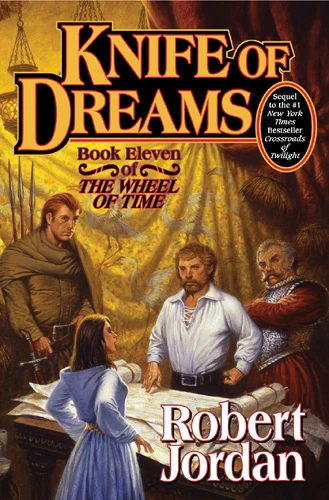
Knife of Dreams

Yet another part of my Great 2020 re-read includes finishing as much of the Wheel of Time series as I can. In that vein, I recently polished off Knife of Dreams as part of a general re-read of that series I have been pursuing for the last few years as well.

I began the Wheel of Time series almost two decades ago. My brother and I were, by chance, introduced to it by a family friend. She lent us her copy of The Eye of the World and my brother and I devoured that book, and eagerly began casting about for more. Fortunately for us, ten further books existed and we gleefully racked up late fees from our local library reading them. Eagerly flipping through large hardcover copies. Many people who saw us reading them expressed astonishment that we were. It was very uncommon for preteens to read, much less finish, 800+ page works of fantasy. It was fortunate for us though that someone did comment on that though. When I finished reading the 10th book in the series Crossroads of Twilight, it came as a shock to me that there was nothing further to read.

In an age well before limitless internet access, it was difficult to find out for someone not connected to a greater network of fantasy fans when it could be expected a new book would come out. As I mentioned before though, we were fortunate that an older fan recognized that we liked those books and she helpfully directed us to the latest book in the series, book 11, Knife of Dreams which came out in 2005.


This book holds a special place in my heart as it was when my brother and I 'caught up' to the greater fandom of the series, it is the eleventh book, and it was the last book Robert Jordan completed. He would die in 2007 from cardiac amyloidosis, his magnum opus left unfinished.

That was of course, until the modern fantasy juggernaut Brandon Sanderson (of Mistborn fame) was selected to finish the series by Jordan's widow. Though this is a story in and of itself which is separate from my love of this book.

Knife of Dreams actually came at a pivotal time for this series as a whole. The 10th book had been reviewed, largely negatively, by even hardcore fans who found it plodding, and somewhat unenjoyable as a rehash of the events from the last book through other characters eyes that added little to the overall narrative. Jordan himself even admitted it was something of a mistake. There was very real fears the series would begin to suffer variously from Kudzu Plot or Four Lines All Waiting, which would drag the series out and onwards to its detriment. 

In that sense, Knife of Dreams was a breath of fresh air. It tied up longstanding story arcs, moved the plot in dramatic ways, and pushed character arcs in a way it felt to many readers hadn't been pushed since the 8th installment of the series. It genuinely breathed new energy into the series and opened up new avenues that could be explored while pushing the plot and characters closer to their inevitable gathering at Tarmon Gai'don, the Last Battle.

As this is the 11th book in the series, I'll be going into some MAJOR SPOILERS below the cut so if you haven't read the series do not start here, and instead pick up the first book at your local bookseller, library, or online. Before that though, definitely check out other reviews or watch this primer by fantasy and booktuber Daniel Green who does an excellent job at dissecting the series.

Before that though, as a semi-ending before I do some more plot analysis, I'd just like to reiterate why this series is important to me. I came to it late, all things considered, but it really did develop my love of epic fantasy. This book too was important because it set me on the course to keep reading, and eventually come to the satisfying conclusion of the series. I genuinely do love it and the characters it contains, and though it's some heavy reading, if you love fantasy, it's work taking a chance on. It really did help develop my love of reading in the genre.

Knife of Dreams was an excellent book to keep the series going, and proved that, to the end, Robert Jordan was an amazing writer.

Tuesday, 21 April 2020

A Game of Thrones

For the first time in nearly a decade, I delved wholeheartedly into the world of Westeros and the Seven Kingdoms. I begin my reread of the (so far) five books making up the A Song of Ice and Fire series. I start with A Game of Thrones.

Originally published in 1996 this book has set off over two decades of well informed speculation, appreciation and adaptation within the world of fantasy. With board games, card games and the wildly successful small screen adaptation that was Game of Thrones the ASOIAF series has gained enormous traction in both overall media and the fantasy genre as a whole.

It all began here though.

A copy of the book which owes my family and friends nothing

I must admit that at first, I was very resistant to picking up the series. My brother originally stumbled upon it while looking for good books to read. I myself was little intrigued, and instead was trying to continue with various books I was personally reading at the time. I picked up A Game of Thrones very hesitantly and walked into it and came away not unduly impressed. I actually put it down until I saw the first episode of the small screen. Then I picked the book up and read through it as quickly as I could.

This is one of the few times I've really gone the opposite way with a show making me read a book series. My opinion on the show and its ending is available for all to see, so I won't elaborate on that but let me just say I'm glad I'm rereading the book series.

Since then I have sucked a few people into the series, and my brother has never let me live down that it was he that got me into reading it. He was right, I was wrong, and that's all I am going to say about that!

But we start in the foreboding world of Westeros, in the realm of the Seven Kingdoms. Beyond the vast icy Wall a threat of ancient legend is rising, and below conspiracies in the halls of King's Landing threaten to topple the realm into civil war at the worst possible moment.

Our principle view of this world comes through the members of House Stark, little Bran, the girls Arya and Sansa, and the matriarch and patriarch Catelyn and Eddard Stark respectively. They tell most of the tale which we become familiar with, and their decisions will ultimately play a great role in the fate of kingdoms.

The outlying viewpoint characters are those of Jon Snow, a Stark yet a bastard boy unloved by the matriarch. Tyrion Lannister, the dwarf of the rival House Lannister, and finally Daenery's Targaryen, the last of the old line of House Targaryen. These tell separate stories across the Narrow Sea in the Free Cities and on the Wall, showing us separate but no less important plot lines in the whole game of thrones which plays out.

Going back and rereading this book I was shocked at how much my memory had been filtered through the television series. There were bits I had outright forgotten, and characters or subplots I didn't even remember. Getting back into the heads of the characters and their struggles was a very welcome journey for me to take.

The mystery still lies thick upon the story, and the plotting and intrigue between the lords and ladies continue to impress me. I will be thrilled to re-explore where different plots go, and what I find myself learning again as the series is brought into a new light for me.

It opened my eyes to different aspects of the story the show missed, and different perceptions of the characters I had not previously thought about in well over a decade. Ned Stark is a very canny operator who is trying to do what is right in light of his wartime experience, his daughters have both been raised in very different circumstances which influence their decisions, and his wife and sons are all very strong and independent characters. That said, his death near the end of the book shocked me when I originally read it, much as it shocked many other first time readers. The story of Daenery's and her rebirth as it were was also one that I thought I knew, but the reality of it compared to the show did again surprise me! It just goes to show you how much can really be lost in an adaptation!

The remainder of the series is part of my 2020 reread, and I intend to say more about this now ongoing fantasy classic as I dive deeper into books I haven't picked up in over a decade. Rest assured though, it is a series which I can happily recommend to anyone.