Showing posts with label Ideology. Show all posts

Friday, 17 June 2022

A Country of Ghosts

“The steepest places have always been the asylum of liberty.” – Baron de Tott

The Boril Empire seeks to conquer the mountains. It has coal, iron, and other resources necessary for the empire to continue it's expansion. There are no nations there, or so they tell everyone. Dimos Horacki is sent to report on this war for the broader public. He believes the nation is going to war in order to give resources to the people, not just for simple conquest, but he is soon disabused of this notion and captured by the Free Company of the Mountian Heather. Now in enemy hands he finds all his assumptions challenged in this, A Country of Ghosts.

In Margaret Killjoy's novel we are given a little slice of utopia and war in a secondary world. The 'country' of Hron is being invaded by a colonial empire as told through the eyes of this wayward observer to war. It makes for an extremely effective analysis of the world and the premises of each side.

Killjoy writes a very believable anarchist society, in a way perhaps that Ursula K. Le Guin would not have dared for her own The Dispossessed but not quite in the sci fi spectacle of Michael Z. Williamson's Freehold where the ideological conflict and military conflict are synonymous. It makes for something of a refreshing in between.

 A Country of Ghosts is a book that is meant to showcase a society, and one that the author is exploring through this fictional lens. The people of Hron are a curious mix. Many of them are the descendants of herders and isolated mountain communities who have always governed themselves and lived as they liked. Then an influx of refugees fleeing a failed revolution who have in turn revolutionized the society into a more confederal mix of refugees and mountain communities, all living in (mostly) harmony.

Young Dimos finds this confusing, hypocritical, and is a very believable fish out of water! Looking through his eyes I also found confusion, but also appreciation for the people of Hron. The secondary characters are no less deep for all that they may have the life of a mayfly on the stage of the impending war! The ways they introduce our viewpoint character to the ideas of Hron are very organically laid out and tend to flow with the story so you are gradually introduced to this world. It makes for some very fun reading, especially as Killjoy does not skimp on details in this secondary world, from the flora, fauna, and even how these people build their homes! It's all quite entertaining.

Nor does she skimp on the horrors of war. Honestly war is occasionally portrayed as invigorating, but always with a cost. You'd be hard pressed to say anyone walks away unscathed.

Just as importantly, nothing is monolithic. The people of Hron are varied, quarrelsome, and often don't get along as well as they should. Nor is it depicted as some paradise or land of plenty, but it is plenty free. The people like how they live overall, and don't care to be told what to do. It honestly makes me flirt with the idea of anarchism.

The story has it's highs and lows, with a grimly satisfying conclusion. Killjoy establishes a beautiful world and I hope she returns to it! Definitely one to keep an eye out for!

Friday, 2 July 2021

Red Mars

In 1992 Kim Stanley Robinson published the first book in his phenomenal trilogy about the colonization of Mars. Taking a look at the information we had on Mars at the time, how it might effect people living there, and telling a very deep story about community, Robinson paints a fascinating picture of life on the Red Planet, and how humans end up changing the environment of Red Mars.

Come the year 2020, the first humans set foot on Mars. John Boone is the first man out of the lander, and in one small step becomes the most famous man in the Solar system since Yuri Gagarin orbited Earth or Neil Armstrong. Returning to Earth, he puts his heart and soul into creating a mission to settle Mars. Wrapped up in the heady wines of fame, discovery, and international popularity, Russia and the United States begin constructing everything they need to settle the Red Planet.

With a reasonably vigorous testing system, a faux Martian settlement in Antarctica, and lots and lots of psychoanalysis, the United States, Russia, and various others from numerous nations representing one hundred in number, set off to colonize Mars on the ship Ares in 2026. Led by John Boone, his American counterpart Frank Chalmers, the excitable Russian Arkady Bogdanov, and the other Russian leader Maya Toitovna, the First Hundred head to Mars.

From there we have an exciting series of landings, struggles against nature, and exploration. From the landing of the First Hundred on Mars, the exploration of the Martial North Pole, and the struggles of building in low gravity, the initial backdrop for the colonization of Mars is vividly realized. There's many poignant and breathtaking explorations of Martian vistas, the world around them, and the different skies people see.

Much like all of Robinsons work, the story is also very ideological. There are those who want to terraform Mars as fast as possible, known as Greens, while there are those who want to be slow and methodical, keeping Mars pristine, known as Reds. Then others want to simply learn how to live in coexistence with this environment, for as long as possible. This ideological debate informs much of the early story, and it seems there are those willing to go to any lengths to see their views come out on top.

There is also no agreement on how Mars should be governed, or even developed. Initially the UN supports the slow approach, but pressure from a world that is overpopulated, resource hungry transnational corporations, and other factors, push them along the quick path. Then comes the question of who exactly governs Mars. Who sets the laws, who polices people, and who profits from all the work being done? That is an extremely messy question with no easy answer.

I found that, from the trip on Ares on, the story hooked me. Personally, I enjoyed the more confined element of the ship over from a story telling view, but it worked very well introducing us to all the various characters. It established personalities, ideologies, and competing interests very effectively for the eventual struggles which would culminate in the final acts of the novel. None of the characters ever felt like a cardboard cutout, and many had interesting depths. Some were better than others, but they generally didn't interact enough outside the First Hundred to really flesh the world beyond them out, so one might say the story is told almost exclusively from their view of it.

Some elements were told simply for plot. The idea of a stowaway on something as sensitive as a colonization mission to Mars is a bit extreme. Then a few of the ideological and cultural patterns did stretch belief (no idea who the Big Man of Mars is supposed to be represented by) but nothing really pulled me out of the story or ruined it. Reading this story with all we know now in the 2020s - and without a First Man on Mars - is interesting, as we see what people thought of Mars in the 90s. It's definitely going to be interesting how many speculations from the novel end up being correct from looking at the Martian environment.

Red Mars is an amazing piece of the classic science fiction canon, and a strong opening in this trilogy. Definitely worth checking out!

Monday, 4 January 2021

What I Read in 2020

The year 2020 was a long, long year for me. Quite honestly it almost feels like the period between January and March was one year, between March and June was another and then June to September, and finally October to January. So, I feel like I've been through four years when its been just one. Thankfully though, I read a lot in the four years of 2020!

I managed to read 72 books and 34,204 pages between them. I'm not sure if that's a record for me or not, but it certainly outpaced what I read last year. I had actually planned 2020 as a fresh start in a new decade, especially for reading. I had started the year with the goal of doing a massive re-read of my favorite book series for the year. I had dedicated myself to re-reading a lot of my old favorites to see if they stood up, and then to maybe, maybe downsizing my collection. I mostly expanded it though. In the course of my re-read I went back to a few of my old favorites, The Moon Is A Harsh Mistress, Leviathan Wakes, Jennifer Government, and then branching into some of my favorite fantasy series. A re-read of Joe Abercrombie's amazing First Law series, then re-reading all of the Stormlight Archive so far in anticipation of the release of Rhythm of War this year. Finally I re-read, perhaps the perfect trilogy in the first three books of A Song of Ice and Fire. Though I had to put off my combined reading of A Feast for Crows and A Dance With Dragons until 2021.

On the whole, the re-read was highly successful. I didn't get to all of what I wanted, but I managed to read a lot of new books too.

Normally my year has pretty bog-standard reading. Fantasy, science fiction, and the occasional mystery, historical fiction or alternate history. This year however, I was committed to reading more on social issues, some on political issues, and generally more books by authors I had not yet read, but especially by women and people of color. 

A small cross section of what I read!

One of the first books I branched out on and took a chance with was The Secret History by Donna Tart. It's a novel set in the 1980s in Vermont at Hampden College. Young Richard Papen leaves his home in California to study Ancient Greek, and while there he meets an eccentric group of wealthy students partake in an almost cultish devotion to the art. From there, dark things transpire and poor Richard is thrown into a world well beyond his understanding. It's honestly one of the most fascinating and frustratingly good books I've read in years. Well recommended!

Something more in my usual wheelhouse that I read for the first time was 2312 by Kim Stanley Robinson. Originally written in 2012, it was the authors attempt to reach 300 years in the future and grapple with what humanity might look like. It tells a compelling story of love, loss, and a humanity startlingly distinct, yet also depressingly still similar to our own 21st century selves. It's an old planetary romance novel in the style of recent reads. A solid piece of science fiction literature!

A non-fiction book I distinctly enjoyed was The Global Crisis by Geoffrey Parker. It's a fascinating look at war, religion and climate change in the 17th century. It supposes an idea of a "general crisis" taking place across the globe brought about by previous socioeconomic conditions, religious awakenings and social upheaval, but most of all, by climate change. The 17th Century was a genuine era of emergency, encompassing the whole world with events like the Thirty Years War in Europe, the collapse of Ming China, the near extinction of the Virginia Colony, the establishment of the Tokugawa shogunate, and the Puebla Revolt. It was referred to by some as the "Age of Iron" due to there being a genuine sense of global calamity. It's a very academic work (and I read the abridged version!) but it is chock full of information, research and first hand accounts of the people of the era. It established to me that this was one of the most fascinating periods in human history. 

In other realms of non-fiction, I also read The Sport and Prey of Capitalists by Linda McQuaig. It's a very short, but spectacularly enlightening read. It details the history of public ownership of utilities and natural resources in Canada, while also detailing long campaigns of poor deals and mismanagement by private entities. It compares and contrasts the systems here with those of other countries. There's notes on missed opportunities and possibilities for how we can make our own institutions better.

A book which acted as a real eye opener for me was Why Women Have Better Sex Under Socialism by Kristen R. Ghodsee. From showing how many early socialists were women, to the egalitarian thinking of other socialists and socialist writers, it also highlights how modern liberal democracy, and capitalism in particular, has made women less free and arguably less equal as well. It's a spectacular examination of how in Eastern Bloc nations, there was a long history of, at the very least, pandering to women's rights, establishing job and childcare opportunities to make something of a more level playing field among men and women, and makes a compelling argument that had the Eastern Bloc not adopted such policies, there would have been little impetus for Western nations to adopt them as well. Far from cheerleading for the East Bloc however, it rightly points out their flaws and failings, while also arguing that the ideas behind socialism could do a lot for our economic lives, and even our love lives.

I think the most shocking, if not the most radical book I read in 2020 though was The Uninhabitable Earth: Life After Warming by David Wallace-Wells. It fleshes out what he wrote in a 2017 article, and runs the range of possible global outcomes across various levels of warming. He points out that with rising temperatures - and they will rise, it's only a matter of by how much - there's a gambit of problems which will impact across multiples spheres. Mass extinctions, spreading disease, rising sea levels, frequent natural disasters and increased risk of internal and external conflict between peoples. It's a grim read, but with a hopeful message. It pairs really well with another novel I read this year, The Ministry For the Future. Both are somewhat shocking examinations of the potential ramifications of climate change, and frankly, I would advertise them as must reads.

On a more fictional note, I also read Mexican Gothic by Silvia Moreno-Garcia. I've done a longer review for this one, but in brief; it takes the usual horror of Gothic fiction and transplants it to the highlands of Mexico. The story has everything you love from Gothic literature, creepy old houses, a reclusive family, and a very deep and disturbing mystery.

Another author who I was very fortunate to run into again was Max Brooks. I was able to re-read his cult classic World War Z, and his new, unique work Devolution. It was amusing to discover this year as well that the one movie monster my dad has a fear of is bigfoot. I got more than a little mileage out of this book by describing it to him. A fun and very unique take on the monster horror style, I definitely recommend this to horror buffs everywhere!

I also caught up with Brandon Sanderson's works by reading Rhythm of War. This is the latest work in the Stormlight Archive and a very well done piece. It defies a lot of your expectations and takes you deeper into the world of Roshar and his fictional cosmere as a whole.

Finally, one of the best novels I read this year was The Parable of the Sower. In my bid to expand beyond works I'd already read, I tried to find works recommend by others. This novel by Octavia Butler was highly recommended in many different circles and by many different authors. I dove in to this world in our near future and found myself entranced. It was a phenomenal read and one which I have to recommend to anyone who loves science fiction. Tracking down the sequel is one of my main reading goals for 2021, along with the rest of my reading list.

Of course, I did read 72 books this year, so I had a lot to choose from to celebrate. These books specifically though, were easily in the top ten of what I read among the re-reads to start the decade. I managed to reconnect with old favorites, while finding lots of new work which I could enjoy! I'm happy for what I accomplished this year, and I'm hoping I can read more next year!

Wednesday, 2 September 2020

So About John A. Macdonald Again

I last spoke on the subject of John A. Macdonald back in 2017. In that little essay, I made many statements on why Macdonald is a flawed man, and some of the mistakes he made. I also pointed out why it is important we remember him and what he accomplished for Canada. Also in that first article I made some mistakes when talking about his past actions and the legacy he left us. In light of recent events, I hope to make some corrections, but also stand comprehensively by the good and the bad of our first Prime Minister's legacy, and why I'm unwilling to forget either of those thing.

In my previous essay I did mention what I thought were the positives of Macdonald's legacy, and to begin this one I would like to point out many of his faults before I expound on why it is important he be remembered, and why our current historiography is perhaps not up to the task of doing it.

Firstly, yes, Macdonald was absolutely a racist and that's something that even if you subscribe to judging people by their time period, he was no paragon of tolerance and virtue. He dismissed the Indigenous peoples of Canada who would not settle to farm land and adopt Anglo-Saxon culture as savages. In his multiple dealings with the Métis people he referred to them as half-breeds, a slur on their Indigenous-European roots. 

He was even extremely racist against the Chinese, exceptionally so for the time, wholeheartedly supporting the efforts of British Columbia to expel them from the province and desired to exclude them from the right to vote even in his aforementioned 1885 Franchise Act. He said "...if they came in great numbers and settled on the Pacific coast they might control the vote of that whole Province, and they would send Chinese representatives to sit here, who would represent Chinese eccentricities, Chinese immorality, Asiatic principles altogether opposite to our wishes; and, in the even balance of parties, they might enforce those Asiatic principles, those immoralities … the eccentricities which are abhorrent to the Aryan* race and Aryan principles, on this House." This shocked even his contemporaries, many of whom objected to denying those of Asian extraction the vote. In the end, Macdonald managed to exclude them however.

He also sanctioned the Davin Report in 1879 which was directly responsible for the creation of the Residential School System which would be used in Canada until the 1990s. I want to make clear here that the report specifically highlighted that taking children from their families to 'civilize' them was the best option, and this was supported by Macdonald.

As I said before, Macdonald was directly responsible for the Residential School System, which is a shameful stain on our history. To be clearer than I was in that original essay, the sanctioning of that system, and it's perpetuation by our government long after it was shown to be unhealthy and ineffective and also not even cost effective, was an act of cultural genocide. Though it did not, in sheer numeric terms, kill many people, it caused irreparable damage to Indigenous culture and communities wherever it was implemented and has lasting and terrible effects to this day. 

To continue from my earlier comment on the Franchise Act of 1885, however, one could cynically examine the prospective Indigenous right to vote as an attempt to enshrine as a method of control over Indigenous polities. It would, in the language presented, effectively destroy the traditional structure of Indigenous self-government. It would take away their unique rights as tribal entities, and assimilate them into the broader Canadian society, effectively cutting up communally owned tribal land into individually owned properties. Though ostensibly they were allowed to keep their tribal affiliation, they would lose any special privileges under the Indian Act (another note on the Act below).

Despite this, does this itself make the attempt to at least grant the franchise to the Indigenous peoples, even with long strings attached, an ignoble thing? Some would say yes, and considering that relations with the government are fraught and full of federally exploited loopholes and are imposed in a top down style to this day, that would not be an incorrect view. However, considering almost no legislation was put forward to try and even engage Indigenous peoples in a discussion about voting again until the 1940s, and then not granted on their terms until the 1960s, some might say that as this bill was being pushed in 1885 after a full blown rebellion, it was still a progressive attempt for its day. Though let it be known that Macdonald did say "The great aim of our legislation has been to do away with the tribal system and assimilate the Indian people in all respects with the other inhabitants of the Dominion as speedily as they are fit to change." It must not be forgotten that even the most benevolent seeming actions by the government then (and arguably still) were about assimilation into the Canadian whole.

Saturday, 20 June 2020

Retro Review: Gone With the Wind

In 1936 Margaret Mitchell wrote a classic book Gone With the Wind which almost overnight became a bestseller, and to this day has seen more than 30 million copies printed worldwide. Lest anyone think that successful novels becoming movies shortly after their release, the film Gone With the Wind was released in December 1939 with an all-star cast and has gone on to be widely considered one of the best films ever made. It is so ubiquitous you've probably been influenced by it even without ever watching the film or reading the novel!

So, almost one hundred years on and many cultural shifts later, does this film stand up to scrutiny? Is it a classic romance, or a piece of Lost Cause propaganda depicting an idealistic Antebellum South? Read on and find out! A good plot synopsis follows, so spoilers are ahead below the cut!

The film is wonderfully cast. Vivien Leigh as Scarlett O'Hara, Clark Gable as Rhett Butler, Leslie Howard as Ashley Wilkes, Olivia de Havilland as Melanie Wilkes, Hattie McDaniel as Mammy, Barbara O'Neill as Ellen O'Hara and many, many more. Quite frankly I don't think you could get better actors for this film, and I'm amazed at the quality of it even nearly a century on. Credit really does go to Gable and Leigh however, with Leigh especially notable for carrying the film almost on her shoulders. The dialogue and rapport she has with Gable really does carry these two flawed characters well, and their tragic romance is beautiful! Leigh as the leading lady is very impressive and the energy she puts into the role is just stunning. 


It went on to win eight Oscars, including best actress for Leigh and best supporting actress for McDaniel who became the first African American to win an Oscar. 

The wonderful score leads us through the whole movie, and I really think you can't get much better than it.The film, in the tradition of the time, has a long beautifully scored opening introducing our principle cast and characters and a bit on the setting. Perhaps an (in)famous tagline 'a civilization gone with the wind' which leads into the story itself.

We begin at the fictional plantation of Tara, based somewhat on the old ballad The Harp That Once Through Tara's Halls (beautiful song) and is the home of an Irish descended planter family, the O'Hara's. 

We're quickly introduced to our main character, the spritely and quick witted southern belle Scarlett O'Hara. She is the beau of all Southern gentlemen, and is fawned over by the Southern gentlemen. They wish to talk of nothing but war and she finds this dreadfully boring, wishing she were being invited to more lively parties. This goes on as she prepares for one hosted by her father at the hall where the men discuss politics and the upcoming war. Therein, they see the objections of one Rhett Butler, who firmly believes the South has no chance. It is, frankly, a fantastic scene and was my first introduction to the film in university beyond cultural osmosis. 

Monday, 16 March 2020

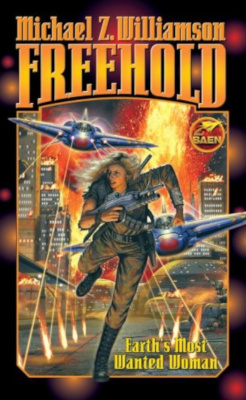
Freehold and Jennifer Government: The Stories

As part of my Great 2020 Re-read I took it upon myself to go back to two novels of varying seriousness. One was a novel I picked up a decade ago, Michael Z. Williamson's Freehold which is a guilty pleasure of mine, and the other is Jennifer Government by Max Barry. One is an interesting story of an alternate society in the far future, while another is a satirical look at a society in the near future. Both are ironically, fundamentally the same society.

That though is a rather simplistic explanation with a broad brush. On the surface they are extremely different, with different cultures, naming conventions, and even different planets. The ideology that unites them however, is fundamentally the same.

First though, let us introduce our two focus cases. First up is the novel I originally read, Freehold.


This was the debut novel by Michael Z. Williamson, for Baen Books. Published in 2004 it was his first full length novel and though it shows at points, it is still an exciting read. My original review still does stand, though I've soured more on some aspects of the story over the years.

Set roughly in the 26th century, it tells the story of Kendra Pacelli as she flees unjust charges of embezzlement in the military on the UN dominated Earth to the only independent planet in human colonized space, the Freehold of Grainne. Self described as "the first truly free society in human history" it is set up as a libertarian paradise (more on that in Part 2) and is meant to be a contrast to the bureaucratic nightmare of Earth. You can do almost anything you want, so long as you are willing to accept the consequences for your actions. Own any weapons you like, drive however erratically you like, love who you like, and sign whatever contract you feel free to. No one is forcing you after all!

Kendra experiences quite a lot of culture shock, but eventually adjusts to her life in the new colony.

When political friction between Grainne and Earth forces her to move into the military, we spend a huge portion of the second act looking in depth at military training on Freehold. It is brutal, harsh, and very difficult. Kendra passes and officially joins the Freehold Military Forces. As she was in logistics in her old military life, she fits right in to logistics in her new one. Getting into the groove of her new job, she again gets caught up with Earth/Grainne tensions as 100,000 malcontents are shipped into the Freehold to stir up trouble. They succeed masterfully, and the UN government declares they are going to annex the Freehold for their own good.

Of course, this leads to war and the UN invades. Needless to say though, that for all the well portrayed horrors of war, the Freehold wins by some pretty far reaching deus ex machina which probably could have been better concentrated on with both a wider cast of characters and some further research. The war largely did depend on a very 20th/21st century understanding of strategic warfare and combat to be believable.

That said, it is a guilty pleasure read, and I fully acknowledge it. Worth a bit of a read if you find the idea interesting.

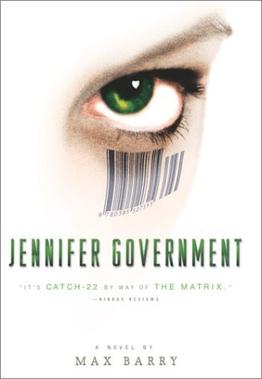
Now this next book, I actually have only very fuzzy recollections of where I picked it up. However, I do recall it being uproariously funny and I definitely read it shortly after reading Freehold. That book is Jennifer Government. Written in 2003, it is an excellent satire of rampant consumerism and corporatism, and turns on its head the idea that a dystopian future requires a totalitarian government!


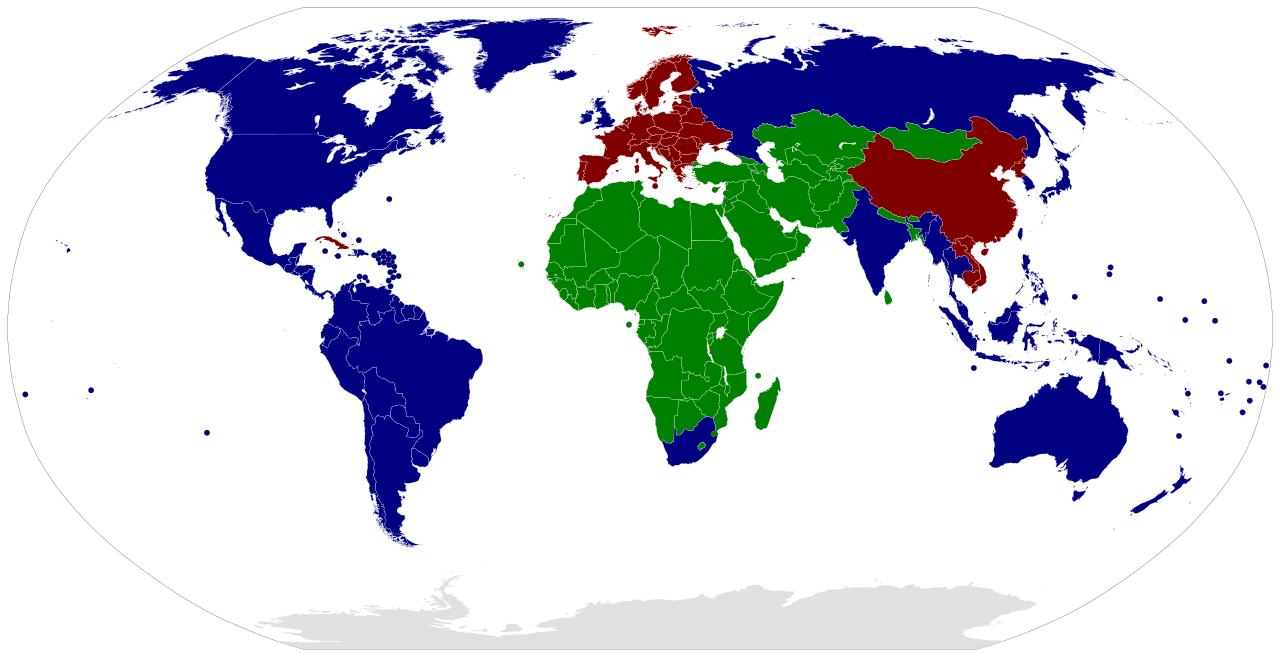
The story begins twenty minutes in the future where much of the world has become the US. Or literally, the United States has expanded into much of the world through corporate purchase. These countries have become part of the US led trade bloc, having gradually given away their sovereignty to become part of the largest, freest system in the world! There is minimal government, no elections, and you're free to do whatever you can afford! Just make sure you read that contract! People have done away with surnames, and you know yourself by the company you work for!

The world of Jennifer Government Blue = US led countries Red = non-US trade blocs Green = fragmented markets
By user Sannita, Wikimedia Commons

Enter one Hack Nike, who works as a middle merchandiser for Nike. One day his water cooler
malfunctions so he travels to the floor above him to try out the one there. It is here he meets John Nike and John Nike. They offer him a fast trace to advancement, he can help them whip up sales for a new line of shoes being sold, and all he has to do is kill some kids! Too bad he didn't read the contract before he signed it!

With all the madness going on enter Buy Mistui, who is unfortunately witness to one of the shootings. Helped out by the barcode tatooed agent Jennifer Government, they both end up on the path of a sociopathic businessman as another cast of colorful characters are sucked into the mayhem. From a militarized NRA gunning for Government agents, companies trying to crash each others servers, to shootouts on the Burger King floor, its a total madhouse as sales come before lives!

Written in 2003 it has some pre-internet vibes which do date the story. But it does really capture consumerism gone mad as corporations have license to do whatever they want since unless you have money, you can't really bring them to task since the government has no right to tax in order to set a budget.

This really complicates the life of Jennifer as she has difficulty going after the bad guys when they do bad things. She's being constantly asked where the money is going to come from, whether she could do things to cause less collateral damage (and therefore expose the government to lawsuits) and if she's sure she can even bring the executives to justice if she has the evidence. Money doesn't grow on trees after all. Meanwhile, if you have the cash the Police can investigate crimes or prevent them preemptively, but it will still cost you. And if there's an emergency, have your credit card number ready so you can pay in advance before they respond!

Other than the murder investigation, the main conflict is between two major loyalty programs taken to its logical extreme. US Alliance and Team Advantage compete against one another to have the biggest consumer base on the block, and John Nike is determined that his side, US Alliance, is going to win big. He is going to wipe out the competition.

As this is written as a satire the humor comes from the over the top situations and unlikely circumstances our many poor characters find themselves in or the ridiculous extremes they will go to in order to get the win. I had quite a few laugh out loud moments, especially as one poor side character Billy Bechtel kept running across Jennifer Government in the worst ways possible. All the poor man wants to do is go skiing! The outlandish desire for consumerism people showed was pretty funny. Late in the novel Jennifer and her partner Calvin are running through a riot and Calvin keeps getting distracted by the good deals he sees.

Its a funny story with a very satisfying conclusion and I genuinely want a laugh about our society and consumerism. Really takes the piss out in an enjoyable way. If you want a laugh in this mad modern world, very worth a read.

With the stories out of the way; why do I think they portray the same society? In worlds where the market is unchecked and money talks, what do you think would happen? Stay tuned for Part 2 as I launch into a much more long winded explanation!

Wednesday, 19 February 2020

2312

Another one not for the re-read, but this is yet again a great science fiction work! Perhaps unsurprisingly, it is another by Kim Stanley Robinson. I take you to the future, three centuries from when it was penned. The exciting world of 2312.


We start our primer to the 24th century on Mercury. There the great mobile city of Terminator crawls ahead of the ever pursuing sun, allowing for the permanent colonization of the planet. Enter our protagonist Swan Er Hong, an artist on the planet out doing a 'sun walk' a journey of staying just ahead of the deadly star. Her famous grandmother, Alex, the Lion of Venus, has just died. Swan is gathering in the city with her family and friends, when she meets with a representative from the Saturnian league a 'toad faced' fellow named Fitz Wahram who was also a friend of Alex's. Even before the funeral is complete however, things get strange. An inspector from Interplan (think the Space Police) Jean Genette, comes asking if Alex had any enemies.

Little does Swan know, but her grandmother was involved in a Solar System spanning plan. It centered around the Mondragon Accords, which were to develop a semi-planned economy for Earth and all the settled planets, moons, and terrariums which act as floating habitats for humanity in the void. All of these are looked over by qubes, small quantum computers with advanced AI in them. The AI though, are not truly self-aware. But if that is the case, why was Alex so intent on keeping her work away from the artificial eyes of qubes? And why did she keep so much hidden from Swan and the qube implanted in her head, Pauline?

This sparks a long journey around the Solar System, from the mobile city of Terminator on Mercury, to the great ridge covered moon of Saturn, Iapetus. We take a floating tour of where humanity has advanced to in the 24th century and get to bask in how far we have come, but also how far we have fallen.

We see that Earth is still a place of extreme inequality, and great desperation. The sea level has risen by 11 meters in the past few centuries, flooding great metropolises like New York, and sending entire coastlines to the bottom of the ocean. The only ice sheets left are in Antarctica and Greenland. Meanwhile the ravages of global warming have led to mass extinctions, great desertification, and billions dependent on food grown in the many thousands of terrariums and then shipped down the orbital elevators to feed Earth's masses.

Meanwhile, in space those living on the terrariums have lives of great luxury. They have access to quality healthcare, need to worry little about their material health, and can afford to undergo many progressive gene therapies to live long and happy lives measuring over a century, or in some cases two and maybe more! Mars has been terraformed, and Venus is well on its way to being turned into another Earth, but one with a substantially higher gravity. The moons of Jupiter and Saturn are being colonized and terraformed, and the future outside of Earth seems very bright.


Naturally, this sparks resentment from peoples on Earth. They feel left behind or resentful of spacers, and that they live in luxury while the majority of humanity does poorly. The spacers then feel that the Earthers are ungrateful, backwards and unwilling to work to solve their own problems.

This is one of the central conflicts of the story as Swan and Wahram go back and forth between the habitats of the Solar system and Earth, trying to continue the secret project that Alex's grandmother was working on. But the issue of the qubes also looms large throughout the entire story.

Exploring the Earth and the settled solar system in this story makes for an engaging read, and that we do it through the eyes of two characters who alternately detest and desire one another, is pretty fun.

Swan is a very headstrong, antisocial, and - even by the standards of the 24th century - heavily augmented woman. She has undergone numerous gene therapies, had a qube directly transplanted into her head, and even eaten lifeforms found on the oceans of the moon Enceladus. With all this, she has trouble with people, and a difficult past which continuously haunts her, giving her trouble beyond her comfort zone. It also makes her short tempered, and not extremely understanding of the motivations of others. This proves quite capable of biting her in the ass on occasion.

In contrast we have Wahram, who is slow, methodical, and not nearly as ready to jump into extreme situations. He has lived for years around Saturn, working as necessary, and supporting a small family creche he is apart of. His friendship with Alex was because he believed in her vision of the Mondragon Accords unifying humanity through an interdependent economic system, and using the terrariums to help keep species that had gone extinct on Earth alive. Whether Swan can live up to that vision is anybody's guess.

The relationships of these two is central to the plot, making for a kind of cute read.

Our supporting cast is fairly small. Mqaret, Swan's grandfather, plays a the role of an elder father figure to Swan, helping her in the background. Jean Genette, the Interplan inspector who is galavanting about the Solar system on his mission to find out if Alex's fears of the qubes has any basis, and finally Kiran, a boy who rescues Swan from the slums of New York for rescuing her, and he is inadvertently thrown into the chaotic workings of the governing body of Venus, the Venusian Working Group.

Each character has an important role to play in the overall plot, and they do each help round things out to a satisfying conclusion in the end.

The plot itself is not what one would call, action packed. It is more driven by drama, emotional soul searching, and trying to piece out whether any of the main casts fears are actually there at all. It does make for some interesting overarching mysteries. We do have some very fun action sequences though, and bits of adventuring and derring do which would not look out of place on older classics. The scenarios will look very familiar to other sci-fi lovers!

This story though, is largely one which revolves around an interplanetary adventure and romance. It manages to tell both stories quite well I think, and I did not find myself getting bored, even if I admittedly skimmed a few more emotional soul searching internal dialogues. The interactions between the lead characters were always fun, and made for good ways to build both tension and the world around them. With the secondary characters fleshing things out, an amazing story came to light as I progressed through their adventures.

The way the story is set, with chapter headings telling you who we will be seeing and then extracts from in universe documents giving important context and background, the reader will never feel totally lost.

What really sucks you in is the amazing work done on building this vision of the lead up to the year 2312, how the Solar system works, and an honest examination of how, despite all the progress, humanity has not achieved utopia. This was a futuristic setting which I couldn't get enough of. It was familiar enough that I could grasp much of what was going on, while being alien enough that I had a little trouble wrapping my head around many of the concepts in it. That said, it was amazingly conceived and I loved all the detail that went into crafting such a complex and nuanced future, but one not so alien as to be impenetrable. It presented problems, and was bold enough not to decide on easy solutions.

Anyone who earnestly enjoys good science fiction would also be sucked into this world I think, and I believe you too will be happily drawn into the world of 2312. Please enjoy this one!

Saturday, 5 January 2019

Vice 2018: The Cheney Story

On December 27th, 2018, I went to see a film with my family which I had originally seen the trailer for in October. That trailer was for the film Vice starring Christian Bale, Amy Adams, Steve Carell and San Rockwell, among others. Written and directed by Adam McKay (known for such classy films like Talladaga Nights, Step Brothers, The Other Guys). It purports to tell the narrative of the rise of one of the most infamous and powerful Vice Presidents in American history, the VP to Bush Junior, Richard "Dick" Cheney.

With its all-star cast, interesting subject matter, and definitely controversial interpretation of the VP, I was definitely interested to see the story it had to tell. The film begins by openly stating that they had a difficult time gathering information on one of the most secretive VP's in history, but they did their best.


There's a cold open where the VP is evacuated to the bunker beneath the White House in response to the September 11th Attacks, and where he gives unilateral authority to shoot down planes to Donald Rumsfeld, ignoring the fact that he does not have authority from the president to do so. Setting the stage in 1963, we see a younger Dick Cheney (Christian Bale) being pulled over for drunk driving.

A sudden flashback and flashforward is not the first time the film will play fast and loose with the timeline for 'artistic merit' so be prepared for a few jarring moves backwards and forwards. This all helped by our fictitious narrator,  Kurt, who relates much of Cheney's life and an interpretation of events.

We pick up with a tale of Dick marrying Lynne Cheney, but failing out of Yale and barely managing to keep a job due to a combination of alcoholism and constant brawling. Berated by his wife, he vows to do better. Jumping forward once again, we see he is a congressional intern and is falling under the wing of then economic adviser to President Nixon, Donald Rumsfeld. Under Rumsfeld's tutelage he becomes a canny political operator, and one of the few men who survives the Watergate scandal. Using this to climb the ladder of political power, he is knocked off by the election of Democratic President Jimmy Carter, stalling his journey into the seats of national influence, for now.

From here we see Cheney's emerging heart problems and his time going forward to becoming Vice President under George W. Bush. All narrated by our fictional narrator Kurt, whose role becomes much clearer later on.

Now it must really be noted that from here on out, the film, while it has made no bones about having a bias against Cheney, goes into overdrive to frame the various scandals surrounding the man as a bid to control American policy through a nitwit president.

McKay's work in the past with mostly comedies (and notoriously immature ones at that) shines through at times. Some of the jokes do feel weak and childish, but for a film coming from a primarily comedy producer and director, it is shocking he delivers some great scenes and chilling pieces of dialogue depicting this man. As someone who really doesn't like any of his previous work, that he manages to deliver moments worth of House of Cards is very impressive.

Despite the intention to create a dramatic film, elements of farce or parody seep in. Whether being overly dramatic intentionally or unintentionally, scenes seem written around what is amusing rather than what is going to grip the audiences attention. This creates mood whiplash in the audience as you may go from a scene portraying torture to witty asides by our narrator and intentionally comedic commentary. This can work, but here it feels as though McKay is sticking to his strengths.

While Vice does make sure it lines up with known facts, it has no problems with filling in the blanks about Cheney's motivations and actions with informed speculation. So anyone who was predisposed to like Mr. Cheney will find the film a total hatchet job, while anyone who is opposed to him will see it as a]well informed assessment of the man. The film even pokes fun at its obvious slant by taking a not so subtle swipe at the audience in an end credits scene.

Now we could debate the known facts, the innuendo and the speculation around former VP Dick Cheney forever, but that really doesn't answer the question of whether this film is any good.

For my own personal taste, the way the film leaps back and forth throughout the timeline in delivering 'artistic' speeches seems a bit contrived, and sheds no real light on the supposed motivations of Cheney as a character. Cutting to scenes of his unruly younger years, spliced with his early years in the Nixon White House and accompanied by powerful poses of the elderly man we all know in the halls of power really don't add much to the film. Some attempts to inform his motives also fell a little flat, as they passed into parody territory which detracted from the film at inconvenient times.

Some scenes are darkly humorous, such as when Cheney's heart condition is often played for laughs to break moments of tension, or Rumsfeld's character is a hoot for how cynically irreverent he is. However, in some scenes, such as when the film breaks for Dick and Lynne to speak to each other in Shakespearian verse, go on too long and seem unflattering to the overall pacing of the film. (Though McKay has a thing for this kind of dialogue, and his ending scene echoing Richard III works well).

The acting, though, is phenomenal. Bale comes to life as this reserved, powerful and calculating character. You do feel as though he is playing a scheming, flawed and power hungry man which is echoed on by Adams portrayal of a powerful woman who seeks to advance through her husband, each using the other to bring their dreams of power and influence into a reality.

The supporting cast also bring this tense Washington gang together. Steve Carell as Donald Rumsfeld is an unexpected treat, as he goes from fawning mentor to betrayed underling across the decades. Bush Junior by Sam Rockwell is good, but genuinely unflattering to the former president. The pained portrayal of Colin Powell by Tyler Perry of a man trying to reign in the excesses of a power hungry cabinet member while obeying the orders of his President is endearing, and does make you feel for him despite the implication he was betraying his integrity by carrying out the tasks assigned to him. Justin Kirk as the scheming sidekick Scooter Libby makes one think of the dead eyed Steven Miller who goes to bat for President Trump every so often.

Though Bale and Adams steal the show, one cannot overlook the performance of Allison Pill as Mary Cheney. A story the film plays to the hilt is Cheney's unwillingness to compromise the support of his daughter despite her being a lesbian, something notably opposed by the right-wing Cheney also supports. Her support for her father and her initial troubled coming out are all powerful scenes, making the ending of that troubled relationship all the more meaningful.

Powerful performances as those delivered by Bale and Pill are why I think this movie ought to be seen. Bale is amazing on screen, jumping into this persona with gusto, which should be applauded. It really does deserve every award it has been up for.

Ultimately the film, though not without flaws, will be enjoyed based on the audiences political leanings. It has been divisive amongst critics for that reason, though I dare say not that reason only. Some jokes and scenes are legitimately hamfisted, some of the comedy fairly weak, and portions of the script could certainly have been improved upon. The acting saves it from being a mediocre, while showcasing a series of definitely award winning performances.

For Christian Bale's act as one of the most powerful VP's alone, this film is worth watching at least once.

Saturday, 17 November 2018

Benedict Arnold Gets a Bad Wrap

Perhaps the phrase most synonymous with traitor in the English language after Quisling, is Benedict Arnold. For those of you not in the know, Benedict Arnold was an American general serving in the Continental Army in the Revolutionary War. Now, despite the fact that almost everyone knows Benedict Arnold was a traitor, most cannot quite name what exactly he did.


To give some background, ol Arnold had enlisted early to the Revolutionary cause, and had a particular zeal and charisma about him leading to his appointment to command early in the conflict capturing Fort Ticonderoga. In fact he headed the ill-fated invasion of Quebec, while mounting the delaying action at Valcour Island which slowed the coming British invasion of New York. In 1777 he was instrumental at the Battle of Saratoga where the British force was captured, bringing France into the war. In doing so however, he suffered terrible leg injuries which put him out to the proverbial pasture rather than earning another field command and instead being assigned to command the city of Philadelphia.

However, Arnold was known for getting involved with disputes, most famously with Horatio Gates who actually sacked him during the Saratoga Campaign, only for Arnold to disobey orders and lead attacks on the British anyways. In Philadelphia, he came up against prominent local businessmen and was brought up on charges of embezzlement, though he was eventually acquitted.

It was during this time Arnold married the young Peggy Shippen, who was the daughter of a Loyalist sympathizer. After the marriage he became far more bitter against the Continental Congress, which he felt had unfairly brought charges against him, and passed him over for promotion. It had also heaped praise on his foe, General Gates, for Saratoga, where he had been unfairly sacked.

The exact causes of his decision to betray the Continental Congress are the subject of much speculation, but many believe his smoldering resentment against the Congressional leadership, and his sudden ingratiation with Loyalists through his wife (and a lavish spending style racking up debt) led him to decide to betray his former comrades in arms.

That being said, his whole plan was to surrender West Point to the British. The important fortifications could have significantly altered the balance of the war in New York, but the plan never got off the ground. The British spy carrying the papers which revealed Arnold's plan was captured. Exposed, Arnold fled for his life and despite a brief command with the British Army, he soon retired to London where he would die in 1801.

In sum totality, Arnold's treason did very little to hinder the American cause, and nothing to help the British, costing no American lives. Though arguably his greatest act, was while leading British troops engaging in the massacre of the garrison at Fort Griswold (though whether Arnold is explicitly to blame for that has also been long debated) late in the war. However, this again had no impact on the war overall.

Yet for all this, he is remembered as the greatest traitor in American history. Is that really fair?

I would argue, no.

Even were one to factor in the casualties at Fort Griswold, Arnold did far more to help the Revolutionary cause than he did to hinder it. He was instrumental in a number of significant victories, and comparatively caused more damage to the British. With those considerations in mind his greatest sin seems to be portraying George Washington's trust.

However, let us compare him to a few lesser known, I would argue, greater traitors.

Monday, 5 March 2018

Conquistador

I have blogged about the work of S.M. Stirling before, and indeed much of his work deserves high praise. He has many well known series and novels including the Draka, and the Peshawar Lancers, which are all exciting and epic sci-fi romps. As I have said before though, Stirling excels at world building, but sometimes there are only so many ways you can build a world when we already have one without going totally alternate history. What is a man to do?

The answer of course, is simple, you build a portal to another world!

That is exactly the plot of his 2003 novel, Conquistador.


Starting in 1946 we follow a young John Wolfe VI as he is living in Oakland California, convalescing from his time serving in the Pacific Theater of WWII after getting some Japanese lead free of charge on Okinawa. Suddenly, while tinkering with a radio he is repairing, he opens a portal to another world. He steps out and finds a North America where no European has ever set foot. Thinking of this rich and unexplored world, he rounds up some buddies to explore.

Meanwhile in 2009 Oakland, Fish and Game wardens Tom Christiansen and Roy Tully are attempting to solve the mystery of how so many smugglers are getting their hands on the pelts of endangered species. Only to be drawn into a complex conspiracy involving two worlds and a pretty and (very literally) otherworldly special agent. 

The story kicks off very quickly as our two hapless Game Wardens try to unravel the mystery they are presented with and young Adrienne Rolfe, the granddaughter of this modern day conquistador and a plot to control this gate from inside her home country that John Rolfe has founded, the Commonwealth of New Virginia.

I'll say this, the book hits the ground running with action, intrigue, suspense, and surprises and doesn't stop until a brief interlude in the middle. Stirling is on his game here and he runs the gambit from a crime drama procedural to describing battles with small unit tactics with varying things like P90s to flintlock muskets and bow and arrows, combining that with history and a nature documentary. It shows an impressive array of knowledge and a commendable depth of research. Frankly that level of detail, which doesn't clutter up the plot, should be applauded.

That Stirling also sets the scenes so well, describing sweeping vistas of untarnished nature and the habits of wildlife never seen in our world, is impressive. The alternate patterns of animals, the different geography, and the sweeping beauty of a world largely untouched by man is amazing and paints some stunning views of a world we don't know.

Now it is funny because it is an alternate history in a few ways. The first is how John Rolfe VI is descended from the John Rolfe of Pocahontas fame. In our timeline his lineage died out with his sons' only daughter, here the family lives on if slightly unremarkably until 1946 when Rolfe finds this new world. 

This new world on the other hand is a total alternate history having changed so much from our own it is unrecognizable! In this world Alexander the Great and his Macedonian Empire live on as Alexander dies in 280 BC, rather than in 323 BC as in our own time period. In his prime he has conquered what would be the Roman Empire, turned back the nomads of the east, and settled his people as far west as Spain. His successors manage to keep the Empire running until it bursts in about 300 AD. That though changes the world as we know it, it is a Greek influenced Europe (trapped in the late medieval period) with numerous "barbarian" cultures floating around the periphery and cultures displaced the world over, with Indo-Iranian peoples in Manchuria! No Christianity, no Islam, and certainly nothing compared to the world we know. Then with trade with the East open the post-Macedonian kingdoms have no need to go gallivanting off across the Atlantic. 

All this of course, so the Old World never meets the New.

In its place has popped up one of Stirling's more eccentric societies. The Commonwealth of New Virginia is founded by men who have old school ideas of society and morality, and a very settler mindset. If you've ever read the book Guns, Germs, and Steel you'll have a very good idea of why things go wrong for the Natives rather quickly and how these settlers move in to fill the void.

It is essentially and "oligarchic aristocracy" where the nobility (in the form of the Thirty Families) control most everything, they have their associates (basically their tenants) and there are freeholders and collaterals who are direct members of the family, or are directly in the thrall of the families themselves. 

The families themselves are made up the original members who settled this new world, those who came first, and later those who provided significant capital or settler populations to help boost the Commonwealth. Many of these are people with good reasons not to be caught on FirstSide (or our world), fleeing Nazis, Pied Noirs, Rhodesians, Russian communists, Serbian war criminals, and Afrikaners. All people with very different world views than what would be acceptable today.

Society is almost stuck in the 1950s in culture, dress, and attitude, with a firm agrarian basis. Cheerfully irreverent towards displacing the natives and taking their land, and rather intolerant regarding outsiders.

This comes as a great shock to the characters who end up there from FirstSide who don't want to be there, making them distinctly uncomfortable. Many people who get close to the gate against their will are kidnapped and brought to New Virginia by force. Which is how they have a small population of precisely twenty-seven black people.

All of this is delicious window dressing though for an exciting story about how some people want to change a bit of this, by force. There are thrilling car chases, skirmishes, encounters with hostile Native bands in running Wild West style fights, and references to top notch old movies. It's a geeks dream book really.

Other than one or two parts where the world building takes over the story with description, it grabs you and doesn't let go, from page one to the epilogue it is mostly exploration and daring fights. 

Like I said earlier, Stirling did his homework, and I really don't want to spoil all of that for you. It is sadly underrepresented in discussions regarding his work, and really should be celebrated for how unique it is. I highly recommend it to anyone who likes Stirling's work, and anyone who enjoys action, crime, adventure, and alternate history will love this. It has something everyone can enjoy from numerous genres.

Definitely worth a read!

Monday, 28 August 2017

So About John A. Macdonald

So it came to light recently that following this interesting trend in tearing down statues in the United States, some bright minded people have decided the best thing to do is try to remove the name of our first PM from some schools for reasons which seem rather far fetched. Felipe Pareja, who put forward the motion claims: "it might be difficult for Indigenous students and teachers to go to a school named after someone who he says was complicit in the genocide of Indigenous people."

Felipe Pajera is clearly not a historian.

Wednesday, 8 March 2017

The Russian Revolution

One hundred years ago today, perhaps the greatest revolution of the 20th century shook the foundations of Europe as it erupted across the vast expanse that was then the Russian Empire. The world was engulfed in the flames of the greatest war to ever rage across the planet up to that point. Millions had died, famines had engulfed nations, and borders were changing rapidly... on the Eastern front at least.


The Russian Empire, even mauled as it had been in 1914, had been clinging desperately to life come 1917, even making limited gains through military strength in the Brusilov Offensive of late 1916. However, it was becoming clear that Russia, for all intents and purposes, had shot its bolt.

By this point the Russian people were tiring of war. Despite an enormous outpouring of patriotism and national unity at the start of the conflict in 1914, by 1917 millions were dead or dying, and the Imperial armies were being forced back mile by mile. Worse, bureaucratic inefficiency and the poor state of the Russian internal railways meant supplies were not getting to the front, and supplies were not even making it to the cities where the war industries were churning out armaments to support the forces in the field. This was especially true of food.

Thursday, 10 November 2016

Conservative Insurgency: The Struggle to Take American Back 2009-2041 and our own 2016

So yesterday, on November 9th 2016, I woke up to something a year ago I would have laughed off as impossible, and utterly unrealistic. However, much to my own shock, Donald J. Trump has won the American election with a surprising cascade of victories in key battle ground states. Some people are horrified by this news, others are elated, but one thing is certain, Trump's victory was divisive.

However, on the 8th I began reading a book I purchased on Kindle so many years ago on a lark. That novel was Conservative Insurgency: The Struggle to Take American Back 2009-2041 by right wing novelist Kurt Schlichter.


What originally attracted me to it I cannot recall other than it had a catchy cover and comparisons to World War Z's writing style. It has the writing style down pat, but hardly as compelling a story. In brief, it is, since its 2014 publish date, it is now a piece of alternate history wherein "constitutional conservatives" are launching a long campaign of taking back their country through a political and cultural campaign against the nebulous forces of 'progressives' and 'liberalism' and to re-institute "the conservative vision of the Founders" against progressive dominance as exemplified by a two term President Hillary Clinton.

During this re-read I was struck by the uncanny similarities between many of the ideas espoused by these fictional characters, and the real life supporters of Donald Trump. Such were the similarities that I could not get many of them out of my head. So I thought that one interesting way to comment upon the unexpected events of our own time was to look at the ideology and methods that let this happen through the fictional lens of a novel.

In the novel itself it discusses a "cultural war" being waged against the forces of liberalism, and many would say that this is true today from one side of the political aisle. Most of the view point characters in the novel themselves express that they are trying to win their country back from the forces of the unpatriotic liberals. In order to do that, they set out to detach themselves from an ineffective GOP, wage a cultural war to make 'constitutional conservatism' more palatable to the masses by showing them that it is the liberals who are the racists, the liberals who don't support women, and the liberals who support big government and spying on the American people. Make of these claims what you will of course, but the book is all about attempting to show that these ideas of small government conservatives are palatable to people because they encourage personal liberty and freedom versus the liberals who just hunger for power for powers sake. And that the "progressives" will just use slander and lies to discredit and dismiss conservatives as "racists" and "bigots" who can be safely ignored in public discourse.

Ironically the book manages to hit on a number of points which are rather pertinent both in understanding the outcome of the recent election, and in hopefully understanding the common ground that can be found to lessen the division brought about by the election.

For instance, in the novel it discusses the idea of banding together with 'pot culture' as a symbol of personal freedom which is a means of taking away a section of people who would vote Democrat by passing laws which allow the freedom of choice in the matter and remove the burden that smoking or growing pot on the justice system. This is heralded as a step forward in forging a consensus around 'conservative' values. In real life though, during this election California, Massachusetts, Maine, and Nevada all passed legislation which would legalize marijuana, and so did the states of Arkansas, Florida, and North Dakota. So there may be something in the idea that this can bridge gaps. Rather than the false equivalency supported by the novel that "Right leads to freedom, left leads to tyranny."[1]

The novel also manages to hit an interesting number of highlights on the campaign which propelled Trump to power. For instance it discussed that due to the new conservative presidency there was a "border wall" which stopped illegal immigration and prevented millions of unregistered voters from supporting the Democrats.[2] This rather succinctly foretells Trumps long term (and impractical) promise to construct a wall to keep illegal immigrants out, and his promise to deport millions of illegal immigrants. This was the mean and potatoes of Trumps speeches from near the beginning, and one which seems to have meshed nicely with the views of enough Americans to propel him to power.

There is also touched upon the ideological feeling that global warming is a hoax [3a,b]. This seems to be a popular position as well, one cultivated by Fox news, and one happily espoused by Donald Trump, who at one point called it a Chinese hoax. This has been something he has campaigned on getting off of, and most specifically to remove the United States from various global warming related treaties.


However, there are two important points which I think the novel addressed which were very important in explaining the rise of Trump to the White House.

The first is that the novel is constantly harping on the GOP as not standing for 'conservative values' or not standing for the voters. That is something I believe the novel had right then, and is most certainly something the United States electorate agreed on in elevating Donald Trump to the Republican front runner. A political outsider, he has floated the idea of running for president since at least 1988, and he has never had any political experience, and compared to the insiders like Jeb Bush or Ted Cruz he was a breath of fresh air. However, he and the novel made the point that the GOP itself is not speaking for its own constituents. There was a feeling of frustration with the GOP establishment and one which we have seen has been fed since the rise of the Tea Party in 2008. The frustration voters must have felt as they saw their jobs disappearing and infrastructure crumbling[4], all against the backdrop of both a party elite which did not care about them, and an opposition which routinely mocked, marginalized, and discarded them.

That dovetails into a second point that these people were by and large reacting to a culture which regularly abuses and disregards them. That is to say, this is a rural vs urban divide, as David Wong eloquently articulates in his own article. In the novel though, this is presented as a great media gap of the "liberals" disregarding anyone who is conservative as 'racist, bigoted, or stupid' and simply writing them off as a lost cause. In the novel, as in real life, this is something that frustrates and alienates. In real life of course this is a problem where media has merely worked to portray these rural, culturally conservative folk as backwards and bigoted people who are best consigned to the dust bin of history. Calling half of your opponents base 'bigoted deplorables' is hardly engineered to garner either sympathy for you, or your policies.

As outlined in the excellent Cracked podcast on the subject this pattern of alienating a dismissing the people who supported Donald Trump and his policies, both by targeting them indirectly, and their candidate, merely served to strengthen the movement that rallied behind him. This was a direct reaction to eight years of Democrats in the White House, a Republican Party which had become out of touch with its own base, and fear of an uncertain future. Yes, these people are afraid, and concerned about their future. 59 million Americans did not just out themselves as closet racists. Dismissing them as such is counterproductive, much like this novels attempt to dismiss all liberals as power hungry hypocrites who follow a morally bankrupt ideology all for the sake of enriching themselves. It's merely a recipe for creating a toxic environment in social and political discourse.

When one examines how close this election was, with Hillary winning roughly 47.7% of the popular vote to Trump's 47.5%[5] then we can see that creating a further gulf between the people on both sides of the aisle should probably be avoided.

Though allow me to address one thing here. Just because people who voted were Trump were not themselves bigots, does not mean Trump did not rise to power on a wave of bigotry and he was not bigoted. Because boy did he ever. Trump has legitimized some disgusting attitudes and prejudices (which we can already see having a negative impact) that give lie to the idea racism and sexism are not a problem, and ones that, in my humble opinion, make him unfit to govern in Washington in the 21st century. His supporters were willing to overlook this though (much like supporters of Bill Clinton overlooked his sex scandals, and like many have overlooked Obama's poor record with expanding the NSA and drone warfare) because he brought them hope that they finally had someone willing to listen to their concerns.

Though let me be clear, just because someone voted for Trump does not mean they're beliefs, concerns, and fears for the future are invalid. It means that they voted for someone who they felt would address their concerns with what they see as the slow collapse of their country. Simply labeling all these people as bigots and racists and shutting their voices out is so destructive to long term reconciliation that I think such an idea should be rejected out of hand. The future voters need to be building bridges and trying to bring each other together to accomplish more, much as the novel here describes doing (but not in the way the author would like of course) in order to accomplish things that will truly make the United States great again.

There is a reason why rather than professing doom and gloom, commentators who had savaged Trump were able to speak through their disappointment and push for reconciliation between the two divided sides. They don't want a country split into two armed camps. They want a nation which will be stronger. Even Trump himself was asking for unity in his acceptance speech. Hell as David Wong said, Don't Panic. There is no reason to fear Trump will usher in a fascist empire, and even if he wants to roll back the clock on civil rights, he has to go through the voters first. Even if he does, he can't stay in office forever, and everything awful he might accomplish (or try to accomplish) can be undone. It's a democracy, the voters can push back!

Now why am I, a Canadian, writing about this?

Being honest, I think Trump is unfit for the office he has been elected to hold. However, he is the elected president of the United States. Everything he does will effect my country and many of his campaign promises may be devastating in the short term, or even in the long run if you compare his health and tax plans.

He has promised to make American great again. So did another man:


The Reagan years left a legacy of voodoo economics, enormous government debt, and an AIDs epidemic. And he campaigned on similar emotional appeals to fears and hopes.

It is my hope that Trump will be a blip on the map, a last hurrah for ugly populist rhetoric in the United States. He may have though, broken the traditional way politics is carried out, upsetting the political apple cart and letting more diverse candidates into the system and forcing the parties to listen to their constituents needs, and not tell them what they need. This has positive effects in the long run as it may shake up the system and allow new blood in.

In conclusion however, I know many people are hurting, confused, and shocked. But remember, there is hope. My prayers are with my neighbors to the south and I encourage every one to hold on. We are in what the Chinese call, interesting times. Thankfully, times much less interesting than the ones portrayed in the novel mentioned above.

------

1] Schlichter, Kurt. Conservative Insurgency: The Struggle to Take America Back 2009 - 2041 (Kindle Location 1910). Post Hill Press. Kindle Edition.

2] "Of course, we’ve deported a fair number and with the border wall up there’s no more tidal wave coming north." Schlichter, ibid, (Kindle Locations 1131-1132).

3a]"The guy who was into global warming? Remember that scam? It’s freaking six degrees outside!”
Schlichter, Kurt. ibid, (Kindle Locations 2044-2045).

3b]"Al Gore made a fortune off the global warming swindle—" Schlichter, ibid, (Kindle Locations 556-557).

4] Yes, the article is rather nakedly partisan, but it has one of the most succinct descriptions of the total failings of the American infrastructure I could find.

5] Making this the 5th time this has happened in US history. As of time of writing these numbers are accurate.


Friday, 25 March 2016

The New Normal? Unintended Consequences.

Thirty-four dead in Brussels and three hundred wounded. Simply a small number of victims in an ongoing campaign of terror around the world perpetrated by one of the most evil organizations in the modern day. ISIL, the Islamic State of Iraq and the Levant, has emerged to fill some of the power vacuum left in the Middle East since the disastrous US invasion in 2003.

How long this apocalyptic cult posing as a country can sustain itself is an open question, one which should worry long term military strategists and politicians for the foreseeable future. This is a tragic turn of events, but one which comes on the heels of poorly thought out goals set down over a decade ago.

With the power vacuum in Iraq created by the American invasion in 2003, the toppling of governments and the unrest of Arab Spring, and the rising xenophobia in Europe alongside the exodus from the war zones of the Middle East we see a vicious cycle of desperation emerging in the region. Thousands of desperate, angry young men are resorting to extremism to find purpose in their lives as they find their homes turned to rubble and few prospects in a new world that is hostile to them.

None of this could have been accurately predicted in the years leading up to these events. However, the short sighted actions of those who initiated the invasion will be judged historically, but the unpredictable dominoes cannot not be laid at their feet however, and we must remember actions will always have unintended consequences. What is frightening is how far these actions have led to the precise scenario that those who carried them out hoped to prevent. In a terrible irony the world is now threatened by a group more organized and farther reaching than those who carried out the 9/11 attacks. We can only hope that they can never repeat that level of destructiveness.

For now though, as the dominoes continue to fall, the world must sit back and hope that they can come up with a strategy for defeating both extremism abroad, and at home.

What worries me though, and ought to worry many others is what I found myself asking in the wake of the Belgium attacks. Is this the new normal? Are we one day going to get used to living in a global war zone between extremism and Western ideals? Will we be able to look at the list of deaths on the news and the new explosions in cities around the world and simply shrug on get on with our lives? We already can ignore the bombs going off throughout the Middle East and Africa, will we one day be immune to the bombs going off in Europe?

I would sincerely hope the answer is no, but we can only wait and see.