Showing posts with label Characters.. Show all posts

Wednesday, 12 January 2022

The Heroes

Three men, one battle, no heroes. Thus is the tagline to another epic story from Joe Abercrombie. In truth, this is about the fourth time I have read my well loved, and much worn, copy of the book. It was in fact the first I ever picked up of his. I effectively went into the world of the First Law blind and came out star struck. As such, there were some contexts I missed the first time, but when I first read (and then reread) the amazing trilogy, I fell in love with this book all over again. Allow me then, to introduce you to the epic three days in the Valley of Orsung as we see The Heroes. 

From goodreads

Picking up roughly nine years after the events of The Last Argument of Kings we see that, once again, the Union and the North are at loggerheads. A disagreement between the southern clans of the North and the new Protector have exploded into open war and so the King of the Union has backed them in their fight. Now for interminable months the two armies have snapped at one another but not yet come to battle. It's time to change all that.

Fighting for the North we have Crunden Craw and his dozen, working in and behind the lines to support the main army's four war chiefs. Slithering among them is the former Prince Calder who claims the North in the name of his slaughtered father Bethod, but so must act like a hostage while dodging assassins. A young lad named Beck decides he wants to see a real battle like his father and leaves home to take part in the war.

For the Union we have the hulking warrior Bremer dan Gorst, formerly the king's First Guard and a warrior without equal in the whole of the Union. Then we have the infamous Corporal Tunney, the longest serving junior officer in His Majesty's army, a lazy standard bearer who does his best to stay out of the way despite his officers meddling. Finally, on the sidelines, Finree dan Brock, now married to the son of the most infamous traitor in the Union, schemes to raise her husband in society and hopefully become a power to be reckoned with in society.

Behind them all though, Bayaz schemes and plots, while the leaders in the North may have some secret agenda of their own.

One thing I have to mention is that the battlefield is just as much a part of the story as the characters. Laid out in loving detail with a map that changes with the battle, you can track the action and see where everyone is in relation to everyone else. A fantastic use of visual work to help the story and I really think it needs to be commended.

The story, as usual for Abercrombie, is a brutal affair. The folly and misery of war is well on display. Men drowning in mud, bad rations, the misery of the wounded, and the stupidity of men and officers can be seen everywhere. That doesn't drown out individual moments of heroism and mercy of course, but they're far outnumbered by the butchery.

It is a well put together story which takes place over a few days on a single field of battle, with intrigues, betrayals and numerous pitfalls for each side. It shows that any great event can make for an engaging story and have plenty of room for betrayal! It is also where he started on his wonderful little vignettes of characters experiencing the events of the battle, from officers on horseback to soldiers going toe to toe with their counterparts, and many of them meet grisly fates indeed! It's a wonderful piece of writing which brings the scope of the battle to life!

Our strong female character in Finree is a wonderful foil to the men, having to scheme and politic rather than stab and batter her way to the top. There's also Calder, a well know coward who will do anything to avoid fighting! They set themselves against seasoned warriors and commanders whose perspectives really livened up the story. My personal favorite was Beck, a lad who has only heard about war in songs. He goes to earn his manhood and finds war much more than he expected. I won't spoil it, but the end of his story is perhaps one of the most tear jerking things I've read, an amazing piece of writing.

As a stand alone in the greater First Law world, its one of Abercrombie's best books in my opinion. He does some phenomenal work with this one little piece of land and makes you feel the blood and mud spilled for it. It is an amazing war story and an altogether phenomenal work of grim fantasy fiction. It sits proudly on my shelves as one of my favorite novels! Definitely pick this one up!

Monday, 11 May 2020

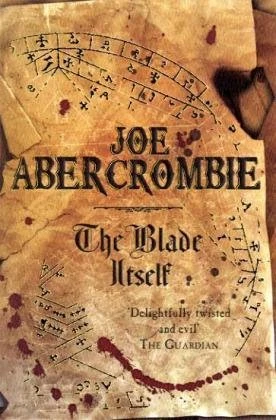
The Blade Itself

As part of my Great 2020 reread I'm returning to a series which I originally picked up way back in the 2010s, I can't remember exactly when, but was drawn to it by the TvTropes page. It promised me a delightfully twisted story of torturers, barbarians, mad wizards, cannibals and the moral grayness of war. I was not disappointed! I give you the First Law trilogy, starting with The Blade Itself! Thanks to Homer for the title!

From the First Law Wiki

Welcome to the Circle of the World, a place I have visited before. It is a world of mighty empires and kingdoms, shattered empires and emerging kingdoms. We start in the grim North, where Logen Ninefingers, The Bloody Nine, is fleeing from the bestial Shanka who want to make him a meal. After being ambushed, separated from his band of fellow warriors, and thrown from a cliff, he survives to seek out the advice of the spirits who guide him to the First of the Magi, Bayaz. What this old sage has need of in a bloody and brutally scarred barbarian like him he can't say for sure.

In the Union we see Captain Jezal dan Luthor who is busily training for The Contest, to win glory for himself. Vainglorious and selfish, Jezal is an officer in the Kings Own, the army that holds the disparate parts of the Union together. He fights for himself though and is happily vain and willing to do anything to advance his position. That is, until a chance meeting puts in in the path of the sister of his commoner superior Major Colleem West. Maybe Jezal has a heart after all.

Also in the Union, in the capital of Adua, Sand dan Glokta of His Majesties Inquisition, war hero, winner of The Contest himself, and former guest of the Emperor of Gurkhul is seeking answers to his questions. Thankfully, no one knows more of questions than him. As a guest of the Emperor he was brutally tortured, losing many of his teeth, the toes on one foot, and being cut, beaten and subject to some of the worst tortures imaginable. Now he must unravel a conspiracy which seems to go to the heart of the Union, and many powerful men want him to succeed or fail and that can be a matter of life and death.

Finally, far to the south, at the edge of the Gurkish Empire, Ferro Maljinn is seeking revenge. Revenge against the Emperor, revenge against his empire, revenge against the whole world. An escaped slave and a notorious bandit to boot, she is hunted by the ferocious warrior priests of the Prophet Khalul, the Eaters. She is saved by a mysterious old man named Yulwei, who declares he desires greater things from her than being a corpse. They head northwards, towards the Union.

These disreputable characters all meet in Adua where blood flows in the streets, corruption festers up from the halls of power, and an ancient feud boils into the open.

This starts off the simply superb First Law Trilogy, the story which brought Joe Abercrombie into mainstream fantasy. Since reading it, it has become one of my favorite series, and he is probably one of my favorite authors because of it. Since I did make some allusions to the newest novel, I would encourage those just discovering this series not to read that review first and to instead read these reviews upcoming.

What probably drew me into this series is that Abercrombie writes immensely flawed characters. They are vain, selfish, cowardly, and twisted people. They commit evil acts while trying to be better, or just for the hell of it. Hell, one of the view point characters is a torturer! But that does make these characters deeply interesting, as we can see our own flaws, shortcomings, and even cowardice reflected in them. I myself was swept away by Jezal's arc in this book where he goes from selfish fop, to a man trying to prove to himself that he can be a better person, all to win a girls heart.


Glokta though, is probably my favorite character. He begins as a self-piteous cripple who loathes the world around him, both for what he has become after his glory days, and a feeling of betrayal at friends who seem to have abandoned him. He also carried the meat of the intrigue plot on his back as with the death of the leader of the Closed Council, his boss, Arch Lector Sult, is jockeying for power with the disparate factions in the realm, and he means to come out on top, even if that means doing so on top of a pile of corpses. Glokta's included.

The infirmities Glokta labors under are interesting as well. Having been crippled from torture he is in constant pain, and must tread carefully lest he cause himself agony. Despite this, he has a keen mind and is very sharp in his observations. One could almost call his storyline a very grimdark noir detective piece. I deeply enjoyed it, and his POV's are probably my favorite throughout the books.

I think what sucked me in though was that while the story itself had a slow build, Abercrombie writes a surprisingly complex and deep backstory. He deftly weaves in discussions about the lore of the world, hints towards the future, and neatly lays out things that upon rereading I found myself shocked at how much he managed to telegraph with me not even guessing!

Then the little bits of writing he does, using simple words and capturing complex thoughts, and little actions. This impressed me as he uses an excellent conservation of language while imparting the maximum meaning of his words. I always come away feeling awed by his stories, and I really look forward to recapturing that feeling I had when I first picked up his books.

Finally, Joe Abercrombie writes action like no one else in the business. It is visceral, brutal, and you can practically feel blood flowing and bones crunching as the action scenes take place. He puts you right in the swinging fists and swords and you almost fear for your life when the steel comes out! If you need a good action scene, read Joe Abercrombie!

I'll be getting into the meat of this series with the sequel Before They Are Hanged soon, and I would highly recommend it to anyone who loves fantasy!

Saturday, 28 March 2020

Sixteenth Watch

I must admit going forward, I had no idea the United States Coast Guard was a branch of the US Armed Forces. Really! And it was that revelation which really sucked me into the world of Myke Cole's new novel Sixteenth Watch!

I had seen this book sitting on the shelves at my local bookstore and the simple cover art and title really sucked me in. A brief read of the back blurb convinced me I had to buy it. So, I set off once more to the Moon of tomorrow!


Set an indeterminate amount of time into the future, we come to a Lunar surface being rapidly developed by Chinese, American, Russian, and European Helium-3 Mining interests. China and America are in fierce economic and military competition in space. Sabers have been rattled and punches have been thrown, and it seems like the first Lunar war is only just around the corner.

Enter Jane Oliver of the United States Coast Guard, the fifth branch of the United States Armed Services. She and her XO Wen Ho are aboard the Coast Guard Cutter Aries as it runs over Lacus Doloris where American and Chinese miners are running riot, brawling over mining rights and economic losses. Things turn ugly, weapons are drawn, and Jane's husband Tom of the United States Navy is caught in the crossfire.

Three years pass and Jane is back down the well in Yorktown teaching Coast Guard cadets, putting the best class she can forward as her daughter Alice moves to stake her own Helium-3 claim. It is with this revelation that she is approached by her commandant about training the Coast Guard's SAR team to compete in the widely televised Boarding Action, where the elite teams from each branch of the Armed Services and United States security services compete in a zero-gee game to see who can board and clear a boat against an opposing team.

What reason might this be to send Jane back to the Moon? Well, the American Navy is increasingly taking over the 'maritime' enforcement and search and rescue activities on the Lunar surface, putting it on a collision course with its People's Liberation Navy counterpart. Unless the Coast Guard can do something to wrest control of policing duties back from the Navy, then it seems very much as though war on the moon may become inevitable.

As a damn good teacher Jane seems right for the job, and she has the most talented operators in the Coast Guard to work with. Unfortunately, they don't seem to work well together, and Jane has only three months to turn them around in order to beat the United States Marine Corps elite operations team. A task that might be beyond even her considerable resources.

Myke Cole has his character voice down pat. Jane comes off as a multidimensional woman who knows what she wants and how she wants to do it. She's a long time operator in the Coast Guard, space experience, and wonderful strengths and limitations. Her banter with both her long suffering and great XO, Wen, is hilarious and endearing, giving their relationship a lot of important depth. Then her own difficult experiences with losing her husband, fears for her daughter, and the stress of her own job comes across quite well.

Oliver's narrative primarily revolves around dealing with her superiors and subordinates. There's a great degree of latitude too the author allows his main character in that she comes up with a pretty ingenious team building plan to put them all on rather even ground. The supporting cast who are her primary charges, the men and women of SAR-1 are quite fun. The best of the best, but not well functioning as teammates. This forms the primary interactions in the books outside Oliver's occasional meetings with her Marine counterpart, General Demetrius Fraser. Those interactions were always a hoot, and Oliver's banter with both her teammates and Ho all made me laugh out loud at points.

The author himself has served in the Coast Guard, and two tours in Iraq. His experience is undeniable and shines through in the book itself quite well. Even though we don't yet have any SAR operators in space, he makes a quite believable case for them operating by the Coast Guard's rules. The doctrine and actions portrayed are all superbly written and they sucked me into the story in a way I really didn't expect.

His portrayal of the politics of military service really adds to the plot. The cajoling for position between the Navy, the Marines and the Coast Guard over who has jurisdiction on Luna is also engaging. I was impressed at how he managed to make it feel like the characters were threading the needle between following orders and not causing a general bureaucratic free for all between departments when things went sideways. And oh boy do many things go sideways!

This isn't your run of the mill military science fiction, its actually taking the idea in a bold new direction. We do indeed have space navies and space marines, but the latter really plays out more like a police drama in space, interspersed with the occasional terrifying firefight between heavily armed opponents. Without the usual emphasis on weapons systems, space battles and gunfights I had to interpret this story in a very different way. It actually gave me an appreciation for a branch of the armed services I never had even considered before!

One might call it part police procedural and part military thriller.

Sixteenth Watch takes our conception of what we expect to see in space and turns it around on us. The goal isn't knock down, drag out action, its life saving by the book work, and I think that's a great way to tell a story. For military science fiction as you haven't seen it before, definitely check out Myke Cole!

Tuesday, 14 January 2020

Leviathan Wakes

So, we come to the first book of the 2020 re-read. I originally read this novel in the span of three days while I was in Australia after my brother recommended it to me. I was a bit skeptical, but I picked it up and I literally couldn't put it down. I don't think a book has ever had me going "holy crap" as I finished chapter after chapter of the book as much as this one did.

That book, was Leviathan Wakes.

From wikimedia commons

The premier novel in the Expanse series was actually written by two authors under the pen name James S. A. Corey, the pen names for Daniel Abraham and Ty Franck. The work originally began as a setting for a large role playing game, but author Abraham said "People who write books don't do this much research," and so the genesis for this now eight book series was born.

It is set centuries in the future, roughly in 2350. Earth supports a large and bloated population of 30 billion. Mars is Earth's wayward daughter colony and eternal terraforming project, or one giant science experiment. Meanwhile on the lesser asteroids and planetary bodies, Ceres, Ganymede, Eros and hundreds or thousands of smaller asteroids and stations, the people of the Belt struggle to survive in the most hostile environment known to man. But into all this, a massive spanner is thrown into the works by a man named James Holden.

Minor spoilers follow this point.

The story is told through two viewpoint characters, the first being the XO on an old icehauler the Canterbury after being drummed out of the navy. Righteous and sure of humanities good side, he has a dangerous habit of speaking his mind too freely. Secondly is a native "Belter" and detective Josephus "Joe" Miller who works the beat on Ceres for the resident police force Star Helix Security. Cynical, jaded, and something of an alcoholic, he works to keep people breathing and enforce the laws on the Belt's busiest port when he gets a strange case on his desk.

With two characters who have such diametrically opposed views of humanity, it is fascinating to see them put in similar situations time and time again, while also overcoming amazingly Herculean odds to accomplish their goals. The two are perfect foils for one another, and I don't think I've encountered a duo like them for a while.

They fit organically in the established setting described above. It is a world rich with political tension, inequality and for the reader, utter wonder at how far it seems mankind has come in colonizing the Solar System. However, as they show, this isn't without cost as the Inner Planets (Earth and Mars) squat on the neck of the Belt (the various moons and asteroids) giving them no representation of their own. Instead a myriad of resistor groups has formed the OPA (Outer Planets Alliance), terrorists, pirates or freedom fighters and a government all their own, depending on who you ask.

Into this ugly mix is the destruction of Holden's ship the Canterbury, with only a small batch of surviving crew members, Naomi Nagata, Alex Kamal, Amos Burton and Shed Garvey, surviving as they were on a shuttle at the time (these secondary characters also helps round out the story as well) This one act kicks off a round of violence solar system wide, and poor Detective Miller gets stuck in the middle of it on Ceres with his Earther partner Dmitri Havelock.

Each chapter in the story ups the stakes further and further, ratcheting the tension higher in each chapter. Even the few precious scenes where the characters feel slightly safe are few and far between as they end up thrust from one system spanning disaster to another. Like I said, I was almost invariably saying "holy crap" as each one ended since things seemed like they couldn't get worse.

The interplay of themes like government, representation, freedom of information, revenge, coupled with Holden's quintessentially optimistic view of humanity versus Miller's pessimistic view of it presents a nice play by play between the chapters. With Miller at first analyzing Holden through various lenses as either an insane optimist or eventually or as a righteous man with a big mouth. When the two do finally meet face to face it makes their interactions just that much more interesting!

In terms of science fiction the authors have intentionally gone for 'Wikipedia level plausibility' being that the technology and ideas you see in the series are not so far-fetched that they distract you from the story while also being real enough they can work plot points out through contemporary understandings of science and physics. I appreciated that as it let me have a base understanding of the setting, as well as seeing what technically worked and guessing at how some events might play out. I ended up being pleasantly surprised more often than not.

This also shines into the action of the series. With ship to ship combat having to take into account things like high gee maneuvering, which could accidentally crush the human body. Dodging around point defense cannon shots, torpedoes and railgun rounds is serious business, but the forces involved are similar to those put on modern fighter pilots. Power armor also makes an appearance as the modern militaries want their soldiers to survive in the airless radiation of space. That makes gunfights even more interesting! Though old fashioned gunslinging is the norm for this first installment.

Quite honestly the interplay between characters and ideas, and the massive solar system spanning implications of the meta plot kept me hooked to the point I was just unable to set the book aside either the first or the second time. Even with a second, perhaps more jaded, read through I really can't say I find anything wrong with the book. It comes together on numerous levels, the story rising and falling, giving you time to breath and then whipping you forwards on a break neck pace. It just works in all the right places I think.

I'm glad that I started the year with this book, as it is definitely one of the best science fiction books I have ever read. It will forever stand out in my imagination as a book which has set the standard for stellar science fiction!

Wednesday, 20 November 2019

The Mandalorian: First Impressions

Having caved and gotten a trial for Disney+ I sat up and watched the first episode of The Mandalorian last night. It had some pretty awesome trailers, good looking effects and some exciting hype surrounding it. I've been hearing people rave about it on social media so I figured, let's check it out. I've been happy through social media before.

Is a lone Mandalorian bounty hunter worth the hype?


Because there are some SPOILERS ahead, you can read more below the cut.

Wednesday, 30 October 2019

Zombieland: Double Tap

A few nights ago I was thrilled to sit down and watch a film which comes ten years later as a sequel to one of my all time favorite movies. That film was the unexpected, but much appreciated Zombieland: Double Tap.


The original Zombieland was a surprise hit comedy, poking fun at both the early 2000s and the zombie genre in general. It had a cast of actors who were all up and coming (with the exception of Harrelson, as well as one enormously funny cameo) and has become a small cult classic in the zombie genre. Making over four times its budget it should well be considered a hit, and I still find it an uproariously funny movie to this day. It even spawned a short lived pilot for a television series in 2013 which sadly didn't get off the ground. Though, with the saturation of popular media with shows like Z Nation and The Walking Dead, maybe that isn't a bad thing.

The film is a surprise return to the big screen by some big name actors to a relatively niche production! Jessie Eisenburg, Woody Harrelson, Emma Stone and Abigail Breslin all come back to pick up their roles as Columbus, Tallahassee, Wichita and Little Rock respectively. It shouldn't need to be said that each of these actors has gone on to bigger and better things, that they would be willing to come back to such a strange film is perhaps a testament to how much they enjoyed the original.

Picking up ten years later, we follow our survivors as they traverse the zombie infested ruins of what was once America. We find that the zombies have evolved, the dopey and relatively unintelligent "Homers", the predatory and learning "Hawkings" who can find efficient ways to kill their prey and the "Ninjas" who are silent but deadly hunters. Setting up shop in the Oval Office, the foursome decide that they've found a place to hole up and lay low for a while. However, the strain of years begins to take its toll, Columbus and Wichita's relationship is fraying and the overbearing Tallahassee is starting to rub the all grown up Little Rock the wrong way. Finally having enough, Little Rock and Wichita run off, leaving the two men to each other's dubious company.

Soon though, the come across another survivor, the bubbly, blonde, pink (and somehow not terminally dumb) Madison (Zoey Deutch). Joining the gang, they set out to find the wayward girls, which is made more difficult by more evolved and vicious zombies. Across the wasteland again they drive, also looking for a new home and a clue maybe at the community called Babylon.


From there the film does deliver on some fun action scenes, great gore and hilarious comedy. The actors still have it and their chemistry is well put together. They feel like a family and good friends at least. The new additions to the film crank up the comedy in a lot of unexpected ways, and do a good job at engaging and subverting out expectations. Whether it is Nevada (Rosario Dawson) or Berkeley (Avan Jogia) you'll be pleasantly surprised by the characters who turn up.

Is it as good as the original though? Some minor spoilers below if you haven't seen either film!

Wednesday, 22 May 2019

We Already Had a Mad Queen

Something like 20 million people have not missed that this last weekend was an end of an era. The show, based on the best selling book series A Song of Ice and Fire, which had run for the last seven years, finally ended. Game of Thrones reached its conclusion.

Now there has been something of a consensus that the ending was awful, and many fans were disappointed. So disappointed in fact they started writing a petition demanding a redo. As silly (and unlikely) as that is, I'm not here to harp on the ending of the show, nor judge how the writing went or what the show runners did. No, I'm merely here to remind people of one salient fact.

Despite what many want to say/claim, Game of Thrones has had a Mad Queen since Season 1. That queen was Cersei Lannister.


Let me be clear here, Cersei has been a villain since the very start of the show. Whether acquiescing to the hurling of a small child out a window, plotting to kill her husband, being complacent in the beating and humiliation of Sansa Stark, or merely by undermining her own brother at every turn, she has - without a doubt - been one of the villains central to the series.

Sure, in the last few seasons she may have had to match wits with the Tyrells, suffered some reverses at the hands of the Faith of the Seven, but through all that she got a zombie bodyguard, a torturer in chief, and murdered hundreds of people. All while either allowing her children to die or driving them to suicide.

As a villain, she was pretty evil is all I'm saying.

So, with many discussing the end of the series, talking about what should or shouldn't have happened, I just want to write this reminder that, no matter what you may think, the show has always had a Mad Queen, and another one was never really necessary.

Thursday, 2 May 2019

Game of Thrones, Arya Stark and Mary Sues

The most recent episode of the long running and cultural milestone fantasy series Game of Thrones has, for many good and bad reasons, drawn lots of criticisms from fans. Much ink has already been spilled trying to justify or point out the flaws in the most recent episode. I think there are valid reasons for criticisms and invalid ones as well. However, let me just do a brief commentary on the show as a whole before diving in.

In case it isn't obvious SPOILERS AHEAD!!!!


Tuesday, 26 September 2017

Guest Post: Donald Trump, Liberal Millennials, and THE THING IN THE WOODS

Though the 2016 election was a surprising turn of events for people all around the world as the unexpected candidate Donald Trump snatched the Republican nomination from out of nowhere then created the greatest electoral upset in nearly a century; it is not as surprising as finding a Lovecraftian horror infesting the woods near your where you live. Though maybe for some of you it was. Here author and fellow blogger Matthew Quinn lays out how some of his characters from his recent novel, The Thing in the Woods would most likely have acted if this story were set ten years further on in history during an election year. Being set in rural Georgia (a state which Trump carried with over 50% of the vote) it is easy to see how the ages and occupations of these characters set them out in support of nefarious goings on, or bias them against it and how such biases can be used to make excellent conflict in stories. I'll let Mr. Quinn take it from here and show you what he means.


The 2016 presidential election was, at least in part, a generational conflict. A significant chunk of Donald Trump's support came from older, more traditionalist people who disliked recent cultural and economic changes. Fears of "cultural displacement" motivated members of the white working class to vote for a man one would think resembles a particularly boorish boss instead of a champion of the little guy. A great many self-identified Christians supported Trump despite his history of rancidly un-Christian behavior for much the same reason.

Tuesday, 13 October 2015

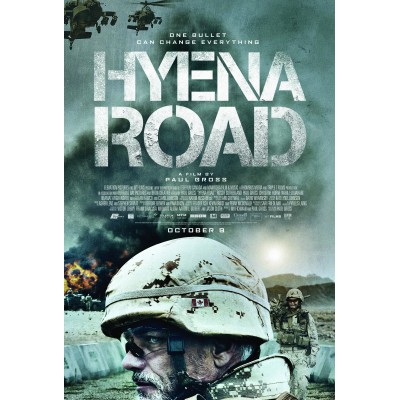
Hyena Road

I just had the absolute pleasure to watch the 2015 Canadian film Hyena Road. I have to say it was a spectacular movie, way more moving than the recent WW2 film Fury. It was, simply put, a masterful piece for a Canadian film.


The film is set at an unspecified time during the War in Afghanistan and is a Canadian film written, produced, and directed by Paul Gross (of Passchendaele fame) which was a real treat to see. The story follows the tale of a sniper team as it secures a road (Hyena Road) being constructed deep into the heart of Taliban territory, while they come into contact with a mysterious Afghan elder known only as 'the Ghost' and in the process get neck deep into local conflicts that are raging all around them. Overlooking all is a wily cynical intelligence officer trying to see the big picture.

Hyena Road's story is masterfully done with each character getting an adequate amount of screen time, and it will constantly leave you guessing as to what happens next. The main characters are all fully fleshed out with supporting scenes, and the myriad of sub plots all roll together in a simply fascinating ending that leaves you literally on the edge of your seat. I really don't want to say too much about the story for fear of spoilers but suffice to say it is well done. There are a series of overarching stories which really come together in a big way at the end.

Our principle cast of characters leads with Paul Gross who plays the aforementioned intelligence officer whose voice over narration sets the stage for our setting and much of the overlying narrative. In the beginning we see the squad consisting of Ryan (Rossif Sutherland) Travis (Allan Hawco) Hickie (David Richmond-Peck) and Tank (Karl Campbell) caught in a dangerous mission which they must navigate out of using their wits and aid from NATO forces directed to them by Captain Jennifer (Christine Horne) whom Ryan is far more intimately involved with than regulations might allow. The mysterious tribal elder The Ghost is played by Neamat Arghandabi, who despite not speaking a single word of English in the film, is a force all his own merely by his presence.

My only complaint that I  might offer up regarding characterization is that the side characters were in need of a bit of fleshing out versus the main characters, but each is a joy to watch as witty and natural banter seems to flow right from the beginning to end whether it is from soldiers under fire or men and women in a non regulation relationship trying to show their feelings.

One of the nice things about this film is that it really is a love letter to the Canadian Forces, showing off professionalism and character, getting the military jargon down to a tee. At the same time it portrays them as human beings with flaws, conflicts, fears, and problems all their own; not attempting to white wash them or show them as incapable of making mistakes. You feel that these are real characters, serving in a real war in stressful situations who can live or die at any moment. The film really keeps you in a state of anxiety regarding the characters fates and I give it a real thumbs up for that.

While it also doesn't shy away from portraying soldiers as real people with flaws (and some very colorful vocabularies) it definitely doesn't shy away from violence. The film's opening scene is a teenaged boy burying an IED and receiving a fist sized hole through his chest for his troubles. The gore is realistic, and surprisingly it felt almost tasteful for how not over the top it was. Blood is shed, and many people die, but it isn't the point of the movie.

That being said, this isn't a Hollywood blockbuster. The production values show at times with some scenes being simply stock footage, but the editing tends to hide this well. There are some moments where it certainly doesn't do the film credit (such as really blatant insertions of real soldiers footage into scenes where it doesn't totally make sense) and some moments where the special effects aren't quite right, but that is forgivable.

Overall this is an excellent film. I have to admit it had me on the edge of my seat for much of the run time, which is a decent two hours. I would really encourage anyone who likes a good war film to go out and see it, especially if you're a Canadian. It's important to support local film efforts and this is a film that sincerely deserves that support.

So if you can, buckle your seatbelt and strap in for a trip down Hyena Road.

Friday, 13 February 2015

Why I Love/Hate the Emberverse

WARNING: SPOILERS AHEAD

Hey there readers I'm just here to talk about a particular series that is both very near, and very far, from my heart.

S.M. Stirling was, in my teen years, one of my favorite writers. He can craft amazing worlds, write some fairly catchy dialogue, and turns out scenarios that are at times so wild that you can't help but be sucked in (I don't think I will ever forget the skirmish with bandits where the protagonists take refuge in what turns out to be an abandoned pornographic store in The Protector's War). And he has written many excellent adventure books, Conquistador, and the Peshawar Lancers which are just too fun to read. He of course is also the author of the infamous Draka series which has probably been picked over as much as A Song of Ice and Fire for details.

However, he is probably currently most famous for his newest (and longest running) series, the Emberverse. The basic premise is that on March 17th 1998, at 6:15 pm a worldwide event known as the Change disables all electronic technology, and even alters the laws of physics which prevents gunpowder and even steam technology from functioning properly, in an instant thrusting humanity back several centuries. The first book in the series (Dies the Fire) follows an excellently written post-apocalyptic scenario where two groups struggle to survive in this fundamentally changed world.

The book follows an interesting cast of characters as they build a new world (even reality) out of the ashes of the old, some good and some bad. The different societies and nations which emerge are fascinating, and the characters themselves are just great. That's not to say they don't go through some hardship. Though from the individual duels and skirmishes, to the sweeping battles of the later series each battle scene is a joy to read and amazingly detailed with twists and turns around every corner.

You have former marine Mike Havel who leads a motley band of survivors in a quest for safety across the Mid West after having survived a plane crash, and Juniper Mackenzie, a Wiccan priestess who bards her way across Oregon who leads her own group to her inherited cabin in the Williamite Valley. Mike founds a warrior society of soldier settlers who take their own territory and hold it against all comers, while Juniper founds a neo-Celtic clan that adopts its new identity with gusto that makes even its founder slightly uncomfortable. These societies develop into things of their own, well beyond their founders intentions in interesting ways.

The first trilogy in the series is fantastic, well fitted together and each book has a tight narrative that you can really sink your teeth into. I will shamelessly admit that they are some of my favorite books of all time, and I have probably read each one at least three times. Mike Havel, Astrid, Juniper, and Nigel Loring are a four very interesting characters who grope their way through a changed world and establish themselves and the groups they bring with them as a new nation, each with its own very unique quirks. They are shaped by the presence of a central antagonist in the form of the neo-feudalist warlord Norman Arminger and his hyper-competent wife Sandra.

While the series tends to present things on unashamedly black and white lines (good guys good, bad guys bad) it doesn't detract from the superb world building, and some of the greatest battle scenes in fiction. The books all tied together well, and presented a compelling story about leadership, survival, and change.

Imagine my pleasant surprise at hearing that a new saga for the Emberverse would be appearing all the way back in 2007. This saga got off to a great start, with an interesting new cast of characters and the promise of exploring more of post-Change North America. We even had amazing new villains in the form of the scary dogmatic religious CUT (Church Universal and Triumphant) and its Prophet, Sethaz.

Now don't get me wrong, these books got off to an amazing start, but they started to teeter on the edge of disappointing very swiftly.

Though I should start by saying that Stirling's skill at world building has not decreased, and the books continue to be amazing romps through a totally different world (which technically counts as alternate history) with the amazing innovations and different survival techniques we've come to see, the force driving that adventure however, diminishes significantly with each volume.

There's no shortage of interesting characters. We have the mercenary salvage man from out East, Ingolf Vogeler, the son of amazing archer extraordinaire Edaine Alyward (and his lovable pooch Gabranth), Father Ignatius from the amazing Knight Templar-esque monks of Mount Angel, and Odard Lieu, son of a villain from the previous trilogy. We also have returning characters in the form of the all-grown up Matilda Arminger (only daughter of the villain Norman Arminger) the twin daughters of Mike Havel, Ritva and Mary, and finally the bastard child of Mike and clan chief and priestess Juniper Mackenzie, Rudi.

I think many readers will understand why I list him last.

At the heart of the series problems from here on in really is this one character. While we have a cast of excellent supporting characters, but they tend to take the back burner whenever Rudi is on screen. Rudi is a very dull, uninteresting, and very poorly executed heroic character whose very presence tends to drag down the novel. In fact he renders almost every other character inconsequential. The main villain of the series (Sethaz) gets progressively less and less screen time until he effectively becomes mostly background noise with only his secondary villains having any screen time at all, and even then its fairly secondary to the plot. He can really do no wrong, and this is outrageously demonstrated in one scene where Matilda overhears a conversation where it sounds as though he is having an affair with another woman and sets up what could be some amazing character drama...only for the next chapter to start with how she was wrong because when she asked Rudi whether he was cheating on her he angrily said no. For me at least that really torpedoed any sense of realism in character development.

The overarching plot of this saga isn't even bad. It's a quest to find a magic sword which will counter the influence of the a dark power which is feared to be rising alongside the CUT. This is backed up by the trials and tribulations of the questers as they cross the vast expanse of North America and run into local politics, CUT allies, savage neobarbarians, and being constantly pursued by CUT fanatics. Some very fun adventures take place amongst the new Sioux nation (with a gripping event involving buffalo) and we get an in depth look at the new nation of Iowa, arguably the most powerful nation in North America now, with a bevy of satellite states surrounding her in the crop rich plains. There's even a great background story about things back home with the war!

The problem again though, is Rudi. The book often goes out of its way to break the "show don't tell" rule when we run into him, and characters will spend pages talking about all the reasons you should like him and all the reasons why he is amazing, and why he is such a good leader. None of this is actually shown to us the readers (unlike with previous archetypal leaders like Juniper or Mike) and we have Rudi with many informed abilities. He is never in any clear danger as he is absolutely unbeatable in combat (which before we see this many other characters spend a good deal of time informing us) and even the sub plot back home tends to devolve around describing how awesome a leader Rudi will be. Despite suffering a serious wound at one point, it doesn't even wind up seriously inconveniencing him as the series goes on. His presence drains any tension from the books and you don't even fear for his friends as things continue. In fact his friends situations get even less screen time and very little development beyond off hand mentions of things happening or a few scenes here and there.

The books from The Scourge of God on really suffer thanks to this. To me, the ultimate disappointment came when we arrived at The Lord of the Mountains where the series had been building up to an epic battle between the forces of good and evil. Now as I've mentioned Stirling can write amazing battle scenes, and with a series that has airships and hot air balloons still being a practical thing the immense undertaking that is plotting and portraying this battle should have been easy for him. Instead we have a series of incredibly underwhelming build ups and an absolutely disappointing let down with a waste of all the books potential epic moments which flop spectacularly in showing us the culminating battle between good and evil. From wasted pages describing the teenage adventures of two squires who are supposed to deliver a message, to simple scenes of meetings where the good guys cheerfully predict their victory over their foes. The book has zero tension, and in an ultimate sin manages to make what should have been an amazing battle boring and utterly unengaging.

However, the novels afterwards have been, well, not incredibly interesting. Despite much tension of when Rudi is supposed to die (a prophecy that he will not live to see his first gray hair) the books play it fairly tamely and he simply dies before he gets any gray in his hair, in middle age. He lives a long healthy life, and becomes a great king. Again we don't really see any of this and are for the most part informed of it by other characters.

The most recent release, The Golden Princess, is now primed to follow a new set of characters into a new quest, for a new sword.

While this one promises to be more nautical, and somewhat more engaging in that it will take readers from the deserts of California to Australia, and finally Japan, it has thus far disappointed. I can say with absolute confidence that people should wait until the follow up volume, The Desert and the Blade, comes out. You will find yourself much more satisfied, since Princess is very lacking in plot advancement versus overflowing with obligatory scenes where characters talk about how amazing Rudi is and describe the very technical feudal terms for feudal government and the neo-Celtic lifestyle. The story honestly just seems to cut off half way through, so I hope the new book will pick up where we left off.

In spite of  the series great  flaw with an unrelatable hero, it does mostly play to Stirlings strengths of world building, battle, and adventure. And you know what? That's a good thing. People may not like the characters, and I'm one of them, but the world Stirling builds is so detailed and intricate that you can't help but want to explore it. He crafts some amazing societies which you will find yourself going back and reading about just to catch glimpses of them. He paints a hauntingly beautiful picture of a completely changed North America built on the bones of our old civilization, and its wonderful.

Though I may not have cared to deeply for the meat of the second saga, I reiterate my love for the first trilogy and recommend it as an excellent series to anyone who wants to enjoy a good book. Stirling is still a good writer, and while it may take a while for the new books to get into the swing of things I fully expect that like the previous books it will contain some amazing gems that will leave you saying "Holy Crap! Did that just happen!?"

It has for me, and I hope it will for many others.

Wednesday, 18 December 2013

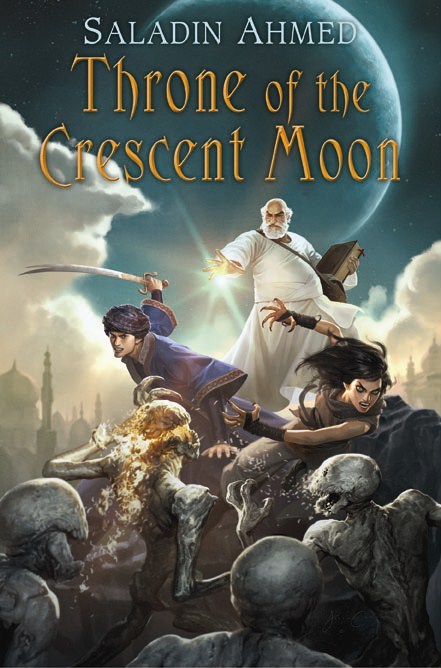
Throne of the Crescent Moon

Hello readers, I come back to you now with another review. This time I send us off to exotic lands of deserts and djinn, ghuls and dervishes. This week I bring you a review of Saladin Ahmed's, Throne of the Crescent Moon!


This is a refreshing and interesting fantasy book since it departs from what we would view as traditional fantasy in a number of what I consider to be very unique circumstances. The first is that rather being set in anything even resembling a facsimile of Medieval Europe, we instead get something that is much more like a fantasy Asia all mixed into one! We have a Khalif who sits on the Crescent Moon Throne of the great city of Dhamsawaat, an ancient society which is a sort of Ancient Egypt, and the surrounding societies all seem to resemble things like the Muslim Kingdoms of India or the Pacific. It's a fresh and as far as I'm aware, virtually unique look at a sort of pseudo-Islamic world in fantasy.


The book itself is written by a man named Saladin Ahmed, a man who is both a poet and a writer who has an extensive background in Islamic history and culture. This offers something very new to fantasy, and as far as I'm aware, something that hasn't been explored in depth. The novel has a very 'Thousand and One Nights' feel to it, and is really quite interesting in that sense. It gives you a look into a society that would be familiar to some, yet totally alien to others. It's actually quite like how I would imagine a foreigner reading our High Fantasy really.

It also offers up some rather unusual characters. For one thing the main character is a fat elderly gentleman in his late forties who is somewhat impious and becoming the last of a dwindling order of ghul hunters. His assistant is a pious dervish wielding a double bladed sword to cleave right from wrong and they eventually ally themselves with a tribeswoman with the ability to morph herself into a holy lion that can crush the forces of evil with her angel granted powers.

Not exactly your traditional fantasy  characters.

Their enemies too are a manjackal and a sorcerer who summons ghuls (or ghouls to those of you familiar with my Undead Menace article) to do his bidding.

Still some recognizable fantasy elements all skillfully blended together with new cultural ideas and locales. There's even a political subplot dealing with potential revolutionaries fighting against what they see as the despotic rule of the current Khalif, all for a juicy flavor of political intrigue and high fantasy action.

The characters themselves, Doctor Adoulla Mahkslood, Raseed ben Raseed, and Zamia are all fairly interesting characters. They each have some fairly good character building moments, periods of internal conflict, and issues with one another that serve to make them real and three dimensional rather than your standard do no wrong good guys, hell many of them even exhibit some good old fashion prejudice to those who aren't like them! For instance we have Adoulla and Raseed, two evil fighting partners with completely different views of the world, you have the old veteran Adoulla who has spent his entire life fighting and hunting monsters and is beginning to tire of it all, despite the fact that if he dies there is likely no one else who can carry on his orders knowledge and fight. He is also morally gray and fairly impious, and this clashes well with his young and eager protege who is from a religious order which dedicates itself to a lifelong struggle of virtuous justice. Raseed is very black and white in his worldview which tempers his reactions to any situation in an almost predictable way, but it also gets him into trouble as the story progresses.

As a cool aside, Raseed's sword is based on Iman Ali's sword from Muslim history.


Story wise the plot flows seamlessly from one scene to the next with very little pause in the running action and dialogue. You are driven from the beginning of the Doctor's quest, on a seemingly unrelated matter, into events that shake the very foundation of the city of Dhamsawaat itself! The story is wonderful and relentless in its telling and you really get a feel for each of the individual characters.

We also are treated to some wonderfully exotic action scenes featuring magic, sword fighting, and not a little bit of desperate cleverness on the part of the heroes. It also does a wonderful job of portraying magic that comes with a cost, whether in a persons personality, soul or body. Every spell cast has an immediate physical reaction both against those whom it is cast against, and those who cast it, making the act of calling upon magical forces seem very real and very challenging.

The setting itself  is also exotic and described in some detail giving it a very neat flavor. However, it isn't described as well as one might like. While I got a decent feel for how the city of Dhamsawaat was laid out, I couldn't be sure of everything that was in it and some details of the surrounding area and peoples seemed mildly to vague for how involved they were in the story. Some key locations could also have used a bit more description or even mention early on. For instance, the Khalif's palace is supposed to be the largest structure in all Dhamsawaat but it gets very little mention until directly near the end of the novel. Then one place called Angel's Square gets only cursory description despite being called breath taking and awe inspiring to those who enter it, I really don't have any mental picture of how it's laid out or what it would look like. Similarily Adoulla's house is something which seemed to be introduced a little too late with little preamble for all the meaning it had to Adoulla, something which I think could have been rectified by having Adoulla thinking wistfully about his house and commenting on its value to him earlier in the story.

The pacing of the novel is also quite fast with no real breaks being taken from character to character and all the action seeming to come at once with little suspense in between. We get some periods of calm, but they always feel like we're being whisked away with each character before we can catch our breaths.

That's not a net negative in itself but merely a matter of pacing which I think ought to be addressed in the sequel.

All in all the novel is a good read and is a fascinating insight into a world which is different from ours and the exciting conclusion left us with a load of problems for the heroes to face in the coming future. I felt excited to learn what challenges might crop up in the future and just what new crisis could emerge on the horizon for our heroes.

I've deliberately left the novels plot unspoiled as I think people really ought to read it for themselves so they can get a feel for the world and how it meshes itself out. The novel may feel a bit unpolished and perhaps a bit unrefined but it is well worth the read as Ahmed is really a writer to watch out for in the future!

If I had to give it a rating I'd say 3.5 stars out of 5 would do it for this book.

Until next time readers!

Friday, 29 November 2013

On Kings and Other Titles


Well it's a common trope in fantasy that we are in a medieval setting and of course every medieval setting must have an authority figure of some sort, and that of course is the king.

Here is an appropriate music video to get you psyched up and thinking about kings:


Awesome music aside, it's rather telling we are always thinking of kings in  fantasy setting. It's actually very unusual in human history to see anything but some variant of the king-vassal relationship in politics and daily life. Our modern political system is less than a few hundred years old, and would be seen as phenomenal (or idiotic) by most previous societies on earth.

In fantasy though one can always count on seeing the good/evil king sitting on his throne surrounded by scheming lords and advisers in his court. Unfailingly we see the fates of kingdoms resting in the hands of plucky heroes, we see crowns being won and lost, and we see kings as characters and come up with the issue of ruling.

Though some must ask; why all the time kings? Can't we see emperors, samurai, daimyo, caliphs, sultans, chiefs, viziers, and pope's engaged in such situations as well?

My answer is that of course we can, there just seems to be a lack of them out there.

I personally doubt that it has anything to do with uninterested authors or less than receptive audiences, but in reality most likely has more to do with that all these titles and positions of authority, in varying degrees to one another, can be summed up under that millenia old word and phrase for a ruler, and that is king.

The title of king is of course one that could be easily translated into many languages or extrapolated from whatever word locals use to call their ruler. The position, and the authority that rests with it, is going to be much the same. Whether a sultan ruling from a palace in India, or an African chief ruling over a great swathe of the Savanna with his warrior armies, the position, power, duties, and authority is going to be very similar to what we would consider a king.

In writing of course this can get cliche to some people, but I tend to disagree simply because of the powers and duties any ruler (no matter what title we give him) will have when it comes to making himself the leader of a pre-industrial (or even post-industrial for that matter) nation. Slapping a fancy made up word on the position is not going to hide the fact that this person is for all intents and purposes, occupying the same position as a medieval European monarch.

This of course should not discourage authors from trying something new and attempting to experiment with the accepted idea of how kings rule and set up authority. Writers should by all means attempt to subvert and play with the tropes we've long accepted as part of the fantasy genre, and we should be seeing people experiment with different political systems and theories for setting up how kingdoms run and govern themselves.

From the Confucian principles that governed Imperial China, to the religious inspiration that justified the rule of the Caliphs across the Middle East, it's important for writers to set their sights on other modes of ruling and how a ruler gets his authority and how a vassal is beholden to him.

While I've heard some authors say that its hard to keep people interested in a character once he becomes king (S.M. Stirling famously saying that it's boring because its all meetings and reports) and that they lose much of the action and drama that could be presented I have to strenuously disagree! In fact in my humble opinion, once a character becomes king and faces the difficulties of ruling it can become a defining moment in a series!

They have to deal with plots, counter plots, swirling alliances and petty grievances, marriage proposals, siring heirs, leading armies in battle, managing the affairs of the kingdom, dodging assassins, and in a fantasy setting this can be offset by some more mystical elements being thrown in! It's sad that some authors seem to miss this. You don't necessarily need a king to be a main character, they can just be secondary characters sitting off to the side advising or hampering the main character.

For instance look at King Elhokar from The Way of Kings by Brandon Sanderson. Elhokar is a young paranoid king who rules a nation mostly in name but still has the power of his office. He is a supporting character to Dalinar (one of the main characters) and at times both helps and hinders Dalinar's actions. He is hardly boring and has a number of fascinating character tics which make him function well and give him a distinct personality.

Then just look at the in depth look at kingship and authority which A Song of Ice and Fire gives to us. We go from kings who are bad to kings who are not so bad in a brief time. The story looks at people who do have power and agency (much like a king would) and shows that despite the fact they still have to deal with petty politics and somewhat mundane matters (Eddard hearing petitions from smallfolk and lesser nobles was a scene which I've heard some people found tedious) but duly demonstrates that showing a man of authority in action shows off his character through how he carries out those actions. Stannis is another good character to show that kings are not all just dull reports and meetings, but people driven by a call to action and a personal sense of justice. Though we haven't seen any POV's from him yet, we have seen his character in action on the Game of Thrones television show which truly helps get a feel for the man and what he does.

In Joshua Johnson's The Cerberus Rebellion we get a POV from the point of view of King Eadric who is the character that starts off the book. Here we see the character of the man who rules the nation. He is far from a boring character and his varied attitudes towards his advisers and vassals is one which frames his interactions with the rest of his realm. We get to see he is a 'big picture' person who looks at the larger issues in his realm while neglecting his vassals smaller needs seeing them as irrelevant to his plans as a whole. This of course is what ends up getting him in hot water.

For another fabulous POV of people who eventually become rulers one need look no further than the Wheel of Time by Robert Jordan. There are many characters who are (or become) rulers in their own right and they were some of the most fascinating character arcs I'd ever read.

So personally I think having a ruler as a main character is something that can really be used well in a piece of fiction, whether you are examining the authority and rights of rulers, or simply making them characters in the grand scheme of things its fascinating.

All in all kings are force in fantasy that will be sticking around for quite some time, whether we call them emirs or shogun is a matter of semantics in terms of what force the character represents. They may be heroes, they may be villains but they capture the romantic vision we have of epic fantasy and they do it quite well.

Monday, 4 November 2013

Ender's Game

Hello again readers and welcome to my first post for November. Here I am going to be reviewing and commentating on a hot new film, Ender's Game which is of course based on the work of the same name by author Orson Scott Card.

In this review I'll be speaking on both the film and the controversy surrounding it, of which yes, there is quite a bit.

As an important (I think) aside, I have read neither the book Ender`s Game or any of Card`s other work save for one of his 'how to' books on writing and the book Empire. This isn't something I usually do but I felt that I wanted to see an awesome sci-fi movie and had too many other things on the go to stop and read the novel first.

Without further ado, let's sit back and take a look at Ender's Game!


The film starts out with a brief intro showing the first Formic invasion stating how the invasion had just barely been beaten off and that humanity was unprepared, which cost millions of innocent lives. Now humanity prepares for the next inevitable invasion. In order to win they need to get a commander who can lead them to victory. To that end humanity has established the Battle School where children are brought to train in the art of combat and leadership.

We start off with our title character Ender Wiggin (Asa Butterfield) as he fights another classmate in a scuffle over Ender's crushing defeat of said classmate in a simulation. The fight leaves the classmate bruised battered, and ultimately broken as Ender crushes him so that the bully will never pick on him again.

Little does Ender realize that this is all an elaborate test set up by the commander of Battle School, Colonel Graff (Harrison Ford) who is a mentor figure and kingmaker looking for the next great commander to fight that battle against the Formics. For Ender's brutal beat down of the bully, and his justification that he wanted to ensure the bully never picked on him again he is promoted and sent to Battle School.

However, he is separated from his caring and empathetic sister Valentine (Abigail Breslin), and his sociopathic and overtly violent brother Peter. Ender has deep personal issues about which sibling he takes after most, he is terrified of his brother Peter, and loves his sister Valentine more than anyone else in the world. Who he most emulates is a character point the film latches onto really well and garners quite a bit of sympathy for Ender as he struggles with who he really is.

Meanwhile Ender excels in Battle School outperforming his fellow cadets in almost every way, along the way he makes friends with characters such as Bean, Petra (True Grit's, Hailee Steinfeld), Ali, and student antagonist, Bernard. Eventually he preforms so well that he is given command of his own army (Dragon Army) so he can prove his worth in the fighting to come.


I don't want to spoil the plot for those who haven't seen it, or to bore those who already know all the details from the novel. Needless to say the film is excellent in its pacing and how it touches on all the moral issues and the different ethical and personal relationships the characters in the film have.

From addressing the morality of child soldiers (brought up in a wonderful performance by Viola Davis) to the proposed genocide of the Formics in order to ensure they can never harm humanity again, and to the attitude to do what it takes to absolutely win the film touches upon many important issues. I particularly felt the impact of the child soldiers discussion where Colonel Graff begins to care more about the necessity of winning over the morality of what happens to your enemy or the men you train to win. I was also impressed by the view that doing whatever it takes to win isn't necessarily the right thing, even though it may be the practical thing.

Now the film itself was well acted. Harrison Ford was an amazing Colonel Graff and every moment he was on screen was pure gold, and Asa Butterman proved himself as a truly capable actor taking on the role of Ender, I was blown away. I for one was at first worried the producers would subvert Ender's character for Ford's when I first saw the trailer, but thankfully those fears were unfounded and the dialogue and sub-plot between the two was woven into the film quite well giving us the dual perspectives of the trainer and the trainee in an interesting comparison of goals and motives. Ben Kingsley's later role in the film is just fabulous, and despite his late appearance the film is much better off for him being in it. Truly you would have been hard pressed to put a better cast together.

That's not to say none of the actions weren't over the top or just a bit goofy. Some of the actions the director had Butterman undertake were fairly cheesy. His over the top arm gestures at some points were visually distracting and seemed pointless, taking away from the focus of some otherwise dramatic moments. The character of Bonzo also seemed to have a perpetual scowl all the way through the film, but that didn't detract from his characterization, just from the range of emotions he could show.

The supporting cast played their roles wonderfully as well, none of them can be said to have screwed up. Whether it was Breslin as the compassionate sister guiding her little brother, or Steinfeld as the friend and companion to Ender the dialogue and interaction between the characters came off nicely and didn't feel stiff or forced in any way. The reactions and emotions seemed raw and real to me, I was quite pleased when watching them.


One beautiful thing about the film was the amazing diversity the cast offered. Gone is the all white cast of buff space marines, here we have children (boy and girl) from all over the world, of radically different backgrounds. Muslims, black, white, Asian, and Latino, we have a diverse and truly global cast represented on screen. It felt like a united effort by the Earth, Hell the International Fleet's commanding officer (and Graff's superior) is a Middle Eastern man! We even have the wonderful Nonso Anozie as Sergeant Dap, a humorous supporting character for Ender.


Visually I would say the film is nothing special. It establishes all the shots it needs and incorporates the free fall mechanics into scenes (especially the Battle Room setting) well and used just enough CGI to keep the flow smooth and believable. The film won't be winning any awards for breaking new ground in CGI or camera shots but it uses the shots and imagery effectively for what there is.

The film gave us only a small number of locations to see and it worked with the film just taking these areas and running with them, from Ender's home, the Battle Station and the International Fleet outpost, we get just a small series of sets that are all incorporated into the characters daily routines, making them feel that much more real.

The musical score was well done as well. I hate to say nicely simplistic, but they established wonderful tension and atmosphere with a small set of musical cues that ran fabulously from start to finish. I was caught up in the emotion of it all and staggered or stressed by the music in the correct spots and it was used to good effect to set the tone of each scene.


Finally however, I come to the controversy which surrounds this film. Much of the controversy comes from Card's outspoken anti-homosexual and gay marriage attitude, and the fears he might use this film to soapbox those views. Thankfully though those fears proved unfounded. However, many felt they should boycott the film in order to keep Card from obtaining royalties or funds he might get from the ticket sales. This was done to prevent him from reaping the rewards to continue with his 'homophobic agenda'.

Now while Card has said some legitimately nasty things about the homosexual community, and while I personally disagree with those views I will say this; just because the author holds these views does not make it right for people to boycott this work, which contains nothing that reinforces those views. Authors personal opinions and their works can be (and in many cases are) separate from each other. Those who decided to boycott the film just because Card (who had very little control over what went into the film) held these views not only cheapen the hard work of the actors and crew who made this film, but also prove their own ignorance since Card will not be receiving one red cent of the ticket proceeds.

The fact is that yes, Card has said some bad things, but those are also his personal opinion, which as far as my knowledge goes, does not extend into his works, and it certainly comes up not at all in this film. I quote the film's producer Robert Orci "the movie should be judged on its message, and not the personal beliefs of the original author," and I hold the same view.

So I would end this review with a plea to those who might be considering boycotting the film or who currently are to give it a chance. The film isn't about homophobia, hating gays, or demonizing gay marriage. It is a film which is well acted, well put together, and raises some thought provoking moral questions about war, it's consequences, and just what measure a non-human's life holds.

If you'll put away whatever disdain you have for the author of the book, you can go see a fantastic film which doesn't disappoint and stars Harrison Ford once again rocking around in outer space.

Until next time readers!

Tuesday, 24 September 2013

The Weekly Word #6

Oh ye of little faith, here comes the Weekly Word number 6!


My slow writing aside, due to school and other things out there, I have got some wonderful tidbits in store for everyone this week. After two weeks of rather depressing news going around this time I have some great pop-culture links to share!

First and fore mostly I would like to again (if you followed me on Facebook you would already know) share the news that Firefly will be continued in comic format by Dark Horse comics! Yes over a decade of waiting has paid off for the erstwhile Browncoat fans who have eagerly awaited the day when the series would continue in some form or another, but now the wait is over!

Here is an article detailing this wonderful new turn of events.

Now of course some will be disappointed since it is not live action, and of course that the film Serenity is canon so some of your favorite characters are still six feet under. I for one am tentatively excited by this turn of events, mostly because numerous fan fics and fan theories have been floating around for years! Finally though we may get some long awaited closure from our favorite sci-fi series.


Though speaking of Firefly, and of course one of my favorite actors Nathan Fillion, I am also happy to say that the sixth season of Castle premiered last night and we finally found out the answer to the burning cliff hanger we were left with over the summer months! Only to be given a new burning cliff hanger to start the series off! We will have to find out what happens next Monday and how the saga of one of the best police partnerships on TV continues!


In other news the new trailer for Robocop is out. We are seeing a whole new version of the franchise with this re-boot and one this is extraordinary in its look at the Robocop world, though according to Cracked it seems to be a little simplistic in it's set up.

Though of course we'll just have to wait and see won't we?

But here is the new trailer for your viewing pleasure!


In other, just as cheery news, it seems the horrible sensation which has been the Atlas Shrugged film trilogy is so desperate they have been forced to go to Kickstarter in order to obtain the funds to finish off a trilogy so bad the books fans don't even like it! Last year I talked about Part II of the terrible trilogy and commented on how this part seemed competently strung together, unlike the first film.

However, many people who have seen the film (well the two I know of) have panned it as being awful, just awful. In a delicious irony the free market agrees and finds the disgusting ideology the film champions unpalatable. This of course sticks in the craw of many of the ideologies most ardent defenders who insist it is a good film and is a wonderful parable of our times.

The remaining 99.99 percent of humanity disagrees.

In their effort to keep ideological purity alive for this sad series the producers have gone to kickstarters with a modest goal to reach of a quarter of a million dollars, and has made a respectable 96,000 so far. Seems to have some rich backers with plenty of cash to throw around for sure. Though I'm sure that like the rest of the films it will flop spectacularly, and it may even end up driving the makers into debt.

It seems the film is to be recast, again, as they have either let the actors go, or the actors have quit. It is admirable that the producers decide to keep going really. The producers have also thanked those who have hated on the movie for helping generate publicity, firmly believing that even bad publicity is good publicity. Unless it of course means that no one will watch your movie of course!

While I salute their commitment to their ideological goal I will of course disparage the series and ideology until the day I die.

On the plus side if the world ends the 1000+ page book makes great kindling or toilet paper!

Well that's my rant for this week readers! Until next time!

Monday, 12 November 2012

Movie Review: Skyfall

Hello dear readers, I am here today to happily proclaim over fifty years of James Bond. To do so I will be giving a brief and spoiler free review of Skyfall the latest film in this wonderful series.


As readers ought to know Skyfall is the third film done with the first blonde Bond actor Daniel Craig. This film, unlike the previous Quantum of Solace, is not a direct sequel and instead is a stand alone film with an original story line following the escapades of M and of course 007 himself.

This film revolves around the mysterious and authorative M as she has her command questioned and an adversary from the past comes back to haunt her. As well 007 questions his loyalty and commitment to the organization he has so faithfully served for many years.

Now on with the show er review!

The Good:

Well what can I say readers? This film has once again given us reasons for why James Bond is a classic hero and such a suave character. From dynamic one liners to amazing action scenes we get a well put together movie with a stellar cast of characters and a wonderful set of villains as well.

Daniel Craig of course returns in his third showing as the eponymous 007 James Bond that lovable MI6 agent. We start of with him fighting valiently in the line of duty and being the good agent he always has been. During the opening moments of the films actions he has intense action sequences and is thrust into the line of duty while questioning his superiors orders and trying to do his duty.

Judi Dench returns as the grand old lady M and the leader of MI6 where we find she is being questioned in her role as a leader and we see her past has come home to haunt her putting some of her current and past decisions in the spotlight.

Then we have a cast of new (or old however you want to look at them) characters returning, with Naomi Harris as Bond's supporting agent, Ben Whishaw as the new Q, Rory Kinnear as Bill Tanner, and Javier Bardem as the villain of this installment.

Put together these characters create a fabulous story of intrigue, betrayal, unorthodox tactics, plotting, and politics. It also delves more deeply into incidents in Bond's past which are interesting to see played out on screen and discover some interesting facts about our great hero.

Then of course we have the hilarious one liners and situational comedy that are so familiar to a 007 film with lovely lines along with my favorite "Seems like a waste of perfectly good Scotch" and I'll leave readers guessing as to the incident which prompts that ;)

The action sequences are amazing and impressively fantastic, what more could you expect from a Bond film? Strung together by an excellent plot we see an army of mooks being demolished by Bond in increasingly unique and unorthodox ways. The final showdown between Bond and our villain is impressive for the number of ways you can kill people with the contents of an old English house and 'the old ways' of killing.

To top it all off the music in the film is a call back to the original Bond soundtracks and we have the opening title song written and sung by none other than Adele. It's probably one of the best Bond openings to date.

For more astute viewers we also have dozens of callbacks to the original Bond films themselves, and much to my pleasant surprise a number of original gadgets. You'll be shocked to see some of the inventive ways they play these in to the film, and it also increases the re-watch value as you try to find all the shout outs to older films.

The Bad:

I honestly can't find to much to criticize about this film. Mind you, there are some things.

For those hoping to see the events of Quantum of Solace and Casino Royale wrapped up, better explained and expanded on I'm afraid you'll be disapointed. Unless later films write this in the film is purely stand alone with no connection to the events of the previous film whatsoever and little effort is made building upon Bond's character or how he's reacted to the previous events from the films. This is one thing that disapointed me but that's alright considering the film we are left with.

There is also the fact that some elements of the plot seem strung together on a shoestring and could have been better explained. For instance the villain could have used just a bit more foreshadowing and given a bit more depth. Otherwise his plans seem kind of out there.

We've also got the issues with other events being left vague or unmentioned which left me confused, not critically so, but still wondering about events characters were referencing in the plot.

Verdict:

All in all though, Skyfall is definately an excellent addition to the James Bond series and filmography as a whole. I found that I was on the edge of my seat most of the film and I was laughing along with the fun events and gnawing my finger nails in suspense for later on.

I would seriously reccomend that people go see this movie and enjoy fifty years of James Bond!


4 out of 5 stars for this great film!