Showing posts with label A Song of Ice and Fire. Show all posts

Tuesday, 20 April 2021

Game of Thrones: Retrospective

Ten years ago, Game of Thrones burst into the television scene and rammed itself into the collective psyche of millions the world over. It was common for people to talk more about the politics of Westeros than the politics of their respective countries for a while! Almost overnight, the show leapt to meteoric heights, praised as "The Sopranos in Middle Earth" and having a talented cast of dedicated actors who worked their way through some of the most intensive scenes we've seen on television.

For all that though, not many people talk about Game of Thrones today.


Unlike say, The Sopranos or The Wire, or even other big name science fiction and fantasy shows like Merlin or Stargate and Battlestar Galactica; you don't see many people sharing memes about the show, it isn't often referenced in contemporary discourse, and often times people seem to act as though it didn't even exist. Where once you couldn't scroll through reddit, Tumblr, Facebook or Twitter without seeing something related to that series, now you only find it on dedicated fan sites and amongst people who still care about the (as of 2021) unfinished series.

Why that is, is hard to explain. For one thing, the show has possibly the most divisive ending in television history. From some who praised it, to millions of fans who were so pissed off they petitioned to have the ending re-filmed. In fact, the show seems to have ended on such a bad note that people who were fans seem to be almost unwilling to talk about having ever liked it in the first place. Hyperbole sure, but I certainly don't run across many people who I know loved the show who say they're going to re-watch it any time soon.

Tuesday, 14 July 2020

A Storm of Swords

Coming on to the third installment of the fantastic A Song of Ice and Fire series, I've finally reached A Storm of Swords and begun reading it in earnest. This book I probably remember the least about from originally reading it, and I think I had a very dim view of much of the book at the time, and I absolutely remembered certain events wrong. In fact, I even confused some major events in this novel for those which took place in A Feast for Crows! So on sitting down and reading this again, it was very much like reading the book for the first time!

Some major spoilers are following since you can't really have a review of this book without them. If you haven't read this book or watched the show, be warned!

The book begins with House Lannister triumphant. Even though this is a supposed victory for House Baratheon, it rings hollow. The three male heirs are dead or defeated, the King on Dragonstone driven into the sea, the King in North has won every battle but now he faces the united strength of the south and west, while the ironborn have overthrown his castle and occupied much of the North, and Tyrion Lannister himself has fallen from grace.

Meanwhile in the North with the ironborn invasion, now the King Beyond the Wall comes pounding to the South and with him the might of the Free Folk with raiders, warriors and giants, but nipping at their heels are the mysterious but deadly Others. Jon Snow finds himself on the wrong side of the Wall, and maybe on the wrong side of the war.

Intrigue, betrayal, and weddings abound as the realm remains split in A Storm of Swords.

Another copy of a book which owes me nothing.

As laid out, all the characters here are in a moment of transition, the war is still being waged even though it is largely won in the south. However, the North, the Iron Islands, and the Riverlands are still in revolt against the Iron Throne. It is looking less and less likely though that these revolutions can continue. The new King of the Iron Islands has launched an ill fated invasion of the North, but this has only served to weaken the power of the King in the North, and so now the war may be for nothing. Worse, he may have made an indiscretion off the battlefield which may cost him more than any defeat ever could.

Like I mentioned above though, this book is chock full of action and events. I had actually misremembered parts of it and changed them to be part of A Feast for Crows in my head. It was a revelatory experience to go back and read the nail biting build up to things like, the Slavers Bay Campaign, the Battle of Castle Black, the Red Wedding, and the Purple Wedding. Seeing the details intricately built up to, betrayals, poisons, and political chicanery was absolutely amazing. I had forgotten just how much went into this book and how important it became for the later volumes.

One of the great themes was that of victory and loss. None of the victories we see on screen come without loss or complications. I enjoyed that each win still managed to bring with it a series of losses, and in some cases outright defeats.

Dany's arc was fascinating as it shows her maturing, but also questioning some of her goals and motivations while having trouble with some of the issues of her youth. I did enjoy that she became something of a wicked badass when doing all this. It's a tale that hits close to my heart because of my love of Civil War history, and the parallels are fascinating to look for.

Jon Snow's story is also interesting as it careens from a spy thriller to an epic story of siege and diplomacy, with so many twists it really made my head spin as I was reading it. I found the whole story with Mance Rayder to be compelling as it explains the threat of the Wildlings, and the threat that hangs over the whole Seven Kingdoms with the Others.

One story line I remembered astonishingly little of was that of Sansa Stark. I think back when I first read this I mostly skimmed her story, which is probably a grievous error. It was so much richer than I remembered, full of intrigue, subtle hints at the nature of the Tyrell's and their plans, while crossing so well with that of Tyrion Lannisters. He finale in the Vale was so well done, I really did underestimate her as a character when I first read this series.

Outside of Tyrion's arc (because how can you not love Tyrion? And the duel, that duel!) I would say that these were the stories that kept me going. Reading all of Catelyn's arc was gut wrenching as this time I knew where it lead. Seeing all the events coming to a head, in a way that really ties off what I consider to be the perfect trilogy in A Song of Ice and Fire,was immensely satisfying. I have more thoughts on why I think the first three books are so well done, and slide so seamlessly together, but those are for another time.

For now I would just like to finish by saying that A Storm of Swords is truly a masterpiece of the writers craft with such deftly handled foreshadowing and amazing plot arcs that it was well worth my time to reread. I'm in love with Westeros all over again.

Saturday, 30 May 2020

A Clash of Kings

The second installment in the Song of Ice and Fire series was my most recent read and I loved it! Picking up once again from where we left off after A Game of Thrones we dive into the world of Westeros and the meat of what became the War of Five Kings, all deciding who would sit on the Iron Throne. So, as a blazing comet streaks across the sky, dragons hatch in the east, wildlings gather against the ancient Wall, kings war and the land bleeds, we delve into a realm split by A Clash of Kings.


Looking back I do remember this book as my favorite from when I first picked the series up. It had many of the tropes I would come to know and love in books, sieges, political intrigue, war, magic and above all, wit!

The book picks up only a few days after the events of A Game of Thrones and follows our main cast of principle characters, minus one. Those characters are the Stark clan, Catelyn, Arya, Sansa and Bran, plus Jon. Then we have our other protagonists Tyrion Lannister and Danaerys Targaryen. Into this mix is thrown a new player, Davos Seaworth the Onion Knight, who is above and beyond one of my other favorite characters. We also have Theon Greyjoy, who plays a very important part in this piece.

This book though, probably more than any of the next volumes, is really about the overarching events of The War of Five Kings (and ironically the only one where all five kings are even present). It accelerates events as in the last book Rob was proclaimed the first King in the North in nearly three centuries, meanwhile both Stannis and Renly Baratheon claim crowns and the kingship of Jofferey "Baratheon" is in doubt. Meanwhile, old rebels take up old crowns and a more sinister plot in the war.

Like I said though, it focuses on some of my favorite elements in storytelling, namely sieges and politics which I think put together make for some fascinating situations to read about. Sieges in history have been intense moments of struggle and can last for quite a long time with great or terrible results. One of the primary issues in this book is the impending siege of King's Landing by one of the claimants to the Iron Throne and how that might end the war in an afternoon!

Tyrion Lannister is the one who deals with the main problems as he enters a city beset by a rising refugee population, political imbalance, and one which is almost utterly unprepared to stand a siege. His sister the Queen Regent does not recognize his authority, the king is an adolescent sadist, and his fellow members of the Small Council are completely unreliable. All the political maneuvering he has to cause just to get things done is fascinating to read about as he must make one thrust and then another to keep everyone focused on the goal of just surviving!

Meanwhile, Catelyn Stark presents our view of the King in the North as he tries to fight the war in the Riverlands. The Lannister army has been denuding the countryside, laying waste to farms and crops and smallfolk to try and force the King in the North to battle. Catelyn sees that as things stand, there is no way for her son to win the war on his own, so she marches on a mission to seek out the other claimants to make cause with them. It leads to probably one of the most fascinating scenes in the whole series from a political/personality standpoint since it analyses different theories of kingship, the right of inheritance and offers a surprisingly pragmatic solution to the whole problem of the war. I honestly encourage you to read Steven Atwell's essay on the topic as it's some amazing subtext built in here which gives me endless thoughts on how Martin structured these characters.

Her daughters Sansa and Arya are captives and fugitives from the Lannister regime respectively. Arya tries to make her way north across the war torn Riverlands, while Sansa is locked away in Kings Landing suffering under the brutality of the boy king Joffery. Sansa must now play the doting fiance, while enduring the deadly politics of a capital falling under siege.

In the North, Bran sits as the crippled Prince of Winterfell, fighting his own political battles while Jon Snow and the Nights Watch march beyond the Wall to confront the Wildling horde which threatens to fall on the Seven Kingdoms like a hammer blow. All the while something more mysterious lurks beyond it all.

One of the overwhelming backgrounds of this book is the War itself. Its twists and turns in battle and fortune run hard. The most compelling aspect is the siege of and assault on King's Landing. It's a great war story, and drives much of the drama throughout the book itself as everyone wonders who will sit in the world's most uncomfortable chair. These elements were, I think, the best part of the story. It made the drama relatable as we knew Kings Landing, knew the stakes for those in the capital, and how the win or loss there could effect everyone across the whole story. Sieges can make for great plot elements like that!

The themes of war and hardship are what hooked me into this volume, but on reread, themes of femininity and women in war are also front and center. From Catelyn Stark whose only weapon is the negotiating power she has as a high lady, to Sansa Stark who is a high born hostage whose life is one of constant intrigue and abuse. Then we have Brienne of Tarth,  who fights like a man and is a homely creature scorned by the lords and knights around her. These women use their wits and words, and occasionally their weapons, to navigate the world of Westeros, and it brings issues to mind we just don't seem to consider enough. I enjoyed picking up on that this time around.

Re-reading this I remembered why I was sucked into Westeros so easily, and how I'm being brought in so easily again! I can't wait to get around to the next installment! 

Tuesday, 21 April 2020

A Game of Thrones

For the first time in nearly a decade, I delved wholeheartedly into the world of Westeros and the Seven Kingdoms. I begin my reread of the (so far) five books making up the A Song of Ice and Fire series. I start with A Game of Thrones.

Originally published in 1996 this book has set off over two decades of well informed speculation, appreciation and adaptation within the world of fantasy. With board games, card games and the wildly successful small screen adaptation that was Game of Thrones the ASOIAF series has gained enormous traction in both overall media and the fantasy genre as a whole.

It all began here though.

A copy of the book which owes my family and friends nothing

I must admit that at first, I was very resistant to picking up the series. My brother originally stumbled upon it while looking for good books to read. I myself was little intrigued, and instead was trying to continue with various books I was personally reading at the time. I picked up A Game of Thrones very hesitantly and walked into it and came away not unduly impressed. I actually put it down until I saw the first episode of the small screen. Then I picked the book up and read through it as quickly as I could.

This is one of the few times I've really gone the opposite way with a show making me read a book series. My opinion on the show and its ending is available for all to see, so I won't elaborate on that but let me just say I'm glad I'm rereading the book series.

Since then I have sucked a few people into the series, and my brother has never let me live down that it was he that got me into reading it. He was right, I was wrong, and that's all I am going to say about that!

But we start in the foreboding world of Westeros, in the realm of the Seven Kingdoms. Beyond the vast icy Wall a threat of ancient legend is rising, and below conspiracies in the halls of King's Landing threaten to topple the realm into civil war at the worst possible moment.

Our principle view of this world comes through the members of House Stark, little Bran, the girls Arya and Sansa, and the matriarch and patriarch Catelyn and Eddard Stark respectively. They tell most of the tale which we become familiar with, and their decisions will ultimately play a great role in the fate of kingdoms.

The outlying viewpoint characters are those of Jon Snow, a Stark yet a bastard boy unloved by the matriarch. Tyrion Lannister, the dwarf of the rival House Lannister, and finally Daenery's Targaryen, the last of the old line of House Targaryen. These tell separate stories across the Narrow Sea in the Free Cities and on the Wall, showing us separate but no less important plot lines in the whole game of thrones which plays out.

Going back and rereading this book I was shocked at how much my memory had been filtered through the television series. There were bits I had outright forgotten, and characters or subplots I didn't even remember. Getting back into the heads of the characters and their struggles was a very welcome journey for me to take.

The mystery still lies thick upon the story, and the plotting and intrigue between the lords and ladies continue to impress me. I will be thrilled to re-explore where different plots go, and what I find myself learning again as the series is brought into a new light for me.

It opened my eyes to different aspects of the story the show missed, and different perceptions of the characters I had not previously thought about in well over a decade. Ned Stark is a very canny operator who is trying to do what is right in light of his wartime experience, his daughters have both been raised in very different circumstances which influence their decisions, and his wife and sons are all very strong and independent characters. That said, his death near the end of the book shocked me when I originally read it, much as it shocked many other first time readers. The story of Daenery's and her rebirth as it were was also one that I thought I knew, but the reality of it compared to the show did again surprise me! It just goes to show you how much can really be lost in an adaptation!

The remainder of the series is part of my 2020 reread, and I intend to say more about this now ongoing fantasy classic as I dive deeper into books I haven't picked up in over a decade. Rest assured though, it is a series which I can happily recommend to anyone.

Saturday, 31 December 2016

Sayonara 2016

Well what a year it has been! A year a laughter, a year of tears, and many other things besides. I think, in the interest of keeping my creative juices flowing, I should write an eloquent goodbye to a year that will hardly be missed.

First off let me say that 2016 has been a rather mixed year on a personal level. Many happy events and many turbulent ones. So that has rather distracted me from things which were going on in the larger world for a while.

In no way is this meant to be a comprehensive look at the last year. So much has happened and so much would need to be stated that it would be impossible to cover in a single blog post. Instead I will simply highlight my feelings on the past year and what a good, or bad, year it has been.

Well being honest this is one for the history books. The election that would never end was all over the news and there was a hulking gorilla hogging the air waves and the internet. Also, a gorilla was killed in a zoo and the internet went nuts for some reason. More seriously, 2016 saw a historic election take place, and no matter who won it was destined to be one for the history books. But, now we have our second choice in the White House, and President Twitter is ringing in the new year for a very interesting four years come January.

ISIS has shaken up things in the Middle East and Europe, bringing terror to the capitals of the European nations. However, in the Middle East itself a scrappy coalition is forming to try and drive them from Iraq, Russia has been busy rolling them back in Syria, and we may in a few years see the organizations demise from the face of the earth.

It's been a sad year for celebrities though, and although President Twitter was Times man of the year, I can think of a sort of better one:


Over 100 celebrities died in 2016. A sad year for popular culture.

Though we got Rogue One, so there's that.

The Winds of Winter hasn't come out yet, and Season 6 of Game of Thrones was alright. But the next Brandon Sanderson book is confirmed! Also, Neil Patrick Harris is playing Count Olaf in a Netflix series. So there's some good pop culture news at least. 

All in all 2016 is not a year I will look back fondly on. There were some good moments for sure, but all in all I'm glad to say sayanora.

Bring on 2017.

Happy New Years everyone.

Friday, 29 November 2013

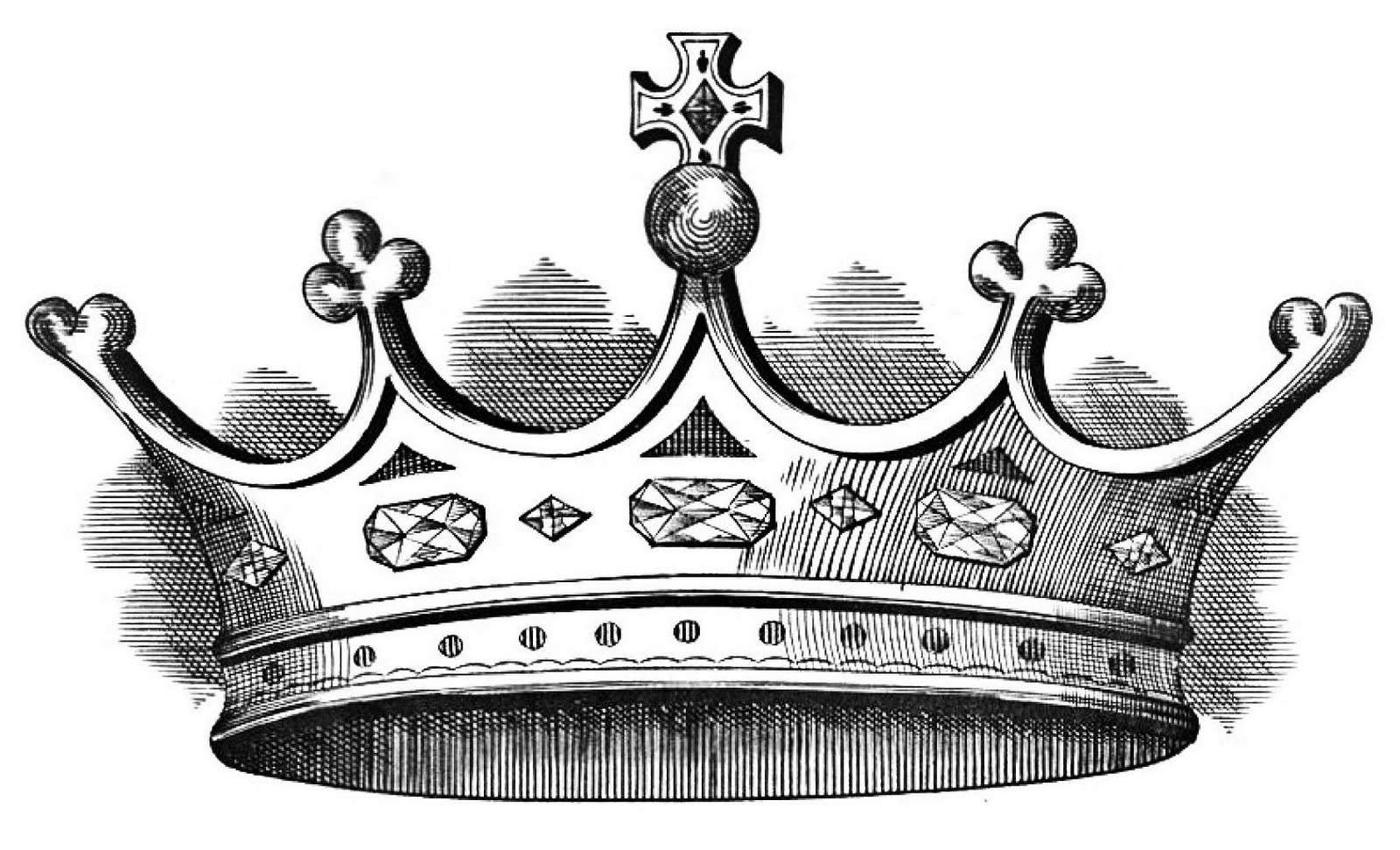
On Kings and Other Titles


Well it's a common trope in fantasy that we are in a medieval setting and of course every medieval setting must have an authority figure of some sort, and that of course is the king.

Here is an appropriate music video to get you psyched up and thinking about kings:


Awesome music aside, it's rather telling we are always thinking of kings in  fantasy setting. It's actually very unusual in human history to see anything but some variant of the king-vassal relationship in politics and daily life. Our modern political system is less than a few hundred years old, and would be seen as phenomenal (or idiotic) by most previous societies on earth.

In fantasy though one can always count on seeing the good/evil king sitting on his throne surrounded by scheming lords and advisers in his court. Unfailingly we see the fates of kingdoms resting in the hands of plucky heroes, we see crowns being won and lost, and we see kings as characters and come up with the issue of ruling.

Though some must ask; why all the time kings? Can't we see emperors, samurai, daimyo, caliphs, sultans, chiefs, viziers, and pope's engaged in such situations as well?

My answer is that of course we can, there just seems to be a lack of them out there.

I personally doubt that it has anything to do with uninterested authors or less than receptive audiences, but in reality most likely has more to do with that all these titles and positions of authority, in varying degrees to one another, can be summed up under that millenia old word and phrase for a ruler, and that is king.

The title of king is of course one that could be easily translated into many languages or extrapolated from whatever word locals use to call their ruler. The position, and the authority that rests with it, is going to be much the same. Whether a sultan ruling from a palace in India, or an African chief ruling over a great swathe of the Savanna with his warrior armies, the position, power, duties, and authority is going to be very similar to what we would consider a king.

In writing of course this can get cliche to some people, but I tend to disagree simply because of the powers and duties any ruler (no matter what title we give him) will have when it comes to making himself the leader of a pre-industrial (or even post-industrial for that matter) nation. Slapping a fancy made up word on the position is not going to hide the fact that this person is for all intents and purposes, occupying the same position as a medieval European monarch.

This of course should not discourage authors from trying something new and attempting to experiment with the accepted idea of how kings rule and set up authority. Writers should by all means attempt to subvert and play with the tropes we've long accepted as part of the fantasy genre, and we should be seeing people experiment with different political systems and theories for setting up how kingdoms run and govern themselves.

From the Confucian principles that governed Imperial China, to the religious inspiration that justified the rule of the Caliphs across the Middle East, it's important for writers to set their sights on other modes of ruling and how a ruler gets his authority and how a vassal is beholden to him.

While I've heard some authors say that its hard to keep people interested in a character once he becomes king (S.M. Stirling famously saying that it's boring because its all meetings and reports) and that they lose much of the action and drama that could be presented I have to strenuously disagree! In fact in my humble opinion, once a character becomes king and faces the difficulties of ruling it can become a defining moment in a series!

They have to deal with plots, counter plots, swirling alliances and petty grievances, marriage proposals, siring heirs, leading armies in battle, managing the affairs of the kingdom, dodging assassins, and in a fantasy setting this can be offset by some more mystical elements being thrown in! It's sad that some authors seem to miss this. You don't necessarily need a king to be a main character, they can just be secondary characters sitting off to the side advising or hampering the main character.

For instance look at King Elhokar from The Way of Kings by Brandon Sanderson. Elhokar is a young paranoid king who rules a nation mostly in name but still has the power of his office. He is a supporting character to Dalinar (one of the main characters) and at times both helps and hinders Dalinar's actions. He is hardly boring and has a number of fascinating character tics which make him function well and give him a distinct personality.

Then just look at the in depth look at kingship and authority which A Song of Ice and Fire gives to us. We go from kings who are bad to kings who are not so bad in a brief time. The story looks at people who do have power and agency (much like a king would) and shows that despite the fact they still have to deal with petty politics and somewhat mundane matters (Eddard hearing petitions from smallfolk and lesser nobles was a scene which I've heard some people found tedious) but duly demonstrates that showing a man of authority in action shows off his character through how he carries out those actions. Stannis is another good character to show that kings are not all just dull reports and meetings, but people driven by a call to action and a personal sense of justice. Though we haven't seen any POV's from him yet, we have seen his character in action on the Game of Thrones television show which truly helps get a feel for the man and what he does.

In Joshua Johnson's The Cerberus Rebellion we get a POV from the point of view of King Eadric who is the character that starts off the book. Here we see the character of the man who rules the nation. He is far from a boring character and his varied attitudes towards his advisers and vassals is one which frames his interactions with the rest of his realm. We get to see he is a 'big picture' person who looks at the larger issues in his realm while neglecting his vassals smaller needs seeing them as irrelevant to his plans as a whole. This of course is what ends up getting him in hot water.

For another fabulous POV of people who eventually become rulers one need look no further than the Wheel of Time by Robert Jordan. There are many characters who are (or become) rulers in their own right and they were some of the most fascinating character arcs I'd ever read.

So personally I think having a ruler as a main character is something that can really be used well in a piece of fiction, whether you are examining the authority and rights of rulers, or simply making them characters in the grand scheme of things its fascinating.

All in all kings are force in fantasy that will be sticking around for quite some time, whether we call them emirs or shogun is a matter of semantics in terms of what force the character represents. They may be heroes, they may be villains but they capture the romantic vision we have of epic fantasy and they do it quite well.

Sunday, 24 November 2013

Winter Has Come

Hello again readers. This is more of a general post since due to my workload recently I've lacked any specific major topic to post about. Here though I'm going to outline a few idle thoughts and ideas.

First off of course is that outside a few brief moments of writing a few hundred words here or there, dabbling a bit in world building and updating and editing notes I actually have not written very much recently. Sadly this will probably be a continuing problem until well into December as my exams creep up on me. My biggest problem is not distracting myself with new projects and instead just sticking to one or two that I wish to be concentrating on.

Mostly though, I have been successful at keeping my eye on the prize for two main projects, one of course is Service to the State, which is coming along healthy for a first draft, and another manuscript that has been idle for a while. I'm going to resolve to sit down and finish both first manuscripts when I can while only dabbling in one other side project I have at the moment which may, or may not be a good idea.

Now aside from my other writing woes I'm pleased to announce the first snowfall of the season has arrived! I woke up this morning quite happy to see a white curtain coming down around my home and the new carpet of snow covering the road and cars around me.

I always feel pleased when I see the first snowfall. Mind you, historically this has not been the case.

Most people were always dreading winter when it came as it meant an end to the growing season, a series of shorter days and cold bitter nights. Unlike today with our modern central heating most people would have to have gathered enough firewood during the year and stored it away (hoping to heaven it was all nice and dry) in order to both heat their homes on the long cold winter days, and in order to safely cook their food and enjoy a hot meal.

I personally thank God for the fact I don't live in such a subsistence society or have to worry about not having enough wood for winter, however, I also thank my father for the foresight of having a wood stove in our home. As people should no winter storms can be brutal and cold, burying things under a smothering blanket of snow and snuffing out our wonderful electric lights. And as anyone who lived through the terrible Ice Storm many years back can attest to, modern homes are not well designed to do without central heat.

So personally, I hope to one day live in a home where I can take advantage of the best of both worlds and not have to worry that if my power goes out that I'll freeze or not be able to cook any food.

Winter can be a dark and dreary time. There is a reason why the words of House Stark in a Song of Ice and Fire are "Winter Is Coming", both a clear warning and a pragmatic look ahead for the dangers winter could pose to such a society.


On a related note to that, the superb blog Race for the Iron Throne has finally come to what I consider the 'turning point' of a Game of Thrones where the War of the Five Kings heats up, as well as examining an interesting section of politics in Westeros, most notably the politics of the Northern Houses who are sworn to the Starks.

No doubt the commentary is going to get very interesting as we near the exciting climax of Game of Thrones itself and then set out to the big war aspect of A Clash of Kings.

On an unrelated note about my own blog, most readers have probably seen that the Weekly Word has not continued as hoped. I found that trying to make a weekly serial of random news updates and facts was more difficult than I thought, especially as serializing my blog didn't sit well with me, and seemed to also make the blog posts unappealing.

I've instead decided to simply do little posts like this with my thoughts and ideas, intersposed with random reviews and blog series about certain subjects. It feels like potentially a much better outlet for creativity and random thoughts than anything.

We'll just have to see won't we?

On another, more final, note relating to my blog, I will finally be posting another book review as I've almost finished an exciting book by author Saladin Ahmed, and I can't wait to share my thoughts on the subject, so stay tuned for that. I've also finally seen the movie Pacific Rim and I may potentially be reviewing it here, though I'm leery of doing so as everyone and their dog has done that already!

Well that's all for today readers, look to my coming again at sunset sometime in the next week. I'll be puttering around the web, and of course be hard at work on other things.

Until next time!

Tuesday, 22 October 2013

The Cerberus Rebellion

Well it's time for that long promised review. Now here I am going to reviewing another Kindle novel I purchased, and it's not just another short story either. No this work is full fledged novella comprising a whole cast of delightful characters and awesome battles, all revolving around a growing trend in modern fantasy, the idea of gun powder fantasy.

As a short aside so readers will understand, gunpowder fantasy is a fantasy setting which features gunpowder weapons, ranging from flintlocks to full fledged firearms. Much like Brandon Sanderson's Alloy of Law, Stephen King's Dark Tower series or  Brian McClellan's A Promise of Blood. However some books only feature guns to help differentiate them from epic fantasy, gunpowder fantasy is revolved around fitting magic into an advanced setting outside the middle ages. The Cerberus Rebellion by Joshua Johnson does just that.

From: gunpowderfantasy.com


The world of the Cerberus Rebellion is an interesting one, the Kingdom of Ansgar is ruled by a paranoid and brooding king, Eadric Garrard, who sees the rise of the Chisean Empire across the seas as a potential future threat to his own realm. Egged on by foreign diplomats and by his own advisers he decides to martial his armies and intervene in the conflict across the Vast Sea and safeguard his realm.

However, Eadric is not a well loved king, and not all his subjects are as eager to go to war as he. Then we have Magnus Jarmann, ruler of Kerberos, once a sovereign nation, now under the heel of the Asangari occupation. He is eager to win his realm's independence back, all he has to do is wait for the right moment. Finally we have Lord Raedan Clive, Baron of the Broken Plains who is a warrior first and foremost, a politician second.

This delightful cast of diverse main characters, each with competing interests and ideas, sets us up for a thrill ride through politics and war.

There are of course plenty of fun secondary characters in the series, like Raedan's brother Hadrian, and the king's advisers who all color the events of the novel depending on their own outlook. They serve as wonderful supporting characters who fill in the dynamics of the story and serve as windows into the upper crust of the world.

The story itself is not slow at all. From the get go we see things moving both militarily and politically. What helps this along of course is that it is in a setting where you don't rely on just men on horseback but telegrams and railroads which all speed along the important messages and allow for very little lag time. Here I have to applaud Johnson for his skillful mix of court intrigue and politics with the practical and often harsh realities of early industrial war and the nitty gritty of the battle field.

The resulting combination is something akin to Game of Thrones meets Bernard Cornwell's Sharpe series.

It's an interesting world with politics that are distinctly feudal in their application (for instance landed aristocracy still holds an enormous amount of power compared to our world in a similar time) and one which is clearly influenced by such. It combines the appendages of a modern and centralized state with those of a late medieval one where the king controls all the armories with the best weapons and artillery, but the aristocracy can still call on a powerful military levy of its own.

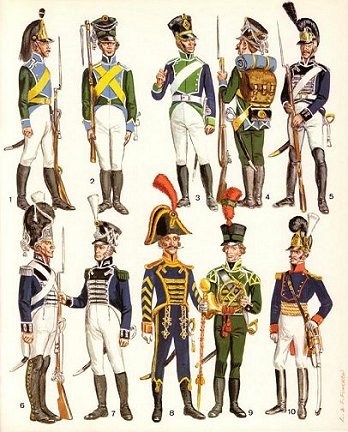
It's even reflected brilliantly in some of the battle scenes! There is no national uniform for any of the armies so the infantry marches to war in their house colors, which causes immense confusion and disorder on the battlefield (similar to our own histories Napoleonic Wars with soldiers lack of standard uniforms leading to friendly fire incidents) and is something the characters comment on more than once.

Think this, only just a bit more confusing.


It's also a sort of fascinating look into a society where a medieval style of command and control still reigns with titles of aristocracy such as 'Knight Commander' sitting in the chain of command alongside more familiar ones like lieutenant and major. The lack of a true unified command structure in most cases too makes for some rather interesting, and in one or two cases unfortunate, situations.

The battles of course are superbly done with little confusion from the point of view of the characters, and we get what is, in my opinion, a good vague outline of the actual battlefield and course of the battle itself while dealing with what only the character on the ground sees and then once the battle is done do we see the full scope of the action and what has happened. From a narrative perspective it makes things more thrilling and tense as the characters don't fully grasp how they are affected in the thick of it, yet they tend to make great leaps and advances.

Of course they are not military fools and at a few points characters make great leaps which change the course of battle thanks to good foresight and clever maneuvering of their forces.

Now one criticism I would have is that of the roughly six battles we see in the book only two are presented in great detail to the end. Sometimes the author forms a wonderful and suspenseful buildup to a turning point in the battle, only for us to miss it completely and have the narrative skip straight to the aftermath. While it was a bit of a suspense killer it did hasten the events of the novel along and I won't say the story suffered greatly for it.

The character interaction too is fun and educational, giving us details about the world these characters live in. The sub-plot focusing around the potential marriage of Raedan in order to sire an heir and cement his claim the Broken Plains is fun and quite amusing since it shows off Raedan's personal strengths and weaknesses, alongside his magical abilities.

Another thing I would like to congratulate the author on is his inclusion of elves in the story without making it feel cliched or shoe-horned in to fit the necessary fantasy mold. The elves seem to be perfectly natural in the world and they insert themselves as individual characters and personalities alongside their human counterparts with their long lived and magical nature filling an important niche in noble politics.

The inclusion of magic too was well done, though at times it did seem like a secondary focus of the plot, but it played an important role in Raedan's story arc. The way magic is handled was interesting to me, especially how it plays into the nature of griffons and how one controls them.

All in all the book is a wonderful read with a climax which leaves you begging for more. Johnson shows off his stuff as a writer with great promise leaving us with a fascinating new fantasy world to explore. I say the book is worth a read as it is a nice long read at a very affordable price. I would say that you could do well to part with three dollars for more than three hours of entertainment.

---
On a related note Johnson has a wonderful website where he posts about his world, industrial fantasy in general, and updates on his writing projects. He also has a myriad of short stories available on Amazon. This is his Facebook page, if anything here has intrigued you, check him out!

Saturday, 5 October 2013

The Weekly Word #7

Well this will be a short Weekly Word readers, really only two things have happened this week worth great notice, along with a few interesting things on the web.


In international news, the American government has shut down after failing to reach an agreement on the details of expanding Medicare and all 'non-essential' government services have been shut down. This of course has spawned various debates on whose fault the shutdown is, when an agreement will be reached, whether Obama is a weak president for allowing this to happen, and of course, a loss of faith in the system by some.

Of course this also isn't the only time in recent memory the government has been shut down. In fact back in the 90s the Clinton administration suffered the same problem over near the exact same issue. The only good thing about that is that it was after the limit to raise the debt ceiling had been passed.

Now though, just like back in 2011, the US faces yet another game of brinkmanship over the raising of the debt ceiling in which the very real threat of the US defaulting on its loans rears its ugly head. Now if he really has to Obama can use his executive powers to force the raising of the ceiling, but if he somehow fails to do that then the resulting catastrophe would make the recession of 2008 look tame in comparison.


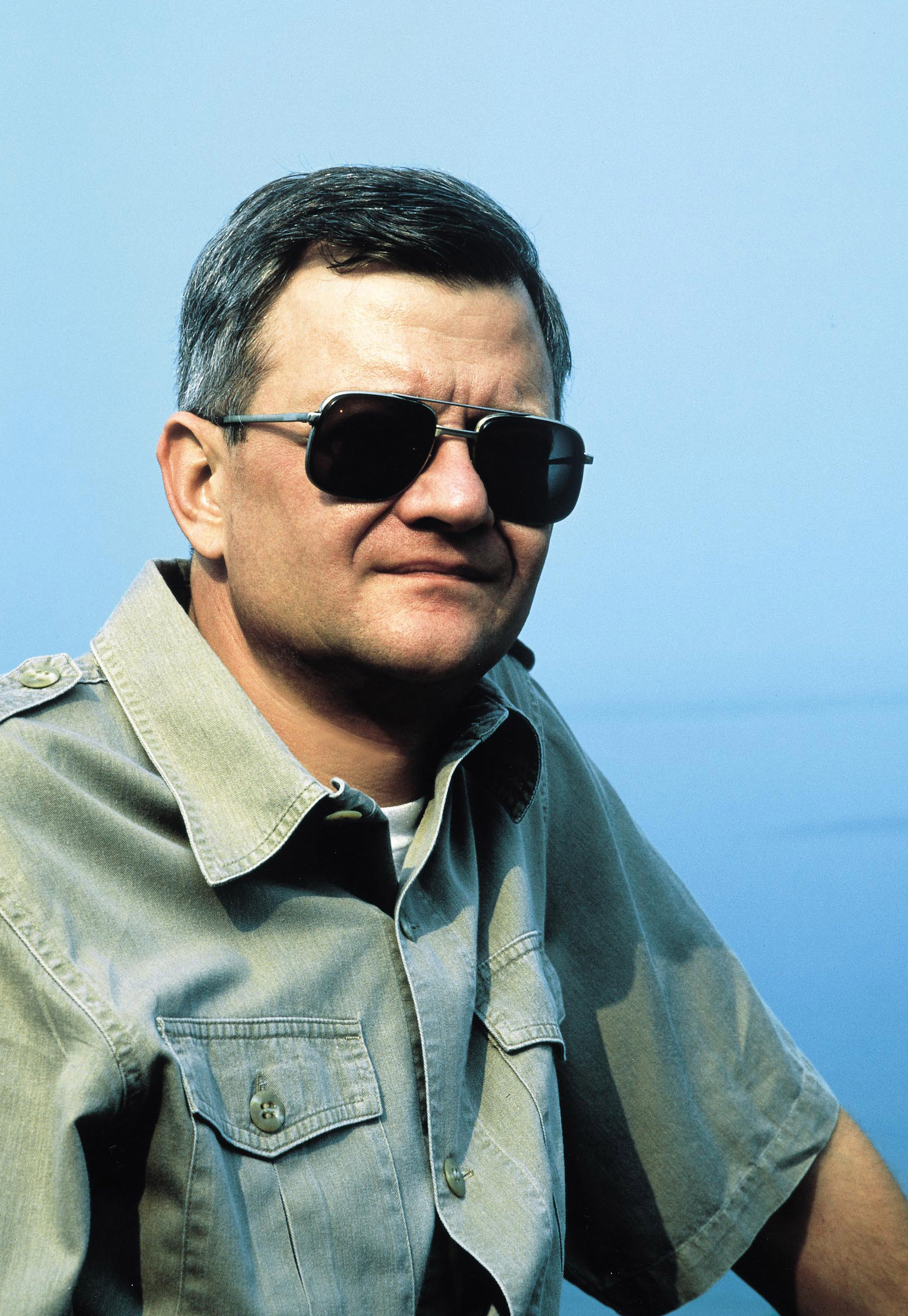
In other sad news Tom Clancy has passed away at the age of 66 this week. He was the father of the modern techno-thriller as we know it and he was really a brilliant man in many of his insights into military technology. In fact he once got in hot water for merely guessing what a US submarine would operate like (inadvertently guessing top-secret knowledge at the time!).

His books have made a number of best-selling movies, from The Hunt for Red October, to Sum of All Fears, and one of my personal favorite books for its sheer beautiful insight and techno-thrilling genius, Red Storm Rising, which alongside Red Army by Ralph Peters is one of the most amazing insights into the potential ground war between the Warsaw Pact and NATO and makes for an amazing read.

I simply hope we can find writers of his caliber to fill the void of the techno-thriller genre in the future.


In other news from around the web Korsgaard has done a wonderful review of the new film, Gravity which people really ought to check out. He really sells the film in this review, and he has decided for me the next film I am going to see!

In other-other news I have begun reading Steven Attewell's simply phenomenal Song of Ice and Fire political/story analysis blog,  Race for the Iron Throne. It's an amazing blog which seeks to do a chapter by chapter analysis of the entire series examining the political and cultural ideas that George R.R. Martin introduces to his world. He really digs into the series and helps show off some of the considerable world building Martin has done in creating Westeros and the Seven Kingdoms, comparing our history and Westeros and looking at the medieval world in which the characters reside.

It also appeals to me as a lover of the alternate history genre as it highlights the 'What if?' questions that A Song of Ice and Fire offers in abundance that really brings the world alive. In nearly every chapter we find details of how if even certain little events had changed they would have effected the outcome and trajectory of the story immensely! It's the little things like that which make the world so believable as well as spark literally hundreds of fan fictions putting forward different POD's for how the whole series could have gone differently!

Currently he's a little over halfway through A Game of Thrones so this project is going to be ongoing for many years if he does as detailed an analysis of every book as he does this one. Don't be too rough on him though, even if he did one chapter a week it would still take over a year for him to get through the first book!

I encourage readers who like that series, or even just history in general, to read his blog and support the project, it's truly a gargantuan undertaking!


Well that's all for this week readers! Stay tuned for my upcoming review!

Monday, 15 October 2012

The Grim Dark (In Writing)

Recently dear readers something has been on my mind which I just can't shake. Something that has both bothered and annoyed me. It's something which has been slowly creeping into our papers, our video games, our movies, and our novels! This slow seeping and gloomy menace is what we can call Grimdark (or Grim Dark). Now this is a phenominon which is not entirely new, it has been going on since the 90s after all, and is one which is fairly well established. In the fantasy genre though, it is beginning to show. Since A Song of Ice and Fire and its attendent TV series Game of Thrones became such sensational hits, we have been seeing an upsurge in popularizing dark fantasy. Dark fantasy has also been around for some time (Diablo anyone?) and has had a genre of its own. However, it is one which is becoming incredibly popularized in all forms of fantasy writing recently, pushing it to mainstream. This of course has shifted me from being mildly opposed to it, to becoming outright annoyed.

Now here's the thing, I don't mind dark fantasy (or any dark item in particular) but the massive push of depressing black, bleak, and nihilistic fiction is starting to become almost cliche to me. I enjoy a good morally gray story from time to time yes, but recently its less from time to time, and more 'all the damn time'.

To use one great example we have George R. R. Martin's A Song of Ice and Fire series. A deconstruction of the heroic fantasy genre (which is wonderful in itself) it started as a rich and interesting world with some dark and morally gray tones, but has since shifted to bleak, hopeless, and has multiple characters carrying the idiot ball. For instance in the most recent book A Dance with Dragons we had a series of inreasingly dark, twisted, and disturbing scenes played out before us and everything that the main characters did seemed to serve no purpose or else went incredibly wrong. Now I hadn't minded this before, but by this point many of the actions the characters took cried out idiot ball rather than 'decision gone wrong' and many of the more grotesque elements of the story were completely uncessecary.

Here's the thing, I love Martin's work and all he does in it, but when the series is so dark that I can instantly predict how badly something is going to go wrong without even thinking about it there is something wrong. I found myself simply guessing who would be the one to be screwed over in the next chapter, and was never really surprised at who it was.

For some non-literature examples I merely need point to video-games like The Witcher or the Dragon Age series. Each of them are good games, but the unnecessary ammount of angst, grimness, and depressing overtones makes it irritating for me to keep playing them. And the modern swearing (I mean honestly, like in all this dark literature everyone has to say f*ck at some point or another! There was no point in history until very recently that f*ck was being used as a swear word! I just can't stand that writers need to use it to somehow make the setting 'darker and edgier'! That word doesn't make it darker or edgier!!!) in these series just sets my teeth on edge. The games tell a dark, racist, and depressing story about a fantasy world where fantastic racism abounds and even kings and nobles aren't safe from the machinations of evil and inherent corrupt decay. They also seem quite content to play in petty power struggles as the powers of hell stand almost literally on their doorstep. Grimdark indeed.

The deonsrtuction of the heroic fantasy genre is something that I can appreciate from an artistic perspective, but when we are flooded by so many cheap grimdark fantasy knock offs that have no depth I begin to get sincerely tired of the whole charade. Why should I care that there are so many rape scenes, or that in this version it's just so morally gray? Unless the author is setting out with a specific goal in mind I really can't stand the cheap novelty of it.

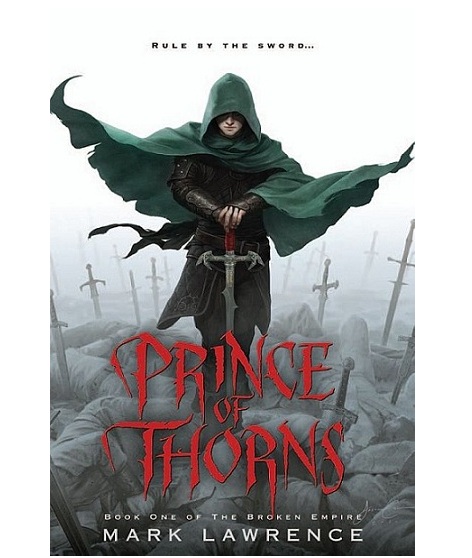
A recent series that set off my irritation was the Prince of Thorns series which is loosely set in a post-global warming earth, but has so many elements of grimdark (the cover art alone should tell you).


Now while I have nothing against the authors writing, he just latches to hard onto this grimdark aspect for me to be able to truly enjoy the read (indeed the opening scene is a group of swearing soldiers happily ransacking some dead peasants bodies and describing all the blood and gore) which is a let down. If it even had a slightly lighter tone I would be more sympathetic, but sadly now I cannot be.

The biggest problem is when these stories get so dark its to the point of self-parody. Dance with Dragons comes oh so very close to this. Every chapter with the Martell prince was painful to read with all the grimdark I was experiencing. It nearly got as bad as a Warhammer 40k novel (and those are grimdark by design, but thankfully not all take themselves seriously). Hopefully though future installments will leave me guessing at the plot again and finding it a page turner rather than glumly turning from one page to the next as everyone screws up in one fantastic way or another.

Now with this out of my system I can return to writing my own, somewhat light hearted, science fiction.

Monday, 2 April 2012

Game of Thrones: Season Two

The second season of Game of Thrones has arrived! Based on the best selling book series A Song of Ice and Fire by George R R Martin it encompasses the tale of the many families and characters in the land of Westeros. We are being thrust into one of the most dynamic moments in the series, the War of the Five Kings and great multi-sided civil war that is engulfing the land following the untimely death of King Robert Baratheon and the chilling revelations that come from it. Both a cracking good read and television show to watch!

Finally the best part of summer entertainment has come! I am thrilled to have seen episode one of what promises to be one of the best shows on TV soon. Though the former is my personal opinion I hope many others share it. Just watching the first episode has left me craving yet more and I'm hoping that I will be able to watch them all over the summer! I loved the first series and have watched it three times in a row, while having read all the books thus far as well I do know most of the plot but in each season thus far they have thrown a number of pleasant surprises by either showing some well done original scenes and showing scenes which were only mentioned by dialogue in the book.

The first season after many previous viewings I noticed seemed to lack a sense of scale, something that is easily forgiven considering the actors and directors are getting used to putting in on, but in some scenes (such as the Hand's Tourney) this was rather unforgivable as I had seen lower budget films and shows do better. I was especially displeased by the lack of a battle onscreen during the first season. There were some wonderful duels and one neat little skirmish but otherwise they seemed trivial and IMO could have been better choreographed. The acting was top notch though and all the actors carried their roles stunningly well.

Now for the little bit we have seen of the second season the directors and writers have certainly done a good job of making things feel more epic in scale. There are large panning shots of the Army of the North's camp and we see a full shot of Kings Landing and the dark and ominous fortress of Dragonstone is well shown off, I was especially impressed with the directors doing the Westeros shaped table in Stannis's hall (something I was genuinely taken with in the books). Relating to fights, in the opening sequence there is a short duel between the Hound and an unknown knight in the first few seconds that was wonderfully done! So it seems scale and battles will be no problem in this season. This is especially important as the most epic battle of the novels is supposed to happen this season. I am interested in seeing how the writers and directors pull this one off.

As for acting, none of the actors have disapointed. One character I was very worried wouldn't be played correctly was Melisandre, the Red Priestess from the East who is a mysterious and very knight templar like character. But in her opening appearance my fears were disuaded as the actress did a phenominal job of portraying her knowing, mysterious, and aloof nature quite well. And in Bran's brief appearance we see things in Winterfell portrayed just as I would like them to be. He was another character I was worried wouldn't come out properly. And once again the magnificent bastard Tyrion is played up very well.

If there is anything I can criticize about the opening episode it is two things. One is the comet, a major plot device from the books, is simply shoved in our faces which I found slightly disconcerting as it made me feel as though I had missed an episode already. The other was that we didn't get enough time with each character and it felt rather rushed throughout and as though it was trying to do too much in too little time. I felt the episode could have been longer to allow for more characterization to be played out properly, but as long as this doesn't become an issue as the series progresses I don't see much point in complaining.

I eagerly await more episodes and I am tingling with excitement for the upcoming season.