Showing posts with label Books. Show all posts

Monday, 29 June 2020

Book Releases I'm Excited For 2020

Even though I was trying not to buy any books across 2020 (and I did an okay job, haven't bought as many as I normally would) I am still of course going to be buying some of the new releases coming soon in the last half of this year! So by order of appearance let me celebrate some upcoming new books I'll be buying!

First off we return to an author I've been having something of a reading fling with these last few years, Joe Abercrombie. Having been powering through his First Law trilogy, and having read the first in his new trilogy I'm extremely excited to get my hands on the second book The Trouble With Peace which is set to drop September 2020. We'll be picking up with the new cast of characters, and hopefully having more fun with the old ones too! If you want my thoughts on the first book, here's a spoiler free review of A Little Hatred!


The following month we will have something by a new favorite author of mine, Kim Stanley Robinson. In the last two years I've reviewed a few of his works, and I'm eager to see what he offers us now. He brings us another tantalizing tale of a future that could be, and this one seems to make for some very, initially, depressing reading. The Ministry For the Future is set in a world where climate change has ravaged the globe, and mankind is finding increasingly difficult to survive, let alone thrive! To survive daily temperatures you have to be in a well air conditioned area. With all that is going on, can we save ourselves from the problems we've created? Can this new ministry advocate for all the generations yet unborn? I suppose we will find out October 6th 2020!


In November, we have probably one of the most anticipated works in the fantasy sphere as Brandon Sanderson brings us book four of the Stormlight Archive, Rhythm of War. In the much anticipated fourth installment we return to Roshar where the war between the Knights Radiant and the Voidbringers rages as men and gods do battle over the fate of the planet. This volume will fill in more background on the character Venli, and meanwhile, the war continues. Will the Knights Radiant prevail, or will the world fall into chaos? We will find out November 14th!

Finally, we come to another author I have been reading ever more eagerly. Marko Kloos already had one novel out this year, which I cheerfully reviewed, but we now come to the next novel in his much celebrated Frontlines series. In Orders of Battle we pick up years after the climactic battles between Earth and the Lankies both in and out of the Sol system as humanity picks up the pieces from its near destruction. Our protagonist Andrew Grayson has grown up in years, advanced in rank, and watched the now peacetime military shrink to accommodate the needs of rebuilding Earth and her colonies. But the Lankies are still out there, and the war isn't over yet. We will see more of the Human-Lankie war, come December 8th!


There are of course, many fabulous new stories in the pipeline for new and emerging authors, but here I'm just highlighting the books and series I've been following. I hope this generates some interest for them as these authors deserve all the love they get! Until next time!

Wednesday, 14 August 2019

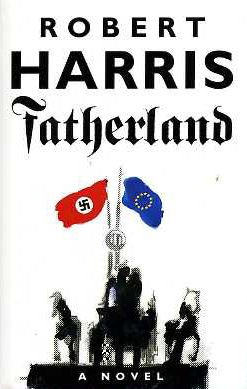
Fatherland

I've been catching up on well deserved classics that I haven't gotten around to reading yet, so in the dual interests of the mystery genre and my love of alternate history, I delved into the 1992 novel Fatherland. Written by Robert Harris, it explores an alternate world where Hitler's Germany did not lose WWII. Now, the Nazi colossus sits from the Atlantic to the Urals, holding all Europe, save Switzerland, under its sway. Having corralled the formerly independent nations of the Continent into a sham 'European Community' as well as engaging in a forever war along the long eastern frontier at the A-A line. Victory in hand, Hitler then turned his attention to creating his ultimate victory city in a garish redesign of Berlin.

The year is 1964.


Our story begins in the new Berlin, a body has been found washed up along the Havel River, near the heart of where the Nazi Party elite live. Detective Xavier March of the Kriminalpolizei (Kripo), and former U-boat sailor, is called to the scene of what at first seems to be the accidental death of an old Party member. Something of a recluse, the victim seems to have little connection to anyone other than being an original member of the Party. However, in an age of increasing terrorism at the heart of the German Reich, who can be sure?

The plot unfolds though as March, on a hunch, continues his investigations after the Gestapo claims jurisdiction over the case. He begins to unravel a disturbing conspiracy at the heart of the Nazi regime, one dating all the way back to the war and deals with the mysterious disappearances of all the Jews in Germany.

Along the way he meets American reporter Charlotte "Charlie" Maguire, while also dealing with numerous Nazi bigwigs and little men who are eager to dissuade his curiosity. But, he still has help in the form of his friend and partner Max Jaeger, who still aims to help him despite being a man not inclined to question the state.

Obviously, as this is a mystery thriller I won't be spoiling many details for you, but I think more than a few readers will be aware of the twist in this novel early on. I certainly was, but that did not mean I did not enjoy the book because of it.

While many fans of alternate history probably now find the idea of a Nazi victory story overdone, I still consider this to be a top rate novel. Rather than tell an exhaustive story of how the world got to where it was, the story is merely the setting for an intriguing thriller plot which uses that world as the background. It does of course, detail some of the alternate history leading to the Nazi control of Europe and the post-war Cold War with the United States.

Personally, what I found evocative of the novel was the setting. The premise is explained and partially justified but we are just told the story through these characters eyes as they live in this world. It is one where the Nazi Party reigns supreme over every aspect of German life, they remain constantly vigilant in attempting to police/purge the occupied territories of the East, while also struggling to catch up to a world where technology is moving quicker than men like Hitler and his cronies could anticipate. Terrorists are constantly targeting Germans, while the Germans themselves grow fat off the spoils of Occupied Europe, with Slavic laborers building their cities and English maids serving their tea.

March is a man who has grown up listening only to Party propaganda, and he still resents the Party despite the high standard of living he enjoys. Even with all that, his inquisitive nature makes him someone the Nazis would naturally be suspicious of. His interactions with Charlie, who has an outsiders perspective of Nazi Germany, are quite interesting. He uses this to ask questions he could never ask of another German person. He finds out about the horrible casualties incurred in the forever war on the frontier in the East against the Soviets and their partisans, and knows that much of the propaganda spouted against America is probably untrue, and even being toned down in light of the attempted detente with the United States.

These alternate 1960s are now defined by the interactions between the Reich and America. While we don't have as much of a global look as other stories might tell, the background to the story is fascinating and really establishes the characters and the world they exist in.

As for the plot, while many may see the twist coming, you are kept guessing as to whether anything will come of March's efforts to uncover the truth. He is constantly dodging a series of legal and lethal hurdles as the Gestapo seek to overcome any attempt to uncover the conspiracy at the heart of the Reich. It has all the good times of a spy thriller and a serial detective novel.

March himself is an engaging character. He has a policeman's sense of duty, constantly questioning and looking to solve crimes. He is also a former patriot. He loves Germany, and pursued a career in the navy because his father served in the Great War, but he has become disillusioned with what the Reich has grown in to. A man against his people as it were.

Charlie is a great sidekick, and as a kickass woman she deserves to be praised. An investigative journalist who is always looking for the next big scoop, she has German heritage and rebels against her family by carrying on in such a semi-dangerous career.

The somewhat forced attraction between the two leads felt, to me at least, as detrimental to the story. A love story (or lust story as the case may be) was not really necessary. Charlie would have been a stronger character without it, as there was not much chemistry between the two.

Fatherland though, is a deserved alternate history classic. Unlike the other stories I've reviewed, the spy thriller that was A Kill in the Morning and the war story which was Festung Europa, this one relies very much on its two leads to carry the story rather than increasing stakes or the drivers of history. It also shows you that stories set in one of the 'overdone' settings of alternate history, can, and most likely will, give you some great entertainment.

Friday, 28 June 2019

Book Releases I'm Excited For

Summer and Fall of 2019 are so far looking like a good time to be alive for a bookworm like me. Why you ask? Well allow me to share with you some exciting releases coming out soon!

First up one of my favorite fantasy authors is continuing his long running fantasy series with:

A Little Hatred


Joe Abercrombie returns to the Circle of the World, picking up his stories some time after the events of his first trilogy The First Law and it's various outrigger novels. Now this story picks up years later following a new cast, but with some familiar faces in the background.

Set as the first in a new trilogy, this piece will be taking us back to the places we all know and love from Abercrombie. The Union, seething with new industrial technology and unrest, The North, as chaotic and war torn as ever. These new characters will be navigating the world so changed from how it first appeared in The Blade Itself and dealing with both old, and new, problems.

To avoid spoilers for the previous novels I will not mention much more here. But if you love gritty fantasy and some awesome action and characters, these are begging to be checked out. I highly recommend it.

Expect it September 17th 2019!

The Testaments


Ever since Margaret Atwood first published The Handmaid's Tale in 1985, people have been asking, what happens next? Many questions are left frustratingly unanswered by this book, and the postscript raises even further questions! With the run away success of the streaming series, and arguably the modern political climate, Atwood it seems felt compelled to write the answers to these questions.

Now in The Testaments we will get some (but if I had to guess, not all) of the answers we have been waiting years for. Whether you've been waiting since 1985 or (like me) the 2010s, this book is a no brainer for your shelves in 2019.

I think that the hook speaks for itself:
When the van door slammed on Offred's future at the end of The Handmaid's Tale, readers had no way of telling what lay ahead for her—freedom, prison or death.

With The Testaments, the wait is over.

Margaret Atwood's sequel picks up the story fifteen years after Offred stepped into the unknown, with the explosive testaments of three female narrators from Gilead.

"Dear Readers: Everything you've ever asked me about Gilead and its inner workings is the inspiration for this book. Well, almost everything! The other inspiration is the world we've been living in." —Margaret Atwood
Expect it September 10th 2019!

Aftershocks 


Marko Kloos returns with a new science fiction series, the Palladium Wars! Taking place in a new solar system far from Earth and with an exciting new cast of characters, it will be handling some tough stuff. Losing a war, occupation, and the aftermath of a brutal conflict. We have new characters like Aden, a POW who was part of the Gretian military forces and who is now going home finding himself facing a conflict he thought he had left behind.

While I myself have only read the first chapter from the preview (and only seen the character of Aden) there promise to be many more interesting characters to indulge in. As one reviewer on goodreads put it:
As the Expanse nears the conclusion of its nine book arc fans are going to need something to look forward to, and this more than fills the bill.
Unlike his long running Frontlines series, this one will be told from the third person perspective with multiple points of view, giving us numerous characters to see these fascinating new worlds through. Having been a huge fan of Kloos's previous work, I'm stoked to get my hands on this one as it promises to be just the thing I need to keep my sci-fi kick going this year!

Expect it on July 1st, Canada Day! On this one at least, you don't have long to wait!

Thursday, 17 January 2019

Retro Review: Rebecca (1940)

Recently I had the absolute pleasure to watch 1940's Rebecca directed by none other than that supreme suspense shooter, Alfred Hitchcock. As perhaps is no secret, I'm a huge fan of retro films, whether colored or black and white. Alfred Hitchcock of course, is a film giant who is well known for his mystery and suspense. The book which Rebecca is based on is - criminally I am told - unknown by the greater public nowadays. Penned in the 1930s and published in 1938 by Daphne du Maurier, it tells the tale of all the tragic goings on at Manderly, the ancestral home of the de Winter family.


That the book was an amazing success would be an understatement. Going from smash hit to box office in two years is pretty exceptional in this time period. What was also exceptional was that Alfred Hitchcock, who wanted to make the film more 'funny' was told no. One just didn't do that to Hitchcock! With that in mind however, Hitchcock still delivers his classic thriller drama and shows off some amazing camera work in this film! It won two Academy Awards, and in 2018 it was chosen for preservation in the United States National Film Registry by the Library of Congress as being "culturally, historically, or aesthetically significant."

Beginning in the South of France (as one does in the 1930s when dealing with the British upper crust) at Monte Carlo, we come across our nameless protagonist (Joan Fontaine) as she serves as a paid companion to the stuffy and overly chatty Edythe Van Hopper. One morning, while out for a stroll, she oversees a man she assumes is moments away from commit suicide, so she calls to him. The man, visibly annoyed, tells her to mind her own business, but does not jump.

She next encounters him with Edythe, and learns that he is in fact Maximilian de Winter (Laurence Oliviere) the heir of the great de Winter family. Our nameless protagonist is timid and used to being pushed around, and Max, as he likes to be called, is forceful in his ways. However, he takes her on a whirlwind romance and, unexpectedly, asks her to marry him.

From there, she is whisked away to the Manderly estate, the realm of the great de Winter family. There she is introduced to the eerie Mrs. Danvers, the matron of the household staff and begins to see that tragedy haunts the halls of Manderly. A specific specter lingers over her as well, that is the ghost of Maxim's former wife, the eponymous Rebecca.

The film does an excellent job of ratcheting up the tension from the opening shots, to the claustrophobic moments where we zoom in on a character's face to see their terror written plainly across it. The atmosphere and the acting is all geared towards making you fear for the poor nameless protagonist as she is thrust into a new world which is strange and alien to her, and one haunted by a vengeful dead woman.

Fontaine portrays her nervous and bewildered character well. She has nervous ticks, slouching and constantly rubbing her hands together when feeling stressed. Cringing away from others, but especially the terrifying Mrs. Danvers who proves to be her indomitable adversary.


Mrs. Danvers (played by Judith Anderson) becomes a horror in her own right. While outwardly severe and at least maintaining the facade of the new Mrs. de Winter being in charge, she bullies and cajoles Maxim's new wife and attempts to drive her away. She is fanatically loyal to her former employer, even after her death.

Rebecca is a phantom in this film. Having died one year before the events of the film we know her only by her reputation and the effect of even mentioning her to Maxim has. Her rooms in the West Wing are all off limits, and maintained by Danvers as a mausoleum to her deceased employer. Her grace, beauty, and effortless excellence is often commented upon in relation to our poor nameless protagonist.

Perhaps the best scene in the whole film is one where we are tracing Rebecca's last steps. Almost done entirely in narrative, with the rare presence of an actor, it uses the camera, props, and the rising and falling in the voice of Maxim to stage and follow the scene. In this scene, we get a sense of the never seen character, Rebecca. It is, put simply, a masterpiece of film. You are lead around and can practically picture the character there, even though you never once see her directly in the film. The narrative is so gripping and intense with revelation that you cannot look away.

Hitchcock of course, does an excellent job setting atmosphere with his work in the film. From creepy dissolves where Mrs. Danvers ghostly face fades menacingly into another object, to well cut footage of characters in states of shock, anxiety, or grief. With less camera angles than a modern director could manage without, he uses easy shots to capture your attention and fix you on specific points within range, all the points he wants you to see. His method of shooting the film "in camera" was designed to make the film one seamless production from start to finish. He rejected some of the more melodramatic suggestions of the producers and manages to create a grand spectacle of cinematography.

Of course, the film is not completely faithful to the novel. While there is heavy emphasis on the perfect nature of our ghostly Rebecca and the emphasis is on our nameless protagonist, each fall short of du Maurier's vision. Her work wanted to emphasize how different Rebecca was from the standard female protagonist (while also making her something of a victim) and using our nameless protagonist as a victim of her society, being dominated by her husband, who must have things just so. This sadly is not picked up on by most, and the protagonist becomes attached (perhaps from Stockholm Syndrome) to Maxim and hopelessly devoted to him.

Oliviere plays the forceful and haunted Maxim well. Blustering between goodnatured enthusiasm to temperamentally domineering, going into a frenzy when he is reminded in almost any way of the dead Rebecca. His brooding nature is revealed gradually throughout the film, but he is never anything but controlling in his mannerisms.

The supporting cast is well rounded, from Maxim's devoted servants and to his manager and friend Frank Crawley. They all bring their subtle and powerful moments to the story.

The score, while appropriate for a 1940s audience, will probably grate and frustrate a 21st century audience. Relying on string music to bring in the tension, it is appropriately discordant at times, while also seeming confusing and out of place at others. It was an issue in evolution and though I do understand how it is supposed to work, I find that my ears just don't like string music in supposedly comforting scenes vs tense ones.

Rebecca, though, is a great film if you're looking for something suspenseful and shocking. The twists are all amazing, and you will be on the edge of your seat as our poor nameless protagonist tries to unravel the mysteries of Manderly. Another retro film I encourage you to see.

Wednesday, 25 January 2017

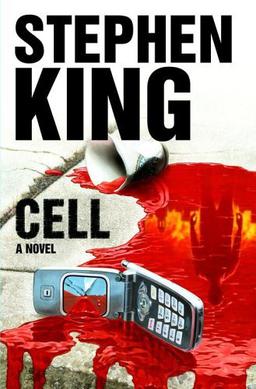
Cell by Stephen King

A while back now while browsing the book section at Costco I came across a novel simply titled Cell. Due to its curious cover I picked up the book and began browsing. Needless to say I bought the book soon after. Little did I know this would be my first foray into the world of Stephen King.

Stephen King is of course the best selling author and horror writer who perhaps has defined horror in the last half century and thus needs no introduction.

As a note this contains mild spoilers regarding both the book and the film so consider yourself warned.


Sunday, 24 November 2013

Winter Has Come

Hello again readers. This is more of a general post since due to my workload recently I've lacked any specific major topic to post about. Here though I'm going to outline a few idle thoughts and ideas.

First off of course is that outside a few brief moments of writing a few hundred words here or there, dabbling a bit in world building and updating and editing notes I actually have not written very much recently. Sadly this will probably be a continuing problem until well into December as my exams creep up on me. My biggest problem is not distracting myself with new projects and instead just sticking to one or two that I wish to be concentrating on.

Mostly though, I have been successful at keeping my eye on the prize for two main projects, one of course is Service to the State, which is coming along healthy for a first draft, and another manuscript that has been idle for a while. I'm going to resolve to sit down and finish both first manuscripts when I can while only dabbling in one other side project I have at the moment which may, or may not be a good idea.

Now aside from my other writing woes I'm pleased to announce the first snowfall of the season has arrived! I woke up this morning quite happy to see a white curtain coming down around my home and the new carpet of snow covering the road and cars around me.

I always feel pleased when I see the first snowfall. Mind you, historically this has not been the case.

Most people were always dreading winter when it came as it meant an end to the growing season, a series of shorter days and cold bitter nights. Unlike today with our modern central heating most people would have to have gathered enough firewood during the year and stored it away (hoping to heaven it was all nice and dry) in order to both heat their homes on the long cold winter days, and in order to safely cook their food and enjoy a hot meal.

I personally thank God for the fact I don't live in such a subsistence society or have to worry about not having enough wood for winter, however, I also thank my father for the foresight of having a wood stove in our home. As people should no winter storms can be brutal and cold, burying things under a smothering blanket of snow and snuffing out our wonderful electric lights. And as anyone who lived through the terrible Ice Storm many years back can attest to, modern homes are not well designed to do without central heat.

So personally, I hope to one day live in a home where I can take advantage of the best of both worlds and not have to worry that if my power goes out that I'll freeze or not be able to cook any food.

Winter can be a dark and dreary time. There is a reason why the words of House Stark in a Song of Ice and Fire are "Winter Is Coming", both a clear warning and a pragmatic look ahead for the dangers winter could pose to such a society.


On a related note to that, the superb blog Race for the Iron Throne has finally come to what I consider the 'turning point' of a Game of Thrones where the War of the Five Kings heats up, as well as examining an interesting section of politics in Westeros, most notably the politics of the Northern Houses who are sworn to the Starks.

No doubt the commentary is going to get very interesting as we near the exciting climax of Game of Thrones itself and then set out to the big war aspect of A Clash of Kings.

On an unrelated note about my own blog, most readers have probably seen that the Weekly Word has not continued as hoped. I found that trying to make a weekly serial of random news updates and facts was more difficult than I thought, especially as serializing my blog didn't sit well with me, and seemed to also make the blog posts unappealing.

I've instead decided to simply do little posts like this with my thoughts and ideas, intersposed with random reviews and blog series about certain subjects. It feels like potentially a much better outlet for creativity and random thoughts than anything.

We'll just have to see won't we?

On another, more final, note relating to my blog, I will finally be posting another book review as I've almost finished an exciting book by author Saladin Ahmed, and I can't wait to share my thoughts on the subject, so stay tuned for that. I've also finally seen the movie Pacific Rim and I may potentially be reviewing it here, though I'm leery of doing so as everyone and their dog has done that already!

Well that's all for today readers, look to my coming again at sunset sometime in the next week. I'll be puttering around the web, and of course be hard at work on other things.

Until next time!

Tuesday, 22 October 2013

The Cerberus Rebellion

Well it's time for that long promised review. Now here I am going to reviewing another Kindle novel I purchased, and it's not just another short story either. No this work is full fledged novella comprising a whole cast of delightful characters and awesome battles, all revolving around a growing trend in modern fantasy, the idea of gun powder fantasy.

As a short aside so readers will understand, gunpowder fantasy is a fantasy setting which features gunpowder weapons, ranging from flintlocks to full fledged firearms. Much like Brandon Sanderson's Alloy of Law, Stephen King's Dark Tower series or  Brian McClellan's A Promise of Blood. However some books only feature guns to help differentiate them from epic fantasy, gunpowder fantasy is revolved around fitting magic into an advanced setting outside the middle ages. The Cerberus Rebellion by Joshua Johnson does just that.

From: gunpowderfantasy.com


The world of the Cerberus Rebellion is an interesting one, the Kingdom of Ansgar is ruled by a paranoid and brooding king, Eadric Garrard, who sees the rise of the Chisean Empire across the seas as a potential future threat to his own realm. Egged on by foreign diplomats and by his own advisers he decides to martial his armies and intervene in the conflict across the Vast Sea and safeguard his realm.

However, Eadric is not a well loved king, and not all his subjects are as eager to go to war as he. Then we have Magnus Jarmann, ruler of Kerberos, once a sovereign nation, now under the heel of the Asangari occupation. He is eager to win his realm's independence back, all he has to do is wait for the right moment. Finally we have Lord Raedan Clive, Baron of the Broken Plains who is a warrior first and foremost, a politician second.

This delightful cast of diverse main characters, each with competing interests and ideas, sets us up for a thrill ride through politics and war.

There are of course plenty of fun secondary characters in the series, like Raedan's brother Hadrian, and the king's advisers who all color the events of the novel depending on their own outlook. They serve as wonderful supporting characters who fill in the dynamics of the story and serve as windows into the upper crust of the world.

The story itself is not slow at all. From the get go we see things moving both militarily and politically. What helps this along of course is that it is in a setting where you don't rely on just men on horseback but telegrams and railroads which all speed along the important messages and allow for very little lag time. Here I have to applaud Johnson for his skillful mix of court intrigue and politics with the practical and often harsh realities of early industrial war and the nitty gritty of the battle field.

The resulting combination is something akin to Game of Thrones meets Bernard Cornwell's Sharpe series.

It's an interesting world with politics that are distinctly feudal in their application (for instance landed aristocracy still holds an enormous amount of power compared to our world in a similar time) and one which is clearly influenced by such. It combines the appendages of a modern and centralized state with those of a late medieval one where the king controls all the armories with the best weapons and artillery, but the aristocracy can still call on a powerful military levy of its own.

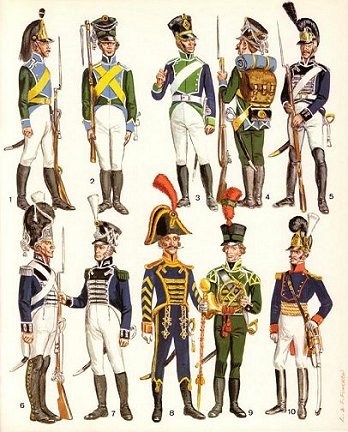
It's even reflected brilliantly in some of the battle scenes! There is no national uniform for any of the armies so the infantry marches to war in their house colors, which causes immense confusion and disorder on the battlefield (similar to our own histories Napoleonic Wars with soldiers lack of standard uniforms leading to friendly fire incidents) and is something the characters comment on more than once.

Think this, only just a bit more confusing.


It's also a sort of fascinating look into a society where a medieval style of command and control still reigns with titles of aristocracy such as 'Knight Commander' sitting in the chain of command alongside more familiar ones like lieutenant and major. The lack of a true unified command structure in most cases too makes for some rather interesting, and in one or two cases unfortunate, situations.

The battles of course are superbly done with little confusion from the point of view of the characters, and we get what is, in my opinion, a good vague outline of the actual battlefield and course of the battle itself while dealing with what only the character on the ground sees and then once the battle is done do we see the full scope of the action and what has happened. From a narrative perspective it makes things more thrilling and tense as the characters don't fully grasp how they are affected in the thick of it, yet they tend to make great leaps and advances.

Of course they are not military fools and at a few points characters make great leaps which change the course of battle thanks to good foresight and clever maneuvering of their forces.

Now one criticism I would have is that of the roughly six battles we see in the book only two are presented in great detail to the end. Sometimes the author forms a wonderful and suspenseful buildup to a turning point in the battle, only for us to miss it completely and have the narrative skip straight to the aftermath. While it was a bit of a suspense killer it did hasten the events of the novel along and I won't say the story suffered greatly for it.

The character interaction too is fun and educational, giving us details about the world these characters live in. The sub-plot focusing around the potential marriage of Raedan in order to sire an heir and cement his claim the Broken Plains is fun and quite amusing since it shows off Raedan's personal strengths and weaknesses, alongside his magical abilities.

Another thing I would like to congratulate the author on is his inclusion of elves in the story without making it feel cliched or shoe-horned in to fit the necessary fantasy mold. The elves seem to be perfectly natural in the world and they insert themselves as individual characters and personalities alongside their human counterparts with their long lived and magical nature filling an important niche in noble politics.

The inclusion of magic too was well done, though at times it did seem like a secondary focus of the plot, but it played an important role in Raedan's story arc. The way magic is handled was interesting to me, especially how it plays into the nature of griffons and how one controls them.

All in all the book is a wonderful read with a climax which leaves you begging for more. Johnson shows off his stuff as a writer with great promise leaving us with a fascinating new fantasy world to explore. I say the book is worth a read as it is a nice long read at a very affordable price. I would say that you could do well to part with three dollars for more than three hours of entertainment.

---
On a related note Johnson has a wonderful website where he posts about his world, industrial fantasy in general, and updates on his writing projects. He also has a myriad of short stories available on Amazon. This is his Facebook page, if anything here has intrigued you, check him out!

Saturday, 23 March 2013

Gorn (or the Etiquette of Blood and Gore)

Readers let it be known I am no stranger to the concept of blood and gore in stories, nor am I opposed to it. Sometimes though we just have to find a better way to use it. Today I talk about gorn (and boy is the page image for that accurate).

Now of course I'm not referring to the alien from Star Trek.

This alien for those of you who are wondering
No today I instead talk about (as quoted from TVtropes) the 'extreme and sadistic violence, to the point of prurience. A portmanteau of "gore" and "porn". The term can refer to just an extremely graphic scene of bloodshed, or the entire sub-genre of torture films in the spirit of Saw'. And of course if that's not explanitory enough for you, let's just say that it's blood and gore for blood and gores sake.

Now that's not to say that the application of gore is a bad thing, in fact some of the best video games and horror movies use bloody murder to captivate/horrify their audiences and wratchet up the action in the game/film. In fact in some cases it can be downright hilarious! That is, if it is used tastefully and applied well.

Some video games just tend to suffer from over the top gore with blood dripping from the screen, these aren't even necessarily horror games, but action games which have ridiculous ammounts of blood and guts just seemingly for the sake of it! It can be fun, but after a while it is just boring, and incredibly juvenile. You won't see much evolution in gameplay terms as long as developers concentrate on this!

I'm no stranger to liberal gore, some of my favorite video games include the Dead Space series, Gears of War, and Resident Evil. Now none of these games is exactly light on violence. In fact Gears of War is billed as being a violent action game with some of the over the top violence being the selling point. I mean when your using a chainsaw bayonet to saw through a Locust Drone while screaming 'yeeeeaaaaah!' along with the character on the screen you can't exactly claim you aren't enjoying it.

Case in Point, vis Destructoid
Now this is a game which is sold on over the top action along with a mediocre story. Here's the thing though, the weapons and violence sell it. They are larger than life and improbable, which combined with good gameplay mechanics and interesting hammy characters we have something that sells quite well.

Looking at Dead Space, you have something which is basically zombies in space. They have scything talons and go around infecting people by driving a proboscus into the player characters head or removing his limbs from his torso in various gory and creative ways. These are all items that are expected in a zombie style game, and as watchers/players of that particular genre we now expect that people will be messily devoured and zombie heads will explode through high velocity lead poisoning (or plasma cutter related work injuries) and that is pretty much what we watch the genre for. The Walking Dead would not be what it is without the proper application of zombies eating people and zombies being killed by people. Done in proper context and shown well it is what viewers enjoy.

However, few people want to see a show or game where the zombies win and eat everyone, or all the main characters are messily devoured in pointless ways. Admittedly some people were rooting for the zombies in Land of the Dead (I wasn't) but no one really wanted to see them win!! What they wanted to see was the plucky human characters defeat the evil villains and if the zombies helped do that, great! If not, well, putting a bullet in their brains isn't a terrible idea.

The reason you can't have a zombie as a sympathetic character (most of the time) is that they are human eating machines, and as such are beyond the sympathy of people. You don't want to see them messily devour someone who might be innocent, and you don't want them to win in the end. In fact I've only ever read one series which did this well, is The Rising by Brian Keene.

The thing is though, that mindless gore will be a given when a zombie is the main character, just like if the main character in a movie is a slasher. We will have to sit through ages of the villain/monster killing people, now this can be done well by being downplayed in favor of the horror of this person winning, or it can be done poorly by dragging out the horrible torture for ages.

A point in case of this being done well is actually the first Saw. I personally may not have liked it, but, I will concede that it was not especially gory and used the terror it created in a decent fashion for reeling the audience into the characters awful dilemma. The sequels however, instead turned up the gore and violence and had people dying for no other reason than for us to see them brutally murdered on screen. Another movie which invokes this trope, is Hostel which is literally a movie with no point other than seeing young tourists having sex, then being kidnapped to be tortured to death by foreign rich people. The ludicrous ammount of gore and its ridiculous use (I mean blow torch to the eye?) makes people want to vomit. Literally none of this adds to the movie, and its more disturbing than scary, and not in a good way. It doesn't leave you asking anything about the movie, instead merely wondering who the hell would come up with this plot?

It's hard for people (most people) to sit through a film where teenagers are being slaughtered left and right with no reason. Some movies today will spend mindless ammounts on gore budgets just to get realistic looking slit jugulars or ripped out rib cages. In fact some movies have decided to just ditch the concept of plot or characterization altogether in order to show scantily clad co-eds being ripped apart or hacked up in order to appeal to the lowest denominator in advertising.

This film being a recent offender
You see gore isn't what people expect from a horror movie. What they expect is to be scared or terrified, and in truly well done cases ask fundamental questions about their own humanity and what constitutes a monster. Yes they expect blood, yes they expect murder, but what they don't expect is for the set to be drenched in so much blood you could fill a swimming pool. Sometimes just finding a dead and mutilated body is much better than having to watch that character be mutilated and then have their friends stumble upon the scene moments later. It just saves time and can increase terror.

The fact of the matter is that lots of horror today suffers from a lack of substance and a ridiculous infusion of severed heads and spurts of blood flying around for no reason I could point out. Even in video games (like Left 4 Dead) the gore begins to become an impediment when you can't even see the screen properly through the layers of blood. In fact one of the reasons the Resident Evil series has suffered recently is the fact that it has become self aware of the gory nature of the transformations and monsters and is just playing them up for kicks! This is in no way interesting, and really doesn't appeal to most players who are looking for an exciting horror survival (or maybe in the far future an actualy horror!) game with puzzles.

Crime dramas today are also becoming dependent on gory murder rather than the idea of solving crime. Thankfully however, some shows are coming out which deal less with us following demented serial killers as they butcher people in 'creative' ways (such as in the ever sinking Criminal Minds series) or the psuedo-science and ripped open bodies as seen on CSI, and instead lead us to the enjoyable 'murder as a framing device' plots of great crime dramas and character driven stories such as Castle (which in my opinion is probably the best crime drama on TV right now).

Literature isn't immune from this either. Some series take the gory horror to a ridiculous level. Many modern Lovecraft books begin having freakish monsters messily and slowly disembowling their victims for no real reason. Some novels (like some particular moments in the Sword of Truth series) just have long torture sequences (committed by the heroes no less) and use them for what might have been a metaphor about war, but it is lost in the ensuing random 'heroic' violence that follows.

In fact much of the literary genre of horror has also come to try and depend on gory monster attacks rather than the physical horror of such monsters, or being alone, isolated and under attack by otherworldly creatures! The Slenderman mythos is so scary not because of any gore which might be in it (and there rarely is any) but because of the sense this tall suited blank faced creature can chase you down anywhere and then...well what exactly he does do when he catches you is left to the reader, and that makes it all the more scary!! No gore necessary but maximum scare fest!

It's the unknown or monstrous that usually scares people, not the sight of someone being dismembered or a college co-ed having her still beating heart ripped out and force fed to her. While those images are disturbing I wouldn't call them terrifying in and of themselves. I mean I've seen uncensored battlefield casualty photos which are gorier than these films and while it makes me feel sick it doesn't make me particularly scared.

What writers (and more importantly, executives) need to learn is that you can't just appeal to the common denominator base that looks for bloody gore and sex while expecting to win out in the box office. People tend to quickly tire of that kind of thing, and it ends up with the same repetetive, boring, predictable, and idiotic, plots that people really only go to see from boredom. Just putting bloody murder onto a screen and expecting it to sell is not an incredibly successfull business plan (hell even the classic 'sex sells' mantra fails if you underestimate your audiences intelligence).

What horror and action writers should learn is that you can't abandon plot for silly gimmicks and expect to be wildly successfull in your careers. Hopefully this can end with a thrilling psychological horror movie coming out that serves to scare me because it's actually scary, and not because the script says its scary by decapitating some teenagers.

Now here's a picture of a zombie getting it's head blown off.


Until next time readers!

Saturday, 24 November 2012

The Case for Prepping

Well readers I suppose many of you might start to consider me an odd duck after this post, but if that is the case, so be it. What I aim to do today is make a valid case for the idea known as survivalism. Now some of you may have passing aquaintance with the idea of survivalism and may have seen movies where so called 'survivalists' are featured.

For a moment let me sketch out the the typical mental image that people see when they hear the word survivalist. For most people the word evokes images of a man (usually in his late 40s early 50s) holed up in a bunker beneath his house surrounded by stockpiles of MRE's canned food and cradling an M-16 in his arms while checking his other illegally obtained weapons and waiting for the Soviets or New World Order to come knocking. Now while this stereotype isn't completely undeserved (as an unfortunate number of websites and authors show) it is only focusing on the extreme fringe of so survivalist movement. Many people who identify as survivalists have recently been using the term 'prepper' to differentiate themselves from this fringe. I myself use it as I am not in the process of prepping for a global collapse, but rather more local things.

More about me in a moment though. What people will find today is that may preppers are people who are members of the Green movement and want to get back to the land. Or they are simply people who live in areas that are at risk for terrible weather and other natural disasters (hurricanes and earthquakes and the like). Most people will simply have an emergency supply of food, batteries, and blankets to be used in case of a terrible power outage or storm. If you do something basic like that then yes dear reader, you are indeed a prepper. It's even just the little things that make someone a prepper, if you are preparing for any kind of freak hit mother nature can throw at you, you fall into the category of prepper.

Though now some of you may be asking 'Stienberg why do you prep? Surely you aren't afraid of the NWO nor do you need to fear the weather so much?' well readers I'm glad you asked that!

As I'm sure many of you will remember back in 1998 we had the mother of all ice storms which came down on us like the wrath of an inebriated and severely ticked off Jack Frost! For some readers who may not remember, or who would like to see how devastating this was I present you these:

This is some trees bent under their own weight from the ice (one having its branches totally ripped off)
No these aren't ice scupltures.
This is a twig, covered in two inches of ice, to illustrate just how bad this was.
Now I was just a little rascal at this time, but I do still remember three things in abundance. One was that a great big tree was literally uprooted and smashed across the road blocking part of the neighbourhood, the other was that our power didn't work for days, and that we eventually had to flee to my grandmothers house because it was to cold to stay in our own.

The problem grew so great and many communities (like my own) were isolated and the roads impassable from the ice sheets and debris covering them. Eventually the army was called in and I can remember how glad my parents were to see helicopters flying overhead and for a soldier to come and check on us.

That time dear readers, was bad. Some froze to death in their homes (especially the elderly) and many who did leave to stay with relatives who did have power, returned to find their homes looted by opportunistic scavengers (of both the four and two legged variety). Now it wasn't anarchy in the streets, nor a world ending disaster, but it made many people quite upset and uncomfortable and made me realize just how fragile our modern way of life is. My father for instance, has not owned a house without a woodstove since.

Now of course I was to young at the time to really appreciate these details. As I got older though, I began to really see the effects that a few days without power could have on people. Take the 2003 blackout for instance. I was again cast into a world of darkness and no power, but was thankfully warm as it was summer. So these memories have weighed heavily on me as I see how catastrophic man made screw ups can be.

From the time I was sixteen onwards I began asking myself what I could do in situations like these. So from there I began reading about disaster prepardness and storm shelters. What will surprise readers is that it wasn't any man made disaster that finally tilted me over the edge into full on prepper, but a fictional one.

I purchased the Zombie Survival Guide (and consequently have reviewd it on Amazon as MDStien) many years ago. I bought this book as friends and I had become infatuated with zombie movies, and all the post-apocalyptic aspects there of. This book really got me thinking, what if the power goes out for weeks at a time? What if I get caught up in a riot or other civil disturbance? And even, what if maybe, just maybe a horde of undead flesh eating monsters tries to force its way into my home? The last one aside (well I'd focus that on burglers really) these are very important questions. What will I do if I'm without power for a number of days, or what will I do if there is a critical shortage and I have to stock up on food for something, and even what if I'm stranded in the great Canadian wilderness?

These are all important questions people should ask themselves. It's little things like that which can throw our entire world into disorder. Especially with food, there's an old saying 'every country is three meals away from a revolution' and if an entire region were deprived of food for many days I can assure the reader that things would not end well.

I personally began scanning the web and blogosphere for websites which might help me prepare. Eventually I've come across two important websites which have given me tips and tricks to help prepare. One is the famous Survivalblog by James Wesley Rawles a well known author and blogger on the subject. His political leanings do however influence his writings and ideas about survival and he has a bit of a militia bent to him. That being said he also spends a considerable ammount of time on weapons and other self-defense ideas. However, his blog is an excellent resource for starting preppers, and his book How to Survive the end of the world as we know it, is a must have for starting preppers as it gives you an idea of where to begin, and where to go.

Now Rawles does have another book. This one:


Now understandably this may begin to sound alarm bells in some readers heads screaming 'militia fanatic!!' and while there are some elements in the book of this, it actually reads more like Red Dawn in Weirmar Republic Germany. The author is controversial because of his viewpoints and beliefs and this will certainly turn away some readers. Though it doesn't even read as well as a regular novel I can gaurentee it is chock full of excellent ideas and tips packed into a useful narrative. His non-fiction works and blog are much less controversial and could be easier to swallow, I merely reccomend this book to people who want to see what would be described as the best-case scenario for a prepper group put into print.

Now on another note, here is a blog that is a) more Canadian and b) closer to what I'd envisage as my prepping scenario dream. Modern Homesteading is a blog begun by Victoria Gazeley when she moved to her proverbial cabin in the woods and began a life of self-sufficiency and work. Now my proverbial cabin in the woods would look something like this but that's beside the point. Gazeley sets out her ideas on self-sufficient living, and how to prep in a Canadian environment and for a rural lifestyle. This resonates with me a) because I come from a very rural background and seek to return to it and b) because it is from a Canadian perspective and will thankfully avoid foreign politics and ideological banter. The blog offers so many helpful tips and advice that you would be hardpressed to keep track of it all.

That being said online resources are not the only resources that can be used. Amazon has a plethora of books and how to guides on things that can be essential for prepping, and I encourage readers to check some of these items out starting with this.

In the end dear readers I ask you to remember a few things. Being a prepper does not make a person crazy, it is something that almost everyone does to one extent or another (and some simply take it further) and that it is something we should all practice to some extent, just in case.

For now though readers I hope I have outlined the pros for a prepper mindset, and I can assure you I will be doing some more prep oriented posts in the future. Keep on reading and please give these issues some thought.

As a final note, I encourage everyone to think about Hurricane Sandy and many of the ill effects it has had when you consider prepping. If you don't think you can be affected by weird weather and natural disasters, you are oh so sadly wrong dear reader.

Friday, 10 August 2012

Ruminations on Interstellar Travel

Recently I was reading National Geographic and its lengthy issue on space. Of particular interest to me was the colonization of Mars and the approximately thousand year long terraforming process which got me thinking (again) about the future of mankind among the stars.

I have been an avid reader of science fiction since I was young from books like Star Hatchling or the young adult Star Wars novels like the Galaxy of Fear series. I graduated on to reading the works of Isaac Asimov and Robert Heinlein and wonderful novels like Dune, Starship Troopers, or The Moon is a Harsh Mistress. I loved the series and I was eventually reading the Halo novels which were very well done. Since then I've always had heady visions of space colonization and space battles.

Most recently I've been reading the Honor Harrington series which has really captured my interest. The series is extremely technical giving immense details on the technical data of the science behind the universe, and almost as importantly, the immense distances involved in travel among the stars and the vast distances that occupy even a single star system.

It has been immensely helpful for the opening stages of my own science fiction novel. Especially for some pivotal scenes involving space pirates thus far.

Establishing a proper timeline for the story has been a bit trickier, especially because of my thoughts on interstellar travel. Faster than light travel is something that we currently don't possess so making a viable means either relies on technobabble jargon or by extrapolating on currently shaky sciences. Since mankind has yet to travel well beyond earths orbit (in any manned capacity that is) I have come down to using more vague terms for my own science fiction such as 'hyper space' and 'jump drives' to describe the process.

The way I see it to have a decent history for an interstellar star nation one needs to have at least three centuries of colonization, which if you want to set it in something like the year 2600 or so requires mankind to have some decent terraforming technology and an adequete FTL technolgy else you have to rely on generational ships and an increase in earth-like planets (which while not impossible, it is still highly unlikely to have them concentrated in any nice dense array without a little push from the human race in my opinion). Mind you the previous thought is best regulated to 'hard' science fiction, while mine is going to be on the softer side, I am trying to make it as semi-realistic of possible to help with the suspension of disbelief.

You see in my science fiction (the Service to the State series as the name is thus far) I have developed a fairly intricate backstory for the nation of the Commonwealth, its worlds having been settled five hundred years before the current story line and then clawing their way to independence in order to form their own nation. The galaxy shattering events which lead to their independence (various wars and revolutions) all require FTL in a reliable shape so that they can carry out interplanetary war on a realistic scale. It needs to be both relatively easy to aquire and maintain, but difficult enough that it has some drawbacks and disadvantages to keep it from being a sort of easy way out for ships in a jam. I have no real grasp of the advanced sciences required though so I have to avoid the 'info-dumps' of the Honor Harrington series and rely more on characters, events, and conflict rather than the interesting hard sciences to keep people reading!

The problems with mapping a decent timeline this presents are large. Due to many realisations of both scale, and realism I have revised my initial timeline at least three times now. I'm sure I'll be forced to do this more in the future as I attempt to make the story as 'hard' as I can. Thus far though, both the story and the timeline are progressing well. I hope to have a rough draft for the entire story in place by the end of the year.

Tuesday, 15 May 2012

The Weapon, By Micheal Z Williamson

Now as readers here should know I have already reviewed Williamson's first novel Freehold in which I gave middling marks as it was a good debut story and one which I had liked and looked forward to reading. Knowing it was his first novel I had decided to give his other works a look over. While I highly reccomend him, especially to anyone with libertarian views on the world or anyone that likes military sci-fi, I am skeptical of reccomending this book at all. I will endeavor to adequetely explain why.

The story is set both before and during the events of Freehold and is a sort of sequel, but I really more like S.M. Stirling's Tears of the Sun in explaining events that happened simultaniously in Freehold but follows a once mentioned character.

The Weapon follows Freehold operative Kenneth Chinran who is a badass motherf**ker and wants the whole galaxy to know it. We begin following his gruelling training to enter the special forces of the Freehold. These montages (unlike the ones in Freehold) are well placed and flow fluidly and actually give depth to the plot as they describe the harsh and demanding process which it takes to become a special forces soldier. There are a few jabs at the squeamish UN observers, but in this case they also work quite well as it shows that anyone who disgaree's with this harsh training doesn't know how to make a special forces operative. Mind you I do know some of the training that goes into making a special ops soldier and the standard the Williamson sets is rather...harsh by comparison and might fly in the face of what a civilian government would be willing to allow. Then again that is the point he is trying to make.

But back on track the story follows his training, his years as an operative, and some engagements that his forces get themselves involved in coupling with their eventual great mission; to attack Earth.

The Good:

The story does follow a believable spec ops training cycle, missions and actions that special forces operatives would be sent to engage in. It shows them taking on terrorists, training with other governments and practicing with their own forces. All something that goes in real life.

Williamson also explores the galaxy at large, something I enjoyed, and does some creative world building in the effort. There are a few planets with distinct cultures that are shown wonderfully and also their militaries. One world we spend a great deal of time looking at is Caledonia, a planet settled by the British. I enjoyed the look into their culture and the examination of their military views and society. Brits in space basically but it read well and as a Brit lover myself I was happy with it.

Then he describes the conflict on Mtali, a major backstory component in the first book, and gives depth to the war and the people who fought there. This is something I was glad of, for it was only sketchily mentioned in the previous novel.

The Bad:

Unfortunately I have a lot to criticize with the book.

One thing of course which I will get out of the way now is that I don't agree with the books politics, but as an open minded reader and person in general I am willing to let that slide. What I cannot let slide is the outright hyporcrasy of the main character.

Also, Kenneth Chinran is not nor will his character in this book ever be a likable person who can be forgiven for his actions. The man is also a hypocrite through and through and should be tried for multiple counts of murder, and not to mention the various war crimes he commited. The man thinks he is a badass and acts as though he is superior to everyone else while treating himself as nearly God incarnate by being judge, jury, and executioner in all aspects of his mission. Emphasis on executioner.

One of his first missions is to hunt down a terrorist who killed a small child and the passengers of a space liner. He and his team proceed to do so and capture (quite amazingly on the first try) the head terrorist and his compatriots. Chinran then proceeds to torture and mutilate the man within an inch of his life and castrate him. This not only doesn't prompt any retaliation by the terrorists at all but in fact ensures no other Freehold civilians are attacked by these terrorists! Amazing!

My suspension of disbelief is still intact by this point, but I'm sad to say that doesn't last long.

We then move on to Caledonia, one of the most interesting venues in the book, where we have some low level spy activity and training with the allies of the Freehold. Unsurprisingly Chinran and his team proceed to thoroughly trounce the forces of an entire base only to end up in a messy hostage situation before being wiped out by an SAS (yes I said SAS) response team, but not before killing half the response team of course. So yes it proves the operatives are dangerous individuals and can go on dangerous rampages just because they have superior training, and come from a heavier gravity world. All reasonable but the fact that save for being massacred by the SAS at the end they manage to pull everything off without a hitch is ridiculous to me.

Then of course comes Mtali. The first chapter describing it goes into a long hateful and racist (incredibly so) rant about how Muslims (specifically Sunni and Shia) are evil raping, murdering, war mongering, and genocidal bastards. Also Baptists (sorry an off-shoot of them) are just as bad. There probably isn't a single religion (except paganism) which isn't listed or mocked in a certain way. I was personally disgusted by the rant and how narrow minded and stereotypical it was. I could forgive this as something of a character flaw or so, but it was astoundingly uncessesary and I couldn't help but feel the authors own personal prejudice seaping into it. It was shocking, offensive, and not well written which simply added salt to the wound. And of course by this point Chinran is still perfect.

But the long and short of it is this. Mtali is basically a stand in for war torn Africa or even some part of the Middle East, but mostly Africa. You see the Freehold Military Forces (FMF) are sent to partake in peace keeping (read making) operations. Yes he details his approach to this, but not before completely breaking my suspension of disbelief. You see when they land they are met by US Marines, that's right United States Marines from a world dominated by the UN. Chinran then proceeds to intimidate them. Ladies and gentlemen we are five hundred years in the future and the world is controlled by the UN but the US Marine Core is still standing strong! Hoo-rah! This I found as an unforgivable destruction of the suspension of disbelief, as you cannot convince me that US Marines are still in operation under the same name or colors on a UN dominated Earth! Give me a break!

Then of course we have Chinran's treatment of the locals. Here we are treated to an unflattering display of how Sunni Arabs are filthy and live in their own garbage and go out of their way to antagonize the FMF. Chinran, in what doubtless in his mind constitues a Napoleon-esque strategy, orders his soldiers to act like animals. They urninate and deficate in the streets, harrass Muslims, and dump loads of garbage whever they feel like it. They also preform admirably by encouraging the locals to attack them then kill them. This becomes their routine until (thanfully in reference to realism) Chinran is over confident and someone slips and gets killed.

Now in real life this would result in an inquiry about Chinrans operations and why after such a long period of success he managed to incur a casualty and why he screwed up. He would also be withdrawn from the field and replaced, as in all likelihood his unit would not be fit for combat.

But no Chinran proceeds to perpetrate a war crime while his commander looks the other way. He massacres the entire village down to the elderly, the women, and the children. His excuse? It will prevent further reprisals, and the kids would have just grown up to extremists anyways.

This incurs no repercussions whatsoever. On a planet where the modus operandi is vengeance for killing others no group carries out a revenge raid against the Freehold forces, no group turns to a less risky insurgency tactic and no one bothers to prosecute Chinran for war crimes. What is worse is that this is presented as not only the right thing, but a solution that works. Unfortunately history has shown us this is not the case, as massacring a single village has never reduced the overall determination of an insurgency. From Ghengis Khan, to Napoleon to Hitler, massacring villages has never worked. Oh it did work for Ghengis Khan, but that was because he would kill everyone who opposed him.

From this point on I could not sympathise, care or even root for Chinran. When you hate a books main character this will somewhat ruin the book for you.

To sum up, Chinran then participates in the war where he carries out the master stroke attack against Earth and resorts to the terrorist tactics he mocked and loathed earlier in the book. Instead of realising he's a hypocritical mass murderer who shouldn't be proud of what he's done, he has a daughter and tries to rationalise his actions. Instead of a good book about he who fights monsters and the consequences this entails or what one must do to survive, we end up with a broken aesop critique of terrorism, and then its outright glorification as a necessity, which the author makes worse by justifying it in a section at the end!

Chinran had the possibility of being an interesting, well developed and sympathetic character who goes from the moral high ground, to questioning why he fights and what lengths he is willing to go to in order to keep his nation safe. Instead we have an unlikable jerk who cheefully commits war crimes and genocide but justifies it because 'it is for a just cause'.

Bullshit Mr. Chiran, bullshit and you know it. In fact you said so yourself many times. His character had potential, but he didn't grow from that potential! Even though he seemed nervous, and somewhat repetent after helping kill six billion people I couldn't care less about him. All I remembered was the village of Sunni's he gleefully slaughtered back on Mtali and then every action regardless of his feelings seemed normal. His regret was pitiful and impossible to sympathize with. The man was a monster plain and simple.

The Verdict.

Great potential, but a massive disapointment. The point could have been made better, the actions (especially those in the earlier parts of the book) less glorified, and the main character less of a psychopath that the reader couldn't sympathise with.

It reads somewhat like a John Ringo novel, but fails to capture its essence and instead of a regular or good soldier we get a murderer.

In the end I could not like this book no matter how much I liked the authors previous book. I will still read some other works in the hopes that he has improved since then. But I cannot in good standing reccomend that anyone read this book. Despite some pleasurable moments I was left with raging stomach pains after digesting this monster.

0.5 stars out of 5.