Showing posts with label Films. Show all posts

Monday, 17 August 2020

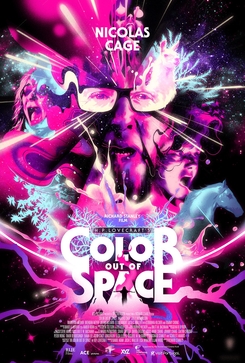
The Color Out of Space (2020)

Recently, thanks to Covid-19, a film was released digitally which would otherwise have been cruising for a decent premier as a very interesting horror film. That film is The Color Out of Space! I have been anticipating this movie for a while now, having been a fan of the original 1927 Lovecraft short story, I was looking forward to seeing a modern adaptation of it. It had some interesting promotional art, and most importantly, to me, one of the big names was going to be Nicholas Cage.


The original story is set in 1882, with the movie instead moving forward to the 21st century sometime in the 2010s in a small place in the sticks, just a while outside the town of Arkham. Normally I don't like this kind of setting change, but the film does it really well I think, and quite deftly neutralizes the problems of modern technology in horror movies besides.

We begin with some opening narration, quoted directly from the original short story. It then moves on to establish the Gardener family. Their daughter, Livinia (Madeleine Arthur) is out practicing spells in the woods when she is stumbled upon by hydrologist Ward Phillips (Elliot Knight) who is out testing the water table for a proposed reservoir. Then we get some establishing shots of the family, and the film actually spends a very good amount of time establishing why we should care about these people. Nathan Gardener (Nicholas Cage) has moved his family to the remote farm his father owned as a way to save costs after his wife Theresea's (Joey Richardson) bout with breast cancer. His two sons, elder Benny (Brenden Meyer) and youngest Jack (Julian Phillips) are typical adolescent and youthful males besides. Jack is always scared of something while Benny likes to smoke pot with the land's resident squatter Ezra (Tommy Chong) who lives in a remote 'off grid' cabin on the property.

It's a loving family which has its issues. Nathan has taken up alpaca farming because he believes it's the future while his wife is a remote worker who takes clients over the web. The physical and social distance puts strain on the family, a lack of reliable wifi and worries over their kids getting to school or medical care are all typical problems in the 21st century. It's all laid out well in the opening scenes and I really appreciated that the film took time to make me care about these people.

Then the comet hits and all hell breaks loose.

Seeing the titular crash landing from outer space was fun. It was done in a bit of a hokey way (an eerie purplish light filling the whole area but for some reason only one person looks at it) and a spectacularly creepy landing leading to more outlandish results. Little Jack finds a new imaginary friend and the crops start to taste weird, while time seems to flow...differently for the Gardeners. Things spiral steadily downhill from there as Phillips tests out the stuff he found in the meteor and comes to the conclusion there's something undeniably alien about it.

Visually, the movie is great at leaving you in suspense. There's no in your face examples of the color (beyond well, the color) and it builds suspense over the course of the film to some of it's more genuinely horrifying moments. People and animals beginning to change, and I found this approach to be very well done, with some similarities to The Thing which I found to be very well adapted. The steady descent into madness these circumstances bring is delightfully creepy as characters at first just try to adjust to weird, but not otherworldly, experiences. The actors brought out the Lovecraftian themes beautifully, with Nicholas Cage bringing his world class ham to the screen making his descent spectacularly terrifying! The man can still deliver!

Stand out performances do go to Madeleine Arthur and Elliot Knight for their roles. Arthur plays Livinia who is, after all, a teenager caught up in a horrible experience to a tee, and Knight plays the poor hydrologist sucked into an otherworldly circumstance very well. I really thought he was going to die halfway through the film! Their little subplot crush on each other makes for some cruelly tense moments later in the film, and I really felt for both of them as things spiraled out of control.

There were some excellent nods to Lovecraft in the film. From Livinia reaching for the Necronomicon in desperation as her world falls apart, to Ward being a graduate of Miskatonic University, the film made itself broad in appeal to the general public, but also having enough nods to keep Lovecraft fans enraptured by how well it did the original material.

Now there were some small errors I felt. There were a few character tics and subplots which were not well explored. The Garderner family is supposed to have some kind of feud with the mayor over their property and the construction of the resevoir, but nothing ever comes from that or is explained. Then there's something about the resevoir supposed to provide water to 'half the East Coast' which also drops with nary a whisper. Then the color itself is... well it's basically purple. I know we can't have an actual alien color within this medium and it works much better in your head, but having the color shift more would have been more visually appealing to me at least.

However, this is a genuinely thrilling horror film. If you know the original story you're in for some surprises, which is good. Then if you're used to regular horror films you're also going to be surprised for how well it handles older material and makes it accessible in the modern age. It is a movie I would definitely recommend watching and is sure to at least make you think twice about where your water comes from!

Saturday, 20 June 2020

Retro Review: Gone With the Wind

In 1936 Margaret Mitchell wrote a classic book Gone With the Wind which almost overnight became a bestseller, and to this day has seen more than 30 million copies printed worldwide. Lest anyone think that successful novels becoming movies shortly after their release, the film Gone With the Wind was released in December 1939 with an all-star cast and has gone on to be widely considered one of the best films ever made. It is so ubiquitous you've probably been influenced by it even without ever watching the film or reading the novel!

So, almost one hundred years on and many cultural shifts later, does this film stand up to scrutiny? Is it a classic romance, or a piece of Lost Cause propaganda depicting an idealistic Antebellum South? Read on and find out! A good plot synopsis follows, so spoilers are ahead below the cut!

The film is wonderfully cast. Vivien Leigh as Scarlett O'Hara, Clark Gable as Rhett Butler, Leslie Howard as Ashley Wilkes, Olivia de Havilland as Melanie Wilkes, Hattie McDaniel as Mammy, Barbara O'Neill as Ellen O'Hara and many, many more. Quite frankly I don't think you could get better actors for this film, and I'm amazed at the quality of it even nearly a century on. Credit really does go to Gable and Leigh however, with Leigh especially notable for carrying the film almost on her shoulders. The dialogue and rapport she has with Gable really does carry these two flawed characters well, and their tragic romance is beautiful! Leigh as the leading lady is very impressive and the energy she puts into the role is just stunning. 


It went on to win eight Oscars, including best actress for Leigh and best supporting actress for McDaniel who became the first African American to win an Oscar. 

The wonderful score leads us through the whole movie, and I really think you can't get much better than it.The film, in the tradition of the time, has a long beautifully scored opening introducing our principle cast and characters and a bit on the setting. Perhaps an (in)famous tagline 'a civilization gone with the wind' which leads into the story itself.

We begin at the fictional plantation of Tara, based somewhat on the old ballad The Harp That Once Through Tara's Halls (beautiful song) and is the home of an Irish descended planter family, the O'Hara's. 

We're quickly introduced to our main character, the spritely and quick witted southern belle Scarlett O'Hara. She is the beau of all Southern gentlemen, and is fawned over by the Southern gentlemen. They wish to talk of nothing but war and she finds this dreadfully boring, wishing she were being invited to more lively parties. This goes on as she prepares for one hosted by her father at the hall where the men discuss politics and the upcoming war. Therein, they see the objections of one Rhett Butler, who firmly believes the South has no chance. It is, frankly, a fantastic scene and was my first introduction to the film in university beyond cultural osmosis. 

Wednesday, 30 October 2019

Zombieland: Double Tap

A few nights ago I was thrilled to sit down and watch a film which comes ten years later as a sequel to one of my all time favorite movies. That film was the unexpected, but much appreciated Zombieland: Double Tap.


The original Zombieland was a surprise hit comedy, poking fun at both the early 2000s and the zombie genre in general. It had a cast of actors who were all up and coming (with the exception of Harrelson, as well as one enormously funny cameo) and has become a small cult classic in the zombie genre. Making over four times its budget it should well be considered a hit, and I still find it an uproariously funny movie to this day. It even spawned a short lived pilot for a television series in 2013 which sadly didn't get off the ground. Though, with the saturation of popular media with shows like Z Nation and The Walking Dead, maybe that isn't a bad thing.

The film is a surprise return to the big screen by some big name actors to a relatively niche production! Jessie Eisenburg, Woody Harrelson, Emma Stone and Abigail Breslin all come back to pick up their roles as Columbus, Tallahassee, Wichita and Little Rock respectively. It shouldn't need to be said that each of these actors has gone on to bigger and better things, that they would be willing to come back to such a strange film is perhaps a testament to how much they enjoyed the original.

Picking up ten years later, we follow our survivors as they traverse the zombie infested ruins of what was once America. We find that the zombies have evolved, the dopey and relatively unintelligent "Homers", the predatory and learning "Hawkings" who can find efficient ways to kill their prey and the "Ninjas" who are silent but deadly hunters. Setting up shop in the Oval Office, the foursome decide that they've found a place to hole up and lay low for a while. However, the strain of years begins to take its toll, Columbus and Wichita's relationship is fraying and the overbearing Tallahassee is starting to rub the all grown up Little Rock the wrong way. Finally having enough, Little Rock and Wichita run off, leaving the two men to each other's dubious company.

Soon though, the come across another survivor, the bubbly, blonde, pink (and somehow not terminally dumb) Madison (Zoey Deutch). Joining the gang, they set out to find the wayward girls, which is made more difficult by more evolved and vicious zombies. Across the wasteland again they drive, also looking for a new home and a clue maybe at the community called Babylon.


From there the film does deliver on some fun action scenes, great gore and hilarious comedy. The actors still have it and their chemistry is well put together. They feel like a family and good friends at least. The new additions to the film crank up the comedy in a lot of unexpected ways, and do a good job at engaging and subverting out expectations. Whether it is Nevada (Rosario Dawson) or Berkeley (Avan Jogia) you'll be pleasantly surprised by the characters who turn up.

Is it as good as the original though? Some minor spoilers below if you haven't seen either film!

Thursday, 11 July 2019

The Dead Don't Die

As a long time connoisseur of the zombie genre, I was pleased to discover a few months ago that we were supposed to be getting an ensemble, all star cast for a new zombie comedy The Dead Don't Die. Looking like a big homage to the tropes and fun of the best the zombie genre had to offer, its' trailer played well and had me hooked from the first time I saw it. Starring, Bill Murray, Adam Driver, Chloe Sevigny, Steve Buscemi, Tilda Swinton, Danny Glover and Selena Gomez, to name only a few! The cast is actually quite large and very likable, with what I thought were for sure going to be some stellar performances!

Did we get that? Well, we got something...


Set in the town of Centerville (A Nice Place) it follows the work of Sheriff Cliff Robertson (Murray), Ronnie (Driver) and Minerva "Mindy" (Sevigny) and others from the small town as they deal with some inexplicable changes caused by polar fracking. The day is longer, the moon emits a strange 'toxic' glow, and strange things are happening in the cemetery.

Robertson is first going after local Hermit Bob (Tom Waites) who Farmer Miller (Buscemi) has accused of stealing his chickens. We then have the the two policemen driving away and leaning very abruptly on the fourth wall when Ronnie comments that the song The Dead Don't Die, by Sturgill Simpson, is the theme song for the film after Robertson comments that it sounds very familiar. Get used to this song, this joke is gonna be overused a lot. There is a pretty cleverly done establishing shot done as the police cruiser goes by all the various locations we will be seeing as the film goes on.

We meet more of the town's denizens at a local diner, Hank (Glover), Farmer Miller, and a scene with some juvenile delinquents locked up in the county juvy center, Geronimo (Jahi Winston), Olivia (Taliyah Whitaker), and Stella (Maya Delmont). There's also local gas store/paraphernalia shop owner Bobby Wiggins (Caleb Landry Jones), motel owner Danny Perkins (Larry Fessenden) and travelling at the head of some 'city hipsters' is Selena Gomez as Zoe. Finally we have Tilda Swinton as the new local mortician, Zelda Winston.

The zombie weirdness begins one night as two 'coffee zombies' attack the diner and devour locals Fern and Lilly in a genuinely unsettling scene. It has some dark humor to it as the zombies recognize coffee and quit their mauling to ineptly swig some back before shuffling on. Now, these two zombies are played by Iggy Pop and Sara Driver, so you'd expect them to show up again. Other than a single scene where they are walking around with the coffee pots... they're kind of irrelevant.

Following this is an amusing sequence where we once again see some well done humor as a three part take with each police officer viewing the scene goes on. Then we finally get some delightful weirdness from Swinton's character Zelda as she wanders around in odd ways, speaks strangely (addressing people by their full names) and has jerky, almost planned moves when she isn't wielding her katana.

Next the zombies begin to follow in waves, and as the undead begin to slowly overwhelm the town. Madness ensues.

Something I should pause to praise is the zombies themselves. While they are the usual undead shamblers, the actors and extras who play them just dig into the roles and damn they do it well! And rather than big bloody sprays of gore, when the zombies are killed they instead shoot out these black dust clouds. It's a unique and very visually appealing touch that I think should be applauded.

From here we get intervening bits of well executed horror, some good bits of comedy, and a lot of flat jokes. Some of it is well executed, especially in the second act as I found myself laughing uproariously at Driver and Murray's banter with Sevigny, then Swinton just stole every scene she was in. But the first hour of the film tends to drag, with only a few well done jokes. Then the finale comes across as, well, confusing.

Now, past this cut there be spoilers, you have been warned. Sadly, it is almost impossible to do a good critique of the film without them.

Tuesday, 9 July 2019

Atlas Shrugged Part III

God alone knows how, but the producers managed to waste enough money to make three of these dumb movies. It took a small fortune to create these disasters, but it took them only an hour to drain my brain of any, even halfhearted, enthusiasm for watching this last film! As before, please check out the reviews of this film alongside my friend Andrew over at I Choose to Stand where he looks at all three like me!

After Part II bombed even more spectacularly than the first film, making less than a quarter of its stated budget back, the series seemed to be in some limbo for a while. There was even talk of optioning it for a musical (God wouldn't that have been annoying?) way back when. However, this fortunately (sadly?) did not come to pass and instead they did what they had done for the last two installments, scrapped the old cast and hired all new actors making things even more confusing for people.

In a now hilariously familiar story, the budget for this film was only half of its predecessors, with some 440,000$ of that being raised on Kickstarter. Really, this film should have been called Atlas Shrugged Part III: The Search For More Money. In should come as no surprise that from a budget of 5 million, the film made only 800,000$ back at the box office. Considering what this was, even in comparison to Part III of the book, there isn't any question of why it bombed even worse than it's predecessors.


Now as someone who had read the book I will admit full disclosure to being interested to seeing Part III of this film series. It was, in themes, set pieces and story, very different from the first two parts which can be very well described as "business people talking business" with some bland mystery coloring the background.

Part III of the novel however, had one large section of ideological screed, followed by some rather entertaining pulpy action bits and the close up examination of society collapsing. Trains stop running, harvests are left to rot, and sections of the country break into open civil war. It's actually rather gripping stuff as we see the United States collapse into anarchy as part of the plan by the megalomaniacs heroes of the story.

Saturday, 6 July 2019

Atlas Shrugged Part II

So we come to Part II of this nonsense, and let me tell you it just gets sillier from here. If you have missed it, my friend and fellow blogger Andrew Cowie has also done a review for this film over on his blog I Choose to Stand and it is well worth reading!

After the first installment of the Atlas Shrugged trilogy bombed fantastically. The idiots Randian heroes who had made this film decided rather than let the free market do the talking as their own philosophy would compel them to do, they were going to double down on their idea and decided the world must learn of the brilliance of their prophet's ideology.

The only problem was that now, after making less than a quarter of their budget back from the first film, the plan of financing it with profits was no longer feasible. The strategy? Hire an all new cast because keeping actors is expensive! Well, there was also a massive debt sale in order to keep the film afloat, and a big investment of personal funds. Apparently this film, when you tally up marketing and everything, cost as much as the first one. If that was the case oh boy did it have problems.

It seems that the other portion of the plan was to stoke the public's expectations by keeping it from being screened by critics pre-release so everyone would have to be surprised and appalled at the same time. This fantastically misleading article from Fox News in 2012 has the producer John Aglialoro stating "The integrity of the critics are going off a cliff...Why should I give them the sword and they are just going to use to decapitate me with?" The article of course blames the 'Liberal Media' for casting the movie down, but as a National Post review of Part I by Peter Foster notes: "Still, if it sinks without trace, its backers should at least be proud that they lost their own money."

Turns out, the film wasn't proud with just losing its own money, it didn't even need to give anyone else the sword to decapitate itself! The film made even less money than the first, and received an even lower rating from critics and audiences alike!


Why might that be you ask?

Thursday, 4 July 2019

Atlas Shrugged Part I

Years and years ago, my teen self made a monumental mistake. I discovered a supposedly great work of fiction which, according to some people I knew, would change my life. To their credit, they weren't wrong. However, the book I read Atlas Shrugged did not change my life for the better. Instead, it left me knowing what true evil felt like. The magnum opus of philosopher madwoman (and Superman arch nemesis)  Ayn Rand, it was written explicitly to solidify her economic, philosophical and political codes. Essentially, this is the Bible of the weird philosophy of Objectivism.

This strange little philosophy has had a disproportionate effect on world economics and thinking, especially in the United States of America. It has influenced politicians, philosophers, gurus, and most significantly, the head of the United States Federal Reserve who oversaw the disastrous policies leading to the 2008 Financial Crisis. Some would say that isn't a coincidence. Reading its long drawn out piece was misery personified.

Imagine then, to my chagrin, discovering way back in 2015, that after years of simmering in development hell some fanatic acolyte far sighted visionary John Aglialoro, had finally decided to bring Ayn Rand's creation to the screen.

God Help Us

Now, for a quick cliff notes version of Objectivism. Essentially it is be selfish for selfishness sake. To use the fancier terms, pursue your own enlightened self interest (rational egoism) and that laissez-faire capitalism is the only system which can allow you to pursue this. There's more boring 'metaphysical' stuff about how true reality can be expressed through art or human will, but its dull as watching paint dry so Rand wrote a book. Atlas Shrugged is intended to showcase how this life is to be lived. For a normal, sane person, it's pretty awful stuff.

Unsurprisingly, it has largely been roundly rejected by the civilized world and people at large, but, also unsurprisingly, rich right leaning white people tend to love it overwhelmingly.

Discussion over a movie adaptation has been in the works for decades, near since Rand first wrote it. However, while she was alive Rand was uncompromising with her vision and always demanded strict control over any script, something no producer or Hollywood exec was going to give her. Even after she died Objectivists still hoarded the story lest its purity be 'spoiled' by Hollywood elites. Eventually Aglialoro bought the rights, but numerous conflicts with writers and executives stalled the film from going anywhere. In the 2000s, there was talk of a two part series directed by Vadim Perelman, with people like Angelina Jolie apparently being considered to star. Finally, with the rights running out, in 2011 Aglialoro basically poured 20 million into this new film trilogy so he wouldn't lose them.

So what is there to say about this film?

Thursday, 17 January 2019

Retro Review: Rebecca (1940)

Recently I had the absolute pleasure to watch 1940's Rebecca directed by none other than that supreme suspense shooter, Alfred Hitchcock. As perhaps is no secret, I'm a huge fan of retro films, whether colored or black and white. Alfred Hitchcock of course, is a film giant who is well known for his mystery and suspense. The book which Rebecca is based on is - criminally I am told - unknown by the greater public nowadays. Penned in the 1930s and published in 1938 by Daphne du Maurier, it tells the tale of all the tragic goings on at Manderly, the ancestral home of the de Winter family.


That the book was an amazing success would be an understatement. Going from smash hit to box office in two years is pretty exceptional in this time period. What was also exceptional was that Alfred Hitchcock, who wanted to make the film more 'funny' was told no. One just didn't do that to Hitchcock! With that in mind however, Hitchcock still delivers his classic thriller drama and shows off some amazing camera work in this film! It won two Academy Awards, and in 2018 it was chosen for preservation in the United States National Film Registry by the Library of Congress as being "culturally, historically, or aesthetically significant."

Beginning in the South of France (as one does in the 1930s when dealing with the British upper crust) at Monte Carlo, we come across our nameless protagonist (Joan Fontaine) as she serves as a paid companion to the stuffy and overly chatty Edythe Van Hopper. One morning, while out for a stroll, she oversees a man she assumes is moments away from commit suicide, so she calls to him. The man, visibly annoyed, tells her to mind her own business, but does not jump.

She next encounters him with Edythe, and learns that he is in fact Maximilian de Winter (Laurence Oliviere) the heir of the great de Winter family. Our nameless protagonist is timid and used to being pushed around, and Max, as he likes to be called, is forceful in his ways. However, he takes her on a whirlwind romance and, unexpectedly, asks her to marry him.

From there, she is whisked away to the Manderly estate, the realm of the great de Winter family. There she is introduced to the eerie Mrs. Danvers, the matron of the household staff and begins to see that tragedy haunts the halls of Manderly. A specific specter lingers over her as well, that is the ghost of Maxim's former wife, the eponymous Rebecca.

The film does an excellent job of ratcheting up the tension from the opening shots, to the claustrophobic moments where we zoom in on a character's face to see their terror written plainly across it. The atmosphere and the acting is all geared towards making you fear for the poor nameless protagonist as she is thrust into a new world which is strange and alien to her, and one haunted by a vengeful dead woman.

Fontaine portrays her nervous and bewildered character well. She has nervous ticks, slouching and constantly rubbing her hands together when feeling stressed. Cringing away from others, but especially the terrifying Mrs. Danvers who proves to be her indomitable adversary.


Mrs. Danvers (played by Judith Anderson) becomes a horror in her own right. While outwardly severe and at least maintaining the facade of the new Mrs. de Winter being in charge, she bullies and cajoles Maxim's new wife and attempts to drive her away. She is fanatically loyal to her former employer, even after her death.

Rebecca is a phantom in this film. Having died one year before the events of the film we know her only by her reputation and the effect of even mentioning her to Maxim has. Her rooms in the West Wing are all off limits, and maintained by Danvers as a mausoleum to her deceased employer. Her grace, beauty, and effortless excellence is often commented upon in relation to our poor nameless protagonist.

Perhaps the best scene in the whole film is one where we are tracing Rebecca's last steps. Almost done entirely in narrative, with the rare presence of an actor, it uses the camera, props, and the rising and falling in the voice of Maxim to stage and follow the scene. In this scene, we get a sense of the never seen character, Rebecca. It is, put simply, a masterpiece of film. You are lead around and can practically picture the character there, even though you never once see her directly in the film. The narrative is so gripping and intense with revelation that you cannot look away.

Hitchcock of course, does an excellent job setting atmosphere with his work in the film. From creepy dissolves where Mrs. Danvers ghostly face fades menacingly into another object, to well cut footage of characters in states of shock, anxiety, or grief. With less camera angles than a modern director could manage without, he uses easy shots to capture your attention and fix you on specific points within range, all the points he wants you to see. His method of shooting the film "in camera" was designed to make the film one seamless production from start to finish. He rejected some of the more melodramatic suggestions of the producers and manages to create a grand spectacle of cinematography.

Of course, the film is not completely faithful to the novel. While there is heavy emphasis on the perfect nature of our ghostly Rebecca and the emphasis is on our nameless protagonist, each fall short of du Maurier's vision. Her work wanted to emphasize how different Rebecca was from the standard female protagonist (while also making her something of a victim) and using our nameless protagonist as a victim of her society, being dominated by her husband, who must have things just so. This sadly is not picked up on by most, and the protagonist becomes attached (perhaps from Stockholm Syndrome) to Maxim and hopelessly devoted to him.

Oliviere plays the forceful and haunted Maxim well. Blustering between goodnatured enthusiasm to temperamentally domineering, going into a frenzy when he is reminded in almost any way of the dead Rebecca. His brooding nature is revealed gradually throughout the film, but he is never anything but controlling in his mannerisms.

The supporting cast is well rounded, from Maxim's devoted servants and to his manager and friend Frank Crawley. They all bring their subtle and powerful moments to the story.

The score, while appropriate for a 1940s audience, will probably grate and frustrate a 21st century audience. Relying on string music to bring in the tension, it is appropriately discordant at times, while also seeming confusing and out of place at others. It was an issue in evolution and though I do understand how it is supposed to work, I find that my ears just don't like string music in supposedly comforting scenes vs tense ones.

Rebecca, though, is a great film if you're looking for something suspenseful and shocking. The twists are all amazing, and you will be on the edge of your seat as our poor nameless protagonist tries to unravel the mysteries of Manderly. Another retro film I encourage you to see.

Wednesday, 16 January 2019

Some Quick Streaming for January and February

Just in the last few days I've learned of some interesting series and films coming up. I'm hoping to share them with you so you too can enjoy what promises to be a fascinating few hours of Netflix and streaming.

Firstly, we have the History Channel. True to form, having moved on from history and WWII to aliens and conspiracies is broadcasting the historical drama Project Blue Book which will be a 10 episode series following Josef Allen Hynek who in real life was involved with the aforementioned Project Blue Book, one of several studies undertaken by the US to determine the existence of UFO's and whether or not they were real.

The subject of constant investigation and curiosity, it will I think, make for some interesting watching. Whether the History Channel will continue its proud tradition of mucking about with real history remains to be seen though. However, a perusal of the real Project Blue Book does make for some interesting reading all its own.

Secondly we have the Netflix film IO which premiers January 18th. Set on a post-apocalyptic Earth made toxic by global warming, humanity has largely evacuated their home world to colonize the Jovian System, specifically Io. Some however, have been left behind. We will be following the efforts of Sam (the daughter of scientist Henry Walden) and another survivor named Micah. They are hoping to make it to the last launch of a rocket leaving for Jupiter. The question is whether they can survive the toxic wasteland which used to be Earth to get there.

On January 25th we get the absolutely bonkers action flick (adopted from the graphic novel of the same name) Polar. A retired hitman, settling into a life in a remote Alaskan town, only for the assassin company he worked for to try and 'appropriate' his retirement policy by trying to kill him and kidnapping his one friend. He goes on a rip snorting bloody string of vengeance in a familiar trope, but one that looks like it will be simply epic.

In February we have two spooky ones coming out.

Firstly is one which I had the pleasure of seeing on Halloween a few years ago. Happy Death Day was Groundhog Day meets Scream, which was an admittedly amusing combination. Now we have a sequel just in time for Valentine's Day. Happy Death Day 2 U. With a similar premise, but now more people are effected by the Ground Hog Day like experience, and maybe this will try answering the weird issues which surround how it got started in the first place.

Though I'm not sure how I feel about this sequel, I'm very open to giving it a shot.

Secondly we have Velvet Buzzsaw which seems to be an intriguing look into the high art world through a horror lens. When an unknown artist is found dead, his works seem to come to life and exact grizzly revenge on those who used the art world for money. Starring Jake Gyllenhaal and other amazing people such as Renee Russo and John Malkovich, it looks like it will be an amazing romp through the high art world with some bloody massacres in between!

So there's some good entertainment, terrifying and action packed, coming up. Stay tuned for it!

Saturday, 5 January 2019

Vice 2018: The Cheney Story

On December 27th, 2018, I went to see a film with my family which I had originally seen the trailer for in October. That trailer was for the film Vice starring Christian Bale, Amy Adams, Steve Carell and San Rockwell, among others. Written and directed by Adam McKay (known for such classy films like Talladaga Nights, Step Brothers, The Other Guys). It purports to tell the narrative of the rise of one of the most infamous and powerful Vice Presidents in American history, the VP to Bush Junior, Richard "Dick" Cheney.

With its all-star cast, interesting subject matter, and definitely controversial interpretation of the VP, I was definitely interested to see the story it had to tell. The film begins by openly stating that they had a difficult time gathering information on one of the most secretive VP's in history, but they did their best.


There's a cold open where the VP is evacuated to the bunker beneath the White House in response to the September 11th Attacks, and where he gives unilateral authority to shoot down planes to Donald Rumsfeld, ignoring the fact that he does not have authority from the president to do so. Setting the stage in 1963, we see a younger Dick Cheney (Christian Bale) being pulled over for drunk driving.

A sudden flashback and flashforward is not the first time the film will play fast and loose with the timeline for 'artistic merit' so be prepared for a few jarring moves backwards and forwards. This all helped by our fictitious narrator,  Kurt, who relates much of Cheney's life and an interpretation of events.

We pick up with a tale of Dick marrying Lynne Cheney, but failing out of Yale and barely managing to keep a job due to a combination of alcoholism and constant brawling. Berated by his wife, he vows to do better. Jumping forward once again, we see he is a congressional intern and is falling under the wing of then economic adviser to President Nixon, Donald Rumsfeld. Under Rumsfeld's tutelage he becomes a canny political operator, and one of the few men who survives the Watergate scandal. Using this to climb the ladder of political power, he is knocked off by the election of Democratic President Jimmy Carter, stalling his journey into the seats of national influence, for now.

From here we see Cheney's emerging heart problems and his time going forward to becoming Vice President under George W. Bush. All narrated by our fictional narrator Kurt, whose role becomes much clearer later on.

Now it must really be noted that from here on out, the film, while it has made no bones about having a bias against Cheney, goes into overdrive to frame the various scandals surrounding the man as a bid to control American policy through a nitwit president.

McKay's work in the past with mostly comedies (and notoriously immature ones at that) shines through at times. Some of the jokes do feel weak and childish, but for a film coming from a primarily comedy producer and director, it is shocking he delivers some great scenes and chilling pieces of dialogue depicting this man. As someone who really doesn't like any of his previous work, that he manages to deliver moments worth of House of Cards is very impressive.

Despite the intention to create a dramatic film, elements of farce or parody seep in. Whether being overly dramatic intentionally or unintentionally, scenes seem written around what is amusing rather than what is going to grip the audiences attention. This creates mood whiplash in the audience as you may go from a scene portraying torture to witty asides by our narrator and intentionally comedic commentary. This can work, but here it feels as though McKay is sticking to his strengths.

While Vice does make sure it lines up with known facts, it has no problems with filling in the blanks about Cheney's motivations and actions with informed speculation. So anyone who was predisposed to like Mr. Cheney will find the film a total hatchet job, while anyone who is opposed to him will see it as a]well informed assessment of the man. The film even pokes fun at its obvious slant by taking a not so subtle swipe at the audience in an end credits scene.

Now we could debate the known facts, the innuendo and the speculation around former VP Dick Cheney forever, but that really doesn't answer the question of whether this film is any good.

For my own personal taste, the way the film leaps back and forth throughout the timeline in delivering 'artistic' speeches seems a bit contrived, and sheds no real light on the supposed motivations of Cheney as a character. Cutting to scenes of his unruly younger years, spliced with his early years in the Nixon White House and accompanied by powerful poses of the elderly man we all know in the halls of power really don't add much to the film. Some attempts to inform his motives also fell a little flat, as they passed into parody territory which detracted from the film at inconvenient times.

Some scenes are darkly humorous, such as when Cheney's heart condition is often played for laughs to break moments of tension, or Rumsfeld's character is a hoot for how cynically irreverent he is. However, in some scenes, such as when the film breaks for Dick and Lynne to speak to each other in Shakespearian verse, go on too long and seem unflattering to the overall pacing of the film. (Though McKay has a thing for this kind of dialogue, and his ending scene echoing Richard III works well).

The acting, though, is phenomenal. Bale comes to life as this reserved, powerful and calculating character. You do feel as though he is playing a scheming, flawed and power hungry man which is echoed on by Adams portrayal of a powerful woman who seeks to advance through her husband, each using the other to bring their dreams of power and influence into a reality.

The supporting cast also bring this tense Washington gang together. Steve Carell as Donald Rumsfeld is an unexpected treat, as he goes from fawning mentor to betrayed underling across the decades. Bush Junior by Sam Rockwell is good, but genuinely unflattering to the former president. The pained portrayal of Colin Powell by Tyler Perry of a man trying to reign in the excesses of a power hungry cabinet member while obeying the orders of his President is endearing, and does make you feel for him despite the implication he was betraying his integrity by carrying out the tasks assigned to him. Justin Kirk as the scheming sidekick Scooter Libby makes one think of the dead eyed Steven Miller who goes to bat for President Trump every so often.

Though Bale and Adams steal the show, one cannot overlook the performance of Allison Pill as Mary Cheney. A story the film plays to the hilt is Cheney's unwillingness to compromise the support of his daughter despite her being a lesbian, something notably opposed by the right-wing Cheney also supports. Her support for her father and her initial troubled coming out are all powerful scenes, making the ending of that troubled relationship all the more meaningful.

Powerful performances as those delivered by Bale and Pill are why I think this movie ought to be seen. Bale is amazing on screen, jumping into this persona with gusto, which should be applauded. It really does deserve every award it has been up for.

Ultimately the film, though not without flaws, will be enjoyed based on the audiences political leanings. It has been divisive amongst critics for that reason, though I dare say not that reason only. Some jokes and scenes are legitimately hamfisted, some of the comedy fairly weak, and portions of the script could certainly have been improved upon. The acting saves it from being a mediocre, while showcasing a series of definitely award winning performances.

For Christian Bale's act as one of the most powerful VP's alone, this film is worth watching at least once.

Sunday, 21 October 2018

Bram Stoker's Dracula

Since it is that spooky time of year, I'd like to review a film near to my heart. Yes readers, I'm here to talk about Francis Ford Coppola's Bram Stoker's Dracula! This film is based on the 1897 novel Dracula by...well obviously by Bram Stoker. The film though, plays a little fast and loose with the narrative and is, by the by, rather more hilarious than scary in my opinion.

So why do I like this movie so much? Well precisely because it is so funny.


Opening in 1462 in Wallachia, we see Prince Vlad Dracula (wearing the absolute weirdest armor I've ever seen on screen), leading his forces against the invading Ottoman Empire. It takes place in a weird shadow puppetry sequence, where most of what happens is hidden in shadow. I guess saves the budget on a big battle scene. He has just been married to his one true love Elisabeta. However, upon his victory the Turks send her false news of his death, in grief she kills herself and Vlad, enraged at priests telling him because she committed suicide her soul is damned, renounces his faith and stabs the crucifix. Oddly, it bleeds literal blood, lots of it, and he drinks it, attaining his evil immortality.

So that's how you make a deal with the devil.

Monday, 17 September 2018

Peppermint

Jennifer Garner, the darling of the rom-com and one of the most known actresses of the 90s and early 2000s, has been off the radar for some time. However, recently I was surprised to hear about her hopeful comeback in this years bloody film, Peppermint. In it she plays a grieving widow whose husband has been gunned down for even considering to steal from cartel boss, Diego Garcia. In a world of corrupt cops and amoral lawyers, she decides she must take justice in her own hands when her daughter is gunned down with him.

Does this bloody tale of revenge serve up a nice cold dish?


Well, it serves it lukewarm.

For starters, the story hits a lot of familiar notes that people will be familiar with in a revenge flick. Heck, if you saw 2007's The Brave One or even Kill Bill, you'll be getting all the right notes. Family/lover dies, woman trains/applies training to extract bloody vengeance on her tormentors. She's possibly amoral, unstable, and definitely going against the law. Responsible authority figures who have tried to help but failed try to stop her, things get messy, and the blood flows.

Thematically there really isn't much to differentiate it from any other vigilante film. Cinematography wise, its nothing to write home about. The direction is capable, and there's a blessed lack of shaky-cam to infect the screen, and all the action looks good. Its nothing ground breaking, but is certainly serviceable for some blood and gore.

Few of the characters really stand out. Garner's character is, after the first act, mostly a silent protagonist speaking only a little to utter threats, grunt in pain, or some combination of the two. The other characters, mainly John Gallagher Jr.'s Detective Cairmaichal, John Ortiz's Detective Moises Beltran and Juan Raba's Diego Garcia are mostly one note characters. While Cairmaichal and Moises have a bit of an onscreen competition for who gets to be the corrupt cop, Garcia is just a villain who is out to show how villainous he is. That's about all there is to it.

Garner though, does a creditable job showing she can be a badass. Her action is done well, and she clearly worked to get in shape for this role and learn the movements of someone who knows cage fighting, tactical shooting and infiltration. She pulls off the mindless revenge seeker well, and even manages to be over the top cruel without seeming too unsympathetic to the viewer.

However, the film plays up the grieving mother angle without any real twist or subtlety. In a moment where we see her with the villain cornered, we get a sudden twist that he has a daughter and so she can't kill him! The daughter of course, was never referenced before, and disappears from the narrative and her own thought process shortly after. A one time distraction that doesn't effect the plot and really served no purpose. Does the idea of taking away someone else's family disturb her? Does she want to 'free' this daughter from a criminal father? Or any other motivation that being haunted by a dead daughter? Nope. Just a one second cop out.

She also hallucinates her dead daughter a lot. Whether it be in near prophetic warnings or timely scenes which serve to remind the viewer why she's suddenly balls out for revenge. The visions of dead daughter are mostly left-field, they haven't happened before, and it doesn't seem like there's a great reason for them happening here. It seems as though they are only obligatory for the 'dead child and revenge' story we're being told.

Some secondary plots and dialogue, conversations amongst Detective's Cairmaichal and Moises about 'Bigfoot' and Cairmaichal maybe being attracted to the FBI agent introduced partially into the second act, don't go anywhere. There's the idea that Cairmaichal may be trying to shift the heat off Garner's character, but that doesn't go anywhere either. Really all these secondary points seem like something picked up by the writer, and then they never really decide what to do with it.

Overall, the film feels less like a big reboot for Garner's career, and more like a film of the times. In her March 2018 article What the New Wave of Female Vigilante Films Says About the #MeToo Movement Emily Yoshida states "And so it seems fitting, if coincidental, that at a time when innumerable sexual harassment and assault allegations have tarnished [Harvey] Weinstein’s legacy, female vigilantes are back on the big screen with a literal vengeance." So it seems, if recent films like Jennifer Lawrence's Red Sparrow or even the new Tomb Raider film are a way for female actors (and their watchers) to punch back at the male dominated establishment, while entertaining us with some excellent popcorn along the way.

Punching, Garner delivers in spades. Along with shooting, kicking, and stabbing her opponents, she is merciless in her crusade for revenge. While by no means an intellectual,  particularly thrilling, or even original film, it is one you can crunch some popcorn watching.

While I doubt Peppermint will ever be on anyone's all time favorite movie list, it may entertain you for a few hours at least. A film of the times maybe, but I can't say it is much beyond that. If anything, it will show Julia Garner's still has game, and maybe we will be seeing her pull of some bigger punches in the future.

Tuesday, 21 August 2018

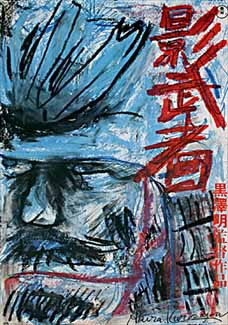
Retro Review: Kagemusha

Set in feudal Japan in the sengoku jidai period, Kagemusha follows the story of the Takeda clan as they battle with the fearsome warlords Tokugawa Ieyasu and Oda Nobunaga. It is a story revolving around the historical drama leading to the end of that particular struggle. Those familiar with history will know how it ends from the start. For those without knowledge of it, I will refrain from any spoilers of the ending.

The story is a jidaigeki film (literally period drama) directed by acclaimed Japanese film director Akira Kurosawa of Seven Samurai fame. It won the Palme d'Or at the 1980 Cannes film festival, and was nominated for other awards.


Our story here opens with the daimyo of the Takeda clan, Takeda Shingen, and his brother, Takeda Nobukado, looking at a condemned criminal who bears an uncanny resemblance to the daimyo. It is decided, that despite his insolent nature, they will keep the criminal alive to act as the daimyo's body double in time of need. He becomes, the kagemusha. Meanwhile, the Takeda are engaged in a battle with Tokugawa Ieyasu, one of Nobunaga's prime supporters. Shingen, feeling that the fall of the castle is imminent, travels to oversee the siege. While watching the siege one night he is shot and mortally wounded by a sniper.

Despite being on the cusp of victory, Shingen orders a withdrawal of his forces. Nobukado is able to maintain the ruse by posing as his brother, but realizes this is a failing strategy. Shingen gathers his closest generals and allies, including his son Katsuyori, and orders that if he dies, the clan cannot be allowed to fall to the plans of their enemies. He orders that they must stay neutral for three years in order to recuperate. Dying from his wounds, Nobukado orders the thief to be used as a body double to fool the clans enemies. Meanwhile, his foes ponder on what this sudden change of strategy in the Takeda clan means.

This deception will not be easy. The thief is uncouth, ill educated, and does not know the ways of the noble families. He will have to fool Shingen's allies and family, as well as dealing with the bitterness of Katsuyori, as he fumes at being unable to take his rightful place at the head of the clan. His enemies too are on the lookout for anything that undermines the clans position.

At its heart, Kageshuma is a family drama. It revolves almost solely around the issues affecting the Takeda clan, the internal family, and its struggle to survive. Nobukado tries to keep the wishes of his brother in place while protecting the clan, while Katsuyori is struggling to understand his role in his father's plan, all the while feeling as though he has been slighted through his fathers death and delayed inheritance. The thief himself must navigate the world of concubines while preventing the old lord's son from discovering he is an impostor.

The film itself is a visual spectacle though. Medieval Japan is brought to life in costuming, scenery, and battle through the use of well dressed extras, amazing costumes, and fascinating battle scenes. The work has clearly been done in bringing this era of history to life, and you see that in the little scenes where men are relaxing, and the scenes where soldiers clash on screen.

The small actions of the actors might be baffling to those unfamiliar with Japanese dramas, but the way they use subtle facial expressions and motions to portray events are amazing in my opinion. If you're even remotely familiar with Japanese culture you will get a pure joy from seeing how the movie turns out.

However, if you aren't familiar with Japanese drama, history, and culture, this may be a difficult movie for you. If you don't like movies with subtitles, that is doubly so.

Personally, knowing the history, I enjoyed the film and what it has to offer. As a historical drama it is excellent, and I think it should be applauded for how well it captures the era. The work that has gone into the costumes, the set design, and the appreciation for the culture is amazing. It is worthy of any awards it was nominated for. The film was spectacular.

All in all, this is an excellent historical piece. I recommend giving it a watch even once to truly appreciate some of the fantastic imagery we owe Japan, and to get an understanding of Japanese culture.

Tuesday, 10 July 2018

Retro Review: The Ten Commandments

Personally, I am an old movie buff. Even though old movies acting and effects are nowhere near what we can put on the screen today, they still tell excellent stories and gives a glimpse into the world as it was way back then. This is part of the reason I tend to appreciate them so much as compared to some modern films which don't do the era they are set in justice I think.

Recently, I was able to watch the 1956 classic The Ten Commandments on Netflix.


That film is epic, which tells not only its own innovative story of the Exodus, but is epic in scope and scale of story telling regarding the life of Moses, Pharaoh, and the Israelites. It also draws influence from novels like Dorothy Clark Wilson's Prince of Egypt, Joseph Ingraham's Pillar of Fire, and On Eagle's Wings by Arthur Eustace Southton. Not only that, it draws on historical sources like Philo's Life of Moses and the works of Josephus. This provides a rich background to draw characters and inspiration from in order to craft a grand narrative to tell a new story of Moses. Largely filling in the 'forgotten years' between Moses exile and return to Egypt.

The casting though, is spot on.

A younger Charlton Heston (with pectoral muscles which could put eyes out) captures a young, outgoing, and brash image of Moses who has been raised by Egyptians. His performance as the film rolls on and he undergoes a transformation from honorable, but driven and intriguing prince, to a devout holy man with a mission to free his people. His penchant for chewing the scenery is fantastic in my opinion and he can be perfectly over the top as necessary.

The second character I noticed was Vincent Price as Baka, an Egyptian overseer who goes from faithful assistant to Moses, to card carrying villain. The man whose voice I remember from The 13 Ghosts of Scooby-Doo as a kid, plays an excellent and sinister character on screen. Though admittedly this is a tiny role, it fills me with great amusement.

Bigger roles of course are those of Rameses (Yul Brynner), Nefritiri (Anne Baxter), Joshua (John Derek), Aaron (John Carradine), Lilia (Debra Paget), Yochabel (Martha Scott) and Bithia (Nina Foch). Each of these actors is well cast to their parts, and the female leads are all amazing in their performances.

I think that for a 1950s film, the agency and drama it grants to women is admirable. The roles of Nina Foch as Bithia and Martha Scott as Yochabel both are allowed to shape and drive Moses while holding some agency of their own. Though this is primarily in the form of protecting and nurturing their biological and adoptive son, it is a good role regardless. Nefritiri, whose scheming and agency drives much of the plot is a fantastic character, for both her tragic backstory and her desire for vengeance. Unfortunately, the character Lila falls into the "damsel in distress" category as Joshua's love interest.

While the film would soundly and swiftly fail a modern Betchel Test, it is fair for its day in the 1950s in giving its female characters more voice.

The Biblical epic though, unfolds roughly similar to the original story in the Book of Exodus. Pharaoh, fearing that the people of Judah will become too populous, orders the massacre of every firstborn males of the Hebrews. Yochabel, seeking to protect her son, sets him adrift in the river. He is saved and adopted by Bithia, daughter of Pharaoh.

Years pass, the Hebrews suffer, but Moses (named so by Bithia) is raised in luxury. Prince Moses quickly becomes the favorite of Pharaoh Sethi, to the jealously of his son Prince Rameses. This kicks off the plot as Rameses is charged to build a great city to honor Sethi, but his cruelty slows production. Meanwhile, Moses has won a great victory over Ethiopia, earning acclaim. However, he covets Pharaoh's daughter Nefritiri, who Rameses also covets. When Moses is sent to build Sethi's great city, Rameses schemes against him. Moses however, sees the plight of the Hebrews, and tries to aid them. In the process, he learns of his Hebrew parentage and has a crisis of conscience. In doing so he decides to forgo his Egyptian heritage and live among the slaves.

Here is where part of the film felt contrived for me. In the Book of Exodus, (and the great adaptation, The Prince of Egypt) Moses kills an Egyptian overseer, so he must flee. Here, the same thing happens but in a far more contrived way. Despite being told repeatedly that only Pharaoh may free slaves, and with his path to becoming Pharaoh secure, Moses decides to forgo power and live amongst the Hebrews to know his heritage. Instead of using the path laid out for him to free his people and become an enlightened ruler, he decides to take the hard and stupid way. Moses from this movie doesn't seem too bright in this moment.

It gets worse when because of this bad decision he is captured and accused of being "the Deliverer" whom the Hebrews speak of taking them out of bondage. Rameses has him exiled, showing a great deal of bad judgement himself, and Moses wanders the desert until he comes to the tribe of Jethro, and meets his daughter Sephora.

From here the narrative leaves the contrivance train and we get to the big symbols of the burning bush, Moses receiving his staff and getting all woolly haired and wild eyed, and his return to Egypt.

In is at this point that the movie begins playing to its strengths. While the acting and story telling in the first half of the movie is superb (save for Moses being something of an idiot) the narrative shines forth to tell the story of the exodus from Egypt quite well.

The plagues are carried out as well as can be expected with 50s special effects, which is to say remarkably well at points. They manage to show the turning of the Nile to blood, the flaming hail, and a truly creepy rendition of the Angel of Death coming into Egypt. That last scene is tense, disturbing, and truly enjoyable.

The special effects too, are stunning for the time. Showing off the great accomplishments in Egypt, the crossing of the Red Sea, the tempest of God as a pillar of fire, and the burning bush. There was a reason this was, at the time, the most expensive movie ever made.

When one considers that by and large this was accomplished through practical effects and with large groups of extras, the coordination is even more impressive. In the penultimate scene where Rameses chases the Jews to the Red Sea, the armies of Pharaoh are actually being played by the Egyptian Army! Which is pretty great in my humble opinion.

At the time this was one of the most expensive movies ever produced. When one considers the budgets many movies get now and the results that delivers, it should be obvious that directors could learn a thing or two from old movies.

The film is of course something of a morality tale. Nefritiri is something of a "Vamp" who uses her feminine wiles to confuse and misguide the men in her life, and is influenced by first her lust, then hatred for Moses. That the story is from the Book of Exodus is fitting since it is the triumph of the Christian God over the gods of Egypt. Moses more questionable decisions come from a clear intent of following an honor code.

Definitely old fashioned in its message, The Ten Commandments is a spectacle that shouldn't be missed, however. The films scenes of Biblical epics and amazing effects for the 50s stand true today. The acting is grand, the story holds up as timeless, and the film itself is a deserved epic. If the long view time puts you off, it comes with a natural intermission to pause at for a little while if you're not up for seeing the whole thing in one sitting.

Well worth seeing as an excellent Retro Film. Personally, I'm looking forward to recommending many more for you!

Monday, 21 August 2017

The Dark Tower

Well having dipped my toes into the world of Stephen King's Dark Tower in dead tree format, I decided to jump in and see the film version on the big screen. I came away both impressed, and disappointed. Why you may ask? Well join me now as we journey through Keystone Earth and out onto the many spokes of the Dark Tower, and through many worlds.

Jake Chambers dreams of a Tower which a sinister Man in Black hopes to destroy, he also dreams of a mysterious gunslinger who fights him. This leads to him being seen as crazy, but soon those dreams become all too real and he is caught up in a plot to save all worlds from being consumed by darkness and fire...

Wednesday, 29 March 2017

A Fear of Endings

Have you ever been reading a good book (or a series of books) or watching a particularly good television series and then suddenly found yourself at the end? Have you found yourself so immersed in the media that you've crept progressively closer and closer to the grand finale without even realizing it?

As you come upon that ending do you suddenly find yourself filled with dread at the thought that it was done? The sudden feeling that there is no more in this world to be had and your experience with that media is now complete. In short, have you ever finished something and felt your life was meaningless?

All credit to tapastic.com and Sarah Anderson

Wednesday, 25 January 2017

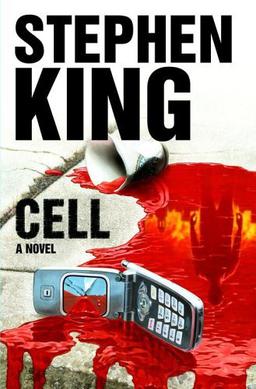
Cell by Stephen King

A while back now while browsing the book section at Costco I came across a novel simply titled Cell. Due to its curious cover I picked up the book and began browsing. Needless to say I bought the book soon after. Little did I know this would be my first foray into the world of Stephen King.

Stephen King is of course the best selling author and horror writer who perhaps has defined horror in the last half century and thus needs no introduction.

As a note this contains mild spoilers regarding both the book and the film so consider yourself warned.


Tuesday, 13 October 2015

Hyena Road

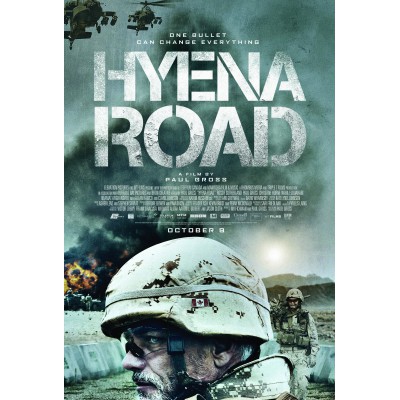
I just had the absolute pleasure to watch the 2015 Canadian film Hyena Road. I have to say it was a spectacular movie, way more moving than the recent WW2 film Fury. It was, simply put, a masterful piece for a Canadian film.


The film is set at an unspecified time during the War in Afghanistan and is a Canadian film written, produced, and directed by Paul Gross (of Passchendaele fame) which was a real treat to see. The story follows the tale of a sniper team as it secures a road (Hyena Road) being constructed deep into the heart of Taliban territory, while they come into contact with a mysterious Afghan elder known only as 'the Ghost' and in the process get neck deep into local conflicts that are raging all around them. Overlooking all is a wily cynical intelligence officer trying to see the big picture.

Hyena Road's story is masterfully done with each character getting an adequate amount of screen time, and it will constantly leave you guessing as to what happens next. The main characters are all fully fleshed out with supporting scenes, and the myriad of sub plots all roll together in a simply fascinating ending that leaves you literally on the edge of your seat. I really don't want to say too much about the story for fear of spoilers but suffice to say it is well done. There are a series of overarching stories which really come together in a big way at the end.

Our principle cast of characters leads with Paul Gross who plays the aforementioned intelligence officer whose voice over narration sets the stage for our setting and much of the overlying narrative. In the beginning we see the squad consisting of Ryan (Rossif Sutherland) Travis (Allan Hawco) Hickie (David Richmond-Peck) and Tank (Karl Campbell) caught in a dangerous mission which they must navigate out of using their wits and aid from NATO forces directed to them by Captain Jennifer (Christine Horne) whom Ryan is far more intimately involved with than regulations might allow. The mysterious tribal elder The Ghost is played by Neamat Arghandabi, who despite not speaking a single word of English in the film, is a force all his own merely by his presence.

My only complaint that I  might offer up regarding characterization is that the side characters were in need of a bit of fleshing out versus the main characters, but each is a joy to watch as witty and natural banter seems to flow right from the beginning to end whether it is from soldiers under fire or men and women in a non regulation relationship trying to show their feelings.

One of the nice things about this film is that it really is a love letter to the Canadian Forces, showing off professionalism and character, getting the military jargon down to a tee. At the same time it portrays them as human beings with flaws, conflicts, fears, and problems all their own; not attempting to white wash them or show them as incapable of making mistakes. You feel that these are real characters, serving in a real war in stressful situations who can live or die at any moment. The film really keeps you in a state of anxiety regarding the characters fates and I give it a real thumbs up for that.

While it also doesn't shy away from portraying soldiers as real people with flaws (and some very colorful vocabularies) it definitely doesn't shy away from violence. The film's opening scene is a teenaged boy burying an IED and receiving a fist sized hole through his chest for his troubles. The gore is realistic, and surprisingly it felt almost tasteful for how not over the top it was. Blood is shed, and many people die, but it isn't the point of the movie.

That being said, this isn't a Hollywood blockbuster. The production values show at times with some scenes being simply stock footage, but the editing tends to hide this well. There are some moments where it certainly doesn't do the film credit (such as really blatant insertions of real soldiers footage into scenes where it doesn't totally make sense) and some moments where the special effects aren't quite right, but that is forgivable.

Overall this is an excellent film. I have to admit it had me on the edge of my seat for much of the run time, which is a decent two hours. I would really encourage anyone who likes a good war film to go out and see it, especially if you're a Canadian. It's important to support local film efforts and this is a film that sincerely deserves that support.

So if you can, buckle your seatbelt and strap in for a trip down Hyena Road.

Saturday, 17 May 2014

Godzilla (2014)

Well readers here is my review of the much anticipated new Godzilla epic. What do I think? Well, as Godzilla films go, it's not great, and here's why!


On a minor note this review will contain minor spoilers for the film.

The 2014 reboot of Godzilla has been much anticipated by Godzilla, kaiju, and action movie fans since it the announcement came out, I know I certainly was. Here's the thing, I love Godzilla, and giant monster films, and I loved the 1998 Godzilla film and despite what many felt I think it was a good monster flick. There were reasons that I actually think the 1998 film topped this one. It will take some time to explain but let me just start with the cast.

Starring in this feature are a few big names, first comes the actor who was shown over and over in the trailers, Bryan Cranston, the star of Breaking Bad and a wonderful actor to boot. From the trailers you would believe he is being paired with Ken Watanabe as a science/conspiracy tag team bent on unraveling the mystery of Godzilla and why he's come to earth. Unfortunately the real story is much less compelling.

It starts off well with Wantanabe's character (and the mysterious group Monarch) discovering a cavern which held a giant monster of some kind. It then cuts to the Janjira nuclear plant where a mysterious disaster takes place where Cranston's character loses his wife. Then there is a time jump 15 years later (to 2014) which sees Cranston's grown up son going after his father who has snuk into the Quarantine Zone around Janjira. From here though the story goes to focus on the son (Ford) played by Aaron Taylor-Johnson. Unfortunately Cranston steals every scene from Johnson, he just has more presence and personality while Johnson has little to work with save for one emotional scene where they discuss the death of his mother.

Sadly following a bit of an underwhelming scene where they sneak into the quarantine zone there is some mildly interesting dialogue where we just miss out on Wantanabe and Cranston sharing the scene but are treated to a spectacular visual of the emergence of the films opponent creature, the MUTO. Then though (spoilers) Cranston's character dies in the ensuing chaos, and despite a set up where Wantanabe and Cranston could be working together he is killed off, and instead we have to follow Johnson's character, Lt. Ford, who just doesn't have the same screen presence, nor a very compelling story to follow.

Here's an image of a MUTO toy


Having not seen Kick Ass I can't comment on any of his previous starring roles, but here in Godzilla he's just flat. To be fair he isn't given much to work with save for bouncing from plot device to plot device, and some of his scenes are so badly done that I just had to groan at their execution. For instance, in one scene which is supposed to be suspenseful he becomes a glorified babysitter for a while. Honestly it was almost painful to watch as he was shunted from one scene to another with almost no direction other than "get back to wife and kids". It was shallow, predictable, and pretty boring to watch while we waited for the monsters to show up.

Oh yes I suppose I ought to mention that for a Godzilla movie there isn't much Godzilla. We don't see the title monster until well over an hour into the film (unless you count the distinctive back scales). Then when we do see him in his full glory for the first time it's briefly before cutting away to watching a kid watch a news report about two monsters fighting.

Now wrap your head around what I just said, there is massive set up for Godzilla to appear on screen, and some set up for the MUTO and it's action, but the first time we see them together the film cuts away to a kid watching a news report about them. I was shocked and nearly enraged when I realized that a character in the film I'm watching is watching a better film than I am. The first big monster fight is barely glimpsed through a secondary source on screen and then we cut away to after the monster fight with Johnson's character trying to again reunite a random kid with his parents.

Well I didn't pay to see a kid get reunited with his family, I paid to see giant monsters fight. Here's the problem with this film though, it teases the monsters, especially Godzilla. We get flashes of him, brief scenes of monster fights, and random cuts of him tearing around. It's almost like the movie was afraid to show the monsters extensively on screen. I don't know why, they look amazing, they move well, are animated well, and all around look fantastic. The one scene where we get a clear shot of the fight it is amazing! Hell I almost cried when I saw Godzilla breathe his traditional fire in glorious modern animation!


The fact that it looks so wonderful makes the lack of monster's on screen even more baffling. It's almost as though the film runners are trying to make it a horror film.

Let me just say that this film is brilliantly visualized, the production values are amazing, it looks wonderful and when the two monsters clash like forces of nature it's as though you're seeing a hurricane in a slap down with a tornado. It is beautifully destructive!

It doesn't answer the question of why the film doesn't show the monsters more though. To me it seems as though they are working from a script which was only half finished, or had been cobbled together from various ideas. It doesn't seem like a complete story was set down, and it almost seems as though it was just put together from other ideas and added up for convenience. To be honest I'm not even sure they knew where the plot wanted to go.

All in all the few minutes of film with monster fights are beautiful, however, they are dragged down by an aimless plot and flat characters which aren't even bad enough to be vehicles for giant monster fights, in fact the giant monster fights are just vehicles for the flat characters and aimless plot!

Though the film is sometimes boring and a little dull, it makes up for it with the occasional monster action and simply gorgeous visuals (the HALO jump scene is phenomenal) I would say it is alright. I don't think it's the cult classic that it could have been, but overall its worth seeing once, at least for the monster fight.

Sunday, 9 March 2014

300: Rise of an Empire

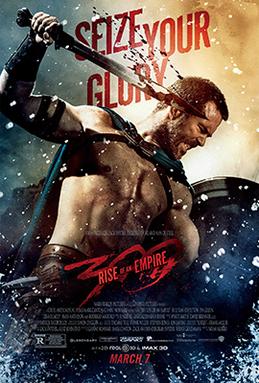
Well for my first movie review of the year I'd like to give you a review of 300: Rise of an Empire, the rather unexpected sequel to the cult classic 300. Was it worth the money it costs to go to the theater these days? Yes, and here's why!


Well I have to say I had been waiting for this unexpected sequel to 300 since I first heard about it and I've been trying to keep my expectations low just to make sure I didn't ruin for the movie for myself. It had an effective marketing campaign and it wasn't played as a re-tread of 300 but rather a wider use of the same style. This made it intriguing and set the stage for what would hopefully be an excellent action movie.

The good news is that it manages to do just that. The opening ten minutes are a bloody fantastic flashback which gives us a fictional version of the Battle of Marathon and it is an amazing show. I saw this in 3D and while normally I'm not one to like it I have to say the style here worked out very well. The intense violence and extreme use of blood was amplified by the 3D aspect and made for a fairly enjoyable visual spectacle.

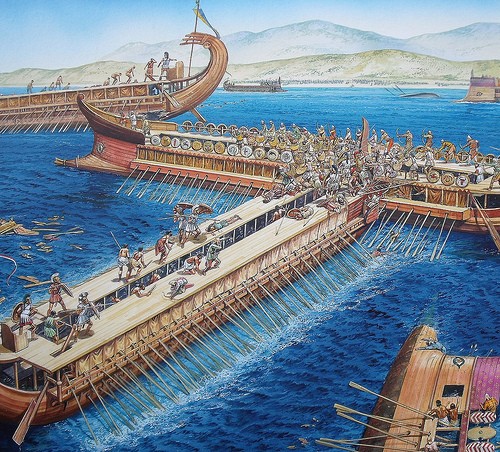
If you liked the action in 300 you won't be disappointed by the action here. Its that signature fast paced bloody slow motion style that made the first movie so enjoyable. We get it in spades here and even get to see it applied to triremes ramming each other in the Aegean Sea! Let me say it makes for some spectacular viewing!

This but with far more rock and blood.


Though I can't say the film is historically accurate (and is better for it really) it shows some impressive skill at taking what naval combat way back in the day was like and adapting it to the big screen. You really feel the hits as rams strike home, feel a savage joy as you watch boarding actions and counter boarding actions and see the main characters match wits and put their strategies to the test, many times in fairly ingenious ways.

The characters themselves are fun to watch. We get a repeat performance from a few former 300 stars such as Lena Hedy as Queen Gorgo, David Wenham as Dilios, Rodrigo Santoro as Xerxes, and Andrew Pleavin as Daxos. Its actually nice to see them reprise their roles as it gives continuity to the story and a nice bit of depth seeing it all as part of a greater drama. There's also very little sense that the film directors are just shoving these characters in our face and telling us to like them, here it's just them being treated as part of a larger story which is nice.

Then of course we have our two main characters who really run the show. Though as a caveat yes Xerxes is a bigger character here, but he's really more of a vessel in through which part of the plot is conveyed. His journey to becoming god-king is actually fairly unspectacular and delivered entirely in narrative flashback, it's a breathtaking sequence and one which is well crafted but it doesn't change the fact that the two main characters are Themistocles, portrayed by Sullivan Stapleton, and Eva Green as Artemisia.

These two characters just steal the show honestly, and the banter and match of wits between them is what drives the plot. Stapleton as Themistocles just nails his character, a man different from Leonidas in every way, he's an ideologue fighting for a united Greece and a commander who has to take a much more flexible approach to his tactics than Leonidas did. It's his skill for battle and the desire to see the men under his command survive that makes him human and far more able for the audience to relate to. There's also a bit of a sub plot where his actions at Marathon haunt him for how they affect the future, but his speech about the weight of command and how his orders produce widows and orphans is one that stuck with me after the film. He also manages to carry the bad ass warrior leader role very well coming off as a flawed but brilliant hero.


Then we have Eva Gree as Artemisia, and holy crap have we got a villain! She gives new meaning to the term femme fatale, and she carries her role beautifully! Honestly I have to agree with Movie Bob where he says she probably sets the standard for how roles like this are portrayed. She's a swashbuckling unhinged killer with a brutal goal of vengeance on her mind and her back story makes this totally understandably and even gives her otherwise villainous character a mildly sympathetic outlook. Until she starts dismembering people and throwing her officers overboard in weights for failing her of course. Her scenes are all memorable and she comes off as powerful, charismatic, and totally unpredictable. She's honestly a joy to watch in this role and I have to say one of the best female villains in ages.


Story wise the movie is much more grand than 300 with a sweeping plot which encompasses the fate of all Greece and no less than three battles. Really its just a fictionalized retelling of the battles of Artemisium and Salamis, but it does them wonderfully. You get this sense of drama and feel the raised stakes as the two characters pit their will against one another on screen. Yes there's a bit of a sub plot with the continuation of the story of Leonidas and Gorgo after his brave last stand, but that's merely a backdrop against the larger battle for Greece. The secondary characters are all still fun to watch and they still have some deep moments and little scenes that touch you as you see them. It's a great story that compliments the action of the film.

The score is wonderful and is really a re-tread of the score from 300 but that's what makes it good and just pumps you up for the action to come while establishing proper mood.

If the movie has any weak points its that it really does undercut Xerxes character to an absurd degree, making him a mere plaything of Artemisia, almost wrapped completely around her finger. That does make his presence more of a weight on the film, but it establishes an interesting mission for Artemisia versus Xerxes will. There's also just enough action to fill in the points around the drama and story but I did leave the theater feeling that there could have been more action in there.

All in all though the film is really satisfying and I couldn't have enjoyed it more. I'd heartily recommend it to anyone who wants to see a damn good action film.