Showing posts with label Mystery. Show all posts

Friday, 26 February 2021

Moonflower Murders

A few years back I had the absolute delight to read Anthony Horowitz's Magpie Murders. I was then thrilled to learn that in 2020 he would be publishing a sequel! We once again meet (former) editor Susan Ryland. Having moved on to what she hopes is a more idyllic life in Crete, she suddenly finds herself swept back into the world of Atticus Pünd and author Alan Conway. Now she has to go back to the UK and try to find out what exactly happened in The Moonflower Murders.

Picture is my own

Once again deftly using a book-within-a-book premise, Horowitz tells us a story that fits right in with the classics of the old school English murder mystery genre. This time he sets his sights on a much more modest idea, solving an old murder in a quaint, but modern, inn in the English countryside. 

Approached by a wealthy couple whose daughter has gone missing, Susan is asked to intervene in the death of one Frank Parris at the Moonflower Hotel. The Trehernes family was aghast when eight years ago one of their workers killed a guest for perhaps no reason. Swiftly convicted, the Romanian worker was carted off to prison despite flimsy evidence. However, now their daughter has gone missing and one of her last acts was to phone her parents and say that the man was innocent, and she had figured it out by reading one of the late Alan Conway's books.

Thrown into a mystery eight years old, and with no authority whatsoever, Susan must pick through a prickly family who alternate between distrusting her and bereaved, the family of the former murder victim who are outright hostile, and a police inspector who doesn't want her sticking her nose into the investigation at all.

It's a cast of characters that wouldn't appear out of place in an Agatha Christie novel. A wealthy family with a prickly relationship, a grieving husband of few means, a sinister cast of not so trustworthy extras, and the English countryside as a background. With many winks to old English detective stories, it sets out to take murder into the 21st century while trying to piece together clues from a book within a book that purport to solve the crime.

The secondary story Atticus Pünd Takes the Case, is from the titular Atticus Pünd series from her deceased former author, Alan Conway. Written in the vein of a Christie era thriller set in the 1950s, it tells a similar story with a cast of characters not so different - in subtle strokes - to the potential murderers in real life. It was a nice distraction from the main story with a complete series of twists all its own, but one that was cleverly foreshadowed in a way that kept me looking for clues to the killer in the principle story. Two mysteries in one has never worked out so well!

Horowitz manages to pile on twists while keeping the book entertaining and suitably throwing off your attention. There's enough surprises to keep you guessing to the very end, and overall he manages to wrap up the story quite nicely. Definitely another excellent mystery for the 21st century.

Wednesday, 19 February 2020

2312

Another one not for the re-read, but this is yet again a great science fiction work! Perhaps unsurprisingly, it is another by Kim Stanley Robinson. I take you to the future, three centuries from when it was penned. The exciting world of 2312.


We start our primer to the 24th century on Mercury. There the great mobile city of Terminator crawls ahead of the ever pursuing sun, allowing for the permanent colonization of the planet. Enter our protagonist Swan Er Hong, an artist on the planet out doing a 'sun walk' a journey of staying just ahead of the deadly star. Her famous grandmother, Alex, the Lion of Venus, has just died. Swan is gathering in the city with her family and friends, when she meets with a representative from the Saturnian league a 'toad faced' fellow named Fitz Wahram who was also a friend of Alex's. Even before the funeral is complete however, things get strange. An inspector from Interplan (think the Space Police) Jean Genette, comes asking if Alex had any enemies.

Little does Swan know, but her grandmother was involved in a Solar System spanning plan. It centered around the Mondragon Accords, which were to develop a semi-planned economy for Earth and all the settled planets, moons, and terrariums which act as floating habitats for humanity in the void. All of these are looked over by qubes, small quantum computers with advanced AI in them. The AI though, are not truly self-aware. But if that is the case, why was Alex so intent on keeping her work away from the artificial eyes of qubes? And why did she keep so much hidden from Swan and the qube implanted in her head, Pauline?

This sparks a long journey around the Solar System, from the mobile city of Terminator on Mercury, to the great ridge covered moon of Saturn, Iapetus. We take a floating tour of where humanity has advanced to in the 24th century and get to bask in how far we have come, but also how far we have fallen.

We see that Earth is still a place of extreme inequality, and great desperation. The sea level has risen by 11 meters in the past few centuries, flooding great metropolises like New York, and sending entire coastlines to the bottom of the ocean. The only ice sheets left are in Antarctica and Greenland. Meanwhile the ravages of global warming have led to mass extinctions, great desertification, and billions dependent on food grown in the many thousands of terrariums and then shipped down the orbital elevators to feed Earth's masses.

Meanwhile, in space those living on the terrariums have lives of great luxury. They have access to quality healthcare, need to worry little about their material health, and can afford to undergo many progressive gene therapies to live long and happy lives measuring over a century, or in some cases two and maybe more! Mars has been terraformed, and Venus is well on its way to being turned into another Earth, but one with a substantially higher gravity. The moons of Jupiter and Saturn are being colonized and terraformed, and the future outside of Earth seems very bright.


Naturally, this sparks resentment from peoples on Earth. They feel left behind or resentful of spacers, and that they live in luxury while the majority of humanity does poorly. The spacers then feel that the Earthers are ungrateful, backwards and unwilling to work to solve their own problems.

This is one of the central conflicts of the story as Swan and Wahram go back and forth between the habitats of the Solar system and Earth, trying to continue the secret project that Alex's grandmother was working on. But the issue of the qubes also looms large throughout the entire story.

Exploring the Earth and the settled solar system in this story makes for an engaging read, and that we do it through the eyes of two characters who alternately detest and desire one another, is pretty fun.

Swan is a very headstrong, antisocial, and - even by the standards of the 24th century - heavily augmented woman. She has undergone numerous gene therapies, had a qube directly transplanted into her head, and even eaten lifeforms found on the oceans of the moon Enceladus. With all this, she has trouble with people, and a difficult past which continuously haunts her, giving her trouble beyond her comfort zone. It also makes her short tempered, and not extremely understanding of the motivations of others. This proves quite capable of biting her in the ass on occasion.

In contrast we have Wahram, who is slow, methodical, and not nearly as ready to jump into extreme situations. He has lived for years around Saturn, working as necessary, and supporting a small family creche he is apart of. His friendship with Alex was because he believed in her vision of the Mondragon Accords unifying humanity through an interdependent economic system, and using the terrariums to help keep species that had gone extinct on Earth alive. Whether Swan can live up to that vision is anybody's guess.

The relationships of these two is central to the plot, making for a kind of cute read.

Our supporting cast is fairly small. Mqaret, Swan's grandfather, plays a the role of an elder father figure to Swan, helping her in the background. Jean Genette, the Interplan inspector who is galavanting about the Solar system on his mission to find out if Alex's fears of the qubes has any basis, and finally Kiran, a boy who rescues Swan from the slums of New York for rescuing her, and he is inadvertently thrown into the chaotic workings of the governing body of Venus, the Venusian Working Group.

Each character has an important role to play in the overall plot, and they do each help round things out to a satisfying conclusion in the end.

The plot itself is not what one would call, action packed. It is more driven by drama, emotional soul searching, and trying to piece out whether any of the main casts fears are actually there at all. It does make for some interesting overarching mysteries. We do have some very fun action sequences though, and bits of adventuring and derring do which would not look out of place on older classics. The scenarios will look very familiar to other sci-fi lovers!

This story though, is largely one which revolves around an interplanetary adventure and romance. It manages to tell both stories quite well I think, and I did not find myself getting bored, even if I admittedly skimmed a few more emotional soul searching internal dialogues. The interactions between the lead characters were always fun, and made for good ways to build both tension and the world around them. With the secondary characters fleshing things out, an amazing story came to light as I progressed through their adventures.

The way the story is set, with chapter headings telling you who we will be seeing and then extracts from in universe documents giving important context and background, the reader will never feel totally lost.

What really sucks you in is the amazing work done on building this vision of the lead up to the year 2312, how the Solar system works, and an honest examination of how, despite all the progress, humanity has not achieved utopia. This was a futuristic setting which I couldn't get enough of. It was familiar enough that I could grasp much of what was going on, while being alien enough that I had a little trouble wrapping my head around many of the concepts in it. That said, it was amazingly conceived and I loved all the detail that went into crafting such a complex and nuanced future, but one not so alien as to be impenetrable. It presented problems, and was bold enough not to decide on easy solutions.

Anyone who earnestly enjoys good science fiction would also be sucked into this world I think, and I believe you too will be happily drawn into the world of 2312. Please enjoy this one!

Friday, 17 January 2020

Ottawa Underground Legend


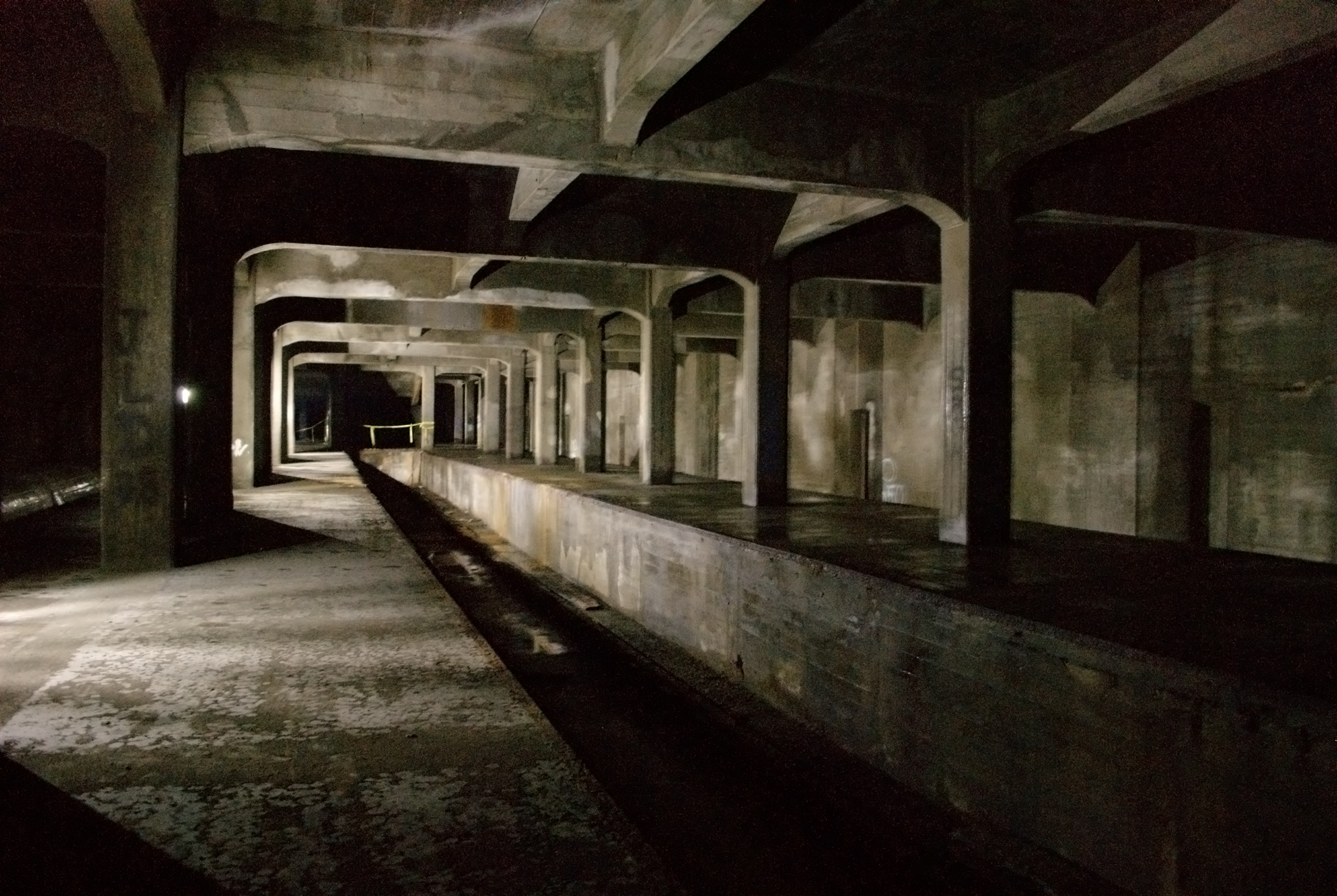
Some urban legends have more truth to them than we think. My own city, I discovered recently, has a few as well. Way back in 2012, there were reports of an abandoned rail tunnel, complete with train, compiled by an enterprising journalist of the Ottawa Citizen. He looked into rumors that someone had found an entire train just abandoned beneath the earth. So he went digging.

Bar side tales told that there was an abandoned train tunnel in the depths of Ottawa. Perhaps from an original attempt to get the city an underground rail system for its street cars, or maybe it was from an old brewery. For the latter, it was out of use since 1967, and no one had seen it since.

That was, potentially, until 2015 when some workers literally fell through the floor into the old tunnel. Needless to say, they were quite surprised and no one could figure out why it had been hidden. Mapping it out on old municipal maps, the rail line was discovered to extend perhaps as far as Carp and Rockland either way.

Now, its not clear from this latter article whether the tunnel in question refers to the conclusions of the 2012 Citizen article that the 'abandoned subway' is a part of the old brewery tunnel, or whether this is a completely different small rail system. There has been precious little follow up journalism on the subject, and it seems that it may well fall into the topic of urban folklore once more.

However, the fact that one has just happened to turn up is both fascinating and perhaps a little alarming. It should make us pause at just how many secrets cities, even small ones of only over a million, can hold after so many years. What else could be lying just beneath our feet?

A special shout out to Voices in the Attic for originally sharing and bringing this to my attention. They've got a great spooky Twitter feed to follow too. Definitely check these guys out!

Saturday, 16 February 2019

Two Moon Mysteries

Recently, I've been on something of a science fiction kick in my reading. Over the last two months I have had the absolute pleasure to read, among other books, the excellent Gunpowder Moon, by David Pedreira, and Red Moon by the modern futurist himself, Kim Stanley Robinson. Both are (obviously) set on the moon, and have competing images of Lunar life in the mid to late 21st century, and interestingly, each was released in 2018. However, both are linked by one of the oldest crimes known to man, murder.


Both stories begin with such a premise, whether it is a murder at an American Helium-3 mining base, or murder on a Chinese owned Lunar community, we have to try and figure out who is behind it. In between are a cast of feckless characters sucked into a power struggle beyond their pay grade. The poor souls.

Each book tries for relatively 'hard sci-fi' playing as close to our understanding of the realities and problems in working and colonizing the moon. In each work we can see some of the big differences in how the author approaches the various problems of Lunar-politics, industry, and resolving murder. A general review of each book follows.

Gunpowder Moon is set in 2072, as we see the dueling claims of Helium-3 mining on the Lunar surface heating up. The Earth is facing an energy crisis in the aftermath of a massive ecological disaster called the Thermal Maximum which caused famine, dislocation, and rampant resource wars as Earth is plunged into a climate changed world rather violently. The world is saved by breakthroughs in nuclear fusion tech, which requires enormous amounts of Helium-3 to make work. The United States, Russia, China, and Brazil, are all staking their claims and keeping one another mostly in check.

The story is told through the eyes of station commander and former Marine Caden Dechert. Escaping from the bloody memories of fighting in the Beqaa Valley, Dechert has come to the Moon for a fresh start. When a hotshot member of his own team is killed in mysterious circumstances, he has to grapple with the fact that everything he fought to escape from on Earth, might just be catching up with him on Luna.

Part mystery novel and part sci-fi thriller, it follows rising tensions between the US and China and the paranoia and mystery of just how someone would set up a murder on such a contained and controlled environment as the moon.

Dechert is helped in his search by his own crew, the most colorful of whom is the genius engineer Jonathan Quarles. An engineering and computer genius, he is invaluable to the station, which is how he gets away with growing hash in the hydroponics garden. His somewhat harmless attentions are often flung upon Dechert's second in command and only female member of the crew Lane Briggs. A no nonsense woman who knows she has to work twice as hard and be twice as serious to be respected or taken seriously by her companions and teammates in the mostly male field of Lunar mining. Secondary characters, from the fellow diggers to the government wet nurse and Marine officer who are introduced supply secondary stories to the plot. Dechert's Chinese counterpart commanding the Chinese stations is an invaluable yet only partially seen character.

The tensions between the rising power of China and the fading power of the US are what drives the story. It is as much a story about nations as it is about the one lone outpost on Luna. From the first murder, to the rising and chillingly well illustrated power grabs by the rival nations it ratchets up to a fast moving conclusion which will leave readers satisfied.

Pedreira goes into the realism quite well. From explaining the intricacies of the hypothetical Helium-3 mining to the difficulties of keeping out the fine Lunar dust and regolith from the crew's living quarters, to justifying the military build up on the moon. It all flows naturally and creates a sense of wonder even in an ostensibly dead rock which we all see on a near daily basis.

In fact, the sheer harshness and sameness of this Lunar landscape plays a significant background in the plot and understanding how the mystery unfolds. It's quite satisfying to see how our knowledge of how the moon works is incorporated. How can the killer leave no tracks from walking on the Lunar surface? How does someone sabotage something in a station which depends on keeping things closely monitored so the miners can live? Pedreira goes to great lengths to keep this consistent, and it works.

I think the only thing that bothered me was that the characters all felt a little flat. I never got a genuine sense of Dechert's implied PTSD, or really understood early on why he had fled to the Moon. Some things are well spelled out over the course of the novel, but we have too much time in Dechert's head with a bevy of unsatisfying thoughts. The only standout character was the engineer Quarles, whose class clown attitude and unusual habits set him apart from the group. The runner up was the government wet nurse who was sent to keep an eye on the situation, since his fish out of water character made for both a natural form of exposition and kept things at least fresh and engaging while keeping us up to date on all the goings on in the wider world.

Overall though, if you want a good sci-fi thriller with mystery and genuine suspense, the book is a good read. I heartily recommend it to anyone who likes either genre. You won't walk away
disappointed.


On the flip side we have Red Moon by the modern master of science fiction, Kim Stanley Robinson. Set in the not-so-distant future of 2047, it plays out against another backdrop of international intrigue. Once again, China is the undisputed growing power in the world, and the US isn't far behind. In fact, people often only talk about the G2, meaning only the United States and China have economies that matter.

Interestingly, the novel is setting itself up to predict some future history on at least a slightly more plausible scale. In 2047 Hong Kong will see the end of the one country, two systems, agreement which has been in place since 1997 when Hong Kong was formally handed over from the UK. The outcome of that has yet to be specified by either party, and what could happen remains a mystery. Here, that sets the background the the election of the next President of China and a shake up in the Party Congress, as an unpopular leader is stepping down and many are jostling for power. Amid all this, the large migrant worker underclass in China is clamoring for change and representation.

Enter Fred Fredericks and Ta Shu, both travelers to China's expansive Lunar community on the South Pole. Ta Shu, a popular poet and host of a cloud travel show, meets the awkward American working for a quantum communications company from Switzerland. The two bond over breakfast before Fredericks is sent to meet the Lunar governor. While there, the governor is assassinated by a clever ploy involving poison, and Fredericks, the man who shook his hand, is implicated.

Secret Service agent Valerie Tong is sent to try and extradite him, helped by the poet. Finally freed, a new problem is thrown at them as daughter of one of China's 'big tiger's' Chan Qi is to be extracted from the Moon along with him. Unfortunately for both, they have become pawns in a much larger game of politics and revolution which is unfolding around them.

Thus begins a series of chases, hiding, and escapes which will culminate once again on the Lunar surface in a race against the clock, not only because of potential revolution in China, but from the fact Qi is pregnant and getting worryingly close to her due date.

The story is a fascinating exploration of a potential future. Interestingly, it chooses to make its focus on China, Chinese problems and politics. Shown as a rising power with the fate of the Solar System potentially resting in its palms, the Party still rules with an iron fist hidden by the velvet glove of the Social Credit System and the Great Firewall, backed up by the expansive security system of the (so far) fictional Great Eyeball, watching the whole nation. These 'soft' methods of authoritarian rule are explored, analyzed, and critiqued, all while trying to navigate the byzantine nature of Party politics.

But it is also an interesting examination of the Chinese system, and what it might birth in the future. I found these parts of the novel enjoyable, and Ta Shu's reflections on his society and its triumphs and flaws are all fascinating reading. Even the brief glimpses into the future of China offered by Fred and Qi's flight from various factions make for interesting reading.

Sadly, the story meanders much from the beginning. Though not a bad premise, the mystery is dropped for a distressingly long time as we spend perhaps too much time inside the head of the socially awkward Fred Fredericks, and are forced into long interactions of their escapes and time in hiding, which is just as boring as it sounds. Despite some interesting scenes, and attempts to explain quantum computing these moments tend to drag. Poor Valerie is largely cast out of the story until near the end! There are also interludes with an unnamed Analyst and his pet project AI, which makes for one of the few genuinely enjoyable reads about an AI I have had in a while, and these add to the story quite nicely too. Though all these plot points seem as though the author is taking too much on.

While the final act from the novel is action packed, and leads to a few fun conclusions, I have to say it still fell a little flat with me. There's little resolution, as such, and many of the tantalizing hints given by the novel are dropped by the wayside in our protagonists final escape. While we do learn whodunnit in the end, and it is neatly wrapped up, dropping that plot point was frustrating and I felt there could have been a more solid conclusion, including more explanation of the oft referenced idea of blockchain governance. While it all sort of comes together, it never really meshes well.

If you like Robinson's work, I would recommend it, but novices in sci-fi might want to steer clear until they've read more of him.


Put together, these two novels represent a microcosm of the slow returning interest humanity has in going back to the moon, and a fun side by side comparison of its possible futures.

This adds to the interesting trend in the last year I've noticed in mankind returning to the Moon. Colonizing the Solar System, and finding a good reason for Lunar economics, has been a source of interest to laymen, NASA and other space agency scientists and billionaires from Jeff Bezos to Elon Musk, which is understandably filtering into our fiction.

These disparate views of the Lunar future, tied together by death, are each interesting in their own ways. Futurism and sci-fi have always interested me, and I think it is fun exploring what the stars have to offer in fiction form. I can only hope that we can see even some of the details read here realized among the stars.

For now though, let us hope that we don't have to worry about space murder or space pregnancies for a good long while!

Sunday, 14 October 2018

And Then There Were None

As it is Halloween, I've been pursuing some spooky reads in my spare time and just plowed through the delightfully suspenseful Agatha Christie novel, And Then There Were None. Originally published in 1939, it became Agatha Christie's most popular novel and one of the best selling novels of all time with over 100 million copies published.

The set up is deliciously simple. Ten strangers are invited to the mansion of an eccentric millionaire in August at some point in the 1930s. While they do not know each other, they have all been contacted by an acquaintance knowing details about their lives, little do they know that this is no ordinary acquaintance. The mansion, set on the foreboding and isolated Indian Island, is the most modern in Britain, with all the comforts of home one could ask for off the coast of Devon. As they arrive, queer things begin to take shape, as no one understands quite how they've all gotten there.

Quaint as the mansion is, they are all struck by the strangeness of their situation, with a mysterious poem involving Ten Little Indians enshrined above each of their beds. Soon however, they are all confronted with horrible secrets from their pasts, and it becomes clear everyone there is hiding something. Worst of all, one of them may be a killer.


Now obviously, I cannot tell much more without fear of spoilers, but I must say that the story is set up very compellingly. With all the dark secrets each character holds, and their unique traits and individual sins you have both a hard time sympathizing with them, but getting to know them you begin to hope they don't die. It's a clever and ghoulish idea when you get down to it.

Christie does a bang up job of capturing the isolation and desperation the characters feel as the dread inevitable begins to set in. They have no way off the island, no way to contact the outside world, and no idea who is stalking them in their tiny prison.

As well, the growing paranoia and desperation amongst the characters is fascinating to watch. Otherwise reasonable individuals become hysterical, and murmuring, plotting, and suspicion set in as it becomes clear no one can be trusted. Despite thin veneers of polite civility, as their numbers dwindle, those imprisoned on the island cannot help but turn on and to each other in hope of safety.

Exploring the increasingly desperate psyches of these guilty persons as they each end up coming out about their own pasts is fascinating. The struggle to survive and the hope of getting off the island will ensure that readers are sucked in and tear through this piece. It's a psychological thriller at its finest, and one which I would highly recommend to anyone who loves the genre.

The ending of course, has a fantastic twist, one which more astute readers may figure out early on. I can assure you though, you will find it very satisfying and spooky.

Though the original title Ten Little N---ers is deemed (correctly) far too offensive for today's market, it is apropos of the time period it was written, and anyone seeing copies with that title should't balk it just for that. In spite of that, the book has become Christie's best selling work and her most adapted, even above those of the venerable Hugo Poirot. With a genuinely unique mystery and setting that will strain the reader who attempts to figure it out, its no wonder it has sold so well for decades. The most modern adaption is the 2015 BBC version, which for those who haven't read the book and prefer to watch, I would recommend for its amazing cast and closeness to the original novel.

Until next time, be wary of accepting strange invitations to fantastic locations!

Saturday, 19 May 2018

Phyrne Fisher

Last December I had the privilege of going overseas across the Pacific and visiting the wonderful country of Australia, which has since then really captured my imagination. It is a country with a rich and fascinating history, and one just as unique and interesting as Canada. I'm even writing an amusing travelogue based on my notes from the trip at the moment.

But with a visit to Australia I became enamored with the places and people. Naturally I began pursuing some fiction set in the country.

Thankfully I was then introduced to the Phryne Fisher series of novels. Which is also an excellent series on Netflix.


Set in the late 1920s it chronicles the career of recent immigrant (and former emigrant) Phryne Fisher, who has returned to Australia to undertake some detective work on behalf of friends in England. Upon arriving in Australia she finds herself swept up in a tide of mystery, intrigue, and murder as the dark underbelly down under creeps into her life. Not one to be scared by such things she takes to solving murder and mayhem with particular aplomb. Along the way saving wayward souls and attracting some colorful followers.

First is her maidservant Dot, whom she saves from committing murder on a man who wronger her. Then a couple of redragger cabbies who serve as co-investigators and impromptu muscle as needed. Her servants, the aptly named Mr. and Mrs Butler, and wayward orphans who end up her wards. This fills up her not inconsiderable household quickly, and amidst solving crimes she continues an amorous life of romance and earning the respect of her male peers through her charm, wit, and intelligence.

Phryne, a character named after an ancient Theban courtesan, is a well rounded character. She's also unapologetically feminist, feminine and amorous. Exploring the unfortunate situations of woman in early 20th century society through her own privileged lens which is informed by her upbringing in poverty. This makes her a breath of fresh air in my opinion. She openly lampshades morals of the time while still fitting into the 'flapper' idea that is historical. She also calls out the sexism and patriarchal attitudes that keep women in chains in that era, making for some fun, and from the present, humorous, reading as she outwits the men who try to outwit her.

The original stories (the first three of which I have just read in the omnibus Introducing the Honourable Phryne Fisher) were written by Australian author Kerry Greenwood. First appearing in the 1989 novel Cocaine Blues, Ms. Fisher would appear in a further 19 stories set in Australia.

However, my original introduction to the character came through the show Miss Fisher's Murder Mysteries the aforementioned show on Netflix dramatizing the story of Miss Fisher in a role well played by Essie Davis.

One small disappointment in seeing the show before the book is that I now have a set view in my head for how the characters look, even though that might not necessarily be true to how they are portrayed in the books. While that is not a problem as Essie Davis looks almost exactly how one would picture Miss Fisher in the books, other characters are a bit problematic to contemplate in their looks based on the shows portrayal of them.

This isn't to say the show is bad, far from it, but that this is why I prefer a written medium before I watch a screen medium of portrayal so an image doesn't get stuck in my head.

However, the two mediums tell these stories well.

In the stories we have an abundance of side characters and slowly introduced secondary characters who come out of the woodwork over time. For instance, while the show is quick to focus on Inspector Robinson, he is not much other than a secondary character in the first few books who only grown into his own over time. Mrs. Butler is absent from the series entirely, and some intriguing secondary characters such as Phryne's prostitute friend, Policewoman Jones, and Phryne's various lovers, go completely unmentioned. This is understandable for television reasons, but it makes the books strikingly different in tone and even with some fun twists to the stories you see on the screen. However, some problems emerge when it seems like Robinson and his one police sidekick are the only constables in town, especially as Ms. Fisher solves crimes farther away.

The show though, has one intriguing feature. An overarching plot device throughout the different seasons is always tied in from an earlier mystery. The first is Phryne confronting a serial killer who killed her sister in their childhood and attempting to discover the reason for it. The subsequent seasons all introduce their own clever plots to the piece, and you can be swept up trying to figure them out. 

The mysteries she solves are also delightfully clever. My favorite is probably the 1991 book (and episode of the same name) Murder on the Ballarat Train which does credit to the classic Orient Express mystery, but also is a clever murder in and of itself with clues that stack up only slowly over time until you reach a terrifying conclusion! It's an intriguing stumper which makes your mind wonder in a good way!

Though I have thus far only read three of the novels, I fully intend to get my hands on more of them for a deep read.

Her murders, as explored on the show, are also clever. From a ghostly haunting in a theater, to a Christmas themed serial killing, Phyrne never fails to find the excitement down under!

To those who enjoy strong female characters, Australia (and the accent), good mysteries, period drams, and of course, a dash of intrigue, I heartily recommend these stories. If you're not a big reader check out the series on Netflix, or purchase it yourself! I can personally attest that it is well worth the read/watch and you won't be wasting your time.

Sunday, 15 April 2018

Magpie Murders

Recently, I had the absolute pleasure to finish a grand modern mystery novel, the Magpie Murders, by Anthony Horowitz. If you're pining for a dose of Agatha Christie, even long after she's dead, you'll find a dose of her writing here! Or at least, her clever style.

The book is actually, two mysteries in one. Inside you have the manuscript of a book called the Magpie Murders and a mystery actually taking place within the universe. A book within a book if you will. The story revolves primarily around the editor Susan Ryland, who must read what seems to be the penultimate novel in the best selling Atticus Pünd series by Alan Conway. However, as she delves into this final mystery, she discovers an apparent mystery of her own which needs solving.

From goodreads.com

Magpie Murders manages to capture that quintessential feeling of old English thrillers. From the use of quirky little mannerisms of small town English life, the foreign detective trying to fit into English society, or the complex web of interweaving motivations and red herrings which keep you guessing till the end. Thankfully though, although it owes a note of inspiration to Poirot, it sets itself apart. It is set in the 1950s for one, and captures the post-war feel rather well.

The nods to Agatha Christie are there, from Pünd having a well meaning but inept assistant based on a lover, to characters based (often unflattering) on people who the (fictional) author knew. Some of this comes off as a great homage, and not a little bit of gentle ribbing against the genre in general.

It is this aspect of the book that falls on the shoulders of poor Susan Ryland!

She is a quirky character. She offers some running commentary on the book within the book, the genre, and how things never quite work out like they do in these novels. Unfortunately for her, she has to put up with how obnoxious and rude Alan Conway actually is, and his behavior seems only to be getting worse as things begin to take a dark turn. Sadly, she finds she may be in way over her head.

Filled with witty commentary, fun dialogue, and the darker side of humanity Magpie Murders is a gripping read. There's twists and turns that, like any good mystery novel, will keep you guessing to the end.

Now of course, were I to go on much more, there would be spoilers galore. So I'll avoid that. However, if you want to enjoy a great whodunnit novel, Magpie Murders is the book for you!