Showing posts with label Retro. Show all posts

Saturday, 20 June 2020

Retro Review: Gone With the Wind

In 1936 Margaret Mitchell wrote a classic book Gone With the Wind which almost overnight became a bestseller, and to this day has seen more than 30 million copies printed worldwide. Lest anyone think that successful novels becoming movies shortly after their release, the film Gone With the Wind was released in December 1939 with an all-star cast and has gone on to be widely considered one of the best films ever made. It is so ubiquitous you've probably been influenced by it even without ever watching the film or reading the novel!

So, almost one hundred years on and many cultural shifts later, does this film stand up to scrutiny? Is it a classic romance, or a piece of Lost Cause propaganda depicting an idealistic Antebellum South? Read on and find out! A good plot synopsis follows, so spoilers are ahead below the cut!

The film is wonderfully cast. Vivien Leigh as Scarlett O'Hara, Clark Gable as Rhett Butler, Leslie Howard as Ashley Wilkes, Olivia de Havilland as Melanie Wilkes, Hattie McDaniel as Mammy, Barbara O'Neill as Ellen O'Hara and many, many more. Quite frankly I don't think you could get better actors for this film, and I'm amazed at the quality of it even nearly a century on. Credit really does go to Gable and Leigh however, with Leigh especially notable for carrying the film almost on her shoulders. The dialogue and rapport she has with Gable really does carry these two flawed characters well, and their tragic romance is beautiful! Leigh as the leading lady is very impressive and the energy she puts into the role is just stunning. 


It went on to win eight Oscars, including best actress for Leigh and best supporting actress for McDaniel who became the first African American to win an Oscar. 

The wonderful score leads us through the whole movie, and I really think you can't get much better than it.The film, in the tradition of the time, has a long beautifully scored opening introducing our principle cast and characters and a bit on the setting. Perhaps an (in)famous tagline 'a civilization gone with the wind' which leads into the story itself.

We begin at the fictional plantation of Tara, based somewhat on the old ballad The Harp That Once Through Tara's Halls (beautiful song) and is the home of an Irish descended planter family, the O'Hara's. 

We're quickly introduced to our main character, the spritely and quick witted southern belle Scarlett O'Hara. She is the beau of all Southern gentlemen, and is fawned over by the Southern gentlemen. They wish to talk of nothing but war and she finds this dreadfully boring, wishing she were being invited to more lively parties. This goes on as she prepares for one hosted by her father at the hall where the men discuss politics and the upcoming war. Therein, they see the objections of one Rhett Butler, who firmly believes the South has no chance. It is, frankly, a fantastic scene and was my first introduction to the film in university beyond cultural osmosis. 

Monday, 27 April 2020

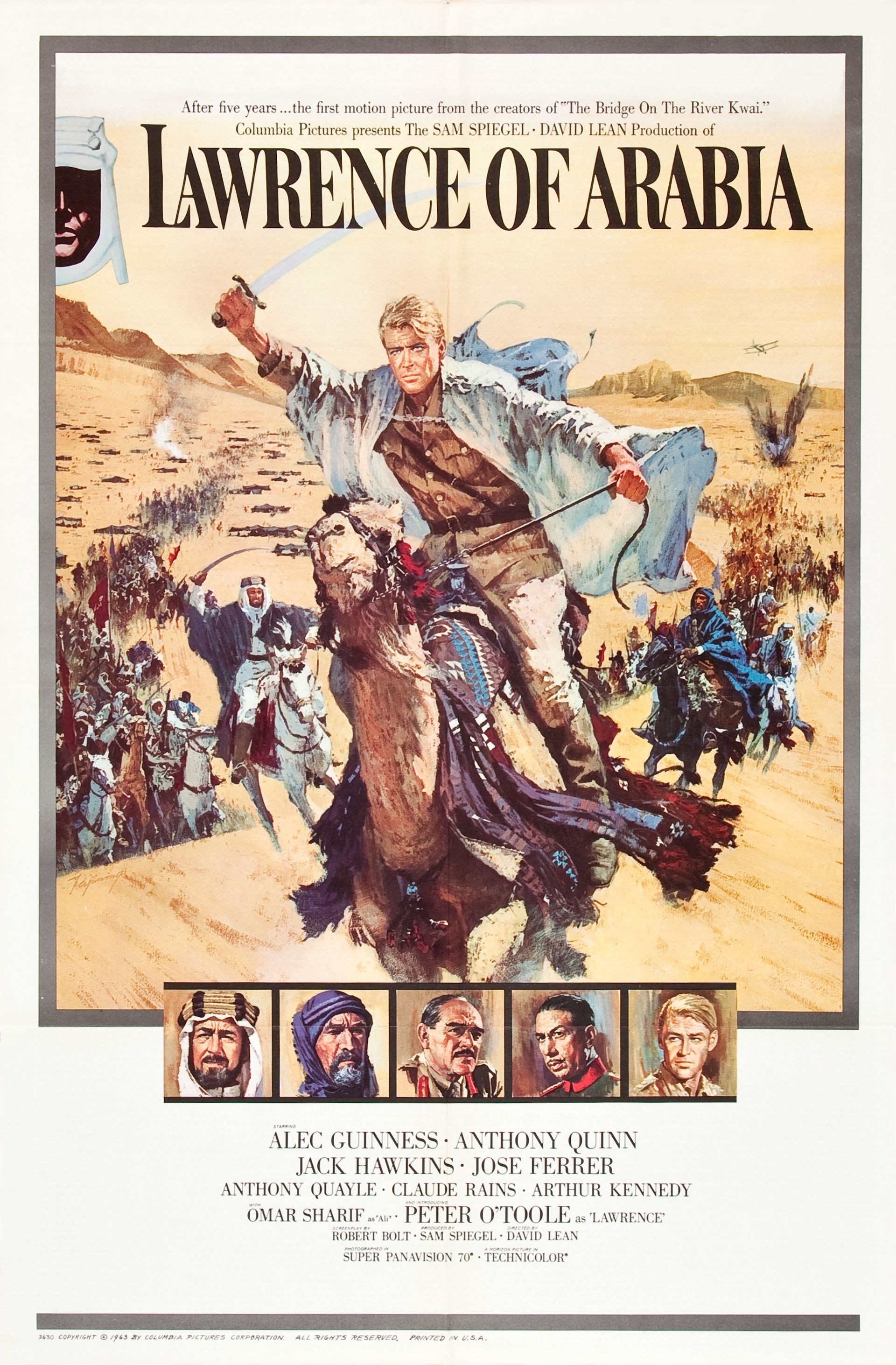
Retro Review: Lawrence of Arabia

In 1916, a man set off across the desert to seek out the peoples of the Arabian peninsula, then in revolt against the Ottoman Empire. In doing so he would live on as a hero and a legend in the English speaking world. That man was Colonel Thomas Edward Lawrence, otherwise known as Lawrence of Arabia. His deeds inspired many stories from both the First World War and then again in its aftermath as tales of his daring-do were embellished by the media and pop culture, particularly by a great song by Sabaton inspired by the title of Lawrence's own book. One of the most famous of course, would come in 1962 with the film bearing his name Lawrence of Arabia.


Now just to get something out of the way, this film is not by a long shot historically accurate. It contains many embellishments and occasionally outright fabrications of both the man himself and the people he worked with. So don't view this as a documentary or factual commentary on Lawrence's life and wartime career. If you want information on that I sincerely recommend a review by History Buffs examining the film, and the excellent work done by the Great War YouTube channel in examining both the war itself and some about Lawrence. Both are great channels that deserve your time and attention.

Without further adieu, let's get to the review.

Filmed in 1962, the movie was directed by David Lean, a great British film director of the time period. It has a quite amazing all-star cast with Peter O'Toole as Lawrence. The man looks so much like Lawrence that it would have been hard to justify not casting him. Then you have Alec Guinness (of Star Wars fame) playing Prince Faisal, both a real character and an amalgamation of other important Middle Eastern leaders, and doing it quite well. Next we have Anthony Quinn (Antonio Rodolfo Quinn Oaxaca) as Auda abu Tayi, an important tribal leader (and real historical figure). Following up you get Jack Hawkins as General Allenby, and he is further famous for his role in what was probably my favorite childhood movie Bridge on the River Kwai, and he delivers a stellar performance here. Then we have Omar Sharif, a famous Middle Eastern actor and of Doctor Zhivago fame, who portrays Sherif Ali, a fictional character who serves as an amalgamation of various other important Muslim characters from the source material. Finally we have Claude Rains as Mr. Dryden, a very cynical and almost sinister character who first helps Lawrence, but really only represents the interests of the British Empire through the Arab Bureau.

A brief note is that yes we do have a few characters in what amounts to blackface playing Arab figures. If you're uncomfortable with that I wouldn't suggest watching this movie as it doesn't really draw attention to that fact, but it certainly doesn't go out of its way to hide it. The movie is a product of its time so it definitely has some questionable choices in how it tells the story, but for all that, it is still a great film, probably one of the best of all time really!

Plans to make a film about Lawrence's life and his wartime exploits had been in the works for years, but they had all fallen through. Plans to make a film in the 1940s were shelved due to various financial difficulties in Hollywood, while in the 50s there were many discussions, but none ever went anywhere. Thankfully the work done on Bridge Over the River Kwai by director David Lean and producer Sam Spiegel. Having worked together before they became interested in another historic collaboration and thankfully decided they would jump on for another one by buying the rights to produce an adaptation of Lawrence's book Seven Pillars of Wisdom in 1960.

Shooting in such exotic locations as Spain, Jordan, and Morocco it managed to capture the desert feeling it was searching for, and thanks to the work done to bring the feeling of being in a visually appealing wasteland to screen, when you watch this movie you really feel transported to another world! It's had visuals homaged and spoofed in films like A New Hope and Space Balls. The city of Seville in Spain was used as a stand in for Cairo, Jerusalem and Damascus, pulling triple duty as a the capital of three modern countries!

The score was composed by Maurice Jarre and performed by the London Philharmonic Orchestra, and was composed and scored in just six weeks! This is a truly phenomenal feat and the movie is well worth seeing for the sound track alone. Though at nearly four hours long it does come with a scored intermission so you can resume watching at a later date!

Visually, this movie is breathtaking. The sheer spectacle invoked which shows the sweeping drama of the Arabian deserts, the heat of battle, and amazing shots done to show off the acting range of Peter O'Toole and Omar Sharif is quite impressive. Wide views of the desert and shots done in large rooms and offices for powerful effect each bring either wonder or quiet dread. That quiet dread is especially important in the political scenes, which all seem to be against Lawrence and his Arab allies, making the pomp and power portrayed in them all the more sharply contrasted with scenes of sprawling Arab camps with some riches but nothing so imposing as what is available to the British officers and politicians.

In shooting the battle scenes we have many amazing views, both of sweeping vistas with hundreds of extras on camel or horseback and then close in shots of the sort of tame 1960s era film carnage. One of the most amazing is filmed of the aftermath of the historically accurate slaughter of a Turkish column as it was retreating from the British after massacring the village of Tafas. This is perhaps one of the most interesting scenes as it shows the films portrayal of Lawrence succumbing to his bloodlust he has been developing since the beginning of his time in Egypt, and he revels in the slaughter of the Turkish column, laying about with his pistol almost indiscriminately, even shooting the corpses of Turkish soldiers. It was amazing work done shooting this scene, and the sheer pageantry of it must be applauded.

O'Toole's portrayal of Lawrence is only based slightly on the historical Lawrence, but he does an amazing job bringing this character to life on the screen. A man fascinated with the culture of the people he was sent to observe, but also a man not used to war. His first great test comes by solving a blood feud on the eve of battle, executing a man he just saved in order to ensure the two tribes do not go to war before they capture Aqaba. The strain of battle and political double dealing takes its toll on Lawrence, but he also begins to believe his own hype and thinks he can deliver miracles which leads to increasingly risky behavior which worries both his British patrons and Arab allies. It all leads to an exhausted and shell shocked veteran ready for wars' end.

His constant companion, Sherif Ali, is well done by Omar Sharif. The character is a proud Arab chieftain who rules his people with an iron fist, but is also a gracious host and skilled warrior. He believes in the vision of Prince Faisal for an Arab Kingdom, but does not trust the Europeans. Believing in Lawrence's abilities he supports and carries his friend (in one case literally) through the war and tries to help him in the peace. In the end though, these two men are from different worlds, making it difficult for them to stay together as the war ends.

These amazing actors, supported by others, craft an intriguing story which is well told on the screen. I was swept away by the battles and intrigue, and Lawrence's struggles and turmoil were gut wrenching to watch as he was swept up in the war. Though the movie is very long, it is very much worth a watch and I would definitely recommend sitting down and taking the time to watch it. Currently available on Netflix, it is absolutely great way to either spend a day or two evenings transported back over a century to the Great War and the world of Lawrence of Arabia.

Thursday, 17 January 2019

Retro Review: Rebecca (1940)

Recently I had the absolute pleasure to watch 1940's Rebecca directed by none other than that supreme suspense shooter, Alfred Hitchcock. As perhaps is no secret, I'm a huge fan of retro films, whether colored or black and white. Alfred Hitchcock of course, is a film giant who is well known for his mystery and suspense. The book which Rebecca is based on is - criminally I am told - unknown by the greater public nowadays. Penned in the 1930s and published in 1938 by Daphne du Maurier, it tells the tale of all the tragic goings on at Manderly, the ancestral home of the de Winter family.


That the book was an amazing success would be an understatement. Going from smash hit to box office in two years is pretty exceptional in this time period. What was also exceptional was that Alfred Hitchcock, who wanted to make the film more 'funny' was told no. One just didn't do that to Hitchcock! With that in mind however, Hitchcock still delivers his classic thriller drama and shows off some amazing camera work in this film! It won two Academy Awards, and in 2018 it was chosen for preservation in the United States National Film Registry by the Library of Congress as being "culturally, historically, or aesthetically significant."

Beginning in the South of France (as one does in the 1930s when dealing with the British upper crust) at Monte Carlo, we come across our nameless protagonist (Joan Fontaine) as she serves as a paid companion to the stuffy and overly chatty Edythe Van Hopper. One morning, while out for a stroll, she oversees a man she assumes is moments away from commit suicide, so she calls to him. The man, visibly annoyed, tells her to mind her own business, but does not jump.

She next encounters him with Edythe, and learns that he is in fact Maximilian de Winter (Laurence Oliviere) the heir of the great de Winter family. Our nameless protagonist is timid and used to being pushed around, and Max, as he likes to be called, is forceful in his ways. However, he takes her on a whirlwind romance and, unexpectedly, asks her to marry him.

From there, she is whisked away to the Manderly estate, the realm of the great de Winter family. There she is introduced to the eerie Mrs. Danvers, the matron of the household staff and begins to see that tragedy haunts the halls of Manderly. A specific specter lingers over her as well, that is the ghost of Maxim's former wife, the eponymous Rebecca.

The film does an excellent job of ratcheting up the tension from the opening shots, to the claustrophobic moments where we zoom in on a character's face to see their terror written plainly across it. The atmosphere and the acting is all geared towards making you fear for the poor nameless protagonist as she is thrust into a new world which is strange and alien to her, and one haunted by a vengeful dead woman.

Fontaine portrays her nervous and bewildered character well. She has nervous ticks, slouching and constantly rubbing her hands together when feeling stressed. Cringing away from others, but especially the terrifying Mrs. Danvers who proves to be her indomitable adversary.


Mrs. Danvers (played by Judith Anderson) becomes a horror in her own right. While outwardly severe and at least maintaining the facade of the new Mrs. de Winter being in charge, she bullies and cajoles Maxim's new wife and attempts to drive her away. She is fanatically loyal to her former employer, even after her death.

Rebecca is a phantom in this film. Having died one year before the events of the film we know her only by her reputation and the effect of even mentioning her to Maxim has. Her rooms in the West Wing are all off limits, and maintained by Danvers as a mausoleum to her deceased employer. Her grace, beauty, and effortless excellence is often commented upon in relation to our poor nameless protagonist.

Perhaps the best scene in the whole film is one where we are tracing Rebecca's last steps. Almost done entirely in narrative, with the rare presence of an actor, it uses the camera, props, and the rising and falling in the voice of Maxim to stage and follow the scene. In this scene, we get a sense of the never seen character, Rebecca. It is, put simply, a masterpiece of film. You are lead around and can practically picture the character there, even though you never once see her directly in the film. The narrative is so gripping and intense with revelation that you cannot look away.

Hitchcock of course, does an excellent job setting atmosphere with his work in the film. From creepy dissolves where Mrs. Danvers ghostly face fades menacingly into another object, to well cut footage of characters in states of shock, anxiety, or grief. With less camera angles than a modern director could manage without, he uses easy shots to capture your attention and fix you on specific points within range, all the points he wants you to see. His method of shooting the film "in camera" was designed to make the film one seamless production from start to finish. He rejected some of the more melodramatic suggestions of the producers and manages to create a grand spectacle of cinematography.

Of course, the film is not completely faithful to the novel. While there is heavy emphasis on the perfect nature of our ghostly Rebecca and the emphasis is on our nameless protagonist, each fall short of du Maurier's vision. Her work wanted to emphasize how different Rebecca was from the standard female protagonist (while also making her something of a victim) and using our nameless protagonist as a victim of her society, being dominated by her husband, who must have things just so. This sadly is not picked up on by most, and the protagonist becomes attached (perhaps from Stockholm Syndrome) to Maxim and hopelessly devoted to him.

Oliviere plays the forceful and haunted Maxim well. Blustering between goodnatured enthusiasm to temperamentally domineering, going into a frenzy when he is reminded in almost any way of the dead Rebecca. His brooding nature is revealed gradually throughout the film, but he is never anything but controlling in his mannerisms.

The supporting cast is well rounded, from Maxim's devoted servants and to his manager and friend Frank Crawley. They all bring their subtle and powerful moments to the story.

The score, while appropriate for a 1940s audience, will probably grate and frustrate a 21st century audience. Relying on string music to bring in the tension, it is appropriately discordant at times, while also seeming confusing and out of place at others. It was an issue in evolution and though I do understand how it is supposed to work, I find that my ears just don't like string music in supposedly comforting scenes vs tense ones.

Rebecca, though, is a great film if you're looking for something suspenseful and shocking. The twists are all amazing, and you will be on the edge of your seat as our poor nameless protagonist tries to unravel the mysteries of Manderly. Another retro film I encourage you to see.

Tuesday, 21 August 2018

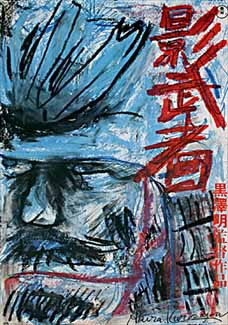
Retro Review: Kagemusha

Set in feudal Japan in the sengoku jidai period, Kagemusha follows the story of the Takeda clan as they battle with the fearsome warlords Tokugawa Ieyasu and Oda Nobunaga. It is a story revolving around the historical drama leading to the end of that particular struggle. Those familiar with history will know how it ends from the start. For those without knowledge of it, I will refrain from any spoilers of the ending.

The story is a jidaigeki film (literally period drama) directed by acclaimed Japanese film director Akira Kurosawa of Seven Samurai fame. It won the Palme d'Or at the 1980 Cannes film festival, and was nominated for other awards.


Our story here opens with the daimyo of the Takeda clan, Takeda Shingen, and his brother, Takeda Nobukado, looking at a condemned criminal who bears an uncanny resemblance to the daimyo. It is decided, that despite his insolent nature, they will keep the criminal alive to act as the daimyo's body double in time of need. He becomes, the kagemusha. Meanwhile, the Takeda are engaged in a battle with Tokugawa Ieyasu, one of Nobunaga's prime supporters. Shingen, feeling that the fall of the castle is imminent, travels to oversee the siege. While watching the siege one night he is shot and mortally wounded by a sniper.

Despite being on the cusp of victory, Shingen orders a withdrawal of his forces. Nobukado is able to maintain the ruse by posing as his brother, but realizes this is a failing strategy. Shingen gathers his closest generals and allies, including his son Katsuyori, and orders that if he dies, the clan cannot be allowed to fall to the plans of their enemies. He orders that they must stay neutral for three years in order to recuperate. Dying from his wounds, Nobukado orders the thief to be used as a body double to fool the clans enemies. Meanwhile, his foes ponder on what this sudden change of strategy in the Takeda clan means.

This deception will not be easy. The thief is uncouth, ill educated, and does not know the ways of the noble families. He will have to fool Shingen's allies and family, as well as dealing with the bitterness of Katsuyori, as he fumes at being unable to take his rightful place at the head of the clan. His enemies too are on the lookout for anything that undermines the clans position.

At its heart, Kageshuma is a family drama. It revolves almost solely around the issues affecting the Takeda clan, the internal family, and its struggle to survive. Nobukado tries to keep the wishes of his brother in place while protecting the clan, while Katsuyori is struggling to understand his role in his father's plan, all the while feeling as though he has been slighted through his fathers death and delayed inheritance. The thief himself must navigate the world of concubines while preventing the old lord's son from discovering he is an impostor.

The film itself is a visual spectacle though. Medieval Japan is brought to life in costuming, scenery, and battle through the use of well dressed extras, amazing costumes, and fascinating battle scenes. The work has clearly been done in bringing this era of history to life, and you see that in the little scenes where men are relaxing, and the scenes where soldiers clash on screen.

The small actions of the actors might be baffling to those unfamiliar with Japanese dramas, but the way they use subtle facial expressions and motions to portray events are amazing in my opinion. If you're even remotely familiar with Japanese culture you will get a pure joy from seeing how the movie turns out.

However, if you aren't familiar with Japanese drama, history, and culture, this may be a difficult movie for you. If you don't like movies with subtitles, that is doubly so.

Personally, knowing the history, I enjoyed the film and what it has to offer. As a historical drama it is excellent, and I think it should be applauded for how well it captures the era. The work that has gone into the costumes, the set design, and the appreciation for the culture is amazing. It is worthy of any awards it was nominated for. The film was spectacular.

All in all, this is an excellent historical piece. I recommend giving it a watch even once to truly appreciate some of the fantastic imagery we owe Japan, and to get an understanding of Japanese culture.

Tuesday, 10 July 2018

Retro Review: The Ten Commandments

Personally, I am an old movie buff. Even though old movies acting and effects are nowhere near what we can put on the screen today, they still tell excellent stories and gives a glimpse into the world as it was way back then. This is part of the reason I tend to appreciate them so much as compared to some modern films which don't do the era they are set in justice I think.

Recently, I was able to watch the 1956 classic The Ten Commandments on Netflix.


That film is epic, which tells not only its own innovative story of the Exodus, but is epic in scope and scale of story telling regarding the life of Moses, Pharaoh, and the Israelites. It also draws influence from novels like Dorothy Clark Wilson's Prince of Egypt, Joseph Ingraham's Pillar of Fire, and On Eagle's Wings by Arthur Eustace Southton. Not only that, it draws on historical sources like Philo's Life of Moses and the works of Josephus. This provides a rich background to draw characters and inspiration from in order to craft a grand narrative to tell a new story of Moses. Largely filling in the 'forgotten years' between Moses exile and return to Egypt.

The casting though, is spot on.

A younger Charlton Heston (with pectoral muscles which could put eyes out) captures a young, outgoing, and brash image of Moses who has been raised by Egyptians. His performance as the film rolls on and he undergoes a transformation from honorable, but driven and intriguing prince, to a devout holy man with a mission to free his people. His penchant for chewing the scenery is fantastic in my opinion and he can be perfectly over the top as necessary.

The second character I noticed was Vincent Price as Baka, an Egyptian overseer who goes from faithful assistant to Moses, to card carrying villain. The man whose voice I remember from The 13 Ghosts of Scooby-Doo as a kid, plays an excellent and sinister character on screen. Though admittedly this is a tiny role, it fills me with great amusement.

Bigger roles of course are those of Rameses (Yul Brynner), Nefritiri (Anne Baxter), Joshua (John Derek), Aaron (John Carradine), Lilia (Debra Paget), Yochabel (Martha Scott) and Bithia (Nina Foch). Each of these actors is well cast to their parts, and the female leads are all amazing in their performances.

I think that for a 1950s film, the agency and drama it grants to women is admirable. The roles of Nina Foch as Bithia and Martha Scott as Yochabel both are allowed to shape and drive Moses while holding some agency of their own. Though this is primarily in the form of protecting and nurturing their biological and adoptive son, it is a good role regardless. Nefritiri, whose scheming and agency drives much of the plot is a fantastic character, for both her tragic backstory and her desire for vengeance. Unfortunately, the character Lila falls into the "damsel in distress" category as Joshua's love interest.

While the film would soundly and swiftly fail a modern Betchel Test, it is fair for its day in the 1950s in giving its female characters more voice.

The Biblical epic though, unfolds roughly similar to the original story in the Book of Exodus. Pharaoh, fearing that the people of Judah will become too populous, orders the massacre of every firstborn males of the Hebrews. Yochabel, seeking to protect her son, sets him adrift in the river. He is saved and adopted by Bithia, daughter of Pharaoh.

Years pass, the Hebrews suffer, but Moses (named so by Bithia) is raised in luxury. Prince Moses quickly becomes the favorite of Pharaoh Sethi, to the jealously of his son Prince Rameses. This kicks off the plot as Rameses is charged to build a great city to honor Sethi, but his cruelty slows production. Meanwhile, Moses has won a great victory over Ethiopia, earning acclaim. However, he covets Pharaoh's daughter Nefritiri, who Rameses also covets. When Moses is sent to build Sethi's great city, Rameses schemes against him. Moses however, sees the plight of the Hebrews, and tries to aid them. In the process, he learns of his Hebrew parentage and has a crisis of conscience. In doing so he decides to forgo his Egyptian heritage and live among the slaves.

Here is where part of the film felt contrived for me. In the Book of Exodus, (and the great adaptation, The Prince of Egypt) Moses kills an Egyptian overseer, so he must flee. Here, the same thing happens but in a far more contrived way. Despite being told repeatedly that only Pharaoh may free slaves, and with his path to becoming Pharaoh secure, Moses decides to forgo power and live amongst the Hebrews to know his heritage. Instead of using the path laid out for him to free his people and become an enlightened ruler, he decides to take the hard and stupid way. Moses from this movie doesn't seem too bright in this moment.

It gets worse when because of this bad decision he is captured and accused of being "the Deliverer" whom the Hebrews speak of taking them out of bondage. Rameses has him exiled, showing a great deal of bad judgement himself, and Moses wanders the desert until he comes to the tribe of Jethro, and meets his daughter Sephora.

From here the narrative leaves the contrivance train and we get to the big symbols of the burning bush, Moses receiving his staff and getting all woolly haired and wild eyed, and his return to Egypt.

In is at this point that the movie begins playing to its strengths. While the acting and story telling in the first half of the movie is superb (save for Moses being something of an idiot) the narrative shines forth to tell the story of the exodus from Egypt quite well.

The plagues are carried out as well as can be expected with 50s special effects, which is to say remarkably well at points. They manage to show the turning of the Nile to blood, the flaming hail, and a truly creepy rendition of the Angel of Death coming into Egypt. That last scene is tense, disturbing, and truly enjoyable.

The special effects too, are stunning for the time. Showing off the great accomplishments in Egypt, the crossing of the Red Sea, the tempest of God as a pillar of fire, and the burning bush. There was a reason this was, at the time, the most expensive movie ever made.

When one considers that by and large this was accomplished through practical effects and with large groups of extras, the coordination is even more impressive. In the penultimate scene where Rameses chases the Jews to the Red Sea, the armies of Pharaoh are actually being played by the Egyptian Army! Which is pretty great in my humble opinion.

At the time this was one of the most expensive movies ever produced. When one considers the budgets many movies get now and the results that delivers, it should be obvious that directors could learn a thing or two from old movies.

The film is of course something of a morality tale. Nefritiri is something of a "Vamp" who uses her feminine wiles to confuse and misguide the men in her life, and is influenced by first her lust, then hatred for Moses. That the story is from the Book of Exodus is fitting since it is the triumph of the Christian God over the gods of Egypt. Moses more questionable decisions come from a clear intent of following an honor code.

Definitely old fashioned in its message, The Ten Commandments is a spectacle that shouldn't be missed, however. The films scenes of Biblical epics and amazing effects for the 50s stand true today. The acting is grand, the story holds up as timeless, and the film itself is a deserved epic. If the long view time puts you off, it comes with a natural intermission to pause at for a little while if you're not up for seeing the whole thing in one sitting.

Well worth seeing as an excellent Retro Film. Personally, I'm looking forward to recommending many more for you!