Showing posts with label Historical Fiction. Show all posts

Wednesday, 3 August 2022

1812 The Rivers of War

In 1814, as the War of 1812 rages, Andrew Jackson has trapped the Creek religious extremists known as the Red Sticks at a place known as Horseshoe Bend, in leading the charge up the impressive barricade erected by them a young Sam Houston is not shot in the groin, enabling him to win much glory and go on a special mission to Washington.

This copy was provided by Baen for review purposes. I give you 1812: The Rivers of War, by Eric Flint.

In reading and reviewing this piece, I actually found it hard to do. Only recently has the late, great Eric Flint left us, and he was a titan of the alternate history genre. I was, in fact, originally drawn to this piece years ago but had only read some of his short fiction at first. In writing the review of this republishing of an underappreciated piece of alternate history, I am also writing it as a tribute to the skills of this fantastic author.


The story starts, as described, with a vivid telling of the historical Battle of Horseshoe Bend in the crushing of the British allied Red Stick movement in the latter part of the War of 1812. Jackson wins a resounding victory, but a young lieutenant who had taken up a place in his command is not wounded. So far as divergences from history go, this is not the biggest, but the ripples from here spread out far and wide, with quite startling consequences. From an inauspicious beginning, the story branches out to include a colorful cast of historic characters, and a few fictional ones. 

In the second part we are treated to an in depth look at Winfield Scott's invasion of Canada in 1814 with an excellent depiction of the Battle of Chippewa, which introduces us to perhaps the most important secondary character, Irish sergeant, and British hater, Patrick Driscol. He provides an excellent grounds eye view to many action scenes, and is an invaluable source of knowledge for young Sam Houston. Also a compelling character in his own right, the sergeant is an excellent character for us to see the horrors of war and hatred through, and he doesn't stint about the battered state of his soul either.

What may shock many readers is that, in the broad strokes, there is not too much which changes in history across the year 1814 in this story. In the broad picture things are very similar, but in the fine details a lot changes thanks to one seemingly trivial event which cascades into greater changes down the line. It is in these fine details though, where the story shines. Using both historical knowledge and his own characters he weaves a detailed image of life in the 1810s from class to class, from the faction ridden ranks of the early United States Army, to the occasionally confusing and confounding peoples of the Creek Confederacy. 

This attention to detail is deep and merciless. Characters vent their prejudices whether they be racial or class, and in one sentence a man can criticize the Creek as barbarians while then claiming the United States is little better in its own dealings. Flint is no wide eyed idealist, and he portrays history in a refreshing warts and all attitude, without bias for either side of this multifaceted conflict which I found immensely refreshing. The man knows his history from dress to events, and he does a magnificent job selling it.

Aside from portraying fun history, he also does a wonderful job showcasing action. From small skirmishes to epic battles between American militia and British regulars, Flint shows off historical knowledge with visceral descriptions of combat in scenes of terror and pulse pounding action. Knowing history, not once did I read a line and believe that the characters might be safe and fully expected some to drop dead from the chaotic battles around them. There was always a rough tension about who would live and who would die, with no guarantee of how things would turn out. 

Overall, it is a brilliant piece of alternate history which shows you don't need a flashy point of divergence, some radical new technology, or even a battle lost, to change history. Instead, a small change can create big ripples which are well populated by characters who help tell an engaging story. That was, in truth, what Eric Flint always did. The genre is richer for him, and I merely hope we can find more story tellers of his caliber.

Saturday, 31 July 2021

Harbor of Spies

 As is usual in July, I found myself immersed in a good historical novel. Once again I found myself in the 1860s as the Civil War is raging. However, like a previous review, this time I was not in the frigid north of Canada, but in the sunny climate of Havana on the island of Cuba. It is here that one young sailor finds himself caught in a series of frustrating twists, with the Spanish government on one side, Confederate spies on another, and a not too sympathetic Union Navy in front of him, this poor lad finds himself caught in a Harbor of Spies

I was first drawn to this book by a comment on a message board talking about Spain in the Civil War. What many do not realize is that Spain, while neutral in the Civil War, made a fortune off running the Union blockade. Cuba, and Havana especially, sympathized with the Confederacy. The island ran on slavery much the same as the Antebellum South, with plantations making coffee, sugar, and other cash crops which sustained the wealth of Imperial Cuba. Unsurprisingly then, the planters of the island sided with the slaveowners of the Confederacy.

This made Havana a very strategic port. It was close to the Gulf coast, and fast steamers or stealthy sailing ships could threat their way through the Union blockade and deliver much needed arms and ammunition to the Confederacy, while bringing back valuable cotton in return. It was a lucrative business, and many men in the island made their fortunes in this trade, doing much to keep the war going for the Confederate cause.

Enter into this story, Everett Townsend, a young Maryland born sailor who was drummed out of the Naval Academy shortly after the outbreak of the war. He has fled to a small sailing schooner travelling to Cuba with a load of Maine lumber, trying to find his way after disappointing his father. A tragic accident has left him in command of the little ship, and then a surprising encounter will introduce him to the world of espionage, deceit and blockade running that all runs from Havana. When he saves an escaped prisoner from the infamous El Morro prison, his life takes a very sudden turn.

Like my last civil war read, this story is intriguing largely because it explores the foreign reactions to the American Civil War. There's some mention of the big players, Lincoln, Seward, Davis and Lee, but it is very much in the background. The focus is all on the Spanish government in Havana, the Confederate agents there, and the Union agents trying to stop them. 

I quite enjoyed this story because it takes place in a country I've visited and come to love (Cuba) and it does regal the reader with historic details of the island under Spanish rule. From the fabulous culture to the horrors of slavery, the author paints a vivid picture of the island in the 1860s. The city of Havana especially is given a lot of love to show off both the slums of poor workers, sailors, and slaves, but also the opulent wealth of the Spanish Empire and the islands slaver aristocracy. The society comes alive and we see a very fascinating, and disturbing one.

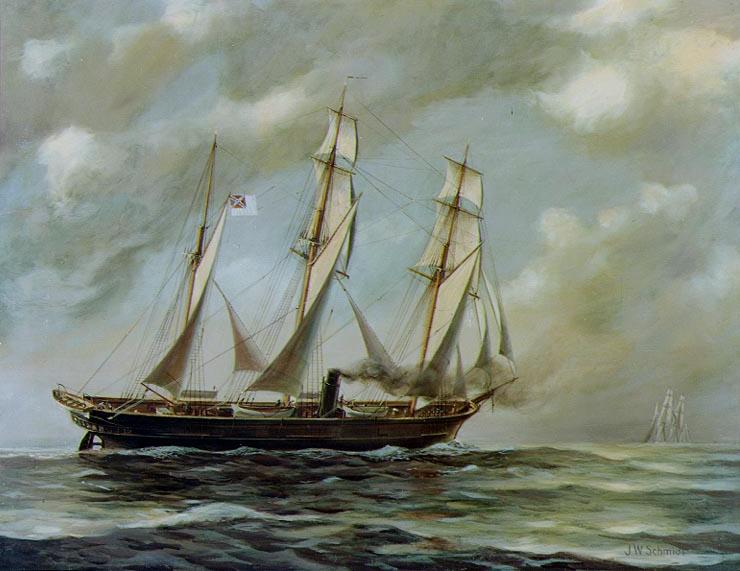
It is though, a story with many nautical themes, and as such it does not disappoint! The running of the blockade is explored in fascinating detail. I admit I was quite surprised at the depth of knowledge and research the author put into getting the small pictures of blockade running right. The nautical runs into Southern ports and out again to Cuba was breathtaking and had me on the edge of my seat as I tried to not sweat bullets like the sailors on the little blockade runner here. It gave me an appreciation for the historical bravery of men who ran the Union blockade of the South whether for ideological reasons or profit!

Secondary to this though, is the exploration of the many espionage acts taking place against the backdrop of the Civil War. This book goes to great lengths to explore the ways spying and counter-intelligence worked in the 1860s. Conflicting loyalties, ideology, and greed certainly all play their parts! Whether it is street level informants, foreign agents, or blockade runners, we get a look at how the cat and mouse game of shell sales and ship registry worked to make the lucrative machine of blockade running function. I was very impressed by the detail and story telling elements worked into these depictions, and it was quite fun to see it all come together in various runs! The way shifting loyalties play a part is key to the story and I won't spoil anything!

It is a very interesting story, espionage aside, about mysterious heritage, conflicted loyalties, and the city of Havana and the society it promotes. I did find some of the mysteries to be well played up, with an overall satisfying conclusion, but thought the book could have been even fifty pages longer to bring those issues which Townsend struggles with to a more satisfying and intimate conclusion. Though the story did leave some dangling plot lines which, probably, should have been addressed, it does an excellent job in bringing Townsend's character arcs satisfyingly forward.

Harbor of Spies is an excellent piece of historical fiction, and well worth reading for its action, intrigue and amazing depiction of such a pivotal piece of the Civil War that often gets overlooked in the battles and politics most history buffs focus on. I'm thrilled I picked this one up!

Saturday, 20 June 2020

Retro Review: Gone With the Wind

In 1936 Margaret Mitchell wrote a classic book Gone With the Wind which almost overnight became a bestseller, and to this day has seen more than 30 million copies printed worldwide. Lest anyone think that successful novels becoming movies shortly after their release, the film Gone With the Wind was released in December 1939 with an all-star cast and has gone on to be widely considered one of the best films ever made. It is so ubiquitous you've probably been influenced by it even without ever watching the film or reading the novel!

So, almost one hundred years on and many cultural shifts later, does this film stand up to scrutiny? Is it a classic romance, or a piece of Lost Cause propaganda depicting an idealistic Antebellum South? Read on and find out! A good plot synopsis follows, so spoilers are ahead below the cut!

The film is wonderfully cast. Vivien Leigh as Scarlett O'Hara, Clark Gable as Rhett Butler, Leslie Howard as Ashley Wilkes, Olivia de Havilland as Melanie Wilkes, Hattie McDaniel as Mammy, Barbara O'Neill as Ellen O'Hara and many, many more. Quite frankly I don't think you could get better actors for this film, and I'm amazed at the quality of it even nearly a century on. Credit really does go to Gable and Leigh however, with Leigh especially notable for carrying the film almost on her shoulders. The dialogue and rapport she has with Gable really does carry these two flawed characters well, and their tragic romance is beautiful! Leigh as the leading lady is very impressive and the energy she puts into the role is just stunning. 


It went on to win eight Oscars, including best actress for Leigh and best supporting actress for McDaniel who became the first African American to win an Oscar. 

The wonderful score leads us through the whole movie, and I really think you can't get much better than it.The film, in the tradition of the time, has a long beautifully scored opening introducing our principle cast and characters and a bit on the setting. Perhaps an (in)famous tagline 'a civilization gone with the wind' which leads into the story itself.

We begin at the fictional plantation of Tara, based somewhat on the old ballad The Harp That Once Through Tara's Halls (beautiful song) and is the home of an Irish descended planter family, the O'Hara's. 

We're quickly introduced to our main character, the spritely and quick witted southern belle Scarlett O'Hara. She is the beau of all Southern gentlemen, and is fawned over by the Southern gentlemen. They wish to talk of nothing but war and she finds this dreadfully boring, wishing she were being invited to more lively parties. This goes on as she prepares for one hosted by her father at the hall where the men discuss politics and the upcoming war. Therein, they see the objections of one Rhett Butler, who firmly believes the South has no chance. It is, frankly, a fantastic scene and was my first introduction to the film in university beyond cultural osmosis. 

Monday, 27 April 2020

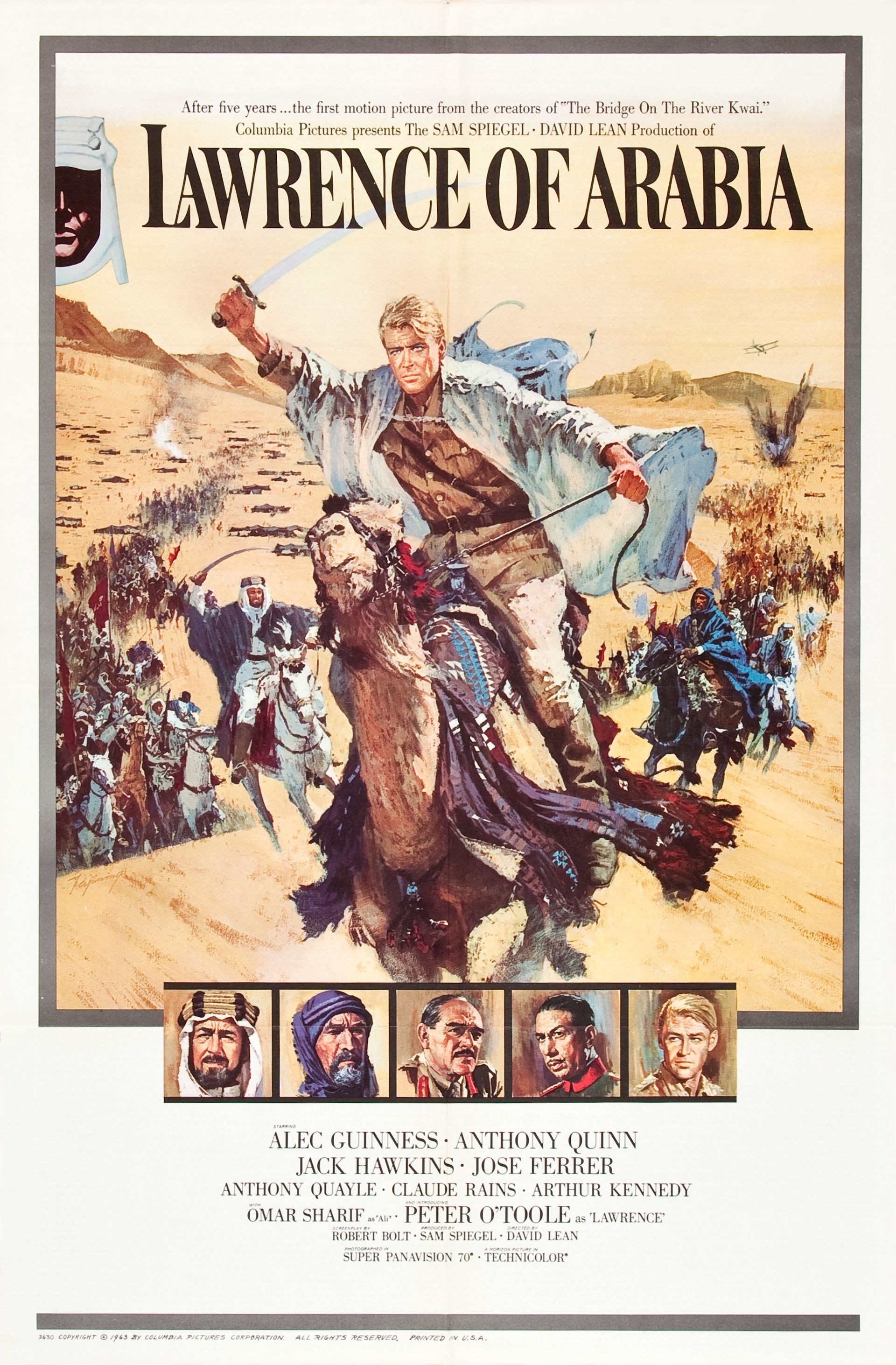
Retro Review: Lawrence of Arabia

In 1916, a man set off across the desert to seek out the peoples of the Arabian peninsula, then in revolt against the Ottoman Empire. In doing so he would live on as a hero and a legend in the English speaking world. That man was Colonel Thomas Edward Lawrence, otherwise known as Lawrence of Arabia. His deeds inspired many stories from both the First World War and then again in its aftermath as tales of his daring-do were embellished by the media and pop culture, particularly by a great song by Sabaton inspired by the title of Lawrence's own book. One of the most famous of course, would come in 1962 with the film bearing his name Lawrence of Arabia.


Now just to get something out of the way, this film is not by a long shot historically accurate. It contains many embellishments and occasionally outright fabrications of both the man himself and the people he worked with. So don't view this as a documentary or factual commentary on Lawrence's life and wartime career. If you want information on that I sincerely recommend a review by History Buffs examining the film, and the excellent work done by the Great War YouTube channel in examining both the war itself and some about Lawrence. Both are great channels that deserve your time and attention.

Without further adieu, let's get to the review.

Filmed in 1962, the movie was directed by David Lean, a great British film director of the time period. It has a quite amazing all-star cast with Peter O'Toole as Lawrence. The man looks so much like Lawrence that it would have been hard to justify not casting him. Then you have Alec Guinness (of Star Wars fame) playing Prince Faisal, both a real character and an amalgamation of other important Middle Eastern leaders, and doing it quite well. Next we have Anthony Quinn (Antonio Rodolfo Quinn Oaxaca) as Auda abu Tayi, an important tribal leader (and real historical figure). Following up you get Jack Hawkins as General Allenby, and he is further famous for his role in what was probably my favorite childhood movie Bridge on the River Kwai, and he delivers a stellar performance here. Then we have Omar Sharif, a famous Middle Eastern actor and of Doctor Zhivago fame, who portrays Sherif Ali, a fictional character who serves as an amalgamation of various other important Muslim characters from the source material. Finally we have Claude Rains as Mr. Dryden, a very cynical and almost sinister character who first helps Lawrence, but really only represents the interests of the British Empire through the Arab Bureau.

A brief note is that yes we do have a few characters in what amounts to blackface playing Arab figures. If you're uncomfortable with that I wouldn't suggest watching this movie as it doesn't really draw attention to that fact, but it certainly doesn't go out of its way to hide it. The movie is a product of its time so it definitely has some questionable choices in how it tells the story, but for all that, it is still a great film, probably one of the best of all time really!

Plans to make a film about Lawrence's life and his wartime exploits had been in the works for years, but they had all fallen through. Plans to make a film in the 1940s were shelved due to various financial difficulties in Hollywood, while in the 50s there were many discussions, but none ever went anywhere. Thankfully the work done on Bridge Over the River Kwai by director David Lean and producer Sam Spiegel. Having worked together before they became interested in another historic collaboration and thankfully decided they would jump on for another one by buying the rights to produce an adaptation of Lawrence's book Seven Pillars of Wisdom in 1960.

Shooting in such exotic locations as Spain, Jordan, and Morocco it managed to capture the desert feeling it was searching for, and thanks to the work done to bring the feeling of being in a visually appealing wasteland to screen, when you watch this movie you really feel transported to another world! It's had visuals homaged and spoofed in films like A New Hope and Space Balls. The city of Seville in Spain was used as a stand in for Cairo, Jerusalem and Damascus, pulling triple duty as a the capital of three modern countries!

The score was composed by Maurice Jarre and performed by the London Philharmonic Orchestra, and was composed and scored in just six weeks! This is a truly phenomenal feat and the movie is well worth seeing for the sound track alone. Though at nearly four hours long it does come with a scored intermission so you can resume watching at a later date!

Visually, this movie is breathtaking. The sheer spectacle invoked which shows the sweeping drama of the Arabian deserts, the heat of battle, and amazing shots done to show off the acting range of Peter O'Toole and Omar Sharif is quite impressive. Wide views of the desert and shots done in large rooms and offices for powerful effect each bring either wonder or quiet dread. That quiet dread is especially important in the political scenes, which all seem to be against Lawrence and his Arab allies, making the pomp and power portrayed in them all the more sharply contrasted with scenes of sprawling Arab camps with some riches but nothing so imposing as what is available to the British officers and politicians.

In shooting the battle scenes we have many amazing views, both of sweeping vistas with hundreds of extras on camel or horseback and then close in shots of the sort of tame 1960s era film carnage. One of the most amazing is filmed of the aftermath of the historically accurate slaughter of a Turkish column as it was retreating from the British after massacring the village of Tafas. This is perhaps one of the most interesting scenes as it shows the films portrayal of Lawrence succumbing to his bloodlust he has been developing since the beginning of his time in Egypt, and he revels in the slaughter of the Turkish column, laying about with his pistol almost indiscriminately, even shooting the corpses of Turkish soldiers. It was amazing work done shooting this scene, and the sheer pageantry of it must be applauded.

O'Toole's portrayal of Lawrence is only based slightly on the historical Lawrence, but he does an amazing job bringing this character to life on the screen. A man fascinated with the culture of the people he was sent to observe, but also a man not used to war. His first great test comes by solving a blood feud on the eve of battle, executing a man he just saved in order to ensure the two tribes do not go to war before they capture Aqaba. The strain of battle and political double dealing takes its toll on Lawrence, but he also begins to believe his own hype and thinks he can deliver miracles which leads to increasingly risky behavior which worries both his British patrons and Arab allies. It all leads to an exhausted and shell shocked veteran ready for wars' end.

His constant companion, Sherif Ali, is well done by Omar Sharif. The character is a proud Arab chieftain who rules his people with an iron fist, but is also a gracious host and skilled warrior. He believes in the vision of Prince Faisal for an Arab Kingdom, but does not trust the Europeans. Believing in Lawrence's abilities he supports and carries his friend (in one case literally) through the war and tries to help him in the peace. In the end though, these two men are from different worlds, making it difficult for them to stay together as the war ends.

These amazing actors, supported by others, craft an intriguing story which is well told on the screen. I was swept away by the battles and intrigue, and Lawrence's struggles and turmoil were gut wrenching to watch as he was swept up in the war. Though the movie is very long, it is very much worth a watch and I would definitely recommend sitting down and taking the time to watch it. Currently available on Netflix, it is absolutely great way to either spend a day or two evenings transported back over a century to the Great War and the world of Lawrence of Arabia.

Friday, 19 April 2019

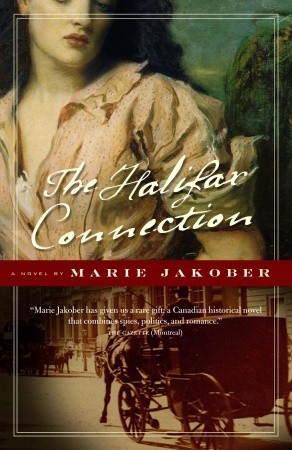
The Halifax Connection

Though I often talk about fantasy, contemporary politics, science fiction, and movies, I'm also going to review for you book from a genre that is close to my heart. That genre is historical fiction and the book is The Halifax Connection by Marie Jakober.


Set primarily in the city of Halifax, this story stretches from early 1862 to September 1864 and follows a colorful cast of fictional characters from all stations of life. Our main protagonist is Erryn Shaw, a disgraced aristocrat and former theater manager who has fallen on hard times. We also get a look into the life of a domestic servant Slyvie Bowen, with the supporting cast of Matt Claverly and Colonel Hawkins.

The backdrop of the novel of course, is the American Civil War. Not many know this but Canada was prime real-estate for Confederate spies and blockade runners. Halifax especially grew rich off the war as Confederate ships and blockade runners would often seek refuge there. Haloginians themselves came from a society which was fiercely loyal to the Mother Country and felt a certain kinship with the South at the time. To find men of high principles and ideals who would oppose them would have been a rare thing indeed.

That the novel chooses to do just that is very much to its credit.

Our story follows mainly Erryn and Sophie. Erryn is a failed theater manager (well, it burned down) who is falling on hard times while Sophie is a former factory worker emigrating to Canada to find work and a new life away from the horrors she has seen in the mill town of Rochdale.

The story kicks off when Erryn is asked by his best friend Matt, to spy for the Governor General. Halifax is full of Confederate agents and sympathizers, who wish nothing more than to involve Great Britain and her Empire in the war to hopefully tip the scales in favor of the cause of independence for the Southern states and their Confederacy. Sucked in to a vortex of lies, espionage, and mad schemes, Erryn finds himself on a twisting path of conflicting loyalties and friendships while publicly renouncing all his ties to his former life and friends who support the Union.

Slyvie meanwhile, is just crossing the Atlantic on the cheap when her ship is set upon by the Confederate raider Alabama. This gives her a lasting enmity for the Confederacy and all it stands for. However, she finds herself falling for a man she meets in Montreal, and that man is Erryn Shaw, who is playing host to the Confederate agents he can find.


Into this story we get something of a twisting love affair between two people who deeply care for one another, but who, ostensibly are on the opposite sides of an ideological divide.

I will admit that, as the piece goes on, it feels like more of a love story than a spy story. There is (to me at least) a decided effort by historical fiction authors to 'spice up' a piece by including a risque love story. Personally, I've never found that remotely necessary to engage with a piece of historical fiction. However, in this case we do at least get a very well written love story between two well fleshed out characters who portray life in the 1860s in pre-Confederation Canada quite well.

As a spy story I would argue the piece leaves much to be desired. Even though Jakober does her best to keep the spy drama going, I found the plot lacked an overall enemy, villain, or objective. Though it was true to life in the British authorities basically whacking Confederate schemes where they could be found, I might have felt more inclined to be hooked by an overarching adversary for the characters to be confronting. The story certainly had one set up in the person of an old enemy from Erryn's past!

That isn't to say though, that the book doesn't work well on its own merits. It does portray the events from Canada in the Civil War quite well, even making the Chesapeake Affair, a backdrop of one of the most pivotal scenes in the book.

Jakober has done her research, this much is clear. She understands life in Nova Scotia (Halifax specifically) quite well, and does a wonderful job portraying the divided opinions of the Canadian people in the 1860s. That she incorporates a number of real life events into the series is much to her credit, and she does it with a deft hand. Though her characters are fictional, she sets them up in real historical events and plots. She makes a very shocking revelation at the end which I simply cannot spoil for casual students of history or readers. You will be taken aback by it, all the more for that it is based on true events.

I liked the characters and I liked that Jakober did her absolute best to stay true to history. There is no embellishment on the side of action or drama, nothing which would necessarily conflict with history as we know it, and lots of emphasis placed on attitudes and ideals from the 1860s.

As historical fiction, I found this novel first rate. Definitely worth a read from fans of romance, historical fiction and Canadian and Civil War history buffs.