Showing posts with label World War I. Show all posts

Monday, 6 February 2023

Balloons of War

With recent news about the transition of a Chinese spy balloon floating over the United States, my mind got turned to what balloons had done in war before. This was, surprisingly, an older practice than I thought!


The first time hot air balloons (rather than lanterns) were used in war was back in  1794, l’Entreprenant at the Battle of Fleurus by Revolutionary French forces to observe the Austrian movements. The Balloon Corps didn't get too much traction with the French forces, and Napoleon disbanded them in 1799. They would again be used by French forces in 1859 when France and Austria went to war over the fate of Italy and were extensively used for reconnaissance. They were again used in the Franco-Prussian War, most famously at the Siege of Paris, some for observation, but also to fly messages in and out of the city over the Prussian lines.

Most English historians are probably more familiar with the Union Army Balloon Corps in the US Civil War when the aeronaut Thaddeus Lowe used his own balloons to observe rebel movements for the US Army. The observation balloons were used at the battles of First Bull Run, in the various engagements of the Peninsula Campaign, Fredericksburg, and the Siege of Vicksburg. However, without political patronage and a military that did not readily adopt the idea of ballooning, Lowe's Balloon Corps languished and, effectively, ceased to exist in 1863.

Amusingly however, the United States can lay claim to the first use of an aircraft carrier, in a sense. A converted coal barge, the George Washington Parke Custis, was used to float the balloon Washington in the Potomac in 1861. 


The British army tinkered with the concept, and the army of the Empire of Brazil used observation balloons in the Paraguayan War, but it wasn't until the 20th century when ballooning for the military really took off (pun intended).

The most famous use of balloons for military purposes came in World War One. While observation balloons were common, the great zeppelins of the Imperial German military were the most conspicuous use of ballooning in that conflict. As observation vessels, bombers, and rough transports, they were used to good effect in the first years of the war, while also dropping bombs on cities to try and inspire fear.

It was then that the incendiary bullet was invented, bringing the hydrogen filled airships down in flames and generally making your survivability in one nil.


While observation balloons (and even spy balloons) have continued to be used, this is not the most common thing in war anymore. The true heyday was the 19th and early 20th centuries when the technology was emerging and we were not able to turn the most abundant fuel into fiery balls of death. So while the era of great military ballooning is long done, it is nice to see them make the news again once in a while!

Friday, 21 January 2022

The Romanov Rescue

As a setting for alternate history, WWI is criminally underutilized. This was The Great War, the fall of empires, and the molding of an entirely new world! There are heaps of unexplored changes which could be explored! So I was quite excited to jump into what counts as a technothriller from the early 20th century set in the waning days of the Great War in 1918. Could the formation of the Soviet Union have been prevented, even at such a late stage? The Romanov Rescue, seeks to tell that tale!

Written by three authors, Tom Kratman, Justin Watson, and Kacey Ezell, it was very much a group effort piece. It shows though, that each of the authors has a solid expertise and has rigorously investigated the material and skills available to soldiers of the time period. I can't quite say where each author took over - a bonus to the book - but a few sections did have distinct voices. Overall though, it blended quite seamlessly together and for a three person effort, that's no mean feat!

From  my Kindle

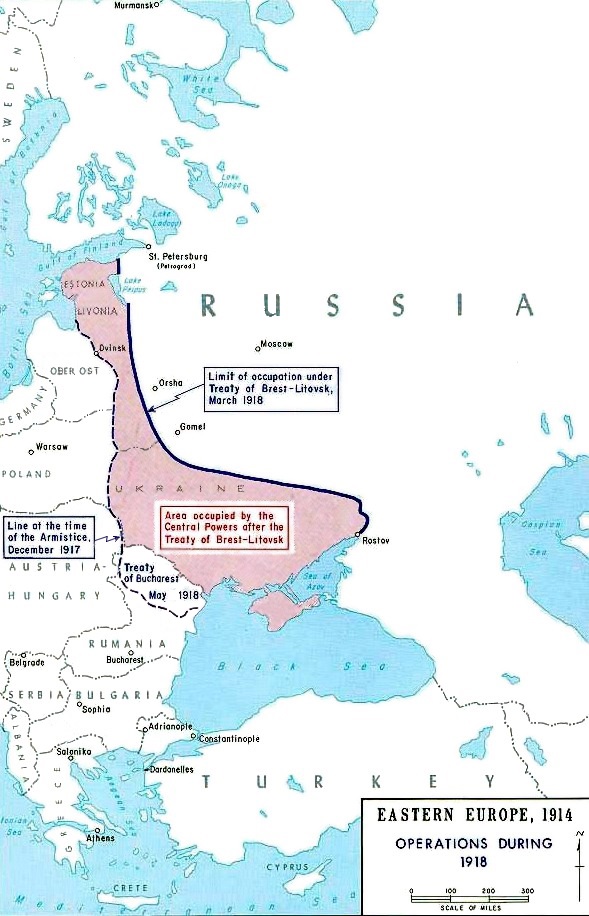
Set in early 1918, in the midst of the work for the Treaty of Brest-Litovsk, we follow the musings of one Max Hoffman, who is effectively running the show as Hindenburg and Ludendorff prepare their great offensive of 1918 (another overlooked point in alternate history) and he stumbles upon a rapacious band of Latvian Riflemen. Musing on how awful the communists are, he wonders if anything can be done to stop them. Enter captured Russian Imperial Guardsman Daniil Kostyshakov. Fresh from an escape attempt, he is approached with an intriguing mission, how would be like to rescue the imprisoned royal family from the clutches of the Bolsheviks?

If that sounds like a mad plan, or the setting of a crazy thriller, you're right! From here its a plan on how to carry out the mission, how to recruit troops for it, and where on Earth they can get what they need when the war is still raging!

We follow many fun Russian characters. In truth the Imperial Guards made the best of the book, from Daniil, to Kaledin to Turgeney, they all had their quirks and fun ideas which hooked me on them. The story then largely follows their attempts at reconstituting an Imperial Guard unit for the rescue, training for the rescue, and covering the minutia of details on how to actually accomplish these goals. Otherwise we follow a strategic recon team who scout the way, and the stories of two guards at where the Royal Family is being held, Chekov and Dostovalov. These two add an excellent depth and personal touch to the events on the ground, and gets into some pretty fun intrigue which has far reaching effects on the outcome.

I enjoyed the German crew of the L5 Afrika Schiff so much. It added a very clever element to the whole drama. The equipment seems odd for even buffs of WWI, but when compared between 1914 and 1918 the world was a very different place and the things which could be learned very different! The authors definitely put a lot of thought into the technology, tactics, and how to make that realistically work, which educated me quite a bit on many of the fascinating details of airship launches, flight, and what interesting uses they might have had.

Then the story takes us across much of Russia, and through many various halls of power. The long recon led by Turgeney has some signature fun moments, from piracy to a train robbery. However, it also contains many of the more lagging sections of the novel. For instance, the entire section which took place in the smuggling vessel might have been better excised, if simply for tying up a lot of narrative time which might have been better spent elsewhere, and from there it used far too much 'rape as drama' for my taste. This did though, include many worthwhile action scenes.

My only other critique might be that the story attempts to humanize the Romanov's a bit too much. Certainly it is to be remembered that they were people, but the former tsar and tsarina were relentless autocrats who were actively undemocratic and engaged in bloody reprisals against their own people all in the name of autocracy. Telling the story through their children's eyes was a far better choice both stylistically and when it came to arriving at a much more thrilling finale.

I was impressed that the authors managed to end up pulling together such a large cast of characters to - eventually - a single location. There are many clever plot points, twists, and overall revelations that I was kept in rapt attention to details until the very end.

The story rapidly reaches a very action packed crescendo, with all the action and maddening complications despite meticulous planning one could hope for. In fact the final act doesn't pull its punches and I was caught off guard by just how insane the situation became. Despite the best laid plans and all the training in the world, there truly are some things you just can't prepare for! A very unique and ultimately satisfying read which does leave me wondering how the world might have turned out otherwise.

Wednesday, 11 November 2020

What If the Central Powers Won WWI 2

Last time, I discussed the Schlieffen Plan enacted by Germany in 1914. Though that plan was very flawed from the get go, it working as a 'stop gap' to make a short victorious war for the Central Powers is a prerequisite for the the whole premise of that piece. The changes would follow logically, and the Germans would of course have a reason to seek peace. That is a scenario where the Central Powers can absolutely be seen as the unambiguous winners of the war. This scenario though, well it's one that certainly doesn't have an unambiguous win, but one which can still see a Central Powers victory.

The Kaiser in a communications trench, April 1918

Option 2) Peace of Exhaustion

I have talked about this before, discussing the 'victory' from the German Spring Offensive in another article. However, even that was technically a German defeat as the Entente still had the upper hand at the negotiating table. For this article, I'll be looking at the Entente not having the upper hand, and instead examining a peace of exhaustion. I would highly recommend reading my previous article about the Spring Offensive and victory, as I'll be using a few of the same ideas here, but with a different outcome and series of events.

However, for this all you really need to know is that there are two important differences from our timeline. The first is that in this TL the United States, for whatever reason, chooses not to intervene in the First World War. Without intervention, the Germans are not facing the serious manpower crunch they were facing in 1918 with the Entente now experiencing a windfall of millions of fresh troops coming from North America and their financial system being propped up by American loans. Without American loans, it is questionable that the Entente could have 'borrowed' its way further into 1919 and both sides would have found themselves deeply in the economic red as the year wore on. 

That though, is an extremely convoluted and hypothetical economic speculation. I'm not really an expert on it and there's so many competing narratives, whether the US could afford to let the Entente nations, who had borrowed heavily from them, default, whether the Central Powers treasuries could have foot the bill for another year of fighting economically, if the Germans could get supplies from their conquered territories or riches to sustain the war effort, ect; it's a lot of economic speculation, so let's stick with what we know.

Without the imminent threat of American intervention, one can ask whether the Germans would be as compelled to launch their OTL planned "Spring Offensive" to deliver a decisive knock out blow. My own speculation is that, yes, they would want to try and launch one vicious offensive in the spring and summer of 1918 to try and force the remaining Entente powers to the negotiating table. This, potentially, avoids another year of war and another grueling winter. The Entente too, will have no enormous pool of fresh American manpower waiting to replenish their ranks.

For the purposes of this scenario we can speculate that the Germans, in this scenario, manage to take Amiens. This would have been, something of a catastrophe for the British and French. Amiens was the major rail line connecting the two Entente armies, and even though some French forces had been dispatched to the north to support the British, it is debatable they could have managed to keep well supplied had Amiens fallen. 

This loss was the nightmare scenario for the men fighting the Germans at this point. Amiens was probably the only true strategic target (besides Hazebrouk) the Germans might have captured in their offensive in 1918. Doing so would have given them an actual strategic advantage that the original attack very significantly failed to produce.

However, like OTL, these German forces would still be exhausted, and to take Amiens they would have, undoubtedly, have had to take more casualties than they did historically. For the purposes of argument let's say that as compared to OTL the Germans lose 180,000 of their best, irreplaceable, troops. That's 20,000 more than OTL, but probably reasonable based on how well Amiens was historically defended. That means that, for follow up operations that are supposed to drive the British back to the Channel ports, they have even fewer troops to attempt it with.

I don't think it's a stretch to imagine that this version of Operation Georgette would be a disaster as well. With fewer men, a desperate British defense, and most likely having to hold off an Entente counter offensive towards Amiens, the Germans simply flail uselessly against the British defences, while by the skin of their teeth holding Amiens.

This will mean that, by May, it has become clear to the Germans that they cannot win a decisive military victory in the West. The Germans would have no chance of taking the vital rail center at Hazebrouk, which supplied the British armies in Flanders, and be facing a possible Entente counterattack over the summer. 

Here, much of this scenario does run similar to my piece from back in 2018 which speculates about a naval battle of Terschelling and German attempts at negotiation, but I will add one more speculation. The Entente will, naturally, try one do or die offensive of their own. This waits until the high summer, June and July, to get rolling, giving the Germans time to dig in. Even with their desperate straights, the Germans in their new positions manage to roughly hold their gains, and importantly, still cling to Amiens.

The failure of the Entente counterfactual "Summer Offensive" will signal to both sides that the European War has reached a stalemate. On the global front, the British most likely are stalemated in Mesopotamia and Palestine, having withdrawn troops to the more important fronts in Europe, and otherwise are engaged in chasing Paul von Letto-Vorbeck around German East Africa. Though the Entente is dominant at sea, holding on in France, and still, technically, more economically sound than their Central Powers opponents, both sides will have to face the facts that they can't win a decisive victory.

Enter America, as a peace broker.

Without the Entente driving the Germans to the table, or vice versa, the Germans will have just as many cards to play. Potentially approaching the Americans themselves, the new Austrian Kaiser and the German Kaiser, could play up their desire for peace and ask the United States to act as mediator. This would effectively be a diplomatic coup, which would probably earn German and Austria-Hungary sympathy with Americans and the still powerful German and Central European populations and voting blocs in America. Woodrow Wilson would probably insert himself, somehow, into the peace deal, but at this point the Central Powers can semi-dictate terms.

This then, is what I would imagine:

The German gains in the East, already established by the Treaty of Brest-Litovsk, are ratified, since there is fundamentally nothing the Entente can do to change that and Russia is embroiled in civil war and not an effective member of the Entente anymore. This means that the Germans split off client states in Poland, the Baltics, and Ukraine to act as satellites in Eastern Europe.

Meanwhile, the Ottomans have been promised all the land they lost in the 1877-78 Russo-Turkish War, and without the British to detain them, they have a chance to reclaim some of it. The historic Transcaucasian Democratic Federative Republic would probably form, then break apart, for similar reasons. The Ottomans may end up seizing much of what becomes Armenia and some of Georgia, and the total outcome depends quite a bit on the outcome of the Russian Civil War.

In the West, the Entente is forced to accept that the Germans now have a say in the government of Belgium. The United States will insist on Belgian territorial integrity, but I have no doubt the Germans will manage to keep Belgium under their thumb diplomatically in exchange for a status quo antebellum on the borders. After four years of bloodshed, not much will have changed on the European frontier.

The Germans though, will lose the totality of their colonial empire in exchange. Despite Lettow-Vorbeck's heroic actions in Africa, this is not enough to prevent the British and French from navally dominating them. Japan controls their Pacific and Asian colonies, and the British take what is left.

The biggest problem though, will be Russia. They are a boil that needs to be lanced. In a scenario with a reasonably intact Germany, the British and Germans will probably manage to get over their anger at one another and support the White Russians in the war, but, the Germans might also get caught up in being bankrupt, and the British too. With the need to keep a lid on their own new Eastern European empire and money and economic problems at home, it's not a stretch to think both Britain and Germany will be too busy gobbling up their own gains, and cash strapped to boot, to support the White Russian forces. 

Shorn of Western support, the Whites are crushed like they were in our own history, and the Bolsheviks come to power creating a bit of a truncated USSR.

Technically, the Germans have won World War I. They have lost no territory in the West, gained territory in the East, and are triumphant against Russia, who was considered one of their most dire enemies. They have however, lost their global colonial empire, severely damaged their economy, and now must keep a lid on unrest in the East. Their enemies are not any better off though. The French have buried an entire generation for little gain, the British have enlarged their empire, but are broke and in hoc to the United States, and the Russian Empire is no more. Germanies allies though, are basket cases. The Ottomans have lost their religious ruling mandate to an Arab revolt, the Austro-Hungarians are broke and facing unrest at home, and arguably only Bulgaria has made any gains.

Everyone is broke though, so technically everyone is a loser. The notable exceptions are the United States and Japan.

The 1920s and 1930s will be interesting. An economic downturn is very likely, and unrest across the East most likely unfolds throughout 1919 and well into the 1920s. The Austrian Empire may manage to survive by federating, but it might also go down in flames.

In the East, the Germans will probably face pressure from the new USSR which will try to ignite communistic/nationalistic uprisings against the German puppet governments, and any forces sympathetic to them in the decaying Ottoman Empire. This may, in time, lead to a second war, one maybe supported by vengeful Western powers. Or, maybe, broke and gorging themselves on German colonies the former Entente will let Germany and Russia squabble over central and eastern Europe, only looking to increase their hold and stabilize their own empires. Meanwhile, Japan and the United States will becoming rising powers in the Pacific. 

While only technically a German victory, it is still a victory. One of mutual exhaustion to be sure, but one where the Central Powers have, arguably, gained more than they lost.

Wednesday, 9 September 2020

What If The Central Powers Won WWI

There's a pretty healthy market for works on alternate history regarding WWII or a Nazi Victory and I've read a lot of it, but there seems to be something of a dearth speculating on what might have happened if the Axis had never risen at all. What if, instead, Germany stood ascendant in Europe, the Entente were humbled, and the Central Powers had stood triumphant in the Great War?

So there's two options for a Central Powers victory, the 'quick' victory of knocking out France in 1914 and then turning around and bruising Russia until it asks for an armistice in 1915-16 or the long painful drawn out peace of exhaustion circa 1918. I'll cover both in these coming articles.

Option 1) The Short War

The Imperial German Military, prior to 1914, had won a series of stunning victories over it's European opponents from 1864-1870, whether the Danes, the Austrians, or the French, they had shown an incredible ability to take the fight to the enemy and overwhelm them forcing peace on them. With how wars had gone afterwards, the Russo-Turkish War, the Second Boer War, and even the Russo-Japanese War, European military planners had every expectation that any war they fought would be relatively swift and decisive. A multi-year slugging match was not envisioned by almost anyone at the time.

That was the basis around which the Schlieffen Plan was made. The quick knockout blow to France, and then turning around to bring the fight to Russia. In brief summation, a quick knockout blow to invade France through Belgium, swing around and sucker punch the French, and occupy Paris and force the French nation to the negotiating table. 

Was this a feasible plan in real life? Would the French have simply surrendered? Eh, very hard to say, but probably not. It was a flawed plan with many holes, and was absolutely dependent on the French doing as the Germans wanted, which as we saw in our own timeline, wasn't going to happen. It was inflexible, inaccurate, and didn't allocate nearly enough men before it began getting messed around with during the historic Battle of the Frontiers. Then the logistics are another story of flawed improvisation. The Great War channel does an excellent video on the plan and why it failed historically.

For the purposes of this discussion, we're going to assume that the Germans do manage to swing around the French and occupy Paris, forcing the British and French armies towards the Channel and the south of France. The French, demoralized and looking for an easy peace, decide that they will accept negotiations with the German Empire, but no armistice is signed right away, and the BEF is allowed to slip away.

Now, important to note here is that until a peace treaty is signed, the Germans cannot send all of their strength to the Eastern front with Russia. They have to keep enough troops to occupy the portions of France they have, and occupy Belgium to prevent the British from trying to sneak their way back into the Continent. Instead, negotiations probably muddle through to the beginning of 1915, and the Germans take some land, annexing a strip of the coast at Dunkirk to vassal state Belgium, and then the regions around Briey which control much of French iron production.

However, it should be noted that the Germans will want to negotiate a quick treaty, so they probably will not be able to be as harsh as they like. The French will not have been decisively defeated, French armies are still in the field, they still have British money and ships backing their own not inconsiderable armed forces and economy. They may forgo most land claims entirely save Briey, and the Dunkirk strip in exchange for a larger indemnity to keep the French out. 

Assuming then, that the French fold for a quick armistice for a large indemnity, a minor loss of territory, and no change in their colonial empire (something which the Germans would have been pretty powerless to effect) then it could be speculated this would be a success for the Germans. Now they can afford to turn more men to the East and go beat up Russia.

This doesn't mean they're done fighting though. The British will be rearing to go fighting on the seas, they will most likely send troops to fight in Russia instead of France, while diverting more effort to messing up the Ottoman Empire in the Middle East. However, there would be fewer neutral powers, like Italy and Romania, willing to join this war on the side of the Entente with the Central Powers so clearly triumphant.

How much of a difference British forces in Russia makes is hard to quantify. Their ships will certainly still help strangle the German economy, even though they'll be stretched thinner. British troops in the Baltics would probably prevent the Germans from so completely overrunning them and act as an important shield to St. Petersburg. However, with the Russians themselves not having much more luck than OTL against getting battered, and possible strains between British and Russian commanders, it is unlikely they can really hold off the Germans into 1917 without both sides deciding to sue for peace. The Germans would have the worry of French deciding to break their treaty, as they are merely humbled but not broken, and the British and Russians would be bearing the brunt of the fighting.

Peace in this scenario will probably mean similar annexations from the Russians (an independent Poland, Ukraine and Belarus) but probably the Baltics will stay in Russian hands. The Russians too will be forced to pay an indemnity. Something similar enough to Brest-Litovsk, but not exactly it, changing with the face of the war.

Now, with Britain probably having been forced to withdraw from the Continent with both of her allies bowing out of the war, she could choose to fight on. However, with only her navy and smaller army, there are few places they could actually menace the Germans. They can keep beating up the Ottoman's, but what would that serve? They could keep the blockade going, but that is a costly and long term solution which may not bear fruit with the recent German conquests. The Germans themselves, facing the problem of Napoleon, would probably try more indirect attacks on Britain, as they couldn't hope to invade the little island.

Instead, the two sides will probably find themselves each making an unhappy peace with one another, the Germans settling in to an uneasy control over much of the Continent, and the British, unbowed, unbent, unbroken, looking to the future when they can unseat Germany. The Great War ends, late 1916.

It's important to note that despite the Germans laying out their strategic hopes in the historic Septemberprogramm, there is practically no way they will get everything they want from their victories. Changing circumstances in the war, the need to garrison new conquests, and the simple need to keep certain players out will mean that the Germans can't just take what they want. Even the Entente Powers in 1918/19 at Versailles simply couldn't dictate terms to the defeated Central Powers as they fell apart. They had to make many sacrifices, and they had overwhelming military power. The Germans here, will not. I think there is far too much speculation around a Central Powers victory giving them everything they desire, when the historic Entente victory came with so many pitfalls of its own.

So what happens to the other Central Powers in this scenario?

Though Germany took the blame for starting the war at Versailles the country which arguably bore the guilt for feeding the conflict into a larger war was that doddering institution known as the Austro-Hungarian Empire. Though a Serb assassinating Franz-Ferdinand started the conflict, Austria-Hungary's increasingly strident and almost insane demands forced Russia's hand which triggered an avalanche of military mobilizations and interlocking alliances that would leave millions dead. Historically, the empire was battered into submission and the death of Emperor Franz Joseph and the succession of his great-nephew Karl, meant that there was no truly stable force to keep the empire alive and the Fourteen Points of Wilson, coupled with increasing nationalistic unrest and defeat, splintered the Empire permanently.

Here though, if the treaties can be concluded in 1916, you have an Emperor who has lived through a successful war and when he dies it may well be in a nation at peace. The new Emperor Karl, who appeared to support a more federated empire, may be able to bring stability to the various realms which comprise this great chunk of Europe. With some minor concessions from Serbia and Russia in territory, the Empire may very well thrive and be able to rebuild. A victorious Germany next door will be a very good way to keep a lid on things, and the need to mind Germany's new vassal states in Eastern Europe will probably cinch cooperation between the two. The empire will probably be stable, for a time at least.

The Ottoman Empire on the other hand, the one power which Britain would probably concentrated a lot of its energy on, would still be badly beaten up. The British would have done their best to kick off regional revolts like they did in our timeline, the Armenian genocide would still have taken place, and the Ottoman's would most likely still have suffered at the hands of Russia in the Caucuses. It would be the now very sick man of Europe, and even with help from its other Central Powers benefactors would probably not be long for the world.

Nationalistic revolts, angry Arabs, Kurds, and Armenians, all probably see the Ottomans descending into nasty civil wars and revolts in the 1930s perhaps as the army will eventually get fed up and overthrow the Sultan. Expect it to break up before too long I think.

The last member of the Central Powers, mighty little Bulgaria, will also be quite pleased with what it accomplishes. Having been badly beaten in the Second Balkan War, the Bulgarians nursed hearty grudges against all their neighbors, and historically the ascendancy of the Central Powers in 1915 brought them in on their side. Here, that obviously still happens, and so they help crush Serbia, and then go on to menace Greece and Romania into neutrality while sending men to help bludgeon the Russians. Historically the were promised the portions of Serbia in Vardar and east of the Morava River. They may even be able to use the victory to level concessions from Romania for the portion of Dobruja they had so wanted historically. Either way, Bulgaria will be the big winner from this war. 

In the rest of the world, a white peace with Britain may see the Germans take control of the Belgian Congo, as a stepping stone for a greater German empire in Africa as they can't force Britain's hand in Africa, nor that of France. They may be forced to relinquish their Pacific holdings, but with the Congo in their hands, no great loss. The British Empire remains untouched, the Japanese Empire has made some minor gains at the Germans expense, and so are probably on Germany's hit list for the future.

Hypothetical Europe/Africa circa 1918

What about the neutrals though? Those who didn't join the war?

The obvious elephant in the room is the United States. Having sat the war out they haven't yet had to build up their military strength, and having only partially fallen menace to Germany's submarine warfare campaign, they will maybe only see naval expansion as a necessity. Without having mobilized a large wartime army, no Zimmerman Telegram to make them feel threatened at home, it is unlikely they will truly develop the military muscle and nationalistic pride they had in our timeline. Instead, I think it likely that the ethnic nationalism (first language newspapers, purely German speaking communities among others) persists to a great degree in the 20th Century, possibly until well past the midpoint. The US is more concerned about the chaos in Mexico on it's southern border and collecting the debts the Entente owes them.

Italy meanwhile, is sulky because Austria still controls territory it considers Italian, they have competing ambitions in the Adriatic, and Italy still wants to expand its African empire. They are probably side eyeing the Central Powers whom they screwed over by staying neutral, and the Germans and Austrians are doing the same to them. Romania, for her part, is simply feeling lucky it sat out the war. There's an uneasy peace in Europe.

By 1920 the world is in an uneasy new status quo. France, Britain, and Russia will all be hopping mad, and looking for revanche, while Germany is busy policing a new colonial empire in Africa and Eastern Europe, neither of which may take kindly to being occupied. How long this can last is open to debate, but with a well armed and still wealthy Britain to back Germany's enemies, I think it's only reasonable to conclude both sides would be looking for Round 2, and with a short decisive war being the norm, why not?

Since if I continue this piece to cover the war of exhaustion we're going to run over four to six thousand words, I'm going to split this into two for a part two, Peace of Exhaustion! Stay Tuned!

Monday, 27 April 2020

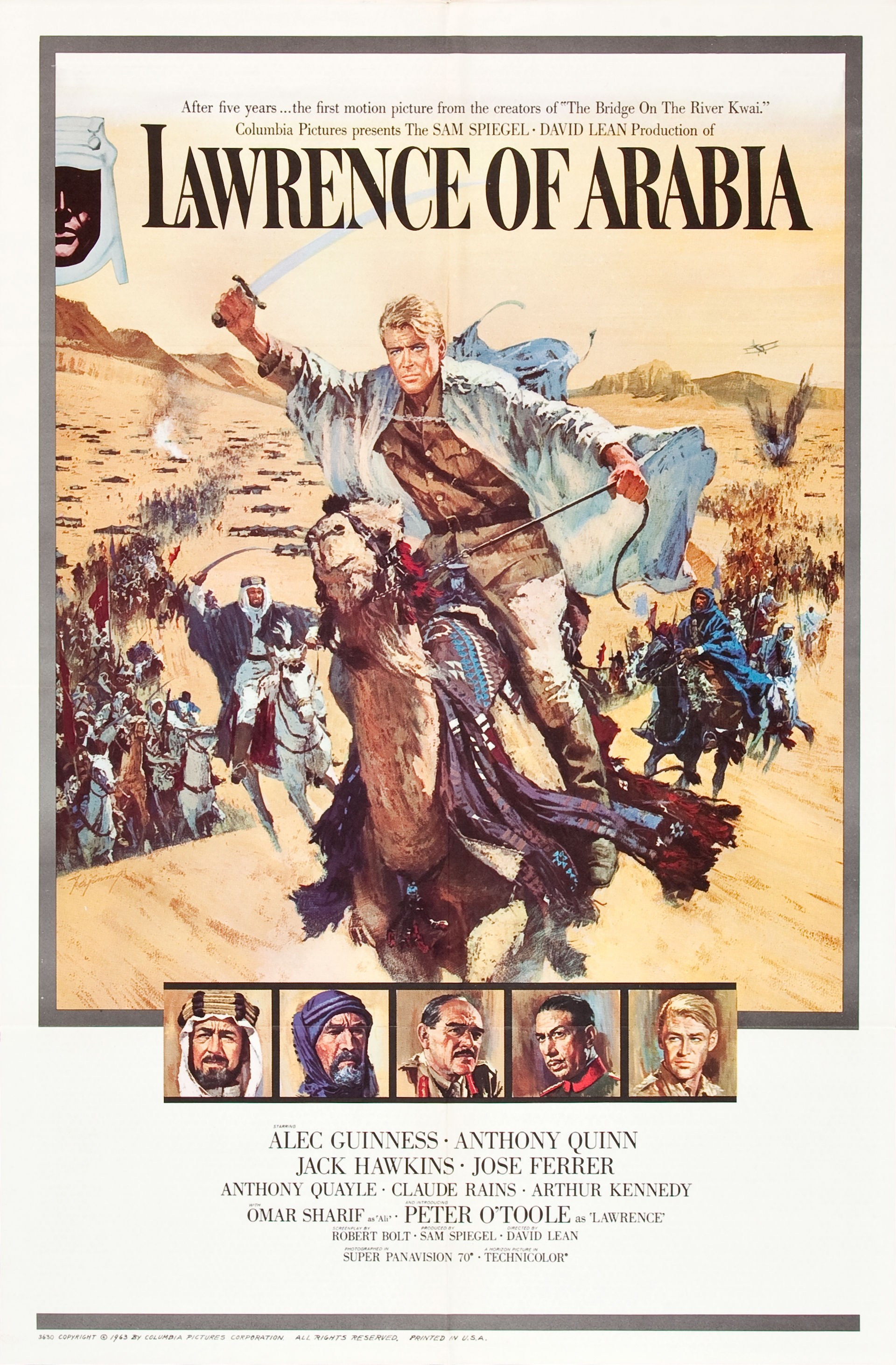
Retro Review: Lawrence of Arabia

In 1916, a man set off across the desert to seek out the peoples of the Arabian peninsula, then in revolt against the Ottoman Empire. In doing so he would live on as a hero and a legend in the English speaking world. That man was Colonel Thomas Edward Lawrence, otherwise known as Lawrence of Arabia. His deeds inspired many stories from both the First World War and then again in its aftermath as tales of his daring-do were embellished by the media and pop culture, particularly by a great song by Sabaton inspired by the title of Lawrence's own book. One of the most famous of course, would come in 1962 with the film bearing his name Lawrence of Arabia.


Now just to get something out of the way, this film is not by a long shot historically accurate. It contains many embellishments and occasionally outright fabrications of both the man himself and the people he worked with. So don't view this as a documentary or factual commentary on Lawrence's life and wartime career. If you want information on that I sincerely recommend a review by History Buffs examining the film, and the excellent work done by the Great War YouTube channel in examining both the war itself and some about Lawrence. Both are great channels that deserve your time and attention.

Without further adieu, let's get to the review.

Filmed in 1962, the movie was directed by David Lean, a great British film director of the time period. It has a quite amazing all-star cast with Peter O'Toole as Lawrence. The man looks so much like Lawrence that it would have been hard to justify not casting him. Then you have Alec Guinness (of Star Wars fame) playing Prince Faisal, both a real character and an amalgamation of other important Middle Eastern leaders, and doing it quite well. Next we have Anthony Quinn (Antonio Rodolfo Quinn Oaxaca) as Auda abu Tayi, an important tribal leader (and real historical figure). Following up you get Jack Hawkins as General Allenby, and he is further famous for his role in what was probably my favorite childhood movie Bridge on the River Kwai, and he delivers a stellar performance here. Then we have Omar Sharif, a famous Middle Eastern actor and of Doctor Zhivago fame, who portrays Sherif Ali, a fictional character who serves as an amalgamation of various other important Muslim characters from the source material. Finally we have Claude Rains as Mr. Dryden, a very cynical and almost sinister character who first helps Lawrence, but really only represents the interests of the British Empire through the Arab Bureau.

A brief note is that yes we do have a few characters in what amounts to blackface playing Arab figures. If you're uncomfortable with that I wouldn't suggest watching this movie as it doesn't really draw attention to that fact, but it certainly doesn't go out of its way to hide it. The movie is a product of its time so it definitely has some questionable choices in how it tells the story, but for all that, it is still a great film, probably one of the best of all time really!

Plans to make a film about Lawrence's life and his wartime exploits had been in the works for years, but they had all fallen through. Plans to make a film in the 1940s were shelved due to various financial difficulties in Hollywood, while in the 50s there were many discussions, but none ever went anywhere. Thankfully the work done on Bridge Over the River Kwai by director David Lean and producer Sam Spiegel. Having worked together before they became interested in another historic collaboration and thankfully decided they would jump on for another one by buying the rights to produce an adaptation of Lawrence's book Seven Pillars of Wisdom in 1960.

Shooting in such exotic locations as Spain, Jordan, and Morocco it managed to capture the desert feeling it was searching for, and thanks to the work done to bring the feeling of being in a visually appealing wasteland to screen, when you watch this movie you really feel transported to another world! It's had visuals homaged and spoofed in films like A New Hope and Space Balls. The city of Seville in Spain was used as a stand in for Cairo, Jerusalem and Damascus, pulling triple duty as a the capital of three modern countries!

The score was composed by Maurice Jarre and performed by the London Philharmonic Orchestra, and was composed and scored in just six weeks! This is a truly phenomenal feat and the movie is well worth seeing for the sound track alone. Though at nearly four hours long it does come with a scored intermission so you can resume watching at a later date!

Visually, this movie is breathtaking. The sheer spectacle invoked which shows the sweeping drama of the Arabian deserts, the heat of battle, and amazing shots done to show off the acting range of Peter O'Toole and Omar Sharif is quite impressive. Wide views of the desert and shots done in large rooms and offices for powerful effect each bring either wonder or quiet dread. That quiet dread is especially important in the political scenes, which all seem to be against Lawrence and his Arab allies, making the pomp and power portrayed in them all the more sharply contrasted with scenes of sprawling Arab camps with some riches but nothing so imposing as what is available to the British officers and politicians.

In shooting the battle scenes we have many amazing views, both of sweeping vistas with hundreds of extras on camel or horseback and then close in shots of the sort of tame 1960s era film carnage. One of the most amazing is filmed of the aftermath of the historically accurate slaughter of a Turkish column as it was retreating from the British after massacring the village of Tafas. This is perhaps one of the most interesting scenes as it shows the films portrayal of Lawrence succumbing to his bloodlust he has been developing since the beginning of his time in Egypt, and he revels in the slaughter of the Turkish column, laying about with his pistol almost indiscriminately, even shooting the corpses of Turkish soldiers. It was amazing work done shooting this scene, and the sheer pageantry of it must be applauded.

O'Toole's portrayal of Lawrence is only based slightly on the historical Lawrence, but he does an amazing job bringing this character to life on the screen. A man fascinated with the culture of the people he was sent to observe, but also a man not used to war. His first great test comes by solving a blood feud on the eve of battle, executing a man he just saved in order to ensure the two tribes do not go to war before they capture Aqaba. The strain of battle and political double dealing takes its toll on Lawrence, but he also begins to believe his own hype and thinks he can deliver miracles which leads to increasingly risky behavior which worries both his British patrons and Arab allies. It all leads to an exhausted and shell shocked veteran ready for wars' end.

His constant companion, Sherif Ali, is well done by Omar Sharif. The character is a proud Arab chieftain who rules his people with an iron fist, but is also a gracious host and skilled warrior. He believes in the vision of Prince Faisal for an Arab Kingdom, but does not trust the Europeans. Believing in Lawrence's abilities he supports and carries his friend (in one case literally) through the war and tries to help him in the peace. In the end though, these two men are from different worlds, making it difficult for them to stay together as the war ends.

These amazing actors, supported by others, craft an intriguing story which is well told on the screen. I was swept away by the battles and intrigue, and Lawrence's struggles and turmoil were gut wrenching to watch as he was swept up in the war. Though the movie is very long, it is very much worth a watch and I would definitely recommend sitting down and taking the time to watch it. Currently available on Netflix, it is absolutely great way to either spend a day or two evenings transported back over a century to the Great War and the world of Lawrence of Arabia.

Sunday, 29 April 2018

The German Spring Offensive and "Victory"

100 years ago this month, the Germans began a series of offensives designed to, if not drive the Entente to defeat, drive them to the negotiating table. The German Spring Offensive (the Kaiserschlacht) or more generally, Operation Michael, the brain child of German Quartermaster General Erich Ludendorff. This was all to take place with 190 Divisions, three million men, and reinforcements, drawn from the German victory on the Eastern Front. It was the hope that this offensive would drive a wedge between the British and French armies, forcing the British to protect the Channel Ports, and push the French back into Paris so the German Army could deliver a coup-de-main and drive the Entente from the war before American manpower could be decisive.

The first phase, Operation Michael, was designed to drive the a wedge between the French and British armies, and force the British back towards the Channel Ports. Follow up operations (initially termed Operation Georg) would then turn north to deliver a decisive blow to the British in Flanders by capturing Hazebrouck railway junction. Meanwhile, smaller operations would distract and throw back the French, rendering them unable to aid the British and leaving their flank open for an eventual march on Paris.

However, lofty as these goals were, in reality they were strategic failures. While Operation Michael was a great success, driving the British back in a huge breakthrough, it lacked any strategic objective, and Ludendorff failed to set any major objective until it was too late. He reinforced success, rather than strategic goals, and only set Amiens as an objective after a week of fighting. After two weeks the attack fizzled out as the Germans outpaced their supplies, and failed to follow up their attacks. A miniature version of Georg (Georgette) was then launched to try and keep the British off balance, resulting in the Battle of the Lys, which also ended in failure. In the end this lengthened German lines by 80km, in a weak salient with no true strategic value.

They also lost over 350,000 irreplaceable troops. These soldiers were the best of the best, selected for their fitness and professionalism. By the end of April, these men were gone. The elite stormtroopers were depleted, along with the reserves that were supposed to keep the subsequent offensives on track.

However, the Germans came within a hairsbreadth of forcing their way through to the vital rail line at Amiens. If the Germans had captured Amiens during Operation Michael, they would have been able to severely damage the British ability to supply their armies in the field, and put a significant chink in the Entente's ability to coordinate. Follow up operations could then inflict local defeats on the Entente forces, and maybe, just maybe, drive them to the negotiating table before summer, and the arrival of the American juggernaut.

Let us assume that Ludendorff manages to rush everything in to strengthen his right flank and manages to press on to Amiens, strengthening his lines so we end up with a situation roughly like this:


Amiens is in German hands, and the right is slightly more stable, with a definite wedge driven between the Entente armies, with Haig and the BEF divided along the Somme, and the French First Army on their flank. The railroads are in German hands but damaged, and they have suffered heavier casualties and failed to take Arras, which is well entrenched.

The Entente now must marshal for a counter offensive, but the Germans cannot hope to continue their planned spring offensives. Assuming they attempt to, they instead opt to fall into the defensive by June, rather than continuing to attack into July of 1918. Ludendorff informs the Kaiser they must seek negotiations, but not an armistice, while the Entente is unbalanced, lest they find themselves with nothing.

Assuming for the moment the Entente accepts German negotiations, what might this potential peace look like?

Wednesday, 8 March 2017

The Russian Revolution

One hundred years ago today, perhaps the greatest revolution of the 20th century shook the foundations of Europe as it erupted across the vast expanse that was then the Russian Empire. The world was engulfed in the flames of the greatest war to ever rage across the planet up to that point. Millions had died, famines had engulfed nations, and borders were changing rapidly... on the Eastern front at least.


The Russian Empire, even mauled as it had been in 1914, had been clinging desperately to life come 1917, even making limited gains through military strength in the Brusilov Offensive of late 1916. However, it was becoming clear that Russia, for all intents and purposes, had shot its bolt.

By this point the Russian people were tiring of war. Despite an enormous outpouring of patriotism and national unity at the start of the conflict in 1914, by 1917 millions were dead or dying, and the Imperial armies were being forced back mile by mile. Worse, bureaucratic inefficiency and the poor state of the Russian internal railways meant supplies were not getting to the front, and supplies were not even making it to the cities where the war industries were churning out armaments to support the forces in the field. This was especially true of food.