Showing posts with label Horror. Show all posts

Thursday, 20 July 2023

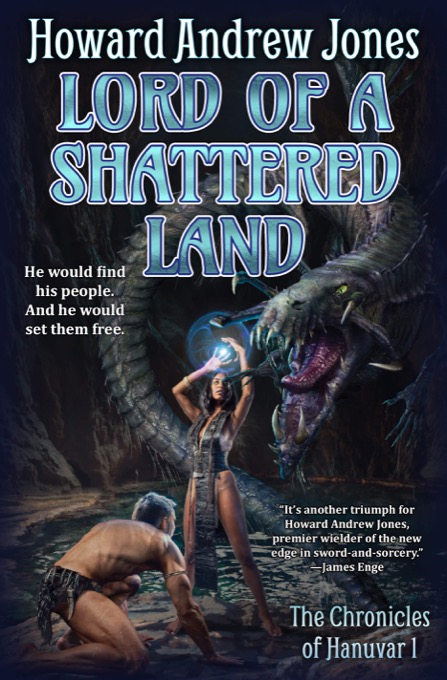
Lord of a Shattered Land

The once great city of Volanus has fallen. The Dervan Empire has invaded, crushing all resistance and driving its people to extinction or slavery. Their greatest general falling to his death in the sea. Soon, there will be no trace of Volanus left if Derva has anything to say about it. Little did they count on the ghost of Hanuvar, Derva's greatest enemy, to return in order to free his people from slavery.

Thus begins the epic tale of Lord of a Shattered Land by Howard Andrew Jones. For full disclosure, I have been provided with an advanced reading copy by the author for review purposes.
In the realm of fantasy, good sword and sandals stories are few and far between. With the early fantasy genre having been partially defined by works like Conan the Barbarian (and my own childhood by shows like Xena, Mythic Warriors and the film Prince of Egypt to excite my own imagination) this often seems like a terrible oversight! However, with sword and sorcery having many avenues for adventure, the works of Howard Andrew Jones fill a niche that readers will be thankful for! Jones has a distinguished writing career, from writing historic and epic fantasy, work inside Paizo Pathfinder line and was the Managing Editor of Black Gate before it transferred to the digital sphere. When he's not writing tales of suitable drama and action, he is currently the editor for the sword-and-sorcery magazine Tales From the Magician’s Skull

Jones then has quite a lot of skill in weaving together exciting, fast paced, and enthralling tales of heroism alongside short sighted evil. That means that he knows how to wind a series of short stories into a fast paced epic that weaves well together! Lord of a Shattered Land is set more like a TV series, or perhaps an anthology, with episodic content tying into a grander arc that tells us Hanuvar's story. And Hanuvar has many stories to tell!

From his fortunate escape from imprisonment, to his clashes with literal gods, Hanuvar endures a long series of traumas. First through watching the destruction of his home, then through the wrinkles of old age. Heroism is a younger man's game, but he is the only hero remaining to Volanus. Without him, his people will disappear. Through this all, he has only one constant ally, the playwright turned unlikely hero, Antires. The young actor wants to tell Hanuvar's story to the ages, and though the thought amuses the aging hero, he sees the earnestness in the young man and invites him on what Hanuvar believes will be a suicidal mission. Fortunately for Hanuvar, he's Hanuvar, the greatest military mind of a generation!

In each of the stories within, that mind is as much an asset as his sword arm. The way in which Hanuvar reasons out traps, outthinks opponents and gains allies is thrilling to watch. We see this master strategists mind at work, and it's a joy to behold. In the later stages of his life and skill, he has nothing to prove, only a quest to fulfill. Jones portrays this masterfully as the old warrior must confront not just mortal enemies, but monsters and gods who are more powerful than any single human. Too often he comes within spitting distance of death, only to just wriggle out of reach.

Through his journeys he finds many unlikely allies besides Antires. From former Volani warriors to Dervan soldiers unwillingly serving alongside him, Hanuvar makes allies and slays enemies. Jones has an impressive array of foes for Hanuvar to fight past. With a flare for both quiet conversation and intense action, Jones delivers many exciting scenes for the reader to chew on, plotted out cleverly against the greater story of the quest to free the remaining Volani from slavery.

Each story builds on the next progressively, and set as episodic as they are, if you really enjoy one you can simply go back and read it and have a self contained short story to chew on during a coffee break. It makes for good dialogue and small character moments that are compiled against a great backdrop. The more tender moments where we explore Hanuvar's life, his story, and the sheer scale of the loss he has suffered after the Third Volani War are as well told as the scenes of action and adventure. Jones skill as a writer can't be missed here!

Choosing to draw from history, Jones does excellent work in portraying the Dervan Empire - and in a very sword and sandals style epic, no prizes for guessing who they're based off - in excellent detail. From the marching matters of a unit of legionnaires, to the casual pursuits of the Dervan upper class and their backstabbing politics, its a well built and interesting world for Hanuvar to inhabit. Pushing up against that world of course are all manner of magical beasties, from mythic creatures with a taste for human flesh, demons, indifferent gods who seem to regard the lives of all men as playthings, and more benign spirits. The more you read of Hanuvar's backstory, the more impressed you have to be with what he accomplishes, even in comparison to his historical counterpart!

The stories here head towards a genuinely action and horror packed conclusion which tie together some threads from the early stories in a way which is extremely satisfying! Old enemies meet again, and old allies are forced to work together once more under a threat greater than anything even the empire might present! And don't worry, there's no great cliffhanger, we are guaranteed a sequel which is also coming out this year!

Jones has created a fascinating setting, populated by intelligent, witty, honorable, idiotic, evil and outright monstrous characters that can keep a reader entertained for hours! There's plenty of room for rereading, and I think that I've got lots to look forward to from Hanuvar yet! Don't miss out on something the fantasy genre sorely needs more of! Grab your copy on August 1st!

Saturday, 21 January 2023

What I Read in 2022

I found that 2022 was a good reading year. Not necessarily as good as 2020 with the new non-fiction and huge re-reads I did, but still a banner year for reading. I re-explored some of my favorite fiction, while also jumping into a pair of exciting new series and exploring a lot of wonderful science fiction! I read 68 books; some pleasurably for the first time and a few pleasurably once again! Here's a brief overview of what caught my attention in 2022!

Starting the year I read the phenomenal non-fiction work Revolution in Rojava which is an accounting of the political revolution which took place in northern Syria during the Syrian Civil War and up to the present. It is an older work (2015) that doesn't take into account many updates, but is still a fantastic look at one of the most revolutionary and democratic experiments in the 21st century in the last place you would expect! 

In the first months of the year I also read Stoic Wisdom by Nancy Sherman, which was an excellent modern reading on the great stoic tradition which I aspire to conform to. I also read Michael Coren's The Rebel Christ which is a must read for modern Christians and a truly compassionate look at the revolutionary message Christ espoused.

As for fiction, well that didn't disappoint! I read the exciting new alternate history The Romanov Rescue and Sarah J. Maas's new installment in the Crescent City series House of Breath and Sky which expanded on that exciting new world. I also continued on with a reread of the Honor Harrington series, which rarely fails to inspire joy in the military science fiction reader. I also sat down and read Cory Doctorow's Walkaway which is a radical story of a new society and some amazingly interesting ideas. One of my big recommends from 2022! A fantasy counterpoint would be A Country of Ghosts by writer and podcaster Margaret Killjoy, which is an equally exciting work for its storytelling and ideas!

Another good read was The Word for the World is Forest by Ursula K. Le Guin, an author I only really got into over the last two years. It, like all of her work, did not disappoint! Really an interesting look into her ideas on violence, pacifism, and the ill effects of colonialism! Very cleverly done, and written at the time of the Vietnam War, which she was of course adamantly opposed to. Interestingly enough, there were comparison's to James Cameron's Avatar film, ones which she amusingly shot down.

One of my big new jumps in 2022 was to get into Ian Douglas's Star Carrier series, where I read the first four books. Expect a full review of that series this year! I was also very lucky to get into David Weber and Timothy Zahn's Manticore Ascendant series which is all the best of Honor Harrington, but without Honor Harrington!

For other fiction, I read Christopher Nutall's Coup D'etat which is a near future thriller and one I sincerely enjoyed. Also, the late, great Eric Flint's alternate history story 1812 Rivers of War which was a work I learned about years ago, and having read, sincerely think it sets the standard for excellent alternate history, but had feared we would never see more! It's sequel was also republished last year, and I'll be reading it this year as well, while sincerely looking forward to more!

In a similar vein to the nonfiction that started the year, I read George Orwell's Homage to Catalonia which, let me just say, if you ever thought Orwell leaned to the right of the political spectrum let his own words in here cheerfully disabuse you! Secondly, a book which paired well with my more utopian reading this year was Joel Wainright and Geoff Mann's Climate Leviathan which took a riveting look at the political theory that may emerge from the looming threat of climate change. Genuinely insightful book on how the world order could respond to this calamitous threat!

Among some of the best fantasy and science fiction I read this year though was Mickey7 by Edward Ashton, which is a short but endlessly funny, inventive and pulsepounding story of the life of a clone worker on a struggling colony and his rough life fitting in with not only his human colleagues, but the dangerous alien life that inhabits that world! Legends and Lattes was just a great low fantasy story that revolves around setting up a coffeeshop for a retiring adventurer, which was oh so fun, and relaxing, to read. There was also Richard Chismar's Chasing the Boogeyman which is a soft horror story where he tells the fictional tale of his hometown serial killer, which as not only a true crime aficionado but also horror reader, loved how he wove the story of his childhood years and home into a truly terrifying/creepy story of an imagined murder spree in the late 80s!

I also finished my reread of the Mistborn Era Two novels just in time for Brandon Sanderson's latest release, The Lost Metal which effectively and heartwarmingly ends the new era on Scadrial. I loved it and I hope all the other Sanderson fans out there enjoyed it too!

However, my big foray into fun reading was in anthologies. The year started with the news that the Expanse series would be releasing all its short fiction in a single collection Memory's Legion which alongside all the previous work, included one last tale from the author which tied up (sort of) a few loose ends and made just as many questions!

The big foray for me though was into some of the amazing anthologies that Baen has released over the years. I started with their recent release Robosoldiers which was a fantastic look at robots, drones, AI and all their myriad uses and abuses on the battlefield. Just a wonderful book.

Next I perused my way through The Founder Effect which is an ambitions project that tracks the founding of Cistercia and the stories of the effort to get the mission off the ground, the trip over, the first colonists and all their myriad struggles, and oh so much more! I sincerely hope there will be more released in that shared universe so I can get my hands on it!

Finally, the most recent release was the horror/scifi anthology Worlds Long Lost by Christopher Ruocchio and Sean Korsgaard who edited the whole compilation. It is, bar none, a collection of some of the best science fiction horror writing ever put together. With stories from old masters and new faces, the anthology was one of the best I read all year! I couldn't put it down, and it gave me some haunting visuals that are still sticking with me! Definitely check this one out! The paperback comes out this year with an all new story from writer/editor Korsgaard which I was priviledged to get a look at and let me tell you you don't want to miss it!

Rounding out the year, I read Origins of the Wheel of Time by Michael Livingston which is a beautiful work by a fan exploring the late Robert Jordan's epic masterpiece. It goes into his notes, what we can glean of his thought process, as well as a long look at all the history and mythology that inspired this modern fantasy epic! If your a Wheel of Time fan check this out!

All in all, a good reading year that I was quite happy with. Here's to a well read 2023!

Wednesday, 28 December 2022

World's Long Lost

It is rare that two of my favorite ideas like science fiction and horror get combined so well, but the new anthology from Baen, edited by Christopher Ruocchio and fellow blogger and writer Sean Korsgaard titled World's Long Lost has really managed to scratch that itch! I had been looking forward to it for many months now, and it's fabulous to finally get to run through these pages! Korsgaard does the opening blurbs, and he builds the stories up quite well, while expounding on the central themes to the overarching anthology. The stories themselves are a fabulous mix of creepy, mysterious, and downright horrifying.

I will be endeavoring to write spoiler free reviews, so feel free to read on ahead, and I promise only minor spoilers if necessary!


To start out, we have The Wrong Shape to Fly by Adam Oyebanji, which starts out as an embarrassed collector of the artifacts of dead civilizations is divesting themselves of a piece misidentified as that belonging to a dead civilization which could not possibly have had the technology described. Academics were far too eager to identify a pet theory rather than look at the evidence. Now an art dealer is embarking on a journey to the edge of civilized space to ponder his own theory. It's not creepy in the way many in this story are, but the reveal at the end just blew my mind with the subtle hints and tensions Oyebanji was able to build on. A superbly strong opener!

Mother of Monsters by Ruocchio is a short story set in his own Sun Eater series. Ever battling against the forces who despise humanity like the Cielcin, the hapless soldier Valen discovers there are worse things than even those that eat human flesh. Things hide in the dark which can warp human minds, tangle with the laws of physics, and damage conscious itself. Told part by interrogation and part by flashback, it's a chilling look at alien intelligences and the ways they don't necessarily care about what our puny minds think of how the world is supposed to work. Genuinely chilling end, which makes me merely want more in that universe!

Next up is Rise of the Administrator a story by M.A. Rothman & D.J. Butler, which details the rise of the mysterious administrator. Set against the background of the discovery of incomprehensible ancient runes and sandstone of unusually indestructible properties, it also tells the tale of an extradimensional being which has risen beyond our plain of understanding. It's a sort of prequel to Time Trials, which details the machinations behind this alien administrator's decision to test humanity in such a way. The reasoning, and extremely destructive outcomes, are laid out in a sort of dispassionate bureaucratic manner which is both alien, and extremely terrifying in its mundanity. To learn more, you must go read Time Trials!

Coming from Les Johnson (of Saving Proxima fame) we have Mere Passers By which sees an exploratory vessel USSS Alligator stumble across what should, by all rights, be an impossibility. Planets held together in a way which defies our understanding of physics. Even more unsettling is the lack of any indications of a technological society in this system. This merely raises disturbing questions of, what kind of technology could do this? Would they even notice our existence? Do we even want to meet them? Unsettling in it's own way, the story really pulled me in and got me quite excited (if a little terrified) by the idea of what could be out there in the universe.

Erica Ciko writes perhaps one of the best pieces in the story with a clear Lovecraftian theme. Never Ending Ever-Growing sees the contractors of "Verdant Dreams" responding to a distress call on the planet Vaenmyr, where the thriving rich settlement has gone mysteriously quiet. The terraforming agency which sterilized the planet to standard for human colonization needs its' crown jewel up and running again, but the aliens they thought they wiped out might not be so dead after all. It's an amazing sweep of horror which catches you off guard and sucks you right in. One of the most unsettling and mesmerizing in the whole anthology!

They Only Dig at Night by Sean Patrick Hazlett is another short, but spooky, story that wouldn't look out of place as a piece from Tales from the Cryptkeeper or another TV horror serial like the X-Files. Ostensibly two old pals who work at the same company are sitting down to coffee and one is trying to get a transfer, but as the conversation goes on, much more disturbing things come to light. Is it a good idea to try and monetize something you don't understand?

Howlers in the Void by Brian Trent combines some of the best of Lovecraftian fiction with classic scifi. After a run in with alien pirates, Captain Shayne Dunsay discovers that he may have found the origins  of strange artifacts which can be found throughout space. The question is, does he want to know what made them? Marooned on an alien world, he and what remains of his crew must fight past increasingly strange encounters and hostile weather in order to stand any chance of making it out alive.

Gray Rinehart presents us with what I consider an amazing combination of Michael Creighton style adventure and exploration, and Stephen King or Lovecraftian style horror. The Building Will Continue chronicles the unravelling of a series of academic expeditions on a world whose inhabitants built fantastic artifacts, and then simply vanished. The engineer Leland has terrible nightmares, and the whole crew soon seems to be equally infected by them. As his team are slowly driven mad by whatever haunts these ruins, Leland finds himself questioning whether it could all be caused by innocuous seeming life forms which infest the area. But can he find the secret before he is consumed by his dreams?

re: something strange by Jessica Cain delivers horror at its best. In a series of increasingly strained, chaotic, and horrifying phone calls and texts, we see a seemingly insignificant discovery of an ancient statue devolve into a horror show. The story is made all the more tense by the fact the two people talking are jilted lovers who broke it off in questionable circumstances. The reader can wonder whether anything real is even happening, or whether this is all a desperate plea for attention. By the end, you'll really be wondering just what happened! A genuinely freaky story it really belongs in this anthology and was one of my favorites.

The Sleepers of Tartarus by David J. West sees the dying special operator Cormac on a one way ticket to a lonely asteroid which is now believed to be undergoing militarization by a hostile power. With a deadly cancer eating him away, he really doesn't care and only wants to complete one last mission. However, when he arrives, he winds up with more than he bargained for as the asteroid is not quite what it seems. A tale of adventure and mild cosmic confusion, this one really deserves your love as I can't say anything without some major spoilers! If you can, dive in and read it and I guarantee you won't be disappointed! West turns this one on its head!

Dark Eternity by Johnathon Edelstein is one which, I admit, I did find difficult to get into. It lays out its background and the world lovingly, with excellent attention to detail and world building, but I feel I lacked an overall context for it. The story was told well, and I genuinely enjoyed each little piece of information fed to me from the narrator Kalonde, but without a fuller understanding of his work, I don't think I appreciated the genius of the ending as much as I could have.

Patrick Chiles delivers a sense of mystery and wonder in his Rocking the Cradle where a little bit of geology and a lot of language class pays off after a crew investigates what appears to be an alien ruin in a far solar system. The way Chiles unpacks the mystery at the heart of this story is slow, deliberate, and not something you wouldn't expect outside a techno thriller. The revelations are disturbing to ponder on at least. You wonder about the longevity of human civilization, and whether we have a way forward from traps of our own devising. Chiles doesn't scare you with aliens, monsters, or impending black holes, but some mundane and fundamental questions about how we manage. A wonderful story!

Giving Up on the Piano is a prize inclusion by Orson Scott Card, which compared to much of the anthology is a more mundane delivery of a creepy factor. Not the most terrifying inclusion, but a good capture of what can go wrong in suburbia. It wasn't my favorite in the anthology, but it did provide perhaps a bit of relief from the heavy going of many of the other stories with its more domestic setting and almost tragicomedy presentation.

Finally, we have Retrospective by Griffin Barber. This one is haunting just as much for it's vagueness vs what we actually see. The story is told as an interrogation of a soldier who touched an unknown alien artifact during a firefight. However, the exact nature of the artifact, what it did, and fully what happened to said soldier is left vague as even those discussing it don't seem entirely sure of exactly what they're dealing with. The ending is just creepy enough with how little you know despite all this that your mind can fill in the blanks in unpleasant ways! A great end for the anthology and really helps capture the spirit of it all.

With science fiction and horror being among my favorite types of story, I was enthralled by how well this was put together. There are so many good stories it's impossible to choose just one to love. All were well crafted with skill and and a love for the genre. This is one you should absolutely pick up!

Friday, 19 August 2022

Prey

In 1719, a young Comanche woman trained as a healer seeks to become a hunter. In doing so she challenges the norms of her people, but finds that rather than the animals of the wild, the hunter may just become the hunted.

Prey is a new film in the Predator franchise which takes it away from the 20th and 21st centuries, and instead places it back in a much hinted past from scenes in both Predator 2 and Predators which were both very clever pieces of world building, and set us up for a very rich expanded universe. And Prey delivers quite well on that expansion.


Using the early 18th century Comanche on the Plains is a clever idea, and I felt that it was an excellent use of the concept. What was just as intriguing was that there was no attempt to hide the Predator in this film, and it was front and center the moment it showed up, instead being used as a known element to slowly build tension as the characters unravel the mystery that is confronting them.

We follow Naru (Amber Midthunder) as she navigates her desire to be more than a healer in her tribe. She is looked down on by the young warriors of her village and only her brother Taabe (Dakota Beavers) openly indulging and encouraging her. With her dog Sarii, she is found just as often practicing her hunting skills as her healing skills, though both do her well in the wild. While preparing for a hunt, she sees a Thunderbird in the sky – of course it’s actually a Predator ship dropping off a young hunter. This leads to our first tense scenes, early action, and some well shot lead up to the final confrontations.

The action in Prey is also gloriously violent. From short scenes of hunting and man vs wild action, to the head to head confrontations with the Predator itself, it is an excellent view of older technology being leveraged against a familiar enemy. Even more interesting is the Predator itself is being shown using much less sophisticated examples of the equipment we see in later films, suggesting a level of technological sophistication that their species is aiming for. Made for fun surprises that really kept me guessing.

Adding to the action are some excellent special effects which brought the setting alive. From well used CGI to very good practical effects I enjoyed everything I saw on screen. Honestly there was nothing to complain about, save finding some of the CGI animals a little wonky, but I’d rather wonky animals than harming real ones.

Overall the tone of the film is one of tense buildup and subtle dread, and then the action picks up. It’s well acted by our principle leads and the supporting cast, and all the work done on the Predator from the bodysuit to the CGI is simply fantastic. I loved the new setting, the fun female lead, and the shoutouts to other films in the franchise, which made for exciting watching. I am sincerely hoping for more from this universe. Though as a rule, it should either be set in the past, or the future. We’re well overdue for the Marines from Aliens fighting the Predator on the big screen, or some version thereof.

If you have yet to see Prey, go watch it. You will not be disappointed

Sunday, 1 November 2020

Ghost Run

In this fourth installment in the Day by Day Armageddon series, we once again join Kil as he is taking a lonely tour through the zombie haunted wasteland that is the continental Americas.. I purchased this book earlier this year with the explicit goal of reading it, along with all the others in the series, for Halloween. Last night I wrapped up my reading and got some closure to the world of Day by Day Armageddon which I had been needing for a few years.

Does this struggle across the dead land once known as the United States amount to much, or is it the last hurrah of a survivor who was unable to control his urge to explore? Find out, in Ghost Run!

To begin with, this story does get back to the strength of the original novel. Its' a fixed first person narrative, told in the journal style. Less concentrated, but told in a very similar manner. It does tell a more personal story, one which covers a range of issues from addiction, the devolving of society, and seeing echoes of a formerly strong world now covered in decay, both natural and unnatural. It does have a wonderful series of action sequences with spectacular zombie kills. From knives to wrecking balls, we do see some good work taking out the undead.

However, it does manage to only harken back slightly to what made the original novels so good. Without a real overarching mission, the humanity and the community which was built across the first two installments, it felt lacking in terms of the hope and drama which propelled me through the first books. Then it's much shorter, with precious little preamble to the meat of the main story. Shorn of the tighter narrative, broader supporting cast, and overarching sunny, but gray, tone, it made for a less compelling read than the previous three volumes.

Our ending here too, felt rushed. It didn't have the same oomph which added power to the story of Shattered Hourglass, or Origin to Exile which, while each had their dark moments, the sense of hope and humanity established in them allowed me to hold hope for something more than mere survival. Instead, in this story, we almost get a sense of the lights going out one by one, the field of view narrowing, and no hope anywhere else in the world. It was, to be frank, a tad disappointing.

If you've read the rest of the series and would like resolution, I definitely recommend checking it out. However, you may feel better just reading the end of Shattered Hourglass. It's an ending, and it comes from two strong initial installments which created one of the best zombie stories I've ever read. So ends my saga with this terrifying series!

Saturday, 31 October 2020

The Walking Dead Season One

Ten years ago, to the day, The Walking Dead premiered on AMC. It was, for a good while, a cultural phenomenon. The zombie genre had reached new heights, with it taking over popular culture for all intents and purposes. Truly, you couldn't find anything that didn't have zombies in it, from video games to cinema. George Romero was even making his film finale in his Living Dead film series. However, it was Robert Kirkman's The Walking Dead which spilled the zombies onto the serialized small screen.

My first brush with The Walking Dead came from high school. I actually have fond memories of flipping through a friend's copy of the first issue of the comics, Days Gone By, as we excitedly chatted about the board game Zombies!!! and gushing over this comic series my friend had brought to our attention. I quite liked it and remember briefly borrowing them from him and drawing nostalgic connections to Issue 3, Safety Behind Bars, and events from Max Brooks The Zombie Survival Guide.

Having read the first few issues way back when, and now in 2020 having finished the series with the fantastic conclusion to Kirkman's comics in 2019, I've now re-watched the 2010 pop-culture phenomenon that is The Walking Dead. This is just my own reminisces from ten years on, and why I think this show managed to become so popular.

This story opens in presumably the not too distant future or past of our own world in rural Georgia. Sherriff Rick Grimes and his partner Shane are discussing life and Rick's strained marriage when they get a call about a high speed chase in progress, and along with other officers, respond. In the ensuing shoot out, Rick is shot and badly injured. He lapses into a coma. 

Roughly a month or so later he wakes up in the hospital. He finds it abandoned, in a state of serious disrepair, and sees signs of fighting, badly mutilated corpses, and a field of bodies. Though first he stumbles on one of the major changes of the series, finding a door which reads, "DON'T OPEN DEAD INSIDE" which produced one of the most visually arresting shots in the whole show, which sticks out to to people who haven't even watched the series. 

It's actually one of the first changes from the comics where Rick instead wanders into a cafeteria full of zombies and, through blind luck, manages to extract himself from a life threatening altercation with the undead. 

Escaping to his family home, he finds it empty of his wife Lori and son Carl, instead he is found by fellow survivor Morgan and, after a brief interrogation, discovers the sudden fate of the world. The dead have risen to eat the living, civilization has collapsed, and his family has headed to what they hope is the safety of Atlanta where the government has tried to establish a safe zone for refugees. After arming up, he rides off into the new world, and is almost immediately nearly devoured by a horde of ghouls before hiding in a tank. On a walkie talkie he gets in contact with a survivor observing him from the outside and finds his way to, relative, safety.

Upon doing so he meets Glen, Andrea, Meryl, T-Dog, Jacqui and Morales. They devise a way out of the city, in a very good departure from the original comics which leads us to a more drawn out escape, but some clever looks at the fall of Atlanta and the dynamics of surviving the zombie apocalypse. And our first big plot conflict emerges as Meryl, an unrepentant asshole, is left behind in the escape.

When they do make it back to camp, they encounter the rest of the survivors. In a very heartwarming scene, Rick finds his wife and son, who have been protected by his former partner Shane. This little community manages to have a few good days, but are interrupted by the return of Darryl, a show only character and the brother of Meryl, which prompts another expedition into the city. Though a success, all good things come to an end when walkers attack and kill many of the survivors. In the aftermath, there is a dispute about where to go, and it's a toss up between Fort Benning and trying for the CDC headquarters in the city.

In a very different take from the comics, the show has a fascinating look at how the virus started, the failed study for a cure, and some interesting science behind how the virus is spread. It's a welcome change, which made for a very fresh take on the show and a fantastic final episode. It was quite ambitious for both a finale and in how bold the decision was to depart from the original material.

At only six episodes, the first season is extremely short and, I would argue, that's to its overall benefit. The Second Season, at the time almost universally hated, but in recent years remembered fondly, was stretched over thirteen episodes, which with only one location and a radically different cast and story was bound to frustrate fans and new audiences with its slower pace. The Third Season set things back on track however, hewing closer to the original story and then making it a massive television success. Though the shows viewership has declined markedly from Season Seven onwards. I'll personally say that I have only watched intermittently beyond Season Five.

This being said, the First Season was a real tour de force with an opening episode which really drives home the suddenly changed world. Gory visuals and some simply fantastic zombie killing action. The acting is wonderful, and the show was done in a way which turns your expectations from the comics against you so very well. Re-watching it I was struck by how much my initial expectations were happily raised by the departures from the original comics. Darryl became such a fan-favorite that he is the face of The Walking Dead now. In only six episodes we managed to get a great new story, some unexpected surprises, and no matter what you think of the show now, ten years later those six episodes still stand out.

Definitely worth a viewing this Halloween!

Monday, 26 October 2020

Shattered Hourglass

The third installment of J. L. Bourne's Day by Day Armageddon series manages to bring our story to an international world, and tie off some loose threads which we have been dealing with since the dead first walked. In a story that provides the best of Robert Kirkman, George A. Romero and Tom Clancy, we see the end of the world from the Arctic to Honolulu in Shattered Hourglass

Minor SPOILERS for the last two installments follow.

In this next installment of the series we have a new look at the world ravaged by the zombies created by the "anomaly" which causes the dead to rise and seek to devour the living. This story switches from previous first person narrative as journal style to a multi-POV, third person style novel which has more in common with fiction usually found in this genre. The main protagonist is still Kilroy, but now we have Special Operators, some of the original Hotel 23 survivors like John and Tara and scientists trapped in an Antarctic Research outpost. It's a dizzying array of characters providing a greater look at the global zombie outbreak. We get hints of what happened in Europe, the Middle East, Africa, and Asia. 

Our focus though does remain on Kil and his drafting into Operation Hourglass, which is a mission charged with finding out what the Chinese government was working on prior to the dead rising. Inside a secret facility on the Chinese mainland, there may be a way to cure humanity and prevent the dead from continuing to rise. Meanwhile, special operators working in support of the remaining US government are working to both sustain Operation Hourglass, and to deal with the shadowy organization known as Remote Six, which may put our embattled protagonist in mortal peril. Finally, his former Hotel 23 family lives onboard the USS George Washington while trying to aid the remaining US military command and keep the American Dream from fading into undeath. 

I will admit that beginning the third installment was a bit jarring, as I had immensely enjoyed the original journal style entries and the intense focus on our single protagonist. However, the sheer scope of this tale and the many complex moving parts did necessitate an expanded cast to keep things going. It did add some freshness to the story which kept my expectations high, and allowed for more varied and scary plots. From the isolation of the Antarctic research team, to the constant running and gunning the Special Operators had engage in, I found that this story never had a dull moment.

The final twist to the story though, in my opinion, made this really worth it. There was a great set up, and an answer, to why the world suddenly became the way it did. I won't spoil it, but if you want something that works as a zombie virus story, and perhaps helps keep you in the world and a high stakes international mission, this was a great way to do it. It honestly combined everything good about Tom Clancy's Rainbow Six novel and Robert Kirkman's The Walking Dead for an exciting high stakes plot.

While I didn't enjoy it as much as the original two installments, I will admit I had a great time reading this book again for Halloween!

I will be discussing some spoilers below the cut, so if you haven't read the first two novels, I highly recommend checking them out and you can find my reviews for each, here and here. SPOILERS below! 

Friday, 23 October 2020

Devolution

In our very tech focused and hyper-integrated world, it can be hard to imagine just how brutal and unforgiving nature can be. Try to picture then, a quaint and cute little haven away from the hustle and bustle of the technological world, surrounded in an oasis of natural phenomenon. This is the small planned community of Greenloop, situated in the Pacific Northwest and in the shadow of the magnificent Mount Rainier. Still hyperconnected to the comforts of the modern world though, wifi, great cell reception, drone deliveries, and biofueled houses which you can adjust at your leisure. 

Truly a small piece of paradise.

Until the mountain erupts. In a flash of fire and fury, the modern world is swept away, leaving the people lounging here stranded. All one once the inhabitants of Greenloop are cut off from the outside world, their access gone, drone deliveries, gone, and they're stranded in an unforgiving environment at the onset of winter. But it's just a matter of time until they're rescued right? Perhaps, but what if the eruption of Mount Rainier has driven something more dangerous, something more deadly, something more primal towards them? What happens when these modern people, who have never known the terror of primal nature, its mercilessness and its hardship, come face to face with their potential primitive past? You get a severe case of Devolution.

Max Brooks new novel sets out to tell an engaging scary story, one quite appropriate for the modern world.

The story is told in the familiar scrapbook style, revolving around the nameless journalists' interviews with those familiar with the incident, excerpts from news pieces, and the main meat of the story, the diary of Kate Holland. Her story is one told with an interesting twist as she writes a diary to deal with her stress from the overwhelming nature of everyday life, to keep her therapist abreast of how she's feeling, and chronicle her own state of mind to see her progress and express herself.

Her trip has, with her husband Dan, been undertaken to improve their marriage, give them some piece of mind, and help them get back on track. 

They meet the colorful cast of other eccentrics coming from the Pacific Northwest to relax and unwind in this isolated, but technologically connected community. Run by the stunningly beautiful and technologically savvy team of Tony and Yvette Durant, the community looks amazing with its individual houses and common house. 

The other members of the community, the overweight and arrogant philosopher Reinhardt, the power couple of Carmen and Euphemia with their adopted daughter Palomino, husband and wife Bobbie and Vincent, and the reclusive but powerful presence of the elderly and diminutive Bosnian artist, Mostar. This little group, thrown together from diverse backgrounds, will suddenly have to survive their own little apocalypse.

It tells an interesting story of city dwellers who are expecting nature to revolve around their needs. They feel that, with technology, their little group can tame nature. That they've all only lived in the city, never interacted with untamed nature, and have no survival skills that don't revolve around technology, doesn't really occur to them. It puts human need for technology and community front and center, and shows how the hyper-individualistic and society of instant connection can be sorely tested by extreme situations. They also learn the hard way that nature is not nice.

All of the issues of being cut off from greater society, planning for long term survival, and otherwise pulling together, might have been overcome if it were not for the sudden intrusion of another group of equally desperate primates. The Sasquatch. This throws everything into turmoil as these new critters are desperate and hungry, and the humans of Greenloop, while smart and intuitive, are not exactly equipped to fight them off. Whether from sheer lack of preparedness, a semi-naïve philosophy of harmony with nature, or simple inability to understand their new neighbors, the people of Greenloop are very much unprepared for the danger they face.

Like most of Brooks works prepping does feature, to a greater or lesser degree, into the overall story. He tries to outline practical examples of disaster preparedness, reminders about the fragility of high technology in emergencies, and that most people don't really know how to survive in the wilderness. It's an honest, not really preachy, way of putting forward the idea of keeping yourself ready for even a mild natural disaster which, I can say from experience, can really throw you for a loop. It also takes a few potshots at tech gurus, thinking nature is calm and pleasant, or that humans can be effortlessly on top of the food chain. Though most of all, reminding us that nature is full of wild animals and not tame petting zoo critters.

We have a great slow build to the story, with the gradual encroaching disaster, a slow creep of the monsters, and a build up to a tense, unknown situation with a brutally climactic ending. One of the true triumphs of the book is so comprehensively dealing with the modern problem of instant communications in horror, by using the destruction from the Rainer eruption to so totally cut off the characters. It gives you a real feeling of isolation and horrible solitude that is hard in our modern world, and I think that every time this is pulled off well for an author it should be applauded.

I definitely think it's great to have Max Brooks back in the game of horror. He writes phenomenally well, establishes a diverse, exceptional, and unique cast of characters, and uses them in an unexpected and interesting way. They really do jump off the page, through the biased views of the narrator, and with the "after action report" of the various interviewees. A great read for 2020 and anyone who loves the horror genre! 

Saturday, 17 October 2020

Mexican Gothic

 A recent release which I picked up because goodreads kept recommending it to me, I was very happily surprised as I found myself suddenly immersed in the world of Mexican Gothic

Set in 1950's Mexico, it follows debutante Noemi Taboada, as she answers a seemingly madness filled letter from her cousin Catalina, who has married into the obscure Doyle family. In the letter, Catalina accuses her husband Virgil Doyle of trying to poison her. Catalina's father, wary of scandal, sends his daughter to check on events in the remote province of Hidalgo at the Doyle home of High Place. As Catalina arrives, she realizes things are not quite as they seem.

This is the most recent novel by Silvia Moreno-Garcia. This is a Canadian author who I had not read before, and I am pleasantly surprised by what I have found! Having explored more of her work upon completion of this novel, I am happy I started with this one and will certainly be checking out more of what she does!

Mexican Gothic has everything you could hope for in a good tale of Gothic horror. There's a creepy house, a mysterious family, and dark, twisted secrets. Instead though, they are transplanted to the highlands of Mexico and set against the backdrop of Mexican society and expectations. The very foreign people are almost part of the horror as their entire setting is alien and unsettling, with its many references to both the Mexican Revolution and foreign exploitation of the Mexican people.

Noemi is a fantastic narrator. She is a sassy socialite who likes to bend the rules and frustrate her opposition. That she comes from a world of parties, learning, and language, makes it very difficult for her to adjust to the dark, dreary, rigid ways of the Doyle family of High Place. She's like a beacon of light there, but one which almost instantly strikes friction with those inhabiting the place. She clashes immediately with the family head Virgil, instantly dislikes the patriarch Howard, and the 'mother' of the house Florence has an instant distaste for her smoking habit. The only person she doesn't seem to bring out revulsion in is the black sheep of the family, the shy and nervous Francis.

She isn't one to play a damsel in distress either, and is always thinking to try and get one over on the Doyle's and save her cousin, who seems to be slowly losing her mind. Though Noemi finds herself questioning her own sanity the longer she stays in High Place.

What I really enjoyed was how my initial assumptions were twisted and turned on me, until I came to a stunning and shocking conclusion. In the first few pages I rather foolishly assumed I knew how things would end up, but man did the twist really show me wrong! Very well done and very, very scary! Highly recommend this wonderful new book!

Friday, 16 October 2020

World War Z

 A few years ago I had the misfortune to see the Bradd Pitt film, World War Z which was extremely loosely based on Max Brooks phenomenal 2006 novel of the same name. The book though, as is often the case, is undoubtedly better. Rather than the swift running, barely discernable from their victims, monstrosities we saw in the film, here we have the classic Romero zombies which have slouched their way into my nightmares since I was a child. The world is stumbling towards its demise and consequently it becomes engulfed in the great Zombie War.

Welcome to the real World War Z


This book is, in essence, set in a similar world to the authors first novel, The Zombie Survival Guide which details the zombies seen in this story. I picked up the Zombie Survival Guide in high school, having had a recurring series of sleepless nights and nightmares regarding the undead thanks to games like Resident Evil (and its attendant film) and Dawn of the Dead. This semi-serious and slightly comedic guide to dealing with the undead really helped me overcome a semi-childish fear of being eaten alive by the undead. When I learned that there was a novel coming out set in a world besieged by the undead, it was a no brainer I was going to get it!

I also, unsurprisingly, agree with Max Brooks on why zombies are scary: "They scare me more than any other fictional creature out there because they break all the rules. Werewolves and vampires and mummies and giant sharks, you have to go look for them. My attitude is if you go looking for them, no sympathy. But zombies come to you. Zombies don't act like a predator; they act like a virus, and that is the core of my terror. A predator is intelligent by nature and knows not to overhunt its feeding ground. A virus will just continue to spread, infect and consume, no matter what happens. It's the mindlessness behind it"

With that in mind, Brooks sets out to write this fear very well. From the first bite, to the expanding hordes, we see the zombies grow in threat and menace. In a world too similar to our own!

At the time this was written, it was set in an undetermined time some twenty minutes into the future. With 2020 upon us, it becomes a bit of fun alternate history really. But the novel itself is probably the single definitive work on the zombie apocalypse. It takes us through the eyes of people all over the world from all walks of life and deals with how they struggled to survive the Zombie War.

The novel has a very American oriented focus, which simply makes sense. However, it delves into events the world over from China, India, Japan, France and even outer space! It provides a smorgasbord of fascinating little looks into how different countries fought the zombie menace or dealt with the little quirks of fighting zombies. Whether in the infamous catacombs under Paris, the constant de-thawing ghouls of Russia, or dealing with those that roam the sea floor in a terrible form of eternal damnation.

When I first read this book, and when the zombie craze was reaching it's zenith around 2012 when the film was in production, there were numerous discussions on the internet of how plausible the whole set up was. I remember how many people scoffed at how 'no one could be that stupid' or 'governments would not ignore the dead walking' and such other arguments. With others pointing out that accepting the walking dead as a fact of life would be far too difficult for some. Well, I personally think that 2020 has really put paid to the idea that people will react rationally in the face of zombies. The book's "Great Panic" is horrifically realistic.

This Great Panic was, for me, one of the high points of the book. It showed that the zombie problem had become accepted, understood, and out of control. People fleeing with no destination, outbreaks too large for the government to control, and a terrible attempt at a "shock and awe" battle at Yonkers to try and restore faith in the government. The Battle of Yonkers might be the most unrealistic moment, but it was a great piece of writing.

After this we see a series of implementations of the Redeker Plan, where governments retreat behind safe zones, hoping to ride out the wave of the undead so that they rot away. Of course, that eventually changes! And we get to see a new way of fighting the undead, and the genuine fear of the swarms in their hundreds and millions!

With later stories taking place (including one which is essentially The Hunt for Red October meets Dawn of the Dead) above and around the world, you get a wonderful feeling of this being a global war. I did enjoy how this played out in the end, and I loved feeling like humanity was not just curling up behind its walls. The post-war world might have been fleshed out a little better, and one of my personal criticisms is that the 'wrapping up' section was way to American oriented. Some vagueness and a sense of mystery is necessary of course, but for some parts I felt the novel was almost too short!

Overall though, this one is absolutely a standard read for anyone that loves the zombie genre. It's a fast read, full of unique and clever zombie action and thinking, and deserves your time this Halloween!

Thursday, 8 October 2020

Origin to Exile

Two years ago I reviewed Day By Day Armageddon and commented on how it is one of my favorites in the whole genre of zombie literature. Here I present the sequel, Origin to Exile (or Beyond Exile) and would like to simply add on why I believe this novel is an amazing sequel to an already powerful first installment.

In the first novel we established that the dead now walk the land. Anyone who dies, for any reason, reanimates as a corpse hungry for the flesh of the living. Following a failed government campaign to eliminate the bulk of the walking dead, we now have to contend with radioactive zombies who not only spread deadly contagion wherever they walk, but also are more intelligent, agile, and deadly than their regular brethren. 

Now we put on our boots, load our guns, and follow our protagonist as he works his way across the horrific wasteland that is the former United States where the casualty rate is 99%. The dead surely outnumber the living, and we see a road to exile.

Spoilers for Origin to Exile follow.

Thursday, 3 September 2020

Writing Update Summer 2020 and Winter Law

With the steady and inexorable advance of Covid-19 at the start of the year very much messing up my plans, I have, thankfully, been able to work on a lot of writing over the past eight months. Summer was mostly productive, and the year has been very productive overall.

Firstly, I did publish my little vignette 2069 in July which was a fun experiment in second person narration, and an opening for a larger series of short stories I intend to be publishing over the next couple years. Not exclusively on this blog of course! I aim to anthologize them for fun and profit!

Secondly, over the course of the summer I finished my short story Priests of the White God which came out at 12,809 words. It is a low fantasy, nautical horror story which I intend to anthologize with some other short pieces this October, and that will be my biggest writing goal of September. It will be premiered alongside my existing piece of flash fiction, The Disappearance of Wilson and two other stories. One is The Closing Hour which features sadistic shopkeepers in a definitely-not-Walmart in sinister circumstances, I'm envisioning it as something like The Purge meets Clerks. The other is a story inspired by my time in quarantine during early Covid-19 and the depressing news hours I watched while not doing much of anything. It will probably clock in at some 7-10k words, untitled yet, but has lots of disease and a little death. 

With those four stories I'll anthologize them and hopefully have them packaged for release by late October in what is tentatively titled Darkness in the Mind.

I also, over the last few days in August, managed to churn out a dark fantasy short for the Grimdark Magazine. They had the Matthew Ward Pay It Forward Competition for short pieces of dark fantasy running for unpublished authors, maximum word count 4,000. With the 4k limit, sadly my short story Priests of the White God was ineligible. I had an idea that had been in rough form for a while though, and so I hammered out some words and a brief plot. The Winter Law is sacred, and those who break it have naught but rough justice awaiting them. Bermer is a hunter apprenticed to his master Horm, and trudging through the late winter snows with only a guide, they must figure out whether a small family of farmers has broken the law, and if they have, there can be no mercy. That is the gist of my short story Winter Law which will be submitted to the contest. Coming in at 3,588 words, I'm sending this bad boy off and seeing where it lands.

Other than those works, I have made some progress on longer works. One alternate history project currently sits at 36,000 words, and another project is currently being meticulously plotted out, my 1866 piece A Road Not Taken regarding an alternate Battle of Ridgeway. I'm currently aiming for it to be my NaNoWriMo project.

In other news, my novella Integration remains in the slush pile at Tor. Since it now is not the only long form fiction I've completed I'm going to let it sit for a time, and hopefully have more news for 2021. 

Overall, a rather productive summer for simply writing in my spare time! Hopefully by years end I'll have further updates for you all! In the meantime, I'm back to hammering on the keys!

Monday, 17 August 2020

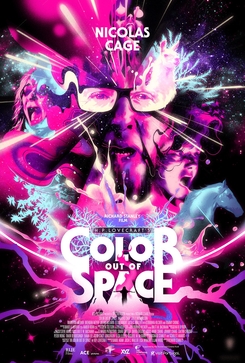
The Color Out of Space (2020)

Recently, thanks to Covid-19, a film was released digitally which would otherwise have been cruising for a decent premier as a very interesting horror film. That film is The Color Out of Space! I have been anticipating this movie for a while now, having been a fan of the original 1927 Lovecraft short story, I was looking forward to seeing a modern adaptation of it. It had some interesting promotional art, and most importantly, to me, one of the big names was going to be Nicholas Cage.


The original story is set in 1882, with the movie instead moving forward to the 21st century sometime in the 2010s in a small place in the sticks, just a while outside the town of Arkham. Normally I don't like this kind of setting change, but the film does it really well I think, and quite deftly neutralizes the problems of modern technology in horror movies besides.

We begin with some opening narration, quoted directly from the original short story. It then moves on to establish the Gardener family. Their daughter, Livinia (Madeleine Arthur) is out practicing spells in the woods when she is stumbled upon by hydrologist Ward Phillips (Elliot Knight) who is out testing the water table for a proposed reservoir. Then we get some establishing shots of the family, and the film actually spends a very good amount of time establishing why we should care about these people. Nathan Gardener (Nicholas Cage) has moved his family to the remote farm his father owned as a way to save costs after his wife Theresea's (Joey Richardson) bout with breast cancer. His two sons, elder Benny (Brenden Meyer) and youngest Jack (Julian Phillips) are typical adolescent and youthful males besides. Jack is always scared of something while Benny likes to smoke pot with the land's resident squatter Ezra (Tommy Chong) who lives in a remote 'off grid' cabin on the property.

It's a loving family which has its issues. Nathan has taken up alpaca farming because he believes it's the future while his wife is a remote worker who takes clients over the web. The physical and social distance puts strain on the family, a lack of reliable wifi and worries over their kids getting to school or medical care are all typical problems in the 21st century. It's all laid out well in the opening scenes and I really appreciated that the film took time to make me care about these people.

Then the comet hits and all hell breaks loose.

Seeing the titular crash landing from outer space was fun. It was done in a bit of a hokey way (an eerie purplish light filling the whole area but for some reason only one person looks at it) and a spectacularly creepy landing leading to more outlandish results. Little Jack finds a new imaginary friend and the crops start to taste weird, while time seems to flow...differently for the Gardeners. Things spiral steadily downhill from there as Phillips tests out the stuff he found in the meteor and comes to the conclusion there's something undeniably alien about it.

Visually, the movie is great at leaving you in suspense. There's no in your face examples of the color (beyond well, the color) and it builds suspense over the course of the film to some of it's more genuinely horrifying moments. People and animals beginning to change, and I found this approach to be very well done, with some similarities to The Thing which I found to be very well adapted. The steady descent into madness these circumstances bring is delightfully creepy as characters at first just try to adjust to weird, but not otherworldly, experiences. The actors brought out the Lovecraftian themes beautifully, with Nicholas Cage bringing his world class ham to the screen making his descent spectacularly terrifying! The man can still deliver!

Stand out performances do go to Madeleine Arthur and Elliot Knight for their roles. Arthur plays Livinia who is, after all, a teenager caught up in a horrible experience to a tee, and Knight plays the poor hydrologist sucked into an otherworldly circumstance very well. I really thought he was going to die halfway through the film! Their little subplot crush on each other makes for some cruelly tense moments later in the film, and I really felt for both of them as things spiraled out of control.

There were some excellent nods to Lovecraft in the film. From Livinia reaching for the Necronomicon in desperation as her world falls apart, to Ward being a graduate of Miskatonic University, the film made itself broad in appeal to the general public, but also having enough nods to keep Lovecraft fans enraptured by how well it did the original material.

Now there were some small errors I felt. There were a few character tics and subplots which were not well explored. The Garderner family is supposed to have some kind of feud with the mayor over their property and the construction of the resevoir, but nothing ever comes from that or is explained. Then there's something about the resevoir supposed to provide water to 'half the East Coast' which also drops with nary a whisper. Then the color itself is... well it's basically purple. I know we can't have an actual alien color within this medium and it works much better in your head, but having the color shift more would have been more visually appealing to me at least.

However, this is a genuinely thrilling horror film. If you know the original story you're in for some surprises, which is good. Then if you're used to regular horror films you're also going to be surprised for how well it handles older material and makes it accessible in the modern age. It is a movie I would definitely recommend watching and is sure to at least make you think twice about where your water comes from!

Wednesday, 29 July 2020

The Atlanta Incursion

Once again I'm coming back to the works of Matthew Quinn. He's got a new book for us, the second book in his The Long War series (as it is now titled) and a direct sequel to his first full length novel The Thing in the Woods which I reviewed back in 2017. Here now though, we are given the events of The Atlanta Incursion!

As a warning, some minor spoilers will follow from the events of Thing, but nothing that will spoil the whole plot!


The story picks up roughly a year after the events of Thing and takes place in the Atlanta metro area in the aftermath of the Great Recession. There's plenty of abandoned areas, decrepid buildings, and gang activity to keep prying eyes away from things you'd rather not see. Unfortunately, that doesn't work out for young Javion, a member of the the Edgewood Jack Boys who, while out on a mission to bruise up a rival gang, finds that his simple turf war has suddenly taken on implications of an interstellar nature.

Meanwhile, young James Daly is doing what most kids his age are doing; managing his school life, studying for tests and attending classes, keeping his long distance relationship going and also staving off nightmares about confronting an eldritch horror in the woods last summer. Just simple freshman school worries. All through this he's trying to manage his friendship with his roomate Eli, and then with his girlfriend Amber, another survivor of those terrible events last May.

There's something strange going on in Atlanta though. Bizarre sightings, drones flying around, and perhaps Extra Terrestrials roaming the streets at night. James himself begins to see this, confused and worried, he thinks maybe he needs more sleep. However, it turns out that the events from last summer might not be as complete as he would like.

James was much how I remember him from the last book, but has had some definite character growth. Quinn also goes to show that he isn't unscathed from the horrible events he witnessed before, with nightmares, and some survivors guilt. I can say he captures this quite well from a narrative standpoint, and uses those feelings in both James and Amber to display character growth, vulnerability, and even some access to their inner badass when the time calls for it. 

Amber is also well handled. I did criticize the last book for this character failing the Bechdel test, and her treatment has improved. She's far more her own person, not only thinking about her attraction to James and has her own inner demons which haunt her in the story. I do think there was better opportunity for her to have another female character to play off on, instead of just one conversation with her roomate. Overall though, her arc and agency in this story is well handled and I applaud Quinn for upping his game with her and her actions in the story. Near the end she does get a pretty amazing scene which alludes to her rural heritage and something about it is just oh so right!

Our two new characters, Javion and Eli, were much more enigmatic. Javion comes across as one hell of a hardass who progressively survives more and more punishment, becoming something of a badass. He was already someone who grew up tough on the streets of impoverished Atlanta, so his growth is handled nicely and does go some way to explaining his resiliency. I think he was deftly handled for a character who could have ended up as something of a stereotype, and in light of events going on which took place just before this story came out, his life experiences (and distrust of Atlanta PD) were both timeless and timely if that makes sense. I am looking forward to seeing more of him in the future. I will admit though that his third act was less impressive than I had hoped for.

The final new character, Eli, was a bit of a mystery to me. It's true he's not entirely new (I made sure of that) but he's name dropped only a few times in Thing so he felt new at least. He's James's roomate, has some trouble accepting the alienation James is experiencing as James (for obvious reasons) can't really talk it out with him. His Jewish background and life is fairly well explored, and his friendship with James is fleshed out more, but beyond that, I didn't really know what to make of him and his character, unlike the first three, feels almost incidental to the story rather than an integral piece of it.

That being said, there were many fun moments in this book. The shoutouts to popular culture, especially from the 80s, 90s and 2000s was fun for someone like me who grew up immersed in a similar nerdy culture. The many references to the X-Files or Men In Black made me grin. That those were something of a running monologue in Javion's head endeared him to me. The sort of low key cultural jabs at city living Eli and the rural Amber were a fun contrast between rural and urban culture (especially one reference to James 'going native' which also cracked me up) and having transitioned from a rural to urban lifestyle myself it was quite relevant. 

I also enjoyed the 'secret war' aspect of the series. It makes sense for an X-Com style organization to be fighting aliens that aren't landing in big motherships. Though a lack of understanding of the alien goals, more speculation about why they did what they did, and a little bit of frustration with a paucity of prisoners did leave me in the dark to what precisely was going on. A small frustration was a moment where an alien speaks stunted English and then later we're informed the aliens never communicate back which felt...odd? I think I might have understood more if we'd seen or heard about the aliens taking other prisoners because it renders Javion's plot more sensible. That aside, it worked nicely for upping the stakes for the next installment, which I always appreciate.

The third act was quite well done, with very competent and exciting action scenes put forward, as I've come to expect from Mr. Quinn, and it had me on the edge of my seat for a bit (I finished the final third of the book in one sitting). I will admit that one aspect of the final fight made me skeptical, without spoilers, I didn't quite see the reason James got pulled into the fight in the way he did. It performed well and James still came off as a greenhorn, but the set up could have used a bit of tweaking in my opinion.

Overall, this book is great in that it manages the transition quite well in an Alien kind of way. By that I mean that where The Thing in the Woods was akin to the film Alien, what we see in The Atlanta Incursion is definitely a sequel in the Aliens vein of story telling. Fun and filled with equal parts dread and action.

A great read, I recommend it!

Monday, 23 March 2020

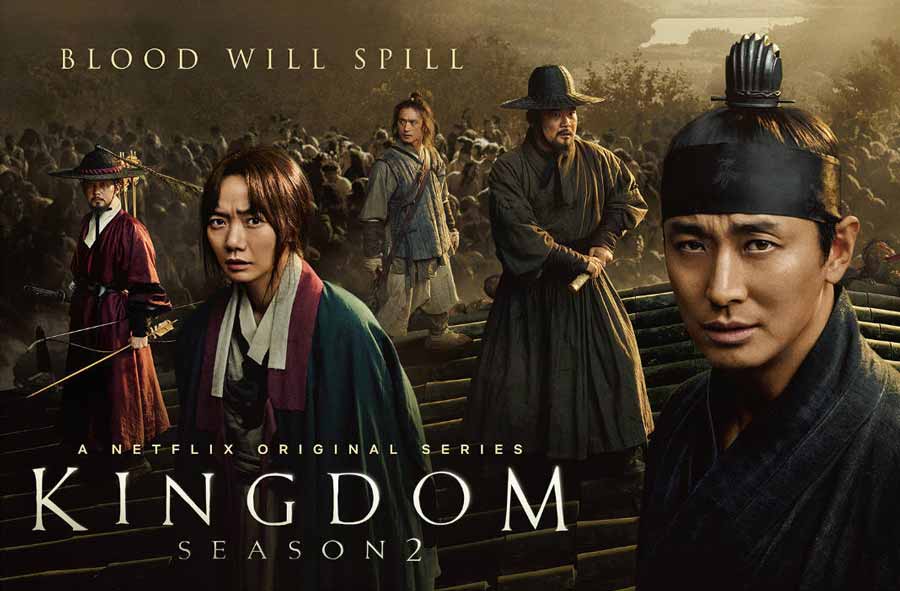
Kingdom (Netflix) Season 2

Last year I was delightfully introduced to a historical drama from Korea. Set against the backdrop of the Joseon Period, Kingdom was an amazing story of a young prince on the run from a conniving minister who sought to supplant him on the throne. In the midst of it all though, a dangerous disease is reanimating the dead into flesh eating monsters who have now overrun the entirety of one province. Can young Prince Yi Chang overcome the odds against him to overthrow the scheming plots of Cho Hak-jo and Queen Yeong-shin jein, or will the tide of the undead sweep over all the realm?

From here out there are SPOILERS so be warned! I will be assuming you have read the first blog post or have at least watched Season 1. If you haven't, drop what you're doing and go watch it now!


As a minor preamble, there was a big change from Season 1 where the series was in the original Korean with English subtitles. I assume that the popularity of the show led to the decision for Netflix to make an English dub for a foreign audience. It makes me curious whether they have put the first season on an English dub option, so more incentive to re-watch! I don't mind subtitles or dubs, but this is just to let any potential viewers who might find them distracting be aware!

Tuesday, 3 December 2019

Writing Update 2019

Hello readers! I'm here to bring updates on my writing as of 2019.

This year has been only somewhat productive as it has been extremely busy. I have however, managed to jump onto a number of disparate projects as well as deciding on a few main projects. I'll be giving a short list of each project and listing them from primary to secondary.

Firstly, my novella Integration remains in the queue for the Tor novella pile from summer 2018, and so there it shall remain until I get feedback. Depending on the feedback, I will be shopping it around again after some editing. I will post any new updates as they come.

My goals from last year slipped by unfortunately. But I did make progress on a few works.

The first is, what I hope to be have finished by New Years, my first draft of the story Priests of the White God a nautical, fantasy, horror story which I'm hoping to self publish in 2020. Following that is another untitled horror story estimated to be around 7-10k words for publication hopefully in October 2020.

Another project, Finiphobia, unfortunately stalled out completely. The premise of two aspiring authors in a zombie apocalypse appeals to me, but managing the story has been a difficult task. I may come back to it, but for now it is firmly on hiatus.

Alongside those, I have two novella length works in the offing.

The first is a novella project I have been nipping at for a few years which I hope to polish off and complete. It is a science fiction project called The Virtue of Battle. Based somewhat on the events of the Chilean Civil War in space, it is meant to be a short military sci-fi piece to get some practice in at expanding characters and works up to novel length. Meant to be 50k words.

Another piece I'm working on is an alternate history novella, hesitantly titled A Road Not Taken. This work is based around the historical 1866 Battle of Ridgeway. The battle came about as the leader of the Canadian force, Colonel Booker, was meant to take one road to meet with another column coming down from Chippawa. However, he did not, and ended up meeting a Fenian party along Ridge Road and enduring a humiliating defeat. What if he went the way he was supposed to though? How would that have changed things? Also aimed at being 50k words, this one is slightly easier to write as it will be using a cast of historical characters and will be my first attempted foray into published alternate history.

In addition, I am still plugging away at my first full length fantasy novel with a current word count of 11,872, or roughly 10% towards its projected 100k word count. It's pretty well fleshed out, and I'm mostly happy with the story so far, but we will see how the year goes. This one has no set premier date, but is on the back burner.

Now, my goals for 2019 were very modest compared to these. In total, I'm working towards writing something like 120,000 words this coming year, and I'm hoping to have a decent amount of time to devote to it. First over Christmas, and then over the summer, with a personal goal of at least 500 words a day, working towards 1,000. It's an ambitious goal, but it is something to strive for in the new decade. 

I fully intend to keep people posted as this develops! Until next time!

Monday, 25 November 2019

Little People Big Guns

I've reviewed the work of Matthew Quinn before on this blog, and I'm pleased to announce I'm reviewing another great story of his! It's an...unconventional horror story to say the least. What happens when you combine mutant badgers with pissed off little people? You get Little People Big Guns!


I'd originally seen Mr. Quinn pitch this on his blog some time ago, and while the premise sounded interesting, needless to say, I was skeptical at first. However, he's done some great horror in the past managing to combine fascinating time periods and concepts pretty well. So of course I was going to read this!

Set in McTavish County Oklahoma, we follow members of the McTavish Little Person's Association as they mourn for their friend Gordon, killed by wild animals. President James is a very devout Catholic and is dealing with the loss while trying to keep everyone else calm in a trying time for the small community of little people in McTavish County. Former president Murphy thinks - not entirely wrongly - that the county won't be moved to action by this crisis and that they ought to take matters into their own hands. He sees the county as inefficient, and sincerely believes that the death of one of their members won't be taken seriously by the community at large. Both men arguably have the right of it in some way, and this little (no pun intended) clash of personalities adds some depth to each character.

The supporting cast includes other members of the Little Person's Association, members Marquise and Angela. Marquise is another outspoken member of the group who tries to get along in the world any way he can, being a delightfully sexually out there character. His lifestyle puts him in almost constant conflict with Murphy who is very outspoken in his views and doesn't really care who knows. Angela, the only woman of the group, is someone who suffers both from being the only woman (and so treated a little patronizingly by the men) and also with the many other problems faced by the little people in the area.

Put together, they won't take CRAP from anyone. Especially not any giant mutant badgers running amok.

This was a very fun book. I was laughing out loud when I read it, especially from the earnestness of the characters and the amazingly funny lines and terrifying situations they were in which were played absolutely straight. It was the characterization that made this work. James is a very strict Catholic characters, and the numerous asides in his head and discussions about religion beefed up his character. His determination to do right by everyone, even if that person is trying to kill him, puts him at odds with the more abrasive Murphy who is very much the type to go for the throat, even if its a little extra-legal. Murphy's determination to take action in their own hands makes him a powerful foil for James. I really enjoyed how the two played off of each other.

One thing which makes this story stand out is that it really makes you look at the world from the perspective of a little person. All the main characters are those who were born of very short stature or with dwarfism, or to use what is considered a pejorative among the community, midgets. This opens a whole new perspective on the world for readers which makes all their actions, from walking and running to getting attention from folks (big people) all the more interesting. Honestly, its a very fresh view on horror which made me think, something I like.

In doing so Quinn  had to write the action scenes under some interesting limitations. From firing guns to driving cars, you have different priorities. I liked how it brought these issues to the forefront and made me consider how the characters would solve various problems.

The monster badgers were a wonderful outside context problem. Who on Earth would think of using badgers as monstrous creatures? It is hilarious when you find out who the villains are. The rather comically extreme views had me laughing out loud while finishing the book.

One lovely improvement is how the author handles the female characters in this one. The character Jane gets a well rounded attitude, and some redeeming qualities, while not quite as well rounded as the male protagonists, she manages to be an engaging character who turned out amazingly well in the finale. Unfortunately, the character Angela, still came off feeling like the token woman on the hero side. She also played a part in the finale, but one would almost be forgiven for forgetting she exists in this work.

I genuinely enjoyed this story. It was funny, scary and well plotted, which made me just binge read it all the way through. For a short and fun read you can always count on Matthew Quinn.

Thursday, 31 October 2019

Lovecraft Country

What could be scarier than a unknown entity stalking you across the cosmos? Being a person of color in 1950s America of course! Back then you didn't know whether the white man you saw on the corner would shout a racial slur, or whether he might summon a lynch mob to hang you for being in the wrong neighborhood. Against this backdrop, the specter of cosmological horrors from beyond space and time can only make things worse! How do you combine the two? You take a little trip to Lovecraft Country!


Written by Matt Ruff, I picked up this novel in 2018, and have given it a lot of thought in the last year. It's a very interesting work balancing the mundane fears of the African American community already present in the United States in the 1950s with the more esoteric panic of monsters from beyond the veil of time and space. Understandably our protagonists in this story are struggling against both the prejudice of the white community which wishes to 'put them in their place' and the monsters which want to put them in their stomachs.

Told in chapters from the perspectives of various characters it first takes up the mantle of Atticus Turner, a Korean War veteran who did his time fighting the communists for Washington. Sadly, that earns him very little respect from white veterans, and even less from the average white man in the North of the United States. He finds that his father has gone missing. Accompanied by his uncle, George who wrote The Safe Negro Travel Guide (based heavily on the Negro Motorist Green Book), they discover his father has been kidnapped by the mysterious Samuel Braithwhite of Ardham. To free him, he must travel to this remote and rural area to take part in some strange ritual which may cost him his life. There though, he may have an ally in the strange son of his tormentor, Caleb.

From here, the story explores the minutia of life in 1950s America for people of color. Of course, it adds to that by throwing in ghosts, monsters, curses and other sundry issues which would drive the average man mad.

It is a fascinating tale which almost reads like a series of interconnected TV episodes, which ironically is what it was originally opted as. It picks up with ghost stories, interplanetary travel, cursed dolls and even heist plots, all with an overarching battle between equally dangerous wizards in the background. It makes for, what is in effect, an engaging series of short stories wrapped up as a novel. They all tie together quite neatly, making for some very exciting reading.

Ruff tells a fascinating story. One which comes together and has creeps and spooks which could easily come from the real Lovecraft country. It is compelling at its heart because it isn't just a regular series of horror stories. It does its best to examine the challenges facing African Americans in the United States before the Civil Rights era, and uses these characters to tell a frankly fascinating story\ies which can be enjoyed from the comfort of your living room, and will hopefully make you think. For fun stories and some great ideas, I heavily encourage you to read it, and look forward to the series coming out in the future!