Showing posts with label Battles. Show all posts

Thursday, 5 May 2022

Cinco de Mayo

Every year in the Fifth of May, many Americans mistakenly believe they are celebrating Mexican independence day (It's September 16th by the way, the Cry of Dolores). While this is often a veneer for eating many tacos and getting drunk on tequila, the Fifth of May is in fact an important day in Mexican history. However, it was not a moment of independence, but instead when a Mexican force which, by conventional wisdom should have been overrun and scattered, held out and threw back one of the armies with the highest prestige in Europe. Let me tell you the story of the true Cinco de Mayo.


It begins in 1861, not a great year for a lot of people, but after a nasty little civil war the Mexican government under Benito Juarez decided that in order to get their house back in order and get around to running the nation they would need some financial relief. This not being the era of the IMF, that meant they needed to default on loan payments to the European powers. The powers of Europe, primarily Spain, Britain, and France, didn't much care for that and decided to sign the Convention of London, in which they declared they would use force in order to make Mexico pay its loans back.

Thus in October of that year, an allied fleet landed at the port of Veracruz and took hold of the important port city. The intention was that Mexico would be forced to divert at least some of its national incomes to paying the foreign powers, but one man had much more grandiose ideas.

Napoleon III, Emperor of the French, who had overthrown the Second Republic and established the Second Empire in a coup, had grand imperial ambitions. Exiles from the conservative side of Mexico's previous civil war had whispered in his ear that he might gain glory, and perhaps more importantly, money from engaging in an adventure to overthrow Juarez and his republican allies. Napoleon, readily agreed and dispatched 6,000 men to the country under the command of Count de Lorencez, Charles Latrille. Lorencez was the scion of a minor noble family born in 1814 he had studied Saint-Cyr and graduated in 1832, earning the rank of colonel after service in Algeria. He fought in the Crimea, fighting in the successful French assault on the Malakoff Redoubt earning his rank as a major general.

Facing him would be Ignacio Zaragoza, a republican general who was a confidant of and fiercely loyal to President Juarez. He had under him some 4,000 troops who were a motley assortment of army regulars, militia with odds and ends, and locals with whatever came to hand. They were expecting reinforcements, but they would not arrive in time for the French assault. He did however, prepare to defend the town by positioning his men on two forts that had been built to defend the town in the late civil war. 

Fort Loreto and Fort Guadalupe defended the town of Puebla right along the French line of advance. To capture the town the French would necessarily have to assault these two forts. Knowing he faced a far better armed and more experienced force, Zaragoza dug a trench between the two forts along the saddle of the two hills on which they sat.


The French meanwhile, were quite overconfident in their analysis of their capabilities. The 6,500 men under Lorencez's command were veterans of recent wars in Europe and China, and armed with the latest modern Minie rifles and artillery. Such was his disdain for his Mexican opponents Lorencez declared that his men were “…so superior to the Mexican in terms of race, organization and moral discipline that now at the head of 6,000 soldiers I am the master of Mexico.” Indeed, most observers thought that the French would handily win the upcoming battle.

Overconfident at winning a skirmish with Mexican forces on the 28th of April, as Lorencez's French troops approached Puebla on the 5th of May at a leisurely pace. So overconfident was Lorencez that he decided he would attack the Mexican fortifications head on. His officers attempted to dissuade him from this course of action, but with what he assumed were superior men and weapons, he decided to bull ahead anyways. 

French cannon began a bombardment of Fort Guadalupe, but poor terrain, and getting too close made it difficult to aim. The defenders were further protected by their trenches and the masonry of the forts. Having fired off over half their ammunition, Lorencez ordered his troops to advance. A glittering array of French Zouaves supported by marines advanced a 12pm noon, only to be driven back by withering Mexican fire from their trenches. Lorencez decided to change his tactics, and this time made a diversionary attack south of Fort Loreto, while again sending his Zouaves up the center covered by marines. This proved more successful and the Zouaves actually managed to rise the tricolor along a section of the Mexican line before being beaten back again. In this action, fierce combat ensued against the French diversionary attack led by Mexican leader Porifio Diaz.

Finally, Lorencez allowed his men to rest and bombarded the Mexican forts again. By 2pm he had used all of his artillery ammunition, but was determined to launch a do or die attack and assembled all of his remaining men to launch an assault. This time the French advanced, making it to the Mexican line and fighting hard, and the battle became a general melee. After an hour of fighting, it began to rain turning the battlefield to mud, and Zaragoza, who could not believe his luck, ordered his cavalry under Diaz to strike the French in the flank. This unexpected attack demoralized the French and inflicted further casualties. Fearing the worst, and seeing no hope of breaching the Mexican lines, Lorencez ordered a withdrawal and dug in for an expected Mexican counterattack which did not immediately materialize.

It was an amazing victory for the Mexican forces. They had lost only 83 killed and a 132 wounded, while inflicting over 700 casualties on the French. In total, the French would lose 462 dead and 300 wounded. A humiliating reversal for French troops, and Zaragosa would say "The national arms have been covered with glory.”

Zaragoza was soon reinforced to a strength of 12,000 men, and while he pursued them and attempted to assault their positions at Orizaba, a French counterattack convinced him to retreat back to Puebla where he would fall ill and pass away a mere four months after his great victory. His incapacity meant that the Mexicans lost the Battle of Cerro del Borrego in June, leaving both armies where they had started. Tragically, their failure to drive the French to the coast meant the French would return with 30,000 men a year later and besiege the town again, and inflict a humiliating defeat on the Mexicans at the Siege of Puebla. A further four years of war would see a short lived French occupation, and finally an expulsion of the puppet monarchy installed by the French.

The 5th of May, once the war was won, became acknowledged as a great victory against the odds. In a battle no one expected Mexico to win the French were driven back at great cost, while Mexico could proudly say they had brought great honor to Mexican arms and won the first battle to maintain their independence. So raise a glass of cerveza and have some hot peppers and cry Viva Mexico!

Wednesday, 12 January 2022

The Heroes

Three men, one battle, no heroes. Thus is the tagline to another epic story from Joe Abercrombie. In truth, this is about the fourth time I have read my well loved, and much worn, copy of the book. It was in fact the first I ever picked up of his. I effectively went into the world of the First Law blind and came out star struck. As such, there were some contexts I missed the first time, but when I first read (and then reread) the amazing trilogy, I fell in love with this book all over again. Allow me then, to introduce you to the epic three days in the Valley of Orsung as we see The Heroes

From goodreads

Picking up roughly nine years after the events of The Last Argument of Kings we see that, once again, the Union and the North are at loggerheads. A disagreement between the southern clans of the North and the new Protector have exploded into open war and so the King of the Union has backed them in their fight. Now for interminable months the two armies have snapped at one another but not yet come to battle. It's time to change all that.

Fighting for the North we have Crunden Craw and his dozen, working in and behind the lines to support the main army's four war chiefs. Slithering among them is the former Prince Calder who claims the North in the name of his slaughtered father Bethod, but so must act like a hostage while dodging assassins. A young lad named Beck decides he wants to see a real battle like his father and leaves home to take part in the war.

For the Union we have the hulking warrior Bremer dan Gorst, formerly the king's First Guard and a warrior without equal in the whole of the Union. Then we have the infamous Corporal Tunney, the longest serving junior officer in His Majesty's army, a lazy standard bearer who does his best to stay out of the way despite his officers meddling. Finally, on the sidelines, Finree dan Brock, now married to the son of the most infamous traitor in the Union, schemes to raise her husband in society and hopefully become a power to be reckoned with in society.

Behind them all though, Bayaz schemes and plots, while the leaders in the North may have some secret agenda of their own.

One thing I have to mention is that the battlefield is just as much a part of the story as the characters. Laid out in loving detail with a map that changes with the battle, you can track the action and see where everyone is in relation to everyone else. A fantastic use of visual work to help the story and I really think it needs to be commended.

The story, as usual for Abercrombie, is a brutal affair. The folly and misery of war is well on display. Men drowning in mud, bad rations, the misery of the wounded, and the stupidity of men and officers can be seen everywhere. That doesn't drown out individual moments of heroism and mercy of course, but they're far outnumbered by the butchery.

It is a well put together story which takes place over a few days on a single field of battle, with intrigues, betrayals and numerous pitfalls for each side. It shows that any great event can make for an engaging story and have plenty of room for betrayal! It is also where he started on his wonderful little vignettes of characters experiencing the events of the battle, from officers on horseback to soldiers going toe to toe with their counterparts, and many of them meet grisly fates indeed! It's a wonderful piece of writing which brings the scope of the battle to life!

Our strong female character in Finree is a wonderful foil to the men, having to scheme and politic rather than stab and batter her way to the top. There's also Calder, a well know coward who will do anything to avoid fighting! They set themselves against seasoned warriors and commanders whose perspectives really livened up the story. My personal favorite was Beck, a lad who has only heard about war in songs. He goes to earn his manhood and finds war much more than he expected. I won't spoil it, but the end of his story is perhaps one of the most tear jerking things I've read, an amazing piece of writing.

As a stand alone in the greater First Law world, its one of Abercrombie's best books in my opinion. He does some phenomenal work with this one little piece of land and makes you feel the blood and mud spilled for it. It is an amazing war story and an altogether phenomenal work of grim fantasy fiction. It sits proudly on my shelves as one of my favorite novels! Definitely pick this one up!

Friday, 21 August 2020

Planetary Invasions

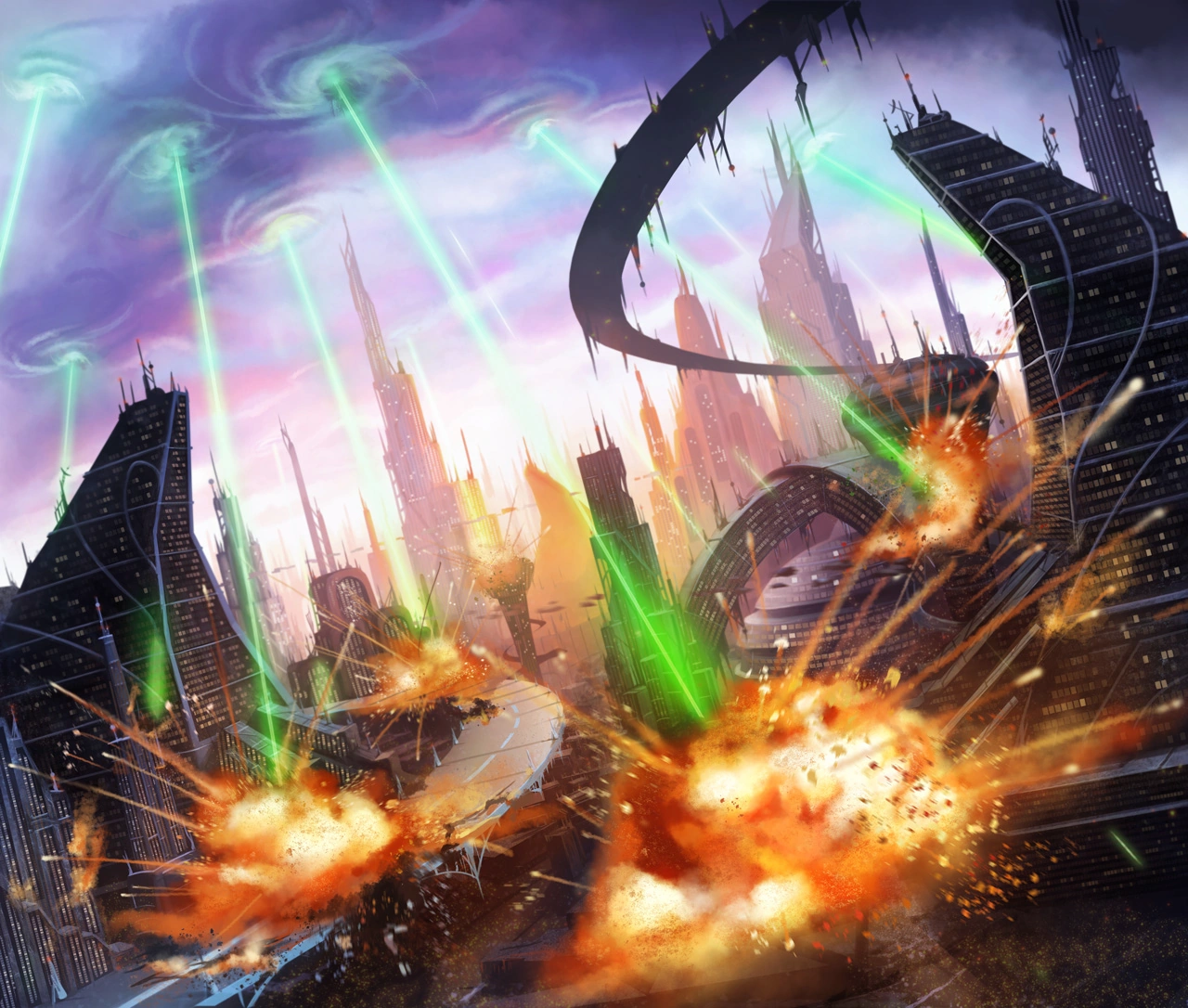
In science fiction the idea of our planet being invaded, or other planets being invaded, is sufficiently old enough to be a trope. It all started back when H. G. Welles imagined Martians slinging themselves towards Earth to mash us with their tripods and death gas. From there it's evolved into many different scenarios some of which still involve us on Earth, to fascinating wars between the stars of other human or alien civilizations. Recently I've been pondering on that after I watched two very interesting videos between people who examined the idea of planetary invasions.

The first is from the excellent channel Space Dock which puts together wonderful work on the spaceships and vehicles of many franchises. They themselves have a drama called the Sojourn coming soon. Definitely check it out. But for our purposes watch their brief video on Planetary Invasions.

In contrast we have one video from Isaac Arthur discussing the subject. It's a longer one and it raises many interesting points. His channel is simply amazing for an in depth look at futuristic science based concepts on how we may do things in the future. It's honestly one of the best futurist channels and series I've ever encountered, sincerely worth checking out if you're interested in that kind of thing.

Credit to Alexander Tooth, from wookiepedia

Both these videos raise very good points, and they have contrasting opinions. In the first video we do see that it is argued that a planetary invasion is basically infeasible. Some Operation Barbarossa style mass landing and invasion taking years, decades, or perhaps centuries, to fully pacify a planet through mechanized warfare from above and below. The crux of the argument is that this is a huge waste of time and resources, especially when you presumably have ships in orbit that can hammer your opponent at your leisure. Then if you have no hope of relief and no friendly ships in the area, fighting on serves no purpose. You don't need legions of soldiers, just large landing forces to take and hold the vital aspects of planetary infrastructure and then garrison forces to keep the planet yours.

The second video has a more wide ranging view. It presumes that planetary assaults or invasions are feasible. The main point is that, after all, if you're jetsetting around in space with any sort of casual interstellar travel then the mobilization of resources to invade and crush another world or system of habitats (especially if you rule over multiple star systems and have great automation) is almost trivial. That being said, it makes a very pertinent point that a planet is not necessarily a helpless target. 

It is a point worth considering as any civilization which can do travel casually at interstellar distances is probably not really having to worry about the whole issue of delta-v in a gravity well. That means that, while an opponent who does control the orbitals has an advantage, the people at the bottom of that well are not nearly so defenceless as we might assume through our lens of 21st century technology where an asteroid barreling through our gravity well is a very terrifying prospect. Your vital sites are probably ringed with powerful railguns or missile batteries which can shoot destruction at any ship foolish enough to park in orbit.


In fact with that view, the traditional image of a ship parking itself in orbit and blasting a planet with it's weapons seems silly. No ship could risk parking in orbit without worrying about taking crippling damage or being rendered combat ineffective. The proper image might be a vessel in the age of sail bombarding a land fortification and having to outnumber the guns of the fort to hope to overpower them before it can be rendered ineffective itself. The planet can shoot back.

What you might see instead is ships engaging in what amount to bombing runs, first moving to cripple or take any orbital defences, then moving in unpredictable patterns to try and crush the ground based defences. If that doesn't work, clearing a landing corridor to insert marines who can disable or capture those defenses so the fleet can put itself in a position to command the ultimate high ground and compel a plant's surrender would be your next best bet. In the book Tiamat's Wrath there is an interesting example of this that works very well from both a tactical and a dramatic perspective.

This is actually a point I've considered for some time. I've mused about interstellar warfare before and why it might happen. In my own, as yet unfinished Service to the State science fiction novel, I've thought about how you could make a planetary invasions feasible, so my own view actually falls somewhere between that of the two videos.

Part of that view does come from finding that in universes like those of the Honor Harrington series that if you've countered gravity to the point you're using it in your weapons, the idea you can't make some kind of planetary based weapons system which could cripple or severely damage a ship seems baffling. It does seem to me that there would need to be an invasion, but one aimed at very limited and achievable goals so your fleet could enforce the threat of death from above.

Some blame might come from Robert Heinlein's Starship Troopers which, though an excellent novel I recommend everyone read, did draw it's inspiration pretty heavily from the work of paratroopers in WWII and the island hopping campaign in the Pacific theater. In the Pacific the small Japanese garrisons which held out across numerous little islands with their coastal batteries and then fighting to the last man against the power of the American gun line and the overwhelming firepower of Marine divisions set the course for the campaign. The Japanese might have inflicted casualties, but they had only the small resources of their islands to call upon and no hope of resupply. This has, I think, colored interpretation of how planetary assaults might go. A planet doesn't generally have that problem unless you wreck the infrastructure so thoroughly that further resistance is simply futile.

In Isaac's video he makes a very good point about the resources of a planet, and how future technology might make it possible to basically weaponize an entire planet's population, or make them know no fear. However, even with fantastic automation or fearless soldiers, there is a point where your offensive options and economic support would be so ground down that your ability to resist is functionally irrelevant as the invading power could zap you whenever they felt like it and destroy or immobilize your remaining assets. At that point, it's either guerrilla resistance or surrender.

That's why in my mind I think a planetary invasion might fall somewhere between these extremes of Honor Harrington and Starship Troopers. A planet isn't defenceless unless it has no real orbital defences or ground based weapons, and even with those ships can work to attire them, and then send in the marines to seize and hold them until the fleet in orbit can establish an advantageous position. Unless you know you have a relief fleet coming, there's no reason to keep fighting.

Of course, this is all just speculation and trying to harmonize the plausible with the realistic and make compelling story telling. Future warfare is liable to be so destructive it's unimaginable to today's soldiers or civilians. It does make for interesting reading or musings though.

Wednesday, 3 June 2020

Son of Grendel

Just last summer I had the delight to pick up Matthew Quinn's full length novel, Battle for the Wastelands, and I thoroughly enjoyed it. Here now we're getting another little look into the world of Battle before the next book. Here comes the short story Son of Grendel!


This story is definitely a villain story, and very strong for that fact I think. It follows both a resistance fighter, Robert Dalton and Falki Grendelsson, son of the Lord of the Northlands, Grendel and a member of the Obsidian Guard

We begin seeing the death of a favorite of Grendel's, and so he has to respond by sending his son as a sign of the seriousness of the matter. Falki goes with his own company of Obsidian Guard to reinforce those already present. There they must bring the rebels to heel.

From here we get a good look at little skirmishes which tend to make up insurgencies like this, another look at the brutality it requires to make an empire, and the very crude yet effective use of both carrot and stick. In one case Falki helps feed a community, and in another he hangs those who would help the insurgents.

This story never shies away from the fact it is a villain story, and Falki, while not seeing himself as a villain, manages to have some depth for a character who is, well, pretty clearly the bad guy. I do sympathize with him and his past (if not his actions) and I found him to be a very interesting viewpoint for this story. It's a well done villain, but not one we might see on a redemption arc.

Robert Dalton bears the unfortunate mantle of being one of the men who got this whole mess started. He was a freeholder who was, with others, forced from his home to make way for Grendel's veterans, and he wants revenge. Having once lived in the Camrose Confederation, he found his home absorbed into this new empire. Mistreated and marginalized, he fought back. It's a tale as old as civilization, and it resonated with me. 

With tyrant lizards, gunfights and villains galore, this is a fun short story which I recommend checking out!

Tuesday, 19 May 2020

The Battle of Matewan

Years ago in high school, my law teacher was giving our class a rundown on the topic of labor unions in Canada and the legal rights employers and employees had. To highlight the history she played a movie called Matewan telling a dramatized version of the Battle of Matewan which took place a century ago today.


The battle itself was part of what was then known as the West Virginia Coal Wars. Boiled down to its simplest form, the largely undeclared war was fought between coal miners who wanted to unionize to gain better working conditions and the coal barons and land owners in West Virginia who simply wanted to make profit off the coal miners' labor. They were willing to use force to do so. The miners, who were forced to work in company towns, pay with company scrip, and were liable to be driven from their company owned homes if they failed to meet quotas or protested, were driven to extreme measures as they attempted to unionize.

The Battle of Matewan was a microcosm of the whole war as it took place thanks to warrants being illegally served to evict coal miners who were trying to unionize. The Baldwin Felts Detective Agency was hired by the coal company to go and serve these eviction notices. Naturally, the miners were touchy about this and armed themselves. When the mayor of Matewan and the sheriff Sid Hatfield (of Hatfield-McCoy lineage fame) intercepted the detectives after they had served some initial eviction notices, fighting started. What precisely started the shooting is disputed to this day, but it left several detectives dead (notably Albert and Lee Felts) and three townsfolk.

A small victory like this snowballed into the largest battle on United States soil between citizens and government (well, partially government) forces since the Civil War.

The Battle of Blair Mountain which followed involved roughly 10,000 loosely organized coal miners and their supporters fighting 3,000 law enforcement officers and militia mobilized to meet them. It lasted for over a week with over 200 casualties and involved the use of machine guns, a private air force bombing the striking miners, and trench warfare.

The fighting was eventually broken up by the intervention of Federal troops and order restored. However, even though it was a defeat for the union forces, it did raise awareness of the appalling conditions miners faced. Though not a hard fought and bloody victory like many stories would tell you, it is a fascinating story in and of itself and does show what can happen when push comes to shove and men and women are driven to desperate need.


As I mentioned at the start of this article, this was shown to my high school law class to make us understand that people had fought and died so we could have labor rights and negotiate with employers to prevent the abuse of workers from happening again. One hundred years after these phenomenal battles, I see workers in a time of global crisis being exploited. Whether it is at the largest retail and warehouse company in North America, one of the largest coffee chains, or even simply being forced to choose between staying home and safe or having to venture into work with a public who just doesn't care about them or even others in their quest for some nebulous thing they claim to need. Workers are at risk, especially the most vulnerable workers.

For what? So someone like Jeff Bezos can be worth more? So you can get your package in the mail faster, so you can get a haircut? None of that is worth a single worker's health or livelihood. We need to keep in mind that our ancestors, quite literally, fought and died so that we today did not have to be exploited in the same way. This battle is a microcosm of that struggle which went on, and arguably continues to this day. It's a struggle we're still fighting, and one I encourage people to be aware of.

In order to further give you a better understanding of the battle and issues surrounding it, I must encourage you to listen to the amazing podcast Behind the Bastards and their episodes on the matter. Robert Evans does a far better job telling the story than I can in a mere centennial blog post. He also gives you access to more information and is himself a phenomenal writer and host whose many podcasts should be listened to. You can also find him on Twitter.

In the end though, I hope you can understand that one hundred years ago, men and women had to fight and bleed to have even their basic rights respected in the face of profit hungry corporations. We can only hope that today we never have to do such again and that future generations will never know the same horrors our ancestors knew.

Solidarity.

Monday, 27 April 2020

Retro Review: Lawrence of Arabia

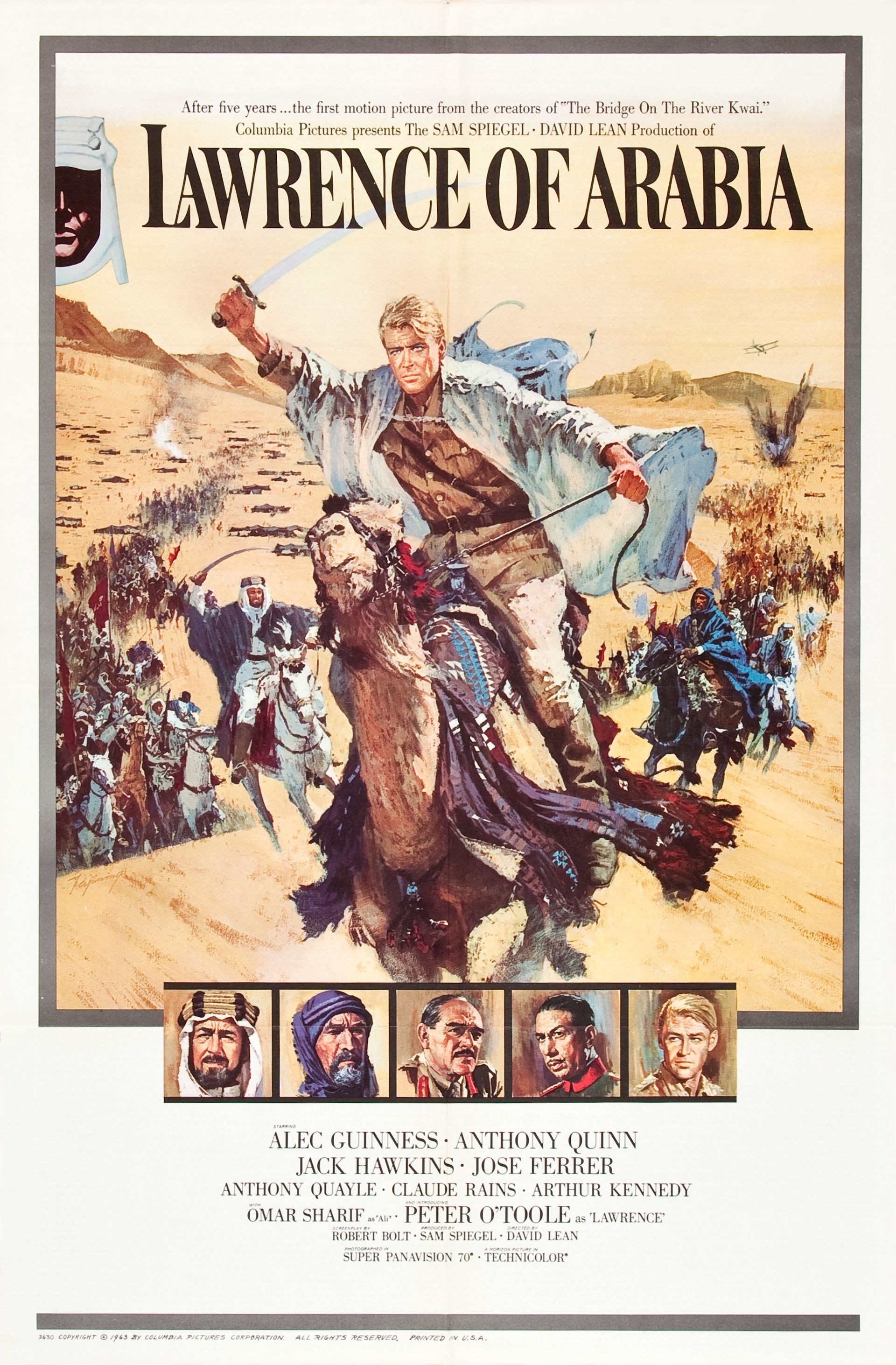
In 1916, a man set off across the desert to seek out the peoples of the Arabian peninsula, then in revolt against the Ottoman Empire. In doing so he would live on as a hero and a legend in the English speaking world. That man was Colonel Thomas Edward Lawrence, otherwise known as Lawrence of Arabia. His deeds inspired many stories from both the First World War and then again in its aftermath as tales of his daring-do were embellished by the media and pop culture, particularly by a great song by Sabaton inspired by the title of Lawrence's own book. One of the most famous of course, would come in 1962 with the film bearing his name Lawrence of Arabia.


Now just to get something out of the way, this film is not by a long shot historically accurate. It contains many embellishments and occasionally outright fabrications of both the man himself and the people he worked with. So don't view this as a documentary or factual commentary on Lawrence's life and wartime career. If you want information on that I sincerely recommend a review by History Buffs examining the film, and the excellent work done by the Great War YouTube channel in examining both the war itself and some about Lawrence. Both are great channels that deserve your time and attention.

Without further adieu, let's get to the review.

Filmed in 1962, the movie was directed by David Lean, a great British film director of the time period. It has a quite amazing all-star cast with Peter O'Toole as Lawrence. The man looks so much like Lawrence that it would have been hard to justify not casting him. Then you have Alec Guinness (of Star Wars fame) playing Prince Faisal, both a real character and an amalgamation of other important Middle Eastern leaders, and doing it quite well. Next we have Anthony Quinn (Antonio Rodolfo Quinn Oaxaca) as Auda abu Tayi, an important tribal leader (and real historical figure). Following up you get Jack Hawkins as General Allenby, and he is further famous for his role in what was probably my favorite childhood movie Bridge on the River Kwai, and he delivers a stellar performance here. Then we have Omar Sharif, a famous Middle Eastern actor and of Doctor Zhivago fame, who portrays Sherif Ali, a fictional character who serves as an amalgamation of various other important Muslim characters from the source material. Finally we have Claude Rains as Mr. Dryden, a very cynical and almost sinister character who first helps Lawrence, but really only represents the interests of the British Empire through the Arab Bureau.

A brief note is that yes we do have a few characters in what amounts to blackface playing Arab figures. If you're uncomfortable with that I wouldn't suggest watching this movie as it doesn't really draw attention to that fact, but it certainly doesn't go out of its way to hide it. The movie is a product of its time so it definitely has some questionable choices in how it tells the story, but for all that, it is still a great film, probably one of the best of all time really!

Plans to make a film about Lawrence's life and his wartime exploits had been in the works for years, but they had all fallen through. Plans to make a film in the 1940s were shelved due to various financial difficulties in Hollywood, while in the 50s there were many discussions, but none ever went anywhere. Thankfully the work done on Bridge Over the River Kwai by director David Lean and producer Sam Spiegel. Having worked together before they became interested in another historic collaboration and thankfully decided they would jump on for another one by buying the rights to produce an adaptation of Lawrence's book Seven Pillars of Wisdom in 1960.

Shooting in such exotic locations as Spain, Jordan, and Morocco it managed to capture the desert feeling it was searching for, and thanks to the work done to bring the feeling of being in a visually appealing wasteland to screen, when you watch this movie you really feel transported to another world! It's had visuals homaged and spoofed in films like A New Hope and Space Balls. The city of Seville in Spain was used as a stand in for Cairo, Jerusalem and Damascus, pulling triple duty as a the capital of three modern countries!

The score was composed by Maurice Jarre and performed by the London Philharmonic Orchestra, and was composed and scored in just six weeks! This is a truly phenomenal feat and the movie is well worth seeing for the sound track alone. Though at nearly four hours long it does come with a scored intermission so you can resume watching at a later date!

Visually, this movie is breathtaking. The sheer spectacle invoked which shows the sweeping drama of the Arabian deserts, the heat of battle, and amazing shots done to show off the acting range of Peter O'Toole and Omar Sharif is quite impressive. Wide views of the desert and shots done in large rooms and offices for powerful effect each bring either wonder or quiet dread. That quiet dread is especially important in the political scenes, which all seem to be against Lawrence and his Arab allies, making the pomp and power portrayed in them all the more sharply contrasted with scenes of sprawling Arab camps with some riches but nothing so imposing as what is available to the British officers and politicians.

In shooting the battle scenes we have many amazing views, both of sweeping vistas with hundreds of extras on camel or horseback and then close in shots of the sort of tame 1960s era film carnage. One of the most amazing is filmed of the aftermath of the historically accurate slaughter of a Turkish column as it was retreating from the British after massacring the village of Tafas. This is perhaps one of the most interesting scenes as it shows the films portrayal of Lawrence succumbing to his bloodlust he has been developing since the beginning of his time in Egypt, and he revels in the slaughter of the Turkish column, laying about with his pistol almost indiscriminately, even shooting the corpses of Turkish soldiers. It was amazing work done shooting this scene, and the sheer pageantry of it must be applauded.

O'Toole's portrayal of Lawrence is only based slightly on the historical Lawrence, but he does an amazing job bringing this character to life on the screen. A man fascinated with the culture of the people he was sent to observe, but also a man not used to war. His first great test comes by solving a blood feud on the eve of battle, executing a man he just saved in order to ensure the two tribes do not go to war before they capture Aqaba. The strain of battle and political double dealing takes its toll on Lawrence, but he also begins to believe his own hype and thinks he can deliver miracles which leads to increasingly risky behavior which worries both his British patrons and Arab allies. It all leads to an exhausted and shell shocked veteran ready for wars' end.

His constant companion, Sherif Ali, is well done by Omar Sharif. The character is a proud Arab chieftain who rules his people with an iron fist, but is also a gracious host and skilled warrior. He believes in the vision of Prince Faisal for an Arab Kingdom, but does not trust the Europeans. Believing in Lawrence's abilities he supports and carries his friend (in one case literally) through the war and tries to help him in the peace. In the end though, these two men are from different worlds, making it difficult for them to stay together as the war ends.

These amazing actors, supported by others, craft an intriguing story which is well told on the screen. I was swept away by the battles and intrigue, and Lawrence's struggles and turmoil were gut wrenching to watch as he was swept up in the war. Though the movie is very long, it is very much worth a watch and I would definitely recommend sitting down and taking the time to watch it. Currently available on Netflix, it is absolutely great way to either spend a day or two evenings transported back over a century to the Great War and the world of Lawrence of Arabia.

Wednesday, 30 July 2014

Flashing Steel Flashing Fire: A Short Story Collection.

Well readers here I being you another excellent review. I have given some glowing reviews of the works of author Matthew Quinn's work before. Here though I offer you the opportunity to enjoy all of Quinn's published works, as well as three new stories as yet seen by the world in one easy reading location.

I present to you, Flashing Steel and Flashing Fire!


This is of course an anthology, making it one of Quinn's longest published works so far. I've reviewed some of the stories available in the publication already, so I think I'll just stick to talking about two of the stories contained herein.

The first new story I'd like to talk about is Nicor. Nicor is a sort of combination period piece combined with a horror story. Here we have the Vikings taking on an eerie mythological swamp beast in a battle to the death and they find their weapons and courage almost useless when fighting the beast. Its interesting as it's told through the POV of a young first time raider who has never been a-reaving before. His nervousness and uncertainty paint a vivid contrast to the experienced raiders he stands beside. With a fun twist at the end it's a delight.

Next we have Lord Giovanni's daughter. I have to admit that this one was the most difficult for me to read, not because it was a bad story, but because I have very little point of reference for the villainous reptilians who populated the story. Imagining them was difficult so it took me a while to properly get into it, but once I did we had the right amount of wit and creativity to make for a fascinating read!

The next new piece is the very interesting prologue to an aborted fantasy series called Lord of the Dolorous Tower. This one is interesting as it has a fascinating blend of post-apocalyptic fiction and high fantasy. The characters are essentially two lovable rogues from their village who go exploring an old tower. It offers some fascinating ground work for a world in which it is suffering from an asteroid strike. It deals with some fascinating magic and world building while giving us a great romp with these two explorers, though it is a wee bit dark I'll just say.

Finally we have the ending piece Westernmost Throne. It's a 'political' horror story which is fairly unique in and of itself. It follows the tale of a young political secretary who discovers she may be in just a tad over her head when her up and coming political boss turns out to be more than he seems... I won't say too much here as it needs to be read to be appreciated. This one certainly subverts expectations! I can say I quite enjoyed it and I think you will too!

Now that't it for all the new material, but it has a number of old favorites like Melon Heads and Illegal Aliens! If you've ever read any of Matthew Quinn's work before I highly recommend you pick this piece up! It's a fantastic anthology and as I've said before, Mr. Quinn does not disappoint.

So I heartily encourage you to go pick it up!

Sunday, 9 March 2014

300: Rise of an Empire

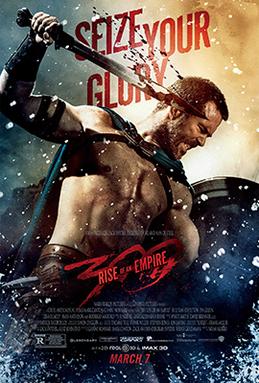
Well for my first movie review of the year I'd like to give you a review of 300: Rise of an Empire, the rather unexpected sequel to the cult classic 300. Was it worth the money it costs to go to the theater these days? Yes, and here's why!


Well I have to say I had been waiting for this unexpected sequel to 300 since I first heard about it and I've been trying to keep my expectations low just to make sure I didn't ruin for the movie for myself. It had an effective marketing campaign and it wasn't played as a re-tread of 300 but rather a wider use of the same style. This made it intriguing and set the stage for what would hopefully be an excellent action movie.

The good news is that it manages to do just that. The opening ten minutes are a bloody fantastic flashback which gives us a fictional version of the Battle of Marathon and it is an amazing show. I saw this in 3D and while normally I'm not one to like it I have to say the style here worked out very well. The intense violence and extreme use of blood was amplified by the 3D aspect and made for a fairly enjoyable visual spectacle.

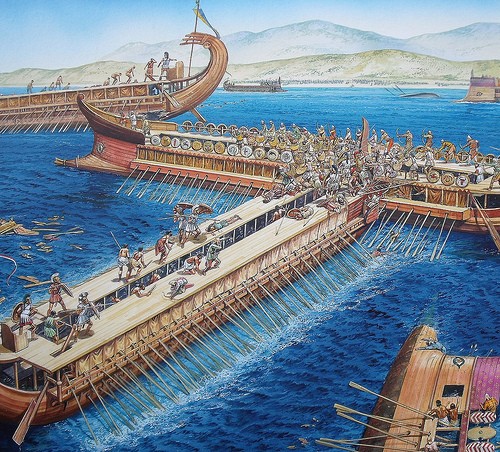
If you liked the action in 300 you won't be disappointed by the action here. Its that signature fast paced bloody slow motion style that made the first movie so enjoyable. We get it in spades here and even get to see it applied to triremes ramming each other in the Aegean Sea! Let me say it makes for some spectacular viewing!

This but with far more rock and blood.


Though I can't say the film is historically accurate (and is better for it really) it shows some impressive skill at taking what naval combat way back in the day was like and adapting it to the big screen. You really feel the hits as rams strike home, feel a savage joy as you watch boarding actions and counter boarding actions and see the main characters match wits and put their strategies to the test, many times in fairly ingenious ways.

The characters themselves are fun to watch. We get a repeat performance from a few former 300 stars such as Lena Hedy as Queen Gorgo, David Wenham as Dilios, Rodrigo Santoro as Xerxes, and Andrew Pleavin as Daxos. Its actually nice to see them reprise their roles as it gives continuity to the story and a nice bit of depth seeing it all as part of a greater drama. There's also very little sense that the film directors are just shoving these characters in our face and telling us to like them, here it's just them being treated as part of a larger story which is nice.

Then of course we have our two main characters who really run the show. Though as a caveat yes Xerxes is a bigger character here, but he's really more of a vessel in through which part of the plot is conveyed. His journey to becoming god-king is actually fairly unspectacular and delivered entirely in narrative flashback, it's a breathtaking sequence and one which is well crafted but it doesn't change the fact that the two main characters are Themistocles, portrayed by Sullivan Stapleton, and Eva Green as Artemisia.

These two characters just steal the show honestly, and the banter and match of wits between them is what drives the plot. Stapleton as Themistocles just nails his character, a man different from Leonidas in every way, he's an ideologue fighting for a united Greece and a commander who has to take a much more flexible approach to his tactics than Leonidas did. It's his skill for battle and the desire to see the men under his command survive that makes him human and far more able for the audience to relate to. There's also a bit of a sub plot where his actions at Marathon haunt him for how they affect the future, but his speech about the weight of command and how his orders produce widows and orphans is one that stuck with me after the film. He also manages to carry the bad ass warrior leader role very well coming off as a flawed but brilliant hero.


Then we have Eva Gree as Artemisia, and holy crap have we got a villain! She gives new meaning to the term femme fatale, and she carries her role beautifully! Honestly I have to agree with Movie Bob where he says she probably sets the standard for how roles like this are portrayed. She's a swashbuckling unhinged killer with a brutal goal of vengeance on her mind and her back story makes this totally understandably and even gives her otherwise villainous character a mildly sympathetic outlook. Until she starts dismembering people and throwing her officers overboard in weights for failing her of course. Her scenes are all memorable and she comes off as powerful, charismatic, and totally unpredictable. She's honestly a joy to watch in this role and I have to say one of the best female villains in ages.


Story wise the movie is much more grand than 300 with a sweeping plot which encompasses the fate of all Greece and no less than three battles. Really its just a fictionalized retelling of the battles of Artemisium and Salamis, but it does them wonderfully. You get this sense of drama and feel the raised stakes as the two characters pit their will against one another on screen. Yes there's a bit of a sub plot with the continuation of the story of Leonidas and Gorgo after his brave last stand, but that's merely a backdrop against the larger battle for Greece. The secondary characters are all still fun to watch and they still have some deep moments and little scenes that touch you as you see them. It's a great story that compliments the action of the film.

The score is wonderful and is really a re-tread of the score from 300 but that's what makes it good and just pumps you up for the action to come while establishing proper mood.

If the movie has any weak points its that it really does undercut Xerxes character to an absurd degree, making him a mere plaything of Artemisia, almost wrapped completely around her finger. That does make his presence more of a weight on the film, but it establishes an interesting mission for Artemisia versus Xerxes will. There's also just enough action to fill in the points around the drama and story but I did leave the theater feeling that there could have been more action in there.

All in all though the film is really satisfying and I couldn't have enjoyed it more. I'd heartily recommend it to anyone who wants to see a damn good action film.