Showing posts with label Prepping. Show all posts

Friday, 18 June 2021

Parable of the Talents

Lauren Olamina has, after losing everything, finally found family and community again. She's built a community on the land of her husband's family, a place where her religion of Earthseed can grow. From there perhaps it can spread to the greater world, and then to the stars. First though, she'll have to keep it against the rise of a much more terrifying temporal power seeking to make America great again. Will she multiply her talents, or find them buried in the earth? This is Parable of the Talents.

From goodreads

The story picks up five years after the conclusion of Parable of the Sower in 2032, she and her small group in the community of Acorn have grown and prospered. Lauren hopes to use the community as a base of operations to spread her new religion of Earthseed. However, America is still in decline, coasts are collapsing, violence and banditry is endemic, and the economy is in freefall. However, one man, a Senator and preacher named Andrew Steel Jarret, is promising a vision of Christian America which will "Make America Great Again" and restore the nation to the glory it once had.

Against this backdrop, Lauren must try and spread her religion, raise a family, and keep her people safe. 

The story, again deliver in epistle style, is buttressed by another viewpoint this time. Lauren's daughter Larkin (or Asha Vere) writes about her mother and the spread of her religion, how that affected her development, and the way it impacted history. It adds a very critical, and not necessarily sympathetic, lens to the story. I greatly enjoyed how this was seamlessly interwoven into the material and it actually created far more suspense than you might expect. It also adds a great element of tragedy.

Unsurprisingly, the book is one of immense suffering and loss. It follows the country through the years of President Jarret and his "Christian America" which merges the worst parts of theocracy and authoritarianism. Indeed, it actually impacts Larkin's development in a way many who had read of Franco's Spain would find very familiar. This does allow though, for the exploration of many aspects of authoritarianism, ideology, ministry and proselytism. 

The Christian America brand is selling a vision of America of old and - stop me if this sounds familiar - a time when things were better, American values were emphasized and America was a Christian nation. They preach from the pulpit and the political campaign, and they deliver charity, homeless shelters and project an image of American strength. That they also deliver witch burnings, vigilante justice, and fanaticism metted out by "Crusaders" is part and parcel.

In contrast, Lauren must try and spread her new religion covertly. To avoid drawing the ire of the more powerful (and quasi state-religion) of Christian America, she has to work with those she trusts. Eventually she has to get on the road and preach, in sequences that will be familiar to missionaries and pollsters from time immemorial. It makes for more harrowing tales, but does give a very good insight into how religions or movements can start. It was something I found fascinating, and these internal problems make up many of the asides in the book.

You'll be gratified (horrified?) to see there's action as well. It's one where we find, and lose, family and even see that family can be broken up pretty spectacularly. Religion can unite, and it can divide. To quote an old professor of mine "Religion is wonderful, until it's not," which you can broadly say is what many of the characters in this book discover! It does though, share how Earthseed develops, and that is well worth exploring for contrast.

I will admit that there were some scary parallels to contemporary politics, but considering this book was written in the 90s, well after the Reagan Administration and the Satanic Panic and Moral Majority era, it's pushing it to call the novel "prescient" in that sense, as the edition I picked up did. It does have a number of worryingly close parallels with the rise of climate change, authoritarian political activism, and others, but it isn't about those issues per-say, but about how Lauren and her family, and religion, live through those times. That may be an important message going forward.

The final act of the book though, for all the implications of Earthseed and its growth, did feel a bit rushed. There could have been a little more with a time skip to help, some more exploration of Lauren's relationship with her daughter, and more about the future, but all in all I did enjoy it. Not perhaps as much as the first installment in the series, but I greatly enjoyed how it did its best to wrap the series up. Well worth exploring. As before though, I leave you with the true Parable of the Talents:

“For it will be like a man going on a journey, who called his servants and entrusted to them his property. To one he gave five talents, to another two, to another one, to each according to his ability. Then he went away. He who had received the five talents went at once and traded with them, and he made five talents more. So also he who had the two talents made two talents more. But he who had received the one talent went and dug in the ground and hid his master's money. Now after a long time the master of those servants came and settled accounts with them. And he who had received the five talents came forward, bringing five talents more, saying, ‘Master, you delivered to me five talents; here, I have made five talents more.’ His master said to him, ‘Well done, good and faithful servant. You have been faithful over a little; I will set you over much. Enter into the joy of your master.’ And he also who had the two talents came forward, saying, ‘Master, you delivered to me two talents; here, I have made two talents more.’ His master said to him, ‘Well done, good and faithful servant. You have been faithful over a little; I will set you over much. Enter into the joy of your master.’ He also who had received the one talent came forward, saying, ‘Master, I knew you to be a hard man, reaping where you did not sow, and gathering where you scattered no seed, so I was afraid, and I went and hid your talent in the ground. Here, you have what is yours.’ But his master answered him, ‘You wicked and slothful servant! You knew that I reap where I have not sown and gather where I scattered no seed? Then you ought to have invested my money with the bankers, and at my coming I should have received what was my own with interest. So take the talent from him and give it to him who has the ten talents. For to everyone who has will more be given, and he will have an abundance. But from the one who has not, even what he has will be taken away. And cast the worthless servant into the outer darkness. In that place there will be weeping and gnashing of teeth." Matthew 25:14-30 (ESV)

Monday, 21 December 2020

Parable of the Sower

In the late 2020s, Lauren Olamina lives in relative safety in her walled and gated community in California, under the protection and strict tutelage of her preacher father. Deep down, Lauren does not feel that anything they do can keep them safe. The world is falling apart. Despite having a colony on the Moon and a base on Mars, the United States is wracked with social unrest, rampant drug abuse, economic inflation and rising sea levels from unchecked global warming. Food is always getting more expensive and social services like police, ambulances and fire departments are costly and unreliable. Though her parents hope for a return to the 'good old days' Lauren thinks that is impossible.

Thus begins Parable of the Sower.

My first copy

I'd heard on and off about this book in interviews from other writers, numerous literary discussions and simple internet searches. It was often described as a "must read" by people. I picked it up expecting to disagree, but found myself adamantly agreeing with those who recommended it! From the discomfort of the near future vibes, the eloquence of the language, and the characters and messages it espouses, I can't recommend it enough!

Parable is a book with a message. First about the calamity of a slowly collapsing United States and all the uncertainty that brings, secondly it is about the idea of Earthseed. This is the religion that Lauren has discovered (not created, she is very particular about this) which realizes "God is Change" and that leads all she does from there. Lauren is young, grappling with how to explain her discovery to other people, and without scaring them away. One of the other messages in Earthseed is the importance of community, creating and building a stable one. Which, quite honestly, felt very much like something I would read in prepping fiction. 

As a very quick aside, it has a lot of the basics of the prepping movement seamlessly woven into the story. From having a bug out bag handy, to practicing with firearms, methods of hiding goods on your person, and pragmatic group oriented survival, this would be a very colorful way to introduce people to the concept. Truthfully I'm a little shocked I hadn't come across this book before in those circles.

Moving on, Lauren's life is one of loss and pain predominantly. She lost her biological mother at a young age, and her own community is losing its fight for survival. Then on the road, she finds that she can make a new community and a new family. Through acts of kindness, ruthless pragmatism, and knowing who and who not to trust, she embarks on a long journey of discovery, and one without a real destination in mind.

The story is told largely as diary kept by Lauren where she chronicles the break down of her family life, and her journey across much of California. It is also where she confides her deepest secrets and hopes for Earthseed. There too, she has an outlet for her 'sharing' ability, that is, an ability to feel the pain and pleasure of others. Though in a world as crazy as hers, it is sadly mostly pain and she does her best to keep people from knowing. It was caused by her mother's use of a new form of psychedelic drug which began flooding the US in the early 2000s. It's a secret she fights to keep, lest it be used against her.

I found the message espoused through Earthseed and Parable  as a whole, to be a very timeless one. The ideas behind Earthseed are interesting, and they fascinated me as they were an exciting exploration of how a religion is founded, how people view its early ideas, and maybe what it is like to be an early prophet absent some more dramatic divine revelation.

Readers will find it very easy to emphasize with Lauren's struggles, both personal and external, and will be rooting for her and her little family the whole way. Though I will admit some will probably find Lauren and Bankole's relationship a little off putting, but to each their own as that is a far too detailed topic to get in to. It was a read that really sucked me in, and I found myself wanting more. The only complaint I have against this book is that it was too short! It was exciting to discover that there was indeed a sequel, and I really look forward to getting my hands on it.

This is an easy recommendation whether you like science fiction or not in my opinion. Easily one of the best books I have read in 2020. Though for now, let me leave you with the original parable of the sower for some easy reading and appreciation for clever theme naming!

"Then he told them many things in parables, saying: 'A farmer went out to sow his seed. As he was scattering the seed, some fell along the path, and the birds came and ate it up. Some fell on rocky places, where it did not have much soil. It sprang up quickly, because the soil was shallow. But when the sun came up, the plants were scorched, and they withered because they had no root. Other seed fell among thorns, which grew up and choked the plants. Still other seed fell on good soil, where it produced a crop—a hundred, sixty or thirty times what was sown. Whoever has ears, let them hear.'" Matthew 13:3-9

Friday, 23 October 2020

Devolution

In our very tech focused and hyper-integrated world, it can be hard to imagine just how brutal and unforgiving nature can be. Try to picture then, a quaint and cute little haven away from the hustle and bustle of the technological world, surrounded in an oasis of natural phenomenon. This is the small planned community of Greenloop, situated in the Pacific Northwest and in the shadow of the magnificent Mount Rainier. Still hyperconnected to the comforts of the modern world though, wifi, great cell reception, drone deliveries, and biofueled houses which you can adjust at your leisure. 

Truly a small piece of paradise.

Until the mountain erupts. In a flash of fire and fury, the modern world is swept away, leaving the people lounging here stranded. All one once the inhabitants of Greenloop are cut off from the outside world, their access gone, drone deliveries, gone, and they're stranded in an unforgiving environment at the onset of winter. But it's just a matter of time until they're rescued right? Perhaps, but what if the eruption of Mount Rainier has driven something more dangerous, something more deadly, something more primal towards them? What happens when these modern people, who have never known the terror of primal nature, its mercilessness and its hardship, come face to face with their potential primitive past? You get a severe case of Devolution.

Max Brooks new novel sets out to tell an engaging scary story, one quite appropriate for the modern world.

The story is told in the familiar scrapbook style, revolving around the nameless journalists' interviews with those familiar with the incident, excerpts from news pieces, and the main meat of the story, the diary of Kate Holland. Her story is one told with an interesting twist as she writes a diary to deal with her stress from the overwhelming nature of everyday life, to keep her therapist abreast of how she's feeling, and chronicle her own state of mind to see her progress and express herself.

Her trip has, with her husband Dan, been undertaken to improve their marriage, give them some piece of mind, and help them get back on track. 

They meet the colorful cast of other eccentrics coming from the Pacific Northwest to relax and unwind in this isolated, but technologically connected community. Run by the stunningly beautiful and technologically savvy team of Tony and Yvette Durant, the community looks amazing with its individual houses and common house. 

The other members of the community, the overweight and arrogant philosopher Reinhardt, the power couple of Carmen and Euphemia with their adopted daughter Palomino, husband and wife Bobbie and Vincent, and the reclusive but powerful presence of the elderly and diminutive Bosnian artist, Mostar. This little group, thrown together from diverse backgrounds, will suddenly have to survive their own little apocalypse.

It tells an interesting story of city dwellers who are expecting nature to revolve around their needs. They feel that, with technology, their little group can tame nature. That they've all only lived in the city, never interacted with untamed nature, and have no survival skills that don't revolve around technology, doesn't really occur to them. It puts human need for technology and community front and center, and shows how the hyper-individualistic and society of instant connection can be sorely tested by extreme situations. They also learn the hard way that nature is not nice.

All of the issues of being cut off from greater society, planning for long term survival, and otherwise pulling together, might have been overcome if it were not for the sudden intrusion of another group of equally desperate primates. The Sasquatch. This throws everything into turmoil as these new critters are desperate and hungry, and the humans of Greenloop, while smart and intuitive, are not exactly equipped to fight them off. Whether from sheer lack of preparedness, a semi-naïve philosophy of harmony with nature, or simple inability to understand their new neighbors, the people of Greenloop are very much unprepared for the danger they face.

Like most of Brooks works prepping does feature, to a greater or lesser degree, into the overall story. He tries to outline practical examples of disaster preparedness, reminders about the fragility of high technology in emergencies, and that most people don't really know how to survive in the wilderness. It's an honest, not really preachy, way of putting forward the idea of keeping yourself ready for even a mild natural disaster which, I can say from experience, can really throw you for a loop. It also takes a few potshots at tech gurus, thinking nature is calm and pleasant, or that humans can be effortlessly on top of the food chain. Though most of all, reminding us that nature is full of wild animals and not tame petting zoo critters.

We have a great slow build to the story, with the gradual encroaching disaster, a slow creep of the monsters, and a build up to a tense, unknown situation with a brutally climactic ending. One of the true triumphs of the book is so comprehensively dealing with the modern problem of instant communications in horror, by using the destruction from the Rainer eruption to so totally cut off the characters. It gives you a real feeling of isolation and horrible solitude that is hard in our modern world, and I think that every time this is pulled off well for an author it should be applauded.

I definitely think it's great to have Max Brooks back in the game of horror. He writes phenomenally well, establishes a diverse, exceptional, and unique cast of characters, and uses them in an unexpected and interesting way. They really do jump off the page, through the biased views of the narrator, and with the "after action report" of the various interviewees. A great read for 2020 and anyone who loves the horror genre! 

Thursday, 8 October 2020

Origin to Exile

Two years ago I reviewed Day By Day Armageddon and commented on how it is one of my favorites in the whole genre of zombie literature. Here I present the sequel, Origin to Exile (or Beyond Exile) and would like to simply add on why I believe this novel is an amazing sequel to an already powerful first installment.

In the first novel we established that the dead now walk the land. Anyone who dies, for any reason, reanimates as a corpse hungry for the flesh of the living. Following a failed government campaign to eliminate the bulk of the walking dead, we now have to contend with radioactive zombies who not only spread deadly contagion wherever they walk, but also are more intelligent, agile, and deadly than their regular brethren. 

Now we put on our boots, load our guns, and follow our protagonist as he works his way across the horrific wasteland that is the former United States where the casualty rate is 99%. The dead surely outnumber the living, and we see a road to exile.

Spoilers for Origin to Exile follow.

Monday, 4 May 2020

Preppers not Prepped

In the past few days I've been watching with almost abject disbelief as across the United States people have suddenly begun protesting the existing quarantine and stay at home orders. Among their ranks seem to be many members of the so-called preppers (along with a disturbing numbers of alt-right individuals and those waving the Confederate flag). And many of these protests seem, well, extremely stupid. Especially for people who call themselves preppers.

First thing is first, yes this is a pandemic and its a worryingly virulent one. Not deadly per-se, but worryingly virulent. We have to be extremely thankful that we were able to catch it and set up measures designed to keep the virus from getting worse.


Before moving on, let me state this, people who are able to stay home or are non-essential are absolutely doing the right thing. They are working to stop the spread, bend the curve, and ensure the virus does not afflict the general public more than it already has. It is literally the least one can do to endure this somewhat cozy catastrophe we currently find ourselves in.

Secondly, despite the title of the article, I want it to be clearly known I am not in any way shape or form anti-prepper. In fact, I identify as one. What I'm going to be calling out today is essentially 'survivalism' as over the last few years I have noticed that it has largely taken a turn from an idea of general preparedness to simply embracing an apocalyptic vision of the destruction of society. People should not take that view and then assume everyone who prepares (or preps if you will) is a bunker dwelling wingnut who is counting ammunition waiting for society to collapse.

To give some helpful information to you, I have to thank the folks over at Worst Year Ever Podcast for providing this helpful link to theprepared.com. They have a lot of useful information for you, and the link itself can help you confront the what seems to be daunting task of preparing to help yourself and others in a time of need. Basically, be prepared to be able to help yourself and others in times of emergency or natural disaster.

Moving on though, I've seen at many of these protests people equipped in camouflage gear with rifles prominently displayed. Many of them talking about their rights with such interesting slogans as "my body my choice" or "I want a haircut" and the message boils down to the government can't make you stay at home. What is clear though, is that most of these people either don't take the ongoing pandemic seriously, or they are simply enraged that the government is quarantining them and keeping them from such creature comforts as haircuts, bars, and coffee shops. Now it's important to note that not all these people are survivalists, and many are spoiled and entitled middle-aged white people wanting to force other menial laborers back to work to accommodate their boredom and personal appearance. But for those out parading with guns and talking about rights, or seeming "prepared" it becomes apparent that these people couldn't be less prepared. Or as I saw one Twitter commentor postulate, this was not the apocalypse they were promised.

The survivalist community has its roots in the culture of the 50s, with dire visions of nuclear armageddon on the horizon, mushroom clouds expanding over every city and society collapsing into anarchy as the government is suddenly driven underground. It evolved from there towards fears of things like famine, Malthusian collapse, and economic depression. The most extreme views probably gained traction in the 70s however as fears of nuclear war, oil collapse and societal collapse writ large set in.

This all gave way to perhaps more extremist elements in the 90s during the Clinton years, fears of Y2K, and then the general conspiracy mindset that seemed to crop up in that era with broad distrust of the government in the US at least. Events like Ruby Ridge, Waco, and the Oklahoma City bombing also brought issues like survivalism into the public sphere, and not in a good way. September 11th began a new wave in the 2000s with fears of terrorist attacks and biological weapons. This probably reinforced the negative view of survivalism. It was a view already present, and one which I walked into when I first stumbled onto preppers in 2009 while cruising the internet.

Now, in that vein, with fears of terror attacks, the perceived threat of dirty bombs and high jacked nukes, coupled with my own childhood experiences, this seemed like a very reasonable worldview. Stock up on essentials, prepare and get away from cities.

Even back them though, I was able to pick up on the dark undercurrent I was able to find in survivalist literature. Way back in 2012 I read probably one of the worst books I've read in my entire life which was written by a survivalist. It largely contained really hateful right wing talking points, pretty terrifying racism and anti LGBT attitudes, conspiracy claptrap, and gleeful murder of the enemies of the protagonists. Another book which I only read the opening chapter of talking about a modern Carrington Event had the protagonist murder a police officer in cold blood after refusing to stop for him and the officer drew a weapon in self defense.

Yeah, there's some pretty sick survivalist literature out there.

Even some of the better 'survivalist' literature can often have some dark undertones. I was a pretty avid reader/collector of prepper recommended fiction in the 2010s, and let me say it can be disturbing at times unless you implicitly agree with the views of those who wrote it.

Some common themes were; total breakdown of society, looting and rioting on a spectacular scale, violence breaking out swiftly as social bonds collapse, and tyrannical government taking hold. Violence and rape was a common theme. The 'unprepared' becoming ghoulish criminals almost overnight and large cities falling into orgies of violence and murder where the 'golden horde' would spread out and devastate the countryside was a common theme. In more extreme scenarios like nuclear attack and EMP that might be semi-accurate as modern society is suddenly and rudely thrown into uninformed chaos, but by and large that just isn't true. This view of humans as violent animals was common in books even where society just fell into economic collapse.

Most of this fiction focused too much on almost fetishist description of guns and ammunition, violent confrontations with looters and bandits, and eventually a group and their preferred ideology emerging from the chaos and setting the world right.

There was very little about the more mundane inconveniences. Long lines at stores, no reliable electric power or internet, no barbers, and the problems faced by being isolated together for a long period of time even with friends and loved ones. Not even about the sudden loss of our supplies of toilet paper! These problems it seems, are far more pressing and important than preparing for a shoot out with gun wielding looters.

Indeed, this pandemic perhaps shows how hollow all this fiction is, and that it is more reflective of those who write it rather than society as a whole. As the world has faced massive privation and fear over a fast spreading disease, people have by and large banded together, helped each other out, and obeyed social distancing guidelines. Acts of kindness have been the norm, and people have gotten together and talked, even handing out supplies. My own family were the recipients of clothe masks by a kind neighbor who was making them!

Contrary to what survivalist literature has expected, cities have not devolved into riots, the government has not taken steps to deprive people of basic liberty, and we haven't seen a massive spike in crime. In fact, in my own Canada at least, the reaction has been largely a peaceful process of self isolation and community support and outreach. All across the world much the same is happening, and people are earnestly trying to stop the spread of the disease.

Why then is this upsetting many survivalists? With my comments on their fiction above, and the words of that Twitter comment in mind, you may see why.


People reacting calmly, reasonably, and no massive government overreach flies in the face of their world view. There is no Hobbesian war of all against all, and other than panicked sell outs of toilet paper, people haven't really done anything stupid by and large. This is not what was expected, and those who have been expecting societal collapse seem to have been shocked by that. The people who stockpiled bullets and ammunition are suddenly the poor cousins of those who stockpiled canned food and community good will.

Of course this doesn't speak for all of them. But the extremists, those who seem to have earnestly believed they will be the ones to outlast the 'sheep' in society, they seem to be facing the fact that prepping is more mundane and, dare I say, boring than their fiction led them to believe. There is no tyrannical government plotting to take away their rights, people are not dying in the streets, and calm and measured response proving preferable panicked looting. So instead, they must act as though orders to quarantine, and being inconvenienced from their creature comforts, are what they must fight against.

As I said before, this is stupid. Right now we are riding a very mundane wave of disease, potentially only the first wave, and we are only asked to do the bare minimum to stay healthy. For economic reasons I can understand many people are frustrated they can't work and might not be making money (especially in the United States) but to demand an end to quarantine because you want a haircut? Or to be going around with your ammunition fearing government tyranny because of social distancing orders? That is simple unpreparedness, and it sadly lays bare that many of these survivalists, might not survive the inconvenience.

Stay home, stop the spread.

Tuesday, 17 March 2020

Some Thoughts on the Coronavirus Outbreak

As the sheer reality of the Coronavirus Outbreak has become apparent, I've had plenty of time to ruminate both on the nature of our preparedness itself and the challenges that such a pandemic actually puts on our society.

For my own perspective, I was one who thought that this viral outbreak in China would be rather similar to other outbreaks we as a society have faced in the past. Another shot in the arm to the WHO and various health organizations as predictions of mass death and social shutdown alarm us. Invariably these would all come to naught as global health agencies were able to crack down on the disease and some minimal social disruption. We would muddle through.

I was incorrect.

With the current outbreak we have seen a very fast spreading virus which shows, quite alarmingly, how unprepared our interconnected world is for the spread of a very infectious virus. While the current outbreak has nothing on the truly severe diseases of the past, especially the 1918-1920 Spanish Flu epidemic of one hundred years ago, it shows quite alarmingly how vulnerable we are to one similar to it. We are merely fortunate that the virus, while infectious, is not quite so deadly as it could be.

In my own experience this has been one which has been worse than either the SARS outbreak, or the H1N1 outbreak a few years ago. None of these caused, in my country at least, the widespread social disruption and shut downs as this current outbreak. I think that is probably a comfort mindset of "it only gets bad somewhere else" which I had become used to. This was a foolish error, and I ought to have prepared more accordingly.

Mind you, I did take precautions. I always have food on hand, I was well stocked in toiletries, and I made sure to cancel international travel plans. Fortuitous as the day of cancellation there was an outbreak right where I would be travelling to! I prided myself on some foresight for that one, but I did not pride myself on how little thought I had given to the outbreak in general. That was an error on my part.

Given the absolutely massive panic buying and hoarding going on the world over, I am happy I didn't have to make any extremely necessary trips to grocery stores right away. Truly, that same panic buying and hoarding of supplies proves that one of the most dangerous parts of any outbreak, or really any disaster, is human stupidity. People overreacting and putting their needs above others or simply making poor choices which adversely effect collective society as a whole. It is that kind of thing which is probably inevitable any time these crises pop up, and is arguably one of the most damaging. Almost as damaging as idiots who disregard social distancing to prevent the spread of the disease in the first place.

This article here though has also given me something to mull over. It exposes that in times of crisis we accept that certain issues we take for granted are very ridiculous. For instance, the American TSA is now allowing large bottles of hand sanitizer on planes, which begs the question was there any good reason for not doing so? There are many other issues put on display in the article which we, in any country, ought to ask ourselves why in times of crisis they can be relaxed but in normal times have to be encouraged? Food for thought.


As a final thought, if you haven't seen the film Contagion you should really take the time to go and see it on Netflix. It isn't meant to scare you, but it is a wonderful look at peoples reactions in a worst case scenario and how you can do yourself some good and isolate during times like these. The only scary thing you should take away is that the film presents a best case scenario for stemming the tide of infection. Viruses and vaccines can be tricky, and sometimes it takes time to fight them. So I encourage people to stay vigilant and stay safe, even in a regular flu season.

So please, wash your hands, cough into your elbow, and practice social distancing if you're concerned about being sick or getting sick. Stay safe everyone.

Wednesday, 11 September 2013

The Weekly Word #5

Well readers I'm afraid this will be an unusually quick weekly word. I will be off from making blog posts this week, but once I return I have two blog posts to make. Then of course more following.


Well of course the biggest news so far this week comes as President Obama promises firm action on the Syria issue. However, only today he has put that military strike on hold. This will of course lead to anger on both sides of the aisle as people blame him for being to wishy washy when it comes to dealing with a regime which has blatantly used chemical weapons to slaughter people.

Of course this also comes after a Russian initiative to get Syria's weapons turned over for safe-keeping seems to be gaining ground though. How much do I buy the idea of Syria turning over its weapons? I can actually see them allowing most of their stockpile to be taken into (most likely Russian) custody. However, I sincerely doubt they will actually allow their facilities which make chemical weapons to be destroyed.

Only time will tell.

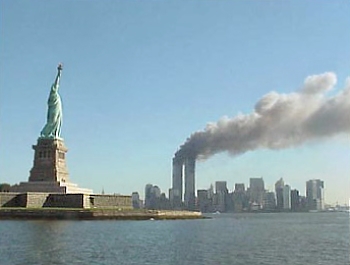
Of course today we commemorate today another great tragedy and atrocity, that of the 9/11 Attacks on the United States.


Twelve years ago today, over 2,000 people lost their lives in a senseless act of violence perpetrated by villains in an attempt to terrorize the people of America and the world. It didn't work of course, and now all the men who perpetrated it, planned it, and their ringleader lay slain from the ensuing conflict.

Argue about the outcome if you will, but never forget the people who died. May they rest in peace.

In more local news I have recently been reading about the Quebec Charter of Values. It seems the government of Quebec would like to see what they can get away with, or flagrantly violate my countries constitution.

The Quebec 'Charter of Values' to quote the CTV article:

The so-called "values charter" announced by the government would impose broad restrictions, unique in North America, on religious clothing for employees in all public sector institutions including schools, hospitals and courts.
While the cross above Montreal's Mount Royal and the crucifix in the legislature are OK because they are considered part of the province's heritage, government employees wearing a crucifix would have to conceal it. Religious headgear such as hijabs, burkas, kippas, veils and turbans would also be forbidden.

This is of course something that outrages many religious minorities, who rightly view it as discrimination against themselves. They see the Charter as nothing less than an attack on their identity and as a series of laws designed to forcefully secularize them where they work.

The Quebec government for its part views it as a good thing as it would 'defuse religious tensions' and of course forbid the wearing of certain items in government and public buildings.

The items in question
Speaking as someone who normally doesn't wear religious iconography on his person, I still find this offensive. It is offensive to think that people aren't reasonable enough, after having lived for years now beside people who routinely wear these types of items, to stand seeing them in plain view. It is offensive to think that you can just forcefully secularize people against their will for no good reason. It is finally offensive to infringe on someones religious beliefs due to the chance that some intolerant person might be dismayed by seeing a woman in a hijab.

I did an article a while ago about 'freedom from religion' and that seems to be just what the current government of Quebec is trying to do. I'm sorry Quebec but a secular society simply keeps government and religion from mixing, not actively trying to subtly force everyone with religious ideas from the government.

My sincere hope is that the supreme court will strike this down for the lunacy that it is. God help Canada, God help Quebec.

Until next time readers, until next time!

Friday, 19 July 2013

The Weekly Word #2

Hello again readers and welcome to the second edition of the Weekly Word on The M. Here this week I am again to bring updates on news, general topics, my blog, and of course my random ideas that I throw around!

For the record: Yes this will be the official picture of these articles ;)


I'm sad to say I start this week on a sombre note as I refer to the infamous Trayvon Martin and George Zimmerman case. It would seem that George Zimmerman was indeed found innocent of the charges laid against him. Now that in and of itself isn't a terrible thing as it shows that the system did not convict him due to lingering doubts by the jury. Rather the terrible thing might be that his trial was presided over by a jury which comprised of five white jurors and a single 'minority' juror!

However, this was also a case where the prosecution again failed as they could not successfully strike jurors they did not approve of, nor did they manage to keep some jurors in whom they felt would successfully be swayed by their arguments. This of course left us with a jury who may or may not have allowed racial feelings or prejudices to get in the way. This did of course, lead to one disastrous interview on CNN.

Some might say that this unnecessarily brings racial issues into the trial. Let me just add that when a young black male is profiled by a non-black male and followed, confronted, then killed, there is no doubt that race was involved. I personally think this speaks to the character of the man who killed Martin, and I do believe that the mostly white jury is morally culpable for letting him walk.

However, I also criticize the prosecution who so badly handled the trial. They overcharged Zimmerman with second-degree murder where a manslaughter charge would have been more justified, and thus it fell on the prosecution to prove that Zimmerman had far more criminal intent than he demonstrated. For sure the man attempted to provoke a confrontation with Martin, and he carried a gun on his person and drew it on someone who was unarmed, but it would be highly disingenuous to say that he went out that night and intended to kill someone.

All in all the case is one that suffered from being surrounded by a media circus which lead to a poor handling of the effort to convinct Zimmerman as the prosecutors became almost honor bound to deliver the highest level of justice they could to Zimmerman, whether or not it was the most feasible charge that could be laid. It is another terrible example of trial by media.

In other, yet related news, I certainly hope that this will be something that forces an examination of the 'Stand your ground law' which exists in the United States. To me it seems like a law which is not well designed and one which doesn't seem capable of defending the people it is actually meant to defend.

---

In more cheery and writing related news, I am coming a long way now on Service to the State and I've finally stopped waffling on whether to include a boot-camp section in the novel. There will be one, but it will be much briefer and intersposed with social commentary and Chekov's Gun related items than a normal set would be.

Much of the other chapters will involve the antagonist and supporting characters gearing up for the epic climax of the novel regarding some intense space battles and hot power armor on power armor action!

That is of course what I set out to accomplish with this story ;)

---

Also, the once proud city of Detroit has filed for bankruptcy. Now I was personally surprised to hear this (mostly owing to the fact that I didn't know a city could file for bankruptcy) (and that is apparently being fought out in court) and felt it was quite the piece of news for me to get.

Well if entire cities can file for bankruptcy I think that we may sadly see more of this in the future as cities with declining economies and financial/industrial sectors are quite literally unable to pay their bills.

That bodes poorly for pensioners, city employee's, anyone dependent on welfare, and a myriad of other people who live in the city. This of course may increase crime, death rates, poverty rates, send the standard of living there plummeting. Though in a city where large tracts of it have been abandoned or turned into ghost towns I suppose it is pretty hard for it to get worse at this point.

The Education system really can't get any worse


What effect this might have on the economy of course, will remain to be see, but I can't call it a good one.

---

In other mostly self-interest (and somewhat prepper related) news, I plan on doing a big article gushing about old stone houses, their pros and cons, and the fact that I'm currently working in one as a museum guide for the summer!

It's a beautiful old place and anyone who could see it ought to see it! Wonderfully preserved it is an amazing sight inside my old town here in Ontario, and I must say that I've come to fall in love with it!

But enough about that I'll be gushing on and on about it later!

Well I guess I haven't found much in the news I feel like reporting on today or this week really, so I'll leave you all with my usual farewell!

Until next time readers, until next time!

Tuesday, 9 July 2013

Prepping: Starting Simple

Well readers after a few hectic weeks where I have been stuffed to the gills with no fewer than four birthday cakes I am happily back to blogging.

This week however I am going to once again deliver a piece on prepping and how easy it can be. While the idea of prepping may seem a daunting task to the novice I assure that in the long run it is well worth it.

To begin there are seven primary things a prepper must have in abundance or plan for extensively to actually get started in the prepping game. In our modern consumer world storing up on these essentials can be as easy as 1,2,3 by going to cheap bulk mark stores like Costco and Walmart!
Though to begin here is a list of the 'must haves' when you begin prepping.

1. A clean and renewable source of water:

Water, the blood of life from the deserts of Arabia to the rivers of lower Canada. You can go for weeks without food but never more than three (and if you're insanely lucky, seven) days without water or fluids of some sort to help replenish your body.

The fact is that without this basic first step any attempts at prepping are sunk right from the start.

There are a myriad of ways for people to get a fresh, clean, renewable source of water from rain catchment to ground wells. This article is only a list of course but I will be going into other ways to get water another time.

What is important to remember is that you will also need a way to purify water as there is no stretch of water which is 100% safe from the contaminants of the modern world. Boiling, purifying tablets, even a rather simple charcoal and dirt water strainer is useful.

To use an example, I as a Canadian do not need to be overly concerned about fresh water. I live in a country where we have the most plentiful fresh water in the world! Now does that mean I can take it for granted? NO! I have to be aware of where my water is coming from, what possible pollutants could be going into the water, and what secondary advantages this water could offer me (fish, boat transport, ect).

Just remember, in a quick fix you can buy large 10gallon drums to store water in! Having at least ten of these fully stocked would be a good idea for a back up supply.

2. A safe place to lay your head:

Now if you have a fresh source of water you next need a shelter to protect yourself from the elements. Suburban home, old farmhouse, raised tent/treehouse, and hobbit holes abound for your choice in shelter.

A shelter is important as it gives you a place to call your castle (and depending on how you like to prep it will be your castle) and for you to store your supplies.

In designing (or buying) a shelter you must think about where you are prepping. Is it in a city? The country? The wilderness? Is it a warm climate? How are the winters? How much rain do you get annualy? What is the wild life like?

I am currently city prepping so I take into account what my home in the city looks like and I have a Bug Out plan in case the worst happens and I am forced to flee the city for my family home in the country. Its rather simple as plans go, with hopes for establishing a secondary stockpile of supplies somewhere else.

3. A good food supply:

Now I won't say a food supply is prep specific as food is a universal must, but I will say how you plan on prepping is going to effect how you prep.

The safest bet for an early prep is to have a six month supply of food stocked away (in emulation of the Mormon tradition) as a just in case idea. This can include canned goods, easily stored grains and vegetables and canned meat and blocks of salt.

Buying canned goods in bulk couldn't be easier if you go to places like Bulk Barn, Costco, or Walmart. You can set aside some money every grocery trip to get items that will store for up to five years and if stored right can last longer! A deep larder is just good planning people.

Now if you are thinking long term well that's another matter entirely and one which would require way more detail this this simple list post. Though there is one generalization I would make it is this, chicken's are a wonderful food animal and are great for eggs and meat.

Whatever you do don't forget about a personal garden! If you're tired of mowing the lawn go out and put that vacant space to good use! I personally reccomend this as most of the time you can get easy practice with growing items in a garden. It's good practice and most of the time it's good food.

4. Waste management:

This should be a must. Unless you have a generator which can run 24/7 continuously, at some point your toilet is going to break down. Now most toilets can still be flushed if you pour water into them or use the mechanism inside the toilet to auto-flush it.

However, what will you do if you can't make your toilet flush? How will you dispose of this human (or animal) waste safely?

The answer readers, ought to be fairly simple. An outhouse. This is the most ideal form of disposal when the toilet stops flushing. You will want to have a space marked for an outhouse on your property which is a) well away from your house and garden b) not going to interfere with your water supply. Unlike most animal wastes our own feces is not beneficial to growing good plants. Over time it will go back to nature but you will want to have a deep hole to let it do so for a while. Preferably three such sites in abundance in order to avoid overtaxing one area.

Trust me here, an outhouse may smell and have insects, but the alternative is much much worse to comprehend. I'd rather go in an outhouse than take a 'wild one' and worry about stepping in it later.

5. Toiletry Items:

This should be obvious. What happens when you can't get a good supply of toiletry items? What will happen when you run out of toilet paper? Feminine items? Toothpaste?

Stock up while you can readers. Remember how much of an inconvenience it was when you saw no one had changed the toilet paper roll? Think about how much worse it will be if you can't get any toilet paper for weeks on end.

The same goes for toothpaste and toothbrushes, deodorent, and of course soap and shampoo. There are many ways to make your own soap and find natural substitutes for these items. It should be a top priority amongst preppers to get these personal hygiene items in abundance in order to stave off disease, and of course, social problems from bad BO.

Soap stores essentially forever, and deoderant can be useful for a few years while shampoo will be essential (though you may not want to waste it every day) and simply feeling clean is a great mental boost after a while.

6. Necessary medical items:

Now this is important readers. Band-aids, lots of them! From painkillers to antiseptics you will want a well stocked first aid kit in your home. If God forbid you find yourself in considerable pain or having a minor wound which could get infected you will want it healed up as quickly as possible.

If possible you will want to be on good terms with your doctor so you can have some clue how to get help.

Since that is not always possible (like having a person who is skilled in medicine) you will want to have some rudimentary knowlegde of medical procedures and have some know how in order to look for the obvious signs of infection or illness.

There will always come a day when you just might not be able to go to the hospital so having at least the basics for first aid or how to set a broken bone could prove to be an indespensible boon someday. There are a variety of good books on the subject available on the market and I would personally suggest these three:

*American Red Cross First Aid

*Where There is No Doctor by David Werner

*Where There is No Dentist by Murray Dickson

They are good starter guides for prepping in the medical sphere.

Number seven however is something that many would say is essential but I would call a lesser consideration. Though I don't view it as optional since at the very least hunting is important.

7. A hunter's weapon:

The old US survival adage goes "Beans, Band-aids, and Bullets". This is true I suppose but contrary to many in the US who stock up on weapons to fight off looters and bandits I would only reccomend a weapon to hunt animals and push off the inevitable feral dog that will spring up.

No matter what your opinion on hunting/killing animals I view it as a necessary thing to keep a hunting rifle to at least bag the occasional deer, or shoot a pesky raccoon.

Hunting can be a great short term suppliment for food and meat if you can manage it, but it is only that, a short term solution. In a short prep scenario that means it is essential to have this as a back up plan in case your supplies run low.

For me driving off a wild animal or predator is more important (and likely) than pell mell banditry that many survivalists predict.

---

So readers prepping is easy to start with! It is committment which is the key. If you can stick to it over time it is easy to stock up for tough times in bulk!

I understand prepping can be a daunting challenge, but as I said in my previous article on the subject, it is something that people ought to do. It is smart, forward thinking, and above all a good excercise in mental and family planning.

Until next time readers!

Tuesday, 11 June 2013

The Purge

Well dear readers after a long hiatus I come back to you now at the opening of the summer blockbuster season. I start though with a film that many have been writing about in the corners of the net I visit, and that film is The Purge. This is the first horror film of the season that I've looked at and the first I've seen in a long time in theatres, so to do this review I will be doing it in the traditional review style and examining it from the perspective of a home defense analysis, since this movie is about a family supposedly prepared for a home invasion.

Now without further ado let's dive in and look at the interesting horror/thriller, The Purge!


The Purge is set in America in the near future of the year 2022, and is 'a nation reborn' and having had a new Constitution put down by the 'New Founding Fathers' who seem to run the country (who also appear exempt from the Purge) and in this new nation the pent up rage and anger at the world is unleashed annualy on a night known as The Purge where all crime (though that appears to exclude political assassination) is legal for twelve hours and all emergency medical, fire, and police services are suspended. It would also seem that since everything on the night of the purge is legal then you can't sue anyone for damages incurred because of a person's actions on the purge.

The film though, starts out showcasing a number of violent crimes and murders being caught on 'purge cams' and showcased to the audience with violent murders seeming the norm for the purge and roving death/rape gangs killing people all across America. There is also the very casual reference to people going 'hunting' on the purge night (which is heavily implied to be hunting other people) and is evidenced by both shots of people armed to the teeth wandering the streets and the films primary antagonists being a roving gang of masked students carrying weapons looking to kill a homeless guy.

Actually they almost look as though they're trying to offer you a copy of the Watchtower.

Now the movie seems to be trying to shove some political commentary into the mix by taking pains to point out how affluent the main characters are and having various radio announcers comment on how the purge seems to target the poor and homeless who are less capable of defending themselves, while others defend that as a 'natural course of life' or a 'survival of the fittest' style of living. In fact in the opening shots the Sandin's wealth is commented on quite a bit by other characters on how they can afford to defend their home and are in fact wealthy because they have a business centered around the selling of home security systems which protect homes and deter maurauders. More on the home security issue and social commentary later.

Questions of that aside the film introduces us to the Sandin family who have a very typical suburban life with a stay at home mother, a teenaged daughter and a younger son who has questions about the nature of the purge and whether it is a good thing or not.

Here we are clearly establishing an obvious suburban family with obvious issues as the teenaged daughter is dating an older boy and is very rebellious, the son looks as though he is going through coming of age issues and the parents are having vague and unspecified reactions in dealing with them.

Now we get a clear family dynamic as the father James Sandin (Ethan Hawke) is shown being personable for the neighbors while the mother Mary (Lena Headly of Game of Thrones and Dredd fame) deals with the kids while having a conversation with her clearly not psychotic and jealous neighbor Grace (Arija Bareikis) who comments on how all their success has paid for a new addition on their large home. This is interuppted by shots of Zoey Sandin (Adelaide Kane) and her boyfriend Henry (Tony Oller) getting frisky and talking about their relationship issues.

The opening of course establishes the setting of the Purge as well as the house of the Sandin's which will be the main focus of the plot as a typical siege style film is. However almost immediately the film begins introducing a number of painfully obvious Chekov's guns in Zoey and Henry's relationship issues as a point of contention between the father and the boyfriend, the fact that Grace seems like a babbling psychopath who seems incapable of taking the wide eyed crazy look of her face while making passive aggressive comments about the Sandins wealth and home, and that the son Charles (Max Burkholden) has a little remote control robot named Timmy which has a laundry list of useful functions such as night vision, being able to play music, use a camera to spy on people, ect. This of course makes a number of upcoming plot twists rather predictable.

Now the siren sounds for the Purge to begin reminding everyone of the rules (no government officials of Class 10 can be harmed and Class 4 level weapons are allowed) and the Sandin's immediately lock down their house (which all it seems to involve is the lowering of a number of heavy metal plates over doors and windows and Mr. Sandin getting a snub nosed pistol from the gun safe in the ludicrously badly secured security room) as Charlie contemplates why they don't participate in the Purge. Mary then notes that contrary to Grace's previous statements her house is hosting it's annual Purge party (which seems to be a nice little ice cream social with guns).

Then the drama begins as it is discovered as Henry has snuck back into the house and a bloodied man is seen running down the street screaming for help. Charlie immediately takes pity on him and opens the doors to let him in before his father can lock them and keep him out, right afterwards Henry convinces Zoey he wants to talk to Mr. Sandin. It immediately becomes clear Henry only wants to talk using 9mm bullets as he tries to kill James with a concealed pistol but is a terrible shot and is killed by an abdominal wound when James fires back. The Bloody Stranger (as he is billed in the credits and played by Edwin Hodge from Red Dawn) disapears in the confusion and hides somewhere in the massive house.

Meanwhile a roving murder gang of well dressed white kids appears wearing masks hunting the stranger whom they refer to as a homeless parasite piece of filth. He is their target for this years purge and since he has taken refuge in their house they offer the Sandin's a deal, give them the hobo by an unspecified time before their means of breaking in arrive or they will bust in and murder everyone. Then, inexplicably, they cut power to the house.

Because it's so much easier killing people when you can't see anything

Here the social commentary bludgeons you over the head as the roving murder gang is made of well dressed students (who are apparently only wearing masks to be terrifying rather than avoid repurcussions) who are chasing after a black homeless man shown wearing dog tags and weilding a combat knife. Clearly America before this was such a terrible place that it must now be preferable for the rich to hunt the poor with impunity. You can tell that the film is trying for some commentary on the American lifestyle, how there is a divide between rich and poor and even the divides across neighborhoods as success and wealth collide with petty jealousy, now instead of merely making snarky comments and spreading malicious rumours about your neighbors, you can kill them to vent your frustration at your own inadequecies!

That might not necessarily be the point of the film however, but it is maddeningly unclear what kind of message the film is trying to send. The rich want to hunt the poor? That man doesn't have to act like animals in order to vent its frustration? That if you cave to social pressure you become that which you disdain? Now on the last one the Sandins nearly do as James almost tortures the hobo into submission so he can turn him over to the murder gang. Mary also displays that when in the last act after they are saved by the very homeless man they are originally trying to hand over to the murder gang when her neighbors show up and save them only to try murdering them because they are jealous of the Sandins wealth.

However, here I have to point out one issue which ruins any suspense the film might have, the fact that while James Sandin sells a security system that is supposed to keep people out, right before the crazy kids break in he points out a number of rather obvious flaws in the system that is supposed to defend his house. Now that wouldn't be so bad if the gang set out to kill them had actually used any of those weaknesses, instead they simply rip the armored plates out of the house and waltz inside like they own the place.

Thank God I had the foresight to install this useless system


What follows is a number of unexciting fight scenes where the Sandins have to either defend themselves or hide from the insane student murderers. Now there is one very well done scene in here, a piece where James has to fight off three students who he catches in the game room of the home. It's actually fairly fun to watch if only because you can scream 'yes!' as you see him gun down or bludgeon mask wearing crazies. There is also a blink and you miss it moment where he sees one of the kids he's killed not wearing a mask and gets a look of remorse on his face, which contributes nothing to the film as he then shoots their bodies to make sure they are dead.

Now the film itself is described as social commentary/horror thriller. It fails at both of those since it sends a garbled message about social values and has people forming roving murder gangs because why not? Seeing a trailer before this film came out I actually had a lenghty discussion with friends about what I would be doing in the Purge. We all honestly decided we'd rather hunker down and protect ourselves, or at least move countries to escape such weirdness. That and roving murder gangs seems unlikely since it would probably be more like large scale riots every night with an increased murder rate as people plot out murders for that time of year.

Aside from that the film wasn't even very scary. There was no suspense as characters were saved at the last moment from dying or being wounded, the plot twists were tragically predictable, and the fact that they purposely dehumanized the antagonists made them much less scary than they could have been. I probably would have been more scared had the murder gang simply shown up in their school uniforms and declared their intent to kill everyone inside very casually and for no reason. Then we have the neighbors who show up and with absolutely no emotion kill all the students before trying to kill the Sandins themselves. If you didn't see that coming well clearly you weren't paying attention.

The film them ends on a downer note as the siren signalling the end of the Purge sounds and emergency sirens sound in the distance as presumably police, fire, and ambulances pour in to ensure that the people participating actually stop and to help those still alive. The Sandins then realize their jealous neighbors are out to kill them and hate them, and the bloodied hobo walks off into the morning.

All in all the film was a rather big let down which could have been done way better. I wasn't scared at all and saw the film as predictable and bland. There was no solid acting, but I can't blame the actors for that (barring Arija Bareikis who couldn't wipe that psychotic look off her face for five seconds) since the script was weak and garbled with contradictory purposes.

So I'd reccomend people purge this film from their to watch list and look for something more straight forward instead. I give the film 4/10 stars.

But now for the second part of the review as we examine the Sandin's so called security system!


Pictured: State of the art security
James Sandin is supposed to be a man whose company thrives on selling people state of the art security systems to protect them and their homes from the violence of the purge. Sandin makes assurances to people that his system is good, his system is reliable, and that it will keep people safe from attack.

The fact that it fails to do that is the entire premise of the film ought to tell you something.

I understand personally that there is no fool proof defense system in the world, and I also understand that you can't protect your home from every conceivable threat there is but when your entire business runs around this kind of thing you should probably have a more realistic understanding of its strenghts and weaknesses.

For instance let's look at the defences of the house. They basically appear to be giant sliding metal plates which cover all the doors and windows making them essentially impenetrable. That's about it for the security system really. In fact other than this rather superficial and showy device the house has no other security features. No panic room in case the house is actually breached, and no interior system of defence.

In fact the family has no coherent plan in place of what to do if the unthinkable should happen, which considering the level of violence that takes place every year, is ludicrously short sighted!

In film when discussing the possibilities of whether they can defend the house James says testing has shown the system can stand up to attack 90% of the time, and that a determined attacker can get in through a number of ways (tunneling, smoking them out, devising a battering ram). Now to address each of those, tunneling is the most wildly impractical and unlikely to occur so not big deal there. Now setting fire to the house is a big issue so why a large and well stocked fire proofed panic room isn't a staple of the design is beyond me. Finally we have the issue of a battering ram. The plates seen in the film are very thick and they cover every easily enterable entrance and seem to slide down and lock in place from inside the house. It would take a very serious battering ram to smash its way through that!

However, in the film none of these items are used. Instead the roving gang uses a jeep with chains and cables to pull these plates off. Now where they attach the plates to the hooks and how they manage to pull them out of a shutter system inside the wall is beyond me, but that's just poor planning by the writers.

Now how the family reacts to the sudden storming of their home is even more inexplicable. Instead of trying to hold any specific point in the house, or even shooting to inconvenience the attackers while they come in, the family opts to let them just walk in the house and tries to hunt them down despite being outnumbered and seeming to not even know their own house that well. This is simply ludicrous as it gives the initiative to the attackers and doesn't stall for time, and since there is no saferoom/hardpoint for the family to defend it leaves them and their dependents horribly exposed.

When the family splits up and hides in ludicrous places in order to try and hunt down their hunters I just about gave up on the film entirely.

So in the home defence category not only is Mr. Sandin's business bad at what it does, but how the Sandin's survived so many years of purges is beyond me.

Until next time readers, until next time!
 

Saturday, 24 November 2012

The Case for Prepping

Well readers I suppose many of you might start to consider me an odd duck after this post, but if that is the case, so be it. What I aim to do today is make a valid case for the idea known as survivalism. Now some of you may have passing aquaintance with the idea of survivalism and may have seen movies where so called 'survivalists' are featured.

For a moment let me sketch out the the typical mental image that people see when they hear the word survivalist. For most people the word evokes images of a man (usually in his late 40s early 50s) holed up in a bunker beneath his house surrounded by stockpiles of MRE's canned food and cradling an M-16 in his arms while checking his other illegally obtained weapons and waiting for the Soviets or New World Order to come knocking. Now while this stereotype isn't completely undeserved (as an unfortunate number of websites and authors show) it is only focusing on the extreme fringe of so survivalist movement. Many people who identify as survivalists have recently been using the term 'prepper' to differentiate themselves from this fringe. I myself use it as I am not in the process of prepping for a global collapse, but rather more local things.

More about me in a moment though. What people will find today is that may preppers are people who are members of the Green movement and want to get back to the land. Or they are simply people who live in areas that are at risk for terrible weather and other natural disasters (hurricanes and earthquakes and the like). Most people will simply have an emergency supply of food, batteries, and blankets to be used in case of a terrible power outage or storm. If you do something basic like that then yes dear reader, you are indeed a prepper. It's even just the little things that make someone a prepper, if you are preparing for any kind of freak hit mother nature can throw at you, you fall into the category of prepper.

Though now some of you may be asking 'Stienberg why do you prep? Surely you aren't afraid of the NWO nor do you need to fear the weather so much?' well readers I'm glad you asked that!

As I'm sure many of you will remember back in 1998 we had the mother of all ice storms which came down on us like the wrath of an inebriated and severely ticked off Jack Frost! For some readers who may not remember, or who would like to see how devastating this was I present you these:

This is some trees bent under their own weight from the ice (one having its branches totally ripped off)
No these aren't ice scupltures.
This is a twig, covered in two inches of ice, to illustrate just how bad this was.
Now I was just a little rascal at this time, but I do still remember three things in abundance. One was that a great big tree was literally uprooted and smashed across the road blocking part of the neighbourhood, the other was that our power didn't work for days, and that we eventually had to flee to my grandmothers house because it was to cold to stay in our own.

The problem grew so great and many communities (like my own) were isolated and the roads impassable from the ice sheets and debris covering them. Eventually the army was called in and I can remember how glad my parents were to see helicopters flying overhead and for a soldier to come and check on us.

That time dear readers, was bad. Some froze to death in their homes (especially the elderly) and many who did leave to stay with relatives who did have power, returned to find their homes looted by opportunistic scavengers (of both the four and two legged variety). Now it wasn't anarchy in the streets, nor a world ending disaster, but it made many people quite upset and uncomfortable and made me realize just how fragile our modern way of life is. My father for instance, has not owned a house without a woodstove since.

Now of course I was to young at the time to really appreciate these details. As I got older though, I began to really see the effects that a few days without power could have on people. Take the 2003 blackout for instance. I was again cast into a world of darkness and no power, but was thankfully warm as it was summer. So these memories have weighed heavily on me as I see how catastrophic man made screw ups can be.

From the time I was sixteen onwards I began asking myself what I could do in situations like these. So from there I began reading about disaster prepardness and storm shelters. What will surprise readers is that it wasn't any man made disaster that finally tilted me over the edge into full on prepper, but a fictional one.

I purchased the Zombie Survival Guide (and consequently have reviewd it on Amazon as MDStien) many years ago. I bought this book as friends and I had become infatuated with zombie movies, and all the post-apocalyptic aspects there of. This book really got me thinking, what if the power goes out for weeks at a time? What if I get caught up in a riot or other civil disturbance? And even, what if maybe, just maybe a horde of undead flesh eating monsters tries to force its way into my home? The last one aside (well I'd focus that on burglers really) these are very important questions. What will I do if I'm without power for a number of days, or what will I do if there is a critical shortage and I have to stock up on food for something, and even what if I'm stranded in the great Canadian wilderness?

These are all important questions people should ask themselves. It's little things like that which can throw our entire world into disorder. Especially with food, there's an old saying 'every country is three meals away from a revolution' and if an entire region were deprived of food for many days I can assure the reader that things would not end well.

I personally began scanning the web and blogosphere for websites which might help me prepare. Eventually I've come across two important websites which have given me tips and tricks to help prepare. One is the famous Survivalblog by James Wesley Rawles a well known author and blogger on the subject. His political leanings do however influence his writings and ideas about survival and he has a bit of a militia bent to him. That being said he also spends a considerable ammount of time on weapons and other self-defense ideas. However, his blog is an excellent resource for starting preppers, and his book How to Survive the end of the world as we know it, is a must have for starting preppers as it gives you an idea of where to begin, and where to go.

Now Rawles does have another book. This one:


Now understandably this may begin to sound alarm bells in some readers heads screaming 'militia fanatic!!' and while there are some elements in the book of this, it actually reads more like Red Dawn in Weirmar Republic Germany. The author is controversial because of his viewpoints and beliefs and this will certainly turn away some readers. Though it doesn't even read as well as a regular novel I can gaurentee it is chock full of excellent ideas and tips packed into a useful narrative. His non-fiction works and blog are much less controversial and could be easier to swallow, I merely reccomend this book to people who want to see what would be described as the best-case scenario for a prepper group put into print.

Now on another note, here is a blog that is a) more Canadian and b) closer to what I'd envisage as my prepping scenario dream. Modern Homesteading is a blog begun by Victoria Gazeley when she moved to her proverbial cabin in the woods and began a life of self-sufficiency and work. Now my proverbial cabin in the woods would look something like this but that's beside the point. Gazeley sets out her ideas on self-sufficient living, and how to prep in a Canadian environment and for a rural lifestyle. This resonates with me a) because I come from a very rural background and seek to return to it and b) because it is from a Canadian perspective and will thankfully avoid foreign politics and ideological banter. The blog offers so many helpful tips and advice that you would be hardpressed to keep track of it all.

That being said online resources are not the only resources that can be used. Amazon has a plethora of books and how to guides on things that can be essential for prepping, and I encourage readers to check some of these items out starting with this.

In the end dear readers I ask you to remember a few things. Being a prepper does not make a person crazy, it is something that almost everyone does to one extent or another (and some simply take it further) and that it is something we should all practice to some extent, just in case.

For now though readers I hope I have outlined the pros for a prepper mindset, and I can assure you I will be doing some more prep oriented posts in the future. Keep on reading and please give these issues some thought.

As a final note, I encourage everyone to think about Hurricane Sandy and many of the ill effects it has had when you consider prepping. If you don't think you can be affected by weird weather and natural disasters, you are oh so sadly wrong dear reader.