Showing posts with label Religion. Show all posts

Wednesday, 18 May 2022

The Second Sleep

In 1468, a young priest is sent to bury his predecessor in a remote village. In arriving he sees that the man was distinctly odd, with a number of coins, bone fragments and bits of glass from the ancient world in his collection. Did his seeming obsession with the ancient world lead to his death? What does he know of the lost world of the ancients?

For you see, this is not our 1468.

In his new novel, Robert Harris delivers another exciting tale of alternate history. The world is only just rising from peril, and it is enduring a time of The Second Sleep. Some spoilers follow.


I've reviewed Harris's work before, Fatherland being a staple of the alternate history genre, but he delivers exciting reads in straight historical fiction and thrillers as well. This new work of his is merely another excellent exploration on these themes with a twist. Considering it came out in 2019, just before our own cozy catastrophe took place, it seems fitting to review it after the fact.

Young priest Christopher Fairfax sets out from Exeter to a small village called Addicott St. George, where he is tasked to perform a funeral and at least perform mass for the people until a replacement can be sent. There he discovers that all is not as it seems in this little village. The people are dour, rural, and insular, which bothers Fairfax as he goes about his duties and tries to flee as quickly as he can. Unfortunately, bad weather traps him in the little valley, and he thus must work to do his duties. 

He does though, come upon a mystery. The old priest had a collection of items from before the apocalypse, coins, plastic, dolls and a complete Apple iPhone on display. Alongside them, a series of heretical books that seem to challenge the teachings of the Church where the world was destroyed by the Beast. At the funeral he meets local notables John Hancock and Sarah Durston, who verify the priest had strange doings. A minor tension mounts between Hancock and Fairfax as they both seem to vie for the affections of Lady Durston. The mystery deepens as they learn that there is supposedly a treasure hidden near where the old priest died. They set out to discover more about his yearnings for the past.

In turns out that the story has picked up up roughly eight centuries after an unspecified calamity which has been identified as the Apocalypse of John from the Book of Revelation by the people at the time. It is an interesting response as, in a similar story to A Canticle for Leibowitz, the people living through this calamity have knowingly thrown off the technological society of their forebears and then wrapped the fall of the old world in religious significance, which has been spun into official history by the power of the Church in order to keep England (mentioned as now unified under Church and Crown) in order unlike the calamity of the bad old days.

With this forceful renunciation of technological society, old superstitions come back hard. Ghosts, demons, evil spirits, and other ideas are rife in rural areas, and even some cities. The Church does little to dissuade these ideas, and even frowns on many innovations. Wind, water and muscle power are the primary movers of society, and though they have not lost access to gunpowder, the weapons of the day are crude in comparison to those that came before the Apocalypse. Harris also paints a haunting picture of a world where the old has washed away, the glories of the 21st Century looked on at like ancient Roman ruins, and barely a trace of the ancient world still stands. It's emblematic in how many of the (now ancient) manor houses of England are either in ruins or barely kept afloat by proud aristocratic families.

That this old history is presented as a minor mystery is a bit odd. Everyone knows the world collapsed, and it seems that the Church also helped tie society together again, which meant that at some point in the past the collective trauma of the Apocalypse pushed people to adopt this story that the world did indeed end - in a way. After eight hundred years much of that would be forgotten, and Church teaching would have calcified into a more mystical version and other histories might indeed be suppressed. But with everyone knowing technological society collapsed, one of the main mysteries (especially the how and why) never quite gets addressed satisfactorily. Indeed, for what one of the major revelations turns out to be in the end it is barely hinted at, at all and could have provided a much more compelling drama!

That being said, the obfuscation of the calamity, the Church efforts to cover up the past, and the way society has regressed, does create an interesting crusade to find out about the old world. The mystery and interplay between characters is fun as it shows a healthy skepticism amongst many which runs up against rigid attempts at imposing order on society in the after a calamity long ago.

While perhaps not the great mystery it was meant to be, it certainly paints a vivid picture of a world which has moved on from its former glory. Humanity has survived, but has it thrived? The characters present interesting contrasts and make for some amusing drama, while showing us just how people live in this world. It also reminds us that no society is immune from decline or collapse, and raises disturbing questions about just how secure our own world is. Fascinating reading.

Sunday, 13 February 2022

The Revelations: My Apocalyptic Journey

Years ago now I was attending church, and doing what I usually did, poking my nose through the little Church library. I stumbled across books regarding the Book of Revelation and the foretold End of Days. They purported to tell me how I would know the world is coming to an end, how I as a Christian could see the signs, and what to expect as the End Times rolled nearer. I lapped these up, and then moved on to the controversial evangelical fiction series Left Behind.

Since then I've become a bit less convinced in these prophesies. 

I recently read a fascinating article from Current Affairs on 'Christian Horror and the end of the world' which tells the long story of attempts by the evangelical bent of Christianity to provoke a conversion experience by telling them of the horrors that await them in the Apocalypse. It also highlights the very troubling trend undertaken in making these more accessible for 'entertainment' to the public, the outright demonization of anyone who doesn't agree with these very narrow denominational views and an adherence to a very questionable idea of Biblical prophecy.

My own interactions with these ideas has also been uniquely American. For decades now there has been a cottage industry of American evangelists and theologians trying to reinterpret the Bible to, somehow, include the United States in prophecy or claim that the United States had a covenant with God. Neither of those things is true, but it hasn't stopped people from trying to claim it so. As such, whenever I read books about the End Times, the United States always loomed large in the authors thinking.

I can't say specifically what got me going down that path towards interest in the apocalypse, I was a pre-teen turning teenager when I began engaging with the ideas of the Christian End Times so perhaps my own changing life had something to do with it. However, I began reading about all the terrible things in the Book of Revelation, then reading Revelation itself. 

It's some pretty grim stuff, plagues, war, slaughter, and a one world government (if some of this sounds similar to contemporary conspiracy theory, take a few guesses about what has inspired some if it). Quite naturally, I began to be concerned. I read the Left Behind series next, wanting to soak in some - what I assumed - well informed fiction on the subject. The books aren't out and out awful, but they're not good either. If you're a teenager just getting into exploring your religion, this is probably not the best way to explore the End Times.

The fictional journey through the Book of Revelation is told primarily through two dimensional characters with some very lame attempts at Christian ideology or feel good conversion stories sprinkled throughout. Many of them come off as talking down to everyone else in the world. The cast is almost all American, and trips to the other parts of the world are inexpertly told and kinda troubling overall. It explores the years of the Tribulations, and the establishment of a one world government by the Antichrist and the eventual triumph of Jesus over the powers of evil. Yes, knowing the end does drain all the tension from the books.

Finishing the series by about the time I was sixteen, I began to wonder about all the prophesies. Was I living in the End Times? It certainly seemed that way! Wars, rumors of war, economic collapse, chronic fear of "the other" after 9/11, and not really having a firm grasp in Christian theology or the context in which Revelation was written made me fearful. Conversations with fellow Christians became worried about, is the end near, are we doing enough?

However, as time wore on, I became a little less worried. Partially thanks to Matthew 24:36 and Mark 13:32, as touchstones for how misguided the evangelicals warning of the imminent end times were.

With that though, I also realized many of the more firm predictions for how the end of the world would come about were a bit dated. One book I read was certain that Saddam Hussein was the Antichrist who was rebuilding Babylon to bring about the end times and described his time in power as the result of 'Satanic protection' from harm. Considering he was overthrown and executed only a few years before I began my journey into the End Times readings, I was understandably skeptical of further assurances from this writer.

If you go back far enough, many of the assurances or predictions from people seeking to capitalize on the End Times do depend on the enemy of the day. The Russians were fated to bring about the End Times, Gorbachev was the Antichrist, Al Qaeda and Islam would birth the Antichrist, ect. It's a lot of the here and now trying to be shoehorned into Biblical eschatology. Even the contemporary QAnon cult draws on much of the language and prophetic visions we see in Christian eschatology.

By the time I reached twenty there were other weird end of the world theories running around. The Mayan calendar and the 2012 end of the world date was one, and the zombie apocalypse infecting the whole post-apocalyptic fiction genre was also weighing heavily on peoples minds. The end of the world was trendy, and I was beginning to think that the evangelical view of the End Times was less than accurate.

Now I no longer believe in the literal End Times. I believe Jesus is coming back, but I don't quite think the apocalyptic visions promised by Left Behind or may other Christian apocalyptic visionaries are true or accurate. I've moved on from that fear, and I think it isn't a good fear for Christians to engage in. With very real issues facing the Earth like climate change, peak oil, and the horrible potential for nuclear war, we have much bigger things on our plates. The end of the world as we know it can be fun to explore or write about, but is not a theological or evangelical pursuit worth chasing. There are better messages to spread.

Wednesday, 18 December 2013

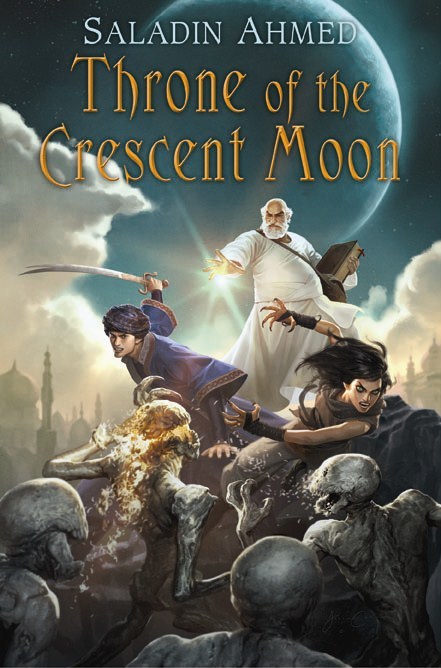
Throne of the Crescent Moon

Hello readers, I come back to you now with another review. This time I send us off to exotic lands of deserts and djinn, ghuls and dervishes. This week I bring you a review of Saladin Ahmed's, Throne of the Crescent Moon!


This is a refreshing and interesting fantasy book since it departs from what we would view as traditional fantasy in a number of what I consider to be very unique circumstances. The first is that rather being set in anything even resembling a facsimile of Medieval Europe, we instead get something that is much more like a fantasy Asia all mixed into one! We have a Khalif who sits on the Crescent Moon Throne of the great city of Dhamsawaat, an ancient society which is a sort of Ancient Egypt, and the surrounding societies all seem to resemble things like the Muslim Kingdoms of India or the Pacific. It's a fresh and as far as I'm aware, virtually unique look at a sort of pseudo-Islamic world in fantasy.


The book itself is written by a man named Saladin Ahmed, a man who is both a poet and a writer who has an extensive background in Islamic history and culture. This offers something very new to fantasy, and as far as I'm aware, something that hasn't been explored in depth. The novel has a very 'Thousand and One Nights' feel to it, and is really quite interesting in that sense. It gives you a look into a society that would be familiar to some, yet totally alien to others. It's actually quite like how I would imagine a foreigner reading our High Fantasy really.

It also offers up some rather unusual characters. For one thing the main character is a fat elderly gentleman in his late forties who is somewhat impious and becoming the last of a dwindling order of ghul hunters. His assistant is a pious dervish wielding a double bladed sword to cleave right from wrong and they eventually ally themselves with a tribeswoman with the ability to morph herself into a holy lion that can crush the forces of evil with her angel granted powers.

Not exactly your traditional fantasy  characters.

Their enemies too are a manjackal and a sorcerer who summons ghuls (or ghouls to those of you familiar with my Undead Menace article) to do his bidding.

Still some recognizable fantasy elements all skillfully blended together with new cultural ideas and locales. There's even a political subplot dealing with potential revolutionaries fighting against what they see as the despotic rule of the current Khalif, all for a juicy flavor of political intrigue and high fantasy action.

The characters themselves, Doctor Adoulla Mahkslood, Raseed ben Raseed, and Zamia are all fairly interesting characters. They each have some fairly good character building moments, periods of internal conflict, and issues with one another that serve to make them real and three dimensional rather than your standard do no wrong good guys, hell many of them even exhibit some good old fashion prejudice to those who aren't like them! For instance we have Adoulla and Raseed, two evil fighting partners with completely different views of the world, you have the old veteran Adoulla who has spent his entire life fighting and hunting monsters and is beginning to tire of it all, despite the fact that if he dies there is likely no one else who can carry on his orders knowledge and fight. He is also morally gray and fairly impious, and this clashes well with his young and eager protege who is from a religious order which dedicates itself to a lifelong struggle of virtuous justice. Raseed is very black and white in his worldview which tempers his reactions to any situation in an almost predictable way, but it also gets him into trouble as the story progresses.

As a cool aside, Raseed's sword is based on Iman Ali's sword from Muslim history.


Story wise the plot flows seamlessly from one scene to the next with very little pause in the running action and dialogue. You are driven from the beginning of the Doctor's quest, on a seemingly unrelated matter, into events that shake the very foundation of the city of Dhamsawaat itself! The story is wonderful and relentless in its telling and you really get a feel for each of the individual characters.

We also are treated to some wonderfully exotic action scenes featuring magic, sword fighting, and not a little bit of desperate cleverness on the part of the heroes. It also does a wonderful job of portraying magic that comes with a cost, whether in a persons personality, soul or body. Every spell cast has an immediate physical reaction both against those whom it is cast against, and those who cast it, making the act of calling upon magical forces seem very real and very challenging.

The setting itself  is also exotic and described in some detail giving it a very neat flavor. However, it isn't described as well as one might like. While I got a decent feel for how the city of Dhamsawaat was laid out, I couldn't be sure of everything that was in it and some details of the surrounding area and peoples seemed mildly to vague for how involved they were in the story. Some key locations could also have used a bit more description or even mention early on. For instance, the Khalif's palace is supposed to be the largest structure in all Dhamsawaat but it gets very little mention until directly near the end of the novel. Then one place called Angel's Square gets only cursory description despite being called breath taking and awe inspiring to those who enter it, I really don't have any mental picture of how it's laid out or what it would look like. Similarily Adoulla's house is something which seemed to be introduced a little too late with little preamble for all the meaning it had to Adoulla, something which I think could have been rectified by having Adoulla thinking wistfully about his house and commenting on its value to him earlier in the story.

The pacing of the novel is also quite fast with no real breaks being taken from character to character and all the action seeming to come at once with little suspense in between. We get some periods of calm, but they always feel like we're being whisked away with each character before we can catch our breaths.

That's not a net negative in itself but merely a matter of pacing which I think ought to be addressed in the sequel.

All in all the novel is a good read and is a fascinating insight into a world which is different from ours and the exciting conclusion left us with a load of problems for the heroes to face in the coming future. I felt excited to learn what challenges might crop up in the future and just what new crisis could emerge on the horizon for our heroes.

I've deliberately left the novels plot unspoiled as I think people really ought to read it for themselves so they can get a feel for the world and how it meshes itself out. The novel may feel a bit unpolished and perhaps a bit unrefined but it is well worth the read as Ahmed is really a writer to watch out for in the future!

If I had to give it a rating I'd say 3.5 stars out of 5 would do it for this book.

Until next time readers!

Wednesday, 11 September 2013

The Weekly Word #5

Well readers I'm afraid this will be an unusually quick weekly word. I will be off from making blog posts this week, but once I return I have two blog posts to make. Then of course more following.


Well of course the biggest news so far this week comes as President Obama promises firm action on the Syria issue. However, only today he has put that military strike on hold. This will of course lead to anger on both sides of the aisle as people blame him for being to wishy washy when it comes to dealing with a regime which has blatantly used chemical weapons to slaughter people.

Of course this also comes after a Russian initiative to get Syria's weapons turned over for safe-keeping seems to be gaining ground though. How much do I buy the idea of Syria turning over its weapons? I can actually see them allowing most of their stockpile to be taken into (most likely Russian) custody. However, I sincerely doubt they will actually allow their facilities which make chemical weapons to be destroyed.

Only time will tell.

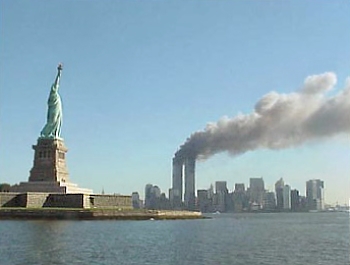
Of course today we commemorate today another great tragedy and atrocity, that of the 9/11 Attacks on the United States.


Twelve years ago today, over 2,000 people lost their lives in a senseless act of violence perpetrated by villains in an attempt to terrorize the people of America and the world. It didn't work of course, and now all the men who perpetrated it, planned it, and their ringleader lay slain from the ensuing conflict.

Argue about the outcome if you will, but never forget the people who died. May they rest in peace.

In more local news I have recently been reading about the Quebec Charter of Values. It seems the government of Quebec would like to see what they can get away with, or flagrantly violate my countries constitution.

The Quebec 'Charter of Values' to quote the CTV article:

The so-called "values charter" announced by the government would impose broad restrictions, unique in North America, on religious clothing for employees in all public sector institutions including schools, hospitals and courts.
While the cross above Montreal's Mount Royal and the crucifix in the legislature are OK because they are considered part of the province's heritage, government employees wearing a crucifix would have to conceal it. Religious headgear such as hijabs, burkas, kippas, veils and turbans would also be forbidden.

This is of course something that outrages many religious minorities, who rightly view it as discrimination against themselves. They see the Charter as nothing less than an attack on their identity and as a series of laws designed to forcefully secularize them where they work.

The Quebec government for its part views it as a good thing as it would 'defuse religious tensions' and of course forbid the wearing of certain items in government and public buildings.

The items in question
Speaking as someone who normally doesn't wear religious iconography on his person, I still find this offensive. It is offensive to think that people aren't reasonable enough, after having lived for years now beside people who routinely wear these types of items, to stand seeing them in plain view. It is offensive to think that you can just forcefully secularize people against their will for no good reason. It is finally offensive to infringe on someones religious beliefs due to the chance that some intolerant person might be dismayed by seeing a woman in a hijab.

I did an article a while ago about 'freedom from religion' and that seems to be just what the current government of Quebec is trying to do. I'm sorry Quebec but a secular society simply keeps government and religion from mixing, not actively trying to subtly force everyone with religious ideas from the government.

My sincere hope is that the supreme court will strike this down for the lunacy that it is. God help Canada, God help Quebec.

Until next time readers, until next time!

Friday, 9 November 2012

Arnageddon??? And the Salvation War

Well dear readers I'm pleased to say that here comes another interesting (and very unique) review for you today. I recently finished the story Armageddon??? by author Stuart Slade. To say it is unique would be an understatement of earth shaking proportions. The story has quite a simple premise (one apparently set off by a comment on a discussion board) and one which readers of any stripe will find intriguing. Stuart simply asks; what would happen if the forces of Hell were unleashed on Earth? All Earth would be unleashed on Hell he says. This is made rather startlingly apparent in a number of amusing and fascinating ways.

Though to start out I will say this, the series has recieved both praise and hate for a number of reasons, many being unfounded, and much of the arguments and various counter arguments can be had out on the stories tvtropes page so it's worth a look. Armageddon??? and it's sequel Patheocide can be found here in rough form as they will sadly probably never be published to an indicent regarding internet piracy. Though they are in rough form they are still well written and prosed with only minor spelling and language mistakes so easy to read and well worth it too.

As a minor note there will be spoilers in this review, not major ones mind you, but if you read anything on the tvtropes page you'll see rather quickly what it's all about.

The Good:

Armageddom??? starts off nice and briskly sometime right after a mysterious event know as The Message in which it has been decreed that all mankind must lay down and die and surrender themselves to Satan by the order of Heavan. Many do simply lay down and die, but not all. In fact most of huamnity decides to stand up and fight.

That is exactly what we see happening when the novel starts off as a demonic herald is flying through the sky and is shot down (and much to the relief of everyone watching) killed by modern weaponry. This scene is pivotal as it proves demons can be killed and gives humanity hope and eggs us on to fight back.

From here the story progresses into a number of believable and insanely well written battle scenes. The author shows how the world would have to pick up the slack in order to fight the armies of Hell. Massive mobilizations are called on levels not seen since World War Two, entire sectors of the economy are turned around or changed towards weapons production, and more importantly, that of spare parts for the existing military equipment. They also institute the draft again, and form a militia, which clearly shows just how dire (and life changing) the situation is.

Then we have scenes where mothballed equipment is pulled out the hanger (or in a humorous example 'liberated' from a museum) and made ready for battle again.

The portrayal of the humans as being incredibly badass is also a nice touch, though the jury really is out on whether parts of this story about David Petraeus are fan wank or hero-worship. The author also does not skimp in his writing about real life people and their situations and nearly every big name shows up in varying degrees, George Bush, David Cameron, Vladimir Putin, and Queen Elizabeth all get some good screen time along with a bevy of memorable fictional characrers as well. Some such as kitten (a person not a cat) are very interesting and show the authors willingness to be unconventional in how he makes his heroes, while others like Tucker Elroy and other military men are the usual hoo-rah but lovable military. Then we have some zany scientists and researchers that are quite fun (get into the parts about DIMO(N) I gaurentee you will love them, so no spoilers there).

Then we have the portrayal of the denizens of Hell, and ooh boy is it awesome! The author constructs a well thought out, reasonable, and excitingly fresh look at how Hell is run, structured and inhabited. He mostly used classical sources to get an idea of the head honchoes, the looks, and their powers. I have to say this was probably one of the most well done parts of the novel. For literary reasons of course he couldn't have them simply as all powerful and amazing monsters, instead he gives them a distinct series of strengths and weaknesses. For instance demons are huge, big, scary monsters and most stand at around six feet tall, the Greater Demons and rulers of hell are simply giant! There are also many forms of demons, the regualr demons who can shoot lightning from their tridents (and like all demons regenrate wounds, a full clip from an M-16 barely slows them down much to the infantries dismay early on) harpies who fly and shoot fire, succubus who...well take a guess, naga who can shoot more powerful bolts of lightning and generate portals to and from Hell, and gorgons who are basically Medusa's but with portal generating powers of their own. Then of course there are a variety of hell beasts like rhinolobsters and wyverns.

Hell itself is run as a kingdom lorded over by Satan who has his lesser dukes beneath him jockying for position, and then beneath that are the warrior class who are basically the dukes muscle men, and beyond that are lesser demons who are the demonic equivalent of serfs. It's an amalgamation of a medieval society with bronze age technology. The torture of the damned and Hell's running of that system is well explored and I will not elaborate just so I can pique the readers curiosity.

It's also got a bronze age outlook on war, and when that meets up with 21st century technology, firepower, and doctrine...well you can guess how that goes.

To be fair though the demons are no slouches and many are intelligent and have wonderful initiative and ingenuity, but they are simply outclassed in many ways in the open field. On their home turf... well that's another story. They do manage to get a number of truly horrifying strikes at Earth as well, proving they aren't completely harmless.

To Stuart's credit he also does an excellent job describing the sheer terrifying power of modern weaponry. One actually feels sorry for demons on the recieving end of artillery strikes or for harpies torn apart by dog-fights with F-16s. The aftermath of an artillery barrage and seeing what happens when a HEAT round goes off in tightly packed ranks is truly gruesome.

Modern military for the win ya'll.

The story also contains some wonderful humour and wit which I just can't bring myself to spoil for the potential reader. Needless to say it is good!


The Bad:

Now the story gets a bad rap from many who say that humans are to overpowered in the story and Stuart made the demons to underpowered. I have to angrily disagree with this criticism, barring sheer supernatural intervention (like instant healing or outright invicibility) Stuart did an excellent job of taking real life stories and legends about what we percieve as a demon and how it would look, tweaked it a bit to conform to the laws of physics and set them loose. What happens is predictable. Stuarts excercise really shows that modern firepower really can overpower anything the demons can muster. It's an excellent take on what human weapons as we have right now could do to nearly any supernatural force!

Though I myself do have some criticisms of the story.

The author is clearly what we would call a gear head, and he does take lengthy breaks in the narrative to lovingly describe the inner workings and effects of each weapon he puts in the pages. While in principle there is nothing wrong with this, I have to object to how often it was used. It did slow the narrative down unnecessarily at points and it sometimes seemed like I was slogging through technical jargon that didn't serve any real purpose in the story other than to prove how much the author knew. I applaud the author's indepth knowlegde, but felt it would have been far better to skip much of the excessive detail and 'dumbed down' certain points merely for the sake of brevity.

Another point is that while the badass humans is pretty awesome, they did some things too right, too early. For instance the massive mobilization of the economy takes a number of weeks and somehow derelict factories are up and running practically overnight with the American juggernaught starting up again. It looks good, but realistically it would take at the bare minimum a year to get our modern industry to even close the World War Two levels that the author describes. So too does the science community react far to quickly to the sudden changes in the laws of physics and reality (our human ingrained skepticism is still a factor and 'seeing is believing' still applies). The speed and ease with which the scientific community reacts to these massive changes (and begins studying very specific aspects of demons) is much too fast to be realistic. I found that one of the demon's main strengths (the ability to possess peoples minds) was discovered and defeated with unbelievable ease. The scientists literally had nothing to go on before the Hellgate opened and the demonic legions were let loose, but yet they can counter this ability and study demons with little or no imperical data to go on? Give me a break! It also served as a big suspense killer and robbed the demons of what could have been a big game changer for the opening stages of the story! That was a personal let down for me and one that really stretched my suspension of disbelief to the breaking point.

The other is the authors bias, which while not intolerable, it still seeps through. For one thing he makes a number of personal jabs. One particularly irritating and worthy of Micheal Crichton type pettiness, is at another internet figure whom advocated M113 as the armies main fighting vehicle. That character is prompty drafted and shipped to Alaska to dig latrines.One must also remember that this is a story where the most religious people on Earth do simply lay down and die. He also takes some digs at countries (particularly the Israeli Armed Forces) he doesn't like as well as ideas and practices and people he finds irritating, which while not entirely bad is somewhat off putting to potential readers.

The other big UGH for me regarding his writing is his handling of many real life characters. For instance he has George W. Bush and Condoleezza Rice survive The Message, now both of these people in real life are extremely religious and did allow their faith and beliefs to influence their politics in both overt and minor ways. That they lived through The Message was something extremely unlikely to me, and that's not just my politics talking. Though to make a point for my politics, this was an administration marred with dozens of unhealthy economic choices, incredibly bad military decisions, and was one which had advisors who were very questionable in their actions and were constantly jockying for position and influence on affairs. The smooth sailing, well reasoned and nearly infalliable way the government reacts is at huge odds with the lackluster and screw up prone administration in real life.

One point where I had to laugh in bitter irony is where there is a suggestion that people who are Nephillim or refuse to wear anti-demon headgear be rounded up and detained. Bush immediately vetoes this idea and speaks about infringing on liberties and chastises the person who suggests it. I was sorely reminded of things like the Patriot Act in this scene and couldn't help but find the whole exchange ridiculous.

Another unceccessary and poorly done plot point is when Richard Dawkins is rescued from Hell. This is because he is a friend of a government scientist who is angry about it, unusual care is taken to extract him and then put him in the hands of people who are willing to look after him. This after they have been portalling into Hell talking to soldiers and others who had been killed by demons or in the fighting, and it had occured to no one to pull any of them out!? They also don't discover a crucial plot point about people in Hell until this time which is also rather remarkably stupid (I mean come on if you were killed in battle and in Hell would the first thing you wanted to do was be supplied with weapons and told to start an insurgency rather than, y'know, GET OUT OF HELL!?). It was one part in the story which I immensely disliked and found to be more than ridiculous. Though I suppose it can be forgiven as Dawkins is still portrayed as somewhat of an egotistical knob. Still really, really ridiculous from a rational and practical perspective though.

The Verdict:

Despite some claims, Stuart did give the demons a fighting chance, and despite others he really has his military stuff down to a T. Stuart is an excellent writer who has crafted an intriguing world full of war, violence, heroism, and has unleased Earth on Hell.

It reads well, has its own excellent brand of wit, and is a masterpiece of war fiction.

Despite some plot flaws and issues of skepticism I have to say that the story reads very well and I will certainly be reading it again.

I give it a four out of five stars.

I am currently reading the sequel title Pantheocide and will be reviewing it later on.