Showing posts with label History. Show all posts

Monday, 20 March 2023

Invasion of Iraq Twenty Years On

On this day in 2003, the announcement was made that land operations were being undertaken against Saddam Hussein's Iraq and the Ba'ath Party which had brutally ruled it for decades. In a little over a month, the Coalition forces overran Iraq and occupied the country. The invasion, while an unqualified military success, contained almost no planning for the political and economic aftermath. Almost immediately Iraq fell into anarchy and the forces of occupation had to struggle to maintain order. A rising insurgency, civil war, and unclear strategic goals, lead to a chaotic war that attempted to stabilize the country. Even so, this paved the way for the nihilistic death cult of ISIL to expand into a power vacuum. Overall, the strategic aims of the United States and it's allies failed spectacularly, and plunged the region into continued chaos with effects that are still felt to this day.

The war began on extremely dubious justification. We now know that ever since the day of the 9/11 attacks, the Bush administration was looking for a way to attack Iraq or somehow blame them for the exportation of terror around the world. Enter the extremely nebulous "Weapons of Mass Destruction" which were toted by the administration as the reason Iraq had to be invaded. They were never found. Instead, there was a post-facto justification for "spreading democracy" and rebuilding Iraq, despite the men who decided to invade Iraq having no intention to do anything of the sort.

Over the course of the intervention the US did topple a dictator, but had to spend blood and treasure on rebuilding the country because they had no plans to do so. The appointed governor/dictator Paul Bremer then proceeded to sow the seeds for a brutal little civil war and cock up creating a government quite badly. This allowed nearly a decade of violence to be played out with only a few bright spots until the withdrawal was negotiated and agreed to by the US, with all Coalition troops leaving by the end of 2011. Unfortunately, in linking the war to the wider war on terror the US had allowed terror cells and movements the ability to coalesce around Iraq and use it as a rallying cry. The Iraqi government then became embroiled in sectarian fights which led to the rise of ISIS, necessitating the US to deploy to Iraq once again.

Most damningly, throughout it all Iran steadily increased its own powerbase in the country and plays a large role in internal Iraqi politics to this day. Making an entire aspect of the ostensible reason for the US to be there pointless! It was a strategic failure from start to finish, costing hundreds of thousands of lives, most of them civilian.

In short, it was a baseless, brutal, nasty war that served no purpose.

Yet, against the odds, to this day there are people who will say it was the right decision. Everything from saying "well weapons of mass destruction could have existed" to "well we overthrew a dictator!" Which is all so much whitewashing. The consequences of the US's unsanctioned invasion of Iraq are with us to this day as it showed that power could flout international norms, and the wars we see from Ukraine to Armenia are now proof that countries are willing to use violence to settle their differences in a way we had assumed was not possible or desirable at the end of the Cold War. The casual flouting of the idea of a rules based international order will have consequences far down the road that we cannot yet conceive of.

I was young when the war started, but I have a vivid memory of watching the news one night and seeing the announcement that the invasion of Iraq had started. I turned to my father and said "Dad, am I watching history right now?" 

"Yes, this is history," he said.

What I most vividly remember leading up to the war was the divisiveness, with many media pundits and commentators (and even our then Prime Minister, Jean Chretien) disagreeing with the US policy. The UN was telling people there were no weapons of mass destruction hiding under rocks anywhere, while the Bush Administration aggressively said they were. This was, of course, all lies based on either deliberately selected faulty intelligence or willful ignorance, but it took a long time to discover that.

I remember Jon Stewart lampooning most of discourse leading up to the invasion, and the backlash that he got. France in particular for spurning the American claims so much that there was a briefly known as freedom fries. Journalists who questioned the honesty of the decisions leading up to the war were branded as unpatriotic, while even the Dixie Chicks - as they were then known - received threats for being insufficiently patriotic.

Discourse was heavily divided, the evidence was lacking, and even as a youth I could see that, but the war went ahead anyways. Maybe I'm more cynical because I've looked back on those years and just finished reading some excellent books on the decision making processes, the rush to judgement, and the terrible mistakes made during the war. My mind was further hardened after a visit to the George W. Bush museum in Texas last year where I saw the ongoing effort to whitewash the war. However, even with hindsight, I am happy I was such a little radical as to oppose the war at a young age and still be a staunch critic of it now.

What makes me sad is all the blood, death, and destruction visited on countries that had nothing to do with 9/11, the losses of so many innocents, and the ongoing sectarian and regional violence it has enabled. This war leaves many scars and will have a long shadow cast over not only the Middle East, but the United States as well.

Monday, 6 February 2023

Balloons of War

With recent news about the transition of a Chinese spy balloon floating over the United States, my mind got turned to what balloons had done in war before. This was, surprisingly, an older practice than I thought!


The first time hot air balloons (rather than lanterns) were used in war was back in  1794, l’Entreprenant at the Battle of Fleurus by Revolutionary French forces to observe the Austrian movements. The Balloon Corps didn't get too much traction with the French forces, and Napoleon disbanded them in 1799. They would again be used by French forces in 1859 when France and Austria went to war over the fate of Italy and were extensively used for reconnaissance. They were again used in the Franco-Prussian War, most famously at the Siege of Paris, some for observation, but also to fly messages in and out of the city over the Prussian lines.

Most English historians are probably more familiar with the Union Army Balloon Corps in the US Civil War when the aeronaut Thaddeus Lowe used his own balloons to observe rebel movements for the US Army. The observation balloons were used at the battles of First Bull Run, in the various engagements of the Peninsula Campaign, Fredericksburg, and the Siege of Vicksburg. However, without political patronage and a military that did not readily adopt the idea of ballooning, Lowe's Balloon Corps languished and, effectively, ceased to exist in 1863.

Amusingly however, the United States can lay claim to the first use of an aircraft carrier, in a sense. A converted coal barge, the George Washington Parke Custis, was used to float the balloon Washington in the Potomac in 1861. 


The British army tinkered with the concept, and the army of the Empire of Brazil used observation balloons in the Paraguayan War, but it wasn't until the 20th century when ballooning for the military really took off (pun intended).

The most famous use of balloons for military purposes came in World War One. While observation balloons were common, the great zeppelins of the Imperial German military were the most conspicuous use of ballooning in that conflict. As observation vessels, bombers, and rough transports, they were used to good effect in the first years of the war, while also dropping bombs on cities to try and inspire fear.

It was then that the incendiary bullet was invented, bringing the hydrogen filled airships down in flames and generally making your survivability in one nil.


While observation balloons (and even spy balloons) have continued to be used, this is not the most common thing in war anymore. The true heyday was the 19th and early 20th centuries when the technology was emerging and we were not able to turn the most abundant fuel into fiery balls of death. So while the era of great military ballooning is long done, it is nice to see them make the news again once in a while!

Thursday, 5 May 2022

Cinco de Mayo

Every year in the Fifth of May, many Americans mistakenly believe they are celebrating Mexican independence day (It's September 16th by the way, the Cry of Dolores). While this is often a veneer for eating many tacos and getting drunk on tequila, the Fifth of May is in fact an important day in Mexican history. However, it was not a moment of independence, but instead when a Mexican force which, by conventional wisdom should have been overrun and scattered, held out and threw back one of the armies with the highest prestige in Europe. Let me tell you the story of the true Cinco de Mayo.


It begins in 1861, not a great year for a lot of people, but after a nasty little civil war the Mexican government under Benito Juarez decided that in order to get their house back in order and get around to running the nation they would need some financial relief. This not being the era of the IMF, that meant they needed to default on loan payments to the European powers. The powers of Europe, primarily Spain, Britain, and France, didn't much care for that and decided to sign the Convention of London, in which they declared they would use force in order to make Mexico pay its loans back.

Thus in October of that year, an allied fleet landed at the port of Veracruz and took hold of the important port city. The intention was that Mexico would be forced to divert at least some of its national incomes to paying the foreign powers, but one man had much more grandiose ideas.

Napoleon III, Emperor of the French, who had overthrown the Second Republic and established the Second Empire in a coup, had grand imperial ambitions. Exiles from the conservative side of Mexico's previous civil war had whispered in his ear that he might gain glory, and perhaps more importantly, money from engaging in an adventure to overthrow Juarez and his republican allies. Napoleon, readily agreed and dispatched 6,000 men to the country under the command of Count de Lorencez, Charles Latrille. Lorencez was the scion of a minor noble family born in 1814 he had studied Saint-Cyr and graduated in 1832, earning the rank of colonel after service in Algeria. He fought in the Crimea, fighting in the successful French assault on the Malakoff Redoubt earning his rank as a major general.

Facing him would be Ignacio Zaragoza, a republican general who was a confidant of and fiercely loyal to President Juarez. He had under him some 4,000 troops who were a motley assortment of army regulars, militia with odds and ends, and locals with whatever came to hand. They were expecting reinforcements, but they would not arrive in time for the French assault. He did however, prepare to defend the town by positioning his men on two forts that had been built to defend the town in the late civil war. 

Fort Loreto and Fort Guadalupe defended the town of Puebla right along the French line of advance. To capture the town the French would necessarily have to assault these two forts. Knowing he faced a far better armed and more experienced force, Zaragoza dug a trench between the two forts along the saddle of the two hills on which they sat.


The French meanwhile, were quite overconfident in their analysis of their capabilities. The 6,500 men under Lorencez's command were veterans of recent wars in Europe and China, and armed with the latest modern Minie rifles and artillery. Such was his disdain for his Mexican opponents Lorencez declared that his men were “…so superior to the Mexican in terms of race, organization and moral discipline that now at the head of 6,000 soldiers I am the master of Mexico.” Indeed, most observers thought that the French would handily win the upcoming battle.

Overconfident at winning a skirmish with Mexican forces on the 28th of April, as Lorencez's French troops approached Puebla on the 5th of May at a leisurely pace. So overconfident was Lorencez that he decided he would attack the Mexican fortifications head on. His officers attempted to dissuade him from this course of action, but with what he assumed were superior men and weapons, he decided to bull ahead anyways. 

French cannon began a bombardment of Fort Guadalupe, but poor terrain, and getting too close made it difficult to aim. The defenders were further protected by their trenches and the masonry of the forts. Having fired off over half their ammunition, Lorencez ordered his troops to advance. A glittering array of French Zouaves supported by marines advanced a 12pm noon, only to be driven back by withering Mexican fire from their trenches. Lorencez decided to change his tactics, and this time made a diversionary attack south of Fort Loreto, while again sending his Zouaves up the center covered by marines. This proved more successful and the Zouaves actually managed to rise the tricolor along a section of the Mexican line before being beaten back again. In this action, fierce combat ensued against the French diversionary attack led by Mexican leader Porifio Diaz.

Finally, Lorencez allowed his men to rest and bombarded the Mexican forts again. By 2pm he had used all of his artillery ammunition, but was determined to launch a do or die attack and assembled all of his remaining men to launch an assault. This time the French advanced, making it to the Mexican line and fighting hard, and the battle became a general melee. After an hour of fighting, it began to rain turning the battlefield to mud, and Zaragoza, who could not believe his luck, ordered his cavalry under Diaz to strike the French in the flank. This unexpected attack demoralized the French and inflicted further casualties. Fearing the worst, and seeing no hope of breaching the Mexican lines, Lorencez ordered a withdrawal and dug in for an expected Mexican counterattack which did not immediately materialize.

It was an amazing victory for the Mexican forces. They had lost only 83 killed and a 132 wounded, while inflicting over 700 casualties on the French. In total, the French would lose 462 dead and 300 wounded. A humiliating reversal for French troops, and Zaragosa would say "The national arms have been covered with glory.”

Zaragoza was soon reinforced to a strength of 12,000 men, and while he pursued them and attempted to assault their positions at Orizaba, a French counterattack convinced him to retreat back to Puebla where he would fall ill and pass away a mere four months after his great victory. His incapacity meant that the Mexicans lost the Battle of Cerro del Borrego in June, leaving both armies where they had started. Tragically, their failure to drive the French to the coast meant the French would return with 30,000 men a year later and besiege the town again, and inflict a humiliating defeat on the Mexicans at the Siege of Puebla. A further four years of war would see a short lived French occupation, and finally an expulsion of the puppet monarchy installed by the French.

The 5th of May, once the war was won, became acknowledged as a great victory against the odds. In a battle no one expected Mexico to win the French were driven back at great cost, while Mexico could proudly say they had brought great honor to Mexican arms and won the first battle to maintain their independence. So raise a glass of cerveza and have some hot peppers and cry Viva Mexico!

Friday, 11 March 2022

My Stoic Journey

A few year ago now I stumbled across the idea of stoicism from fellow blogger Jeffery Brooks. It was mere chance that I saw a post he had done on the nature of stoic philosophy and down a rabbit hole I began to travel. It has been an exciting journey of self discovery I would love to share with you!


Stoicism is, in a nutshell, an ancient philosophy which teaches the value of self control through the practice of virtue. The idea is that if one practices virtue, you can become a clear and unbiased thinker. Practicing virtue leads to a better life, and focusing only on what you can control, your reaction to things, allows you to weather the blows of life better than simply giving in to base emotions. The power of the stoic philosophy is well put by one of its greatest thinkers Epictetus:

Philosophy does not promise to secure anything external for man, otherwise it would be admitting something that lies beyond its proper subject-matter. For as the material of the carpenter is wood, and that of statuary bronze, so the subject-matter of the art of living is each person's own life. (Discourses 1.15.2)

The stoic philosophy extolls the four cardinal virtues. These are; wisdom, justice, courage, and temperance. In the stoic mind the evils of the world follow from ignorance of these principles, or men acting out against their nature, or the innate logic of nature (the logos). Practicing and refining your life around these virtues then is a goal to be strived for and it is not merely a set of spiritual beliefs but something to be strived for. There is an art to stoic living, one that requires, like exercise, constant practice and refinement.

In order to better understand this refinement, the words of the Roman Emperor, Marcus Aurelius, can still be easily read in his accidental book of philosophy Meditations. The private thoughts of an emperor written down for personal consumption, they are the innermost reflections of one of the most powerful men in the world as he chides himself, tries to direct his energies to a more productive use, and reminds himself that he is mortal and fallible. Indeed, one can take some of his thoughts and reflect on it well every morning to cope with life's stresses:

“Say to yourself first thing in the morning: today I shall meet people who are meddling, ungrateful, aggressive, treacherous, malicious, unsocial. All this has afflicted them through their ignorance of true good and evil. But I have that the nature of good is what is right, and the nature of evil what is wrong; and I reflected that the nature of the offender himself is akin to my own -- not a kinship of blood or seed, but a sharing in the same mind, the same fragment of divinity. Therefore I cannot be harmed by any of them, as none will infect me with their wrong. Nor can I be angry with my kinsman or hate him. We were born for cooperation, like feet, like hands, like eyelids, like the rows of upper and lower teeth. So to work in opposition to one another is against nature: and anger or rejection is opposition.” (Meditations, Book II.I)

It was not with that great and venerable emperor philosopher I began my journey however, it was through the work of Massimo Pigliucci in his work How to be a Stoic. It is an easily accessible book, with diagrams and endless personal anecdotes on the stoic lifestyle, its challenges, and how to live by what the ancient philosophers said. His work is easy to read for a philosopher novice, and he draws heavily on the works of others and tries to break down their language so that it is more accessible to a 21st century reader. Through it all he succeeds admirably, and does a very concise job in showing you the path to living a stoic lifestyle.

I immediately followed this by reading Epictetus's Discourses. It is a good read, but one that is much better suited to someone who has studied philosophy before. Going onwards I immediately read Meditations, which has stood the test of nearly a thousand years! Edited into digestible chunks, it is merely the musings of Marcus Aurelius. Easy to read for many and something that should be read and appreciated!

From there I read a few of the works of Seneca and Cicero, both great writers and thinkers in their own ways. My most recent read however, was from a very modern source, Nancy Sherman's Stoic Wisdom: Ancient Lessons for Modern Resilience

Sherman writes in a very conversational style, only occasionally drawing on the exact words of the ancient writers and instead utilizing her own personal knowledge of stoicism to inform you on how to apply this ancient wisdom to your modern life. From hectic schedules, to cellphones, to the pandemic (which struck as she was writing it) she applies the different ideas of stoic virtues and ways of living/thinking which are so useful to stoics. I sincerely recommend this accessible read to anyone hoping to see how this ancient philosophy is very applicable to their modern lives!

For my own part, having accessed Pigliucci's work and then read through the stoics and managed to try my hand at the stoic way of living through the wisdom of these sages, and finally more recently through the work of Sherman, I am attempting to incorporate its practices into my everyday life. Whether it's Marcus Aurelius's admonishment for every morning, or simply remembering there is very little I can have physical control over in my life, I attempt to bring those ancient ideas forward.

What has been of some great comfort is that stoic practice has directly influenced modern cognitive behavioral therapy, which I also practice. I remind myself what I can control, what I can or should think about, and set concrete expectations on what I can do. It has been very helpful living in these trying times.

Stoic thought too has influenced Christianity, with the Apostle Paul using stoic arguments and metaphors in his epistles to the early churches. The stoic virtues and ideas of consistently refining yourself to the rigors of modern life and the world have resonated with Christian audiences, and can be very useful in guiding the Christian faith. At least I have found so anyways.

Stoicism is though, a powerful philosophy for the modern world. A series of ideas and practices which have withstood the test of time and are as applicable to life now as they were when the first stoic, Zeno, began to spell out his thoughts to his followers all those millennia ago! Hopefully these ideas have been instructive and offer a little glimpse of the philosophy I enjoy, and hopefully you can explore these resources and find out more for yourself as well!

Friday, 21 January 2022

The Romanov Rescue

As a setting for alternate history, WWI is criminally underutilized. This was The Great War, the fall of empires, and the molding of an entirely new world! There are heaps of unexplored changes which could be explored! So I was quite excited to jump into what counts as a technothriller from the early 20th century set in the waning days of the Great War in 1918. Could the formation of the Soviet Union have been prevented, even at such a late stage? The Romanov Rescue, seeks to tell that tale!

Written by three authors, Tom Kratman, Justin Watson, and Kacey Ezell, it was very much a group effort piece. It shows though, that each of the authors has a solid expertise and has rigorously investigated the material and skills available to soldiers of the time period. I can't quite say where each author took over - a bonus to the book - but a few sections did have distinct voices. Overall though, it blended quite seamlessly together and for a three person effort, that's no mean feat!

From  my Kindle

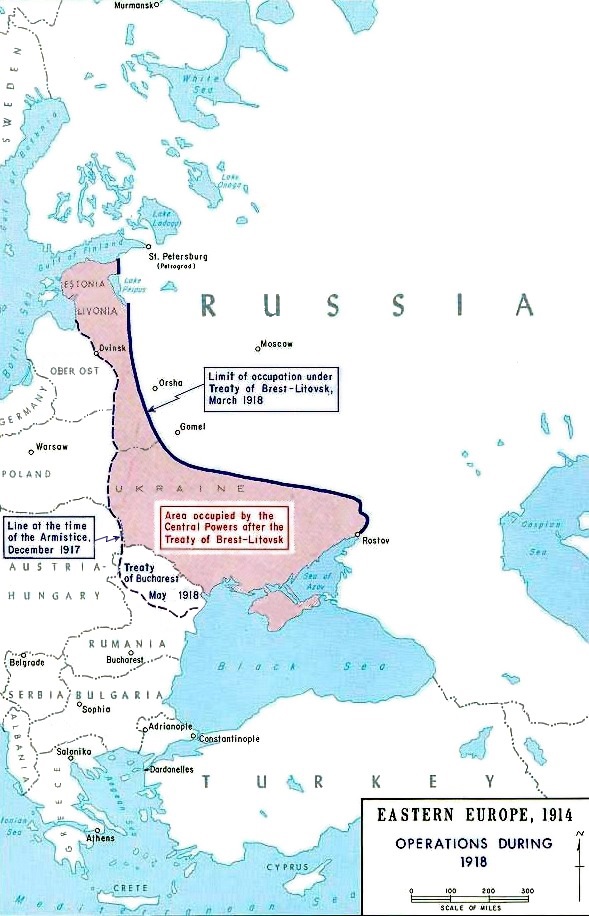
Set in early 1918, in the midst of the work for the Treaty of Brest-Litovsk, we follow the musings of one Max Hoffman, who is effectively running the show as Hindenburg and Ludendorff prepare their great offensive of 1918 (another overlooked point in alternate history) and he stumbles upon a rapacious band of Latvian Riflemen. Musing on how awful the communists are, he wonders if anything can be done to stop them. Enter captured Russian Imperial Guardsman Daniil Kostyshakov. Fresh from an escape attempt, he is approached with an intriguing mission, how would be like to rescue the imprisoned royal family from the clutches of the Bolsheviks?

If that sounds like a mad plan, or the setting of a crazy thriller, you're right! From here its a plan on how to carry out the mission, how to recruit troops for it, and where on Earth they can get what they need when the war is still raging!

We follow many fun Russian characters. In truth the Imperial Guards made the best of the book, from Daniil, to Kaledin to Turgeney, they all had their quirks and fun ideas which hooked me on them. The story then largely follows their attempts at reconstituting an Imperial Guard unit for the rescue, training for the rescue, and covering the minutia of details on how to actually accomplish these goals. Otherwise we follow a strategic recon team who scout the way, and the stories of two guards at where the Royal Family is being held, Chekov and Dostovalov. These two add an excellent depth and personal touch to the events on the ground, and gets into some pretty fun intrigue which has far reaching effects on the outcome.

I enjoyed the German crew of the L5 Afrika Schiff so much. It added a very clever element to the whole drama. The equipment seems odd for even buffs of WWI, but when compared between 1914 and 1918 the world was a very different place and the things which could be learned very different! The authors definitely put a lot of thought into the technology, tactics, and how to make that realistically work, which educated me quite a bit on many of the fascinating details of airship launches, flight, and what interesting uses they might have had.

Then the story takes us across much of Russia, and through many various halls of power. The long recon led by Turgeney has some signature fun moments, from piracy to a train robbery. However, it also contains many of the more lagging sections of the novel. For instance, the entire section which took place in the smuggling vessel might have been better excised, if simply for tying up a lot of narrative time which might have been better spent elsewhere, and from there it used far too much 'rape as drama' for my taste. This did though, include many worthwhile action scenes.

My only other critique might be that the story attempts to humanize the Romanov's a bit too much. Certainly it is to be remembered that they were people, but the former tsar and tsarina were relentless autocrats who were actively undemocratic and engaged in bloody reprisals against their own people all in the name of autocracy. Telling the story through their children's eyes was a far better choice both stylistically and when it came to arriving at a much more thrilling finale.

I was impressed that the authors managed to end up pulling together such a large cast of characters to - eventually - a single location. There are many clever plot points, twists, and overall revelations that I was kept in rapt attention to details until the very end.

The story rapidly reaches a very action packed crescendo, with all the action and maddening complications despite meticulous planning one could hope for. In fact the final act doesn't pull its punches and I was caught off guard by just how insane the situation became. Despite the best laid plans and all the training in the world, there truly are some things you just can't prepare for! A very unique and ultimately satisfying read which does leave me wondering how the world might have turned out otherwise.

Thursday, 6 January 2022

Storming the Capitol (1/6) A Year On

It is hard to believe that the terrible events of January 6th are now only a year old. In fact it seems almost like yesterday, even though so much has happened since then. While hundreds have been arrested and tried for the act, it appears as though they are going down as martyrs rather than treasonous criminals. Indeed, there is a frightening divide in the United States now where a purely partisan reality is entrenching itself. On one side is the old liberal order which trusts the rule of law to see them through, and on the other is a new, reactionary far right ideology which sees itself as persecuted by a corrupt system. The outright lie that the 2020 election was stolen seems to be, rather than weakened for the farce that it is, strengthened by commentators and politicians on the right pandering to a myth.

It does not bode well for the future.


I've seen the pernicious effects of this myself. Whether from online commentators calling the events 'staged' or 'mischaracterized' despite them happening on live television and hundreds live streaming their ideology and actions to the world. Or you have sitting politicians willingly and maliciously downplaying or outright fabricating events. One of the few people killed is now being hailed as a martyr by the right wing, while the GOP has been doing everything it can to hamper the investigation into events by the government.

Meanwhile the Democrats, ostensibly the party in power, have been reacting to the GOP outright enabling and allowing this treasonous talk with what one could call suicidal faith in the rule of law. Rather than treating the situation as unprecedented in modern US history, they seem to act as though as this were something that might be brushed under the rug. That it will be decided in the courts and in the ballot boxes. The GOP, whether through embracing the violent rhetoric or attempting to control the courts, treats this as a fight to the death.

Whether it is because an aging Democratic leadership in Washington is out of touch with most of the country - or reality - or simply an abundance of faith in the system (or adversity to changing it) they seem to be setting the stage for defeat in 2022. That could lead to worse, a defeat in 2024. The GOP seems to let no rules or boundaries constrain them. While recently the Democrats felt bound by the Senate Parliamentarian, the GOP in a similar situation fired and replaced them. This is nothing new, in the past decade the GOP flouted norms as it suited them, and the Democratic politicians have done almost nothing to stop them, or challenge them at their own game.

I'm not saying a game of political brinkmanship is the solution to the US's ills, but showing more backbone to authoritarians has never really been a problem. Rather than tackling the GOP head on, they target the foot soldiers and not the enablers. Only time will tell if their ongoing investigation into events bears fruit or even tilts the political headwinds slightly.

So far though, the divide between left and right is entrenching. I wrote last year that there are still chances for Americans to come together, if they can merely stop demonizing each other and understand their own common ground. But to do that one has to peer beyond a wall of rhetoric, hate, and fear. Many fears are sadly not rational. The ones propelling those who stormed the Capitol a year ago least of all. In the end, all we can really hope is that a nation's leadership can stand firm before an oncoming storm. It ain't over yet.

Saturday, 11 September 2021

9/11 Twenty Years On

In my grandparents time, Pearl Harbor was one of the most defining moments of a generation. I don't think for my (or even my parents) generation, any event was so Earth shaking as those moments when highjacked planes flew themselves into the former World Trade Center in New York. The images from that day will haunt me for the rest of my life I suspect. The world will be living with the aftershocks for a generation to come.


Make no mistake, twenty years later we are living in the shadow of the Twin Towers collapsing. The world as we know it changed immediately after that event, and it took on a momentum of its own.

Perhaps because it is the 20th anniversary of that terrible day, or perhaps because of the chaos we have seen playing out in Afghanistan recent, but because of it all, I am brought back to when I wasn't yet ten years old and I saw the world change. I remember the news conferences, the repeated footage, and the tumultuous decisions around the clock as the news tried to keep up with the response to the deadliest terrorist attack in human history which killed nearly 3,000 and wounded 25,000. I even remember the fear that crept into everyone in some form or another. 

Barely a month would pass before the Bush administration ordered military action in Afghanistan, and until recently, we were living with a "forever war" where US and allied forces were fighting an uphill battle against a tenacious enemy who had harbored the man who carried out 9/11. Little would the world realize that the war would go on for nearly two decades, and the most powerful military in the world would lose. Whether it was because there was no coherent mission, enriching weapons manufacturers, it was a war that went on well past the point of sanity and only succeeded, broadly, in carrying out its goal of impoverishing Al-Qaeda, and killing Osama bin Laden. In Pakistan. 

That of course, was not all. Seemingly losing track of the mission at hand the Bush administration then contrived to invade Iraq and topple the tyrannical regime of Saddam Hussein, a man who had nothing to do with 9/11. This would lead to another "forever war" which did toppled Saddam, but did very little for the stability of the Middle East as a whole. All the consequences of that decision are still playing out to this day.

I have been reading all about that history recently. The bungling, the fear, the botched reactions, and it is sobering. I can only encourage people who lived through it, and those born afterwards, to go out and read the more accessible history detailing the choices made going to war, and after the wars had ostensibly "ended" according to the politicians. It's a mess that, twenty years on, is still difficult to understand. 

History aside, I am choosing to spend this 9/11 living for tomorrow. We must remember the dead from that day, but we cannot forget the innumerable graves dug across the Middle East by decades of war and pointless struggle. We should open our arms to those fleeing the consequences of the actions of the West in Afghanistan and Iraq, and we should do better on the world stage in the coming decades. 

So today, on the 20th anniversary of 9/11, I ask everyone to take a moment of silence, not just for those lost in New York, but for every life lost in the last two decades. Remember these tragedies, and remember that we can do better in the world. There are so many people who have grown up not knowing the collapse of the Two Towers and its traumatic images, and they don't need to live in the shadow of the mistakes of the past. We can build a better world for tomorrow, and we should set our energies to doing so.

Wednesday, 2 June 2021

The Battle of Ridgeway

In June 1866, the year before Canada would become Canada, a group of Irish patriots under the moniker the Fenians, crossed into Canada with a simple plan. They would invade Canada and hold it hostage in exchange for Ireland's freedom. If this plan sounds insane, it's because it is. However, many were convinced they could make it work, and many would die before the whole fiasco came to an end.


The Fenians were a group of Irish rebels who were determined to free Ireland from British rule. Active for roughly twenty years. Founded in 1858 by American Irishmen and former rebels from the 1848 rising, the Brotherhood would try to recruit men to fight for Irish independence. Their earliest successes came when many men gained experience fighting in the Irish Brigade and other bloody battles in the American Civil War. Indeed, many of the future Fenian leaders such as John O'Mahoney, Thomas Sweeney and John O'Neill would see their first action in the Civil War and gain experience leading men.

In the aftermath of the Civil War, there was a large number of armed men with experience in war, but no one to fight. Why not then, the Fenian leadership asked, lead an invasion of Canada to conquer the, at this point disparate colonies and hold them hostage in exchange for Ireland's freedom? This was not a universally popular idea, and it led to a split in the Fenian leadership. However, plans for an invasion went ahead anyways. It is estimated as many as 50,000 men volunteered to be a part of this invasion. When push came to show however, the Fenians only managed to get a few thousand men organized, and most were dispersed once the American authorities got into action.

On the Canadian side, British spies actually had managed to penetrate the Fenian organization. They had successfully predicted a previous Fenian raid on Campobello Island in April of 1866 which was dispersed without issue. This in turn, lowered the guard of the Canadian authorities in Canada West (Ontario) who felt there was nothing to fear from the Fenian menace. Alarms had been common in 1865 and in 1866 the Canadians felt certain that they could control a Fenian invasion.

When John O'Neill kicked off his invasion in June it was not a secret to either Canadian or American authorities. However, none could pinpoint the exact location the crossings would take place at.

It was actually meant to be part of a broader strategy. One Fenian force would march on Toronto, another on Quebec, and they would overwhelm the Canadians. In actuality, on O'Neill's invasion of the Niagara Peninsula got off the ground, and there were only a few other small skirmishes 

In a well planned action, the Fenians first disabled the only warship on Lake Eerie, the USS Michigan by subterfuge. This allowed O'Neill to begin landing men across the Niagara River. Without USN ships to stop him, he was able to cross nearly 1,400 men to the Canadian side. The quickly seized the town of Fort Eerie, and began trying to bring over Irishmen to their side. They received no local volunteers.

Meanwhile, the Canadians quickly learned of the invasion and ordered out the militia, calling over 14,000 men to arms. In Toronto, the men of the 2nd Battalion of the Queens Own Rifles hastily mustered in Toronto and was quickly delivered to the Niagara frontier by train. They were joined by a similar quick mobilization of the 13th Battalion of Volunteers from Hamilton and two other quickly mobilized companies of militia in an ad hoc brigade. They were placed under the command of militia Col. Alfred Booker who, like the men under his command, had no experience with war, unlike the oncoming Fenians. The Canadian forces numbered about 850 men, while their Fenian counterparts numbered between 700 and 800 men.

Learning of Booker's route of march (possibly by 'tapping' the Canadian telegraph lines) O'Neill swiftly night marched his men from their initial position at Black Creek to the Ridge Road near the village of Ridgeway which would give the battle its name.

Booker's men had bivouacked for the night at Port Colborne. He had originally planned to make straight for Fort Eerie and take the town from a supposed Fenian rearguard. However, early in the morning on the 2nd, he received orders from the superior authority, British Colonel Peacock leading the 47th Foot and a larger relief column with cavalry and artillery, that he was instead to move to Stevensville and meet this column where the joined group, then over 2,000 strong, would attack the Fenian positions.

For reasons never adequately explained, Booker followed the spirit of Peacock's orders, but not the letter. Instead of moving to meet the reinforcement column along Skerk's Crossing to Stevensville, he advanced to Ridgeway and took the Ridge Road. This would lead to the Fenians learning of the change and being ready to meet the Canadians on the afternoon of June 2nd.

The following battle was, for all intents and purposes, little more than a skirmish between infantry battalions. Though each was grandiosely a brigade, none was stronger than a full strength battalion of regular infantry. There was no cavalry or artillery, and so it would come down to the skill of each individual commander. Though the Canadians behaved admirably, advancing into the Fenian fire and driving off their skirmishers and discomforting the Fenian left flank, a series of events that has never been adequately explained soon drove the Canadians from the field.

For some reason, in the midst of the Canadian advance, the order to "form square" was given. Whether it was the sighting of a party of mounted Fenians who acted as scouts, or merely a mistake by a bugler, the Canadians dutifully carried out a formation which had been drilled into them. Booker, immediately realizing his mistake, ordered the men back into line. Other accounts maintain that an attempt to relieve the front line by bringing up a fresh company of men caused confusion. Whatever the case, the Canadian militia was soon milling about in disorder. Seeing this, O'Neill ordered a bayonet charge which promptly routed the Canadian center. In contrast, the Canadian flanks withdrew methodically, skirmishing with their opponents, but the men did not regroup, and individuals and companies disorderly withdrew to Port Colborne. 

Seven Canadians would be killed at Ridgeway, while another two would die of their wounds days later. A further 22 Canadians would die of disease sustained while in camp in the subsequent weeks.

Six Fenians died on the field at Ridgeway, with another three known to have died of wounds after the fighting ended. Fenian casualties are difficult to estimate as many fled to the United States afterwards. However, another four Fenians would die in the lesser known but nearly concurrent Battle of Fort Eerie. 

A small Canadian force on the tugboat W. T. Robb, led by Colonel Stoughton Dennis who in his first action of bravely running in the face of danger, led 50 men to hold the town and hopefully capture any stragglers from an assumed Canadian victory. Instead, they encountered over 800 Fenians retreating from Ridgeway and other positions. In a doomed last stand the Canadians fought, but many were wounded - miraculously none killed - and captured. Other than this brief humiliation though, the Fenians let them go as they had to flee the oncoming British reinforcements.

In the aftermath, much blame was passed for the defeat. Only a victory at Pigeon Hill by the Canadians would salve the bitter wounds of what happened on the Niagara Peninsula. Booker was ultimately found to be moderately to blame for the fiasco, but the Canadian government at the time was quick to try and pass off the blame to the individual soldiers themselves, rather than admit it had not handled the crisis properly. O'Neill meanwhile, would be feted as a hero to the Fenian cause, and it would be celebrated. He would subsequently lead two further failed invasions of in 1870 and 1871. The Fenians themselves would peter out by the 1880s, replaced by later incarnations of the Irish Republican movement.

It was Canada's first real test of battle. The nine men who died in battle or afterwards have never properly been remembered. While most Canadian students have learned the story of the Fenian Raids and their roll in helping shepherd the various colonies towards Confederation, it is a battle itself which is rarely explored. Peter Vronsky has written perhaps the best single volume on the battle, and I myself used it as a guide to this piece. It is a book well worth reading, and may enlighten many people on a sadly unappreciated piece of Canadian military history.

One can only wonder what might have happened had the Canadians not gone the way they had, or what could have happened had Booker gone straight to Fort Eerie instead. That though, is speculation for another time!

Friday, 26 February 2021

Moonflower Murders

A few years back I had the absolute delight to read Anthony Horowitz's Magpie Murders. I was then thrilled to learn that in 2020 he would be publishing a sequel! We once again meet (former) editor Susan Ryland. Having moved on to what she hopes is a more idyllic life in Crete, she suddenly finds herself swept back into the world of Atticus Pünd and author Alan Conway. Now she has to go back to the UK and try to find out what exactly happened in The Moonflower Murders.

Picture is my own

Once again deftly using a book-within-a-book premise, Horowitz tells us a story that fits right in with the classics of the old school English murder mystery genre. This time he sets his sights on a much more modest idea, solving an old murder in a quaint, but modern, inn in the English countryside. 

Approached by a wealthy couple whose daughter has gone missing, Susan is asked to intervene in the death of one Frank Parris at the Moonflower Hotel. The Trehernes family was aghast when eight years ago one of their workers killed a guest for perhaps no reason. Swiftly convicted, the Romanian worker was carted off to prison despite flimsy evidence. However, now their daughter has gone missing and one of her last acts was to phone her parents and say that the man was innocent, and she had figured it out by reading one of the late Alan Conway's books.

Thrown into a mystery eight years old, and with no authority whatsoever, Susan must pick through a prickly family who alternate between distrusting her and bereaved, the family of the former murder victim who are outright hostile, and a police inspector who doesn't want her sticking her nose into the investigation at all.

It's a cast of characters that wouldn't appear out of place in an Agatha Christie novel. A wealthy family with a prickly relationship, a grieving husband of few means, a sinister cast of not so trustworthy extras, and the English countryside as a background. With many winks to old English detective stories, it sets out to take murder into the 21st century while trying to piece together clues from a book within a book that purport to solve the crime.

The secondary story Atticus Pünd Takes the Case, is from the titular Atticus Pünd series from her deceased former author, Alan Conway. Written in the vein of a Christie era thriller set in the 1950s, it tells a similar story with a cast of characters not so different - in subtle strokes - to the potential murderers in real life. It was a nice distraction from the main story with a complete series of twists all its own, but one that was cleverly foreshadowed in a way that kept me looking for clues to the killer in the principle story. Two mysteries in one has never worked out so well!

Horowitz manages to pile on twists while keeping the book entertaining and suitably throwing off your attention. There's enough surprises to keep you guessing to the very end, and overall he manages to wrap up the story quite nicely. Definitely another excellent mystery for the 21st century.

Saturday, 6 February 2021

Stories of WWIII

The Cold War, a 'frozen' conflict lasting from roughly 1947-1991, pitted the world's two great powers and their allies against one another. Hanging against the backdrop of this was the hellish destruction of WWII, and the ever present threat of nuclear annihilation following the successful detonation of a Soviet atomic bomb in 1949. It was the specter than haunted my parents and my grandparents generation. I however, was born after the war ended, just missing the end of the Warsaw Pact and the Soviet Union. So other than the continuing existence of nuclear weapons, I didn't grow up in the shadow of ICBM's trained on my home.

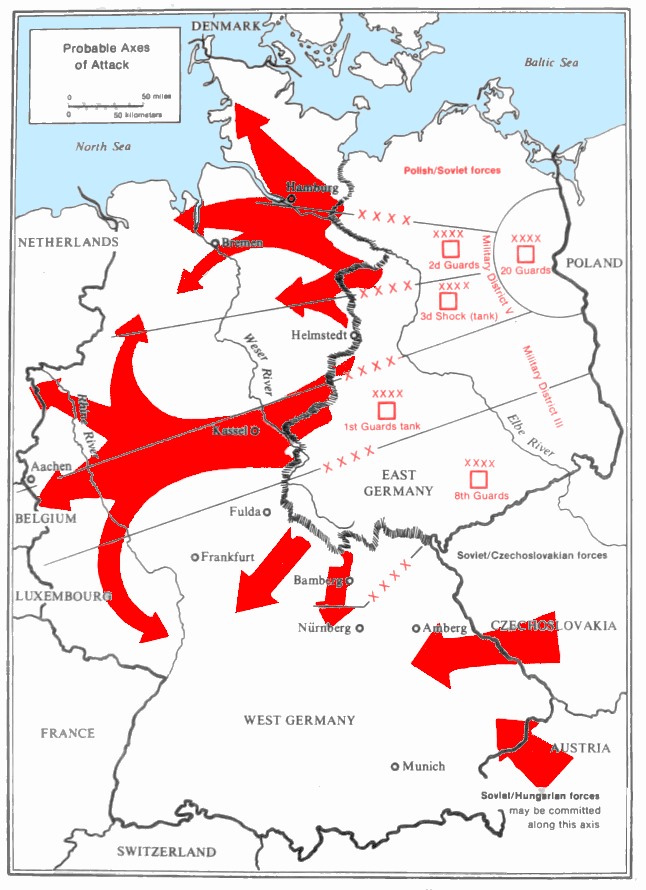
However, while there's lot's of talk about the Cold War going "hot" most of those scenarios refer to the sudden, terrifying appearance of a mushroom cloud over some city in the US. There's another scenario though, one where the bombs don't drop and mechanized forces backed up by missiles and satellites tear into each other across the European continent.

It seems, that Soviet plans all revolved around fears of a NATO nuclear first strike attack on the Soviet Union. In response, the Soviet Union would launch a limited nuclear strike of it's own to disrupt the ability of NATO forces to defend themselves while aiming to drive to the Rhine to force a diplomatic solution. Interestingly, it seems the USSR never contemplated a nuclear first strike against NATO, with one notable exception. They were were so confident of their conventional superiority that they expected to win any war on the ground which would cause NATO to launch it's own first strike against them.

Assessing the Soviet superiority in both mechanized warfare and troop strength (if not necessarily technology) it seems likely that the USSR with it's limited objectives and local superiority could have won a conventional WWIII in Europe. At least that was the fear.

There was a brief period in the 80s and 90s where this fear was assessed in fiction. I've been musing on that since last year when WWIII was trending on Twitter, and had been meaning to read some of the fiction around that. I settled on two books which, I feel, outlined the beliefs in Western (or at least American) fiction best. The first is by the most popular technothriller writer of the 80s and 90s, Tom Clancy with his classic Red Storm Rising which chronicles a war in the late 80s between NATO and the Warsaw Pact. Secondly, I'm reading Red Army by Ralph Peters which, well, chronicles the same. Thirdly, I'll be reading a modern take on a war between the Russians and Europe, Red Metal by Mark Greaney.


That will be my big reading project for the start of 2021, and it will be an interesting comparison in the techno thriller genre. Same themes, different stories, and very different ideas. Stay tuned!

Before I go though, I'd just like to recommend the Fuldapocalypse blog which regularly reviews this kind of fiction and gives you some interesting insights into the genre as a whole. And if you want to know more about the Cold War in general, you should definitely check out the Cold War channel on YouTube for the work they do on exploring this conflict! Well worth your time for fact or fiction!

Monday, 4 January 2021

What I Read in 2020

The year 2020 was a long, long year for me. Quite honestly it almost feels like the period between January and March was one year, between March and June was another and then June to September, and finally October to January. So, I feel like I've been through four years when its been just one. Thankfully though, I read a lot in the four years of 2020!

I managed to read 72 books and 34,204 pages between them. I'm not sure if that's a record for me or not, but it certainly outpaced what I read last year. I had actually planned 2020 as a fresh start in a new decade, especially for reading. I had started the year with the goal of doing a massive re-read of my favorite book series for the year. I had dedicated myself to re-reading a lot of my old favorites to see if they stood up, and then to maybe, maybe downsizing my collection. I mostly expanded it though. In the course of my re-read I went back to a few of my old favorites, The Moon Is A Harsh Mistress, Leviathan Wakes, Jennifer Government, and then branching into some of my favorite fantasy series. A re-read of Joe Abercrombie's amazing First Law series, then re-reading all of the Stormlight Archive so far in anticipation of the release of Rhythm of War this year. Finally I re-read, perhaps the perfect trilogy in the first three books of A Song of Ice and Fire. Though I had to put off my combined reading of A Feast for Crows and A Dance With Dragons until 2021.

On the whole, the re-read was highly successful. I didn't get to all of what I wanted, but I managed to read a lot of new books too.

Normally my year has pretty bog-standard reading. Fantasy, science fiction, and the occasional mystery, historical fiction or alternate history. This year however, I was committed to reading more on social issues, some on political issues, and generally more books by authors I had not yet read, but especially by women and people of color. 

A small cross section of what I read!

One of the first books I branched out on and took a chance with was The Secret History by Donna Tart. It's a novel set in the 1980s in Vermont at Hampden College. Young Richard Papen leaves his home in California to study Ancient Greek, and while there he meets an eccentric group of wealthy students partake in an almost cultish devotion to the art. From there, dark things transpire and poor Richard is thrown into a world well beyond his understanding. It's honestly one of the most fascinating and frustratingly good books I've read in years. Well recommended!

Something more in my usual wheelhouse that I read for the first time was 2312 by Kim Stanley Robinson. Originally written in 2012, it was the authors attempt to reach 300 years in the future and grapple with what humanity might look like. It tells a compelling story of love, loss, and a humanity startlingly distinct, yet also depressingly still similar to our own 21st century selves. It's an old planetary romance novel in the style of recent reads. A solid piece of science fiction literature!

A non-fiction book I distinctly enjoyed was The Global Crisis by Geoffrey Parker. It's a fascinating look at war, religion and climate change in the 17th century. It supposes an idea of a "general crisis" taking place across the globe brought about by previous socioeconomic conditions, religious awakenings and social upheaval, but most of all, by climate change. The 17th Century was a genuine era of emergency, encompassing the whole world with events like the Thirty Years War in Europe, the collapse of Ming China, the near extinction of the Virginia Colony, the establishment of the Tokugawa shogunate, and the Puebla Revolt. It was referred to by some as the "Age of Iron" due to there being a genuine sense of global calamity. It's a very academic work (and I read the abridged version!) but it is chock full of information, research and first hand accounts of the people of the era. It established to me that this was one of the most fascinating periods in human history. 

In other realms of non-fiction, I also read The Sport and Prey of Capitalists by Linda McQuaig. It's a very short, but spectacularly enlightening read. It details the history of public ownership of utilities and natural resources in Canada, while also detailing long campaigns of poor deals and mismanagement by private entities. It compares and contrasts the systems here with those of other countries. There's notes on missed opportunities and possibilities for how we can make our own institutions better.

A book which acted as a real eye opener for me was Why Women Have Better Sex Under Socialism by Kristen R. Ghodsee. From showing how many early socialists were women, to the egalitarian thinking of other socialists and socialist writers, it also highlights how modern liberal democracy, and capitalism in particular, has made women less free and arguably less equal as well. It's a spectacular examination of how in Eastern Bloc nations, there was a long history of, at the very least, pandering to women's rights, establishing job and childcare opportunities to make something of a more level playing field among men and women, and makes a compelling argument that had the Eastern Bloc not adopted such policies, there would have been little impetus for Western nations to adopt them as well. Far from cheerleading for the East Bloc however, it rightly points out their flaws and failings, while also arguing that the ideas behind socialism could do a lot for our economic lives, and even our love lives.

I think the most shocking, if not the most radical book I read in 2020 though was The Uninhabitable Earth: Life After Warming by David Wallace-Wells. It fleshes out what he wrote in a 2017 article, and runs the range of possible global outcomes across various levels of warming. He points out that with rising temperatures - and they will rise, it's only a matter of by how much - there's a gambit of problems which will impact across multiples spheres. Mass extinctions, spreading disease, rising sea levels, frequent natural disasters and increased risk of internal and external conflict between peoples. It's a grim read, but with a hopeful message. It pairs really well with another novel I read this year, The Ministry For the Future. Both are somewhat shocking examinations of the potential ramifications of climate change, and frankly, I would advertise them as must reads.

On a more fictional note, I also read Mexican Gothic by Silvia Moreno-Garcia. I've done a longer review for this one, but in brief; it takes the usual horror of Gothic fiction and transplants it to the highlands of Mexico. The story has everything you love from Gothic literature, creepy old houses, a reclusive family, and a very deep and disturbing mystery.

Another author who I was very fortunate to run into again was Max Brooks. I was able to re-read his cult classic World War Z, and his new, unique work Devolution. It was amusing to discover this year as well that the one movie monster my dad has a fear of is bigfoot. I got more than a little mileage out of this book by describing it to him. A fun and very unique take on the monster horror style, I definitely recommend this to horror buffs everywhere!

I also caught up with Brandon Sanderson's works by reading Rhythm of War. This is the latest work in the Stormlight Archive and a very well done piece. It defies a lot of your expectations and takes you deeper into the world of Roshar and his fictional cosmere as a whole.

Finally, one of the best novels I read this year was The Parable of the Sower. In my bid to expand beyond works I'd already read, I tried to find works recommend by others. This novel by Octavia Butler was highly recommended in many different circles and by many different authors. I dove in to this world in our near future and found myself entranced. It was a phenomenal read and one which I have to recommend to anyone who loves science fiction. Tracking down the sequel is one of my main reading goals for 2021, along with the rest of my reading list.

Of course, I did read 72 books this year, so I had a lot to choose from to celebrate. These books specifically though, were easily in the top ten of what I read among the re-reads to start the decade. I managed to reconnect with old favorites, while finding lots of new work which I could enjoy! I'm happy for what I accomplished this year, and I'm hoping I can read more next year!

Wednesday, 11 November 2020

What If the Central Powers Won WWI 2

Last time, I discussed the Schlieffen Plan enacted by Germany in 1914. Though that plan was very flawed from the get go, it working as a 'stop gap' to make a short victorious war for the Central Powers is a prerequisite for the the whole premise of that piece. The changes would follow logically, and the Germans would of course have a reason to seek peace. That is a scenario where the Central Powers can absolutely be seen as the unambiguous winners of the war. This scenario though, well it's one that certainly doesn't have an unambiguous win, but one which can still see a Central Powers victory.

The Kaiser in a communications trench, April 1918

Option 2) Peace of Exhaustion

I have talked about this before, discussing the 'victory' from the German Spring Offensive in another article. However, even that was technically a German defeat as the Entente still had the upper hand at the negotiating table. For this article, I'll be looking at the Entente not having the upper hand, and instead examining a peace of exhaustion. I would highly recommend reading my previous article about the Spring Offensive and victory, as I'll be using a few of the same ideas here, but with a different outcome and series of events.

However, for this all you really need to know is that there are two important differences from our timeline. The first is that in this TL the United States, for whatever reason, chooses not to intervene in the First World War. Without intervention, the Germans are not facing the serious manpower crunch they were facing in 1918 with the Entente now experiencing a windfall of millions of fresh troops coming from North America and their financial system being propped up by American loans. Without American loans, it is questionable that the Entente could have 'borrowed' its way further into 1919 and both sides would have found themselves deeply in the economic red as the year wore on. 

That though, is an extremely convoluted and hypothetical economic speculation. I'm not really an expert on it and there's so many competing narratives, whether the US could afford to let the Entente nations, who had borrowed heavily from them, default, whether the Central Powers treasuries could have foot the bill for another year of fighting economically, if the Germans could get supplies from their conquered territories or riches to sustain the war effort, ect; it's a lot of economic speculation, so let's stick with what we know.

Without the imminent threat of American intervention, one can ask whether the Germans would be as compelled to launch their OTL planned "Spring Offensive" to deliver a decisive knock out blow. My own speculation is that, yes, they would want to try and launch one vicious offensive in the spring and summer of 1918 to try and force the remaining Entente powers to the negotiating table. This, potentially, avoids another year of war and another grueling winter. The Entente too, will have no enormous pool of fresh American manpower waiting to replenish their ranks.

For the purposes of this scenario we can speculate that the Germans, in this scenario, manage to take Amiens. This would have been, something of a catastrophe for the British and French. Amiens was the major rail line connecting the two Entente armies, and even though some French forces had been dispatched to the north to support the British, it is debatable they could have managed to keep well supplied had Amiens fallen. 

This loss was the nightmare scenario for the men fighting the Germans at this point. Amiens was probably the only true strategic target (besides Hazebrouk) the Germans might have captured in their offensive in 1918. Doing so would have given them an actual strategic advantage that the original attack very significantly failed to produce.

However, like OTL, these German forces would still be exhausted, and to take Amiens they would have, undoubtedly, have had to take more casualties than they did historically. For the purposes of argument let's say that as compared to OTL the Germans lose 180,000 of their best, irreplaceable, troops. That's 20,000 more than OTL, but probably reasonable based on how well Amiens was historically defended. That means that, for follow up operations that are supposed to drive the British back to the Channel ports, they have even fewer troops to attempt it with.

I don't think it's a stretch to imagine that this version of Operation Georgette would be a disaster as well. With fewer men, a desperate British defense, and most likely having to hold off an Entente counter offensive towards Amiens, the Germans simply flail uselessly against the British defences, while by the skin of their teeth holding Amiens.

This will mean that, by May, it has become clear to the Germans that they cannot win a decisive military victory in the West. The Germans would have no chance of taking the vital rail center at Hazebrouk, which supplied the British armies in Flanders, and be facing a possible Entente counterattack over the summer. 

Here, much of this scenario does run similar to my piece from back in 2018 which speculates about a naval battle of Terschelling and German attempts at negotiation, but I will add one more speculation. The Entente will, naturally, try one do or die offensive of their own. This waits until the high summer, June and July, to get rolling, giving the Germans time to dig in. Even with their desperate straights, the Germans in their new positions manage to roughly hold their gains, and importantly, still cling to Amiens.

The failure of the Entente counterfactual "Summer Offensive" will signal to both sides that the European War has reached a stalemate. On the global front, the British most likely are stalemated in Mesopotamia and Palestine, having withdrawn troops to the more important fronts in Europe, and otherwise are engaged in chasing Paul von Letto-Vorbeck around German East Africa. Though the Entente is dominant at sea, holding on in France, and still, technically, more economically sound than their Central Powers opponents, both sides will have to face the facts that they can't win a decisive victory.

Enter America, as a peace broker.

Without the Entente driving the Germans to the table, or vice versa, the Germans will have just as many cards to play. Potentially approaching the Americans themselves, the new Austrian Kaiser and the German Kaiser, could play up their desire for peace and ask the United States to act as mediator. This would effectively be a diplomatic coup, which would probably earn German and Austria-Hungary sympathy with Americans and the still powerful German and Central European populations and voting blocs in America. Woodrow Wilson would probably insert himself, somehow, into the peace deal, but at this point the Central Powers can semi-dictate terms.

This then, is what I would imagine:

The German gains in the East, already established by the Treaty of Brest-Litovsk, are ratified, since there is fundamentally nothing the Entente can do to change that and Russia is embroiled in civil war and not an effective member of the Entente anymore. This means that the Germans split off client states in Poland, the Baltics, and Ukraine to act as satellites in Eastern Europe.

Meanwhile, the Ottomans have been promised all the land they lost in the 1877-78 Russo-Turkish War, and without the British to detain them, they have a chance to reclaim some of it. The historic Transcaucasian Democratic Federative Republic would probably form, then break apart, for similar reasons. The Ottomans may end up seizing much of what becomes Armenia and some of Georgia, and the total outcome depends quite a bit on the outcome of the Russian Civil War.

In the West, the Entente is forced to accept that the Germans now have a say in the government of Belgium. The United States will insist on Belgian territorial integrity, but I have no doubt the Germans will manage to keep Belgium under their thumb diplomatically in exchange for a status quo antebellum on the borders. After four years of bloodshed, not much will have changed on the European frontier.

The Germans though, will lose the totality of their colonial empire in exchange. Despite Lettow-Vorbeck's heroic actions in Africa, this is not enough to prevent the British and French from navally dominating them. Japan controls their Pacific and Asian colonies, and the British take what is left.

The biggest problem though, will be Russia. They are a boil that needs to be lanced. In a scenario with a reasonably intact Germany, the British and Germans will probably manage to get over their anger at one another and support the White Russians in the war, but, the Germans might also get caught up in being bankrupt, and the British too. With the need to keep a lid on their own new Eastern European empire and money and economic problems at home, it's not a stretch to think both Britain and Germany will be too busy gobbling up their own gains, and cash strapped to boot, to support the White Russian forces. 

Shorn of Western support, the Whites are crushed like they were in our own history, and the Bolsheviks come to power creating a bit of a truncated USSR.

Technically, the Germans have won World War I. They have lost no territory in the West, gained territory in the East, and are triumphant against Russia, who was considered one of their most dire enemies. They have however, lost their global colonial empire, severely damaged their economy, and now must keep a lid on unrest in the East. Their enemies are not any better off though. The French have buried an entire generation for little gain, the British have enlarged their empire, but are broke and in hoc to the United States, and the Russian Empire is no more. Germanies allies though, are basket cases. The Ottomans have lost their religious ruling mandate to an Arab revolt, the Austro-Hungarians are broke and facing unrest at home, and arguably only Bulgaria has made any gains.

Everyone is broke though, so technically everyone is a loser. The notable exceptions are the United States and Japan.

The 1920s and 1930s will be interesting. An economic downturn is very likely, and unrest across the East most likely unfolds throughout 1919 and well into the 1920s. The Austrian Empire may manage to survive by federating, but it might also go down in flames.

In the East, the Germans will probably face pressure from the new USSR which will try to ignite communistic/nationalistic uprisings against the German puppet governments, and any forces sympathetic to them in the decaying Ottoman Empire. This may, in time, lead to a second war, one maybe supported by vengeful Western powers. Or, maybe, broke and gorging themselves on German colonies the former Entente will let Germany and Russia squabble over central and eastern Europe, only looking to increase their hold and stabilize their own empires. Meanwhile, Japan and the United States will becoming rising powers in the Pacific. 

While only technically a German victory, it is still a victory. One of mutual exhaustion to be sure, but one where the Central Powers have, arguably, gained more than they lost.

Wednesday, 9 September 2020

What If The Central Powers Won WWI

There's a pretty healthy market for works on alternate history regarding WWII or a Nazi Victory and I've read a lot of it, but there seems to be something of a dearth speculating on what might have happened if the Axis had never risen at all. What if, instead, Germany stood ascendant in Europe, the Entente were humbled, and the Central Powers had stood triumphant in the Great War?

So there's two options for a Central Powers victory, the 'quick' victory of knocking out France in 1914 and then turning around and bruising Russia until it asks for an armistice in 1915-16 or the long painful drawn out peace of exhaustion circa 1918. I'll cover both in these coming articles.

Option 1) The Short War

The Imperial German Military, prior to 1914, had won a series of stunning victories over it's European opponents from 1864-1870, whether the Danes, the Austrians, or the French, they had shown an incredible ability to take the fight to the enemy and overwhelm them forcing peace on them. With how wars had gone afterwards, the Russo-Turkish War, the Second Boer War, and even the Russo-Japanese War, European military planners had every expectation that any war they fought would be relatively swift and decisive. A multi-year slugging match was not envisioned by almost anyone at the time.

That was the basis around which the Schlieffen Plan was made. The quick knockout blow to France, and then turning around to bring the fight to Russia. In brief summation, a quick knockout blow to invade France through Belgium, swing around and sucker punch the French, and occupy Paris and force the French nation to the negotiating table. 

Was this a feasible plan in real life? Would the French have simply surrendered? Eh, very hard to say, but probably not. It was a flawed plan with many holes, and was absolutely dependent on the French doing as the Germans wanted, which as we saw in our own timeline, wasn't going to happen. It was inflexible, inaccurate, and didn't allocate nearly enough men before it began getting messed around with during the historic Battle of the Frontiers. Then the logistics are another story of flawed improvisation. The Great War channel does an excellent video on the plan and why it failed historically.

For the purposes of this discussion, we're going to assume that the Germans do manage to swing around the French and occupy Paris, forcing the British and French armies towards the Channel and the south of France. The French, demoralized and looking for an easy peace, decide that they will accept negotiations with the German Empire, but no armistice is signed right away, and the BEF is allowed to slip away.

Now, important to note here is that until a peace treaty is signed, the Germans cannot send all of their strength to the Eastern front with Russia. They have to keep enough troops to occupy the portions of France they have, and occupy Belgium to prevent the British from trying to sneak their way back into the Continent. Instead, negotiations probably muddle through to the beginning of 1915, and the Germans take some land, annexing a strip of the coast at Dunkirk to vassal state Belgium, and then the regions around Briey which control much of French iron production.

However, it should be noted that the Germans will want to negotiate a quick treaty, so they probably will not be able to be as harsh as they like. The French will not have been decisively defeated, French armies are still in the field, they still have British money and ships backing their own not inconsiderable armed forces and economy. They may forgo most land claims entirely save Briey, and the Dunkirk strip in exchange for a larger indemnity to keep the French out. 

Assuming then, that the French fold for a quick armistice for a large indemnity, a minor loss of territory, and no change in their colonial empire (something which the Germans would have been pretty powerless to effect) then it could be speculated this would be a success for the Germans. Now they can afford to turn more men to the East and go beat up Russia.

This doesn't mean they're done fighting though. The British will be rearing to go fighting on the seas, they will most likely send troops to fight in Russia instead of France, while diverting more effort to messing up the Ottoman Empire in the Middle East. However, there would be fewer neutral powers, like Italy and Romania, willing to join this war on the side of the Entente with the Central Powers so clearly triumphant.

How much of a difference British forces in Russia makes is hard to quantify. Their ships will certainly still help strangle the German economy, even though they'll be stretched thinner. British troops in the Baltics would probably prevent the Germans from so completely overrunning them and act as an important shield to St. Petersburg. However, with the Russians themselves not having much more luck than OTL against getting battered, and possible strains between British and Russian commanders, it is unlikely they can really hold off the Germans into 1917 without both sides deciding to sue for peace. The Germans would have the worry of French deciding to break their treaty, as they are merely humbled but not broken, and the British and Russians would be bearing the brunt of the fighting.

Peace in this scenario will probably mean similar annexations from the Russians (an independent Poland, Ukraine and Belarus) but probably the Baltics will stay in Russian hands. The Russians too will be forced to pay an indemnity. Something similar enough to Brest-Litovsk, but not exactly it, changing with the face of the war.

Now, with Britain probably having been forced to withdraw from the Continent with both of her allies bowing out of the war, she could choose to fight on. However, with only her navy and smaller army, there are few places they could actually menace the Germans. They can keep beating up the Ottoman's, but what would that serve? They could keep the blockade going, but that is a costly and long term solution which may not bear fruit with the recent German conquests. The Germans themselves, facing the problem of Napoleon, would probably try more indirect attacks on Britain, as they couldn't hope to invade the little island.

Instead, the two sides will probably find themselves each making an unhappy peace with one another, the Germans settling in to an uneasy control over much of the Continent, and the British, unbowed, unbent, unbroken, looking to the future when they can unseat Germany. The Great War ends, late 1916.

It's important to note that despite the Germans laying out their strategic hopes in the historic Septemberprogramm, there is practically no way they will get everything they want from their victories. Changing circumstances in the war, the need to garrison new conquests, and the simple need to keep certain players out will mean that the Germans can't just take what they want. Even the Entente Powers in 1918/19 at Versailles simply couldn't dictate terms to the defeated Central Powers as they fell apart. They had to make many sacrifices, and they had overwhelming military power. The Germans here, will not. I think there is far too much speculation around a Central Powers victory giving them everything they desire, when the historic Entente victory came with so many pitfalls of its own.

So what happens to the other Central Powers in this scenario?

Though Germany took the blame for starting the war at Versailles the country which arguably bore the guilt for feeding the conflict into a larger war was that doddering institution known as the Austro-Hungarian Empire. Though a Serb assassinating Franz-Ferdinand started the conflict, Austria-Hungary's increasingly strident and almost insane demands forced Russia's hand which triggered an avalanche of military mobilizations and interlocking alliances that would leave millions dead. Historically, the empire was battered into submission and the death of Emperor Franz Joseph and the succession of his great-nephew Karl, meant that there was no truly stable force to keep the empire alive and the Fourteen Points of Wilson, coupled with increasing nationalistic unrest and defeat, splintered the Empire permanently.

Here though, if the treaties can be concluded in 1916, you have an Emperor who has lived through a successful war and when he dies it may well be in a nation at peace. The new Emperor Karl, who appeared to support a more federated empire, may be able to bring stability to the various realms which comprise this great chunk of Europe. With some minor concessions from Serbia and Russia in territory, the Empire may very well thrive and be able to rebuild. A victorious Germany next door will be a very good way to keep a lid on things, and the need to mind Germany's new vassal states in Eastern Europe will probably cinch cooperation between the two. The empire will probably be stable, for a time at least.

The Ottoman Empire on the other hand, the one power which Britain would probably concentrated a lot of its energy on, would still be badly beaten up. The British would have done their best to kick off regional revolts like they did in our timeline, the Armenian genocide would still have taken place, and the Ottoman's would most likely still have suffered at the hands of Russia in the Caucuses. It would be the now very sick man of Europe, and even with help from its other Central Powers benefactors would probably not be long for the world.

Nationalistic revolts, angry Arabs, Kurds, and Armenians, all probably see the Ottomans descending into nasty civil wars and revolts in the 1930s perhaps as the army will eventually get fed up and overthrow the Sultan. Expect it to break up before too long I think.

The last member of the Central Powers, mighty little Bulgaria, will also be quite pleased with what it accomplishes. Having been badly beaten in the Second Balkan War, the Bulgarians nursed hearty grudges against all their neighbors, and historically the ascendancy of the Central Powers in 1915 brought them in on their side. Here, that obviously still happens, and so they help crush Serbia, and then go on to menace Greece and Romania into neutrality while sending men to help bludgeon the Russians. Historically the were promised the portions of Serbia in Vardar and east of the Morava River. They may even be able to use the victory to level concessions from Romania for the portion of Dobruja they had so wanted historically. Either way, Bulgaria will be the big winner from this war. 

In the rest of the world, a white peace with Britain may see the Germans take control of the Belgian Congo, as a stepping stone for a greater German empire in Africa as they can't force Britain's hand in Africa, nor that of France. They may be forced to relinquish their Pacific holdings, but with the Congo in their hands, no great loss. The British Empire remains untouched, the Japanese Empire has made some minor gains at the Germans expense, and so are probably on Germany's hit list for the future.

Hypothetical Europe/Africa circa 1918

What about the neutrals though? Those who didn't join the war?

The obvious elephant in the room is the United States. Having sat the war out they haven't yet had to build up their military strength, and having only partially fallen menace to Germany's submarine warfare campaign, they will maybe only see naval expansion as a necessity. Without having mobilized a large wartime army, no Zimmerman Telegram to make them feel threatened at home, it is unlikely they will truly develop the military muscle and nationalistic pride they had in our timeline. Instead, I think it likely that the ethnic nationalism (first language newspapers, purely German speaking communities among others) persists to a great degree in the 20th Century, possibly until well past the midpoint. The US is more concerned about the chaos in Mexico on it's southern border and collecting the debts the Entente owes them.

Italy meanwhile, is sulky because Austria still controls territory it considers Italian, they have competing ambitions in the Adriatic, and Italy still wants to expand its African empire. They are probably side eyeing the Central Powers whom they screwed over by staying neutral, and the Germans and Austrians are doing the same to them. Romania, for her part, is simply feeling lucky it sat out the war. There's an uneasy peace in Europe.

By 1920 the world is in an uneasy new status quo. France, Britain, and Russia will all be hopping mad, and looking for revanche, while Germany is busy policing a new colonial empire in Africa and Eastern Europe, neither of which may take kindly to being occupied. How long this can last is open to debate, but with a well armed and still wealthy Britain to back Germany's enemies, I think it's only reasonable to conclude both sides would be looking for Round 2, and with a short decisive war being the norm, why not?

Since if I continue this piece to cover the war of exhaustion we're going to run over four to six thousand words, I'm going to split this into two for a part two, Peace of Exhaustion! Stay Tuned!