Monday, 30 September 2019

A Little Hatred

Once again we're looking at a book I have been excited for few months to read. Joe Abercrombie, perhaps best described as 'the Quentin Tarantino of fantasy' returns to his First Law world with the first installment of a wonderful new series. In the new book A Little Hatred, we kick off the Age of Madness!


Picking up thirty odd years after the original First Law trilogy, we are now viewing the world through the eyes of new characters, some the children of previous characters and others entirely new people populating this fascinating world! We have the self centered Crown Prince Orso, the unscrupulous daughter of the Grand Lector, Savine dan Glokta, an up and coming noble from the North in Angland, Leo dan Brock, daughter and potential witch Rikke, veteran and family man Broad, urchin and revolutionary Vick, and a named man of particular distinction working for the forces of the North, Clover.

This new cast has many connections to the old cast. Friends, children, and others who have come to the fore. They are in a new world, a new age. The chimneys of industry rise over the Union, the old Gurkish Empire is in shambles, and rising powers in the east and west, the Old Empire and the Kingdom of Styria, all strive to displace the Union as the foremost power of the world. But this is an unequal age, unrest is formenting in the Union as workers struggle to survive, the nobility is restless, and above all, war looms large in the North. All is restless in the Circle of the World.

Because I have not yet talked about the previous trilogy (which I will get around to reviewing in full in 2020) I will be making this review as spoiler free as possible. So no worries, I will not be giving anything away here. Pro-tip though, don't do what I did and go to the First Law Wiki and spoil some minor plot points!

For those familiar with the first trilogy (and the spin offs) you will be quite happy to know we come back to a world well versed in moral ambiguity and bloodshed. Some old faces are still around, some have gone back to the mud. You'll be quite happy if you've read all the books so far, and I can say without question that this keeps Abercrombie's signature style, as well as adding some whole new troubles and fun into the mix!

The cast is well rounded, and a particular new standout is Clover, something of a lazy, indolent layabout. He is new to this series, and he helps run Abercrombie's style from the moment he steps foot into the plot. To be clear, he is self-centered, amoral and very much willing to use violence to achieve his ends when absolutely necessary.

Each character has their own signature style and plot line, and they often intersect in quite interesting and often very surprising ways. I guarantee that readers will be kept guessing about the penultimate destinations (and fates) of so many of our 'heroes' to the very end of the story! Some people are genuinely heroic, others are wolves in sheep's clothing, and it is up to you to figure out which is which!

Blood soaks every page almost from the beginning of the story. It is so much more than that however, as complex stories about politics, economics, and even a smidge of philosophy gets thrown in. It is a fast paced read, with many twists and turns, and our cast will both surprise and horrify you to equal degree. If you aren't shocked and appalled at the end like I was, you really won't have been paying attention!

The themes of change and how it effects everyone are well addressed. On the cusp of an Industrial Revolution, much of the old order in the Union has been upended. The nobility still control much of the world, but are finding themselves squeezed by new taxes to pay for wars and industrialization. The working men are also squeezed by taxes, but greedy nobles and industrialists buy their land out and put them in miserable shanties to eke out a rough existence on the edge of death and poverty. What we read is almost Dickensian in nature, but it is still something just shy of the horrors and brutality of our own gilded age. Savine is a particular window into this world of squalor and nouveau riche mentality which keeps the wealth flowing upwards, and it is well examined all around. From the poor to the wealthy, things can go downhill quite quickly.

As usual, Abercrombie delivers on the action and the intrigue. Bayaz looms large over the plot, and you'll be happy to see he's back and just as bad. The story is well split with the characters, and even some with only a bit of screen time get fleshed out quite well in little asides that build the world and establish the madness of the times the characters are going through! The ending really does set us up for the sequels, and it makes me unable to wait for the next installments!

A definite must read for people who love the fantasy genre. It's an especially important read if you want to read dark fantasy done right. I love this author and I can't recommend him enough!

Wednesday, 25 September 2019

The Testaments

Three months ago I mentioned my excitement at seeing the long awaited, if somewhat surprising, sequel to the The Handmaid's Tale. When The Testaments dropped on September 10th in my city I was quick to pick a copy up. Sadly, I was not as quick to read it as I was working through my existing reading list at the time and didn't believe rushing things would bring me any benefit. However, I was finally able to get back in to the world Atwood crafted in 1985.


I will admit, I was a little trepidatious at first. I generally am not a fan of sequels published long after the fact, and see them as usually being far inferior to their progenitors. However, I was lucky enough to see an interview with Margaret Atwood hosted live from London at a local theater. In it, I heard  some excerpts read from the book, and an altogether too brief talk with the author about her work and her decisions for writing it after so many years.

Naturally of course, many of them had to do with the current politics in the United States, but they were also influenced by the advent of the Me Too movement, and campaigns for women's rights the world over. It was also because the Handmaid has become a surprisingly popular and effective method of protest. Showing up at pro-Choice rallies, and standing as a silent testament to the suffering women will endure when the rights to their bodies are taken away by men. In that case, how could she not write a sequel to explore more of the world of Gilead?


The Testaments is very different from the original. The original, which told the story through one narrator's view which often included hazy recollections, is now told through three distinct perspectives. They are alternatively called: The Ardua Hall Holograph, Witness 369A and Witness 369B. Each has their own names, but as with the case of identity in much of Atwood's work, those prove to be fluid and I won't spoil anything by using the various identities and pseudonyms characters operate under, save one.

Using three different perspectives to tell the story set in Gilead is, in my opinion, genius. Though only one of the narrators is an adult, all three convey a different set of ideas, cultural upbringings and motivations. Each is quite understandable, sympathetic, and ultimately engaging in keeping you interested in the outcome of these in-universe historical documents.

The one character whose name I will reveal, is that the Ardua Hall Holograph is one of the villains from the first book, the erstwhile leader of the Aunts, the women who control other women in Gilead, Aunt Lydia. Hers is a shocking story, one which shows an amazing insight into what creates an authoritarian regime, what one must do to survive in one, and how one can be brought down. In doing this Atwood effectively wields empathy like a cudgel, as no doubt those who had read the original book or watched the television series felt they could never like or sympathize with a woman who engaged in the wholesale abuse of other women. The story of Aunt Lydia shows this not to be true.

It is a fascinating tale of how indoctrination and reshaping a narrative is used to control and coerce subject populations in authoritarian regimes. We see the start of Gilead, and a great deal of the brutality used to begin the control of women as seen in The Handmaid's Tale. What is fascinating is that, other than the specific roles of Aunts, Handmaid's, Wives, ect, Atwood has drawn almost entirely on real historical precedent for how awful regimes are established and keep power.

As a small aside, this can almost be seen as a snub against those who insist "it can't happen here" or that the United States is somehow immune to the power of authoritarian instigators. Indeed, such an idea has been snubbed as far back as the 1930s in a very literal way. A good message to take from this book, and its predecessors then, are that our democratic rights must be guarded very carefully. Hence the powerful, silent symbolism of the Handmaid.

Wednesday, 28 August 2019

Aftershocks

A month ago, I was mentioning a new book from Marko Kloos Aftershocks, the first book in his new series Palladium Wars. Kloos is fast becoming one of my favorite sci-fi authors, I had devoured his Frontlines series last year in some excited quick reads, so a new series by him seemed like a great thing to jump into. And so, when this book premiered, I was sure to buy it on Kindle the first chance I got.


Jumping in, I found myself in a rich new star system with a fascinating backstory. We come to a colonized star system which has, after years of  brutal war, finally found itself at peace. Enter Aden, a former language specialist in the elite and infamous Blackguard of the Gretian armed forces. The Gretians had just launched an offensive war against practically everyone else in the solar system, and then found themselves ground down to dust by attrition. Having spent the last five years as a prisoner of war, he finds himself about to be released and adrift in the world.

Indina, is a soldier from Palladium, a high gravity world where people eek out existences by carving land from the very mountains. She is with the Palladium Brigade as part of the Gretian occupation forces. She suddenly finds herself under attack from a deadly and unknown adversary, which culminates in the near destruction of her entire platoon. Her only thought now, is revenge.

Dunstan, of the Rhodian Navy and the frigate Minotaur is on what seems to be routine patrol duty protecting the former Gretian fleet which will be partitioned among the former allies and kept to ensure Gretia never industrializes to prevent a threat to the rest of the system again. However, as the time to partition the fleet up, it ends up destroyed in a spectacular, and what should be impossible fashion.

Finally we have Solveig, the heir apparent to a great Gretian business dynasty whose random luck at being born before an arbitrary time limit means that her families powerful corporation will remain in family hands. This unlike many powerful formerly family owned industries which were forcefully nationalized by the occupiers in order to strip power away from the native Gretians. However, she lives in the shadow of her powerful and dangerous father. His plans for the future may be radically different from her own.

With these character sketches here you get something of a brief sketch of the overall plot, and see some of what to expect.

All of the characters do get very well fleshed out, and pretty evenly developed, but one character who goes for ages without much development until the final part of the story is Solveig. She almost just exists in this story without a lot of purpose, and is actually entirely absent from the plot until very near the end. It's a little confusing really, but it does add up, in something of a limited way at the end.

The book is very much Aden's story, and perhaps that is the authors intention to focus on these core characters and each book will then focus on them and their development until things come together at the very end. That is at least, what I am hoping for, since things seem very confusing at the moment. But most of the action, character development, and story was dedicated to Aden finding his way home, and finding a home in general.

Don't get me wrong, this is still a good read, but unlike the tightly plotted narrative of Kloos Frontlines series, this plot is very much all over the place. We don't really have much of an arc for our characters, and I actually came away feeling that there wasn't really any resolution in the novel. Things just happen and they don't really tie together. We don't even get a proper introduction to what we're supposing are the shadowy forces gathering in the background to bring things into chaos. It's a little...odd.

For instance, much of the action in the book takes place in those character bios, is the majority of the action in  the books. Compared to Frontlines, there is a lot of sitting around talking and little shooting. It seems a little slow. Then you have action events that don't seem to tie together, from space pirates to bombs, but it never really adds up in a meaningful way. The book really just, well ends. I was left with many questions, but practically zero answers. It does make me feel like this book was accidentally cut in half and that the next book will give me more to work with.

Secondary characters pop in with very little development, and people who I thought would be important seem to blip in and out like fireflies. I can honestly say I remember maybe three of the supporting characters. There isn't really a strong secondary character presence.

Despite that, there are some good action sequences, some fun background events, and a few really intriguing ideas. You can tell the series is drawing on the Expanse (which may set the gold standard for sci-fi now) which is a good thing in my opinion, but in places you do feel that influence. Though, the characters are not yet quite as good as those from the Expanse, but they show promise for things to come.

I can't detail too much of the plot for spoilers, but also since the book just kind of ends, its hard to say much about it other than it left me a little unfulfilled. I would still encourage people to read it, but don't be expecting to be blown out of the water. Knowing that Kloos is a good writer, I would say that even if you are leery of this book, give the whole series a chance. It will hopefully surprise us.

Wednesday, 14 August 2019

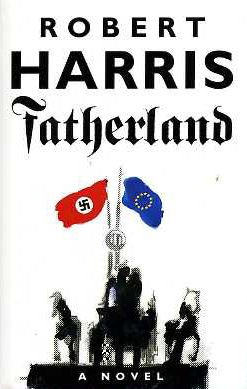
Fatherland

I've been catching up on well deserved classics that I haven't gotten around to reading yet, so in the dual interests of the mystery genre and my love of alternate history, I delved into the 1992 novel Fatherland. Written by Robert Harris, it explores an alternate world where Hitler's Germany did not lose WWII. Now, the Nazi colossus sits from the Atlantic to the Urals, holding all Europe, save Switzerland, under its sway. Having corralled the formerly independent nations of the Continent into a sham 'European Community' as well as engaging in a forever war along the long eastern frontier at the A-A line. Victory in hand, Hitler then turned his attention to creating his ultimate victory city in a garish redesign of Berlin.

The year is 1964.


Our story begins in the new Berlin, a body has been found washed up along the Havel River, near the heart of where the Nazi Party elite live. Detective Xavier March of the Kriminalpolizei (Kripo), and former U-boat sailor, is called to the scene of what at first seems to be the accidental death of an old Party member. Something of a recluse, the victim seems to have little connection to anyone other than being an original member of the Party. However, in an age of increasing terrorism at the heart of the German Reich, who can be sure?

The plot unfolds though as March, on a hunch, continues his investigations after the Gestapo claims jurisdiction over the case. He begins to unravel a disturbing conspiracy at the heart of the Nazi regime, one dating all the way back to the war and deals with the mysterious disappearances of all the Jews in Germany.

Along the way he meets American reporter Charlotte "Charlie" Maguire, while also dealing with numerous Nazi bigwigs and little men who are eager to dissuade his curiosity. But, he still has help in the form of his friend and partner Max Jaeger, who still aims to help him despite being a man not inclined to question the state.

Obviously, as this is a mystery thriller I won't be spoiling many details for you, but I think more than a few readers will be aware of the twist in this novel early on. I certainly was, but that did not mean I did not enjoy the book because of it.

While many fans of alternate history probably now find the idea of a Nazi victory story overdone, I still consider this to be a top rate novel. Rather than tell an exhaustive story of how the world got to where it was, the story is merely the setting for an intriguing thriller plot which uses that world as the background. It does of course, detail some of the alternate history leading to the Nazi control of Europe and the post-war Cold War with the United States.

Personally, what I found evocative of the novel was the setting. The premise is explained and partially justified but we are just told the story through these characters eyes as they live in this world. It is one where the Nazi Party reigns supreme over every aspect of German life, they remain constantly vigilant in attempting to police/purge the occupied territories of the East, while also struggling to catch up to a world where technology is moving quicker than men like Hitler and his cronies could anticipate. Terrorists are constantly targeting Germans, while the Germans themselves grow fat off the spoils of Occupied Europe, with Slavic laborers building their cities and English maids serving their tea.

March is a man who has grown up listening only to Party propaganda, and he still resents the Party despite the high standard of living he enjoys. Even with all that, his inquisitive nature makes him someone the Nazis would naturally be suspicious of. His interactions with Charlie, who has an outsiders perspective of Nazi Germany, are quite interesting. He uses this to ask questions he could never ask of another German person. He finds out about the horrible casualties incurred in the forever war on the frontier in the East against the Soviets and their partisans, and knows that much of the propaganda spouted against America is probably untrue, and even being toned down in light of the attempted detente with the United States.

These alternate 1960s are now defined by the interactions between the Reich and America. While we don't have as much of a global look as other stories might tell, the background to the story is fascinating and really establishes the characters and the world they exist in.

As for the plot, while many may see the twist coming, you are kept guessing as to whether anything will come of March's efforts to uncover the truth. He is constantly dodging a series of legal and lethal hurdles as the Gestapo seek to overcome any attempt to uncover the conspiracy at the heart of the Reich. It has all the good times of a spy thriller and a serial detective novel.

March himself is an engaging character. He has a policeman's sense of duty, constantly questioning and looking to solve crimes. He is also a former patriot. He loves Germany, and pursued a career in the navy because his father served in the Great War, but he has become disillusioned with what the Reich has grown in to. A man against his people as it were.

Charlie is a great sidekick, and as a kickass woman she deserves to be praised. An investigative journalist who is always looking for the next big scoop, she has German heritage and rebels against her family by carrying on in such a semi-dangerous career.

The somewhat forced attraction between the two leads felt, to me at least, as detrimental to the story. A love story (or lust story as the case may be) was not really necessary. Charlie would have been a stronger character without it, as there was not much chemistry between the two.

Fatherland though, is a deserved alternate history classic. Unlike the other stories I've reviewed, the spy thriller that was A Kill in the Morning and the war story which was Festung Europa, this one relies very much on its two leads to carry the story rather than increasing stakes or the drivers of history. It also shows you that stories set in one of the 'overdone' settings of alternate history, can, and most likely will, give you some great entertainment.

Thursday, 11 July 2019

The Dead Don't Die

As a long time connoisseur of the zombie genre, I was pleased to discover a few months ago that we were supposed to be getting an ensemble, all star cast for a new zombie comedy The Dead Don't Die. Looking like a big homage to the tropes and fun of the best the zombie genre had to offer, its' trailer played well and had me hooked from the first time I saw it. Starring, Bill Murray, Adam Driver, Chloe Sevigny, Steve Buscemi, Tilda Swinton, Danny Glover and Selena Gomez, to name only a few! The cast is actually quite large and very likable, with what I thought were for sure going to be some stellar performances!

Did we get that? Well, we got something...


Set in the town of Centerville (A Nice Place) it follows the work of Sheriff Cliff Robertson (Murray), Ronnie (Driver) and Minerva "Mindy" (Sevigny) and others from the small town as they deal with some inexplicable changes caused by polar fracking. The day is longer, the moon emits a strange 'toxic' glow, and strange things are happening in the cemetery.

Robertson is first going after local Hermit Bob (Tom Waites) who Farmer Miller (Buscemi) has accused of stealing his chickens. We then have the the two policemen driving away and leaning very abruptly on the fourth wall when Ronnie comments that the song The Dead Don't Die, by Sturgill Simpson, is the theme song for the film after Robertson comments that it sounds very familiar. Get used to this song, this joke is gonna be overused a lot. There is a pretty cleverly done establishing shot done as the police cruiser goes by all the various locations we will be seeing as the film goes on.

We meet more of the town's denizens at a local diner, Hank (Glover), Farmer Miller, and a scene with some juvenile delinquents locked up in the county juvy center, Geronimo (Jahi Winston), Olivia (Taliyah Whitaker), and Stella (Maya Delmont). There's also local gas store/paraphernalia shop owner Bobby Wiggins (Caleb Landry Jones), motel owner Danny Perkins (Larry Fessenden) and travelling at the head of some 'city hipsters' is Selena Gomez as Zoe. Finally we have Tilda Swinton as the new local mortician, Zelda Winston.

The zombie weirdness begins one night as two 'coffee zombies' attack the diner and devour locals Fern and Lilly in a genuinely unsettling scene. It has some dark humor to it as the zombies recognize coffee and quit their mauling to ineptly swig some back before shuffling on. Now, these two zombies are played by Iggy Pop and Sara Driver, so you'd expect them to show up again. Other than a single scene where they are walking around with the coffee pots... they're kind of irrelevant.

Following this is an amusing sequence where we once again see some well done humor as a three part take with each police officer viewing the scene goes on. Then we finally get some delightful weirdness from Swinton's character Zelda as she wanders around in odd ways, speaks strangely (addressing people by their full names) and has jerky, almost planned moves when she isn't wielding her katana.

Next the zombies begin to follow in waves, and as the undead begin to slowly overwhelm the town. Madness ensues.

Something I should pause to praise is the zombies themselves. While they are the usual undead shamblers, the actors and extras who play them just dig into the roles and damn they do it well! And rather than big bloody sprays of gore, when the zombies are killed they instead shoot out these black dust clouds. It's a unique and very visually appealing touch that I think should be applauded.

From here we get intervening bits of well executed horror, some good bits of comedy, and a lot of flat jokes. Some of it is well executed, especially in the second act as I found myself laughing uproariously at Driver and Murray's banter with Sevigny, then Swinton just stole every scene she was in. But the first hour of the film tends to drag, with only a few well done jokes. Then the finale comes across as, well, confusing.

Now, past this cut there be spoilers, you have been warned. Sadly, it is almost impossible to do a good critique of the film without them.

Tuesday, 9 July 2019

Atlas Shrugged Part III

God alone knows how, but the producers managed to waste enough money to make three of these dumb movies. It took a small fortune to create these disasters, but it took them only an hour to drain my brain of any, even halfhearted, enthusiasm for watching this last film! As before, please check out the reviews of this film alongside my friend Andrew over at I Choose to Stand where he looks at all three like me!

After Part II bombed even more spectacularly than the first film, making less than a quarter of its stated budget back, the series seemed to be in some limbo for a while. There was even talk of optioning it for a musical (God wouldn't that have been annoying?) way back when. However, this fortunately (sadly?) did not come to pass and instead they did what they had done for the last two installments, scrapped the old cast and hired all new actors making things even more confusing for people.

In a now hilariously familiar story, the budget for this film was only half of its predecessors, with some 440,000$ of that being raised on Kickstarter. Really, this film should have been called Atlas Shrugged Part III: The Search For More Money. In should come as no surprise that from a budget of 5 million, the film made only 800,000$ back at the box office. Considering what this was, even in comparison to Part III of the book, there isn't any question of why it bombed even worse than it's predecessors.


Now as someone who had read the book I will admit full disclosure to being interested to seeing Part III of this film series. It was, in themes, set pieces and story, very different from the first two parts which can be very well described as "business people talking business" with some bland mystery coloring the background.

Part III of the novel however, had one large section of ideological screed, followed by some rather entertaining pulpy action bits and the close up examination of society collapsing. Trains stop running, harvests are left to rot, and sections of the country break into open civil war. It's actually rather gripping stuff as we see the United States collapse into anarchy as part of the plan by the megalomaniacs heroes of the story.

Saturday, 6 July 2019

Atlas Shrugged Part II

So we come to Part II of this nonsense, and let me tell you it just gets sillier from here. If you have missed it, my friend and fellow blogger Andrew Cowie has also done a review for this film over on his blog I Choose to Stand and it is well worth reading!

After the first installment of the Atlas Shrugged trilogy bombed fantastically. The idiots Randian heroes who had made this film decided rather than let the free market do the talking as their own philosophy would compel them to do, they were going to double down on their idea and decided the world must learn of the brilliance of their prophet's ideology.

The only problem was that now, after making less than a quarter of their budget back from the first film, the plan of financing it with profits was no longer feasible. The strategy? Hire an all new cast because keeping actors is expensive! Well, there was also a massive debt sale in order to keep the film afloat, and a big investment of personal funds. Apparently this film, when you tally up marketing and everything, cost as much as the first one. If that was the case oh boy did it have problems.

It seems that the other portion of the plan was to stoke the public's expectations by keeping it from being screened by critics pre-release so everyone would have to be surprised and appalled at the same time. This fantastically misleading article from Fox News in 2012 has the producer John Aglialoro stating "The integrity of the critics are going off a cliff...Why should I give them the sword and they are just going to use to decapitate me with?" The article of course blames the 'Liberal Media' for casting the movie down, but as a National Post review of Part I by Peter Foster notes: "Still, if it sinks without trace, its backers should at least be proud that they lost their own money."

Turns out, the film wasn't proud with just losing its own money, it didn't even need to give anyone else the sword to decapitate itself! The film made even less money than the first, and received an even lower rating from critics and audiences alike!


Why might that be you ask?