Showing posts with label World War II. Show all posts

Wednesday, 14 August 2019

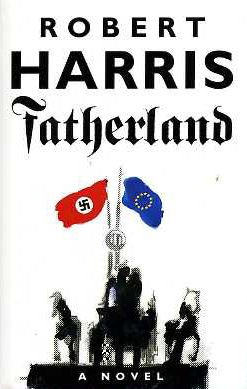
Fatherland

I've been catching up on well deserved classics that I haven't gotten around to reading yet, so in the dual interests of the mystery genre and my love of alternate history, I delved into the 1992 novel Fatherland. Written by Robert Harris, it explores an alternate world where Hitler's Germany did not lose WWII. Now, the Nazi colossus sits from the Atlantic to the Urals, holding all Europe, save Switzerland, under its sway. Having corralled the formerly independent nations of the Continent into a sham 'European Community' as well as engaging in a forever war along the long eastern frontier at the A-A line. Victory in hand, Hitler then turned his attention to creating his ultimate victory city in a garish redesign of Berlin.

The year is 1964.


Our story begins in the new Berlin, a body has been found washed up along the Havel River, near the heart of where the Nazi Party elite live. Detective Xavier March of the Kriminalpolizei (Kripo), and former U-boat sailor, is called to the scene of what at first seems to be the accidental death of an old Party member. Something of a recluse, the victim seems to have little connection to anyone other than being an original member of the Party. However, in an age of increasing terrorism at the heart of the German Reich, who can be sure?

The plot unfolds though as March, on a hunch, continues his investigations after the Gestapo claims jurisdiction over the case. He begins to unravel a disturbing conspiracy at the heart of the Nazi regime, one dating all the way back to the war and deals with the mysterious disappearances of all the Jews in Germany.

Along the way he meets American reporter Charlotte "Charlie" Maguire, while also dealing with numerous Nazi bigwigs and little men who are eager to dissuade his curiosity. But, he still has help in the form of his friend and partner Max Jaeger, who still aims to help him despite being a man not inclined to question the state.

Obviously, as this is a mystery thriller I won't be spoiling many details for you, but I think more than a few readers will be aware of the twist in this novel early on. I certainly was, but that did not mean I did not enjoy the book because of it.

While many fans of alternate history probably now find the idea of a Nazi victory story overdone, I still consider this to be a top rate novel. Rather than tell an exhaustive story of how the world got to where it was, the story is merely the setting for an intriguing thriller plot which uses that world as the background. It does of course, detail some of the alternate history leading to the Nazi control of Europe and the post-war Cold War with the United States.

Personally, what I found evocative of the novel was the setting. The premise is explained and partially justified but we are just told the story through these characters eyes as they live in this world. It is one where the Nazi Party reigns supreme over every aspect of German life, they remain constantly vigilant in attempting to police/purge the occupied territories of the East, while also struggling to catch up to a world where technology is moving quicker than men like Hitler and his cronies could anticipate. Terrorists are constantly targeting Germans, while the Germans themselves grow fat off the spoils of Occupied Europe, with Slavic laborers building their cities and English maids serving their tea.

March is a man who has grown up listening only to Party propaganda, and he still resents the Party despite the high standard of living he enjoys. Even with all that, his inquisitive nature makes him someone the Nazis would naturally be suspicious of. His interactions with Charlie, who has an outsiders perspective of Nazi Germany, are quite interesting. He uses this to ask questions he could never ask of another German person. He finds out about the horrible casualties incurred in the forever war on the frontier in the East against the Soviets and their partisans, and knows that much of the propaganda spouted against America is probably untrue, and even being toned down in light of the attempted detente with the United States.

These alternate 1960s are now defined by the interactions between the Reich and America. While we don't have as much of a global look as other stories might tell, the background to the story is fascinating and really establishes the characters and the world they exist in.

As for the plot, while many may see the twist coming, you are kept guessing as to whether anything will come of March's efforts to uncover the truth. He is constantly dodging a series of legal and lethal hurdles as the Gestapo seek to overcome any attempt to uncover the conspiracy at the heart of the Reich. It has all the good times of a spy thriller and a serial detective novel.

March himself is an engaging character. He has a policeman's sense of duty, constantly questioning and looking to solve crimes. He is also a former patriot. He loves Germany, and pursued a career in the navy because his father served in the Great War, but he has become disillusioned with what the Reich has grown in to. A man against his people as it were.

Charlie is a great sidekick, and as a kickass woman she deserves to be praised. An investigative journalist who is always looking for the next big scoop, she has German heritage and rebels against her family by carrying on in such a semi-dangerous career.

The somewhat forced attraction between the two leads felt, to me at least, as detrimental to the story. A love story (or lust story as the case may be) was not really necessary. Charlie would have been a stronger character without it, as there was not much chemistry between the two.

Fatherland though, is a deserved alternate history classic. Unlike the other stories I've reviewed, the spy thriller that was A Kill in the Morning and the war story which was Festung Europa, this one relies very much on its two leads to carry the story rather than increasing stakes or the drivers of history. It also shows you that stories set in one of the 'overdone' settings of alternate history, can, and most likely will, give you some great entertainment.

Tuesday, 27 November 2018

Overlord

A few weeks ago, yes I've been a bit busy, I went and saw the film Overlord with a friend of mine. Billed as a WWII horror film, it generated a lot of buzz as it was helmed by a black actor in a WWII film. This, in and of itself, was rather remarkable. Black characters in horror movies have a stereotype of being quickly killed or reduced to secondary characters. With this trend being more reversed in recent years, it was understandable that this film should seem like it would bring something new to the table.

A firm WWII setting seemed like it would generate some good visuals, and theories ranged from Nazi zombies, to something set in the same universe as Cloverfield. With the film being produced by well known sci-fi personality J. J. Abrams, this wasn't an unrealistic probability. Soon we learned it was an independent production.

So did Overlord overwhelm me like Operation Overlord overwhelmed the Nazis?

Well, it mostly did.


The film opens in daylight, and we see that a stunning amount of the CGI budget must have gone towards these opening shots. We get lovingly rendered shots of the invasion fleet moving across the Channel to invade Fortress Europe, as the paratroopers fly overhead towards their objective.

Bear with me here, I'm going to be putting on my pedantic historian's hat a few times. Choosing to blow lots of CGI money on this scene feels really weird. Not only does it not make sense (the paratroopers would have been flying over at night, well in advance of the invasion fleet) but it causes some weird disjointedness in the film's timeline. It really seems like a bizarre waste of money, but ah well.

On the plane our main characters are all progressively introduced. The oft derided and ill thought of Ed Boyce (our black protagonist), the far too talkative Jacob Rosenfeld, the horrendously stereotyped Italian-American Tibbet, the no-nonsense Corporal Ford who is attached to make sure the paratroopers objective goes smoothly, the forgettable Dawson, random photographer Morton Chase  and the strangely compelling Sergeant Eldson.

Boyce is something of an enigma, but comes off as wishy-washy at first. Sgt. Eldson (played by Bokeem Woodbine) comes off as the much more interesting character. Tragically, the movie plays for keeps and the plane is soon blown out of the sky, many of the paratroopers along with it. In a truly well choreographed scene, Boyce is falling until he hits a patch of water and has to cut himself loose. He meets up with Ford, just in time to watch Eldson get whacked by the Nazis. Which is a crying shame, but does show that the film is not going to give anyone any mercy if they can avoid it.

The survivors of the crash landing, Boyce, Ford, Tibbet, Chase, and Dawson, regroup and make towards their objective. A radio tower where the Nazis could call in strikes on the landing beaches.

This motley crew overcomes further horrors of war as Dawson, in an unexpectedly hilarious death scene, steps on a landmine after perfectly finishing a sentence. I have to admit, the accidental punctuation made me laugh uproariously, largely because it was such a scene of unintentional black comedy I couldn't help it.

Despite this, I found the opening a little weak, as the characters meandered around and talked to no real end. It seemed like random explosions intermixed with somewhat pointless dialogue.

Moving on they stumble across a French villager, Chloe, who is scavenging the battlefield, and force her to lead them to the village. There they take cover while accidentally stumbling upon SS Hauptsturmführer (Captain) Wafner. He's actually an amazing villain, with the right amount of sneering Nazi contempt and unbridled violence which will make you love and hate him.

We learn not all is as it seems in this village. It is a radio tower sure, but the Nazis have a strange lab beneath the church where they have been steadily experimenting on the villagers to mysterious ends. Corpses and villagers go in, and only occasionally do diseased people come back out. One of those includes Mathilde's aunt who she keeps separate from her young brother Paul.

From here the movie moves between a somewhat confusing genre of action and horror. In a series of events which I don't think re-watching will explain, Boyce stumbles into the Nazi base by accident while he is supposed to be doing something completely different. Boyce seems to have a horrendous instinct for self preservation which at times made me sure he was going to die. However, it does lead to some of our creepier moments early on in the film.

I say that the genre is confusing because for all the horror elements, most seem to hit the notes of either a spy thriller or a war drama. There is one or two points where the soundtrack assaults your ears to scare you, but nothing in the film ever really made me jump. We have some legitimately creepy visuals in the Nazi labs, and a bizarre scene early in the film where they talk about the decomposing corpse of a 'jackal' but that never leads to anything.

Considering the precise nature of what the Nazis are doing is never really elaborated on, that isn't too surprising.

What did surprise me was how bloody fantastic the effects were. From the blood, to the bullets, and the firefights, it was A-list movie cinematics. All the gunfights were amazingly put together, and the gory effects of those (and the monsters) were gory and great. I was literally clapping during some scenes these fights were so awesome. An amazing scene where Chloe picks up a flamethrower was also well appreciated.

The scenes where the action picks up are what makes the movie shine. Considering the slow opening these intense and visceral scenes make you really appreciate both the actors and the effects. It leads to a climax which is immensely satisfying.

I found the movie good fun, but there were some points I found weird.

First let me put my pedantic historians hat on. At one point Boyce says he was drafted, and that's how he became a paratrooper. Not only is that blatantly false, but its doing a disservice to historic paratroopers who firstly had to volunteer for service, then they had to volunteer for dangerous service, and then had to volunteer for the intense paratrooper training.

Second, I think the film did a greater disservice by making some historical revisions to incoporate Boyce and Eldson into the 101st Airborne. If you've ever seen the amazing HBO drama Band of Brothers you'll know that the 101st Airborne circa 1944, was all white. They were a unit of volunteers famous for being the tip of the spear in the Allied landings. Why the film chooses to do this strikes me as odd, this is especially true because doing some research I discovered there were black paratroopers in WWII, the 555th Parachute Infantry Battalion. Though they did not directly see combat, they were a parachute unit.


The film would have done itself a far better service had it made those men the focus of the film. Cooler still had there been a few survivors who found themselves drafted into the mission against the tower because Ford pulls rank and uses them to accomplish his mission instead of one they were originally assigned. The film would be arguably stronger, the interaction between characters more interesting and the historical revisionism to pull it off slightly better.

Historic pedantry aside, the final shots of the film give us an interesting question. Why didn't the navy shell the bloody church? Or hell, someone just drop a bomb on it? Sure civilian casualties, but if it was so important (and so close to the beach) that wouldn't have saved it from Allied planners. The final shots of the film show the whole village as being really close to the beaches, sending paratroopers was a huge bloody waste here.

That aside there were scenes where the day/night dynamic suffered. The film opens in broad daylight, but minutes later its the middle of the night. There are scenes in Chloe's house where its clearly daytime outside, but then we see the night when they look out. It was a baffling failure in editing. Just goes to show why you don't blow your money showing an invasion fleet.

This all being said, the acting was great,

Jovan Adepo as Boyce really matures into his role. The script left his character flailing, but Adepo did a wonderful job building him up as the film wore on. Mathilde Oliver as Chloe is just badass. She is multilingual (without it feeling forced) and handles herself amazingly in action scenes, and it never feels like she's being molded into a role just for the sake of being a strong female character, she just is a strong female character from start to finish.

Wyatt Russel as Ford is also fantastic. His gritty "gotta-be-bad-as-'em-to-beat-'em" attitude (implied to have been picked up fighting the Nazis in Italy) is well done, with its logical flaws pointed out. His single-minded drive to complete the mission, no matter the cost makes you love and fear him.

John Magaro as Tibbet is really fun, but he plays too much of a stereotyped Italian-American. Almost like the William Guarnere stand in from Band of Brothers. But he is a fun character.

All this being said, I came away really liking the movie. There were enough parts where the action and the characters were simply awesome enough that getting behind them was absurdly easy, and with a villain I loved to hate I couldn't get enough of seeing the SS mowed down. Though the horror elements were weird, I found it engaging.

Despite a slow build up, the film redeems itself in the end and really delivers A-list quality to B-list material. As a fun action flick, this is hard to beat and I will certainly be watching it again.

Tuesday, 8 May 2018

A Kill in the Morning

The year is 1955 and something is very wrong with the world.

That is the excellent opening tagline which sucked me into the world of A Kill in the Morning by Graeme Shimmin. Published in 2015 this is a riveting action packed alternate history novel that could in fact be a feature film ripped from the 1980s. It has the riveting action and intrigue of a James Bond novel and the detail of an alternate history piece. Even the book cover looks like something you would find in the amazing stylized posters of the era!


Originally written on alternate history.com by user Shimbo it then got published and came out to some acclaim in the community. I'm quite pleased by this as not only am I a member of the website myself, but I've followed the work of other members there for a while as well!

In that case I was happy to tear into this novel with unbridled pleasure. Let me say that it doesn't disappoint on any front, whether it be action or alternate history!

Opening in 1955 we meet a nameless British assassin while he is out in Germany. Officially he is supposed to be on holiday. Really he ends up killing an SS officer who is responsible for the massacre of his team on a dangerous mission in 1947. One of them at least. He returns to a Britain engaged in a cold war with the German Reich, with the two sides are locked in atomic staring contest across the Channel.

While fleeing from his mission he meets a hapless member of the White Rose, Kitty, as she stumbles away from a mission of her own. Upon meeting her he returns to Britain where he begins to unravel an intrigue that has been playing out since 1941. In Germany itself, a ruthless SS man is rising to the top, the man with the iron heart Reinhard Heydrich.

Saturday, 10 February 2018

The Anglo-American Nazi War

Years ago now, I stumbled across the website alternatehistory.com while looking up alternate history on the web after reading about S.M. Stirlings Draka series. Little did I know then that I would stumble upon a series that has captivated the minds of many since its author under the username Calbear first penned it back in 2009. That story is, The Anglo-American Nazi War, available under the title Festung Europa, on Amazon it is the definitive edition of the story by author Jon Kacer.


The story takes place during World War II, and the point of divergence is the Nazis not engaging in North Africa and the fall of Stalingrad in 1942. This causes Stalin, in one of his brutal rages, to liquidate not only his main generals (Zhukov among them) but also most of Stavka. Stripped of much of their planning staff, the Russian operations of 1943 are disasters, and Stalin soon suffers a "fatal heart attack" and the Soviet Union falls into civil war. Into this vacuum the Nazis pour, and crush all resistance inflicting a crippling peace on the Russians, allowing them to turn their attention to the war with the West.

The Western Allies, now facing some 200 battle hardened divisions of Nazi troops, understandably balk at an immediate invasion of Europe. Instead, a brutally increasing air war peters into stalemate by 1947. From there both sides, seeing little opportunity to hurt each other, have an informal "truce" where no air attacks will take place, but there is no peace either, and the "Warm War" begins.

Unlike other "Nazi Cold War" scenarios (such as Fatherland or A Kill in the Morning) the Allied doctrine of Unconditional Surrender remains in place and so the truce is rather informal. The active combat remains limited to anti-submarine warfare in the Mediterranean and the Atlantic. Then of course, the Nazis being Nazis, decide to reignite the conflict by launching one of the most spectacular(ly ill advised) operations in military history kicking off the war again in 1954.

From there the story follows the operational history of the war, only rarely dealing with the battles themselves when they serve to illustrate a particular strategic/doctrinal point about the combatants.

The author, much like David Weber, knows his stuff. To his credit he does not shy away from the horrors or heroism of war, and is quite frank with some of the brutal calculations the Allied commanders make, offering no moral comment, but simply recording it as what must be done to win. Heck, even commentators in the original story thread were horrified at what took place, even to the Nazis on occasion!

Aside from that, as I said, the author knows his stuff. Prospective weapons of war that were never used in our own WWII come to the fray here, and even weapons that were never used!

For instance, we have Allied adoption of helicopters, which frustrates some Nazi planning against paratroopers. You also have the M92 Chamberlain Heavy Tank which mounts an enormous 120mm gun. Though when faced with something as terrifying as the Nazi Panther Mk III with its sloped armor and 105mm gun, it seems less mind boggling. The many cool planes that contribute to the air war are too numerous to mention, but suffice to say they are used quite well. Combine that with numerous other clever uses of existing military weaponry, it makes for some fascinating "what if" reading.

The story also pulls no punches in describing just how depraved and barbaric the Nazi regime was. Even the short descriptions of the horrendous labor conditions for the slave workers across the Reich are chilling, and when one considers that this is a Reich that stretches from the Atlantic to the Urals, it is terrifying to contemplate (the story at one point estimates some 90 million killed by the Nazi extermination efforts in this time line).

Many of the excellent portrayals of action in the story, are thrilling, including one great moment showing the Free Poles going into action against the SS and kicking serious ass. This is very much a history book rather than a novel though, and should be treated as such. There are no view point characters, merely the fictional in universe author offering their perspective on the war and its history. As such it may be a "dry" piece for some, but if you are a student of history or an alternate history enthusiast, it is well worth the read.

That being said, I had a few quibbles with the story.

For one thing, while I acknowledge the premise of the story is probably more sound than many would argue, I question a few of the authors conclusions. The first is that even after the resumption of the "Hot War" the SS do not meaningfully upgrade their armored capabilities in response to Allied tank designs. There is no mention of a Panther Mk IV appearing, or any other type of new heavy tank. Armor design was the bread and butter of the Reich in vehicle manufacture, and I did expect something of a reaction by them. The Luftwaffe had some design upgrades as the war wore on, but perhaps this was simply an oversight by the author.

Another is how badly he treats Russia and the former USSR, brutalized and vassalized by Nazi invasion, and made to pay staggering tribute, they get the short end of the stick from 1941-1990 alas. This though, may be my reaction to just how terrible things turn out for poor Russia here.

I also question the viability of the "False Peak" strategy adopted by the Allies to draw the SS to destruction in the work. An interesting and remarkably effective strategy in this work, I think it perhaps works too well, as even the SS were not unadaptive robots and could probably have reached the conclusion that something was afoot with all these fake attacks. However, as both a strategic and narrative piece it works well so I can't complain too much.

All these aside, the work stands up. Mr. Kacer knows his history and his military minutia, and manages to present it in a compelling and fascinating way. I have re-read it many times as a result. As previously stated, the book is good, and if you enjoy this sort of thing I encourage you to check it out!

Wednesday, 6 June 2012

Remembering D-Day

Though published late today I would ask readers to remember that on this day in 1944 many of our fathers and grandfathers undertook the Great Crusade to crush the Nazi menace in Europe and end the threat of facism posed to the free world. I wish to honor their sacrifice and pray for those who fought and died in that conflict on both sides. May we never forget the sacrifice and valor of our forefathers and the awesome actions they undertook to ensure our freedom.

May their sacrifice not have been in vain.