Monday, 18 May 2020

The Problem with Trudeau's Firearms Ban

The recent Order in Council put forth by Justin Trudeau in response to the tragic events in Nova Scotia has caused no small amount of public debate. However, the ban itself is problematic in the way it was implemented, but also because it won't do a single thing to stop another massacre.

Now full disclosure, I like guns and have absolutely no problem with people owning them. I also think that the government is right to try and regulate what kind of weapons can be owned, there really is no reason for an individual to own a weapon which can be made to go fully automatic (which is a terrible waste of ammunition anyway). I am of the personal opinion though, this Order in Council was simply a publicity stunt, however well meaning it might have been. I hope to outline both why the gun debate in Canada is long settled, and why the current ban will do absolutely nothing to prevent another massacre.

Via Tactical-life.com

First though, let me clear something up. There has been a lot of push back from gun owners regarding the ban. Many claiming it infringes on their "right" to own weapons. Important thing to know, in Canada you do not have the right to bear arms. There is no second amendment like law which ensures Canadians have access to weapons, and we are probably better off for it. The law is very clear on that fact, and the Supreme Court has ruled twice, quite comprehensively, on the subject.

The first Supreme Court case to rule comprehensively on the issue was 1993's R. v. Hasselwander it was declared, in a specific rebuttal to an appeal to American ideals: The American authorities should not be considered in this case. Canadians, unlike Americans do not have a constitutional right to bear arms. Indeed, most Canadians prefer the peace of mind and sense of security derived from the knowledge that the possession of automatic weapons is prohibited.

In 2005 in R. v. Wiles it was confirmed that: "Possession and use of firearms is a heavily regulated privilege, and the loss of that privilege does not support a finding of gross disproportionality because it falls short of a punishment “so excessive as to outrage standards of decency” Thus confirming that the ownership of firearms in Canada is indeed a privilege. 

Owning firearms in Canada is very well regulated, and while handguns can be owned under very strict circumstances, it is very rare. There are an estimated 12.7 million firearms in Canada, and by and large, we seem to be very responsible gun owners and our current laws work. Even with a relatively large percent of personally owned weapons, gun crime is very low in this country, even if it has been rising in some urban areas. I would personally say this is a victory for our firearms laws and our own gun culture on the whole.

Hopefully this has been educational regarding both the existing laws, and gun crimes in this country. Now let's talk about why the ban will do no good.

I want to draw attention to the fact that the shooter in Nova Scotia actually did not legally own the firearms he used in the attack. They were in fact smuggled in from the United States. This is not unusual in Canadian crimes. It is estimated 70% of the weapons used in Canadian gun crimes come into the country illegally from the United States. These statistics, I think, bear out that any attempt to ban the ownership of guns in the hands of law abiding Canadians, with whatever intention, is utterly irrelevant in actually preventing the importation of illegal guns into the country.

If the Liberal government truly wants to act in practice to reduce gun crime, they should be working harder to stop the illegal importation of weapons into the country through a bilateral solution. Instead, they have chosen to act in a way which not only comes off as antagonistic, but is also not addressing the root of the problem. What is worse is that 2019 Angus Reid polling found that a majority of gun owners would be receptive to a total assault weapons ban. The optics of the Order in Council are, if anything, terrible, and now are dependent on a broad coalition to actually pass legislation - which since the Liberal government declined to adopt a formal coalition, puts them in hock to other parties.

While the Angus Reid polling does certainly suggest that support for items like handgun and assault weapons bans are high, even in a majority among gun owners, it also points to the fact that for the largest part of the population, this is a settled matter. Both in the courts of law and the courts of public opinion, these are not debates to be had. What has to be pointed out however, is that rather than flashy 'feel good' bans like the current move, we should instead be raising public awareness of what will actually go towards preventing massacres like these from happening again.

There is much more that could be done, like the aforementioned better attempts to crackdown on illegal imports, bilateral agreements with our neighbors, or even fighting to bring back the long gun registry. Raising these issues is much more helpful than a sudden and unexpected ban, and this is the conversation our leaders should be having.

It isn't an outright ban of certain weapons, but well researched and implemented policy which will help address Canadians' fears. So far, we seem to be lacking that from our elected leaders.

Monday, 11 May 2020

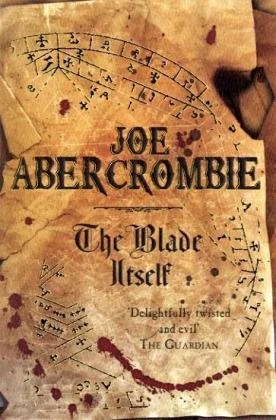
The Blade Itself

As part of my Great 2020 reread I'm returning to a series which I originally picked up way back in the 2010s, I can't remember exactly when, but was drawn to it by the TvTropes page. It promised me a delightfully twisted story of torturers, barbarians, mad wizards, cannibals and the moral grayness of war. I was not disappointed! I give you the First Law trilogy, starting with The Blade Itself! Thanks to Homer for the title!

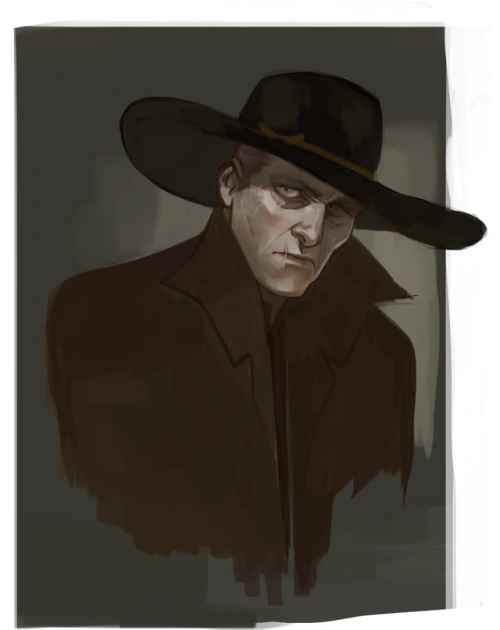
From the First Law Wiki

Welcome to the Circle of the World, a place I have visited before. It is a world of mighty empires and kingdoms, shattered empires and emerging kingdoms. We start in the grim North, where Logen Ninefingers, The Bloody Nine, is fleeing from the bestial Shanka who want to make him a meal. After being ambushed, separated from his band of fellow warriors, and thrown from a cliff, he survives to seek out the advice of the spirits who guide him to the First of the Magi, Bayaz. What this old sage has need of in a bloody and brutally scarred barbarian like him he can't say for sure.

In the Union we see Captain Jezal dan Luthor who is busily training for The Contest, to win glory for himself. Vainglorious and selfish, Jezal is an officer in the Kings Own, the army that holds the disparate parts of the Union together. He fights for himself though and is happily vain and willing to do anything to advance his position. That is, until a chance meeting puts in in the path of the sister of his commoner superior Major Colleem West. Maybe Jezal has a heart after all.

Also in the Union, in the capital of Adua, Sand dan Glokta of His Majesties Inquisition, war hero, winner of The Contest himself, and former guest of the Emperor of Gurkhul is seeking answers to his questions. Thankfully, no one knows more of questions than him. As a guest of the Emperor he was brutally tortured, losing many of his teeth, the toes on one foot, and being cut, beaten and subject to some of the worst tortures imaginable. Now he must unravel a conspiracy which seems to go to the heart of the Union, and many powerful men want him to succeed or fail and that can be a matter of life and death.

Finally, far to the south, at the edge of the Gurkish Empire, Ferro Maljinn is seeking revenge. Revenge against the Emperor, revenge against his empire, revenge against the whole world. An escaped slave and a notorious bandit to boot, she is hunted by the ferocious warrior priests of the Prophet Khalul, the Eaters. She is saved by a mysterious old man named Yulwei, who declares he desires greater things from her than being a corpse. They head northwards, towards the Union.

These disreputable characters all meet in Adua where blood flows in the streets, corruption festers up from the halls of power, and an ancient feud boils into the open.

This starts off the simply superb First Law Trilogy, the story which brought Joe Abercrombie into mainstream fantasy. Since reading it, it has become one of my favorite series, and he is probably one of my favorite authors because of it. Since I did make some allusions to the newest novel, I would encourage those just discovering this series not to read that review first and to instead read these reviews upcoming.

What probably drew me into this series is that Abercrombie writes immensely flawed characters. They are vain, selfish, cowardly, and twisted people. They commit evil acts while trying to be better, or just for the hell of it. Hell, one of the view point characters is a torturer! But that does make these characters deeply interesting, as we can see our own flaws, shortcomings, and even cowardice reflected in them. I myself was swept away by Jezal's arc in this book where he goes from selfish fop, to a man trying to prove to himself that he can be a better person, all to win a girls heart.


Glokta though, is probably my favorite character. He begins as a self-piteous cripple who loathes the world around him, both for what he has become after his glory days, and a feeling of betrayal at friends who seem to have abandoned him. He also carried the meat of the intrigue plot on his back as with the death of the leader of the Closed Council, his boss, Arch Lector Sult, is jockeying for power with the disparate factions in the realm, and he means to come out on top, even if that means doing so on top of a pile of corpses. Glokta's included.

The infirmities Glokta labors under are interesting as well. Having been crippled from torture he is in constant pain, and must tread carefully lest he cause himself agony. Despite this, he has a keen mind and is very sharp in his observations. One could almost call his storyline a very grimdark noir detective piece. I deeply enjoyed it, and his POV's are probably my favorite throughout the books.

I think what sucked me in though was that while the story itself had a slow build, Abercrombie writes a surprisingly complex and deep backstory. He deftly weaves in discussions about the lore of the world, hints towards the future, and neatly lays out things that upon rereading I found myself shocked at how much he managed to telegraph with me not even guessing!

Then the little bits of writing he does, using simple words and capturing complex thoughts, and little actions. This impressed me as he uses an excellent conservation of language while imparting the maximum meaning of his words. I always come away feeling awed by his stories, and I really look forward to recapturing that feeling I had when I first picked up his books.

Finally, Joe Abercrombie writes action like no one else in the business. It is visceral, brutal, and you can practically feel blood flowing and bones crunching as the action scenes take place. He puts you right in the swinging fists and swords and you almost fear for your life when the steel comes out! If you need a good action scene, read Joe Abercrombie!

I'll be getting into the meat of this series with the sequel Before They Are Hanged soon, and I would highly recommend it to anyone who loves fantasy!

Wednesday, 6 May 2020

The Fermi Paradox Problem

Where is all the life out there? Why hasn't it contacted us? That was the basis of the question asked by Enrico Fermi at Los Alamos in 1950, creating the Fermi Paradox. Since then this seeming paradox has confounded scientists, futurists and writers for over seventy years. There have been an exhaustive number of explanations for why that is. Isaac Arthur does many great videos on them. And we have competing ideas about the plausibility of extraterrestrial life.

However, in a controversial take, I'm declaring there is no paradox.

The reason I'm saying so has a relatively simple premise, we simply don't have the means available to us to determine whether life is out there definitively. For reference, we've only been searching the skies for sign of intelligent life for less than a century, and we've been scanning for habitable plants beyond our solar system for far less than half a century. The tools we're using are not yet advanced enough to make a detailed observation of our closest neighboring star, let alone stars beyond that.

Our information is so limited we can't even say for certain what's on the majority of other planets in our solar system. There could be alien ruins on Mars right now and we could just be missing them.

Heck, alien probes could have visited us recently and we would have no idea. They could remain beyond our detection if they so chose, or we simply wouldn't be able to properly identify them. Or they could have visited us one thousand, ten thousand, or ten million years ago and we wouldn't know at all.

From our very Earthbound perspective we have limited data enough on our own solar system, to be then extrapolating from that limited data to try and make sweeping proclamations of the billions of stars in our own local galaxy is the height of folly, or at least an Earth-centric logical fallacy. To assume that our planet, which has had organized civilized life on it for just over 10,000 years, is so interesting or important among many billions of others is almost as silly as the geocentric ideas that the Sun rotated around the Earth. This in turn simply assumes alien life would be rotating around the Earth.

The above is very oversimplified to be sure, but let me address a few other problems with issues of timescale. According to our own understanding of physics, it would take even a civilization with sub-light capabilities (that is, unable to go beyond the speed of light) only a few million years to reliably visit/colonize the entire galaxy. This idea has problems because firstly it assumes civilizations unifying or staying homogeneous enough to carry out such a long term project. Our own science fiction writers and theorists have already posited a few practical problems with humans undergoing such projects (the book Aurora is a great look at that) but we would have no idea of the problems faced by an alien species in undertaking such a project. Secondly there's an implicit statement of intent, which as noted above may not be practical and simply may not exist. Any given alien species might not even see the need to expand beyond its own solar system, or just the next few neighboring solar systems. Even then, as I've said before, space is vast and going beyond a few thousand light years may just exceed the ability or interest of any given species.

Even for the moment accepting that the proposition is true and some species has perhaps colonized the entire galaxy at some point, that possibility isn't even out of the realm of feasibility. It may have happened a billion years ago, but then Earth might have not looked appealing to these alien colonizers. They might not have found any planets in our solar system to be appealing and simply categorized this system and moved on for greener pastures as it were. We quite simply can't say for sure.

Then of course we have the explanation for this 'paradox' that the aliens themselves might be too, well, alien for us to identify. We might be looking for the interplanetary equivalent of the Klingons when our closest intelligent neighbors might look more like the Hanar. We might just be searching for the wrong aliens. Even then, we could be looking for megastructures like the Dyson Sphere, when the aliens themselves might just prefer colonizing their own solar system and building artificial orbital rings around these planets. We can't say for sure.

These of course are just a few points in favor of throwing out the idea of the so-called Fermi Paradox. There are far too many assumptions and potential projections of our own assumed behaviors onto other alien species, which might blind us to very real signs of interstellar life. All these assumptions, and then reasonable objections to the premise, really push the Fermi Paradox from a true paradoxical question about the great silence of the universe, to something more like a trivially interesting thought experiment with no actual bearing on the nature of life among the stars.

It is that latter option which sums up the so-called paradox far better than any of the serious thought given to it by the scientific community, in my own humble opinion.

Monday, 4 May 2020

Preppers not Prepped

In the past few days I've been watching with almost abject disbelief as across the United States people have suddenly begun protesting the existing quarantine and stay at home orders. Among their ranks seem to be many members of the so-called preppers (along with a disturbing numbers of alt-right individuals and those waving the Confederate flag). And many of these protests seem, well, extremely stupid. Especially for people who call themselves preppers.

First thing is first, yes this is a pandemic and its a worryingly virulent one. Not deadly per-se, but worryingly virulent. We have to be extremely thankful that we were able to catch it and set up measures designed to keep the virus from getting worse.


Before moving on, let me state this, people who are able to stay home or are non-essential are absolutely doing the right thing. They are working to stop the spread, bend the curve, and ensure the virus does not afflict the general public more than it already has. It is literally the least one can do to endure this somewhat cozy catastrophe we currently find ourselves in.

Secondly, despite the title of the article, I want it to be clearly known I am not in any way shape or form anti-prepper. In fact, I identify as one. What I'm going to be calling out today is essentially 'survivalism' as over the last few years I have noticed that it has largely taken a turn from an idea of general preparedness to simply embracing an apocalyptic vision of the destruction of society. People should not take that view and then assume everyone who prepares (or preps if you will) is a bunker dwelling wingnut who is counting ammunition waiting for society to collapse.

To give some helpful information to you, I have to thank the folks over at Worst Year Ever Podcast for providing this helpful link to theprepared.com. They have a lot of useful information for you, and the link itself can help you confront the what seems to be daunting task of preparing to help yourself and others in a time of need. Basically, be prepared to be able to help yourself and others in times of emergency or natural disaster.

Moving on though, I've seen at many of these protests people equipped in camouflage gear with rifles prominently displayed. Many of them talking about their rights with such interesting slogans as "my body my choice" or "I want a haircut" and the message boils down to the government can't make you stay at home. What is clear though, is that most of these people either don't take the ongoing pandemic seriously, or they are simply enraged that the government is quarantining them and keeping them from such creature comforts as haircuts, bars, and coffee shops. Now it's important to note that not all these people are survivalists, and many are spoiled and entitled middle-aged white people wanting to force other menial laborers back to work to accommodate their boredom and personal appearance. But for those out parading with guns and talking about rights, or seeming "prepared" it becomes apparent that these people couldn't be less prepared. Or as I saw one Twitter commentor postulate, this was not the apocalypse they were promised.

The survivalist community has its roots in the culture of the 50s, with dire visions of nuclear armageddon on the horizon, mushroom clouds expanding over every city and society collapsing into anarchy as the government is suddenly driven underground. It evolved from there towards fears of things like famine, Malthusian collapse, and economic depression. The most extreme views probably gained traction in the 70s however as fears of nuclear war, oil collapse and societal collapse writ large set in.

This all gave way to perhaps more extremist elements in the 90s during the Clinton years, fears of Y2K, and then the general conspiracy mindset that seemed to crop up in that era with broad distrust of the government in the US at least. Events like Ruby Ridge, Waco, and the Oklahoma City bombing also brought issues like survivalism into the public sphere, and not in a good way. September 11th began a new wave in the 2000s with fears of terrorist attacks and biological weapons. This probably reinforced the negative view of survivalism. It was a view already present, and one which I walked into when I first stumbled onto preppers in 2009 while cruising the internet.

Now, in that vein, with fears of terror attacks, the perceived threat of dirty bombs and high jacked nukes, coupled with my own childhood experiences, this seemed like a very reasonable worldview. Stock up on essentials, prepare and get away from cities.

Even back them though, I was able to pick up on the dark undercurrent I was able to find in survivalist literature. Way back in 2012 I read probably one of the worst books I've read in my entire life which was written by a survivalist. It largely contained really hateful right wing talking points, pretty terrifying racism and anti LGBT attitudes, conspiracy claptrap, and gleeful murder of the enemies of the protagonists. Another book which I only read the opening chapter of talking about a modern Carrington Event had the protagonist murder a police officer in cold blood after refusing to stop for him and the officer drew a weapon in self defense.

Yeah, there's some pretty sick survivalist literature out there.

Even some of the better 'survivalist' literature can often have some dark undertones. I was a pretty avid reader/collector of prepper recommended fiction in the 2010s, and let me say it can be disturbing at times unless you implicitly agree with the views of those who wrote it.

Some common themes were; total breakdown of society, looting and rioting on a spectacular scale, violence breaking out swiftly as social bonds collapse, and tyrannical government taking hold. Violence and rape was a common theme. The 'unprepared' becoming ghoulish criminals almost overnight and large cities falling into orgies of violence and murder where the 'golden horde' would spread out and devastate the countryside was a common theme. In more extreme scenarios like nuclear attack and EMP that might be semi-accurate as modern society is suddenly and rudely thrown into uninformed chaos, but by and large that just isn't true. This view of humans as violent animals was common in books even where society just fell into economic collapse.

Most of this fiction focused too much on almost fetishist description of guns and ammunition, violent confrontations with looters and bandits, and eventually a group and their preferred ideology emerging from the chaos and setting the world right.

There was very little about the more mundane inconveniences. Long lines at stores, no reliable electric power or internet, no barbers, and the problems faced by being isolated together for a long period of time even with friends and loved ones. Not even about the sudden loss of our supplies of toilet paper! These problems it seems, are far more pressing and important than preparing for a shoot out with gun wielding looters.

Indeed, this pandemic perhaps shows how hollow all this fiction is, and that it is more reflective of those who write it rather than society as a whole. As the world has faced massive privation and fear over a fast spreading disease, people have by and large banded together, helped each other out, and obeyed social distancing guidelines. Acts of kindness have been the norm, and people have gotten together and talked, even handing out supplies. My own family were the recipients of clothe masks by a kind neighbor who was making them!

Contrary to what survivalist literature has expected, cities have not devolved into riots, the government has not taken steps to deprive people of basic liberty, and we haven't seen a massive spike in crime. In fact, in my own Canada at least, the reaction has been largely a peaceful process of self isolation and community support and outreach. All across the world much the same is happening, and people are earnestly trying to stop the spread of the disease.

Why then is this upsetting many survivalists? With my comments on their fiction above, and the words of that Twitter comment in mind, you may see why.


People reacting calmly, reasonably, and no massive government overreach flies in the face of their world view. There is no Hobbesian war of all against all, and other than panicked sell outs of toilet paper, people haven't really done anything stupid by and large. This is not what was expected, and those who have been expecting societal collapse seem to have been shocked by that. The people who stockpiled bullets and ammunition are suddenly the poor cousins of those who stockpiled canned food and community good will.

Of course this doesn't speak for all of them. But the extremists, those who seem to have earnestly believed they will be the ones to outlast the 'sheep' in society, they seem to be facing the fact that prepping is more mundane and, dare I say, boring than their fiction led them to believe. There is no tyrannical government plotting to take away their rights, people are not dying in the streets, and calm and measured response proving preferable panicked looting. So instead, they must act as though orders to quarantine, and being inconvenienced from their creature comforts, are what they must fight against.

As I said before, this is stupid. Right now we are riding a very mundane wave of disease, potentially only the first wave, and we are only asked to do the bare minimum to stay healthy. For economic reasons I can understand many people are frustrated they can't work and might not be making money (especially in the United States) but to demand an end to quarantine because you want a haircut? Or to be going around with your ammunition fearing government tyranny because of social distancing orders? That is simple unpreparedness, and it sadly lays bare that many of these survivalists, might not survive the inconvenience.

Stay home, stop the spread.

Monday, 27 April 2020

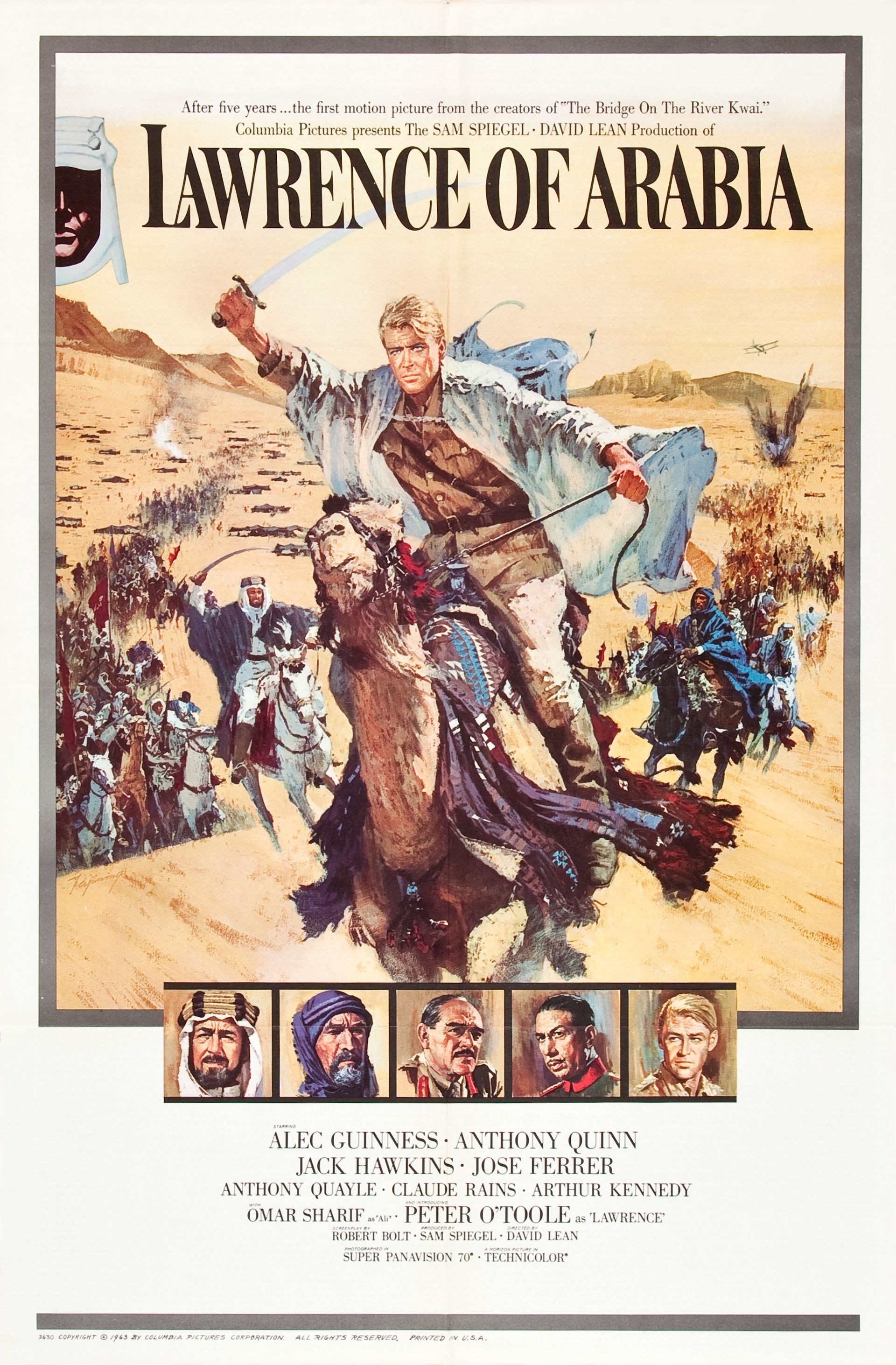
Retro Review: Lawrence of Arabia

In 1916, a man set off across the desert to seek out the peoples of the Arabian peninsula, then in revolt against the Ottoman Empire. In doing so he would live on as a hero and a legend in the English speaking world. That man was Colonel Thomas Edward Lawrence, otherwise known as Lawrence of Arabia. His deeds inspired many stories from both the First World War and then again in its aftermath as tales of his daring-do were embellished by the media and pop culture, particularly by a great song by Sabaton inspired by the title of Lawrence's own book. One of the most famous of course, would come in 1962 with the film bearing his name Lawrence of Arabia.


Now just to get something out of the way, this film is not by a long shot historically accurate. It contains many embellishments and occasionally outright fabrications of both the man himself and the people he worked with. So don't view this as a documentary or factual commentary on Lawrence's life and wartime career. If you want information on that I sincerely recommend a review by History Buffs examining the film, and the excellent work done by the Great War YouTube channel in examining both the war itself and some about Lawrence. Both are great channels that deserve your time and attention.

Without further adieu, let's get to the review.

Filmed in 1962, the movie was directed by David Lean, a great British film director of the time period. It has a quite amazing all-star cast with Peter O'Toole as Lawrence. The man looks so much like Lawrence that it would have been hard to justify not casting him. Then you have Alec Guinness (of Star Wars fame) playing Prince Faisal, both a real character and an amalgamation of other important Middle Eastern leaders, and doing it quite well. Next we have Anthony Quinn (Antonio Rodolfo Quinn Oaxaca) as Auda abu Tayi, an important tribal leader (and real historical figure). Following up you get Jack Hawkins as General Allenby, and he is further famous for his role in what was probably my favorite childhood movie Bridge on the River Kwai, and he delivers a stellar performance here. Then we have Omar Sharif, a famous Middle Eastern actor and of Doctor Zhivago fame, who portrays Sherif Ali, a fictional character who serves as an amalgamation of various other important Muslim characters from the source material. Finally we have Claude Rains as Mr. Dryden, a very cynical and almost sinister character who first helps Lawrence, but really only represents the interests of the British Empire through the Arab Bureau.

A brief note is that yes we do have a few characters in what amounts to blackface playing Arab figures. If you're uncomfortable with that I wouldn't suggest watching this movie as it doesn't really draw attention to that fact, but it certainly doesn't go out of its way to hide it. The movie is a product of its time so it definitely has some questionable choices in how it tells the story, but for all that, it is still a great film, probably one of the best of all time really!

Plans to make a film about Lawrence's life and his wartime exploits had been in the works for years, but they had all fallen through. Plans to make a film in the 1940s were shelved due to various financial difficulties in Hollywood, while in the 50s there were many discussions, but none ever went anywhere. Thankfully the work done on Bridge Over the River Kwai by director David Lean and producer Sam Spiegel. Having worked together before they became interested in another historic collaboration and thankfully decided they would jump on for another one by buying the rights to produce an adaptation of Lawrence's book Seven Pillars of Wisdom in 1960.

Shooting in such exotic locations as Spain, Jordan, and Morocco it managed to capture the desert feeling it was searching for, and thanks to the work done to bring the feeling of being in a visually appealing wasteland to screen, when you watch this movie you really feel transported to another world! It's had visuals homaged and spoofed in films like A New Hope and Space Balls. The city of Seville in Spain was used as a stand in for Cairo, Jerusalem and Damascus, pulling triple duty as a the capital of three modern countries!

The score was composed by Maurice Jarre and performed by the London Philharmonic Orchestra, and was composed and scored in just six weeks! This is a truly phenomenal feat and the movie is well worth seeing for the sound track alone. Though at nearly four hours long it does come with a scored intermission so you can resume watching at a later date!

Visually, this movie is breathtaking. The sheer spectacle invoked which shows the sweeping drama of the Arabian deserts, the heat of battle, and amazing shots done to show off the acting range of Peter O'Toole and Omar Sharif is quite impressive. Wide views of the desert and shots done in large rooms and offices for powerful effect each bring either wonder or quiet dread. That quiet dread is especially important in the political scenes, which all seem to be against Lawrence and his Arab allies, making the pomp and power portrayed in them all the more sharply contrasted with scenes of sprawling Arab camps with some riches but nothing so imposing as what is available to the British officers and politicians.

In shooting the battle scenes we have many amazing views, both of sweeping vistas with hundreds of extras on camel or horseback and then close in shots of the sort of tame 1960s era film carnage. One of the most amazing is filmed of the aftermath of the historically accurate slaughter of a Turkish column as it was retreating from the British after massacring the village of Tafas. This is perhaps one of the most interesting scenes as it shows the films portrayal of Lawrence succumbing to his bloodlust he has been developing since the beginning of his time in Egypt, and he revels in the slaughter of the Turkish column, laying about with his pistol almost indiscriminately, even shooting the corpses of Turkish soldiers. It was amazing work done shooting this scene, and the sheer pageantry of it must be applauded.

O'Toole's portrayal of Lawrence is only based slightly on the historical Lawrence, but he does an amazing job bringing this character to life on the screen. A man fascinated with the culture of the people he was sent to observe, but also a man not used to war. His first great test comes by solving a blood feud on the eve of battle, executing a man he just saved in order to ensure the two tribes do not go to war before they capture Aqaba. The strain of battle and political double dealing takes its toll on Lawrence, but he also begins to believe his own hype and thinks he can deliver miracles which leads to increasingly risky behavior which worries both his British patrons and Arab allies. It all leads to an exhausted and shell shocked veteran ready for wars' end.

His constant companion, Sherif Ali, is well done by Omar Sharif. The character is a proud Arab chieftain who rules his people with an iron fist, but is also a gracious host and skilled warrior. He believes in the vision of Prince Faisal for an Arab Kingdom, but does not trust the Europeans. Believing in Lawrence's abilities he supports and carries his friend (in one case literally) through the war and tries to help him in the peace. In the end though, these two men are from different worlds, making it difficult for them to stay together as the war ends.

These amazing actors, supported by others, craft an intriguing story which is well told on the screen. I was swept away by the battles and intrigue, and Lawrence's struggles and turmoil were gut wrenching to watch as he was swept up in the war. Though the movie is very long, it is very much worth a watch and I would definitely recommend sitting down and taking the time to watch it. Currently available on Netflix, it is absolutely great way to either spend a day or two evenings transported back over a century to the Great War and the world of Lawrence of Arabia.

Tuesday, 21 April 2020

A Game of Thrones

For the first time in nearly a decade, I delved wholeheartedly into the world of Westeros and the Seven Kingdoms. I begin my reread of the (so far) five books making up the A Song of Ice and Fire series. I start with A Game of Thrones.

Originally published in 1996 this book has set off over two decades of well informed speculation, appreciation and adaptation within the world of fantasy. With board games, card games and the wildly successful small screen adaptation that was Game of Thrones the ASOIAF series has gained enormous traction in both overall media and the fantasy genre as a whole.

It all began here though.

A copy of the book which owes my family and friends nothing

I must admit that at first, I was very resistant to picking up the series. My brother originally stumbled upon it while looking for good books to read. I myself was little intrigued, and instead was trying to continue with various books I was personally reading at the time. I picked up A Game of Thrones very hesitantly and walked into it and came away not unduly impressed. I actually put it down until I saw the first episode of the small screen. Then I picked the book up and read through it as quickly as I could.

This is one of the few times I've really gone the opposite way with a show making me read a book series. My opinion on the show and its ending is available for all to see, so I won't elaborate on that but let me just say I'm glad I'm rereading the book series.

Since then I have sucked a few people into the series, and my brother has never let me live down that it was he that got me into reading it. He was right, I was wrong, and that's all I am going to say about that!

But we start in the foreboding world of Westeros, in the realm of the Seven Kingdoms. Beyond the vast icy Wall a threat of ancient legend is rising, and below conspiracies in the halls of King's Landing threaten to topple the realm into civil war at the worst possible moment.

Our principle view of this world comes through the members of House Stark, little Bran, the girls Arya and Sansa, and the matriarch and patriarch Catelyn and Eddard Stark respectively. They tell most of the tale which we become familiar with, and their decisions will ultimately play a great role in the fate of kingdoms.

The outlying viewpoint characters are those of Jon Snow, a Stark yet a bastard boy unloved by the matriarch. Tyrion Lannister, the dwarf of the rival House Lannister, and finally Daenery's Targaryen, the last of the old line of House Targaryen. These tell separate stories across the Narrow Sea in the Free Cities and on the Wall, showing us separate but no less important plot lines in the whole game of thrones which plays out.

Going back and rereading this book I was shocked at how much my memory had been filtered through the television series. There were bits I had outright forgotten, and characters or subplots I didn't even remember. Getting back into the heads of the characters and their struggles was a very welcome journey for me to take.

The mystery still lies thick upon the story, and the plotting and intrigue between the lords and ladies continue to impress me. I will be thrilled to re-explore where different plots go, and what I find myself learning again as the series is brought into a new light for me.

It opened my eyes to different aspects of the story the show missed, and different perceptions of the characters I had not previously thought about in well over a decade. Ned Stark is a very canny operator who is trying to do what is right in light of his wartime experience, his daughters have both been raised in very different circumstances which influence their decisions, and his wife and sons are all very strong and independent characters. That said, his death near the end of the book shocked me when I originally read it, much as it shocked many other first time readers. The story of Daenery's and her rebirth as it were was also one that I thought I knew, but the reality of it compared to the show did again surprise me! It just goes to show you how much can really be lost in an adaptation!

The remainder of the series is part of my 2020 reread, and I intend to say more about this now ongoing fantasy classic as I dive deeper into books I haven't picked up in over a decade. Rest assured though, it is a series which I can happily recommend to anyone.

Wednesday, 8 April 2020

Why an Independent Confederacy Would Be a BAD Thing

As it is now April, and something of a self-proclaimed "Confederate Heritage" month, I would like to illustrate why a world where the Confederate States of America winning its abortive war of independence would be a very bad thing.

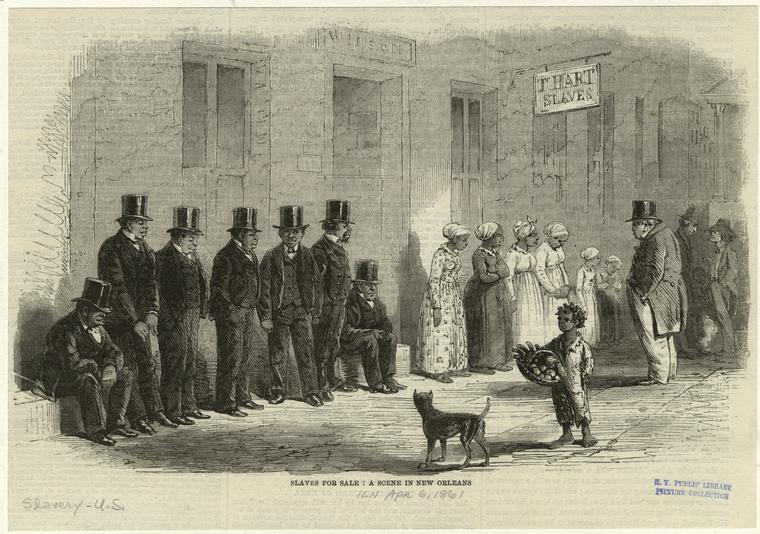
The American Civil War, for those who do not know, was fought from 1861-1865 over the subject of slavery in the United States. Those states which would comprise the Confederate States were all in the deep South, 11 slave holding states whose economies depended on the chattel slavery system which supported the lucrative cotton export business. The secession was indirectly sparked by the election of Abraham Lincoln in 1860 after years of rising tensions after events like the Dredd Scott court case and the political bloodshed of Bleeding Kansas. The bloodiest war in American history followed with over 800,000 dead.

The penultimate result was that the American Union was saved, slavery in the United States (and ultimately, the Western Hemisphere) was ended, and in the immortal words of Lincoln ensured "government for the people by the people shall not perish from the Earth."

However, even in the aftermath of the war a "Lost Cause" ideology began to develop in its wake. This romanticized the conflict, trying to rationalize the deaths of hundreds of thousands of men who fought on the wrong side of the conflict. A romantic view of the Antebellum South developed, a land of graceful belles, honorable men, yeoman farmers and happy slaves working for benevolent masters on colorful plantations. Naturally, this made the South look less dark and more desirable in hindsight, which even gave rise to such romanticism in novels and movies like Gone With the Wind.

Literally called The Lost Cause, Henry Mosler, 1868

In reality, beyond this romantic view, the Confederate States was a country fueled by slavery, powered by a strong central government, and a country with internal divisions between secessionists and Unionists. Fellow blogger Sean Korsgaard did an excellent piece on the biggest misconceptions about the Confederacy, and I encourage you to check it out. Had it succeeded in its attempted rebellion, the world would have been a much poorer place for it.

To begin with the simplest observation, the United States, far from girding the continent, would be balkanized into two nations, and potentially more should some sort of secession fever take hold. Instead of a nation stretching from sea to shining sea, you might end up with something looking like this:


Multiple disparate republics hemmed across the continent and a United States potentially cut off from its Pacific coast. Even with just the two, the United States would suddenly have a potentially hostile neighbor on its southern border, one which had just fought a destructive and bloody war against it with the very real possibility it might do so again.

This opens up two further problems for future history. The first is that the United States might fall into isolationism as it has no reason to look beyond its own borders for fear of a conflict, literally, on the steps of the national capital. Hell, the national capital might not even be Washington anymore in this scenario as it might be moved further away from any prospective frontier in favor of some old spot like Philadelphia. A sore humiliation that would be for the United States.

The second problem would be that, without United States proving it could project unprecedented military power in its own backyard, the powers of Europe might be tempted to play around in the New World. Already in 1861 a combined alliance of Spain, France and Britain, seized Vera Cruz in Mexico to compel the Mexican government to pay its debts. This in turn led to France trying to prop up a puppet monarchy and make Mexico a de-facto colony. Spain too tried to seize hold of its old colony on Dominica, fighting a bloody war to try and hold it. They even spent money on a naval conflict to seize guano rich islands off the coasts of South America. Britain too had interests in places from the San Juan Islands to Hawaii, and could have benefited from a balkanized US. The nascent Confederate States too might attempt to seize Cuba as had been a dream of Southern politicians for decades.

Without the United States to exert pressure on foreign governments to ward off these European encroachments, might these imperial adventures have succeeded? Might we see the Americas once again under the European thumb?


Another, and far more depressing, scenario would see the delayed end of slavery in the United States itself.

The Thirteenth Amendment to the US Constitution was by no means a slam dunk when it was initially proposed in 1863. In order to pass, Lincoln had to exert considerable political capital and personal influence to get it through Congress, while it had previously failed one vote already in June, it needed to overcome a thirteen vote deficiency to pass by the needed two-thirds majority. In a situation where Lincoln most likely has lost the election and has no political favors to spare, Democrats who voted for the amendment might feel no pressure to do so, and those who historically abstained may vote to strike it down. Instead of being passed and ratified in January 1865, a more Democratic inclined Congress may instead let the vote die on the floor, and the Republican Party may be unable to exert any pressure to take the issue up again.


Now, slavery would die out in the North sooner or later, there were only 400,000 enslaved persons in loyal states in 1860, and that number would most likely be halved in the aftermath of the war. But, those slave masters uninclined to give up their property or the institution, may keep people in bondage in the North. This does not mean slavery extends indefinitely, but that it may take perhaps a decade to finally end the practice in the United States. A sad fate for many, and a sad coda to a shattered nation.

Ultimately, both (all?) nations would be poorer with a secession of the Confederate states. Assuming no 'secession fever' then even these two nations would be poorer than the undivided United States. Though a United States which has not fallen into more than two nations will still become a powerhouse, it will not be quite as powerful as it was. Still far more powerful than the nascent Confederate States, but not as strong as it would be otherwise. Would it then fall into the system of alliances which ripped the world apart in 1914, or whatever other global system emerges from 1860 onwards and bring North America into a war to end all wars?

I think it can be argued that a world where the Confederate States managed to gain its independence could be considered a very dark world. One where slavery continues well into the 19th century in the American South and beyond. The Confederacy would seek to expand into places like Cuba and Central America, and other European powers would definitely take advantage of a distracted United States. It's a world where democracy might be regarded as bad idea, the American experiment having failed.

Though many entertaining stories have been written about such a world, from one of my favorites the Shattered Nation series and of course the Southern Victory series by Harry Turtledove, to the classic Bring the Jubilee and even an alternate history by Winston Churchill; I think it is better that this idea is merely a thought experiment rather than a reality. It is interesting to speculate on, but not something I would sincerely want to have happened.

Personally, I'm glad to live in a world where the only true Confederate flag was a white flag.