Wednesday, 29 August 2018

Hang on a Minute: A Discussion of Execution

Recently, I found myself in the oddest discussion. At work I began talking about hangings with someone after we had been discussing the punishments of the earlier eras. How exactly the conversation got to this point I'll never know, but suddenly we were discussing hangings.

The concept of execution by hanging has been around for centuries. It is still the go to method of vigilante mobs, and the method of execution in Japan (where in July the plotter of the Tokyo Subway attacks was executed). In concept it is remarkably simple. In its more 'scientific' form, the condemned is dropped from a height calculated to break their neck and kill them instantly. In its simplest form, it chokes off the airways of an individual via strangulation. Either way, absent intervention, you're dead.


These kinds of executions were often carried out in public, and are a staple of films for just that reason. From the classic Clint Eastwood Westerns, Pirates of the Caribbean, to the oldest films first made. Heck, the last public execution in the United States was in 1936, the execution of Rainey Bethea in Kentucky, drawing a crowd of 20,000.

Public executions were common spectacles. Going as far back as society itself to show the power of the state. They were seen, apparently commonly, as a macabre form of entertainment. It was an interesting dual purpose in keeping the masses happy and showing the power of the state in one event. An interesting example in Canada is the execution of Patrick Whelan in 1869 at Ottawa. He was accused of killing Thomas D'Arcy McGee, and it is almost undeniable he was railroaded through a trial aimed purely at establishing his guilt. Some 5,000 people turned out to watch his execution.

It is interesting that, in my hometown of Perth Ontario, we also had a series of public hangings.

The story I am the most familiar with is the hanging of Thomas Easby in 1829. Easby, whose wife and four children were found dead in the charred remains of their log cabin. Only one child survived, and with rumors flying that Easby had killed his family, he was promptly adopted by a neighboring family. The story goes that the child would beat dolls and say "This is what daddy did to mommy" or when seeing a fire built, remark something similar. This led to Easby's arrest.

He was tried and convicted, and finally sentenced to death. It led to a public holiday in Perth allegedly "Schools were closed, work of all kinds suspended, and settlers came from all parts of the District, bringing with them their families to witness an event which it was hoped would have a great moral influence on the community." There was a sort of carnival atmosphere I have read, and many brought picnics to witness the spectacle.

The second public hanging took place in 1851, when Francis Beare was hung in front of the court house. Apparently many 'well dressed females' were in attendance for this killing. It seems as though people were eager to see justice done. Though it is mentioned there was less of a carnival atmosphere at this execution.

Now, what I did not know, was that the last execution in Perth took place in 1910, though it was not public. Rufus Weedmark was convicted of strangling his wife in 1910, and sentenced to hang. Since public executions were now no longer allowed, he was hanged inside the confines of the county jail. Apparently a 'great crowd' gathered around the jail, but could not see anything.

These are the only hangings that took place in Perth, but at no point did they fail to draw a crowd.

It is interesting that we are drawn to such grizzly spectacles, and that we can find so much fascination in reading about them. Now, not everyone does, as the woman I was having this conversation with felt that it was rather ghastly and moved on from it. Maybe we are heading away from such fascination with it.

However, considering I've just written this piece pondering on the subject of hangings, and you're reading it...maybe not.

Tuesday, 21 August 2018

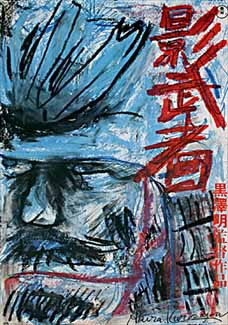
Retro Review: Kagemusha

Set in feudal Japan in the sengoku jidai period, Kagemusha follows the story of the Takeda clan as they battle with the fearsome warlords Tokugawa Ieyasu and Oda Nobunaga. It is a story revolving around the historical drama leading to the end of that particular struggle. Those familiar with history will know how it ends from the start. For those without knowledge of it, I will refrain from any spoilers of the ending.

The story is a jidaigeki film (literally period drama) directed by acclaimed Japanese film director Akira Kurosawa of Seven Samurai fame. It won the Palme d'Or at the 1980 Cannes film festival, and was nominated for other awards.


Our story here opens with the daimyo of the Takeda clan, Takeda Shingen, and his brother, Takeda Nobukado, looking at a condemned criminal who bears an uncanny resemblance to the daimyo. It is decided, that despite his insolent nature, they will keep the criminal alive to act as the daimyo's body double in time of need. He becomes, the kagemusha. Meanwhile, the Takeda are engaged in a battle with Tokugawa Ieyasu, one of Nobunaga's prime supporters. Shingen, feeling that the fall of the castle is imminent, travels to oversee the siege. While watching the siege one night he is shot and mortally wounded by a sniper.

Despite being on the cusp of victory, Shingen orders a withdrawal of his forces. Nobukado is able to maintain the ruse by posing as his brother, but realizes this is a failing strategy. Shingen gathers his closest generals and allies, including his son Katsuyori, and orders that if he dies, the clan cannot be allowed to fall to the plans of their enemies. He orders that they must stay neutral for three years in order to recuperate. Dying from his wounds, Nobukado orders the thief to be used as a body double to fool the clans enemies. Meanwhile, his foes ponder on what this sudden change of strategy in the Takeda clan means.

This deception will not be easy. The thief is uncouth, ill educated, and does not know the ways of the noble families. He will have to fool Shingen's allies and family, as well as dealing with the bitterness of Katsuyori, as he fumes at being unable to take his rightful place at the head of the clan. His enemies too are on the lookout for anything that undermines the clans position.

At its heart, Kageshuma is a family drama. It revolves almost solely around the issues affecting the Takeda clan, the internal family, and its struggle to survive. Nobukado tries to keep the wishes of his brother in place while protecting the clan, while Katsuyori is struggling to understand his role in his father's plan, all the while feeling as though he has been slighted through his fathers death and delayed inheritance. The thief himself must navigate the world of concubines while preventing the old lord's son from discovering he is an impostor.

The film itself is a visual spectacle though. Medieval Japan is brought to life in costuming, scenery, and battle through the use of well dressed extras, amazing costumes, and fascinating battle scenes. The work has clearly been done in bringing this era of history to life, and you see that in the little scenes where men are relaxing, and the scenes where soldiers clash on screen.

The small actions of the actors might be baffling to those unfamiliar with Japanese dramas, but the way they use subtle facial expressions and motions to portray events are amazing in my opinion. If you're even remotely familiar with Japanese culture you will get a pure joy from seeing how the movie turns out.

However, if you aren't familiar with Japanese drama, history, and culture, this may be a difficult movie for you. If you don't like movies with subtitles, that is doubly so.

Personally, knowing the history, I enjoyed the film and what it has to offer. As a historical drama it is excellent, and I think it should be applauded for how well it captures the era. The work that has gone into the costumes, the set design, and the appreciation for the culture is amazing. It is worthy of any awards it was nominated for. The film was spectacular.

All in all, this is an excellent historical piece. I recommend giving it a watch even once to truly appreciate some of the fantastic imagery we owe Japan, and to get an understanding of Japanese culture.

Saturday, 11 August 2018

Submission!

After a few days of editing, and getting the word count to 22,133, I have finally submitted my short story Integration to Tor. Now, they say that the proofreading process will take up to six months due to the sheer volume of submissions so I don't expect any news until at least February 2019. Either way, this is an exciting time for me as I submit my first story to an actual publishing company.

Then in all likelihood receive my first rejection letter!

But I'm happy, and I think this will be a good first step into the industry. Hopefully you'll see this story in print sometime!


Friday, 3 August 2018

Writing Update: Integration

Today, at precisely 9:04 AM, I typed the words "THE END" onto the first draft of my recent manuscript. My sci-fi short story Integration is now complete. For the last month and a half, I've been hammering away at this story almost every day. As of completion, this draft numbers 21,767 words over 51 pages.

Some of you might be wondering why I've said so little about this, or decided to only now make an announcement. Well the reason is simple, ever since last October when I penned off my piece of flash fiction The Disappearance of Wilson I've been hammering out other short stories either for practice, or for hopeful submissions to publishing houses. In creating this story I had set for myself a goal of writing at least 20,000 words, and I had determined not to say anything about it until I actually properly finished the piece. Now that is done.

Now I am excited to share with you my sci-fi short Integration and my plans for it. I had already been punting around in my head a story set on Earth far in the future, but not one that dealt with the difficulty of adapting to a new life. Reading the story, The Hummingbird decided the issue for me.

Writing this was a challenge to complete a work by a deadline and now I have completed the first part, and now I will be submitting it to beta readers while editing the first draft. It is for submission to the Tor slush pile which opened to accept short stories of between 20,000 - 40,000 words in the science fiction and fantasy categories. My goal is to have a complete and edited submission forwarded in the next ten days.

The story itself is following Faisal Williams, who has settled on the edge of the badlands in Old Texas. He has a troubling past, and it seems to be creeping up on him. Meanwhile, he deals with internal conflict over his religious views and the struggles of his one good friend, a recovering soldier, with nightmares of his own past. They all collide one night in Texas and Faisal must make a fateful choice.

With this story submission I will be making my first submission to a professional publishing house. While I don't expect much to come of it, it will be an accomplishment to have this story complete, and submitted to someone.

I'm told this process will take over six months, so it will be a while between submission and any news of progress on this story. Until then, the early draft is finished, and now for the editing to commence!

Other news revolves around two other stories I'm working on, with the intention of self publishing in October.

The first is called Priests of the White God set in a fantasy world where a nautical chase takes place between two factions. However, things are far darker than a simple naval action on the high seas as both parties become desperate.

The second is called Finiphobia. Two authors are trapped in a high school during an outbreak of a terrible epidemic, and to pass the time collaborate on a story between them. Jealousy and paranoia however, begin to take hold among them as they disagree on how to complete their story.

Hopefully I can have more regular updates for you on those stories as the next month progresses. In the meantime, the editing commences in a pell mell rush to meet the submission deadline!

So until next time!

Sunday, 29 July 2018

Those R&R Days

On Thursday I had an absolutely lovely day doing nothing. Now, to some people that may sound awful as I'm supposed to be writing or working, or doing whatever it is twenty-something Canadians do in the summer when our igloos melt. However, much has been happening in my professional and personal life that makes a day spent doing nothing a pure joy.

Many of you older folks may know what I'm talking about already. Days where you don't have to be rushing around or double checking things. Days when you're not really expected to do something and can just do, well, whatever.

Personally, I chose to spend that time with someone I'm rather fond of, while also taking time to expand my reading list and add more weight to my bookshelves. Adding to that realizing I also need a new bookshelf before my existing one collapses or I completely run out of floor space. Walking room is a must after all.

But I was extremely lucky to spend some time in the beautiful city I call home. After days of rain and humidity the weather was near perfect. We were able to go out and sit in the sun and do some much needed R&R (Reading and Relaxation) then move on to grab some delicious lunch at a cantina in the Byward Market. While perusing that in lovely weather, we next got to go and sit at the balcony of the Copper Spirits and Sights rooftop establishment in Ottawa. There we simply had drinks and read. There was something fun about just sitting, drinking, and reading while seeing people who knew there was a two hour wait for one of those coveted balcony seats.


If that doesn't tell you timing is everything I don't know what will.

Alas some brief, but bad, weather did come our way and drive us from our rooftop perch. However, we both got home and sat quietly for the evening, watching some fun documentaries on the hidden killers in British homes throughout history.

All in all, it was a relaxing day I wouldn't have wanted to spend any other way.

Wednesday, 18 July 2018

Lovecraft's Run

For some odd reason, every summer I find myself caught up in a craving for Lovecraft's scary stories. One would think this would be more reasonable over the fall months or on Halloween. Strange as it is that the sun and the water draw me to tales of Eldritch horror and forgotten forbidden lore, I do enjoy sitting up late at night and reading his terrifying works. Last summer that was how I was able to, in a single sitting, pound out my Lovecraftian horror short The Disappearance of Wilson and I intend to make a stab at another story like that. However, I'm just going to reminisce on some of the stories I have particularly enjoyed and managed to have keep me up over the summer.

Pickman's Model

This was in fact, the first Lovecraft story which ever gave me a nightmare. The story revolves around a reclusive and unusual artist (Robert Pickman) who creates macabre imagery of half-man half-dog creatures who rummage through the underworld. The storyteller relates the news of getting Pickman to tell him how he came up with such terrible ideas and learning an awful truth regarding the author's influence.

I read this one on a cottage trip, and it was part of my inspiration for my own short story. Imagining the wild north of Ontario and what it may hide was a great creepy dream and the waking nightmare of Pickman's creatures lurking on the steps to drag me off to the unknown inspired me to hammer this gem out.

The Call of Cthulu

If you have not heard of this story you clearly don't know your Lovecraft. Written in the summer of 1926 it was published in February 1928 in the Weird Tales magazine. It is a story revolving around the discovery and perusal of a deceased academics papers relating to a mysterious and gruesome statue and idol confiscated during a police raid in Louisiana. From there it branches out into a sinister tale of an almost apocalypse (in every sense of the word) as the confluence of unlikely events leads a horrible revelation that would drive any man to despair.

This is perhaps, Lovecraft's most well known work, with Cthulu being the creature most associated with Lovecraftian fiction. His cephalopod visage has graced the covers of many books and drawings, and even the nightmares of some! I personally have a picture of him hanging over my bed to ward off nightmares. The story is dark and exciting, with elements of mystery and penny dreadful thrillers, making it entertaining reading from any angle!

The Whisperer in the Darkness

This particular story was one much discussed by a coworker and I years ago. Involving shambling horrors from beyond the stars, it was one which made much hay over the discovery of Pluto back in the day. A researcher at Miskatonic University is contacted by a reclusive professor who, in response to reports of eerie creatures seen floating in the rivers following a period of intense flooding. The professor passes on undeniable truth regarding other worldly origins of these strange creatures, and over time, begins to feel the strain as they besiege his home.

Told largely through a series of correspondence and personal memoirs, it ratchets up the tension over time as the revelations unfold and the academics step steadily closer to madness from the revelations of what they have discovered. Truly a great short read.

The Beast of the Bosporus

This Lovecraftian tale, not written by Lovecraft, but in a delightfully similar vein, takes us out of Lovecrat's usual setting of rural New England, to the world of the 16th Century Ottoman Empire. Having lost the Battle of Lepanto, the Sublime Porte is looking for a way to strike back at the Spanish who have 'singed their beard.' In it we see palace intrigue, terrifying encounters, and a truly epic conclusion regarding powers that should not be tampered with.

Seeing it all done in a place where you don't really expect Lovecraftian horror makes it so much more interesting.

I have talked about it before, and you can find it in Digital Fantasy Fiction Anthology: Uncommon Senses.

Now these are just a small sampling of Lovecraft's works you can find, and one that is a very delightful example of switching up the location of these eldritch horrors! If people are looking for some timeless reads they should definitely check out the works of Lovecraft and his modern successors.

Tuesday, 10 July 2018

Retro Review: The Ten Commandments

Personally, I am an old movie buff. Even though old movies acting and effects are nowhere near what we can put on the screen today, they still tell excellent stories and gives a glimpse into the world as it was way back then. This is part of the reason I tend to appreciate them so much as compared to some modern films which don't do the era they are set in justice I think.

Recently, I was able to watch the 1956 classic The Ten Commandments on Netflix.


That film is epic, which tells not only its own innovative story of the Exodus, but is epic in scope and scale of story telling regarding the life of Moses, Pharaoh, and the Israelites. It also draws influence from novels like Dorothy Clark Wilson's Prince of Egypt, Joseph Ingraham's Pillar of Fire, and On Eagle's Wings by Arthur Eustace Southton. Not only that, it draws on historical sources like Philo's Life of Moses and the works of Josephus. This provides a rich background to draw characters and inspiration from in order to craft a grand narrative to tell a new story of Moses. Largely filling in the 'forgotten years' between Moses exile and return to Egypt.

The casting though, is spot on.

A younger Charlton Heston (with pectoral muscles which could put eyes out) captures a young, outgoing, and brash image of Moses who has been raised by Egyptians. His performance as the film rolls on and he undergoes a transformation from honorable, but driven and intriguing prince, to a devout holy man with a mission to free his people. His penchant for chewing the scenery is fantastic in my opinion and he can be perfectly over the top as necessary.

The second character I noticed was Vincent Price as Baka, an Egyptian overseer who goes from faithful assistant to Moses, to card carrying villain. The man whose voice I remember from The 13 Ghosts of Scooby-Doo as a kid, plays an excellent and sinister character on screen. Though admittedly this is a tiny role, it fills me with great amusement.

Bigger roles of course are those of Rameses (Yul Brynner), Nefritiri (Anne Baxter), Joshua (John Derek), Aaron (John Carradine), Lilia (Debra Paget), Yochabel (Martha Scott) and Bithia (Nina Foch). Each of these actors is well cast to their parts, and the female leads are all amazing in their performances.

I think that for a 1950s film, the agency and drama it grants to women is admirable. The roles of Nina Foch as Bithia and Martha Scott as Yochabel both are allowed to shape and drive Moses while holding some agency of their own. Though this is primarily in the form of protecting and nurturing their biological and adoptive son, it is a good role regardless. Nefritiri, whose scheming and agency drives much of the plot is a fantastic character, for both her tragic backstory and her desire for vengeance. Unfortunately, the character Lila falls into the "damsel in distress" category as Joshua's love interest.

While the film would soundly and swiftly fail a modern Betchel Test, it is fair for its day in the 1950s in giving its female characters more voice.

The Biblical epic though, unfolds roughly similar to the original story in the Book of Exodus. Pharaoh, fearing that the people of Judah will become too populous, orders the massacre of every firstborn males of the Hebrews. Yochabel, seeking to protect her son, sets him adrift in the river. He is saved and adopted by Bithia, daughter of Pharaoh.

Years pass, the Hebrews suffer, but Moses (named so by Bithia) is raised in luxury. Prince Moses quickly becomes the favorite of Pharaoh Sethi, to the jealously of his son Prince Rameses. This kicks off the plot as Rameses is charged to build a great city to honor Sethi, but his cruelty slows production. Meanwhile, Moses has won a great victory over Ethiopia, earning acclaim. However, he covets Pharaoh's daughter Nefritiri, who Rameses also covets. When Moses is sent to build Sethi's great city, Rameses schemes against him. Moses however, sees the plight of the Hebrews, and tries to aid them. In the process, he learns of his Hebrew parentage and has a crisis of conscience. In doing so he decides to forgo his Egyptian heritage and live among the slaves.

Here is where part of the film felt contrived for me. In the Book of Exodus, (and the great adaptation, The Prince of Egypt) Moses kills an Egyptian overseer, so he must flee. Here, the same thing happens but in a far more contrived way. Despite being told repeatedly that only Pharaoh may free slaves, and with his path to becoming Pharaoh secure, Moses decides to forgo power and live amongst the Hebrews to know his heritage. Instead of using the path laid out for him to free his people and become an enlightened ruler, he decides to take the hard and stupid way. Moses from this movie doesn't seem too bright in this moment.

It gets worse when because of this bad decision he is captured and accused of being "the Deliverer" whom the Hebrews speak of taking them out of bondage. Rameses has him exiled, showing a great deal of bad judgement himself, and Moses wanders the desert until he comes to the tribe of Jethro, and meets his daughter Sephora.

From here the narrative leaves the contrivance train and we get to the big symbols of the burning bush, Moses receiving his staff and getting all woolly haired and wild eyed, and his return to Egypt.

In is at this point that the movie begins playing to its strengths. While the acting and story telling in the first half of the movie is superb (save for Moses being something of an idiot) the narrative shines forth to tell the story of the exodus from Egypt quite well.

The plagues are carried out as well as can be expected with 50s special effects, which is to say remarkably well at points. They manage to show the turning of the Nile to blood, the flaming hail, and a truly creepy rendition of the Angel of Death coming into Egypt. That last scene is tense, disturbing, and truly enjoyable.

The special effects too, are stunning for the time. Showing off the great accomplishments in Egypt, the crossing of the Red Sea, the tempest of God as a pillar of fire, and the burning bush. There was a reason this was, at the time, the most expensive movie ever made.

When one considers that by and large this was accomplished through practical effects and with large groups of extras, the coordination is even more impressive. In the penultimate scene where Rameses chases the Jews to the Red Sea, the armies of Pharaoh are actually being played by the Egyptian Army! Which is pretty great in my humble opinion.

At the time this was one of the most expensive movies ever produced. When one considers the budgets many movies get now and the results that delivers, it should be obvious that directors could learn a thing or two from old movies.

The film is of course something of a morality tale. Nefritiri is something of a "Vamp" who uses her feminine wiles to confuse and misguide the men in her life, and is influenced by first her lust, then hatred for Moses. That the story is from the Book of Exodus is fitting since it is the triumph of the Christian God over the gods of Egypt. Moses more questionable decisions come from a clear intent of following an honor code.

Definitely old fashioned in its message, The Ten Commandments is a spectacle that shouldn't be missed, however. The films scenes of Biblical epics and amazing effects for the 50s stand true today. The acting is grand, the story holds up as timeless, and the film itself is a deserved epic. If the long view time puts you off, it comes with a natural intermission to pause at for a little while if you're not up for seeing the whole thing in one sitting.

Well worth seeing as an excellent Retro Film. Personally, I'm looking forward to recommending many more for you!