Something like 20 million people have not missed that this last weekend was an end of an era. The show, based on the best selling book series A Song of Ice and Fire, which had run for the last seven years, finally ended. Game of Thrones reached its conclusion.
Now there has been something of a consensus that the ending was awful, and many fans were disappointed. So disappointed in fact they started writing a petition demanding a redo. As silly (and unlikely) as that is, I'm not here to harp on the ending of the show, nor judge how the writing went or what the show runners did. No, I'm merely here to remind people of one salient fact.
Despite what many want to say/claim, Game of Thrones has had a Mad Queen since Season 1. That queen was Cersei Lannister.
Let me be clear here, Cersei has been a villain since the very start of the show. Whether acquiescing to the hurling of a small child out a window, plotting to kill her husband, being complacent in the beating and humiliation of Sansa Stark, or merely by undermining her own brother at every turn, she has - without a doubt - been one of the villains central to the series.
Sure, in the last few seasons she may have had to match wits with the Tyrells, suffered some reverses at the hands of the Faith of the Seven, but through all that she got a zombie bodyguard, a torturer in chief, and murdered hundreds of people. All while either allowing her children to die or driving them to suicide.
As a villain, she was pretty evil is all I'm saying.
So, with many discussing the end of the series, talking about what should or shouldn't have happened, I just want to write this reminder that, no matter what you may think, the show has always had a Mad Queen, and another one was never really necessary.
The internet lair of Matthew Stienberg. A blog where my thoughts, ideas and writings can be seen!
Wednesday, 22 May 2019
Thursday, 2 May 2019
Game of Thrones, Arya Stark and Mary Sues
The most recent episode of the long running and cultural milestone fantasy series Game of Thrones has, for many good and bad reasons, drawn lots of criticisms from fans. Much ink has already been spilled trying to justify or point out the flaws in the most recent episode. I think there are valid reasons for criticisms and invalid ones as well. However, let me just do a brief commentary on the show as a whole before diving in.
In case it isn't obvious SPOILERS AHEAD!!!!
Monday, 29 April 2019
Black Summer
If you have ever watched the fun/gory Z-Nation on television on Netflix, you'll be pleasantly surprised that the same team behind that have gotten together to put on a great little miniseries in a zombie filled world. However, this time we have a series which is not only terrifying, but an amazing testament to the zombie genre as a whole.
This is the eight episode series Black Summer
Set six weeks into the ongoing zombie apocalypse, we follow a diverse cast of characters who are struggling to survive and find somewhere safe to run. We are first shown a trio of people on the run, waiting for the end of a bombing run in order to be evacuated to a safe zone. On the way, we see many other refugees on the run, and get introduced to a colorful and diverse cast of characters.
Things quickly go to hell though as we discover one of the trio has been bitten. The military immediately bugs out and drives off, leaving a mother and father suddenly without their child. From there, we play catch up as other characters moments intersect and converge, with many unintended consequences and struggles. But as a warning, don't get too attached to any of these characters, the show plays for keeps.
From the cowardly survivor Lance, mysterious Spears, to the non-English speaking Sun, we have a great little cast of characters who are unique and clever. Though having little or no background they aren't completely well rounded. They're acted amazingly though, putting you in their situation rather than their story.
They're not prepared for the apocalypse, at all, and it shows. Rarely are the zombies killed easily, and often they cause lots of trouble and only fail to kill people by their limited intelligence. That the world seems to be in its death throes doesn't help, as soldiers are overwhelmed and it seems all civil government has essentially broken down.
With its short run time, it's an easy binge. Though, with how scary some episodes are you may find yourself not wanting to binge watch!
Each scene is well shot, usually from a close angle which puts you right in the characters head space. We see their facial expressions, and can really feel the terror they are undergoing. The subtle use of music and ambient sounds makes you cringe. Something as simple as the background noise of an air conditioner really got my heart pounding at one point as I just expected a zombie to come running out at the characters on screen!
The conservation of detail too, with characters facing only one or two zombies at a time early on, made it really terrifying. Even one monster was too much to handle for most, and was a totally life threatening situation, even when a character was armed!
One particularly jarring episode takes place in a high school, and let me just say, if you think children are innocent, you may not think so after watching this! The use of little details to perturb, scare, and crank up your expectations really pays off at the end. It culminates in bits of creeping fear and a series of non stop chases which keep you guessing at who will live or die until the very end.
All in all, there isn't too much overarching story beyond a mother looking for her daughter during the apocalypse. That allows for some scant meaningful plot and leaves very little in the way of meaningful details to be examined as the story goes on. It's meant as a short piece which will tug at your brain and leave you wondering when the zombies will show up, or who is or isn't going to make it out.
As a brief horror mini series, I'd happily recommend it. It has all the right scares and all the right tension. Worth a watch.
Friday, 19 April 2019
The Halifax Connection
Though I often talk about fantasy, contemporary politics, science fiction, and movies, I'm also going to review for you book from a genre that is close to my heart. That genre is historical fiction and the book is The Halifax Connection by Marie Jakober.
Set primarily in the city of Halifax, this story stretches from early 1862 to September 1864 and follows a colorful cast of fictional characters from all stations of life. Our main protagonist is Erryn Shaw, a disgraced aristocrat and former theater manager who has fallen on hard times. We also get a look into the life of a domestic servant Slyvie Bowen, with the supporting cast of Matt Claverly and Colonel Hawkins.
The backdrop of the novel of course, is the American Civil War. Not many know this but Canada was prime real-estate for Confederate spies and blockade runners. Halifax especially grew rich off the war as Confederate ships and blockade runners would often seek refuge there. Haloginians themselves came from a society which was fiercely loyal to the Mother Country and felt a certain kinship with the South at the time. To find men of high principles and ideals who would oppose them would have been a rare thing indeed.
That the novel chooses to do just that is very much to its credit.
Our story follows mainly Erryn and Sophie. Erryn is a failed theater manager (well, it burned down) who is falling on hard times while Sophie is a former factory worker emigrating to Canada to find work and a new life away from the horrors she has seen in the mill town of Rochdale.
The story kicks off when Erryn is asked by his best friend Matt, to spy for the Governor General. Halifax is full of Confederate agents and sympathizers, who wish nothing more than to involve Great Britain and her Empire in the war to hopefully tip the scales in favor of the cause of independence for the Southern states and their Confederacy. Sucked in to a vortex of lies, espionage, and mad schemes, Erryn finds himself on a twisting path of conflicting loyalties and friendships while publicly renouncing all his ties to his former life and friends who support the Union.
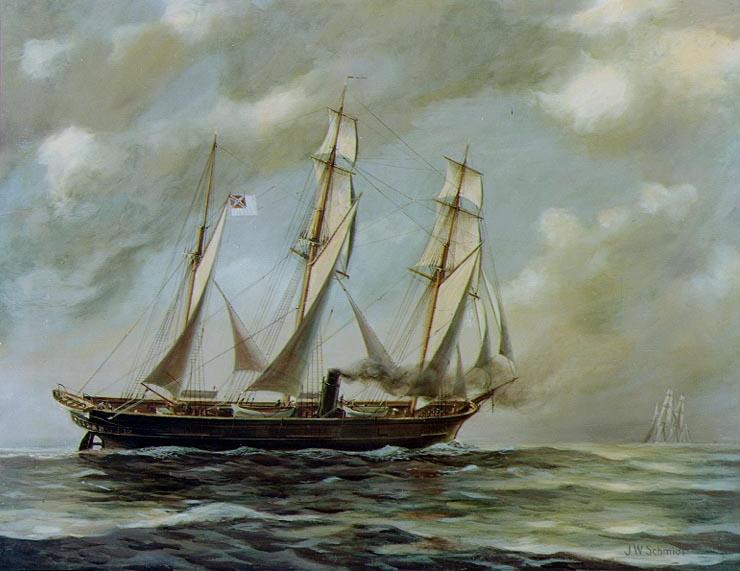
Slyvie meanwhile, is just crossing the Atlantic on the cheap when her ship is set upon by the Confederate raider Alabama. This gives her a lasting enmity for the Confederacy and all it stands for. However, she finds herself falling for a man she meets in Montreal, and that man is Erryn Shaw, who is playing host to the Confederate agents he can find.
Into this story we get something of a twisting love affair between two people who deeply care for one another, but who, ostensibly are on the opposite sides of an ideological divide.
I will admit that, as the piece goes on, it feels like more of a love story than a spy story. There is (to me at least) a decided effort by historical fiction authors to 'spice up' a piece by including a risque love story. Personally, I've never found that remotely necessary to engage with a piece of historical fiction. However, in this case we do at least get a very well written love story between two well fleshed out characters who portray life in the 1860s in pre-Confederation Canada quite well.
As a spy story I would argue the piece leaves much to be desired. Even though Jakober does her best to keep the spy drama going, I found the plot lacked an overall enemy, villain, or objective. Though it was true to life in the British authorities basically whacking Confederate schemes where they could be found, I might have felt more inclined to be hooked by an overarching adversary for the characters to be confronting. The story certainly had one set up in the person of an old enemy from Erryn's past!
That isn't to say though, that the book doesn't work well on its own merits. It does portray the events from Canada in the Civil War quite well, even making the Chesapeake Affair, a backdrop of one of the most pivotal scenes in the book.
Jakober has done her research, this much is clear. She understands life in Nova Scotia (Halifax specifically) quite well, and does a wonderful job portraying the divided opinions of the Canadian people in the 1860s. That she incorporates a number of real life events into the series is much to her credit, and she does it with a deft hand. Though her characters are fictional, she sets them up in real historical events and plots. She makes a very shocking revelation at the end which I simply cannot spoil for casual students of history or readers. You will be taken aback by it, all the more for that it is based on true events.
I liked the characters and I liked that Jakober did her absolute best to stay true to history. There is no embellishment on the side of action or drama, nothing which would necessarily conflict with history as we know it, and lots of emphasis placed on attitudes and ideals from the 1860s.
As historical fiction, I found this novel first rate. Definitely worth a read from fans of romance, historical fiction and Canadian and Civil War history buffs.
Monday, 15 April 2019
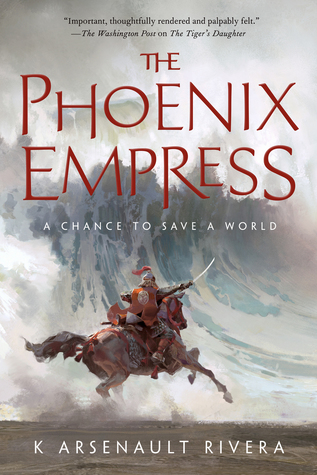
The Phoenix Empress
A few years ago I read the debut novel by K. Arsenault Rivera's The Tiger's Daughter and I discovered myself thoroughly enjoying it. Just this year I've read the sequel, the Phoenix Empress and found myself sucked into this world once more.
The story picks up shortly after the events of The Tiger's Daughter concluded. Shizuka has become the empress of Hokkaro, while her wife Shefali is struggling with her own affliction brought on by being infected with demonic blood. After eight years apart they have been reunited, but in those eight years much has changed with both of them.
Forgoing the original story's epistle format, it is told in the form of first and second person narration. Shefali is generally narrating her ongoing struggles with helping her wife cope with the problems she has come into while she was away, and Shizuka narrates her past eight years of struggle under her uncle's thumb when he was emperor.
In her story Shizuka narrates the terrible years she spent alone, while also having to deal with her uncle's mismanagement of the empire. Finally, he sends her off to war where she encounters horrors she could only imagine.
The novel started off very well in my opinion, seamlessly transitioning from the letter story style of the first book to a more first person and third person narrative which flowed quite nicely. There was more in depth description of the Hokkaran and Xia-lan societies than we received previously, and we got some better examination of the main villain of the series as a whole, the mighty demon known as The Traitor.
However, the pacing in this one suffered terribly.
I will admit that I was hoping for a more action packed epic, but in the beginning we get some good world building which was sorely lacking from the first installment, so this tided me over. This though, did drag on for a time introducing a new character who became vitally important at the end of the novel (though she has been called a dues ex machina, somewhat correctly) while also leading rather subtly into the things which are now terrifying Shizuka. But very little of note actually happens until roughly the half way point of the novel, but after that things pick up considerably.
Though the build up to the final reveals were nice and subtle, there were times where I got annoyed by the dancing around the issue, as well as Shefali not figuring things out as quickly.
We also see that, rather than be improved, much of Shizuka and Shefali's relationship is startlingly unequal. Shefali still puts Shizuka on a very much undeserved pedestal, and Shizuka still makes impulsive and selfish decisions for her own ends rather than consult with others about what might be the right decision since she just knows. Though this does improve somewhat by the end of the book, I felt very often like yelling at the characters since Shefali really needed to tell Shizuka off at least once, and many of Shizuka's decisions were terrible when you give them a good deal of thought.
This though, was Shizuka's book rather than Shefali's. In my previous review I griped that Shizuka was selfish, spoiled and arrogant, and while she remains spoiled and arrogant she manages to shed some of her selfishness by the end of this installment and go a long way towards earning the unconditional love her wife gives her. It was nice to see some legitimate character growth.
All that being said though, like the original novel overwrought declarations of love do come up and across far too often. The motivations and actions of other characters are often obscured through the cloud of almost teenage angst levels of inner monologues that pass for thoughts of love in this book. Grinding past that you found some fun reading, and a few clever twists in the plot as the story wore on.
Some things did bother me where the author had not done enough research (a naginata is not a stabbing weapon) while some characters still felt underdeveloped. Poor Shefali's brother was given the short shift throughout most of the story till near the end, even though he is earnestly trying to help.
All in all, it was a worthy sequel to the original novel. If you can stand some of the more eye rolling sections of the romance and power through to the well plotted reveals and surprises in the last half of the novel, you will see some great character growth and a promise of a good sequel in the future.
While this is not becoming one of my favorite fantasy novels any time soon, it is definitely one worth a read.
Wednesday, 27 March 2019
A Short Civil War What If
I should make no secret that I have been a fan of studying the American Civil War since I was very young. I blame my uncle for this as when I was younger he was also a big American Civil War buff, to such extent that for my 5th birthday my brother and I were taken to Gettysburg to watch a reenactment in 1997. Suffice to say I remember very little of this, but I am told my brother and I were weirdly knowledgeable for five year olds. I do fondly recall however, growing up seeing my uncles civil war memorabilia around and often playing with the figures he collected.
In the face of an entrenched enemy, it is likely the armies merely return to winter quarters. The upside may be that there is no disastrous Battle of Fredericksburg, as McClellan's dismissal and the obvious disposition of Lee's army make imminent action unlikely. From there though, it is anyone's guess as to how the campaign's play out in 1863. Does Burnside refuse the command and Hooker take over? None can say for sure.
In summation, I hope this lays out my reasoning behind my belief that even had McClellan been allowed to continue in his tenure of command, he would not have held it long. An extra month will not save him.
----
As a note, the letters referenced (unless otherwise specified) come from the War of the Rebellion: Official Records of the Civil War, Serial 28, available online through the Ohio State University.
[1] Report, pg. 652
[2] George McCllelan, The Young Napoleon, Stephen B. Sears, pg. 337
[3]Lee to Davis, Nov. 6th, 1862 (pg. 698): "General Jackson's corps is in the valley, his advance being at Front Royal. I do not think they will advance very far while he is in position to threaten their flank. Should they, however, continue their forward movement, General Jackson is directed to ascend the valley, and should they cross the Rappahannock, General Longstreet's corps will retire through Madison, where forage can be obtained, and the two corps unite through Swift Run Gap. No opposition has yet been offered to their advance, except the resistance of our cavalry and pickets. I have not yet been able to ascertain the strength of the enemy, but presume it is the whole of McClellan's army, as I learn that his whole force from Harper's Ferry, to Hagerstown has been withdrawn from Maryland, leaving only pickets at the fords, and but few troops at Harper's Ferry." See also, Lee to Stuart, Nov. 7th, 1862, pg. 703.
[4] George to Mary McClellan, Nov. 7th, 1862, The Civil War Papers of George B. McClellan: Selected Correspondence, 1860-1865, pg. 520
[5] Report, pg. 652
[6] Report, pg. 651. See also, Lee to Stuart Nov. 9th, 1862, pg. 706-707
My dual interest in alternate history has led me to speculate often on 'what might have been' if different actions had happened. And so, I present to you a brief speculation for your consideration.
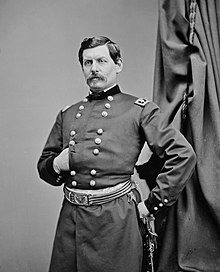
As history tells it, on November 7th 1862, George
B, McClellan, who had commanded the Army of Potomac for 16 months, was
dismissed by President Lincoln. In his 1864 The Army of the Potomac, General
McClellan's Report of its Operations While Under His Command McClellan relates that he was preparing to
deliver a great blow to Lee with his army in November. He had moved over
120,000 men in roughly two weeks towards Lee’s army in Virginia and by his own
accounts was preparing to force a battle upon Lee. In his Report he
relates that “I cannot doubt that the result would have been a brilliant
victory for our army.”[1]
Let us, for a moment, indulge
McClellan and assume that, for whatever reason, Lincoln decides not to dismiss
the general on November 5th, and instead allows him to continue in
his tenure as commander of the Army of the Potomac. What then, might have been
the result of McClellan’s cool belief in victory in 1864?
McClellan’s 1864 Report paints a far different picture
from his personal correspondence in 1862. He told his wife on the 25th
of October 1862 that he did not expect Lee to fight before Richmond[2]. He seemed
to set his own objective as Culpeper Court House, and from there we have no
clear idea of what he intended despite his later prediction of a great victory.
However, Longstreet beat McClellan
to Culpeper comfortably, moving in half the time it took him to
make the same march. Lee had nearly divined McClellan’s intentions by the 6th
of November[3]. He wrote that if the enemy continued to advance he would unite
Longstreet and Jackson’s corps through Swift Run Gap, joining at Madison
through Gordonsville. From there he anticipated the ability to menace
McClellan’s right flank. McClellan had fears regarding his army's ability to use the Orange and Alexandria RR and viewed its capacity as overrated[4], so he would most
likely then have directed his army to Fredericksburg. In his forward movement
however, he abandoned Ashby and Snicker’s Gap, this allowed Jackson to send men
across the Blue Ridge Mountains on the 13th and harass the armies’
rear columns historically.
Jackson suggested advancing his
corps to threaten McClellan’s flank and rear, which Lee agreed with should it
be feasible. Should the enemy further advance, Lee directed him to be pulled
back. In this instance, with McClellan’s slow advance still pushing forward,
but leaving his rear open. Jackson most likely mounts an embarrassing attack on
McClellan’s rear which gives him pause, and allows Jackson time to regroup with
Lee. However, if McClellan’s forward momentum continued positively on the 10th
and 11th, Lee might recall Jackson and continue to implement his
planned withdrawal to Madison. It should be noted that in his Report McClellan believed Jackson was at
Chester and Thorton’s Gaps, when in reality he was closer to Snickers and Ashby
Gaps[5], some 18 miles north, and so his rear is actually exposed rather than
covered. He had in fact, left his rear uncovered[6].
Delayed communications may allow
Jackson’s raid on McClellan’s supplies to go forward, but this will most likely
halt McClellan’s advance as he turns to meet this threat. Should Jackson
receive Lee’s orders to withdraw on the 13th as he did historically,
he would immediately make for the rendezvous with Lee. The timing of that can
only be speculated, but we should not assume he tarries long, and unites with
Lee at Madison.
In the face of a unified army,
and an increasing supply line. McClellan’s most likely option is to move his
force to Fredericksburg, which will make an advance of 35 miles. This movement
would take at best, four or five days, and at worst weeks. This would allow Lee
to discover the change of base, and either relocate himself for a defence on
the North Anna or to attack isolated portions of McClellan’s command. Most
likely, he does as he had done historically and moves to intercept McClellan at
Fredericksburg.
McClellan is now faced with a
prospect similar to that of Burnside in December of 1862. The question then is,
what does McClellan decide to do? Does he cross in the face of what he believes
to be superior numbers? Or does he sit and wait, planning a new campaign?
In the face of an entrenched enemy, it is likely the armies merely return to winter quarters. The upside may be that there is no disastrous Battle of Fredericksburg, as McClellan's dismissal and the obvious disposition of Lee's army make imminent action unlikely. From there though, it is anyone's guess as to how the campaign's play out in 1863. Does Burnside refuse the command and Hooker take over? None can say for sure.
In summation, I hope this lays out my reasoning behind my belief that even had McClellan been allowed to continue in his tenure of command, he would not have held it long. An extra month will not save him.
----
As a note, the letters referenced (unless otherwise specified) come from the War of the Rebellion: Official Records of the Civil War, Serial 28, available online through the Ohio State University.
[1] Report, pg. 652
[2] George McCllelan, The Young Napoleon, Stephen B. Sears, pg. 337
[3]Lee to Davis, Nov. 6th, 1862 (pg. 698): "General Jackson's corps is in the valley, his advance being at Front Royal. I do not think they will advance very far while he is in position to threaten their flank. Should they, however, continue their forward movement, General Jackson is directed to ascend the valley, and should they cross the Rappahannock, General Longstreet's corps will retire through Madison, where forage can be obtained, and the two corps unite through Swift Run Gap. No opposition has yet been offered to their advance, except the resistance of our cavalry and pickets. I have not yet been able to ascertain the strength of the enemy, but presume it is the whole of McClellan's army, as I learn that his whole force from Harper's Ferry, to Hagerstown has been withdrawn from Maryland, leaving only pickets at the fords, and but few troops at Harper's Ferry." See also, Lee to Stuart, Nov. 7th, 1862, pg. 703.
[4] George to Mary McClellan, Nov. 7th, 1862, The Civil War Papers of George B. McClellan: Selected Correspondence, 1860-1865, pg. 520
[5] Report, pg. 652
[6] Report, pg. 651. See also, Lee to Stuart Nov. 9th, 1862, pg. 706-707
Tuesday, 26 March 2019
A Short Mueller Postscript
While the news has been on fire for the past three days regarding the conclusion of the Mueller probe, and Donald Trump and his supporters loudly proclaim he has been 'exonerated'. We of course, should take none of this conclusion at face value.
The report, form what Attorney General Barr said, exonerates Trump and his campaign of collusion. However, Trump is still under multiple investigations, ranging from hush money paid to porn stars to improper use of finances in his electoral committee. At the state and federal level Trump remains under a cloud of suspicion. While the Mueller report was the most troubling cloud by far, the fact that no one will be satisfied until the full report is released means it hasn't completely been cleared.
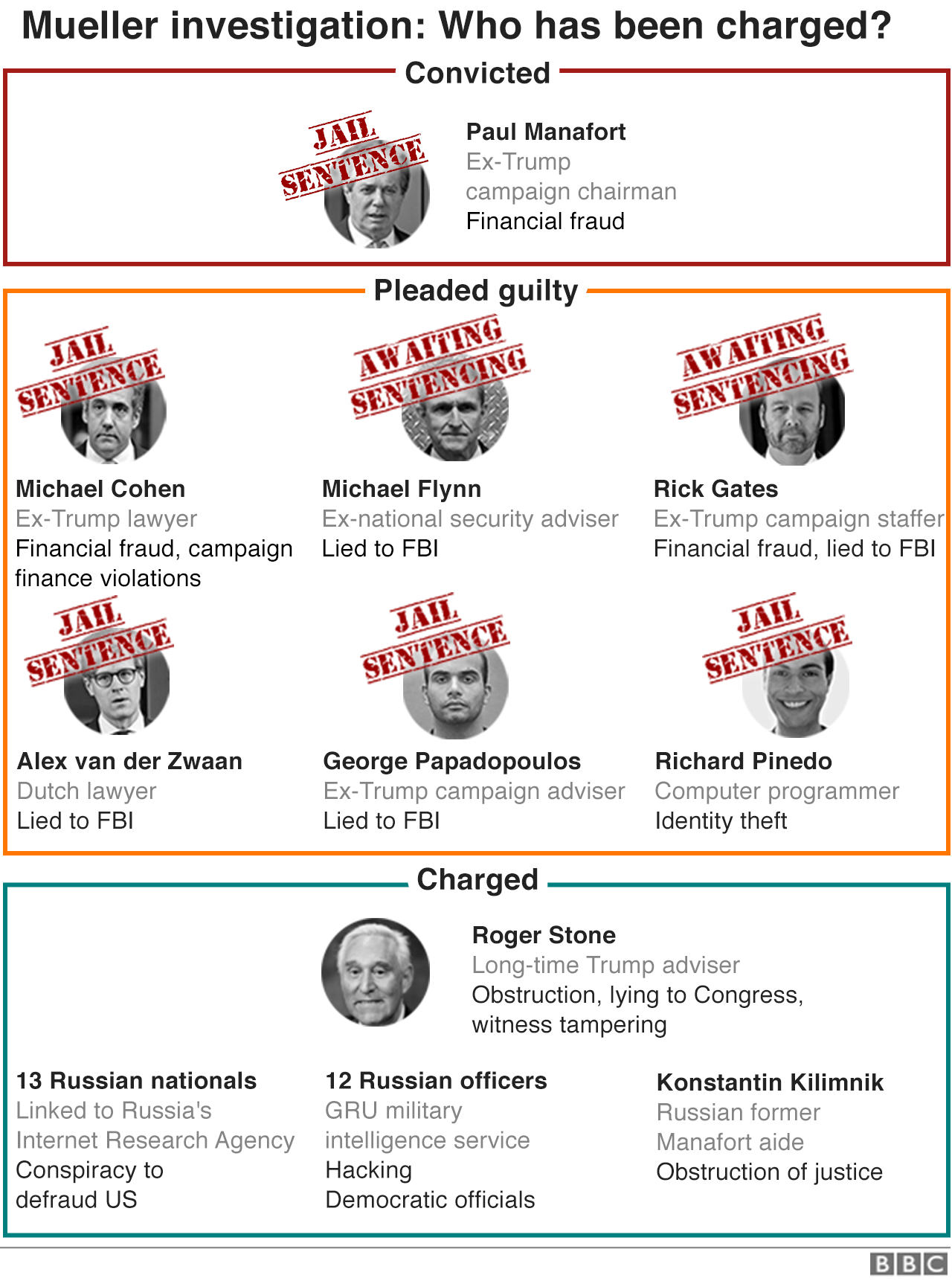
Even though it exonerates Trump and his campaign from collusion, it does not exonerate his associates and unofficial advisers like Roger Stone from that crime. Whether this could in any way be tied back to the Trump family is an open question, and one people would do well to remember. This little graphic should help you with the particulars for the moment.
Most damning however, is the revelation that the investigation does not clear Trump of the impeachable offense of obstruction of justice. Considering that was potentially the most damning charge, and that it remains an open question which could be approached through many of the dozen or so ongoing investigations, Trump and his supporters would be well served to reign in their exultation.
Congress is continuing its own inquiries, alongside the other investigations. There's much more in the woodwork Trump and his associates might be liable for. For now he can crow about 'no collusion' but he would do well to think in terms of 'obstruction' and 'finance violations' which may come back to haunt him far more thoroughly than any charge of collusion ever could.
Subscribe to:
Posts (Atom)


_Title_Card.jpg)